AudioFu Chart · October 2026
Best General Digital Pianos Under $1,000 2026
The top pick is Casio CT-S200 Casiotone 61-Key Portable Keyboard ($960). Casio CT-S1 76 BK gives you the most for the money at $263. Ranked by the AudioFu Index from 16 models across 7 brands, prices checked every night.
Last updated: October 31, 2026
Top 10
Full detail for the 10 highest AudioFu Index scores. Every other model is listed below.
-
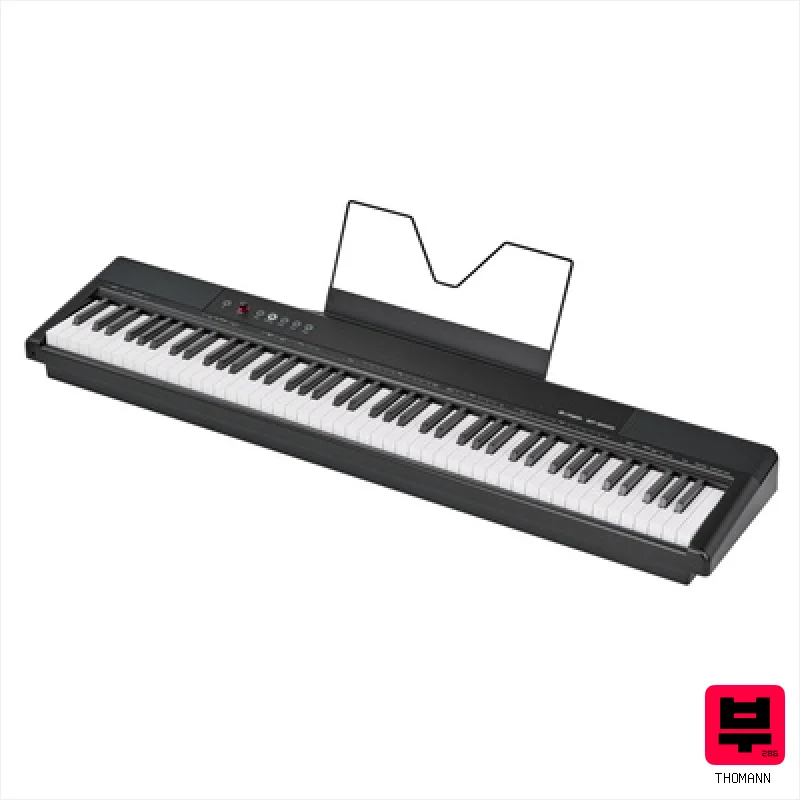
Casio CT-S200 Casiotone 61-Key Portable Keyboard
AP-S200 BN · Casio
70 for sale on Reverb6 finishes at Thomann
- Weight34 kg
- Key actionWeighted keys
The AP-S200 BN is a solid choice for beginners or intermediate players looking for a stylish and relatively affordable entry into the digital piano world. The action is surprisingly good for the price point, and the compact design makes it easy to fit into smaller spaces. It’s great for home practice and casual playing, but don't expect studio-level sound quality or a huge range of sonic textures.
Pros
- Attractive brown finish elevates aesthetics for modern living spaces.
- Smart Scaled Hammer Action provides a surprisingly realistic piano feel.
- Decent speaker system delivers clear, usable sound for practice and small performances.
Cons
- Sound engine, while adequate, lacks the nuance of higher-end digital pianos.
- The included 3-fold pedal feels somewhat plasticky and basic.
89AudioFu
Index↓ 13.9%since Aug 17 · lowest so far$1,115 · Aug 17$960 now$960€859 at Thomann · in stockCheck price ↗ -
- Weight11 kg
- Key actionWeighted keys
The ES-60 is a solid entry-level stage piano, offering a good balance of portability and playability. It's a great choice for beginners, students, or gigging musicians who need a reliable and compact instrument without needing the bells and whistles of a more expensive model. The RHL action is surprisingly responsive for the price point.
Pros
- Responsive Hammer Light action offers surprisingly good dynamic range.
- Compact size makes it suitable for smaller spaces and transport.
- Decent sound selection covers basic piano and organ needs.
Cons
- RHL action lacks the nuanced feel of Kawai's higher-end hammer actions.
- Speaker power is limited; headphone use is recommended for serious practice.
-
- Weight12 kg
- Key actionWeighted keys
The ES-120 B is a solid entry-level digital piano offering a surprisingly good playing experience for the price. It's ideal for students, beginners, or those needing a portable stage piano – the action is much better than you’d expect for this tier, and the Bluetooth connectivity is a real bonus.
Pros
- Responsive Hammer Compact action provides surprisingly realistic key feel.
- Kawai's sound engine delivers a warm, nuanced grand piano tone.
- Bluetooth MIDI & Audio offer modern connectivity and convenience.
Cons
- RHC action, while good, lacks the depth of Kawai's higher-end actions.
- Limited sound selection compared to more expensive stage pianos.
59AudioFu
IndexStableno change since Aug 17Aug 17$669 now$669€599 at Thomann · in stockCheck price ↗ -
- Weight46.2 kg
- Keys88 keys
- Key actionWeighted keys
The Gewa DP 510 is a solid entry-level digital piano offering a surprisingly realistic Steinway piano sound and useful app integration. It’s a great option for students, beginners, or anyone needing a compact and feature-rich instrument for home practice or casual playing – the customization options are a real bonus.
Pros
- Steinway D274 sample delivers a surprisingly authentic, warm grand piano tone.
- GEWA Piano Remote App offers genuinely useful customization and control.
- Illuminated soft-touch buttons are a surprisingly elegant and practical touch.
Cons
- Speaker system, while decent, lacks the depth for serious performance environments.
- Limited sound library, though the core piano sounds are excellent, restricts versatility.
55AudioFu
IndexStableno change since Aug 17Aug 17$781 now$781€699 at Thomann · in stockCheck price ↗ -
- Weight5.3 kg
The CT-S1 76 BK is a surprisingly capable and remarkably light keyboard – a great option for beginners, students, or anyone needing a portable instrument. The extended 76-key range gives a more piano-like feel than smaller models, and the Chordana app is a real bonus for learning. Just don't expect a professional-grade keybed or booming sound.
Pros
- Lightweight design (5.3kg) makes it highly portable for lessons or gigs.
- 76 keys offer a more natural feel and wider range than smaller keyboards.
- AiX sound engine provides surprisingly realistic piano tones for its price point.
Cons
- Key action is synthetic and lacks the nuanced response of a weighted action.
- Polyphony limit (64 voices) can lead to dropouts with complex arrangements.
-
- Weight59 kg
- Key actionWeighted keys
The Thomann DP-51 B is a solid, budget-friendly digital piano that delivers a surprisingly realistic playing experience. It's a great option for beginners or intermediate players who need a dependable instrument for home practice or small gigs – just be prepared for the weight! The build quality is respectable for the price point, and the features cover the basics well.
Pros
- Solid 88-key weighted action provides a realistic piano feel
- Decent speaker system for practice and smaller performances
- Comprehensive connectivity suite for studio and live use
Cons
- Sound engine, while adequate, lacks the nuance of higher-end digital pianos
- Bulky and heavy – transport and placement require significant effort
54AudioFu
IndexStableno change since Aug 17Aug 17$668 now$668€598 at Thomann · in stockCheck price ↗ -
- Weight74 kg
- Key actionWeighted keys
The Thomann DP-140B U BK is a surprisingly capable upright digital piano that delivers a good bang for your buck. Its weighted keys and decent sound engine make it ideal for beginners or intermediate players who need a compact and affordable instrument for home practice and basic performance. It’s a solid choice for students or those needing a space-saving alternative to an acoustic piano.
Pros
- Solid, matte black finish gives a premium, understated aesthetic.
- The 5-Stage piano power MARS technology provides surprisingly realistic acoustic piano tones.
- 30W + 20W speaker system offers decent volume and clarity for home practice and small performances.
Cons
- USB connectivity is MIDI only; no audio output over USB, limiting recording options.
- Synthetic ivory key surface, while durable, lacks the nuanced feel of real ivory or higher-end plastic.
54AudioFu
IndexStableno change since Aug 17Aug 17$892 now$892€798 at Thomann · in stockCheck price ↗ -
- Weight7.1 kg
- Key actionSemi-weighted keys
The Alesis Concert is a solid, budget-friendly option for beginners or those needing a portable practice instrument. It won't fool a seasoned pianist, but it's perfectly adequate for learning the basics and experimenting with different sounds. A great choice for students or anyone needing a compact, all-in-one solution.
Pros
- Affordable entry point for aspiring pianists.
- Decent selection of basic instrument voices.
- Integrated metronome is surprisingly useful for practice.
Cons
- Semi-weighted action lacks the nuance of a real piano.
- Polyphony limit can cause note drop with complex layering.
51AudioFu
IndexStableno change since Aug 17Aug 17$299 now$299€268 at Thomann · in stockCheck price ↗ -
- Weight38.5 kg
- Key actionWeighted keys
The Thomann DP-32 B is a solid entry-level digital piano, offering a weighted action and a surprisingly usable sequencer for the price. It's a great choice for beginners or those needing a functional practice instrument without premium features or a high-end sound. Don't expect concert hall acoustics, but it's a competent performer for home use.
Pros
- Solid 88-key weighted action provides a surprisingly realistic piano feel
- Decent speaker system for practice, avoids tinny digital sound
- The sequencer is a genuinely useful feature for composition and practice
Cons
- Sound engine lacks the nuance and depth of higher-end digital pianos
- USB host functionality limited to MIDI only, no audio transfer
51AudioFu
IndexStableno change since Aug 17Aug 17$556 now$556€498 at Thomann · in stockCheck price ↗ -
- Weight54 kg
- Key actionWeighted keys
The Hemingway DP-501 MKII AT is a surprisingly capable entry-level digital piano, offering a good weighted action and a respectable feature set. It's a great option for students or hobbyists who want a full-sized instrument with recording capabilities and don't need ultra-premium sound quality. The anthracite finish is a nice touch, making it look far more expensive than it is.
Pros
- Solid 88-key weighted action provides a realistic piano feel
- Anthracite finish offers a sophisticated and modern aesthetic
- Built-in 3-track recorder facilitates composition and practice
Cons
- Sound engine, while decent, lacks the nuance of higher-end models
- Internal speakers, while adequate, won't satisfy demanding audiophiles
51AudioFu
IndexStableno change since Aug 17Aug 17$591 now$591€529 at Thomann · in stockCheck price ↗
All 16 general digital pianos
Same index, same nightly prices — compact. Colour options of one model share a row. Tap a photo to zoom.
- 11
Thomann DP-95 BThomann · 4 finishes51Stable$613€549$613€549Check ↗
- 12
Gewa CP 510 BlackGewa · 2 finishes51Stable$781€699$781€699Check ↗
- 13
Gewa PP-3Gewa · 4 finishes50Stable$496€444$496€444Check ↗
- 14
Gewa PP-2Gewa · 2 finishes46Stable$412€369$412€369Check ↗
- 15
Casio CT-FS1BKCasio · 2 finishes43Stable$446€399$446€399Check ↗
- 16
Roland GO-61P GO:PIANO 61-Key Digital PianoGO:PIANO 88PX · Roland40↑ 2.2%$307€275$307€275Check ↗
General Digital Pianos by the numbers
Measured across all 54 models we track, not a sample.
Median $669 — half of all general digital pianos here cost less.
median of 53 models · 5.3 kg–74 kg
most common · 47 models
median of 6 models · 88–88
How to choose the best general digital pianos
Action
Forget plastic keys - you need weighted keys with a decent amount of travel. It's the most important factor for developing proper technique and getting a playable feel. A cheap action will feel mushy or springy and make everything sound lifeless.
Sound Engine
Don't expect Steinway-level realism, but look for a piano sound engine that offers a usable range of dynamics and a pleasing, if slightly artificial, tone. Listen for a natural decay and avoid anything that sounds overly digital or harsh.
Polyphony
128-note polyphony is pretty much the baseline these days. Anything less and you'll hear notes cutting off when you're playing chords or layered sounds. It's frustrating, especially when trying to get a full band sound.
Connectivity
MIDI, USB, and audio outputs are essential for recording and expanding your rig. A decent headphone jack is crucial for late-night practice sessions without annoying the neighbors.
Build Quality
Let's be real - at this price point, plastic is the name of the game. But look for something that feels solid and doesn't rattle or creak when you move it. A wobbly stand is a recipe for disaster on stage.
Buying guide
So, you want a decent digital piano without dropping a grand? It's totally doable, but you gotta know what to look for. Forget those marketing buzzwords - we're talking about getting a reliable instrument that sounds decent, feels playable, and won't fall apart after a few gigs. This list is about bang-for-your-buck, plain and simple.
At this budget, you're making trade-offs. Don't expect perfect piano tone - you'll likely be layering sounds and EQing to get a usable sound. Prioritize a decent action above all else; a bad action will hinder your progress more than a slightly less-than-perfect piano sound.
Also, check the warranty - cheap electronics can be flaky.
How the AudioFu Index works
Five measured signals and nothing else — no stars from strangers, no “tested by experts” we didn’t do. The weights are fixed and public. We don’t play these instruments; we measure the market around them.
This chart covers 54 general digital pianos from the Thomann catalogue. Before you buy, read hands-on reviews and, where you can, play it. Full methodology.
AudioFu earns a commission when you buy through our Thomann links. It never changes the order — the index does.
- Demand40%
How many of this exact model are for sale on Reverb right now — what musicians actually buy and resell.
- Lineup20%
How many finishes Thomann stocks — makers expand the models that sell.
- Price15%
Where the price has moved since we started tracking in August.
- Specs15%
How completely the maker documents it.
- Maker10%
How deep the brand’s range is in this category.
Questions
Are 88 keys really necessary?
For serious playing, absolutely. 76-key models are okay for basic chords and melodies, but you'll quickly feel limited, especially when tackling more complex pieces or trying to emulate a real piano's range.
What's the deal with 'hammer action'?
Hammer action is marketing speak for weighted keys that try to mimic the feel of a real piano's hammer mechanism. The quality varies wildly - some are surprisingly good, others feel like a compromise.
Can I record with this piano?
Most definitely! Look for a USB MIDI port to connect to your computer and recording software. The piano itself won't generate audio, but it'll send MIDI data that your DAW can turn into sounds.
Is Bluetooth audio a worthwhile feature?
It's a nice convenience for playing along with backing tracks or streaming music, but don't prioritize it over a good action or sound engine. Bluetooth audio quality can also be a bit spotty.
What about portability?
These aren't featherweights. If you're gigging regularly, consider a lighter, more compact model, even if it means sacrificing a little on the action or sound. A folding stand is your friend.