AudioFu Chart · October 2026
Best Folk Acoustic Guitars Under $800 2026
The top pick is Gretsch Jim Dandy Parlor ($274). Harley Benton CG-45 NS gives you the most for the money at $89. Taylor BTe-Koa Baby Taylor leads the high end. Ranked by the AudioFu Index from 53 models across 16 brands, prices checked every night.
Last updated: October 20, 2026
Top 10
Full detail for the 10 highest AudioFu Index scores. Every other model is listed below.
-
- Nut width43 mm (1.69")
- Scale610 mm (24.02")
- Frets18 frets
- Fingerboard radius305 mm (12.01")
- Neck profileC-shape neck
This guitar feels like a small, sturdy workhorse perfect for strumming folk songs. The compact body fits easily under a stage light while the sapele top cuts through the mix. It suits players who want a simple, bright voice without extra knobs to fiddle with.
Pros
- Vintage white finish looks classic and clean
- Laminated sapele top and sides add durability
- Compact parlor size is easy to handle
Cons
- Light gauge strings may lack low end punch
- Single pickup offers no tone shaping controls
73AudioFu
Index↓ 2.0%since Aug 27 · lowest so far$280 · Aug 27$274 now$274€244 at Thomann · in stockCheck price ↗ -
- Nut width43 mm (1.69")
- Scale643 mm (25.31")
- Frets20 frets
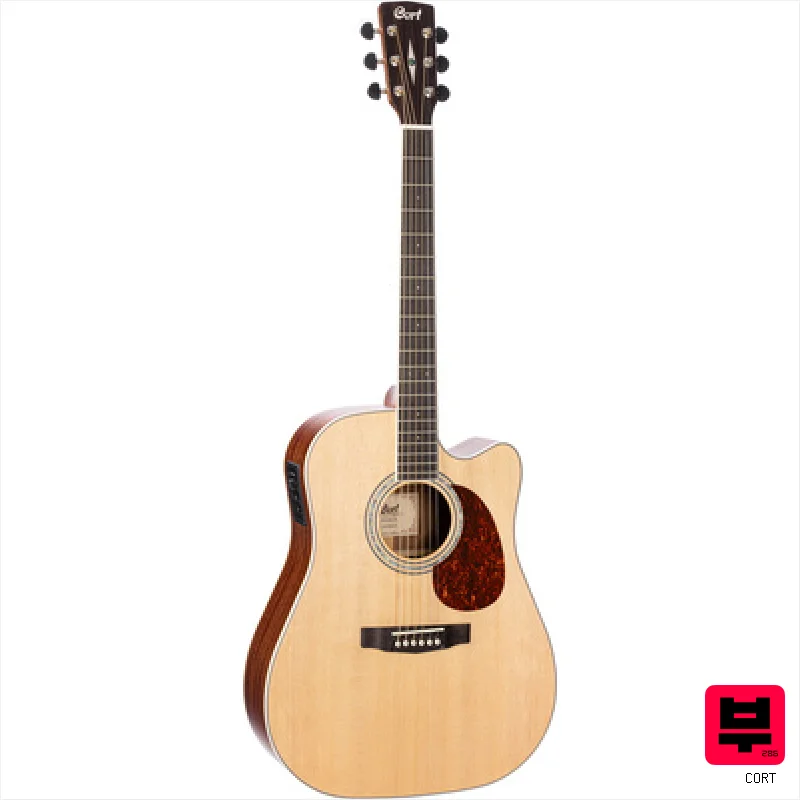
The CC-60SCE is a solid choice for beginners and intermediate players wanting a versatile acoustic-electric. It’s surprisingly well-built for its price range, with a balanced tone that works well for strumming and fingerpicking. If you're looking for a dependable, affordable guitar to take to open mics or campfire sessions, this is a great option.
Pros
- Solid spruce top delivers a bright, responsive tone with good projection.
- Mahogany back and sides add warmth and sustain, balancing the spruce.
- Fishman CD electronics offer a surprisingly good amplified sound for the price.
Cons
- Walnut fretboard can feel a bit 'slick' compared to rosewood for some players.
- Natural finish shows every fingerprint and minor blemish easily.
65AudioFu
IndexStableno change since Aug 17Aug 17$336 now$336€299 at Thomann · in stockCheck price ↗ -
- Nut width43 mm (1.69")
- Scale650 mm (25.59")
- Frets20 frets
- BodyMahogany body
- FingerboardJatoba fingerboard
This CG-45 NS is a fantastic entry point to acoustic guitars. The mahogany construction gives it a really pleasant, mellow tone, and the modern C neck profile makes it comfortable to play. It’s ideal for beginners or players looking for a solid, affordable folk-style instrument for strumming and basic fingerpicking.
Pros
- Mahogany body delivers a warm, focused, and surprisingly resonant tone.
- Jatoba fingerboard offers a smooth playing experience and good durability.
- Dovetail neck joint enhances sustain and adds a touch of quality.
Cons
- The abalone rosette is a sticker – a purely cosmetic detail that feels a bit cheap.
- Mahogany can be a bit 'woody' sounding – lacks brightness for some styles.
-
- Nut width45 mm (1.77")
- Scale628 mm (24.72")
- Frets18 frets
- BodySapele body
The CLP-15M is a seriously impressive offering for the price. Its 00-12 body style lends itself to fingerstyle and smaller hands, while the scalloped bracing delivers a surprisingly resonant tone. This is a fantastic choice for gigging musicians or students looking for a well-built, great-sounding acoustic without emptying their wallet.
Pros
- Okoume top provides surprising warmth and clarity for the price.
- Dovetail joint construction ensures excellent sustain and stability.
- Pau Ferro fretboard offers a smooth playing experience and a unique tone.
Cons
- Okoume can be a bit soft, requiring careful handling to avoid dents.
- Sapele back and sides might lack the complexity of more premium tonewoods.
57AudioFu
IndexStableno change since Aug 17Aug 17$223 now$223€199 at Thomann · in stockCheck price ↗ -
- Nut width43 mm (1.69")
- Scale630 mm (24.8")
- Fingerboard radius380 mm (14.96")
- Neck profileD-shape neck
- FingerboardRosewood fingerboard
This parlor guitar feels solid thanks to its real spruce top and mahogany body. The included tuner helps beginners play in tune right away. It suits players who want a warm, traditional sound in a compact size.
Pros
- Solid Canadian Sitka spruce top for bright tone
- Selected Sonokeling mahogany back and sides
- Scalloped X-bracing for strong structural support
Cons
- No specific weight rating listed for player comfort
- D-profile neck may feel large to smaller hands
56AudioFu
IndexStableno change since Aug 17Aug 17$223 now$223€199 at Thomann · in stockCheck price ↗ -
- Nut width42.8 mm (1.69")
- Frets20 frets
This guitar feels like a mini version of a full-size dreadnought. The solid spruce top sounds bright, while the walnut back and sides add warmth. It is simple to play and fits easily in a gig bag.
Pros
- Almost full-size body offers big sound in small package.
- Solid sitka spruce top ages beautifully over time.
- Walnut plywood back and sides give warm, rich tones.
Cons
- No pickup included for amplified performance.
- Plywood sides lack the density of solid wood.
56AudioFu
IndexStableno change since Aug 17Aug 17$560 now$560€499 at Thomann · in stockCheck price ↗ -
- Nut width42.8 mm (1.69")
- Scale578 mm (22.76")
- Frets19 frets
- FingerboardEbony fingerboard
This small guitar plays bright thanks to its solid Koa top and warm Koa sides. The compact size makes it perfect for traveling musicians who need a portable backup. While it lacks external controls, the built-in tuner helps players stay in tune anywhere.
Pros
- Solid Koa top offers bright, resonant tone
- Koa plywood back and sides add warmth
- Built-in tuner simplifies playing on the road
Cons
- Small body limits volume for loud spaces
- No external volume control on the pickup
55AudioFu
IndexStableno change since Aug 21Aug 21$785 now$785€699 at Thomann · in stockCheck price ↗ -
- Nut width46 mm (1.81")
- Scale630 mm (24.8")
- Frets21 frets
This Baton Rouge X11LS/F-SCC Folk is a really solid choice for a beginner or intermediate player looking for a well-built, resonant guitar without spending a fortune. The spruce top gives it a bright voice that cuts through, while the mahogany back provides a warm foundation. It’s a versatile instrument, great for folk, strumming, and even some fingerpicking.
Pros
- Spruce top delivers a surprisingly bright and responsive tone
- Mahogany back & sides add warmth and sustain, nicely balanced
- Nubone nut & saddle improve sustain and tuning stability
Cons
- Ovangkol fretboard can feel a little harder than rosewood to some players
- Screwed Charcoal finish might not appeal to all aesthetic preferences
54AudioFu
IndexStableno change since Aug 17Aug 17$174 now$174€155 at Thomann · in stockCheck price ↗ -
- Nut width43 mm (1.69")
- Scale596 mm (23.46")
- Frets20 frets
- Fingerboard radius305 mm (12.01")
- Neck profileV-shape neck
This GS-Travel Spruce is a fantastic little instrument—seriously impressive for the money. The spruce top gives it a surprisingly mature sound, and the build quality is solid for a budget-friendly guitar. It's ideal for travelers, students, or anyone wanting a compact, playable acoustic with a warm, pleasant tone.
Pros
- Spruce top delivers surprisingly rich and balanced tonal response.
- Mahogany back and sides add warmth and sustain to the mini-jumbo format.
- Okoume neck offers a comfortable, stable feel with a vintage-style profile.
Cons
- The 'V' neck profile isn't for everyone; might feel cramped to some.
- Factory strings are basic and will likely be the first upgrade needed.
53AudioFu
IndexStableno change since Aug 17Aug 17$145 now$145€129 at Thomann · in stockCheck price ↗ -
- Nut width43 mm (1.69")
- Scale596 mm (23.46")
- Frets20 frets
- Fingerboard radius381 mm (15")
- Neck profileV-shape neck
This little Harley Benton is a surprisingly capable travel guitar. The mahogany body gives it a warm, mellow voice, and the built-in pickup system is a real bonus for small gigs or recording. It’s a fantastic option for students, beginners, or anyone needing a compact, playable, and affordable instrument on the go.
Pros
- Mahogany body delivers a warm, focused acoustic tone.
- Purple heart fingerboard offers a smooth, comfortable playing experience.
- Integrated HB-03 preamp & tuner adds surprising versatility for amplified use.
Cons
- Mahogany's inherent sustain can feel slightly limited compared to spruce-topped guitars.
- The nut width of 43mm might feel cramped for players accustomed to wider necks.
53AudioFu
IndexStableno change since Aug 17Aug 17$178 now$178€159 at Thomann · in stockCheck price ↗
All 53 folk acoustic guitars
Same index, same nightly prices — compact. Colour options of one model share a row. Tap a photo to zoom.
- 11
Harley Benton CLP-12SM BRS Solid TopHarley Benton · 3 finishes53Stable$280€249$280€249Check ↗
- 12
Yamaha JR1 Mini Folk GuitarJR-1 · Yamaha50↑ 4.6%$178€159$178€159Check ↗
- 13
Harley Benton EAX-10 PinkyHarley Benton · 2 finishes48Stable$100€89$100€89Check ↗
- 14
Harley Benton Delta Blues MJCEHarley Benton · 2 finishes48Stable$145€129$145€129Check ↗
- 15
Harley Benton DS-10 MiniHarley Benton47Stable$77€69$77€69Check ↗
- 16
Harley Benton Blues Guitar w/BagHarley Benton47Stable$111€99$111€99Check ↗
- 17
Harley Benton Custom Line CLGS-10S TravelHarley Benton47Stable$167€149$167€149Check ↗
- 18
Harley Benton CLF-200 WNHarley Benton · 2 finishes46Stable$257€229$257€229Check ↗
- 19
Harley Benton Custom Line CLA-28VE WNHarley Benton · 2 finishes46Stable$336€299$336€299Check ↗
- 20
Harley Benton Delta Blues MJCE w/BagHarley Benton45Stable$167€149$167€149Check ↗
- 21
Gretsch JD Parlor WPG RXBGretsch45Stable$223€199$223€199Check ↗
- 22
Harley Benton TravelMate-EHarley Benton45Stable$280€249$280€249Check ↗
- 23
Gretsch JD Parlor DELTO TSPG BLKTGretsch45Stable$336€299$336€299Check ↗
- 24
Guild Westerly Collection P-240 MemoirP-240 Memoir Series · Guild44Stable$627€559$627€559Check ↗
- 25
Ibanez V44 Mini-OPNIbanez · 2 finishes43Stable$134€119$134€119Check ↗
- 26
Taylor BT1 Baby Taylor WalnutTaylor · 2 finishes43Stable$403€359$403€359Check ↗
- 27
Breedlove Pursuit EX S Companion TE CEBreedlove43↓ 22.3%$785€699$785€699Check ↗
- 28
Baton Rouge X81M/P ParlorBaton Rouge42Stable$560€499$560€499Check ↗
- 29
Ibanez V30NJP-OPN 3/4Ibanez40Stable$178€159$178€159Check ↗
- 30
Fender CP-60S Parlor Natural WNFender · 2 finishes40↓ 4.5%$213€190$213€190Check ↗
- 31
Gretsch G5021E Ran. Peng. Parlor BlackGretsch · 2 finishes40Stable$592€527$592€527Check ↗
- 32
Takamine GX31CENSTakamine40Stable$605€539$605€539Check ↗
- 33
Ibanez EWP17M1E-SFO PiccoloGuitarIbanez39↓ 3.1%$246€219$246€219Check ↗
- 34
Baton Rouge X35S/FCEBaton Rouge39Stable$560€499$560€499Check ↗
- 35
Ibanez EWP16EWB-GAO Piccolo GuitarIbanez38↓ 1.7%$262€233$262€233Check ↗
- 36
Fender FA-135CE Concert WN BlackFender37Stable$246€219$246€219Check ↗
- 37
Ibanez EWP17M2E-SMO PiccoloGuitarIbanez37Stable$254€226$254€226Check ↗
- 38
Yamaha Storia III Chocolate BrownYamaha37Stable$377€336$377€336Check ↗
- 39
Guild M-240E Troubadour WesterlyGuild37Stable$560€499$560€499Check ↗
- 40
PRS SE P20E Fire Red BurstPRS37Stable$785€699$785€699Check ↗
- 41
Breedlove Discovery S CompanionBreedlove36↓ 7.4%$280€249$280€249Check ↗
- 42
Journey Instruments PJ410NJourney Instruments36Stable$560€499$560€499Check ↗
- 43
Journey Instruments OF312CJourney Instruments36Stable$751€669$751€669Check ↗
- 44
Takamine GX11MENSTakamine35Stable$393€350$393€350Check ↗
- 45
Takamine GX18CENSTakamine35Stable$437€389$437€389Check ↗
- 46
Cort Earth MiniCort34↓ 0.5%$203€181$203€181Check ↗
- 47
Applause AAP-96-AN OOO VintageApplause34Stable$302€269$302€269Check ↗
- 48
Richwood P-50 ParlorRichwood33Stable$403€359$403€359Check ↗
- 49
Luna Guitars Henna Paradise A/E SpruceLuna Guitars33Stable$425€379$425€379Check ↗
- 50
Richwood P-65-VA ParlorRichwood33Stable$515€459$515€459Check ↗
Folk Acoustic Guitars by the numbers
Measured across all 96 models we track, not a sample.
Median $254 — half of all folk acoustic guitars here cost less.
median of 94 models · 42 mm (1.65")–46 mm (1.81")
median of 92 models · 570 mm (22.44")–650 mm (25.59")
median of 78 models · 18–21
most common · 27 models
How to choose the best folk acoustic guitars
Tonewoods
Solid tops (especially spruce) are your friend. Laminates will sound a little boxier and less dynamic, but they're more resistant to humidity changes - a big factor for gigging. Mahogany tends to give you a warmer, woodier tone, while spruce is brighter and more articulate.
Bracing Pattern
This is critical. Scalloped bracing usually means more sustain and a more open, resonant sound. 'X' bracing is common, but the specific pattern influences the guitar's response and how easily it projects. A poorly executed bracing pattern can strangle the tone.
Neck Profile & Setup
A comfortable neck is everything. Look for a profile that suits your hand size and playing style. Even better, make sure it's been properly set up - low action, intonation that's close, and no fret buzz. A bad setup can ruin even a great guitar.
Headroom & Dynamics
This is about how the guitar responds to your playing. Can it handle a hard strum without immediately muddying up? Does it have enough dynamic range to go from a whisper to a full-bodied chord? Limited headroom often means a compressed, less expressive sound.
Playability & Articulation
A guitar needs to be playable. Does it choke your fingers? Is it easy to bend notes? Good articulation means each note rings out clearly, especially when fingerpicking - crucial for folk styles.
Buying guide
So, you're hunting for a folk acoustic that won't drain your gigging budget? It's a common quest. Under $800, you can actually snag something that sounds decent, plays reasonably well, and won't make you cringe when you mic it up for a show.
At this price point, expect some compromises. You're unlikely to find all-solid wood construction with premium hardware. Laminate backs and sides are common, and the finish might not be as flawless.
Prioritize playability and tone over aesthetics; a guitar that feels good and sounds decent is better than a beautiful instrument that's a pain to play. Don't be afraid to have a luthier perform a basic setup - it's often the single biggest improvement you can make.
How the AudioFu Index works
Five measured signals and nothing else — no stars from strangers, no “tested by experts” we didn’t do. The weights are fixed and public. We don’t play these instruments; we measure the market around them.
This chart covers 96 folk acoustic guitars from the Thomann catalogue. Before you buy, read hands-on reviews and, where you can, play it. Full methodology.
AudioFu earns a commission when you buy through our Thomann links. It never changes the order — the index does.
- Demand40%
How many of this exact model are for sale on Reverb right now — what musicians actually buy and resell.
- Lineup20%
How many finishes Thomann stocks — makers expand the models that sell.
- Price15%
Where the price has moved since we started tracking in August.
- Specs15%
How completely the maker documents it.
- Maker10%
How deep the brand’s range is in this category.
Questions
What's the difference between a dreadnought and a grand auditorium size?
Dreadnoughts are bigger, louder, and have more low-end thump - great for strumming and cutting through a band. Grand auditoriums are smaller, more balanced, and better suited for fingerpicking and more nuanced playing. It's personal preference, really.
Are solid wood tops really that much better?
Yes, but the difference isn't always night and day. A solid top generally resonates more freely, offering better sustain and a more complex tone. Laminate tops are perfectly usable, though; it's a trade-off between cost and performance.
Should I buy online or from a local shop?
Ideally, try before you buy. A local shop lets you feel the neck and hear the tone firsthand. If buying online, check the return policy religiously - you need to be able to send it back if it's not right.
What about pickups? Are they worth it?
If you plan on amplifying, a pickup is essential. The voicing varies wildly - some are bright and thin, others muddy the tone. Fishman and LR Baggs are generally considered reliable, but even the cheaper options can be usable if the guitar sounds good unplugged.
What's the deal with 'nitrocellulose' vs. 'polyurethane' finishes?
Nitro is often considered more 'vintage' and allows the wood to breathe a bit more, potentially improving tone. Poly is more durable and easier to apply. Honestly, in this price range, the tonal difference is minimal - focus on playability and feel.