AudioFu Chart · October 2026
Best Folk Acoustic Guitars for Professional 2026
The top pick is Gibson 1933 L-00 Light Aged Ebony ($5,382). Gibson L-00 Standard gives you the most for the money at $3,251. Ranked by the AudioFu Index from 103 models across 23 brands, prices checked every night.
Last updated: October 21, 2026
Top 10
Full detail for the 10 highest AudioFu Index scores. Every other model is listed below.
-
- Nut width45 mm (1.77")
- Scale628 mm (24.72")
- Frets19 frets
- FingerboardRosewood fingerboard
This 1933 L-00 is a serious player's instrument – the Murphy Lab designation speaks to the meticulous craftsmanship. The aged finish gives it a wonderfully worn-in feel, and the Adirondack top provides a surprising amount of volume. It's a perfect choice for blues, folk, and fingerstyle players who appreciate vintage tone and a smaller, comfortable body.
Pros
- Adirondack top delivers powerful projection and complex overtones.
- Murphy Lab construction ensures exceptional build quality and detail.
- Solid mahogany back/sides offer warm, focused, and woody resonance.
Cons
- The Light Aged finish might not appeal to players preferring a glossier look.
- Ebony can be brittle; requires careful handling and humidity control.
41AudioFu
IndexStableno change since Aug 17Aug 17$5,382 now$5,382€4,799 at Thomann · in stockCheck price ↗ -
- Nut width46 mm (1.81")
- Scale630 mm (24.8")
This Marie Parlour is a seriously refined instrument. The 12th fret design creates a uniquely intimate feel, and that alpine spruce top just sings. It's ideal for fingerstyle players and those seeking a focused, vintage-inspired tone with excellent amplification – a true heirloom-quality guitar.
Pros
- Alpine spruce top delivers exceptional clarity and shimmering overtones.
- Rosewood back and sides provide rich warmth and sustain, balanced beautifully.
- Schatten Design pickup offers a remarkably natural amplified tone, very responsive.
Cons
- East Indian rosewood, while lovely, isn't the most exotic tonewood available.
- The 12th fret design limits lower register accessibility for some playing styles.
32AudioFu
IndexStableno change since Aug 17Aug 17$5,494 now$5,494€4,899 at Thomann · in stockCheck price ↗ -
- Nut width44.5 mm (1.75")
- Scale645 mm (25.39")
- Frets20 frets
- FingerboardEbony fingerboard
This guitar uses solid mahogany for a warm, mid-range sound perfect for folk and singer-songwriter styles. As a left-handed signature model, it offers a comfortable feel with a wide nut for clear strumming. It comes with a case but lacks electronics, so it's best played unplugged.
Pros
- Solid mahogany top and back for warm tone
- Left-handed design for right-handed players
- Jeff Tweedy signature style for folk music
Cons
- No electronic pickup system included
- Mahogany back limits high-end brightness
43AudioFu
IndexStableno change since Aug 17Aug 17$5,158 now$5,158€4,599 at Thomann · in stockCheck price ↗ -
- Scale645 mm (25.39")
- Frets20 frets
- BodyMahogany body
- FingerboardEbony fingerboard
This Jeff Tweedy signature guitar feels fast and warm under your fingers. The solid mahogany top gives it a rich, mid-heavy tone perfect for folk or country strumming. While it lacks built-in pickups, the solid construction makes it a solid choice for players who want a classic acoustic sound.
Pros
- Solid mahogany body delivers warm, focused midrange tone.
- Mahogany neck provides a fast, responsive play feel.
- Ebony fingerboard ensures a smooth, durable surface.
Cons
- No electronics included for stage amplification.
- Single tone wood limits high-frequency sparkle.
43AudioFu
IndexStableno change since Aug 17Aug 17$5,158 now$5,158€4,599 at Thomann · in stockCheck price ↗ -
- Scale543 mm (21.38")
- Frets18 frets
- FingerboardEbony fingerboard
This guitar packs a big sound thanks to its solid spruce top and full rosewood body. The ebony fingerboard feels great under your fingers, and it was built right here in America. It is perfect for players who want pure acoustic tone without needing extra gear.
Pros
- Solid spruce top drives strong, responsive volume
- Full rosewood back and sides add rich depth
- Ebony fingerboard offers smooth, precise playability
Cons
- No electronics included for amplified use
- Scale length is short for larger hands
40AudioFu
IndexStableno change since Aug 17Aug 17$5,046 now$5,046€4,499 at Thomann · in stockCheck price ↗ -
Gibson Modern Les Paul Parlor
Les Paul Parlor Acoustic VCS · Gibson
15 for sale on Reverb1 finish at Thomann
- Scale629 mm (24.76")
- Frets19 frets
- FingerboardRosewood fingerboard
This Les Paul Parlor is a beautifully crafted instrument – the maple top gives it a sweet, responsive voice that really shines for fingerstyle and more nuanced playing. It's a premium-priced package, but the build quality and those LR Baggs electronics make it a serious contender for players seeking a refined parlor acoustic with amplified versatility. It’s a great choice for the discerning player who appreciates smaller body guitars and a vintage vibe.
Pros
- Solid AAA flamed maple top delivers a rich, complex, and articulate tone.
- Mahogany back and sides provide warmth and sustain, balancing the maple's brightness.
- L.R.Baggs VTC+4 system offers a high-quality amplified sound with excellent feedback rejection.
Cons
- Parlor size limits low-end response; not ideal for deep bass-heavy styles.
- Premium-priced, making it a significant investment for many players.
50AudioFu
IndexStableno change since Aug 17Aug 17$3,699 now$3,699€3,298 at Thomann · in stockCheck price ↗ -
- Nut width43.8 mm (1.72")
- Scale629 mm (24.76")
- Frets19 frets
- Fingerboard radius305 mm (12.01")
- FingerboardRosewood fingerboard
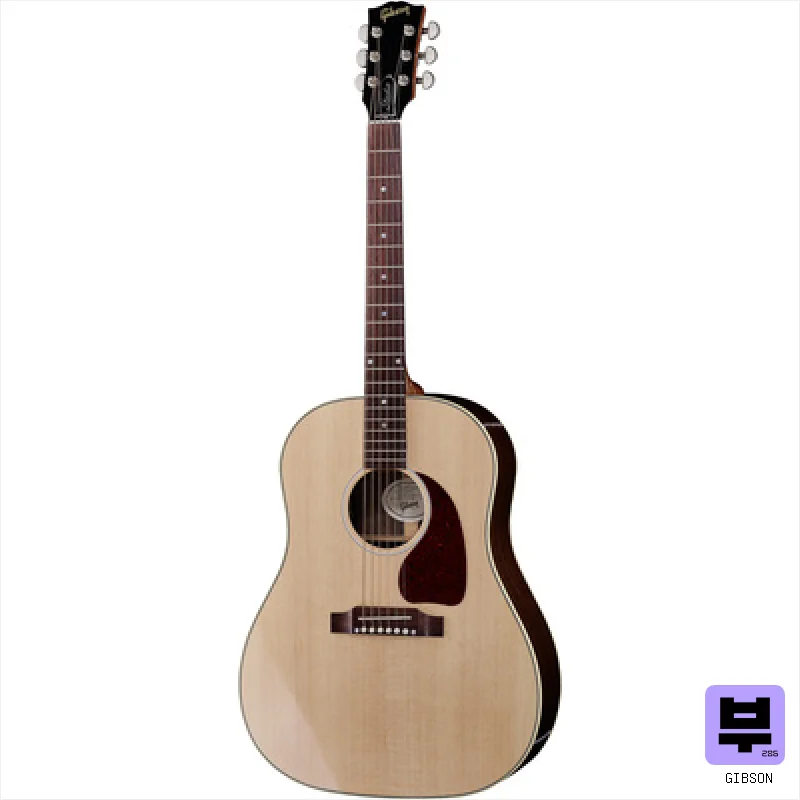
This guitar feels great with a thin neck and solid spruce top. The soundhole pickup lets you play quietly or loudly without batteries. It is a high-end folk choice that fits small to medium hands well.
Pros
- Solid Sitka spruce top with mahogany back and sides
- Gibson Exclusive L.R. Baggs HiFi DNA pickup
- Slim taper mahogany neck for comfortable play
Cons
- Only volume and tone controls available
- No built-in battery or USB connectivity
67AudioFu
IndexStableno change since Oct 1Oct 1$3,251 now$3,251€2,899 at Thomann · in stockCheck price ↗ -
- Nut width44.5 mm (1.75")
- Scale632 mm (24.88")
- FingerboardEbony fingerboard
This guitar plays like a rich, warm instrument made from solid mahogany. The dark color and ebony fingerboard make it look and feel special. It suits players who love traditional acoustic sounds without extra electronics.
Pros
- All-solid mahogany body for deep, warm tone
- Classic concert shape fits most playing styles
- Ebony fingerboard offers smooth playability
Cons
- Solid wood body may feel heavy
- No built-in electronics for amplification
40AudioFu
IndexStableno change since Oct 15Oct 15$3,363 now$3,363€2,999 at Thomann · in stockCheck price ↗ -
- Nut width44.5 mm (1.75")
- Scale632 mm (24.88")
- Frets20 frets
- FingerboardEbony fingerboard
This guitar feels great to play with its smooth hardwood neck and bright spruce top. The Koa wood adds warmth, and the L.R. Baggs pickup makes it ready for stage use. It suits folk players who want a solid, modern-sounding instrument.
Pros
- Koa back and sides offer rich, warm resonance for folk songs
- Spruce top provides bright attack and strong projection
- L.R. Baggs Element pickup delivers clear, modern sound
Cons
- High price point limits buyer options
- No weight spec listed for comfort checks
51AudioFu
IndexStableno change since Aug 17Aug 17$3,027 now$3,027€2,699 at Thomann · in stockCheck price ↗ -
- Nut width45 mm (1.77")
- Scale625 mm (24.61")
- FingerboardEbony fingerboard
This guitar sounds bright and warm thanks to its solid spruce and rosewood woods. The active neck system keeps it in tune while the hand-brushed finish looks great. It's perfect for players who want pure acoustic tone without extra electronics.
Pros
- Solid master grade spruce top delivers a bright, responsive attack.
- Solid master grade rosewood back and sides add deep warmth.
- Active CNR neck system ensures stable tuning and intonation.
Cons
- No electronics listed, so no built-in pickup for amplification.
- No weight spec provided, making it hard to guess playability.
40AudioFu
IndexStableno change since Aug 17Aug 17$3,251 now$3,251€2,899 at Thomann · in stockCheck price ↗
All 103 folk acoustic guitars
Same index, same nightly prices — compact. Colour options of one model share a row. Tap a photo to zoom.
- 11
Guild USA M-20M-20E VSB USA · Guild · 4 finishes53Stable$2,466€2,199$2,466€2,199Check ↗
- 12
Furch Vintage 1 OOMs-SM VTC a SLw/GBFurch42Stable$2,410€2,149$2,410€2,149Check ↗
- 13
Maton RM-6 Redwood MiniMaton34Stable$2,578€2,299$2,578€2,299Check ↗
- 14
Takamine P6N-BSB w/SoftcaseTakamine42↓ 4.5%$2,354€2,099$2,354€2,099Check ↗
- 15
Martin Guitar GPC-13E Modern NatMartin Guitar43Stable$2,242€1,999$2,242€1,999Check ↗
- 16
Furch Vintage 1 OOMs-SR a SL w/GBFurch42↓ 4.8%$2,242€1,999$2,242€1,999Check ↗
- 17
Maton EMBW6 MiniMaton36Stable$2,186€1,949$2,186€1,949Check ↗
- 18
Taylor GS Mini-e Koa PlusTaylor65Stable$1,233€1,099$1,233€1,099Check ↗
- 19
Taylor GS Mini MahoganyGS Mini-e Rosewood SB · Taylor65Stable$858€765$858€765Check ↗
- 20
Yamaha LS16 ARELS 16 M A.R.E NT · Yamaha · 2 finishes48Stable$1,120€999$1,120€999Check ↗
- 21
Martin Guitar SCE all Satin Black BSMartin Guitar48↓ 20.1%$1,344€1,198$1,344€1,198Check ↗
- 22
Martin Guitar 0-10E Retro Jason Isbell LHMartin Guitar · 2 finishes48Stable$1,513€1,349$1,513€1,349Check ↗
- 23
Taylor BTe-Koa Baby TaylorBTe-KOA Baby Taylor · Taylor55Stable$784€699$784€699Check ↗
- 24
Martin Guitar SC-10E Modern SapeleMartin Guitar · 2 finishes46Stable$1,524€1,359$1,524€1,359Check ↗
- 25
Martin Guitar 000Jr E Jeff Tweedy LHMartin Guitar · 2 finishes46Stable$1,681€1,499$1,681€1,499Check ↗
- 26
Gretsch Jim Dandy ParlorJim Dandy Parlor VWT · Gretsch73↓ 2.0%$274€244$274€244Check ↗
- 27
Furch Pioneer-CM aFurch · 2 finishes43↓ 5.1%$1,042€929$1,042€929Check ↗
- 28
Martin Guitar 00-10E Retro Joe BonamassaMartin Guitar43Stable$1,793€1,599$1,793€1,599Check ↗
- 29
Yamaha LS-TA TransAcoustic Concert Vintage TintFSC-TA Vintage Tint · Yamaha48Stable$840€749$840€749Check ↗
- 30
Yamaha LS6 ARELS 6 A.R.E NT · Yamaha48Stable$836€745$836€745Check ↗
- 31
Furch Vintage Pure OOMs-EM a w/GBFurch42Stable$1,659€1,479$1,659€1,479Check ↗
- 32
Furch Vintage Pure OOMs-EM a SL w/GBFurch42Stable$1,849€1,649$1,849€1,649Check ↗
- 33
Furch Vintage Pure OOMs-MM a SH w/GBFurch42Stable$1,849€1,649$1,849€1,649Check ↗
- 34
Journey Instruments OF660 BK MJourney Instruments · 2 finishes41Stable$1,513€1,349$1,513€1,349Check ↗
- 35
Fender CC-60SCECC-60SCE Nat WN w/Bag · Fender · 2 finishes65Stable$358€319$358€319Check ↗
- 36
Furch Pioneer-CM a 43mmFurch40Stable$1,098€979$1,098€979Check ↗
- 37
Godin Folk LTD Mahogany A/E Rust BstGodin40Stable$1,120€999$1,120€999Check ↗
- 38
Takamine P3NY2Takamine40Stable$1,962€1,749$1,962€1,749Check ↗
- 39
Martin Guitar GPC-13EL-01 Ziricote LHMartin Guitar40Stable$2,018€1,799$2,018€1,799Check ↗
- 40
Furch LJ 11-SR Little JaneFurch40Stable$2,074€1,849$2,074€1,849Check ↗
- 41
Journey Instruments OF412BKC Black LimitedJourney Instruments41Stable$952€849$952€849Check ↗
- 42
Taylor Big Baby (BBT)Big Baby Taylor BBT EC · Taylor56Stable$560€499$560€499Check ↗
- 43
Journey Instruments OF422CJourney Instruments41Stable$930€829$930€829Check ↗
- 44
Journey Instruments Cedar Zircot Parlor Travel LTDJourney Instruments38Stable$1,120€999$1,120€999Check ↗
- 45
Furch LJ 10-SM Spruce Little JaneFurch · 2 finishes38Stable$1,737€1,549$1,737€1,549Check ↗
- 46
Furch Pioneer-MM aFurch37Stable$1,042€929$1,042€929Check ↗
- 47
Recording King Tonewood Reserve Koa 000Recording King37Stable$1,120€999$1,120€999Check ↗
- 48
Furch Pioneer-ER aFurch37Stable$1,120€999$1,120€999Check ↗
- 49
Furch Pioneer-EM VTC aFurch37Stable$1,233€1,099$1,233€1,099Check ↗
- 50
Maton Mini EM6 w/ CaseMaton36Stable$1,793€1,599$1,793€1,599Check ↗
Folk Acoustic Guitars by the numbers
Measured across all 165 models we track, not a sample.
Median $560 — half of all folk acoustic guitars here cost less.
median of 157 models · 42 mm (1.65")–46 mm (1.81")
median of 158 models · 570 mm (22.44")–650 mm (25.59")
median of 131 models · 18–21
most common · 32 models
How to choose the best folk acoustic guitars
Playability (Neck Profile & Action)
Forget shredding; we're talking about effortless fingerstyle and comfortable strumming for hours. A neck profile that feels natural in your hand and a low action without fret buzz are non-negotiable. A D shape is common in folk guitars, but even within that, subtle differences matter.
Tonewood Combination
Spruce tops are the standard for a reason - responsiveness and clarity. But the back and sides - mahogany for warmth and sustain, rosewood for that complex overtones and low-end thump, maple for clarity and projection - drastically shape the overall voice. It's a balancing act; mahogany can get muddy with a full band, rosewood can be too dark for a solo recording.
Projection & Headroom
This isn't about volume; it's about how well the guitar cuts through a mix. You need headroom to dig into the strings without the tone collapsing into a muddy mess. A braced top is essential for projection, but the bracing pattern (Scalloped? Modified X-bracing?) dictates the sonic character.
Sustain & Articulation
A quick decay means a lack of nuance. We're looking for guitars that let individual notes breathe and linger, while still maintaining clear articulation - especially important when fingerpicking complex arrangements or playing intricate flatpicking patterns. A long sustain isn't just about sounding 'pretty'; it's about conveying emotion.
Pickup Voicing (If Applicable)
Many pros need to plug in. If the guitar has a pickup, the voicing has to be natural. Avoid anything that sounds overly bright or artificial; it'll be unusable without extensive EQ. Fishman and K&K are generally safer bets, but even then, listen critically.
Buying guide
Alright, so you're a pro looking for a folk acoustic - not a campfire special. You need something that can handle a full band, record cleanly, and still feel comfortable after hours of playing. It's not just about a pretty rosette or a fancy headstock; it's about projection, nuance, and a neck that doesn't fight you when you're chasing that subtle harmonic shift. Let's cut through the marketing and find something that actually delivers.
Don't chase the prettiest finish. Look for solid wood construction - laminate tops sound lifeless. Action adjustments are inevitable, so factor in a setup cost.
Spending a bit more on a hand-shaped neck and carefully voiced bracing makes a huge difference. Understand that mahogany/spruce combinations are warmer, while rosewood/spruce can be brighter - choose based on your playing style and typical recording environment.
How the AudioFu Index works
Five measured signals and nothing else — no stars from strangers, no “tested by experts” we didn’t do. The weights are fixed and public. We don’t play these instruments; we measure the market around them.
This chart covers 165 folk acoustic guitars from the Thomann catalogue. Before you buy, read hands-on reviews and, where you can, play it. Full methodology.
AudioFu earns a commission when you buy through our Thomann links. It never changes the order — the index does.
- Demand40%
How many of this exact model are for sale on Reverb right now — what musicians actually buy and resell.
- Lineup20%
How many finishes Thomann stocks — makers expand the models that sell.
- Price15%
Where the price has moved since we started tracking in August.
- Specs15%
How completely the maker documents it.
- Maker10%
How deep the brand’s range is in this category.
Questions
What's the deal with 'dreadnought' vs. 'grand auditorium' size?
Dreadnoughts are louder and have more low-end thump, great for strumming and band settings. Grand Auditoriums are more balanced and comfortable for fingerstyle, offering better articulation. It's a trade-off - a dreadnought can be boomy solo, while a GA might get lost in a loud band.
Should I prioritize a vintage-inspired neck profile?
Vintage profiles can feel fantastic, but they're often thinner and require a lighter touch. Modern profiles generally offer more stability and are easier to control. Try before you buy; neck feel is entirely personal.
What about hybrid guitars - spruce top with a maple back and sides?
Hybrids are often a compromise. You get some of the projection of maple but lose some of the warmth and complexity of rosewood. They can be versatile, but rarely excel in any one area.
Is a bone nut and saddle really worth the extra cost?
Yes, but only marginally. Bone transmits vibrations better than plastic, resulting in a slight improvement in sustain and clarity. It's a subtle upgrade, but worthwhile if you're already investing in a high-quality instrument.
I'm recording at home. Does that change my guitar choice?
Absolutely. A brighter guitar (rosewood back/sides) can be more revealing of flaws in your playing and recording setup. A warmer guitar (mahogany back/sides) can be more forgiving, but may require more EQ to cut through a mix.