
Best Digital Mixer Expansion Cards for System Expansion 2026
So, you've got a digital mixer-smart move. But a killer live sound or a truly flexible recording setup often needs more than what's built-in. Expansion cards are how you unlock that potential, adding everything from more inputs to crazy effects processing. Let's break down which ones are worth your money, and which ones are just adding noise to the equation.
Last updated: July 22, 2026 • Next update: July 29, 2026
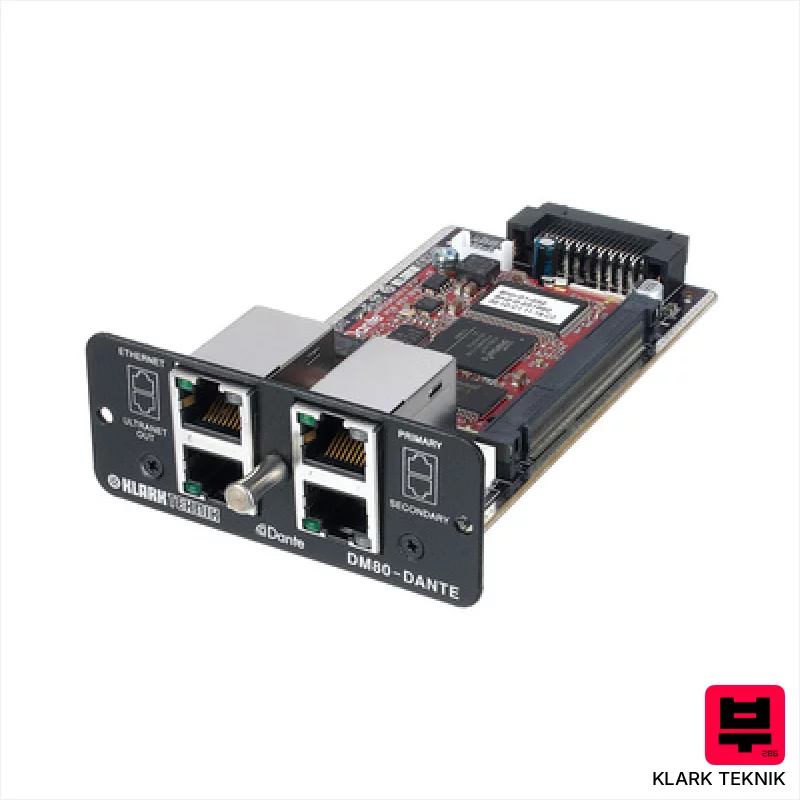
Klark Teknik DM80-Dante
- • Dante connectivity unlocks scalable, flexible audio routing possibilities.
- • Transformer isolation effectively eliminates troublesome ground loop hum.
- • Expands DM8000's channel count significantly for larger setups.
- • Ethernet control provides deep, granular customization options.
- • Requires a Dante-enabled network infrastructure, adding complexity.
- • Limited to 48kHz sample rate, potentially restrictive for high-res workflows.
- • DM8000 dependency; not a standalone solution.

Soundcraft Si Series Madi Card
- • Expands channel count significantly, ideal for large touring rigs
- • Rock-solid MADI implementation, proven reliability in live settings
- • Dual RJ45 connectors offer flexible routing and redundancy
- • Seamless integration with existing Soundcraft Si Series workflows
- • Adds complexity for users unfamiliar with MADI protocols
- • Requires careful planning to avoid MADI bandwidth limitations
- • Limited functionality beyond basic channel extension.
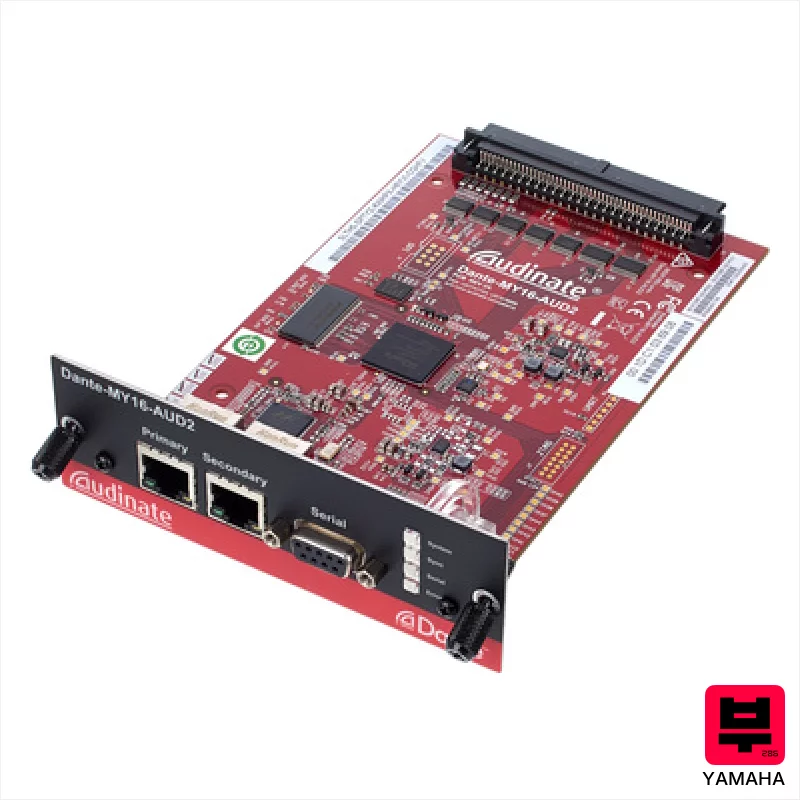
Yamaha MY16 Dante AUD2
- • Seamless Dante integration expands Yamaha's existing ecosystem.
- • Provides 16 flexible inputs/outputs for expanded routing.
- • Adjustable latency presets offer precise control over performance.
- • Robust Gigabit Ethernet connectivity ensures stable, low-latency transfer.
- • Requires compatible Yamaha consoles or interfaces to function.
- • Dante infrastructure demands additional network setup and planning.
- • Limited standalone functionality; relies heavily on host system.

Allen & Heath M-SQ-WAVES3-A
- • Seamless Waves plugin integration expands sonic possibilities.
- • Redundant ports offer rock-solid reliability for live events.
- • Internal Control Network Bridge simplifies complex routing setups.
- • 64x64 channel count handles massive, intricate productions easily.
- • The Waves Plugin Server dependency can add complexity for some users.
- • Price point places it firmly in the professional, high-end mixer category.
- • Requires existing Allen & Heath M series mixer for functionality.
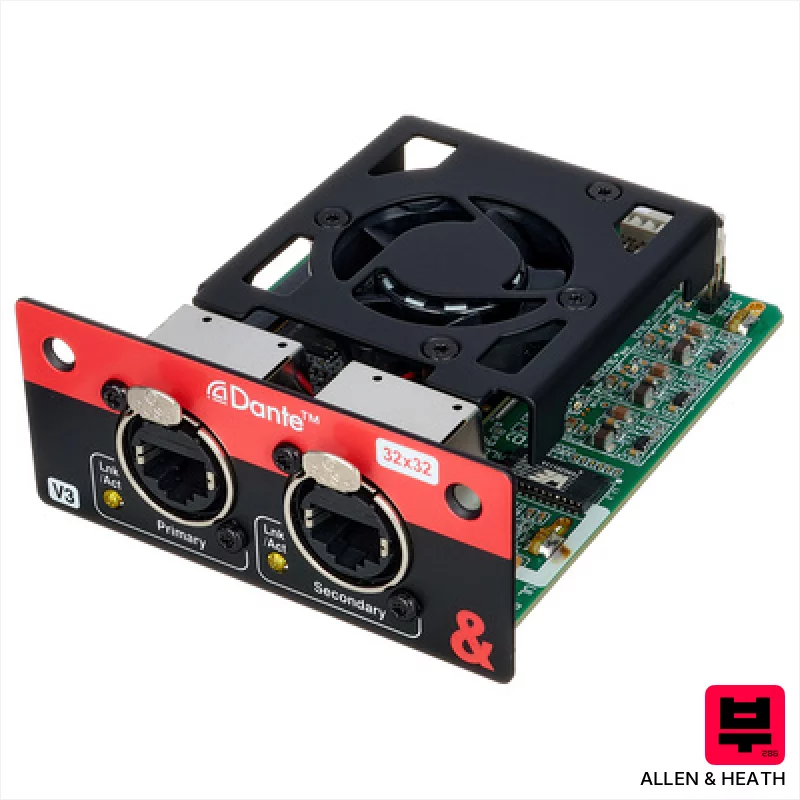
Allen & Heath M-SQ-DANT32
- • Seamless Dante integration expands mixer I/O significantly.
- • Robust construction; feels like a genuine Allen & Heath component.
- • 96kHz resolution provides headroom for demanding audio applications.
- • Dante's network flexibility simplifies complex routing scenarios.
- • Adds considerable complexity for users unfamiliar with Dante workflows.
- • Relatively high cost compared to analog expansion options.
- • Requires a Dante-enabled network infrastructure for full functionality.
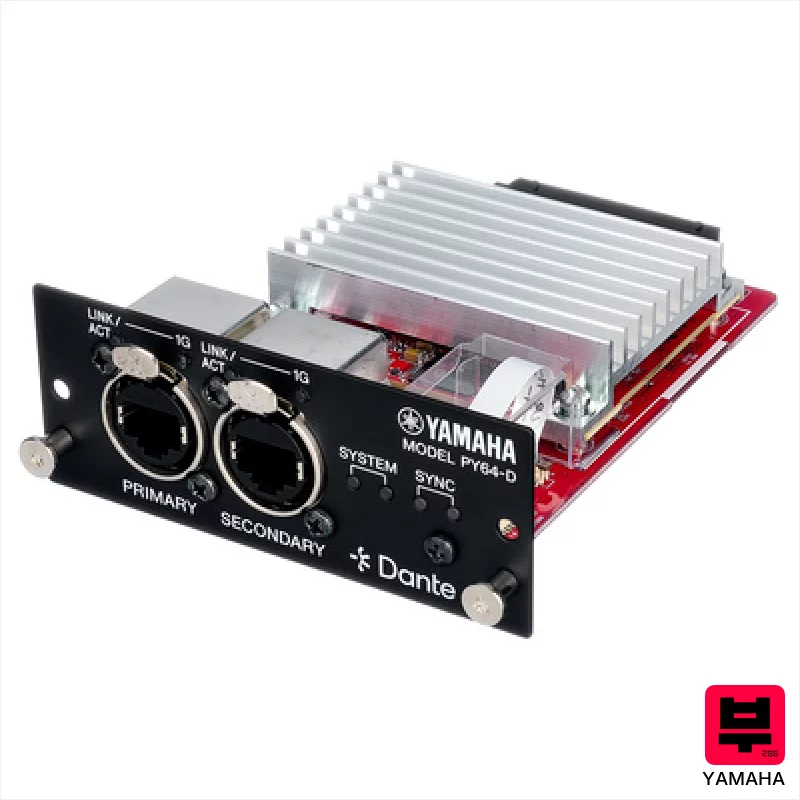
Yamaha PY64-D
- • Massive I/O count unlocks complex routing scenarios.
- • Yamaha's DSP engine provides transparent, low-latency processing.
- • Compact form factor maximizes rack space efficiency.
- • Rock-solid build quality; designed for demanding live and studio use.
- • Significant investment; requires compatible Yamaha digital mixer.
- • Limited standalone functionality; dependent on host mixer.
- • Complex setup and configuration; steep learning curve possible.

DiGiCo DMI A3232
- • Extends DiGiCo’s channel count with rock-solid reliability.
- • Ethercon connectors ensure robust, gig-ready connectivity.
- • Compact size minimizes rack space; ideal for mobile setups.
- • Cascade mode provides substantial expansion for complex routing needs.
- • Requires existing DiGiCo stagebox and console for functionality.
- • Price point positions it as a premium investment for serious users.
- • Limited standalone operation; reliant on DiGiCo ecosystem.

Soundcraft SI-Dante Card
- • Seamless Dante integration expands SI mixer capabilities significantly
- • Dual RJ45 connectors offer redundancy and flexible network options
- • Robust construction feels solid, indicative of Soundcraft’s build quality
- • Provides high channel count expansion for complex live sound setups
- • Price point places it in the premium-priced expansion card category
- • Requires existing Soundcraft SI series mixer for functionality – not standalone
- • Dante network infrastructure is a prerequisite for full utilization
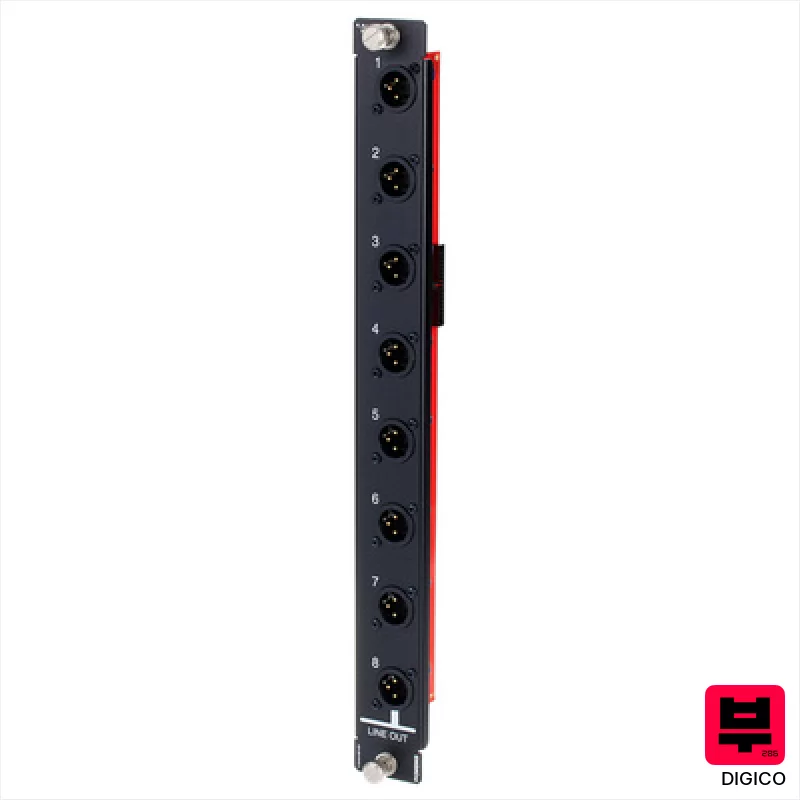
DiGiCo D2-Rack analog OP card
- • Robust, road-ready build quality typical of DiGiCo’s standards
- • Provides pristine, low-jitter analog outputs for critical monitoring
- • Seamless integration within the D2-Rack ecosystem simplifies routing
- • Offers flexible gain staging for precise level control
- • Limited to 8 outputs, potentially restrictive for larger setups
- • Requires a D2-Rack chassis, increasing overall system cost
- • Analog-only; lacks digital output options for direct recording
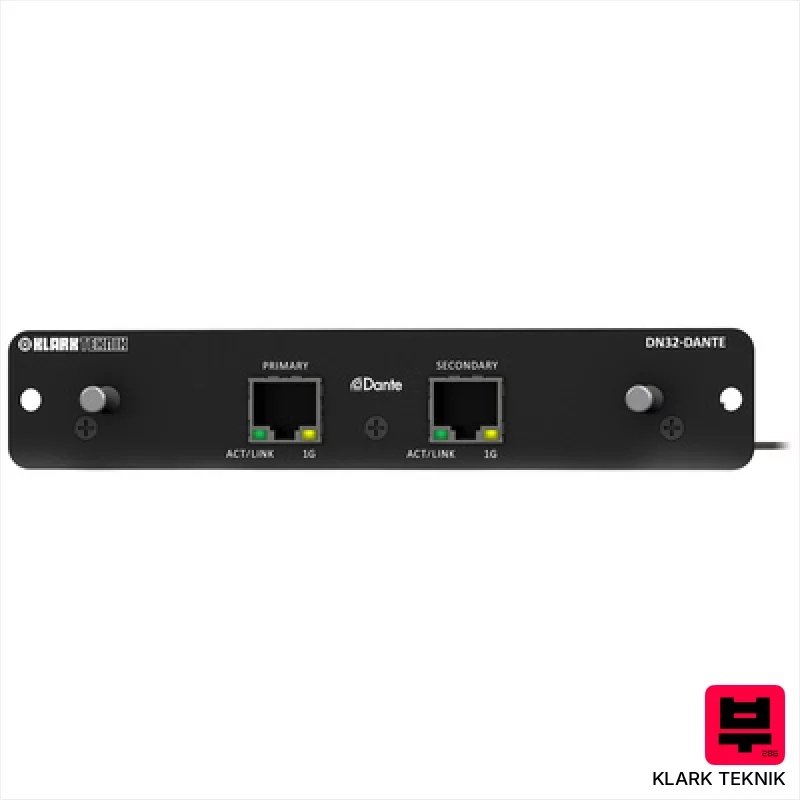
Klark Teknik DN32 Dante
- • Seamless Dante integration expands Midas/X32’s channel count.
- • Provides high-quality, low-latency bidirectional audio transport.
- • Dante Virtual Soundcard enables direct recording to computers.
- • PTP synchronization ensures rock-solid timing across the network.
- • Requires existing Midas or Behringer console for functionality.
- • Dante networking infrastructure is a separate investment.
- • Limited flexibility without the host console’s processing.

DiGiCo D-Rack analog OP
- • Robust, all-steel construction ensures roadworthiness and longevity
- • Provides pristine, low-jitter analog outputs for critical monitoring
- • Seamless integration with DiGiCo's ecosystem, simplifying workflow
- • Offers a flexible solution for expanding DiGiCo rack capabilities
- • Requires a DiGiCo D-Rack chassis; not a standalone solution
- • Limited to 8 line outputs, may not suit extremely large systems
- • Analog-only operation restricts digital signal processing flexibility
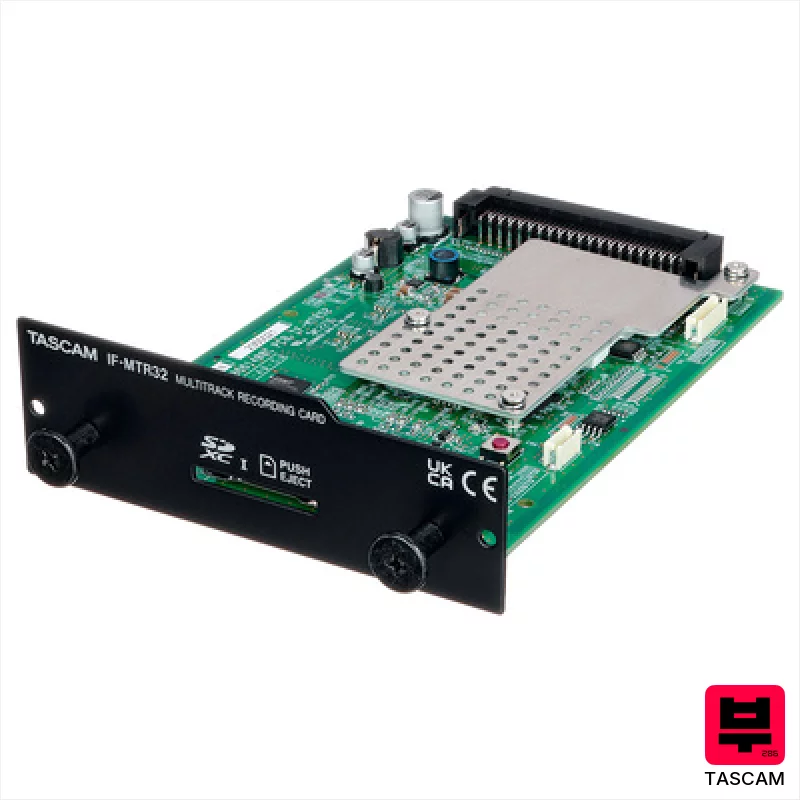
Tascam IF-MTR32
- • Extends Sonicview's capabilities to a full 32-track recording
- • 32-bit depth provides exceptional dynamic range and headroom
- • BWF format ensures critical recording metadata is preserved
- • Compact size makes integration into existing setups surprisingly easy
- • Requires Sonicview platform; not a standalone recording solution
- • SD card reliance introduces potential for data corruption risks
- • Limited file format options restrict compatibility with some DAWs

Soundcraft Vi Series Madi Card
- • Robust MADI connectivity expands mixer channel count significantly
- • Dual RJ45 connectors simplify AUX and main routing flexibility
- • Solid build quality, consistent with Soundcraft’s professional standards
- • Allows for integration with existing MADI infrastructure seamlessly
- • Requires existing Soundcraft Vi Series mixer for functionality
- • Can be a complex setup for those unfamiliar with MADI protocols
- • Limited to Soundcraft Vi Series – not a universal MADI solution

Allen & Heath M-SQ-DANT64-AX
- • Unmatched Dante channel count expands SQ mixer capabilities.
- • Low latency performance crucial for demanding live sound applications.
- • Rock-solid build quality; Allen & Heath’s reputation for durability holds true.
- • Seamless integration with existing Allen & Heath SQ series workflows.
- • Significant investment; a premium-priced option for smaller setups.
- • Requires Dante infrastructure; adds complexity and potential cost.
- • SQ series dependency limits versatility outside that ecosystem.

Klark Teknik DN32-Madi
- • Redundant optical/copper links provide rock-solid reliability.
- • Fiber optic transmission allows for exceptionally long cable runs.
- • MADI clock master/slave capability offers flexible system integration.
- • Seamlessly expands Midas/X32 channel count with professional MADI connectivity.
- • Requires careful cable termination for optimal fiber optic performance.
- • Adds complexity to routing, demanding MADI knowledge.
- • Limited to 32 bidirectional channels – may bottleneck larger setups.
How to Choose the Best Digital Mixer Expansion Cards
Input Count & Type
More is almost always better, but the kind of input matters. XLR mic preamps are a must for serious vocal or instrument work; line inputs are fine for synths or effects returns. Don't settle for cheap preamps that add hiss or muddy the low-end.
DSP Power & Quality
Expansion cards often add processing power-reverb, compression, EQ. The quality here is crucial. A weak reverb can sound like you're in a tin can, and a poorly designed compressor can squash the dynamics out of your performance. Listen closely!
Routing Flexibility
System expansion is all about flexibility. Can you route signals where you need them? Can you use the extra inputs for subgroups or sends? Limited routing options negate a lot of the benefit.
Latency Performance
Extra processing adds latency. Too much latency makes monitoring a nightmare, especially for drummers or anyone needing tight, responsive feedback. Pay attention to advertised latency numbers and, ideally, test it yourself.
Build Quality & Compatibility
A flimsy card that falls apart after a few gigs is useless. Check for robust construction and verify compatibility with your mixer model before you buy. Nothing worse than a card that doesn't even seat properly.
Buying Guide
Expansion cards are a significant investment, so don't cheap out just to save a few bucks. Often, the 'budget' options cut corners on preamp quality or DSP processing, leading to a noisy or lackluster result. Look for cards from reputable manufacturers with solid driver support and consider the long-term upgrade path - a card that's future-proofed will save you money down the road.
Our Methodology
We aren't just looking at spec sheets here. We've spent countless hours A/B'ing expansion cards in both live and studio scenarios-everything from smoky bar gigs to tracking drums in a decent-sized room. It's about hearing the difference, feeling the workflow, and figuring out if that extra feature actually translates to a better sound or a smoother performance.

