
Best Digital Mixer Expansion Cards for Intermediate 2026
Okay, so you've moved past the basic club gig and are starting to want more from your digital mixer - more routing options, better effects, maybe some serious processing for individual channels. Expansion cards are the next logical step, but wading through the options can be overwhelming. This isn't about chasing the ultimate flagship studio setup; it's about finding something that genuinely elevates your workflow without sending you down a rabbit hole of menus you'll never learn. Let's break down what intermediate players need in an expansion card and which ones are worth the investment.
Last updated: September 28, 2026

DiGiCo DMI A3232
- • Extends DiGiCo’s channel count with rock-solid reliability.
- • Ethercon connectors ensure robust, gig-ready connectivity.
- • Compact size minimizes rack space; ideal for mobile setups.
- • Cascade mode provides substantial expansion for complex routing needs.
- • Requires existing DiGiCo stagebox and console for functionality.
- • Price point positions it as a premium investment for serious users.
- • Limited standalone operation; reliant on DiGiCo ecosystem.
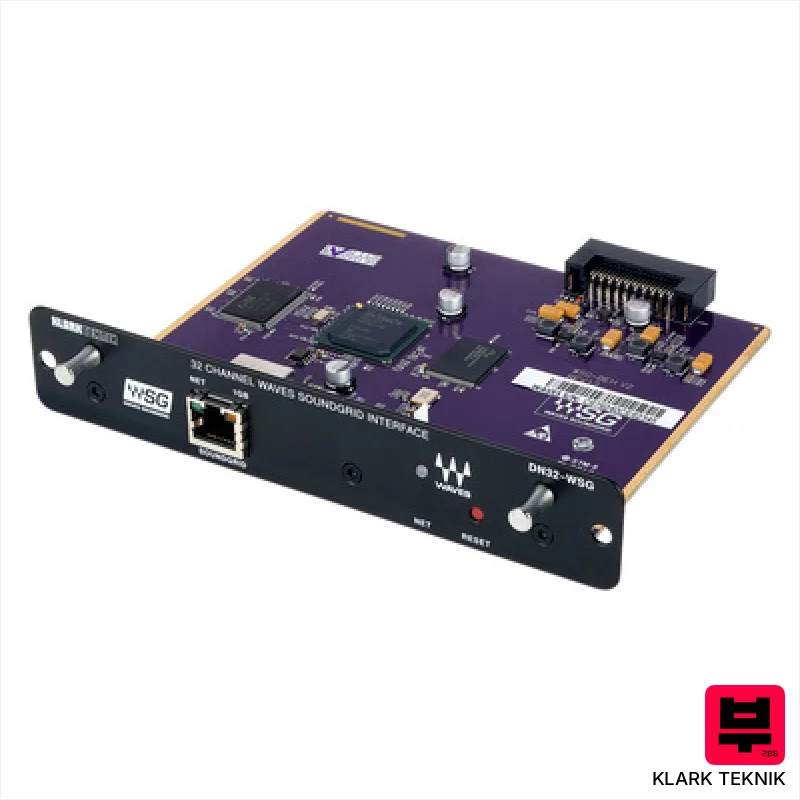
Klark Teknik DN32-WSG
- • Seamless Soundgrid integration expands X32/M32 capabilities.
- • Low-latency AOIP drastically improves remote recording workflows.
- • 32 channels offer substantial flexibility for complex setups.
- • Compact size minimizes rack space usage without compromise.
- • Relies entirely on Soundgrid ecosystem; limited standalone functionality.
- • Requires Soundgrid studio application for full functionality and ASIO/Core Audio.
- • Adds complexity to an already feature-rich mixing console.

Allen & Heath M-SQ-DANT64-AX
- • Unmatched Dante channel count expands SQ mixer capabilities.
- • Low latency performance crucial for demanding live sound applications.
- • Rock-solid build quality; Allen & Heath’s reputation for durability holds true.
- • Seamless integration with existing Allen & Heath SQ series workflows.
- • Significant investment; a premium-priced option for smaller setups.
- • Requires Dante infrastructure; adds complexity and potential cost.
- • SQ series dependency limits versatility outside that ecosystem.
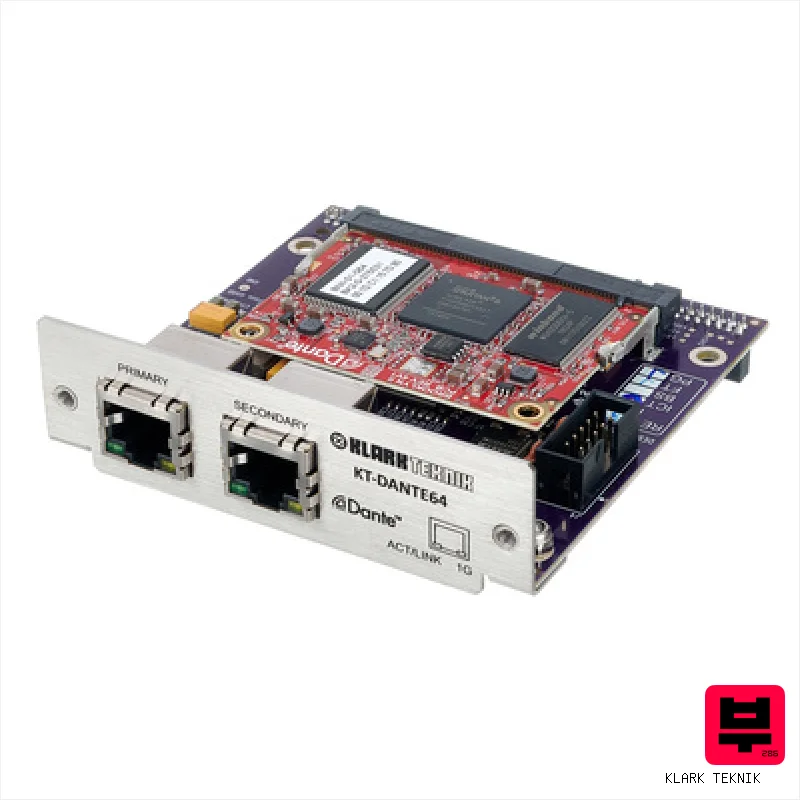
Klark Teknik KT-Dante64
- • Dual redundant Ethernet interfaces ensure network reliability.
- • Bi-directional channels allow full bidirectional audio routing.
- • Supports high-resolution sample rates up to 96 kHz.
- • Dante controller software enables remote PC configuration.
- • Only works with specific bridge models like DN9650.
- • No physical channel inputs or outputs listed.
- • Requires separate PC software for Virtual Soundcard playback.
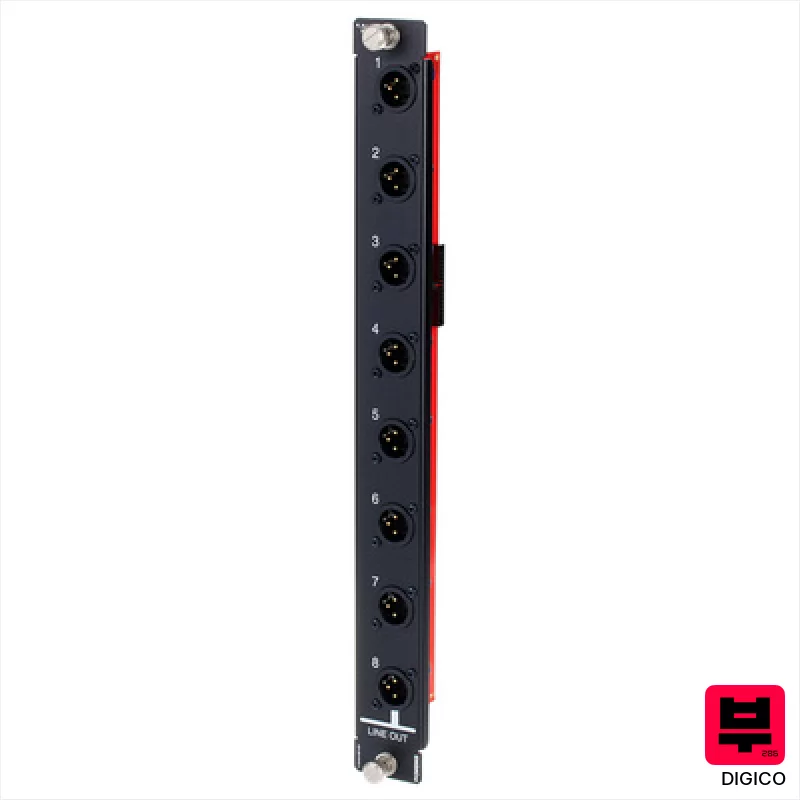
DiGiCo D2-Rack analog OP card
- • Robust, road-ready build quality typical of DiGiCo’s standards
- • Provides pristine, low-jitter analog outputs for critical monitoring
- • Seamless integration within the D2-Rack ecosystem simplifies routing
- • Offers flexible gain staging for precise level control
- • Limited to 8 outputs, potentially restrictive for larger setups
- • Requires a D2-Rack chassis, increasing overall system cost
- • Analog-only; lacks digital output options for direct recording
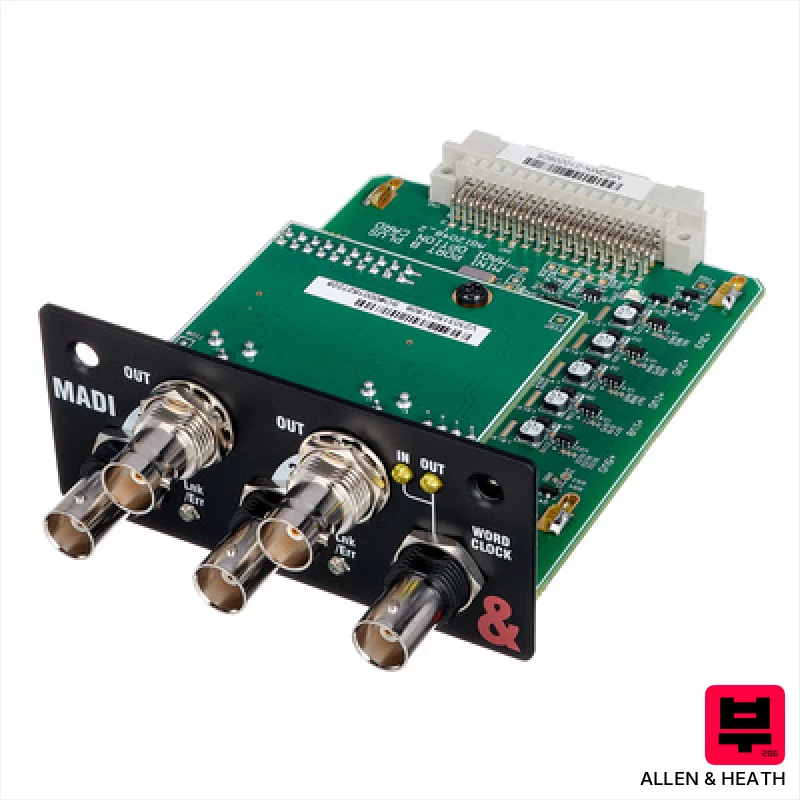
Allen & Heath SQ MADI Interface Card
- • Rock-solid MADI connectivity for extensive I/O expansion.
- • HighSpeed mode offers exceptional bandwidth for complex routing.
- • Allen & Heath’s renowned DSP integration ensures pristine audio quality.
- • Robust BNC connectors guarantee reliable signal transfer and longevity.
- • SQ series consoles are a significant investment upfront.
- • MADI cabling can be bulky and requires dedicated infrastructure.
- • Limited flexibility if you aren't already invested in the Allen & Heath ecosystem.

Soundcraft Si Series Madi Card
- • Expands channel count significantly, ideal for large touring rigs
- • Rock-solid MADI implementation, proven reliability in live settings
- • Dual RJ45 connectors offer flexible routing and redundancy
- • Seamless integration with existing Soundcraft Si Series workflows
- • Adds complexity for users unfamiliar with MADI protocols
- • Requires careful planning to avoid MADI bandwidth limitations
- • Limited functionality beyond basic channel extension.

DiGiCo D-Rack analog OP
- • Robust, all-steel construction ensures roadworthiness and longevity
- • Provides pristine, low-jitter analog outputs for critical monitoring
- • Seamless integration with DiGiCo's ecosystem, simplifying workflow
- • Offers a flexible solution for expanding DiGiCo rack capabilities
- • Requires a DiGiCo D-Rack chassis; not a standalone solution
- • Limited to 8 line outputs, may not suit extremely large systems
- • Analog-only operation restricts digital signal processing flexibility
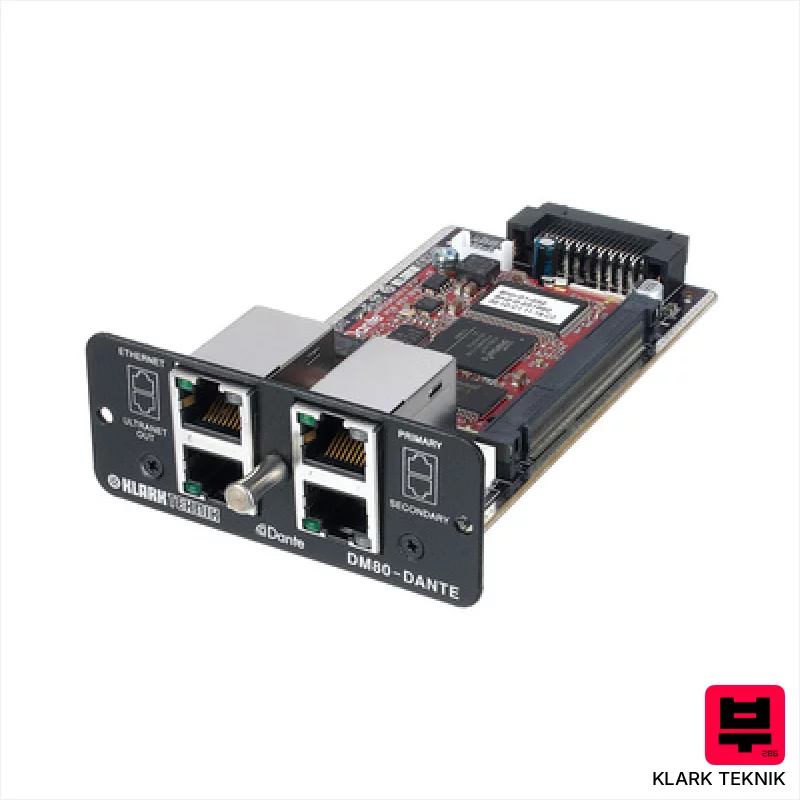
Klark Teknik DM80-Dante
- • Dante connectivity unlocks scalable, flexible audio routing possibilities.
- • Transformer isolation effectively eliminates troublesome ground loop hum.
- • Expands DM8000's channel count significantly for larger setups.
- • Ethernet control provides deep, granular customization options.
- • Requires a Dante-enabled network infrastructure, adding complexity.
- • Limited to 48kHz sample rate, potentially restrictive for high-res workflows.
- • DM8000 dependency; not a standalone solution.
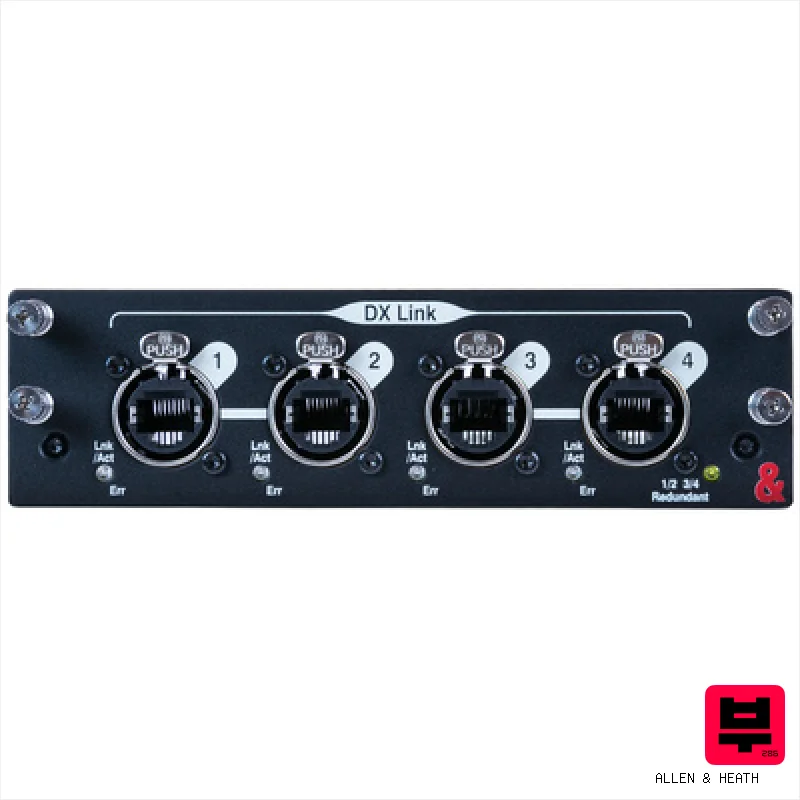
Allen & Heath M-DL-DXLINK
- • Handles 128 input channels with ease
- • Supports 128 output channels for flexibility
- • Adds 4 DX connections for expansion
- • Runs in redundant or parallel modes
- • Heavy weight makes transport difficult
- • Lacks built-in mixing controls on the card
- • No sample rate details provided in text
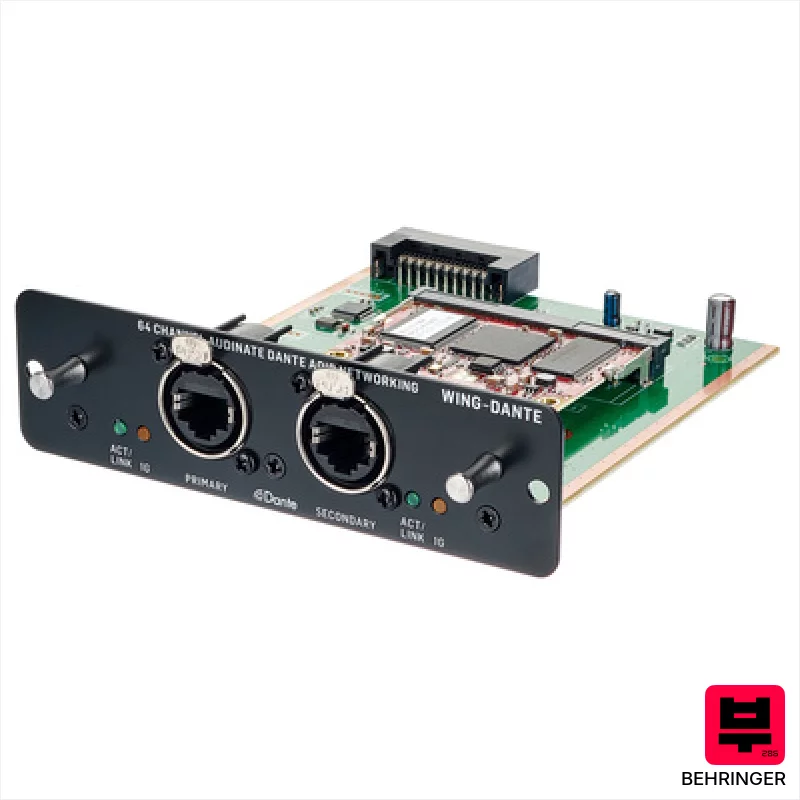
Behringer Wing-Dante
- • Seamless Dante integration expands WING's channel count significantly.
- • Bidirectional signal flow simplifies complex routing scenarios.
- • Co-existing sample rates offer flexibility for varied setups.
- • Integrated Ethernet switch enables convenient remote WING control.
- • Dante infrastructure requires existing network hardware investment.
- • WING mixer itself is a prerequisite; card is not standalone.
- • Potential latency introduced with Dante network depending on configuration.
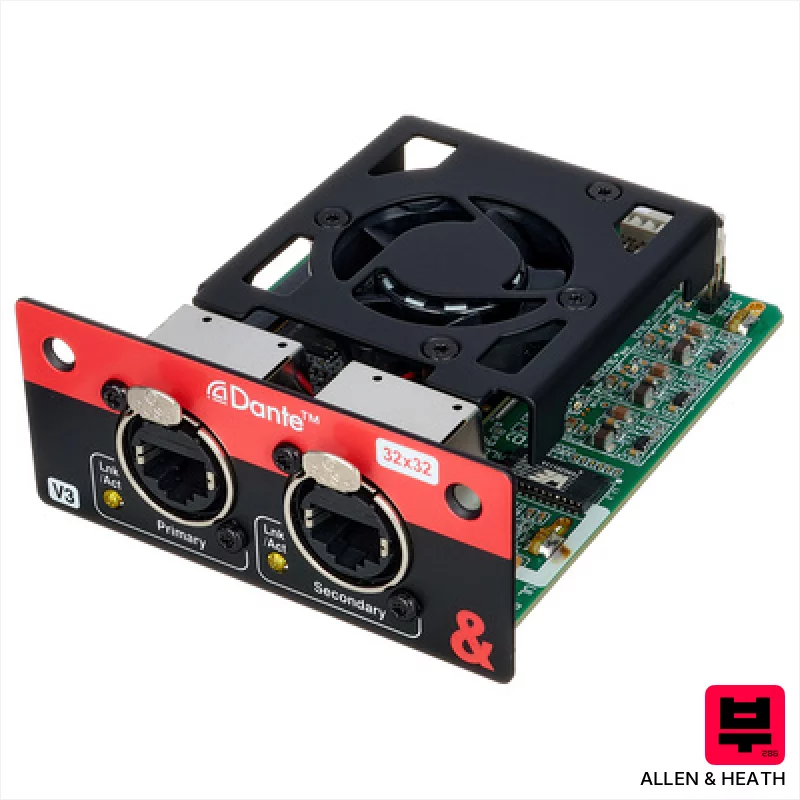
Allen & Heath M-SQ-DANT32
- • Seamless Dante integration expands mixer I/O significantly.
- • Robust construction; feels like a genuine Allen & Heath component.
- • 96kHz resolution provides headroom for demanding audio applications.
- • Dante's network flexibility simplifies complex routing scenarios.
- • Adds considerable complexity for users unfamiliar with Dante workflows.
- • Relatively high cost compared to analog expansion options.
- • Requires a Dante-enabled network infrastructure for full functionality.
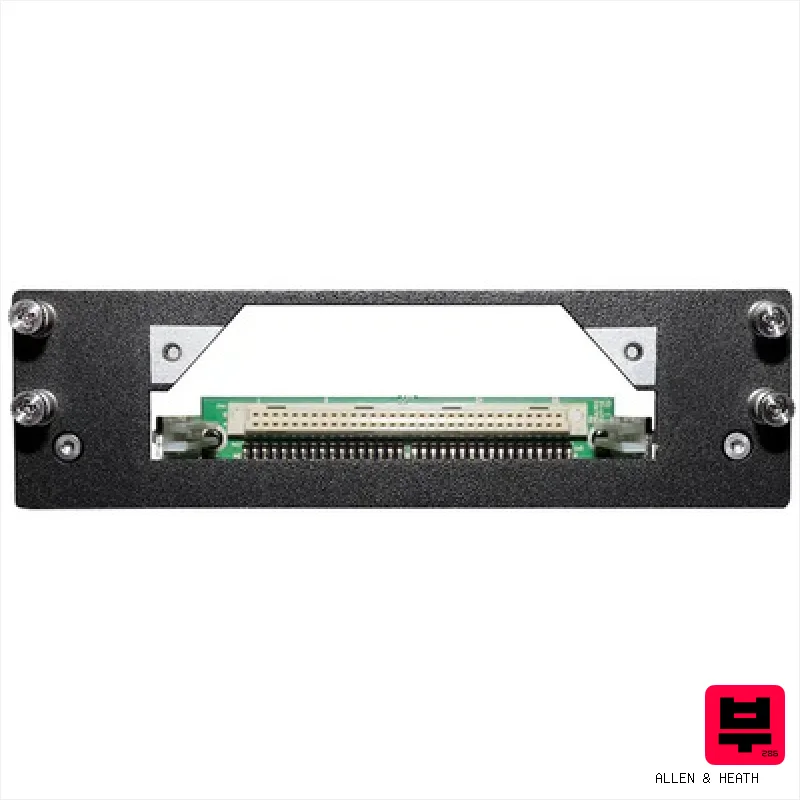
Allen & Heath M-DL-ADAPT-A
- • Adds 64 audio channels to existing dLive or Avantis systems
- • Works with both Dante and MADI audio networks seamlessly
- • Includes built-in sample rate conversion for flexible operation
- • Fits into any available input or output port easily
- • No physical knobs or controls on the card itself
- • Requires a compatible system to function properly
- • Lacks dedicated monitoring or routing buttons

Soundcraft MADI-USB Combo Card
- • Seamless MADI/USB integration simplifies complex routing.
- • Flexible DIP switch settings tailor output to diverse needs.
- • Robust MADI connection via CAT cable offers excellent distance.
- • Soundcraft’s reliable drivers ensure stable performance with common DAWs.
- • Software updates are essential; older versions may present issues.
- • Limited USB bandwidth might bottleneck larger channel counts.
- • Relatively high price point compared to simpler interface solutions.
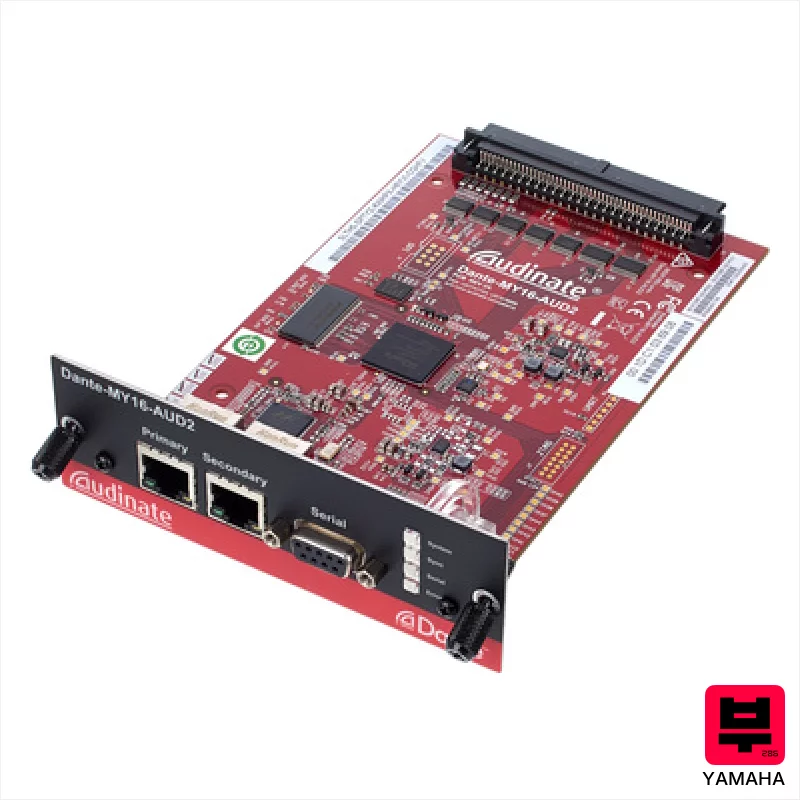
Yamaha MY16 Dante AUD2
- • Seamless Dante integration expands Yamaha's existing ecosystem.
- • Provides 16 flexible inputs/outputs for expanded routing.
- • Adjustable latency presets offer precise control over performance.
- • Robust Gigabit Ethernet connectivity ensures stable, low-latency transfer.
- • Requires compatible Yamaha consoles or interfaces to function.
- • Dante infrastructure demands additional network setup and planning.
- • Limited standalone functionality; relies heavily on host system.
Every digital mixer expansion cards that matches
42 models match this page. The 15 above are covered in detail; the rest are listed here with their published specifications.
| # | Model | Specifications | Price |
|---|---|---|---|
| 16 | Klark Teknik KT-AES50 | not published | $444 |
| 17 | Klark Teknik DN32 Dante | not published | $388 |
| 18 | Klark Teknik KT-MADI | not published | $387 |
| 19 | Behringer Aoip-Dante | not published | $364 |
| 20 | Klark Teknik DN32-Madi | not published | $270 |
| 21 | Allen & Heath SQ SLink | not published | $250 |
| 22 | Behringer WING-MADI | not published | $238 |
| 23 | Behringer Aoip-Wsg | not published | $197 |
| 24 | Allen & Heath DT164 W Dante | Weight 3.6 kg | $3,169 |
| 25 | Yamaha PY64-D | Weight 0.35 kg | $2,392 |
| 26 | Waves WSG-PY64 I/O for Yamaha DM7 | Weight 0.2 kg | $1,059 |
| 27 | Klark Teknik DN32-Live | not published | $131 |
| 28 | Klark Teknik DM80-Ultranet | not published | $113 |
| 29 | Allen & Heath M-DL-DANTE128-AX | not published | $3,420 |
| 30 | Allen & Heath M-DL-ULTRAFX-AX | not published | $3,146 |
| 31 | Allen & Heath M-DL-Waves3-A | not published | $2,725 |
| 32 | Allen & Heath M-DL-DANT64-AX | not published | $2,393 |
| 33 | DiGiCo DMI Dante 2 Z Chip | not published | $2,050 |
| 34 | Soundcraft VI-Dante Card | not published | $1,937 |
| 35 | Allen & Heath M-DL-GACE-A | not published | $1,900 |
| 36 | Allen & Heath M-DANTE-A card | not published | $1,299 |
| 37 | Tascam IF-MTR32 | not published | $1,196 |
| 38 | Soundcraft SI-Dante Card | not published | $1,024 |
| 39 | Soundcraft Vi Series Madi Card | not published | $1,024 |
| 40 | Allen & Heath M-SQ-WAVES3-A | not published | $986 |
| 41 | Soundcraft Si Optical Madi Card SC | not published | $877 |
| 42 | Klark Teknik DN32 ADAT | not published | $97 |
Digital Mixer Expansion Cards by the numbers
Measured across all 42 models in this category, so «wide», «short» or «expensive» mean something you can check.
How to Choose the Best Digital Mixer Expansion Cards
Workflow & Playability
It's gotta be intuitive. Too many layers of menus and obscure button combinations will just slow you down on stage. We're looking for cards that offer a clear visual representation of routing and effects chains, and tactile controls when possible.
Effect Quality
Let's be honest, built-in effects are often... fine. But a good expansion card can bring a noticeable upgrade in reverb tails, compression character, and even creative effects like distortion or modulation. The difference between a generic plate reverb and something with real depth and space is huge for vocal clarity.
Processing Power (DSP)
More channels, more effects, more routing... it all eats up processing power. A card with limited DSP will choke under load, leading to dropouts and artifacts. We're looking for cards that can handle a typical intermediate-level setup without breaking a sweat.
Routing Flexibility
This is where expansion cards really shine. Being able to send individual channels to aux sends for monitor mixes, create submixes for drum groups, or route signals to external processors opens up a whole new level of control and creative possibilities. This goes beyond simple left/right routing.
Long-Term Support & Updates
Digital gear evolves. A card that's abandoned by the manufacturer is a paperweight. We're prioritizing cards from companies with a history of providing firmware updates and ongoing support - ensuring compatibility and access to new features down the road.
Buying Guide
Don't get seduced by a massive feature list you won't use. An intermediate player needs a card that expands capabilities without adding complexity. Look for something with a clear, logical layout and a reasonable number of features you can actually learn and integrate into your workflow. Paying a bit more for a card with solid build quality and a reputation for reliable performance is always a good idea - replacing a flaky card mid-gig is a nightmare you want to avoid.
How This List Is Built
We don't play these instruments — we're a catalog, not a review desk, and we'd rather say so than pretend otherwise. This page covers 42 digital mixer expansion cards from the Thomann catalogue, which is the largest single source of specification data in this category: 15 in detail, the rest listed with their specifications.
Position is computed, not curated. We parse the manufacturer's own description into actual values — nut width, scale, fret count, fingerboard radius, size, alloy — and rank on them: how many specifications a model has published, how many of them are measurable numbers, and how precisely it meets this page's criterion. A product image adds a little. Price is not a ranking signal: it tells you nothing about whether a neck fits your hand. The same inputs always produce the same order, so nothing here is shuffled to look fresh.
What this list is good for: narrowing a category down to a shortlist by spec and budget. What it isn't: a substitute for hearing an instrument. Before you buy, read hands-on reviews and, where you can, play it. Full methodology.

