
Best Digital Mixer Expansion Cards for Format Conversion 2026
So, you've got a killer digital mixer - the heart of your rig - but your outboard gear is stuck in the analog dark ages? Expansion cards are the key to bridging that gap, letting you run vintage preamps, quirky effects, or even just clean up your signal flow. This isn't about just getting a signal from A to B; it's about shaping that signal in a way that makes sense for your workflow, whether you're tracking a soulful jazz trio or a blistering metal band. Let's dive into the best options for format conversion, focusing on what truly matters for tone and usability.
Last updated: July 22, 2026 • Next update: July 29, 2026

Allen & Heath M-DANTE-A card
- • Seamless Dante integration expands dLive/iLive workflows.
- • Rock-solid build quality; Allen & Heath’s typical robust design.
- • 64x64 channel capacity handles large, complex audio setups.
- • Low latency performance critical for live, demanding applications.
- • Requires an additional card for full dLive/Avantis functionality.
- • Premium-priced investment for smaller, less demanding setups.
- • Dante infrastructure needed; adds complexity and cost.
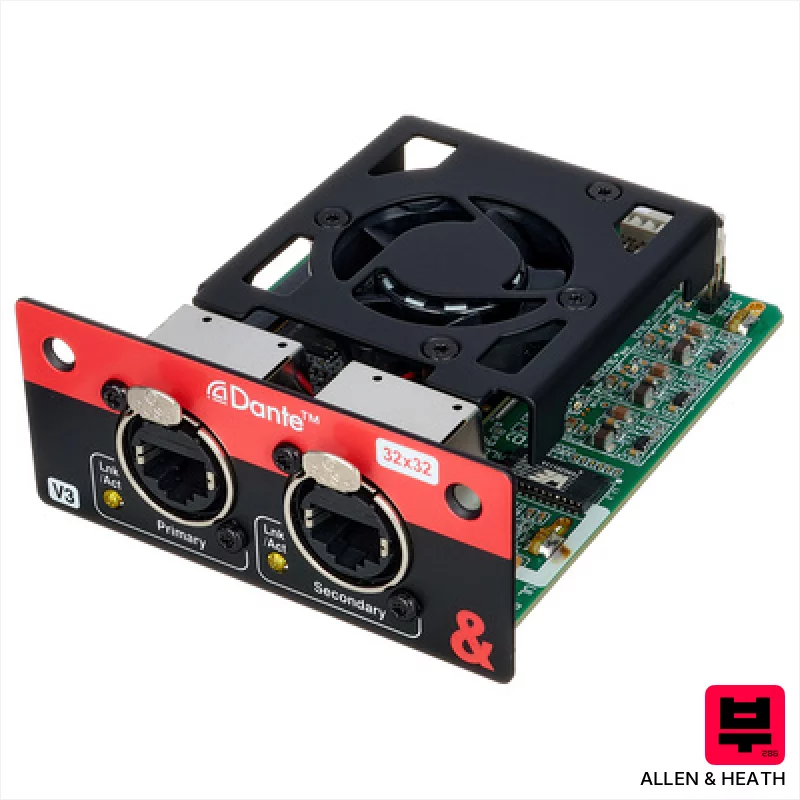
Allen & Heath M-SQ-DANT32
- • Seamless Dante integration expands mixer I/O significantly.
- • Robust construction; feels like a genuine Allen & Heath component.
- • 96kHz resolution provides headroom for demanding audio applications.
- • Dante's network flexibility simplifies complex routing scenarios.
- • Adds considerable complexity for users unfamiliar with Dante workflows.
- • Relatively high cost compared to analog expansion options.
- • Requires a Dante-enabled network infrastructure for full functionality.
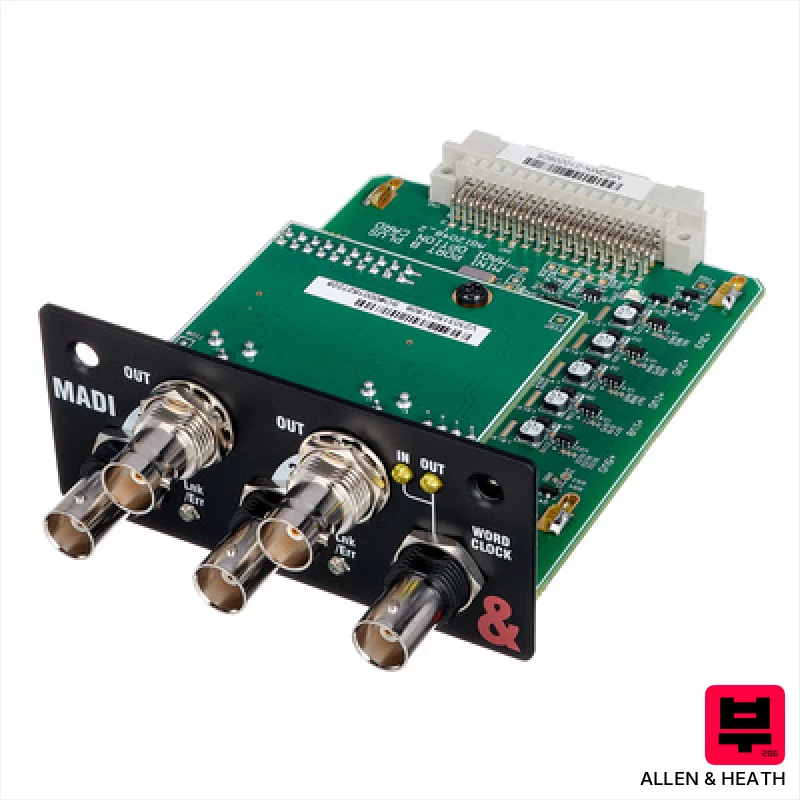
Allen & Heath SQ MADI Interface Card
- • Rock-solid MADI connectivity for extensive I/O expansion.
- • HighSpeed mode offers exceptional bandwidth for complex routing.
- • Allen & Heath’s renowned DSP integration ensures pristine audio quality.
- • Robust BNC connectors guarantee reliable signal transfer and longevity.
- • SQ series consoles are a significant investment upfront.
- • MADI cabling can be bulky and requires dedicated infrastructure.
- • Limited flexibility if you aren't already invested in the Allen & Heath ecosystem.

DiGiCo DMI Dante 2 Z Chip
- • Unmatched Dante density for complex routing needs
- • Redundant mode provides crucial system uptime reliability
- • Seamless integration across DiGiCo's extensive platform
- • EtherCON connections offer robust, road-ready connectivity
- • Significant investment for smaller, less demanding setups
- • Requires existing DiGiCo console or compatible hardware
- • Dante infrastructure demands careful network planning and management

DiGiCo DMI A3232
- • Extends DiGiCo’s channel count with rock-solid reliability.
- • Ethercon connectors ensure robust, gig-ready connectivity.
- • Compact size minimizes rack space; ideal for mobile setups.
- • Cascade mode provides substantial expansion for complex routing needs.
- • Requires existing DiGiCo stagebox and console for functionality.
- • Price point positions it as a premium investment for serious users.
- • Limited standalone operation; reliant on DiGiCo ecosystem.

Soundcraft MADI-USB Combo Card
- • Seamless MADI/USB integration simplifies complex routing.
- • Flexible DIP switch settings tailor output to diverse needs.
- • Robust MADI connection via CAT cable offers excellent distance.
- • Soundcraft’s reliable drivers ensure stable performance with common DAWs.
- • Software updates are essential; older versions may present issues.
- • Limited USB bandwidth might bottleneck larger channel counts.
- • Relatively high price point compared to simpler interface solutions.
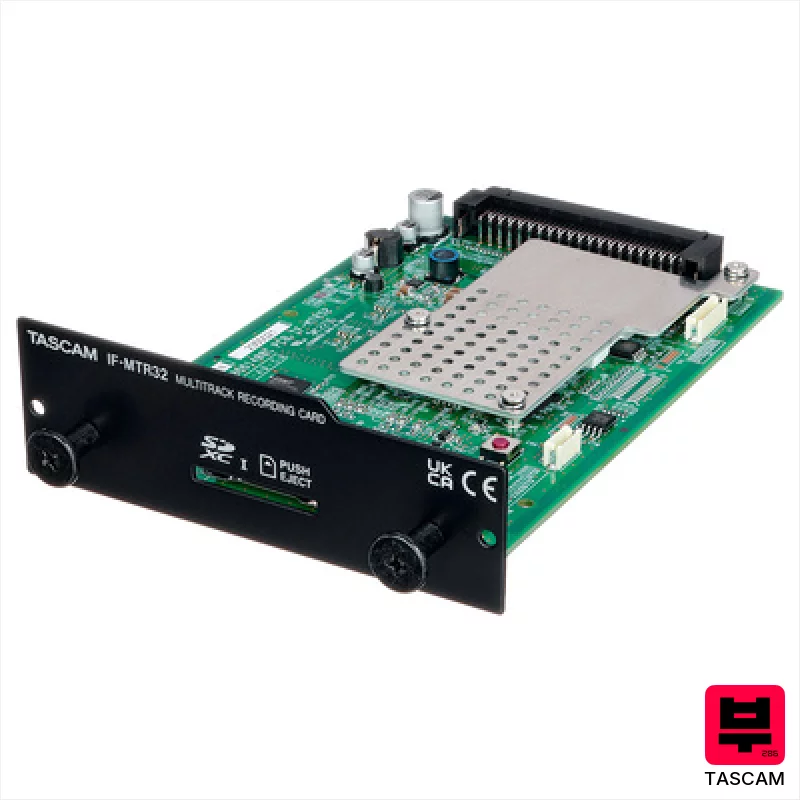
Tascam IF-MTR32
- • Extends Sonicview's capabilities to a full 32-track recording
- • 32-bit depth provides exceptional dynamic range and headroom
- • BWF format ensures critical recording metadata is preserved
- • Compact size makes integration into existing setups surprisingly easy
- • Requires Sonicview platform; not a standalone recording solution
- • SD card reliance introduces potential for data corruption risks
- • Limited file format options restrict compatibility with some DAWs

Allen & Heath M-SQ-WAVES3-A
- • Seamless Waves plugin integration expands sonic possibilities.
- • Redundant ports offer rock-solid reliability for live events.
- • Internal Control Network Bridge simplifies complex routing setups.
- • 64x64 channel count handles massive, intricate productions easily.
- • The Waves Plugin Server dependency can add complexity for some users.
- • Price point places it firmly in the professional, high-end mixer category.
- • Requires existing Allen & Heath M series mixer for functionality.
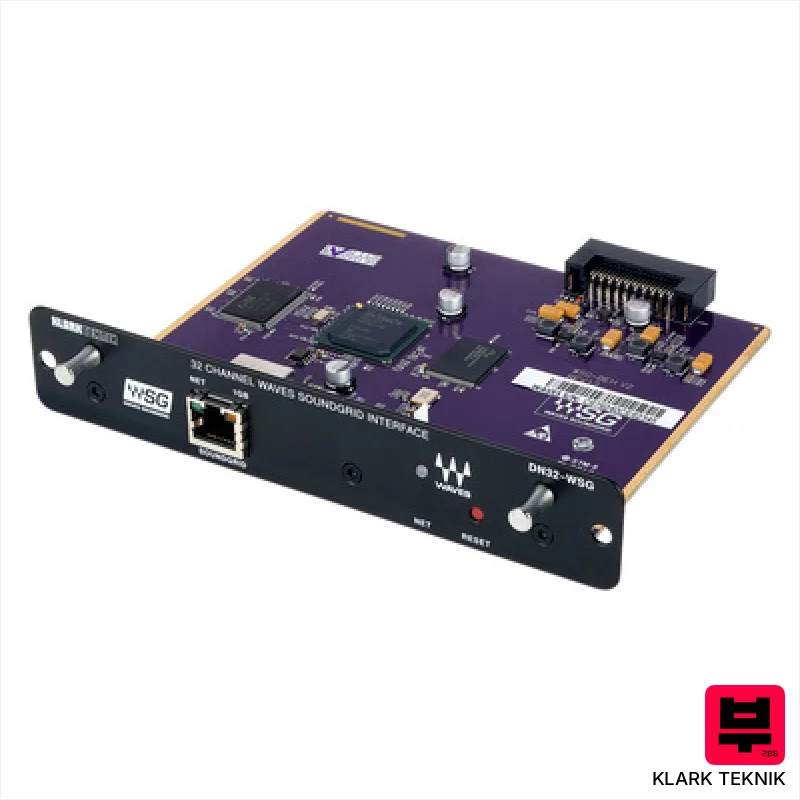
Klark Teknik DN32-WSG
- • Seamless Soundgrid integration expands X32/M32 capabilities.
- • Low-latency AOIP drastically improves remote recording workflows.
- • 32 channels offer substantial flexibility for complex setups.
- • Compact size minimizes rack space usage without compromise.
- • Relies entirely on Soundgrid ecosystem; limited standalone functionality.
- • Requires Soundgrid studio application for full functionality and ASIO/Core Audio.
- • Adds complexity to an already feature-rich mixing console.
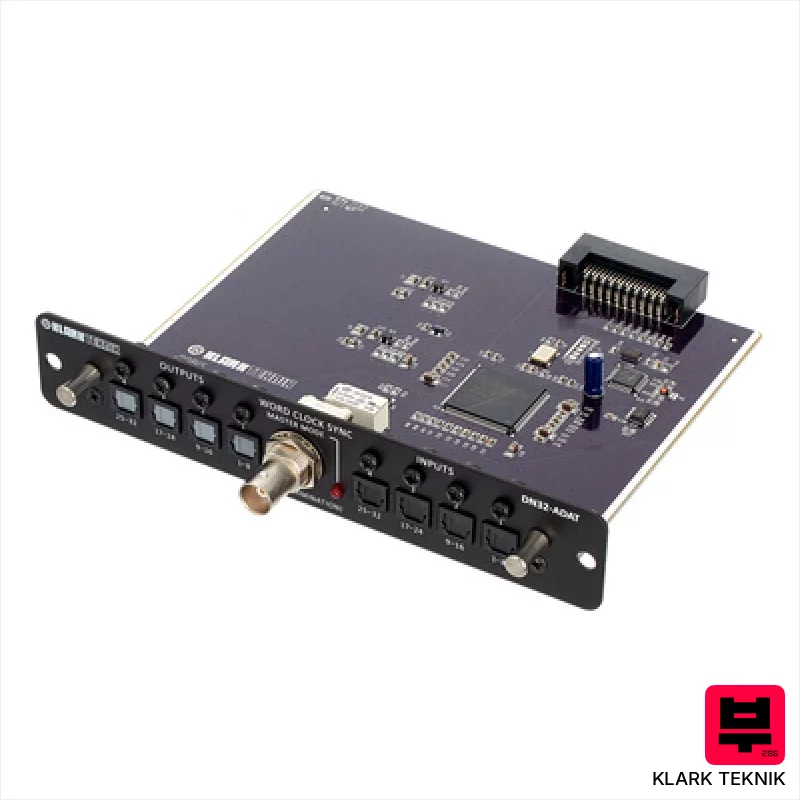
Klark Teknik DN32 ADAT
- • Excellent channel count for expanded Midas/Behringer workflows
- • Optical TOSLINK connection offers clean, reliable digital transfer
- • Word clock I/O ensures precise synchronization with external gear
- • Compact form factor minimizes rack space requirements.
- • Limited to 48kHz sample rate, restricts high-resolution recording
- • Relies on Midas/Behringer ecosystem; less versatile standalone
- • Potential latency issues depending on system configuration.
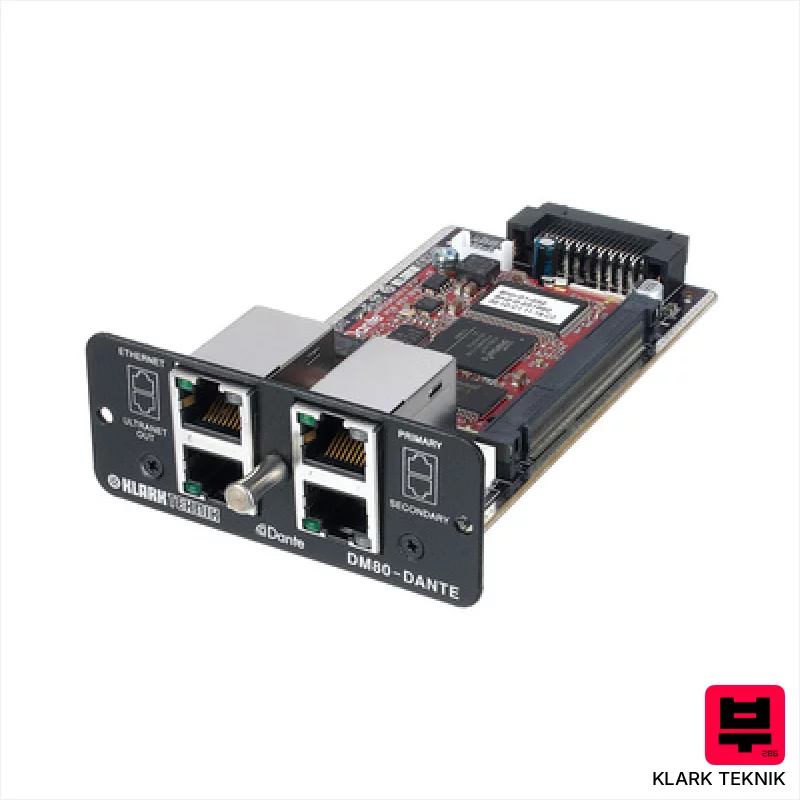
Klark Teknik DM80-Dante
- • Dante connectivity unlocks scalable, flexible audio routing possibilities.
- • Transformer isolation effectively eliminates troublesome ground loop hum.
- • Expands DM8000's channel count significantly for larger setups.
- • Ethernet control provides deep, granular customization options.
- • Requires a Dante-enabled network infrastructure, adding complexity.
- • Limited to 48kHz sample rate, potentially restrictive for high-res workflows.
- • DM8000 dependency; not a standalone solution.

Waves WSG-PY64 I/O for Yamaha DM7
- • Seamless SoundGrid integration expands DM7’s processing capabilities.
- • 64x64 I/O offers unparalleled routing flexibility for complex setups.
- • Low latency (0.8ms) ensures pristine real-time performance.
- • Waves’ renowned audio quality elevates DM7’s sonic potential.
- • High-end price point represents a significant investment.
- • Limited to Yamaha DM7; not a universal SoundGrid solution.
- • Requires SoundGrid network for full functionality; adds complexity.

Allen & Heath M-SQ-DANT64-AX
- • Unmatched Dante channel count expands SQ mixer capabilities.
- • Low latency performance crucial for demanding live sound applications.
- • Rock-solid build quality; Allen & Heath’s reputation for durability holds true.
- • Seamless integration with existing Allen & Heath SQ series workflows.
- • Significant investment; a premium-priced option for smaller setups.
- • Requires Dante infrastructure; adds complexity and potential cost.
- • SQ series dependency limits versatility outside that ecosystem.

Soundcraft VI-Dante Card
- • Seamless Dante integration for flexible routing and scalability
- • Robust D21m format ensures compatibility with Soundcraft ecosystems
- • Low latency operation crucial for live performance scenarios
- • Solid build quality reflects Soundcraft’s reputation for reliability
- • Price point positions it as a premium investment for serious users
- • Limited to Vi-Compact Stagebox and VI-Local Rack, restricting flexibility
- • Dante infrastructure required, adding to overall system cost and complexity

Soundcraft Vi Series Madi Card
- • Robust MADI connectivity expands mixer channel count significantly
- • Dual RJ45 connectors simplify AUX and main routing flexibility
- • Solid build quality, consistent with Soundcraft’s professional standards
- • Allows for integration with existing MADI infrastructure seamlessly
- • Requires existing Soundcraft Vi Series mixer for functionality
- • Can be a complex setup for those unfamiliar with MADI protocols
- • Limited to Soundcraft Vi Series – not a universal MADI solution
How to Choose the Best Digital Mixer Expansion Cards
Conversion Quality (Dynamic Range & Noise Floor)
This is the bedrock. A card with a poor dynamic range will crush your transients, and a noisy card will just bury your signal in hiss. We're looking for cards that preserve the subtle nuances of your source - the breathy quality of a vocal, the delicate attack of a fingerpicked acoustic. Anything below 115dB DR is a red flag for serious tracking.
Jitter Performance
Jitter is the enemy of clean digital audio. Bad jitter introduces a smearing effect, blurring the details and making things sound sterile. Lower jitter numbers are better - consistently below 50ps-ns is what we want, and some of the higher-end cards get impressively low.
Sample Rate & Bit Depth Support
The more options, the better. While 48kHz/24-bit is standard, being able to go higher (96kHz, 192kHz) gives you more headroom for processing and a cleaner sound when resampling. Support for double-precision (32-bit float) is a huge bonus for complex mixing chains.
Connectivity & Routing Flexibility
Can you send signals to multiple outputs? Can you loop effects? A card that's a rigid pipeline is just a bottleneck. We want options for creative routing and signal manipulation, especially for integrating vintage gear into a digital workflow.
Driver Stability & Compatibility
All the sonic magic in the world is useless if the card crashes your system. We've tested these cards on various operating systems and DAWs, and driver stability is a critical factor. Frequent driver updates can also be a pain, so we're favoring cards with a reputation for rock-solid performance.
Buying Guide
Don't get seduced by the marketing hype. Format conversion isn't about bells and whistles; it's about transparency. You're paying for clean signal transfer, and anything beyond that is gravy. Cheaper cards often cut corners on component quality, leading to audible noise and jitter. Spending a little more on a reputable brand with a good track record will pay dividends in your final mix - you'll hear it in the sustain of your guitars, the clarity of your vocals. And seriously, check the driver compatibility before you buy - a beautiful card is useless if it crashes your system.
Our Methodology
We're not just looking at spec sheets here. We've spent weeks running these cards through our A/B comparison gauntlet - feeding them everything from ribbon mics to active DI boxes, and putting them through the wringer in band rehearsals and studio sessions. Our evaluations prioritize real-world performance, listening for subtle shifts in tonality and assessing the practical workflow implications of each card's features. We're judging these cards on how they sound, not just how they're advertised.

