AudioFu
AudioFu Chart · October 2026
Best Compressors, Gates and De-essers Under $2,000 2026
The top pick is Warm Audio WA76 Limiting Amplifier ($1,169). Klark Teknik 76-KT Classic FET Compressor gives you the most for the money at $167. Ranked by the AudioFu Index from 48 models across 23 brands, prices checked every night.
Last updated: October 12, 2026
Top 10
Full detail for the 10 highest AudioFu Index scores. Every other model is listed below.
-
- Weight4.8 kg
The WA76-D2 is a seriously cool recreation of that iconic '70s SSL sound – think punchy drums, driving bass, and vocals with a vintage edge. It's a fantastic option for anyone wanting that classic vibe without the vintage price tag; especially good for rock, pop, and hip-hop producers looking to add some grit and character to their mixes.
Pros
- CineMag transformers deliver authentic 70s SSL warmth and punch.
- Discrete Class-A output provides a clean, powerful signal boost.
- Flexible stereo linking options cater to diverse mixing scenarios.
Cons
- The 'All Buttons In' setting can be overly aggressive for subtle compression.
- Build quality, while decent, doesn't match genuinely vintage SSL units.
87AudioFu
Index↓ 15.8%since Aug 14 · lowest so far$1,388 · Aug 14$1,169 now$1,169€1,043 at Thomann · in stockCheck price ↗ -
- Weight3.9 kg
The WA-1B is a seriously good-sounding compressor, nailing that classic, warm vibe reminiscent of the original. It's fantastic for vocals, guitars, and bass – anything needing a touch of vintage glue. If you’re chasing a smooth, musical compression without being overly aggressive, this is a premium-priced option that delivers.
Pros
- Discrete, hand-wired circuit delivers a warm, vintage compression character
- Tung-Sol 12AX7 and JJ 12AU7 tubes provide authentic tube warmth and headroom
- Transformer-based output adds desirable harmonic richness and color
Cons
- Can be noisy at higher gain settings, especially with sensitive microphones
- Relatively heavy, making it less ideal for portable or mobile setups
77AudioFu
Index↓ 14.5%since Aug 14 · lowest so far$1,310 · Aug 14$1,119 now$1,119€999 at Thomann · in stockCheck price ↗ -
Warm Audio WA-2A Tube Optical Compressor / Limiter
WA-2A · Warm Audio
62 for sale on Reverb1 finish at Thomann
- Weight5.44 kg
The WA-2A nails that classic, 'glue' sound—think Abbey Road compression without the vintage headaches. It's a fantastic choice for vocals, guitars, or anything needing a touch of warmth and subtle dynamic control. This is a great option for producers and engineers seeking a specific, character-rich compression color.
Pros
- CineMag transformers impart a pleasing, vintage-like warmth and saturation.
- Discrete signal path avoids muddying the tone, retaining clarity.
- TungSol/EH tubes deliver a classic, creamy compression character.
Cons
- Limited versatility compared to more complex, multi-band compressors.
- The 6AQ5/6P1 tube choice restricts tonal shaping possibilities.
76AudioFu
Index↓ 7.8%since Aug 14 · lowest so far$1,005 · Aug 14$927 now$927€827 at Thomann · in stockCheck price ↗ -
Warm Audio Bus-Comp 2-Channel VCA Bus Compressor
Bus-Comp · Warm Audio
39 for sale on Reverb1 finish at Thomann
- Size19"
The Bus-Comp nails that classic, slightly colored bus compression vibe. It’s a fantastic option for engineers and producers seeking a touch of vintage warmth and punch without the complexity of a full-blown SSL emulation. This is a great tool for rock, pop, and hip-hop where a cohesive, glued-together sound is key.
Pros
- CineMag transformers add warmth and subtle harmonic richness.
- THAT VCAs deliver clean, precise gain reduction.
- External sidechain unlocks creative compression possibilities.
Cons
- Limited to two channels, restricting larger mixing duties.
- Transformer saturation can be overwhelming for cleaner genres.
71AudioFu
Index↓ 5.6%since Aug 14 · lowest so far$884 · Aug 14$835 now$835€745 at Thomann · in stockCheck price ↗ -
Black Lion Audio Seventeen FET Limiting Amplifier / Compressor
Seventeen · Black Lion Audio
13 for sale on Reverb1 finish at Thomann
- Size19"
- Weight6.58 kg
The Seventeen nails that classic, punchy FET compression vibe – think '80s rock drums or a driving bassline. It's a fantastic tool for adding aggression and glue to your tracks, but be aware of its more assertive nature. This compressor is perfect for engineers and producers seeking a focused, characterful tone.
Pros
- Transformer upgrade delivers a smoother, more musical compression character.
- Sidechain filter offers precise control over compressor behavior.
- Classic ratio switching provides instant recall of favored settings.
Cons
- FET design can be aggressive; not ideal for subtle, transparent compression.
- Mono operation limits stereo processing flexibility.
68AudioFu
Index↓ 9.4%since Aug 14 · lowest so far$951 · Aug 14$862 now$862€769 at Thomann · in stockCheck price ↗ -
Elysia nvelope 500 Stereo / Dual-Mono 500 Series Impulse Shaper /
… nvelope · Elysia
9 for sale on Reverb1 finish at Thomann
- Size19"
- Weight2 kg
The Elysia nvelope is a seriously impressive piece of kit. It’s not just another compressor; it’s a dynamic processor that gives you a ton of control over the character of your stereo mixes. This is a fantastic tool for engineers and producers looking for subtle, transparent shaping or more aggressive, creative dynamics processing.
Pros
- Discrete Class-A topology delivers exceptional clarity and headroom
- Aluminum housing feels incredibly solid and professional, inspiring confidence
- Flexible EQ mode subtly shapes transients, adding polish and control
Cons
- Premium-priced, a significant investment for many studios
- Stepped potentiometers can feel less fluid than continuous controls
68AudioFu
Index↓ 10.0%since Aug 14 · lowest so far$1,411 · Aug 14$1,270 now$1,270€1,133 at Thomann · in stockCheck price ↗ -
Klark Teknik 76-KT Classic FET Compressor
76-KT · Klark Teknik
14 for sale on Reverb1 finish at Thomann
- Size19"
- Weight2.8 kg
The Klark Teknik 76-KT is a surprisingly capable compressor for the money. It’s got a classic 1176 vibe thanks to those MIDAS transformers, delivering a punchy, slightly colored sound that’s great for drums, vocals, or anything needing a bit of attitude. This is a solid choice for home studios or anyone wanting a taste of vintage compression without the premium price tag.
Pros
- MIDAS transformers impart a pleasing, slightly colored sonic character
- Discrete signal path offers clean, transparent compression
- Fast attack time excels at controlling aggressive transients
Cons
- Limited ratio options compared to more flexible compressors
- Build quality, while decent, feels a bit plasticky for the price
67AudioFu
Index↓ 11.8%since Aug 14 · lowest so far$189 · Aug 14$167 now$167€149 at Thomann · in stockCheck price ↗ -
- Size19"
- Weight3.7 kg
The Lindell LiN2A nails that classic, warm compression vibe—think vintage consoles and soulful vocals. It's a great choice for engineers and musicians seeking a straightforward, character-rich compressor without getting bogged down in endless parameters. Perfect for adding glue to mixes or taming unruly instruments.
Pros
- T4BLA opto cell delivers authentic, creamy tube compression character.
- Cinemag transformers add warmth and subtle harmonic saturation.
- Versatile control modes allow for both gentle compression and aggressive limiting.
Cons
- Limited control set compared to more complex, modern compressors.
- VU meter is calibrated, but lacks detailed gain reduction markings.
67AudioFu
Index↓ 15.7%since Aug 14 · lowest so far$929 · Aug 14$783 now$783€699 at Thomann · in stockCheck price ↗ -
- Size4"
- Weight1.9 kg
The ART SCL2 is a surprisingly capable dual-channel processor, offering a good blend of compression, gating, and expansion. It's a solid choice for home studios or live rigs needing a flexible, budget-friendly solution – especially those wanting to experiment with dynamic processing without a huge learning curve. Just be prepared to dial in your settings carefully.
Pros
- Dual-channel operation simplifies stereo buss processing.
- Sidechain insert offers creative routing possibilities for dynamic shaping.
- Adjustable attack/release provides flexibility for various signal types.
Cons
- The 'soft knee' setting can be a bit aggressive at times.
- Gain reduction LED isn't as precise as higher-end units.
63AudioFu
Index↓ 1.2%since Aug 14 · lowest so far$290 · Aug 14$287 now$287€256 at Thomann · in stockCheck price ↗ -
Black Lion Audio Bluey 500 500-Series Limiter Module
Bluey Limiter · Black Lion Audio
12 for sale on Reverb1 finish at Thomann
- Size19"
The Bluey Limiter is a fantastic choice if you're chasing that Chris Lord-Alge vibe – think punchy, glued-together drums and vocals. Its simplicity is its strength; it’s not a Swiss Army knife, but it excels at what it does, adding serious weight and character to your mixes, particularly for rock, pop, and hip-hop.
Pros
- Discrete Cinemag transformers deliver a thick, warm sonic signature.
- Classic ratio switching offers immediate, usable tonal variations.
- Parallel compression circuit provides subtle to aggressive dynamic control.
Cons
- Limited versatility compared to more complex, multi-mode compressors.
- Mono operation requires external stereo linking for true stereo processing.
60AudioFu
Index↓ 9.6%since Aug 14 · lowest so far$1,288 · Aug 14$1,164 now$1,164€1,039 at Thomann · in stockCheck price ↗
All 48 compressors, gates and de-essers
Same index, same nightly prices — compact. Colour options of one model share a row. Tap a photo to zoom.
- 11
Klark Teknik KT-2A Tube Leveling Amplifier2A-KT · Klark Teknik59↓ 6.3%$366€327$366€327Check ↗
- 12
Heritage Audio Successor Stereo Bus CompressorSuccessor · Heritage Audio59Stable$1,736€1,549$1,736€1,549Check ↗
- 13
Elysia nvelope Mastering Edition 2-Channel Impulse Shaper / Dynamics…nvelope Mastering Edition · Elysia57↓ 4.5%$1,657€1,479$1,657€1,479Check ↗
- 14
dbx 266xs Dual-Channel Compressor / Gate266 XS · DBX56↑ 14.4%$178€159$178€159Check ↗
- 15
Black Lion Audio B172A 2-Channel Hybrid FET/Optical CompressorB172A · Black Lion Audio55↓ 2.9%$1,848€1,649$1,848€1,649Check ↗
- 16
Elysia XMAX Stereo Bus Compressorxmax · Elysia54Stable$1,949€1,739$1,949€1,739Check ↗
- 17
Heritage Audio LANG P.LANE Type 436Heritage Audio53↓ 2.5%$1,037€925$1,037€925Check ↗
- 18
Weight Tank WT-CompWeight Tank53↓ 15.0%$1,523€1,359$1,523€1,359Check ↗
- 19
Elysia xpressor neoElysia53Stable$1,669€1,489$1,669€1,489Check ↗
- 20
Drawmer 1973 Three Band Stereo FET Compressor1973 · Drawmer53Stable$1,769€1,579$1,769€1,579Check ↗
- 21
Golden Age Audio Project Comp-3AGolden Age Audio · 2 finishes52↓ 10.0%$503€449$503€449Check ↗
- 22
Black Lion Audio Seventeen 500 Series FET Limiting Amplifier /…Seventeen-500 · Black Lion Audio51↓ 14.5%$593€529$593€529Check ↗
- 23
Behringer MDX4600 Multicom Pro-XL V2Behringer50↓ 4.8%$133€119$133€119Check ↗
- 24
Elysia XMAX Qube Stereo Bus Compressor Modulexmax qube · Elysia50↓ 6.0%$1,411€1,259$1,411€1,259Check ↗
- 25
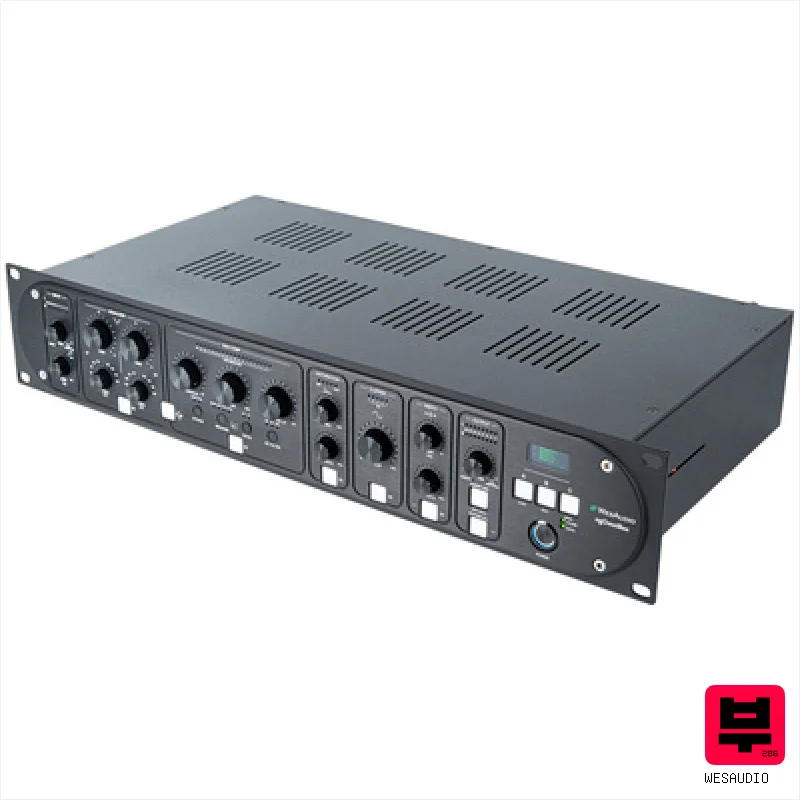
WesAudio ng76 FET CompressorWesAudio50Stable$1,680€1,499$1,680€1,499Check ↗
- 26
Chameleon Labs 7721 Stereo VCA CompressorChameleon Labs50↓ 14.1%$1,876€1,674$1,876€1,674Check ↗
- 27
Lindell Audio LiN76 MKIILindell Audio49↓ 2.2%$503€449$503€449Check ↗
- 28
Drawmer 1978 Stereo Tone Shaping Compressor1978 · Drawmer49Stable$1,230€1,098$1,230€1,098Check ↗
- 29
Drawmer 1970 Dual FET Compressor & Preamplifier1970 · Drawmer49↓ 0.6%$1,669€1,489$1,669€1,489Check ↗
- 30
Behringer 369-KTBehringer48↓ 1.3%$503€449$503€449Check ↗
- 31
ART Pro VLA IIIART48Stable$671€599$671€599Check ↗
- 32
SPL DeEsser MKIISPL47↑ 6.3%$951€849$951€849Check ↗
- 33
Drawmer 1976 Stereo Saturation and Width Processor1976 · Drawmer47Stable$1,230€1,098$1,230€1,098Check ↗
- 34
Drawmer 1968 MKII Dual-Channel Vacuum Tube Compressor1968 MK II · Drawmer47Stable$1,769€1,579$1,769€1,579Check ↗
- 35
Elysia xpressor neo qubeElysia46↓ 0.9%$1,276€1,139$1,276€1,139Check ↗
- 36
Golden Age Audio Project Comp-54 MKIIIGolden Age Audio45↓ 4.8%$447€399$447€399Check ↗
- 37
SSL FusionSSL44↓ 7.5%$1,669€1,489$1,669€1,489Check ↗
- 38
Fredenstein Artistic Comp Plus 500 Series FET Compressor ModuleV.A.S. Comp · Fredenstein43↓ 1.4%$319€285$319€285Check ↗
- 39
Golden Age Audio Project Comp-2AGolden Age Audio43Stable$660€589$660€589Check ↗
- 40
Neve 88CNeve43↓ 2.2%$1,369€1,222$1,369€1,222Check ↗
- 41
IGS Audio One LA 19"IGS Audio43Stable$1,792€1,599$1,792€1,599Check ↗
- 42
Tegeler Magnetismus 2Tegeler43Stable$1,904€1,699$1,904€1,699Check ↗
- 43
SPL 2022 Transient Designer 4 MkII Dynamics ProcessorTransient Designer 4 Mk2 · SPL41↑ 5.6%$1,344€1,199$1,344€1,199Check ↗
- 44
the t.racks FIR DSP 408the t.racks39Stable$670€598$670€598Check ↗
- 45
Elysia mpressor2 qubeElysia39↓ 1.3%$1,493€1,332$1,493€1,332Check ↗
- 46
Elysia Nvelope QUBE 500 Series Transient Shaper in Powered Enclosurenvelope qube · Elysia37Stable$1,041€929$1,041€929Check ↗
- 47
TritonAudio KompressorTritonAudio31Stable$100€89$100€89Check ↗
- 48
Rolls SL 33bRolls31Stable$178€159$178€159Check ↗
Compressors, Gates and De-essers by the numbers
Measured across all 52 models we track, not a sample.
Median $1,119 — half of all compressors, gates and de-essers here cost less.
median of 33 models · 9.5"–19"
median of 32 models · 1.46 kg–6.58 kg
How to choose the best compressors, gates and de-essers
Usability
A complex interface can be a killer, especially during a live show. We prioritize intuitive controls and clear visual feedback - you shouldn't need a PhD in audio engineering to get a usable sound.
Sonic Character
Some compressors just suck the life out of a signal. We're looking for units that impart a desirable color, whether it's a warm tube saturation or a clean, transparent gain reduction.
Noise Floor
Budget gear can be noisy. We're listening for hiss, hum, and unwanted artifacts that can muddy a clean signal. A low noise floor is critical, especially for quiet sources like vocals or acoustic instruments.
Dynamic Range
This isn't just about decibels; it's about how well the unit handles transients. A compressor with poor dynamic range will squash everything into a lifeless mush, killing articulation.
Build Quality
Let's be honest, at this price point, things are built to a budget. We're assessing how robust the unit feels, how well the pots track, and whether it's likely to survive a few years of gigging.
Buying guide
Alright, so you need some serious dynamic control without mortgaging your apartment. Compressors, gates, and de-essers are essential tools, whether you're tracking vocals, taming a boomy bass, or just cleaning up a noisy DI signal. This list focuses on gear that punches way above its weight class - stuff I've genuinely used on gigs and in studios, not just read about online. We're keeping it under $2000, but expecting real results.
At this budget, you're making trade-offs. Expect slightly less pristine components, potentially more noise, and maybe a less refined user experience than you'd get with a $5000 unit. Focus on units that excel in one area - a killer compressor might be noisy, but if it nails that 'LA-2A' warmth, it's worth it.
Don't chase 'transparent' - embrace the character. And remember, a great engineer can make even mediocre gear sound good, but a bad engineer can ruin even the best.
How the AudioFu Index works
Five measured signals and nothing else — no stars from strangers, no “tested by experts” we didn’t do. The weights are fixed and public. We don’t play these instruments; we measure the market around them.
This chart covers 52 compressors, gates and de-essers from the Thomann catalogue. Before you buy, read hands-on reviews and, where you can, play it. Full methodology.
AudioFu earns a commission when you buy through our Thomann links. It never changes the order — the index does.
- Demand40%
How many of this exact model are for sale on Reverb right now — what musicians actually buy and resell.
- Lineup20%
How many finishes Thomann stocks — makers expand the models that sell.
- Price15%
Where the price has moved since we started tracking in August.
- Specs15%
How completely the maker documents it.
- Maker10%
How deep the brand’s range is in this category.
Questions
What's the difference between a FET and an Opto compressor?
FET compressors (like the 1176) are known for their fast attack times and aggressive, punchy character. Opto compressors (like the LA-2A) are slower and smoother, adding a warm, vintage vibe. It's a matter of taste and application.
Can I use a gate to make a snare drum sound bigger?
Not really. Gates are for removing noise, not creating sound. You can use aggressive gating to create a choppy, unnatural feel, but that's more of an effect than a sound-shaping tool. EQ and transient shaper are your friends for snare size.
What's 'threshold' and why is it important?
Threshold is the point at which the compressor starts working. Set it too low, and everything is compressed. Set it too high, and nothing happens. Finding the sweet spot is key to controlling dynamics without squashing the life out of your signal.
Is a stereo compressor always better than a dual-mono?
Not necessarily. A stereo compressor can be great for gluing a drum bus together, but it can also introduce phase issues if you're not careful. Dual-mono compressors give you more flexibility and control, especially when dealing with individual tracks.
I'm on a tight budget, should I buy a rack unit or a desktop?
Rack units often offer more features and better build quality, but they take up more space. Desktop units are more compact and affordable, but may feel less substantial. Consider your space and budget constraints - a well-built desktop can be just as effective.