AudioFu Chart · October 2026
Best Column PA Systems Under $1,000 2026
The top pick is dB Technologies ES602 ($431). Fun Generation ColumnMix gives you the most for the money at $222. DAS Audio Altea-Duo-10A leads the high end. Ranked by the AudioFu Index from 10 models across 7 brands, prices checked every night.
Last updated: October 26, 2026
Top 10
Full detail for the 10 highest AudioFu Index scores. Every other model is listed below.
-
- Size10"
- Weight14.2 kg
The ES602 is a clever little package – a column speaker paired with a subwoofer – that’s surprisingly loud for its size. It's perfect for smaller gigs, presentations, or background music where you need clean, intelligible sound without a ton of fuss. Think coffee shops, small bars, or even spoken word events.
Pros
- Impressive output for its size; excellent clarity for speech and vocals
- Speaker Twist design offers surprisingly even sound dispersion
- Integrated DSP provides useful presets for various applications
Cons
- Plastic construction feels somewhat budget-oriented; not ideal for heavy abuse
- Limited connectivity compared to more versatile PA systems
59AudioFu
IndexStableno change since Aug 17Aug 17$431 now$431€385 at Thomann · in stockCheck price ↗ -
- Size10"
- Weight18.5 kg
The Altea-Duo-10A is a seriously impressive package for a portable PA. It’s got great clarity and a surprising amount of punch for its size, making it ideal for smaller bands, solo artists, or spoken word events where even coverage is critical. The included accessories are a nice touch, too.
Pros
- Excellent clarity across the frequency range, surprisingly detailed mids.
- The integrated DASlink app offers genuinely useful real-time control.
- Column design provides wide horizontal coverage, minimizes feedback risk.
Cons
- The 2000mm height can be unwieldy in smaller spaces or for single-person transport.
- EQ is basic; more advanced processing would be beneficial for complex setups.
52AudioFu
IndexStableno change since Aug 17Aug 17$950 now$950€849 at Thomann · in stockCheck price ↗ -
- Size12"
- Weight16.4 kg
The ES802 is a clever little package – a column PA that’s surprisingly punchy thanks to that 12 in subwoofer. It’s a great solution for solo performers, small bands, or anyone needing portable sound reinforcement in tight spaces. The integrated design makes setup quick, but keep in mind it’s not a full-blown concert rig.
Pros
- Excellent bass response for a column PA system.
- DSP presets offer flexibility for various performance scenarios.
- Compact and relatively lightweight for its power output.
Cons
- Midrange clarity could be improved for vocal-heavy applications.
- Limited input options compared to larger PA systems.
51AudioFu
Index↓ 2.4%since Aug 17 · lowest so far$738 · Aug 17$720 now$720€643 at Thomann · in stockCheck price ↗ -
- Size12"
- Weight16.4 kg
This ES503 system is a clever package – a well-powered, flexible PA solution ideal for smaller bands, DJs, or presentations where portability and ease of use are key. The column design offers surprising projection and the integrated mixer cuts down on clutter. It's a solid choice for performers needing a reliable and adaptable system without a massive footprint.
Pros
- The Digipro G3 amplification delivers a surprisingly clean and powerful sound.
- Flexible configuration allows for stereo, mono, or paired operation, increasing versatility.
- OLED display and integrated mixer simplify setup and operation, a real time-saver.
Cons
- The white finish might not suit every aesthetic or venue preference.
- While adaptable, it's not a full-fledged studio monitor solution.
50AudioFu
IndexStableno change since Aug 17Aug 17$894 now$894€799 at Thomann · in stockCheck price ↗ -
- Size8"
- Weight15 kg
The ColumnMix is a clever little package, perfect for solo performers, smaller acoustic duos, or anyone needing portable sound reinforcement for presentations. The column design really spreads the sound nicely, and the built-in Bluetooth is a huge bonus. It's a solid, budget-friendly option for basic PA needs.
Pros
- Columnar design offers surprisingly even sound distribution.
- Class D amplification provides efficient power with minimal heat.
- Integrated MP3/USB/SD/Bluetooth adds significant convenience.
Cons
- Tweeter module might feel slightly less robust than higher-end systems.
- Limited XLR inputs restrict larger band setups.
46AudioFu
IndexStableno change since Aug 17Aug 17$222 now$222€198 at Thomann · in stockCheck price ↗ -
- Size8"
- Weight13.9 kg
Okay, so this C210 is a clever little package. It's a great option for solo performers, small bands, or anyone needing portable sound reinforcement – think coffee shops, small venues, or even karaoke nights. The column design throws the sound nicely, and the built-in mixer makes it super easy to get going.
Pros
- Surprisingly clean highs thanks to the line array tweeter configuration
- The integrated mixer simplifies small gig setups considerably
- Class-D amp provides decent headroom for its size and price
Cons
- Subwoofer construction feels noticeably lightweight and plasticky
- Limited EQ control restricts fine-tuning sound for diverse genres
44AudioFu
IndexStableno change since Aug 17Aug 17$248 now$248€222 at Thomann · in stockCheck price ↗ -
- Weight19.7 kg
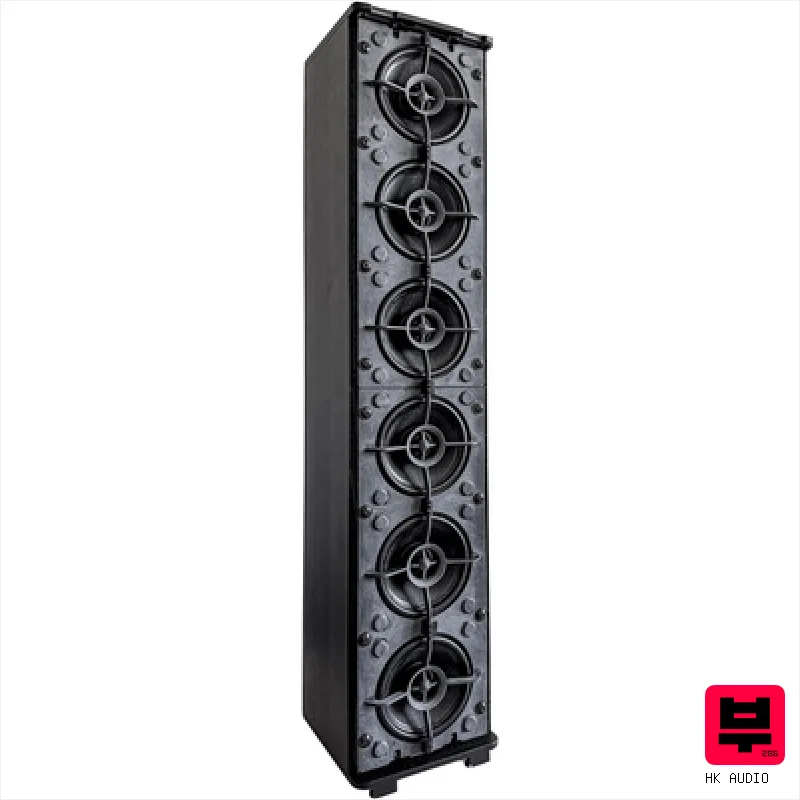
This column speaker packs a lot of power into a tall, sturdy box. The six midrange drivers and switchable EQ modes make it great for live sets. It's a solid choice for venues needing clear, loud sound without complex wiring.
Pros
- Curved column design packs six midrange drivers for focused sound.
- Metal-reinforced cabinet keeps bass resonances low and tight.
- Class-D amplifier delivers 1200 watts of clean power.
Cons
- No wireless microphone input, forcing mic use with cables.
- Single RCA stereo input limits direct connection options.
42AudioFu
IndexStableno change since Aug 17Aug 17$781 now$781€698 at Thomann · in stockCheck price ↗ -
- Weight24.8 kg
The iP1000 V2 is a seriously impressive package – a column PA that delivers surprising power and clarity. It's perfect for smaller bands, corporate events, or anyone needing a self-contained, portable sound system with a clean, modern aesthetic. The app control is a nice touch, too.
Pros
- Neodymium drivers offer excellent power-to-weight ratio for portability.
- Integrated digital mixer simplifies setup and provides flexible routing.
- Column design delivers surprisingly even sound distribution across a wide area.
Cons
- Subwoofer size limits portability, making transport a two-person job.
- Integrated mixer's feature set might feel basic for experienced sound engineers.
-
- Size6.5"
The Maui 11 G2 is a seriously clever system – it's a compact, self-powered PA that sounds remarkably good for its size. It's perfect for smaller bands, singer-songwriters, or anyone needing clear sound reinforcement in spaces like pubs, cafes, or small theaters where a full-blown rig isn't practical. The DynX processing really helps it punch above its weight.
Pros
- Birch plywood sub housing provides excellent resonance and durability
- DynX processing delivers surprisingly clean, controlled sound at high volumes
- Compact design with sleek aesthetics suits both stage and background use
Cons
- Subwoofer's weight makes transport a two-person job, particularly for frequent travel
- Limited channel flexibility restricts complex mixing scenarios
34AudioFu
IndexStableno change since Aug 17Aug 17$928 now$928€829 at Thomann · in stockCheck price ↗ -
- Size8"
- Weight15 kg
This Fun Generation ColumnMix is a neat little package for smaller gigs or mobile presentations. The column array design gives you a decent spread of sound, and the Bluetooth connectivity is a real convenience. It's perfect for solo artists, DJs, or anyone needing a portable and relatively affordable PA solution.
Pros
- Cordura cover offers excellent protection against bumps and weather.
- Columnar design provides surprisingly even sound distribution for its size.
- Integrated echo effect adds basic vocal enhancement capabilities.
Cons
- 200W RMS is adequate but won't drive large venues effectively.
- Limited input channel options restrict complex mixing scenarios.
28AudioFu
IndexStableno change since Aug 17Aug 17$268 now$268€239 at Thomann · in stockCheck price ↗
Column PA Systems by the numbers
Measured across all 14 models we track, not a sample.
Median $781 — half of all column PA systems here cost less.
median of 12 models · 6.5"–12"
median of 13 models · 13.9 kg–19.7 kg
How to choose the best column PA systems
Frequency Response
A wider, flatter response is key for accurate reproduction. Don't be fooled by inflated numbers - listen for clarity and a lack of harshness, especially in the upper mids. A peaky response will sound brittle and fatiguing.
Coverage Angle
Column speakers are all about even coverage, so check the horizontal dispersion. Wider is generally better for reaching more of the audience, but too wide can muddy the sound. 100-120 degrees is a good sweet spot.
Power Handling (Wattage)
This dictates headroom. More wattage isn't always better, but you need enough to handle the dynamics of your music without clipping and distortion. For acoustic sets, 200W RMS is a decent starting point; bands will want more.
Low-End Extension
Column speakers aren't known for earth-shattering bass, but a respectable low-end response (around 80-100Hz) adds warmth and fullness. Expect a roll-off below that - don't try to make it a subwoofer replacement.
Build Quality & Portability
Let's be honest, at this price point, compromises are made. But you still want something that feels reasonably solid and isn't a pain to transport. Look for decent cabinet construction and manageable weight.
Buying guide
Alright, so you need a column PA but your bank account isn't exactly overflowing. I get it. These linear array-style speakers are fantastic for gigs where you need even coverage - think acoustic duos, small bands, spoken word, even decent monitoring - but they don't have to bankrupt you. We're focusing on systems under $1000 that actually deliver usable sound and aren't total garbage, which is surprisingly hard to find.
At this price, you're trading something. Don't expect premium components or studio-grade fidelity. Often, it's build quality or low-end thump that takes a hit.
Prioritize clarity and even coverage over raw power - you can always supplement with a sub later. Check reviews carefully for reports of driver distortion at higher volumes.
How the AudioFu Index works
Five measured signals and nothing else — no stars from strangers, no “tested by experts” we didn’t do. The weights are fixed and public. We don’t play these instruments; we measure the market around them.
This chart covers 14 column PA systems from the Thomann catalogue. Before you buy, read hands-on reviews and, where you can, play it. Full methodology.
AudioFu earns a commission when you buy through our Thomann links. It never changes the order — the index does.
- Demand40%
How many of this exact model are for sale on Reverb right now — what musicians actually buy and resell.
- Lineup20%
How many finishes Thomann stocks — makers expand the models that sell.
- Price15%
Where the price has moved since we started tracking in August.
- Specs15%
How completely the maker documents it.
- Maker10%
How deep the brand’s range is in this category.
Questions
Can I use this for vocals and instruments?
Absolutely, but be realistic. These aren't designed for heavy rock or EDM. They shine with acoustic music, vocals, and smaller ensembles. If you're gigging with a drummer, you'll likely need a subwoofer.
What's the difference between a column PA and a regular speaker?
Column arrays use multiple drivers arranged in a vertical line to create a wider, more even sound dispersion pattern. Regular speakers project sound in a more focused cone, which can lead to uneven coverage and hot spots.
Do I need a mixer?
Yes! A column PA is just the speakers. You'll need a separate mixer to connect your microphones, instruments, and other audio sources. Budget for that in your overall cost.
Are these good for recording?
They can work in a pinch for recording vocals or acoustic instruments, but the sound might lack character. A dedicated studio monitor will always be better for critical listening and mixing.
What about Bluetooth connectivity?
Bluetooth is a nice convenience, but don't rely on it for critical audio. The latency and audio quality often aren't great. Wired connections are always preferable for live performance.