AudioFu Chart · November 2026
Best 1/2 Cellos for Advanced 2026
The top pick is Gewa Maestro 2 Cello Set 1/2 CB ($1,880). Thomann Classic Cello Set 1/2 gives you the most for the money at $488. Ranked by the AudioFu Index from 13 models across 7 brands, prices checked every night.
Last updated: November 12, 2026
Top 10
Full detail for the 10 highest AudioFu Index scores. Every other model is listed below.
-
- Size1/2 size
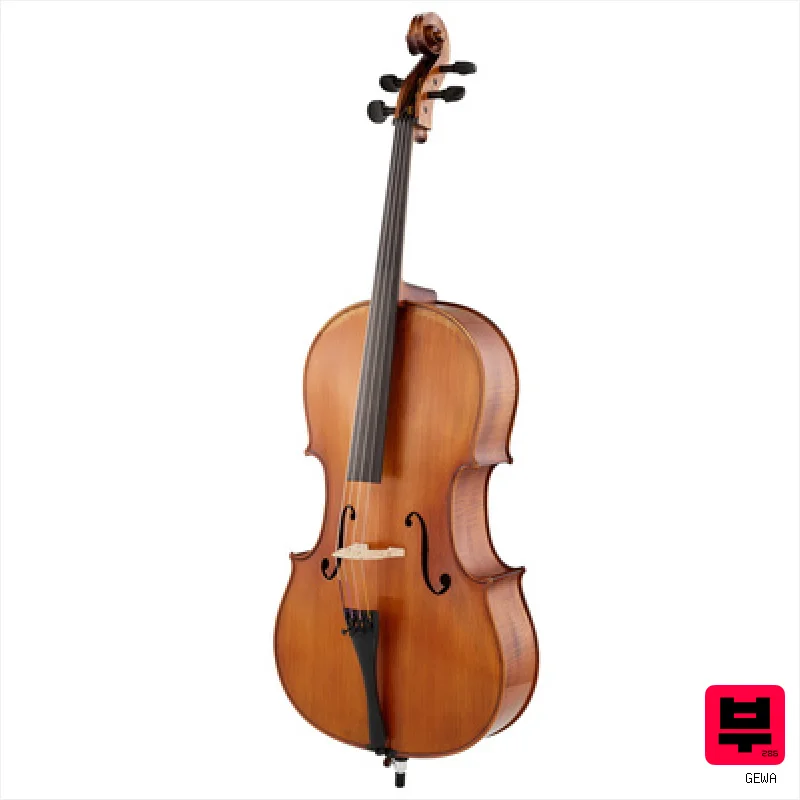
The Gewa Maestro 2 is a solid choice for a developing cellist. The tonewoods provide a surprisingly mature sound for a student instrument, and the included accessories make it a complete package. It's a great value for a young player ready to step up from a beginner instrument, offering a noticeably improved playing experience.
Pros
- Solid European spruce top delivers a surprisingly resonant and warm tonal foundation.
- Well-flamed maple back and sides contribute to a refined, mature acoustic projection.
- Ebony fittings enhance response and offer a premium feel under the fingers.
Cons
- Hand-applied varnish, while beautiful, can exhibit slight color variations – a cosmetic quirk.
- The included carbon fiber bow is adequate, but a higher-quality bow would significantly improve tone.
55AudioFu
IndexStableno change since Aug 17Aug 17$1,880 now$1,880€1,690 at Thomann · in stockCheck price ↗ -
- Size1/2 size
This is a 1/2 size cello with a solid European spruce top and flamed maple back and sides. You get ebony fittings, an Aubert bridge, and Larsen Aurora strings, so it comes set up with well-known parts. It suits a young player moving up from a smaller cello, or a parent who wants a well-made cello for a child.
Pros
- Solid European spruce top gives the cello a traditional wood core.
- Back and sides are well flamed solid European maple.
- Ebony fittings and an original Aubert bridge are fitted as standard.
Cons
- Colour may vary slightly because the varnish is applied by hand.
51AudioFu
IndexStableno change since Aug 17Aug 17$1,778 now$1,778€1,598 at Thomann · in stockCheck price ↗ -
- Size1/2 size
The Gewa Maestro 1 is a really solid choice for a serious young cellist. The all-solid wood construction and quality fittings give it a mature sound and feel that punches above its class. It's a great step up from beginner instruments and will keep a motivated student progressing well.
Pros
- Solid European maple back/sides offer rich, warm tonal projection.
- Hand-applied spirit varnish enhances resonance and aesthetic appeal.
- Ebony fittings provide excellent response and a refined feel.
Cons
- The hand-varnished finish, while beautiful, introduces slight color variation.
- Solid wood construction adds a bit of weight, potentially challenging for younger players.
55AudioFu
IndexStableno change since Aug 17Aug 17$1,724 now$1,724€1,549 at Thomann · in stockCheck price ↗ -
- Size1/2 size
You get a 1/2 size cello made from hand-selected European wood. It has a solid spruce top, solid flamed maple back and sides, ebony fittings, and Larsen Aurora strings. It suits a young player who wants a cello with carefully chosen materials and a classic build.
Pros
- Back and sides are well flamed European maple, a handsome wood choice
- Top is selected solid European spruce, with the solid wood listed for the top
- Hand-selected European tonewood throughout the instrument
Cons
- Varnish is hand-applied, so colour can deviate slightly from one instrument to the next
51AudioFu
IndexStableno change since Aug 17Aug 17$1,612 now$1,612€1,449 at Thomann · in stockCheck price ↗ -
Alfred Stingl by Höfner AS-190-C Cello Set 1/
2 Not on Reverb yet1 finish at Thomann
- Size1/2 size
This Alfred Stingl cello is a solid choice for introducing young students to the instrument. The solid wood construction gives it a surprisingly mature tone for its price point, and the included accessories make it a complete, ready-to-play set. It's an excellent value for those starting their cello journey.
Pros
- Solid spruce top delivers a surprisingly warm and resonant tone.
- Lightly flamed maple back and sides enhance projection and sustain.
- Ebony fingerboard and pegs offer a refined playing experience and tuning stability.
Cons
- Carbon fiber bow lacks the responsiveness of a higher-grade pernambuco bow.
- 1/2 size is best suited for younger or smaller students – ergonomics matter.
44AudioFu
IndexStableno change since Aug 17Aug 17$1,556 now$1,556€1,398 at Thomann · in stockCheck price ↗ -
- Size1/2 size
This is a 1/2 size cello, sized for a young player who is still growing. You get a solid European spruce top and solid European maple back and sides, with an ebony fretboard and ebony pegs. The Wittner tailpiece has fine tuners, and the endpin adjusts in height, so you can set the cello up to fit your child.
Pros
- Solid European spruce top for a well-built body
- Solid European maple back and sides with inlaid purfling
- Ebony fretboard and ebony pegs
64AudioFu
IndexStableno change since Aug 17Aug 17$967 now$967€869 at Thomann · in stockCheck price ↗ -
- Size1/2 size
This is a solid-wood 1/2 size cello, so it fits a younger or smaller player. You get a solid European spruce top and solid flamed European maple back and sides, with an ebony fingerboard and hand-applied varnish. It suits a student or a parent looking for a traditional, well-built cello for a child at this size.
Pros
- Solid European spruce top, the main sound-producing part of the cello
- Solid flamed European maple back and sides for a traditional build
- Ebony fingerboard and ebony pegs for a classic look and feel
Cons
- Only a 1/2 size, so it suits young players and smaller builds only
55AudioFu
IndexStableno change since Aug 17Aug 17$1,333 now$1,333€1,198 at Thomann · in stockCheck price ↗ -
- Size1/2 size
This is a 1/2 size cello set, sized for a child or youth player. It has a laminated spruce top, laminated flamed back and sides, ebony pegs and fingerboard, and steel strings. Since it comes with a bow and a bag, it is a simple, all-in-one choice for a young student starting out.
Pros
- Laminated spruce top gives this cello a sturdy front.
- Laminated graphic flamed back and sides give it a decorative look.
- Ebony pegs and ebony fingerboard are hardwood parts.
45AudioFu
IndexStableno change since Aug 17Aug 17$744 now$744€669 at Thomann · in stockCheck price ↗ -
- Size1/2 size
This is a 1/2 size cello made for a child or young player. It has a solid spruce top, solid flamed maple back and sides, and comes with a bow and bag. It suits a young student starting out who wants a complete set with classic wood and a finish that looks good.
Pros
- Selected solid spruce top gives the body a solid tonewood base
- Solid graphic flamed maple back and sides add visual character
- Ebony fingerboard and ebony tuning pegs give it a classic build
Cons
- Steel strings are fitted, which feel firmer under the fingers than some younger players may like
45AudioFu
IndexStableno change since Aug 17Aug 17$945 now$945€849 at Thomann · in stockCheck price ↗ -
- Size1/2 size
This Thomann cello set is a solid entry point for young cellists or those on a budget. The 1/2 size makes it manageable for smaller students, and the included accessories get them playing immediately. While not a concert-level instrument, it's surprisingly well-made for the price and a great way to see if the cello is a good fit.
Pros
- Jargar Young Talent strings offer a surprisingly warm and responsive tone.
- Solid maple neck provides improved stability and a comfortable playing feel.
- Composite tailpiece with fine tuners simplifies tuning for beginners.
Cons
- Plywood construction limits tonal complexity compared to solid wood instruments.
- Jujube tuning pegs can be a bit finicky and require occasional tightening.
44AudioFu
IndexStableno change since Aug 17Aug 17$488 now$488€439 at Thomann · in stockCheck price ↗
All 13 1/2 cellos
Same index, same nightly prices — compact. Colour options of one model share a row. Tap a photo to zoom.
1/2 Cellos by the numbers
Measured across all 22 models we track, not a sample.
Median $1,333 — half of all 1/2 cellos here cost less.
most common · 22 models
How to choose the best 1/2 cellos
Neck Profile & Action
A comfortable neck is crucial. Many 1/2 cellos have overly thick or awkwardly shaped necks, hindering fast passages and vibrato. We look for a profile that allows for fluid movement and a playable action - not too high, not so low it buzzes.
Tonewood Quality & Resonance
Cheap cellos often use low-grade tonewood, resulting in a muffled, lifeless tone. We're hunting for instruments that exhibit good resonance and a complex tonal palette - capable of producing a warm low-end thump and a clear, singing upper register.
Bassbar & Soundpost Placement
These are key to projection and tonal balance. A poorly placed soundpost can choke the instrument's voice; a weak bassbar will result in a lack of power. Advanced players need an instrument that can cut through a band mix or record cleanly.
Bow Response & Weight
The bow needs to complement the cello's response. A heavy, stiff bow will fight the instrument's natural vibrations, while a too-flexible bow lacks control. We assess how well the bow articulates dynamics and sustains notes.
Construction & Varnish Quality
Sloppy construction (poorly fitted seams, uneven varnish) often translates to compromised tone and structural instability. We're looking for instruments built with attention to detail, as a poorly constructed cello will fall apart faster than you can say 'intonation'.
Buying guide
So, you're an advanced player but need a 1/2 cello? Maybe you're smaller in stature, or you're looking for a travel instrument that doesn't compromise too much. Finding a 1/2 cello that doesn't sound like a toy or fight you every step of the way isn't easy - most are built for beginners. We're focusing on instruments that can actually hold up to serious playing and recording, not just lessons.
Don't be fooled by pretty finishes or inflated marketing. 1/2 cellos are inherently compromised compared to full-size instruments, so you're paying for the best possible compromise. Prioritize playability and tonal response over aesthetics. Beware of instruments with overly bright, ice-picky top end - it's often a sign of cheap materials and poor construction.
Expect to spend more to get something truly usable.
How the AudioFu Index works
Five measured signals and nothing else — no stars from strangers, no “tested by experts” we didn’t do. The weights are fixed and public. We don’t play these instruments; we measure the market around them.
This chart covers 22 1/2 cellos from the Thomann catalogue. Before you buy, read hands-on reviews and, where you can, play it. Full methodology.
AudioFu earns a commission when you buy through our Thomann links. It never changes the order — the index does.
- Demand40%
How many of this exact model are for sale on Reverb right now — what musicians actually buy and resell.
- Lineup20%
How many finishes Thomann stocks — makers expand the models that sell.
- Price15%
Where the price has moved since we started tracking in August.
- Specs15%
How completely the maker documents it.
- Maker10%
How deep the brand’s range is in this category.
Questions
Are 1/2 cellos suitable for professional recording?
It's tricky. A good one can be, but you'll likely need to be more selective with mic placement and EQ to compensate for the smaller body and potential lack of low-end headroom. Don't expect the same depth as a full-size.
What's the difference between a 1/2 and a 3/4 cello?
The 1/2 is smaller and lighter, typically suited for players 4'10" or shorter. The 3/4 is a bit larger and more resonant, often a better choice for taller players needing a fuller sound.
Can I upgrade the strings on a 1/2 cello?
Absolutely! String choice makes a huge difference. Moving to a higher-quality string set (Pirastro, D'Addario, Thomastik-Infeld) can significantly improve the tone and response - often more than upgrading the instrument itself.
Is it worth getting a setup on a 1/2 cello?
Absolutely essential. A proper setup - adjusting the bridge, soundpost, and action - can dramatically improve the playability and tone of any cello, especially a smaller one that might have been neglected.
What about electric pickups for a 1/2 cello?
If you're gigging, a pickup is a good idea, but be prepared to spend on a decent one. Cheap pickups will sound brittle and lifeless. Look for something with adjustable voicing to tame the high frequencies and add some warmth.