
On November 9, 2026, Thomann had 31 microphones made for guitar amps, with a median of $296, and 34 load boxes and attenuators, with a median of $543. Most guitar recordings still start with the cheapest of them.
One mic: the classic
A cardioid dynamic mic, a few centimeters from the grille, aimed at one speaker. Where it points changes the tone more than which mic you use:
- At the dust cap, the center of the speaker: brightest, most aggressive.
- Between the cap and the edge of the cone: the usual starting point, balanced.
- Toward the edge: darker, more body, less fizz.
- Angled off-axis: softer highs.
Move it a centimeter at a time and listen on headphones, with someone else playing.
Shure SM57, $123

The standard amp mic in studios for decades: a cardioid dynamic that takes any volume and costs $124. It ranks second of 23 amp microphones. #2 of 23 amp microphones.
Sennheiser MD 421-II, $430
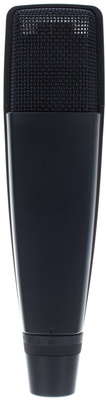
A larger dynamic with a five-position bass switch, rounder and fuller than the SM57 and just as tough. It ranks first. #1 of 23 amp microphones.
Sennheiser's e609, a flat supercardioid that hangs over the amp by its cable, ranks third at $88.
Two mics: more body
A second mic adds what the first misses. Common pairs:
- Two dynamics, an SM57 and an MD 421, both close, for a thicker sound you blend in the mix.
- A dynamic close and a condenser a meter back, for some room.
- A dynamic and a ribbon, the ribbon adding warmth and smoothing the highs.
The catch is phase: two mics at different distances can cancel each other's low end. Put their capsules at the same distance from the speaker, or flip the polarity of one and keep the fuller sound.
No mic: a load box
A tube amp sounds best loud, and loud doesn't work in an apartment. A load box replaces the speaker: the amp drives it at full power, and the box sends a line signal, usually through a speaker and microphone simulation called an impulse response, to your interface.
Two Notes Torpedo Captor X, $607
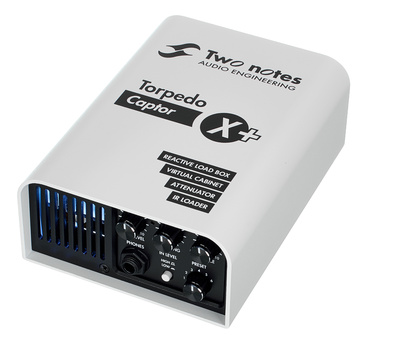
A reactive load for amps up to 100 watts, with an attenuator for running a real speaker at home or club level, stereo virtual speaker cabinets and microphones, and slots for 512 of your own impulse responses. It ranks first of 31. #1 of 31 guitar amp attenuators.
The simpler Torpedo Captor, with an analog speaker simulation, a 20 dB attenuator and a DI output, costs $233 and ranks second. Match the impedance to your amp: 8 or 16 ohms.
Which one?
- First recordings, rehearsals, small gigs: one SM57 or e609.
- Recording at home with a tube amp: a load box, and a mic for the days you can be loud.
- A studio guitar sound with depth: two mics, carefully aligned.
Where the numbers come from. Every amp microphone and guitar amp load box or attenuator Thomann had in stock on November 9, 2026, from its partner feed. Specs are from Thomann's descriptions. Places are from our rankings. Prices are Thomann's US prices.
Share this story

Denis Kataev runs AudioFu. Every night the site records the prices of more than 38,000 instruments and studio tools at Thomann, and he writes about what those numbers show: what got cheaper, what just arrived, and which discounts are real.
All stories by Denis Kataev →


