
Best Workstations for Beginner 2026
So, you're diving into the world of workstations? Awesome! It's a big step up from a basic keyboard, offering sounds, sequencing, and a whole lot more. But wading through the options can be overwhelming, especially when you're just starting out. This isn't about the 'best' in a purely objective sense; it's about finding a workstation that'll inspire you and won't leave you frustrated before you even write a single chord progression.
Last updated: September 24, 2026
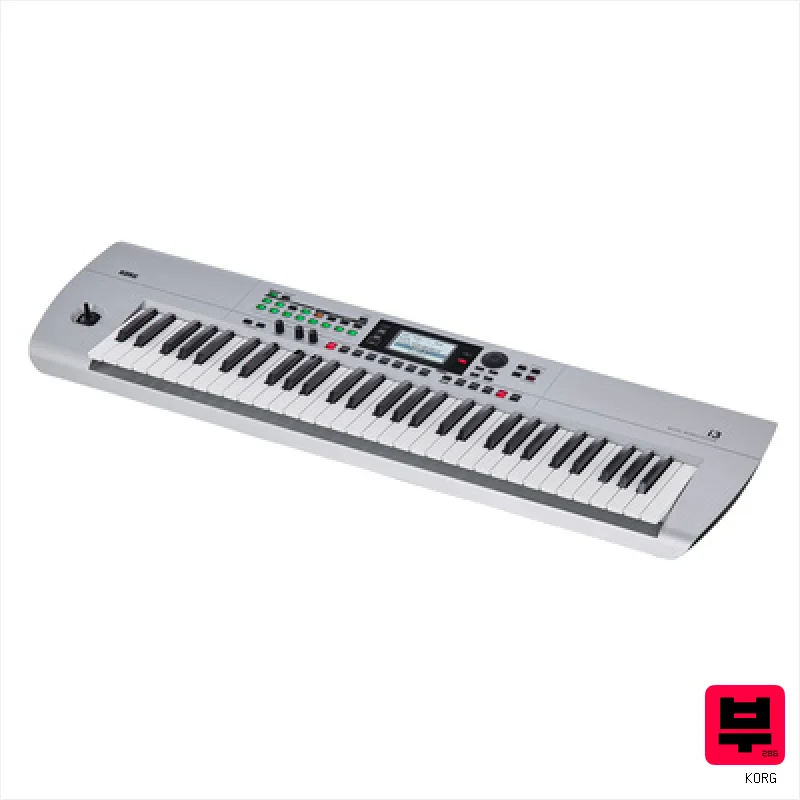
Korg i3 Silver
- • 64-voice polyphony handles dense arrangements easily
- • Stereo PCM generation creates rich, detailed tones
- • Joystick and transpose button simplify playing
- • 8-hour battery life works for gigging sessions
- • No continuous foot pedal detection support
- • Display lacks color options for visual feedback
- • Audio inputs use older mini jack standards

Korg i3 Black
- • Excellent polyphony for layered sounds and complex arrangements
- • Joystick provides intuitive control over modulation and effects
- • Built-in audio player simplifies backing track integration
- • Portable design with battery power enables mobile performance
- • The LCD display lacks brightness and resolution for detailed editing
- • Limited continuous pedal detection restricts expressive playing
- • The key action feels lightweight and lacks premium feel

Korg Nautilus 61
- • Excellent sound engine combining Korg’s best vintage and modern synths
- • TouchView display is intuitive and responsive, enhancing workflow
- • Smooth Sound Transition eliminates frustrating audio dropouts during patches
- • Retractable real-time controller offers immediate sound shaping possibilities
- • The insemi-weighted action lacks the nuanced feel of a fully weighted keybed
- • 61 keys limit versatility for players accustomed to 76 or 88-key instruments
- • Sampling functionality, while present, is somewhat basic compared to dedicated samplers
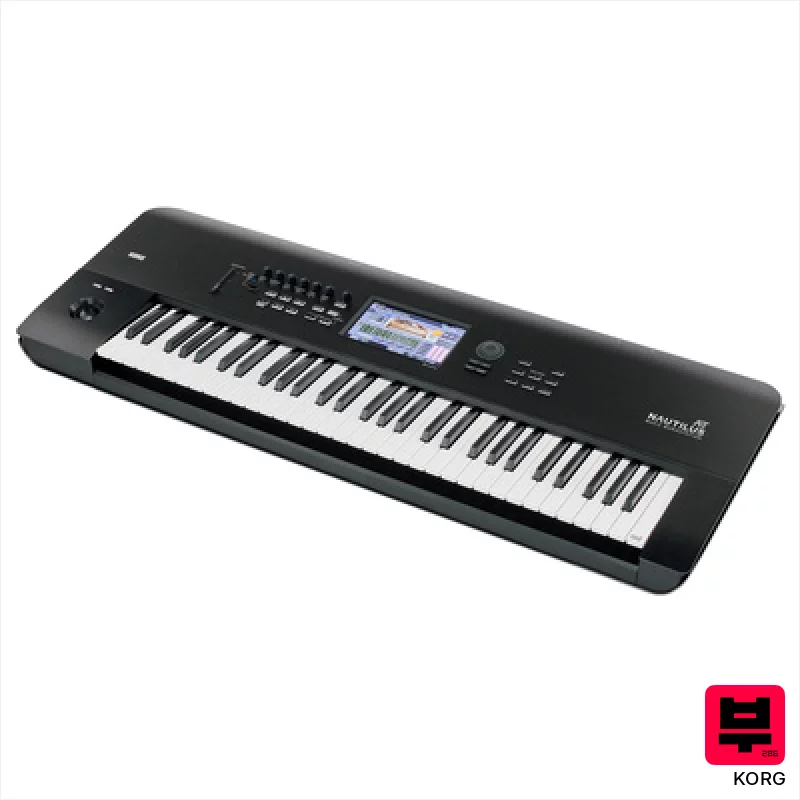
Korg Nautilus 61 AT
- • SGX-2 piano engine delivers remarkably authentic, nuanced acoustic piano tones.
- • Real-time controller provides intuitive, immediate sound sculpting capabilities.
- • Nine distinct synthesis engines offer immense sonic palette and creative possibilities.
- • Smooth Sound Transition eliminates frustrating audio dropouts during performance changes.
- • The 'semi-weighted' action feels lighter than a fully weighted keyboard, lacking some depth.
- • While versatile, the 61-key layout limits complex chord voicings and basslines.
- • Sampling functionality is present, but lacks the advanced editing features of dedicated samplers.

Korg Nautilus 88
- • Excellent RH3 hammer action provides realistic piano feel
- • Nine distinct synthesis engines offer incredible sonic versatility
- • Smooth Sound Transition eliminates frustrating audio dropouts
- • Real-time controller simplifies live performance adjustments
- • The 7-inch display, while functional, feels a bit cramped for detailed editing
- • Weight makes it less portable than some workstation alternatives
- • The extensive feature set can be initially overwhelming for new users
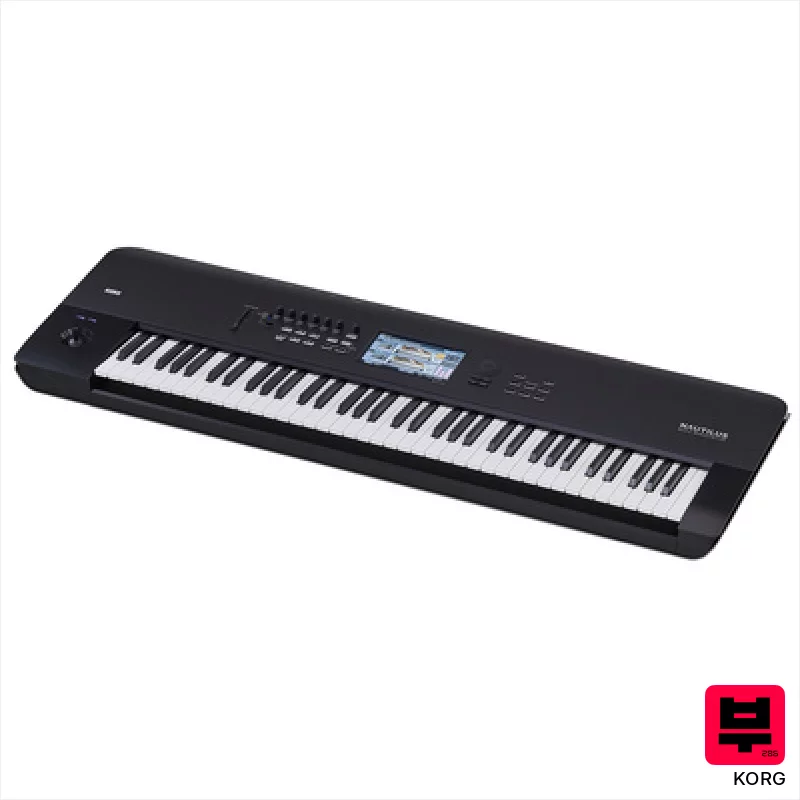
Korg Nautilus 73
- • Exceptional sound engine versatility with nine synthesis methods.
- • TouchView display offers clear visuals and intuitive navigation.
- • Smooth Sound Transition eliminates frustrating audio dropouts during patches.
- • Retractable real-time controller simplifies live performance tweaks.
- • The insemi-weighted key action lacks the depth of fully weighted keys.
- • Size and weight make portability a significant consideration for gigging musicians.
- • Sampling functionality is relatively basic compared to dedicated samplers.

Yamaha Montage M8X
- • 88 keys with polyphonic aftertouch for deep expression
- • 7-inch color touchscreen plus ribbon controller for intuitive play
- • Motion Control engine mixes FM and analog synthesis modes
- • 88 user sets and 200+ effects for custom live performances
- • Heavy at 120 pounds making transport difficult
- • No specific key type mentioned in the provided text
- • Large footprint at over 1.4 meters wide for small stages
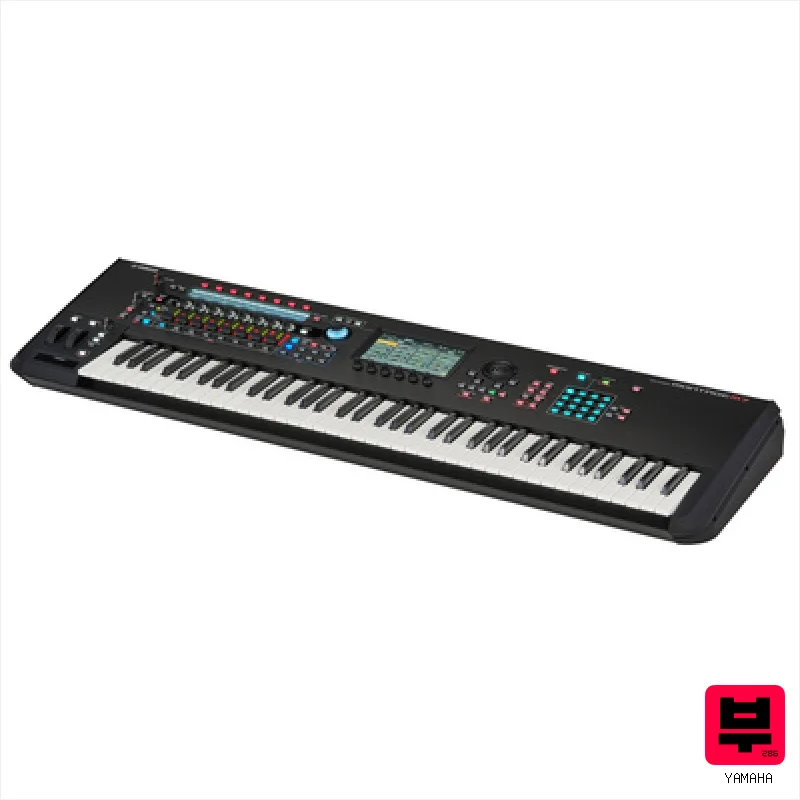
Yamaha Montage M7
- • 76 keys with polyphonic aftertouch for expressive playing
- • Dual FM and analog synthesis engines for rich sound
- • Large 7-inch touchscreen for easy sound programming
- • Extensive wave and sample library for diverse tones
- • Heavier than expected at 17 kg for transport
- • No built-in speakers, requires external audio setup
- • Limited USB MIDI output channels for complex rigs

Yamaha Montage M6
- • Sixteen-track sequencer handles complex live arrangements easily.
- • Seventy-two distinct sound types cover almost every musical need.
- • Touchscreen display lets you edit sounds without touching keys.
- • Polyphonic aftertouch adds expressive control to every note played.
- • Thirteen hundred millimeters wide makes it hard to fit in small rooms.
- • Eleven gigabytes of waveforms can fill up fast with large samples.
- • No specific keyboard action type is described in the provided text.
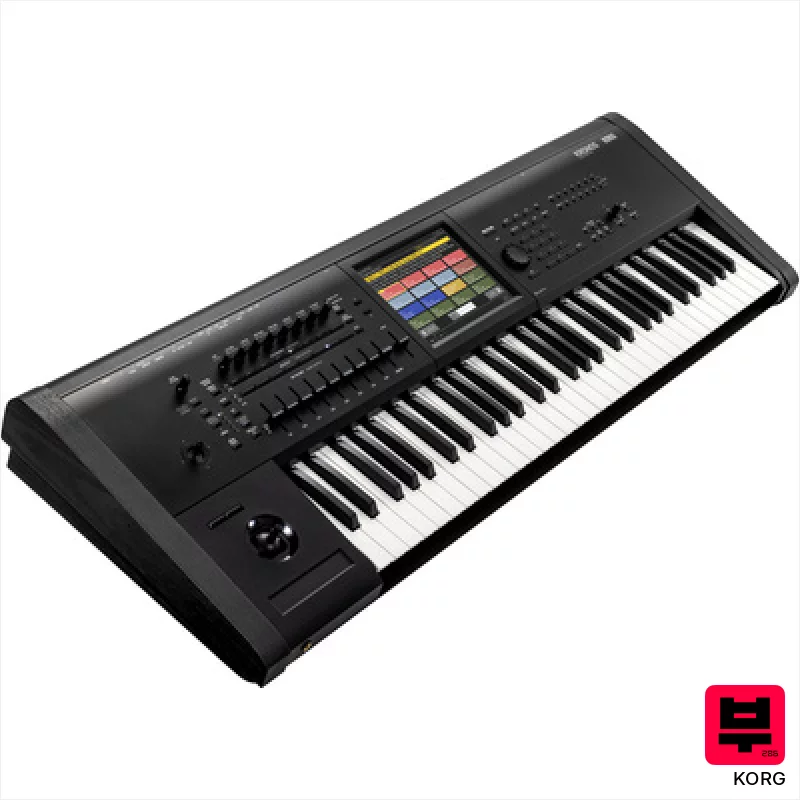
Korg Kronos 61
- • Nine distinct sound engines offer unparalleled sonic breadth.
- • TouchView display is exceptionally bright and responsive for live use.
- • Comprehensive sequencer facilitates complex arrangement and composition workflows.
- • Extensive effects suite provides professional-grade sound shaping capabilities.
- • 61-key action might feel limiting for pianists accustomed to full 88-key range.
- • Premium-priced, representing a significant investment for many musicians.
- • Steep learning curve due to the sheer depth of features and options.

Korg Kronos 88
- • RH3 hammer action provides realistic piano feel and responsiveness
- • Nine distinct sound engines offer unparalleled sonic versatility
- • Comprehensive sequencer with 16 MIDI and 16 audio tracks enables complex arrangements
- • High-resolution TouchView display simplifies navigation and editing
- • The sheer depth of features presents a steep learning curve for beginners
- • Its considerable weight (around 28 lbs) makes transport challenging
- • The extensive feature set may feel overwhelming for simpler performance needs
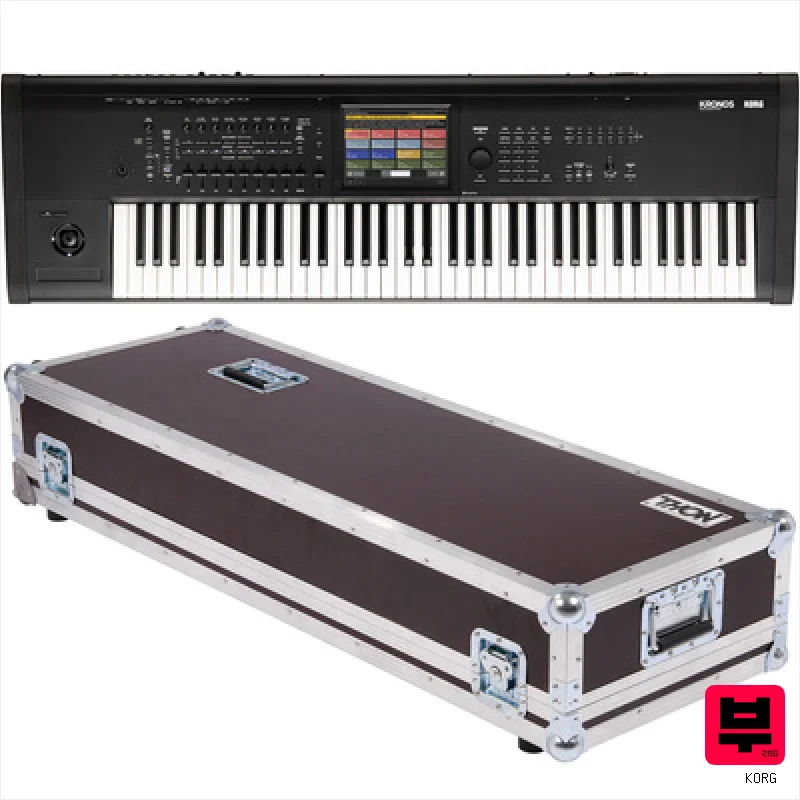
Korg Kronos 73 Case Bundle
- • Four zones of graduated weighted hammer action keys
- • Separate sound engines for pianos, organs, and analog synths
- • Seventy-three velocity-sensitive keys with full aftertouch response
- • Built-in sequencer handles sixteen MIDI and audio tracks
- • No physical case included in the listed bundle
- • Missing details on overall chassis build quality
- • Weight specification not provided in the description

Korg Kronos 73
- • RH3 action provides a genuinely piano-like feel and responsiveness
- • Nine distinct sound engines offer unparalleled sonic flexibility and depth
- • Comprehensive sequencer with 16 MIDI and 16 audio tracks facilitates complex arrangements
- • TouchView display is bright, clear, and intuitive for real-time parameter adjustments
- • The sheer depth of features can be overwhelming for less experienced users
- • Its size and weight (around 48 lbs) make it less portable than some workstations
- • The included effects, while numerous, might not satisfy users seeking boutique-quality processing

Kurzweil K2700
- • Fatar TP/40L keys offer excellent feel and responsiveness
- • V.A.S.T. engine provides remarkably deep and complex sound design
- • Extensive preset library covers a huge range of musical styles
- • 16-zone multi controller offers incredible performance flexibility
- • The user interface can feel dated and less intuitive than modern workstations
- • The sheer number of features can be overwhelming for beginners
- • Physical size and weight make it less portable for gigging
Workstations by the numbers
Measured across all 14 models in this category, so «wide», «short» or «expensive» mean something you can check.
How to Choose the Best Workstations
Playability
How the keys feel under your fingers matters. Heavier, piano-like action is great for classical, but a lighter, synth-action is often easier for beginners exploring sounds. A poor action can kill your enthusiasm faster than you think.
Sound Engine Complexity
Too many knobs and menus can be paralyzing. Look for something intuitive with presets you can actually use, and a clear path to understanding the basics of synthesis.
Sequencing & Recording
A simple, visual sequencer is key. Being able to lay down a basic drum beat and bassline is a huge confidence booster, even if it's not a full-blown Logic Pro setup.
Portability & Build Quality
You'll likely move this thing around - to lessons, rehearsals, maybe even a gig someday. Something lightweight and reasonably sturdy is a definite plus. Cheap plastic feels cheap for a reason.
Sound Palette & Voicing
Does it cover the genres you're interested in? A workstation with a thin, brittle sound just won't cut it if you're aiming for a warm Rhodes vibe or a fat, Moog-style bass. Listen closely to demos - don't just rely on marketing buzzwords.
Buying Guide
Don't chase the bells and whistles. Many beginner workstations try to cram in every feature under the sun, resulting in a compromised experience. Prioritize playability, a manageable feature set, and a decent sound palette. Used gear is your friend - you can often snag a higher-end model from a few years ago for a great price, but be sure to test the keys and make sure all the buttons work.
How This List Is Built
We don't play these instruments — we're a catalog, not a review desk, and we'd rather say so than pretend otherwise. This page covers 14 workstations from the Thomann catalogue, which is the largest single source of specification data in this category: 14 in detail, the rest listed with their specifications.
Position is computed, not curated. We parse the manufacturer's own description into actual values — nut width, scale, fret count, fingerboard radius, size, alloy — and rank on them: how many specifications a model has published, how many of them are measurable numbers, and how precisely it meets this page's criterion. A product image adds a little. Price is not a ranking signal: it tells you nothing about whether a neck fits your hand. The same inputs always produce the same order, so nothing here is shuffled to look fresh.
What this list is good for: narrowing a category down to a shortlist by spec and budget. What it isn't: a substitute for hearing an instrument. Before you buy, read hands-on reviews and, where you can, play it. Full methodology.

