AudioFu
AudioFu Chart · October 2026
Best Workstations 2026
The top pick is Korg Nautilus AT 61-Key Workstation Keyboard with Aftertouch ($1,642). Korg i3 61-Key Music Workstation gives you the most for the money at $469. Yamaha Montage M8x 88-Key Synthesizer leads the high end. Ranked by the AudioFu Index from 12 models across 3 brands, prices checked every night.
Last updated: October 14, 2026
Narrow the chart
All WorkstationsTop 10
Full detail for the 10 highest AudioFu Index scores. Every other model is listed below.
-
Korg Nautilus AT 61-Key Workstation Keyboard with Aftertouch
Nautilus 61 · Korg
24 for sale on Reverb2 finishes at Thomann
- Weight13 kg
- Keys61 keys
- Key actionSemi-weighted keys
The Nautilus 61 is a fantastic, premium-priced workstation for keyboardists wanting a diverse palette of Korg's classic and modern sounds in a portable package. It’s a real sweet spot for gigging musicians or those needing a powerful, all-in-one solution without the bulk of a larger workstation. It’s especially appealing to fans of vintage Korg tones and those wanting immediate, hands-on sound manipulation.
Pros
- Excellent sound engine combining Korg’s best vintage and modern synths
- TouchView display is intuitive and responsive, enhancing workflow
- Smooth Sound Transition eliminates frustrating audio dropouts during patches
Cons
- The insemi-weighted action lacks the nuanced feel of a fully weighted keybed
- 61 keys limit versatility for players accustomed to 76 or 88-key instruments
95AudioFu
Index↓ 13.6%since Aug 14$1,901 · Aug 14$1,642 now$1,642€1,468 at Thomann · in stockCheck price ↗ -
- Weight23.1 kg
- Keys88 keys
- Key actionWeighted keys
The Nautilus 88 is a seriously impressive workstation – a real Swiss Army knife of synthesis. It's fantastic for keyboardists wanting a deep sound palette and solid sequencing capabilities, especially those moving beyond basic piano sounds. If you're looking for a comprehensive performance instrument and don't mind a bit of heft, this is a strong contender.
Pros
- Excellent RH3 hammer action provides realistic piano feel
- Nine distinct synthesis engines offer incredible sonic versatility
- Smooth Sound Transition eliminates frustrating audio dropouts
Cons
- The 7-inch display, while functional, feels a bit cramped for detailed editing
- Weight makes it less portable than some workstation alternatives
90AudioFu
Index↓ 14.0%since Aug 14 · lowest so far$2,572 · Aug 14$2,212 now$2,212€1,977 at Thomann · in stockCheck price ↗ -
Korg Kronos 3 61-Key Digital Synthesizer Workstation
Kronos 61 · Korg
30 for sale on Reverb1 finish at Thomann
- Weight14.2 kg
- Keys61 keys
The Kronos 61 is a powerhouse workstation – a real Swiss Army knife for sound design. It's perfect for gigging musicians, producers, and composers who need a huge palette of sounds and sequencing capabilities in a relatively portable package. Just be prepared to invest some serious time learning its intricacies.
Pros
- Nine distinct sound engines offer unparalleled sonic breadth.
- TouchView display is exceptionally bright and responsive for live use.
- Comprehensive sequencer facilitates complex arrangement and composition workflows.
Cons
- 61-key action might feel limiting for pianists accustomed to full 88-key range.
- Premium-priced, representing a significant investment for many musicians.
83AudioFu
Index↓ 8.8%since Aug 14 · lowest so far$3,467 · Aug 14$3,163 now$3,163€2,827 at Thomann · in stockCheck price ↗ -
- Weight4 kg
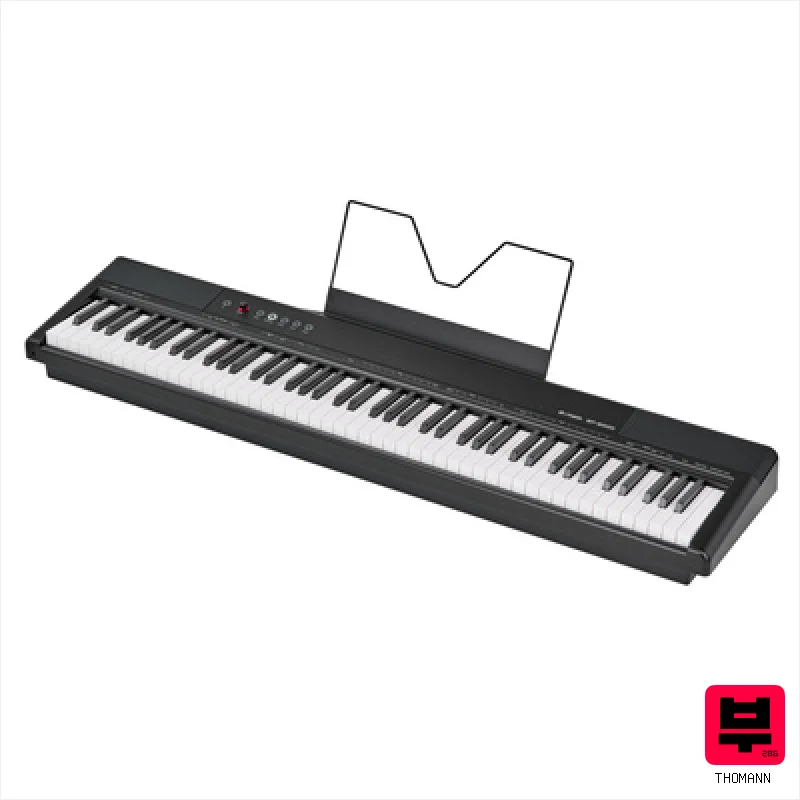
This silver workstation packs serious power for dance music with its 64-voice polyphony and stereo samples. It plays well thanks to the joystick and transpose button, but the lack of continuous pedal detection is a real limitation for live setups.
Pros
- 64-voice polyphony handles dense arrangements easily
- Stereo PCM generation creates rich, detailed tones
- Joystick and transpose button simplify playing
Cons
- No continuous foot pedal detection support
- Display lacks color options for visual feedback
82AudioFu
IndexStableno change since Aug 17Aug 17$469 now$469€419 at Thomann · in stockCheck price ↗ -
Korg Kronos 3 88-Key Digital Synthesizer Workstation
Kronos 88 · Korg
22 for sale on Reverb1 finish at Thomann
- Weight23.4 kg
- Key actionWeighted keys
The Kronos 88 is a powerhouse workstation – a true Swiss Army knife for keys. It's perfect for composers, producers, and gigging musicians who demand a vast palette of sounds and deep sequencing capabilities. Be prepared to invest time mastering it, but the payoff is immense creative potential.
Pros
- RH3 hammer action provides realistic piano feel and responsiveness
- Nine distinct sound engines offer unparalleled sonic versatility
- Comprehensive sequencer with 16 MIDI and 16 audio tracks enables complex arrangements
Cons
- The sheer depth of features presents a steep learning curve for beginners
- Its considerable weight (around 28 lbs) makes transport challenging
78AudioFu
Index↓ 5.5%since Aug 14 · lowest so far$4,194 · Aug 14$3,965 now$3,965€3,544 at Thomann · in stockCheck price ↗ -
- Weight14.6 kg
- Keys73 keys
- Key actionSemi-weighted keys
The Nautilus 73 is a powerhouse workstation offering an incredible range of sounds and sequencing capabilities. It's a great option for keyboardists needing a diverse palette of classic and modern sounds, especially those involved in composing, production, or performance where versatility is key. While not a substitute for a dedicated sampler, the sampling function adds another layer of creative potential.
Pros
- Exceptional sound engine versatility with nine synthesis methods.
- TouchView display offers clear visuals and intuitive navigation.
- Smooth Sound Transition eliminates frustrating audio dropouts during patches.
Cons
- The insemi-weighted key action lacks the depth of fully weighted keys.
- Size and weight make portability a significant consideration for gigging musicians.
76AudioFu
Index↓ 7.9%since Aug 14 · lowest so far$2,427 · Aug 14$2,235 now$2,235€1,998 at Thomann · in stockCheck price ↗ -
- Weight28.1 kg
- Keys88 keys
This workstation blends FM and analog synthesis for huge sound variety. The big touchscreen and ribbon controller make it easy to tweak sounds live. It packs a lot of sequencer tracks but is heavy to move around. It fits well in a studio or big stage setup where you need powerful sounds.
Pros
- 88 keys with polyphonic aftertouch for deep expression
- 7-inch color touchscreen plus ribbon controller for intuitive play
- Motion Control engine mixes FM and analog synthesis modes
Cons
- Heavy at 120 pounds making transport difficult
- No specific key type mentioned in the provided text
70AudioFu
IndexStableno change since Aug 17Aug 17$5,460 now$5,460€4,880 at Thomann · in stockCheck price ↗ -
- Weight17.6 kg
- Keys76 keys
This is a powerful all-in-one workstation with a big touchscreen and tons of built-in sounds. It handles complex setups well but is heavy and needs its own speakers. It fits anyone who wants a compact studio tool without buying extra gear.
Pros
- 76 keys with polyphonic aftertouch for expressive playing
- Dual FM and analog synthesis engines for rich sound
- Large 7-inch touchscreen for easy sound programming
Cons
- Heavier than expected at 17 kg for transport
- No built-in speakers, requires external audio setup
68AudioFu
IndexStableno change since Aug 17Aug 17$4,856 now$4,856€4,340 at Thomann · in stockCheck price ↗ -
Korg KRONOS 2 73-Key Digital Synthesizer Workstation
Kronos 73 · Korg
8 for sale on Reverb1 finish at Thomann
- Weight20.4 kg
- Key actionWeighted keys
The Kronos 73 is a powerhouse workstation, a true studio in a keyboard. Its breadth of sounds and sequencing capabilities make it ideal for composers, producers, and gigging musicians needing a versatile and expressive performance instrument. Be prepared for a learning curve, but the payoff is huge.
Pros
- RH3 action provides a genuinely piano-like feel and responsiveness
- Nine distinct sound engines offer unparalleled sonic flexibility and depth
- Comprehensive sequencer with 16 MIDI and 16 audio tracks facilitates complex arrangements
Cons
- The sheer depth of features can be overwhelming for less experienced users
- Its size and weight (around 48 lbs) make it less portable than some workstations
67AudioFu
Index↓ 5.2%since Aug 14 · lowest so far$3,870 · Aug 14$3,669 now$3,669€3,279 at Thomann · in stockCheck price ↗ -
- Weight15.3 kg
- Keys61 keys
This workstation packs a huge sequencer and many sounds into one big box. The touchscreen makes editing easy, but it's very wide and might not fit your space. It works great for live sets where you need to switch tracks and sounds on the fly.
Pros
- Sixteen-track sequencer handles complex live arrangements easily.
- Seventy-two distinct sound types cover almost every musical need.
- Touchscreen display lets you edit sounds without touching keys.
Cons
- Thirteen hundred millimeters wide makes it hard to fit in small rooms.
- Eleven gigabytes of waveforms can fill up fast with large samples.
63AudioFu
IndexStableno change since Aug 17Aug 17$4,263 now$4,263€3,810 at Thomann · in stockCheck price ↗
All 12 workstations
Same index, same nightly prices — compact. Colour options of one model share a row. Tap a photo to zoom.
Workstations by the numbers
Measured across all 14 models we track, not a sample.
Median $3,163 — half of all workstations here cost less.
median of 14 models · 4 kg–23.6 kg
median of 8 models · 61–88
most common · 7 models
How to choose the best workstations
Sound Engine & Voice Architecture
This is the heart of it. Is it a straight-up FM engine like a Yamaha DX7, a sampled acoustic piano, or a hybrid system? Does it offer polyphony enough for lush pads and complex arrangements? A cheap workstation might skimp on the number of voices, leaving you frustrated when trying to layer sounds.
Keyboard Action
Don't underestimate this! A heavy, unresponsive action will kill your feel and articulation. A good weighted action will respond to your dynamics and let you really dig into those expressive piano passages. Conversely, a synth action might be preferable for fast, percussive sequences. Consider your playing style.
Effects & Routing
A workstation is only as good as its effects. Does it have a decent reverb? Chorus? Modulation? Can you route signals internally? A limited effects section will quickly become a bottleneck in your creative process. Look for flexibility - the ability to insert your own effects is a huge bonus.
Workstation Features (Sequencing, Sampling, Arpeggiators)
These are the features that separate a keyboard from a true workstation. Can you sequence multiple tracks? Sample your own sounds? Does the arpeggiator offer advanced patterns? A limited sequencer can feel restrictive, especially if you're used to DAW-based workflows.
Build Quality & Connectivity
Let's be honest, gigging gear takes a beating. A flimsy plastic case won't last. Also, check the connectivity - MIDI ins/outs, audio inputs/outputs, USB - make sure it plays nice with your existing setup. Cheap workstations often use cheaper components, which translates to a shorter lifespan.
Buying guide
So, you're looking for a workstation? It's a big decision - more than just a keyboard, it's a whole studio in a box. We've all been there, staring at a wall of synths, wondering if you need a massive rack of modules or if a self-contained workstation can actually cover your sonic needs. This guide will help you cut through the noise and find a workstation that'll actually work for you, whether you're laying down tracks in your home studio or gigging out every weekend.
Don't get caught up in the hype. A workstation is an investment, but you don't need to break the bank. Often, older models offer incredible value - the technology matures, the prices drop, and you still get a fantastic instrument.
Pay attention to the keyboard action - it's something you feel, not just read about. And seriously, test it out if you can before you commit.
How the AudioFu Index works
Five measured signals and nothing else — no stars from strangers, no “tested by experts” we didn’t do. The weights are fixed and public. We don’t play these instruments; we measure the market around them.
This chart covers 14 workstations from the Thomann catalogue. Before you buy, read hands-on reviews and, where you can, play it. Full methodology.
AudioFu earns a commission when you buy through our Thomann links. It never changes the order — the index does.
- Demand40%
How many of this exact model are for sale on Reverb right now — what musicians actually buy and resell.
- Lineup20%
How many finishes Thomann stocks — makers expand the models that sell.
- Price15%
Where the price has moved since we started tracking in August.
- Specs15%
How completely the maker documents it.
- Maker10%
How deep the brand’s range is in this category.
Questions
What's the difference between a workstation and a synthesizer?
A synthesizer usually focuses on sound generation. A workstation adds sequencing, sampling, effects, and often a full-featured keyboard - it's a complete music production system.
Do I need a lot of RAM?
It depends. If you plan on sampling a lot or using large sample libraries, yes. Otherwise, the stock sounds and built-in sampler should be sufficient. But more RAM never hurts.
Can I use a workstation with my DAW?
Absolutely! Most workstations offer MIDI connectivity and can be used as a controller. Some even offer audio interface capabilities.
Are older workstations still any good?
Many older workstations (like the Yamaha Motif series or Korg Triton series) are still incredibly capable and offer a unique sound. They're often more affordable and have a devoted following.
What's the deal with 'hybrid' workstations?
Hybrid workstations combine different synthesis methods - like FM, sampling, and virtual analog - to offer a wider range of sounds and creative possibilities. They often provide more flexibility than a workstation based on a single synthesis type.