
Best Workstations for Live Performance 2026
So, you're looking to ditch the rack of boxes and consolidate into a workstation for live gigs? Smart move - less cable spaghetti is always a win. But not every workstation is built for the stage; you need something that can handle the heat, deliver reliable sounds, and won't leave you fighting feedback in a smoky club. This isn't about the latest features, it's about what actually works when the lights come on.
Last updated: July 15, 2026 • Next update: July 22, 2026

Korg Nautilus 88 AT
- • RH3 action provides excellent feel, mimicking acoustic piano response.
- • Nine distinct engines offer unparalleled sonic versatility and character.
- • TouchView display simplifies complex editing with intuitive visual feedback.
- • Smooth Sound Transition prevents audio glitches during performance changes.
- • The 88-key format makes it less portable than its smaller counterparts.
- • The user interface, while improved, can still have a learning curve for new users.
- • Sampling capabilities are present but relatively basic compared to dedicated samplers.

Korg Kronos 88
- • RH3 hammer action provides realistic piano feel and responsiveness
- • Nine distinct sound engines offer unparalleled sonic versatility
- • Comprehensive sequencer with 16 MIDI and 16 audio tracks enables complex arrangements
- • High-resolution TouchView display simplifies navigation and editing
- • The sheer depth of features presents a steep learning curve for beginners
- • Its considerable weight (around 28 lbs) makes transport challenging
- • The extensive feature set may feel overwhelming for simpler performance needs
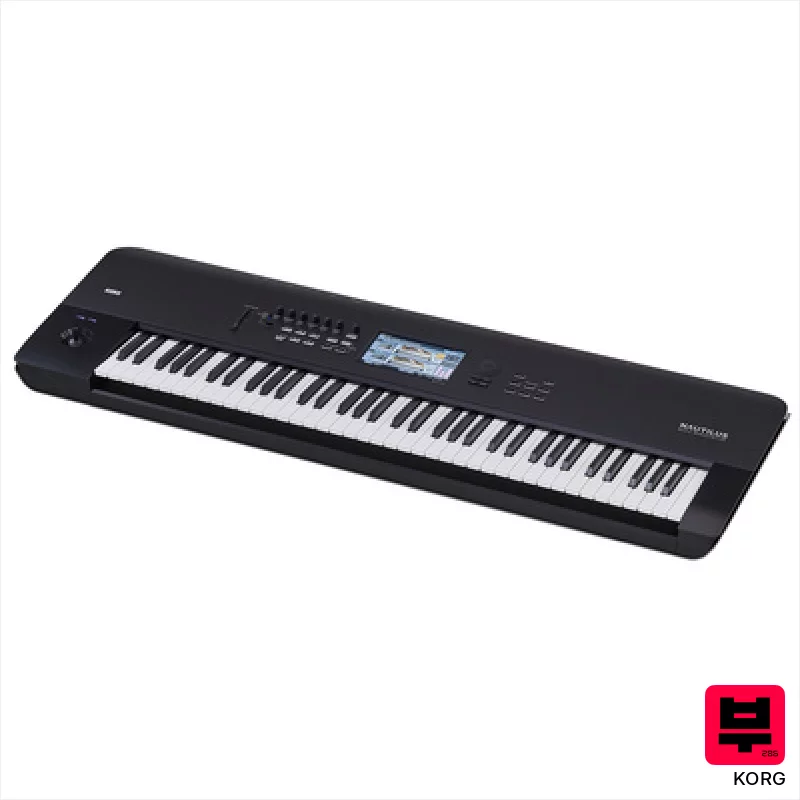
Korg Nautilus 73
- • Exceptional sound engine versatility with nine synthesis methods.
- • TouchView display offers clear visuals and intuitive navigation.
- • Smooth Sound Transition eliminates frustrating audio dropouts during patches.
- • Retractable real-time controller simplifies live performance tweaks.
- • The insemi-weighted key action lacks the depth of fully weighted keys.
- • Size and weight make portability a significant consideration for gigging musicians.
- • Sampling functionality is relatively basic compared to dedicated samplers.

Kurzweil K2700
- • Fatar TP/40L keys offer excellent feel and responsiveness
- • V.A.S.T. engine provides remarkably deep and complex sound design
- • Extensive preset library covers a huge range of musical styles
- • 16-zone multi controller offers incredible performance flexibility
- • The user interface can feel dated and less intuitive than modern workstations
- • The sheer number of features can be overwhelming for beginners
- • Physical size and weight make it less portable for gigging

Korg i3 Black
- • Excellent polyphony for layered sounds and complex arrangements
- • Joystick provides intuitive control over modulation and effects
- • Built-in audio player simplifies backing track integration
- • Portable design with battery power enables mobile performance
- • The LCD display lacks brightness and resolution for detailed editing
- • Limited continuous pedal detection restricts expressive playing
- • The key action feels lightweight and lacks premium feel

Korg Nautilus 61
- • Excellent sound engine combining Korg’s best vintage and modern synths
- • TouchView display is intuitive and responsive, enhancing workflow
- • Smooth Sound Transition eliminates frustrating audio dropouts during patches
- • Retractable real-time controller offers immediate sound shaping possibilities
- • The insemi-weighted action lacks the nuanced feel of a fully weighted keybed
- • 61 keys limit versatility for players accustomed to 76 or 88-key instruments
- • Sampling functionality, while present, is somewhat basic compared to dedicated samplers

Korg Nautilus 88
- • Excellent RH3 hammer action provides realistic piano feel
- • Nine distinct synthesis engines offer incredible sonic versatility
- • Smooth Sound Transition eliminates frustrating audio dropouts
- • Real-time controller simplifies live performance adjustments
- • The 7-inch display, while functional, feels a bit cramped for detailed editing
- • Weight makes it less portable than some workstation alternatives
- • The extensive feature set can be initially overwhelming for new users

Korg Nautilus 61 AT Gray
- • SGX-2 engine delivers remarkably authentic, nuanced acoustic piano tones.
- • Touch response and aftertouch provide expressive, tactile performance control.
- • Compact, lightweight design (around 13 lbs) enhances portability for gigging musicians.
- • Real-time knobs offer immediate, intuitive sound shaping and parameter adjustments.
- • Semi-weighted action lacks the depth and feel of fully weighted keys for serious pianists.
- • Limited polyphony (200 voices) can become a constraint with complex patches.
- • The 61-key range might feel cramped for players accustomed to 76 or 88 keys.

Korg Kronos 73
- • RH3 action provides a genuinely piano-like feel and responsiveness
- • Nine distinct sound engines offer unparalleled sonic flexibility and depth
- • Comprehensive sequencer with 16 MIDI and 16 audio tracks facilitates complex arrangements
- • TouchView display is bright, clear, and intuitive for real-time parameter adjustments
- • The sheer depth of features can be overwhelming for less experienced users
- • Its size and weight (around 48 lbs) make it less portable than some workstations
- • The included effects, while numerous, might not satisfy users seeking boutique-quality processing
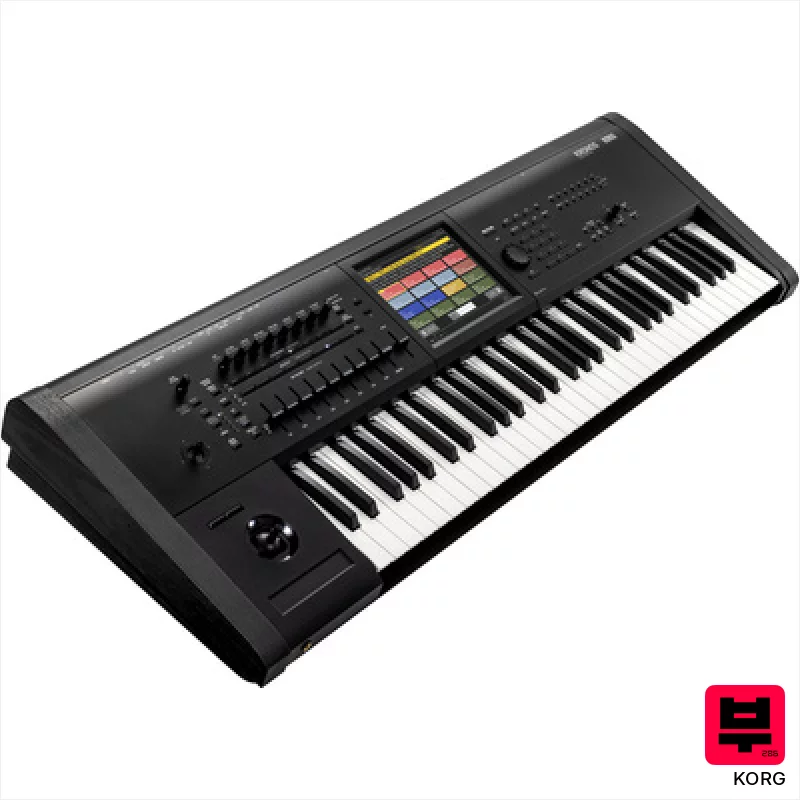
Korg Kronos 61
- • Nine distinct sound engines offer unparalleled sonic breadth.
- • TouchView display is exceptionally bright and responsive for live use.
- • Comprehensive sequencer facilitates complex arrangement and composition workflows.
- • Extensive effects suite provides professional-grade sound shaping capabilities.
- • 61-key action might feel limiting for pianists accustomed to full 88-key range.
- • Premium-priced, representing a significant investment for many musicians.
- • Steep learning curve due to the sheer depth of features and options.
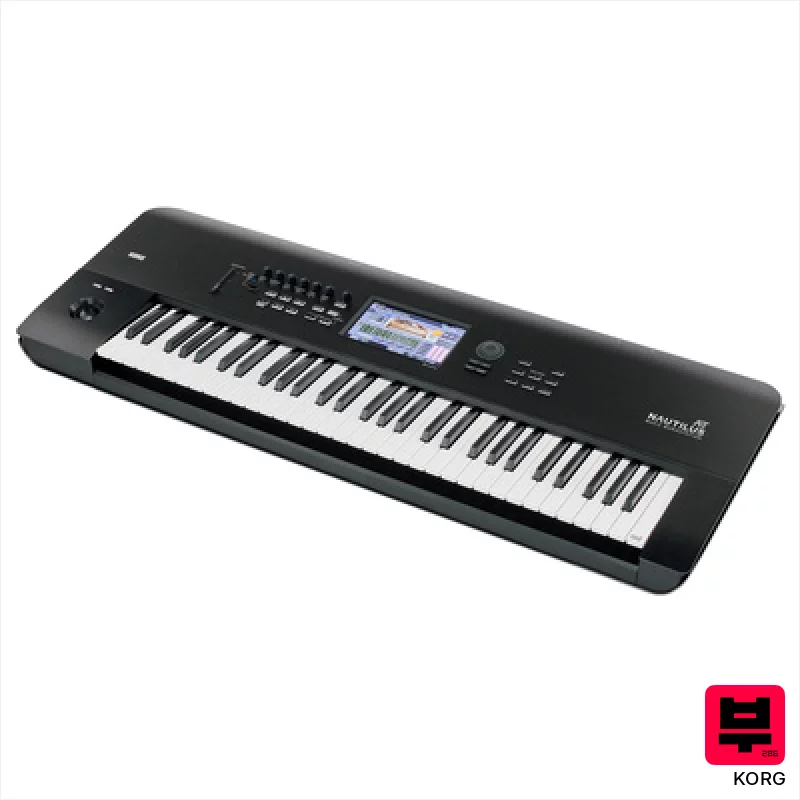
Korg Nautilus 61 AT
- • SGX-2 piano engine delivers remarkably authentic, nuanced acoustic piano tones.
- • Real-time controller provides intuitive, immediate sound sculpting capabilities.
- • Nine distinct synthesis engines offer immense sonic palette and creative possibilities.
- • Smooth Sound Transition eliminates frustrating audio dropouts during performance changes.
- • The 'semi-weighted' action feels lighter than a fully weighted keyboard, lacking some depth.
- • While versatile, the 61-key layout limits complex chord voicings and basslines.
- • Sampling functionality is present, but lacks the advanced editing features of dedicated samplers.

Korg Krome EX 73
- • Aluminum surface adds a premium, durable feel and aesthetic.
- • EDS-X engine delivers surprisingly rich, complex sounds.
- • 73 keys offer expanded range for piano and orchestral work.
- • 16-track sequencer provides powerful composition capabilities.
- • Semi-weighted action lacks the nuance of a fully weighted piano.
- • Limited sampling capabilities compared to dedicated samplers.
- • The 7-inch TouchView display can feel cramped for detailed editing.
How to Choose the Best Workstations
Sound Engine & Voicing
A workstation's heart is its engine. Does it nail that Rhodes shimmer? Can it deliver a gritty Moog lead without sounding sterile? The best have a wide palette of sounds, and the ability to tweak them on the fly. That fat midrange honk is invaluable for cutting through a rock mix.
Keyboard Action & Feel
Let's be honest, a clunky action can ruin your vibe. Weighted keys are great for piano, but semi-weighted or synth-action can be faster for leads. Consider the aftertouch and velocity sensitivity - can you dial in nuanced expression?
Live Performance Features
Dedicated buttons for sounds, splits, layers, and effects are a must. Look for easy access to parameters you'll adjust mid-song - reverb sends, filter cutoff, amp envelope. A good sequencer is also key for looping and building arrangements.
Reliability & Build Quality
Gigs are brutal. You need a workstation that can withstand transport, stage bumps, and the occasional spilled beer. Solid build quality and a stable operating system are non-negotiable. Cheap plastic corners will break.
Integration & Routing
How easily does it play with your other gear? MIDI routing capabilities, multiple outputs for layering sounds through different amps or effects, and compatibility with common digital audio formats are essential for a streamlined setup.
Buying Guide
Don't chase features you won't use. A workstation overflowing with sounds you'll never touch is just bloat. Pay attention to the keyboard feel - it's your primary interface. And remember, cheaper workstations often cut corners on the sound engine, resulting in thin or artificial tones. Spending a little more for a reliable, well-voiced workstation is an investment in your performance.
Our Methodology
We're not just looking at spec sheets here. We've spent countless hours pounding these workstations through rehearsals, gigs of all sizes, and tracking sessions. Our evaluations are based on real-world performance - how they handle dynamics, how easily they integrate with other gear, and, crucially, how they sound through a PA. It's about finding the sweet spot between features and usability under pressure.

