AudioFu Chart · October 2026
Best Wireless instrument microphone systems for Intermediate 2026
The top pick is NuX B-6SAX Wireless Saxophone Microphone ($381). the t.bone free solo 863 Ovid Sax Set gives you the most for the money at $291. Shure BLX14R Ovid Bundle S8 leads the high end. Ranked by the AudioFu Index from 41 models across 8 brands, prices checked every night.
Last updated: October 19, 2026
Top 10
Full detail for the 10 highest AudioFu Index scores. Every other model is listed below.
-
NuX B-6SAX Wireless Saxophone Microphone
B6-Pro Wireless System · Nux
27 for sale on Reverb2 finishes at Thomann
This system is perfect for sax and trumpet players who need a stable signal without hassle. The shock-absorbing neck keeps vibrations out, and the built-in tuner helps you sound right instantly. It works well in noisy rooms thanks to smart frequency hopping, but check battery life before your gig.
Pros
- Patented shock-absorbing gooseneck isolates vibration for clean sound
- Automatic pairing makes setup fast and hassle-free for everyone
- Intelligent frequency hopping blocks interference in crowded venues
Cons
- Battery life duration is not specified in the description
- USB-C port only supports audio recording, not charging or other uses
62AudioFu
IndexStableno change since Aug 17Aug 17$381 now$381€339 at Thomann · in stockCheck price ↗ -
- Size9.5"
This Shure BLX14R Ovid bundle is a dependable wireless solution for acoustic guitar players needing a straightforward, affordable setup. The Ovid clip provides a surprisingly detailed sound, and the system’s ease of use makes it perfect for gigging musicians or smaller venues where simplicity trumps cutting-edge tech.
Pros
- Solid Shure build quality; reliable performance on stage.
- Ovid condenser clip delivers clear, detailed acoustic guitar tone.
- Quick-Scan frequency function simplifies setup in crowded RF environments.
Cons
- BLX system is a bit dated; lacks modern features like digital transmission.
- Limited frequency band (S8) can restrict use in heavily congested areas.
55AudioFu
IndexStableno change since Aug 17Aug 17$550 now$550€489 at Thomann · in stockCheck price ↗ -
- Size9.5"
This AKG PW45 Ovid bundle is a great entry point for violinists needing wireless freedom. The sound quality is surprisingly good for the price point, and the compact design makes it easy to manage on stage—ideal for gigging musicians and student ensembles on a budget.
Pros
- Solid UHF transmission minimizes dropouts common in crowded RF environments.
- t.bone Ovid CC 100 RC delivers clear, detailed violin tone with good transient response.
- Compact pocket transmitter simplifies stage setup and reduces cable clutter.
Cons
- Limited frequency range might cause interference in densely populated areas.
- AA battery power in the transmitter can be inconvenient for long performances.
49AudioFu
IndexStableno change since Aug 17Aug 17$336 now$336€299 at Thomann · in stockCheck price ↗ -
- Size9.5"
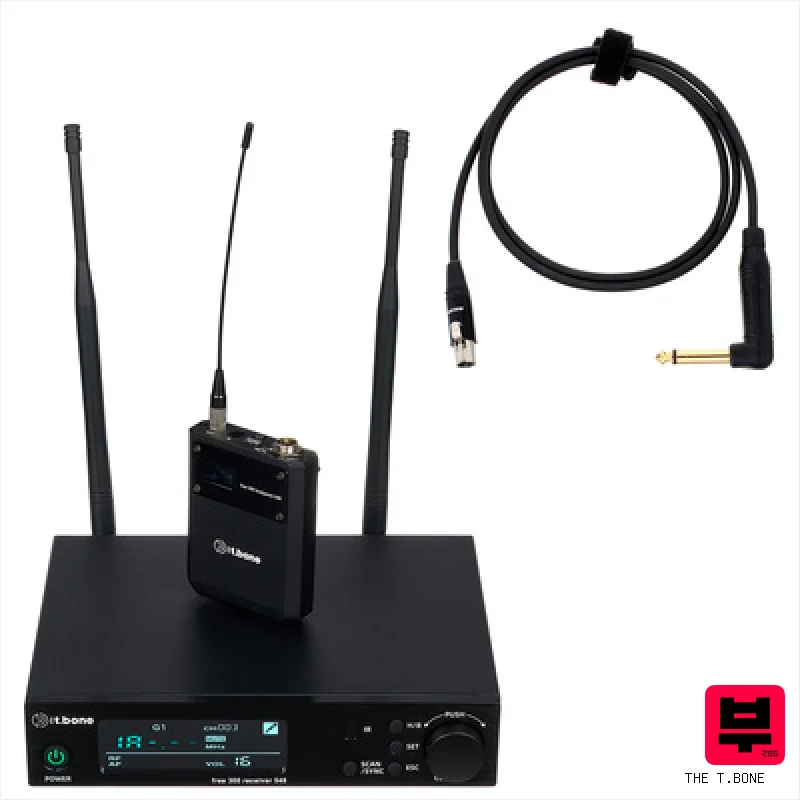
The t.bone free solo 863 Ovid Sax Set is a budget-friendly wireless solution, great for sax players needing freedom of movement in smaller venues or rehearsal spaces. The straightforward design and pre-programmed channels make it easy to use, and the compact receiver is a real bonus. While not a premium system, it's a solid entry point for gigging saxophonists or students.
Pros
- Compact receiver housing saves valuable stage space.
- Infrared control simplifies channel selection and adjustments.
- Pocket transmitter's LCD display offers clear operational feedback.
Cons
- Plastic transmitter casing feels somewhat flimsy for gigging.
- Limited frequency selection compared to higher-end wireless systems.
43AudioFu
IndexStableno change since Aug 17Aug 17$291 now$291€259 at Thomann · in stockCheck price ↗ -
- Size9.5"
This t.bone system is a solid entry point for sax players needing wireless freedom. The frequency scan and infrared sync are genuinely useful features for quick setup, and the compact transmitter makes it comfortable to hold. It's a great affordable option for gigging musicians or students who want the convenience of wireless without the premium price tag.
Pros
- Reliable UHF transmission minimizes interference, crucial for stage use
- Infrared sync simplifies channel matching; a real time-saver
- Compact transmitter housing is comfortable for extended performance
Cons
- Plastic transmitter housing feels somewhat budget-oriented, lacks premium robustness
- Limited frequency band might encounter interference in crowded RF environments
43AudioFu
IndexStableno change since Aug 17Aug 17$291 now$291€259 at Thomann · in stockCheck price ↗ -
- Size9.5"
This t.bone system is a surprisingly capable wireless solution for sax players on a budget. The compact transmitter and simple frequency sync make it easy to use, and the sound quality is decent for rehearsals and smaller gigs. It's a great entry point for players wanting wireless freedom without the premium price tag.
Pros
- Compact transmitter design is genuinely pocketable and convenient.
- Infrared sync simplifies channel matching; a real time-saver.
- Solid build quality for the price point; feels robust in hand.
Cons
- Plastic transmitter housing feels a bit cheap; could be more robust.
- AA battery power is less than ideal; consider rechargeable packs.
43AudioFu
IndexStableno change since Aug 17Aug 17$291 now$291€259 at Thomann · in stockCheck price ↗ -
- Size9.5"
This t.bone system is a solid, budget-friendly option for violinists needing wireless freedom. It’s great for gigging musicians or students who want a reliable, easy-to-use setup without breaking the bank. The straightforward design makes it simple to operate, and the rack-mountable receiver is a nice touch for more permanent installations.
Pros
- Lightweight pocket transmitter simplifies stage movement and setup.
- Rack-mountable receiver offers clean, organized integration into existing rigs.
- Infrared control minimizes latency and ensures reliable synchronization.
Cons
- Plastic transmitter casing feels a bit flimsy for demanding professional use.
- Limited frequency band might experience interference in densely populated areas.
43AudioFu
IndexStableno change since Aug 17Aug 17$291 now$291€259 at Thomann · in stockCheck price ↗ -
- Size9.5"
The t.bone free solo 823 Ovid is a surprisingly solid entry-level wireless system. It’s perfect for gigging violinists, particularly students or those needing a budget-friendly solution for practice or smaller performances where top-tier features aren't essential. The ease of setup is a real plus, and the sound quality is perfectly acceptable for its price point.
Pros
- Reliable UHF transmission minimizes interference on stage.
- Infrared sync simplifies channel matching, a real time-saver.
- Compact transmitter body is comfortable for extended playing sessions.
Cons
- Plastic transmitter housing feels somewhat flimsy for demanding gigging.
- Limited frequency range compared to higher-end wireless systems.
43AudioFu
IndexStableno change since Aug 17Aug 17$291 now$291€259 at Thomann · in stockCheck price ↗ -
- Size9.5"
This t.bone set is a surprisingly capable entry-level wireless solution for violinists needing freedom on stage. The build feels decent for the price, and the infrared sync makes getting started easy. It's ideal for gigging musicians or students who want a budget-friendly wireless option without sacrificing too much performance.
Pros
- Solid build quality for the price point; plastic housing feels surprisingly robust.
- Infrared transmitter sync simplifies setup and eliminates frustrating manual adjustments.
- 14 frequency groups offer reasonable channel selection in most performance environments.
Cons
- Plastic transmitter housing feels a bit cheap compared to metal alternatives.
- AA battery operation can be a recurring expense; consider a power adapter.
43AudioFu
IndexStableno change since Aug 17Aug 17$291 now$291€259 at Thomann · in stockCheck price ↗ -
- Size9.5"
The t.bone free solo 863 Ovid is a surprisingly capable wireless guitar system for the price. It’s a great entry point for gigging musicians or recording situations where cable clutter is a hassle, offering decent range and straightforward operation. It's especially well-suited for smaller venues and practice spaces where ultimate flexibility isn't critical.
Pros
- Solid build quality for a budget-friendly wireless system
- Infrared control simplifies channel selection and adjustments
- Compact receiver housing is rack-mountable and space-efficient
Cons
- Plastic transmitter casing feels less robust than metal alternatives
- Limited frequency band might experience interference in crowded RF environments
43AudioFu
IndexStableno change since Aug 17Aug 17$291 now$291€259 at Thomann · in stockCheck price ↗
All 41 wireless instrument microphone systems
Same index, same nightly prices — compact. Colour options of one model share a row. Tap a photo to zoom.
- 11
the t.bone free solo 823 Ovid Guitar Setthe t.bone43Stable$291€259$291€259Check ↗
- 12
the t.bone free solo 600 Ovid Guitar Setthe t.bone43Stable$291€259$291€259Check ↗
- 13
Sennheiser XSW 1 Ovid Bundle E-BandSennheiser41↓ 10.2%$336€299$336€299Check ↗
- 14
the t.bone free solo PT 1.8 CC 915 Bundlethe t.bone43Stable$280€249$280€249Check ↗
- 15
Sennheiser XSW 2 Ovid Bundle E-BandSennheiser36Stable$448€398$448€398Check ↗
- 16
Mipro ACT-5800 SM-10A Brass BundleMipro36Stable$629€559$629€559Check ↗
- 17
the t.bone free solo PT 863 CC 915 Bundlethe t.bone43Stable$269€239$269€239Check ↗
- 18
the t.bone free solo PT 823 CC 915 Bundlethe t.bone43Stable$269€239$269€239Check ↗
- 19
the t.bone free solo PT 600 CC 915 Bundlethe t.bone43Stable$269€239$269€239Check ↗
- 20
LD Systems U308 BPWLD Systems29Stable$269€239$269€239Check ↗
- 21
the t.bone freeU Ovid Bundle 823 MHzthe t.bone43Stable$219€195$219€195Check ↗
- 22
the t.bone freeU Ovid Bundle 863 MHzthe t.bone43Stable$219€195$219€195Check ↗
- 23
the t.bone freeU Ovid Bundle 600 MHzthe t.bone43Stable$219€195$219€195Check ↗
- 24
XVive U7 Sax/Trp Wireless SystemXVive29Stable$246€219$246€219Check ↗
- 25
Sennheiser EW-DX 2x E908 B Dante U1/5Sennheiser50↑ 3.1%$2,981€2,649$2,981€2,649Check ↗
- 26
Shure GLXD14+/B98Shure · 2 finishes46↓ 1.4%$798€709$798€709Check ↗
- 27
AKG WMS 470 Ovid Bundle Band 10AKG38↑ 4.4%$640€569$640€569Check ↗
- 28
Sennheiser EW-D E 908 Q1-6 BundleSennheiser38↓ 4.9%$748€665$748€665Check ↗
- 29
Sennheiser EW-D E 908 U1/5 BundleSennheiser37↓ 1.4%$775€689$775€689Check ↗
- 30
Sennheiser EW-D E 908 S1-7 BundleSennheiser37↓ 1.4%$775€689$775€689Check ↗
- 31
Sennheiser EW-D E 908 R4-9 BundleSennheiser37↓ 1.4%$775€689$775€689Check ↗
- 32
Sennheiser EW-D E 908 R1-6 BundleSennheiser37↓ 1.4%$775€689$775€689Check ↗
- 33
Sennheiser EW-D E 908 S7-10 BundleSennheiser37↓ 2.1%$843€749$843€749Check ↗
- 34
Sennheiser EW-D MCM 114 Q1-6 BundleSennheiser37↓ 2.5%$1,250€1,111$1,250€1,111Check ↗
- 35
Sennheiser EW-D MCM 114 U1/5 BundleSennheiser36Stable$1,282€1,139$1,282€1,139Check ↗
- 36
Sennheiser EW-D MCM 114 S1-7 BundleSennheiser36Stable$1,282€1,139$1,282€1,139Check ↗
- 37
Sennheiser EW-D MCM 114 R4-9 BundleSennheiser36Stable$1,282€1,139$1,282€1,139Check ↗
- 38
Sennheiser EW-D MCM 114 R1-6 BundleSennheiser36Stable$1,282€1,139$1,282€1,139Check ↗
- 39
Sennheiser EW-D MCM 114 S7-10 BundleSennheiser36Stable$1,348€1,198$1,348€1,198Check ↗
- 40
Sennheiser EW-D MCM 114 Y1-3 BundleSennheiser35↑ 3.5%$1,327€1,179$1,327€1,179Check ↗
- 41
Sennheiser EW-D E 908 Y1-3 BundleSennheiser34↑ 4.3%$820€729$820€729Check ↗
Wireless instrument microphone systems by the numbers
Measured across all 52 models we track, not a sample.
Median $460 — half of all wireless instrument microphone systems here cost less.
median of 25 models · 9.5"–9.5"
median of 5 models · 0.39 kg–1 kg
How the AudioFu Index works
Five measured signals and nothing else — no stars from strangers, no “tested by experts” we didn’t do. The weights are fixed and public. We don’t play these instruments; we measure the market around them.
This chart covers 52 wireless instrument microphone systems from the Thomann catalogue. Before you buy, read hands-on reviews and, where you can, play it. Full methodology.
AudioFu earns a commission when you buy through our Thomann links. It never changes the order — the index does.
- Demand40%
How many of this exact model are for sale on Reverb right now — what musicians actually buy and resell.
- Lineup20%
How many finishes Thomann stocks — makers expand the models that sell.
- Price15%
Where the price has moved since we started tracking in August.
- Specs15%
How completely the maker documents it.
- Maker10%
How deep the brand’s range is in this category.
Questions
What should I look for when buying wireless instrument microphone systems?
Key factors include build quality, sound characteristics, playability, brand reputation, warranty coverage, and value for money. Consider your musical style, skill level, and intended use to find the best match.
How much should I spend on wireless instrument microphone systems?
Budget depends on your needs and experience level. Beginners can find quality options for $200-500, intermediate players should consider $500-1500 range, while professionals often invest $1500+ for premium features.
Are expensive wireless instrument microphone systems worth the investment?
Higher-priced wireless instrument microphone systems typically offer better materials, craftsmanship, and performance. They're worth it if you're serious about music, perform regularly, or need professional-grade features.
What are the best brands for wireless instrument microphone systems?
Top brands combine quality, innovation, and reliability. We evaluate brands based on build quality, sound performance, durability, and customer satisfaction to recommend the best options for different budgets.
Should I buy wireless instrument microphone systems online or in-store?
Both have advantages. Online offers better prices and selection, while stores allow hands-on testing. We recommend researching online first, then testing in stores if possible. Many online retailers offer excellent return policies.