AudioFu Chart · October 2026
Best Wireless handheld microphone systems Under $800 2026
The top pick is Sennheiser XSW 1-835 Wireless Vocal Set w/ e835 Dynamic Microphone… ($738). Shure BLX24R/SM58 S8 gives you the most for the money at $520. Ranked by the AudioFu Index from 66 models across 11 brands, prices checked every night.
Last updated: October 26, 2026
Top 10
Full detail for the 10 highest AudioFu Index scores. Every other model is listed below.
-
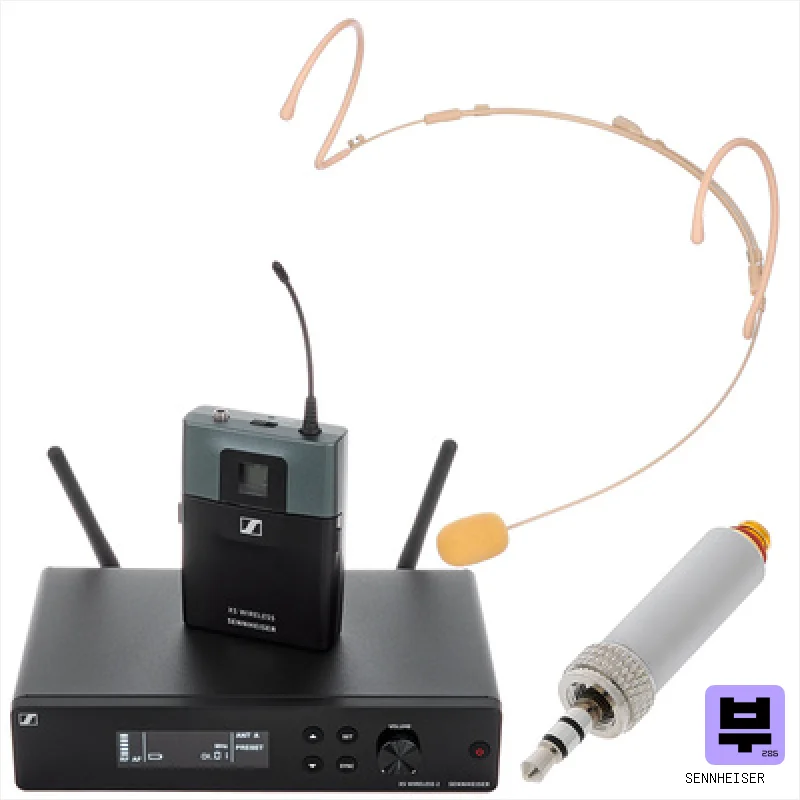
Sennheiser XSW 1-835 Wireless Vocal Set w/ e835 Dynamic Microphone…
XSW 1-835 Dual A-Band Vocal · Sennheiser
38 for sale on Reverb7 finishes at Thomann
This Sennheiser XSW 1-835 Dual system is a solid choice for bands, duos, or presenters needing reliable wireless vocals. The sound is clean and punchy, and the auto-tune feature makes setup a breeze – it’s a great balance of performance and ease of use for gigging musicians.
Pros
- Robust build quality with Sennheiser’s proven reliability
- Dynamic capsule delivers clear vocals with excellent feedback rejection
- Intuitive Auto-Tune simplifies frequency management significantly
Cons
- A-band frequency allocation can be restrictive in crowded RF environments
- SKM 835 transmitters are a bit bulkier than some competing models
70AudioFu
Index↓ 1.5%since Aug 17 · lowest so far$749 · Aug 17$738 now$738€659 at Thomann · in stockCheck price ↗ -
- Size9.5"
The BLX24R/SM58 is a solid, reliable wireless vocal system—it's a great entry point for performers needing freedom on stage. The SM58 capsule is a workhorse, and the system is straightforward to use. Perfect for singer-songwriters, small bands, or anyone wanting the dependable Shure sound without the premium price tag.
Pros
- SM58 capsule delivers Shure's signature vocal clarity and feedback rejection
- Robust metal receiver housing offers excellent durability for stage use
- Quick-Scan frequency selection simplifies setup in crowded RF environments
Cons
- BLX system is a mid-tier offering; lacks features of Shure’s higher-end wireless lines
- Limited frequency band (S8) may restrict scalability for larger events
55AudioFu
IndexStableno change since Aug 17Aug 17$520 now$520€465 at Thomann · in stockCheck price ↗ -
- Weight0.95 kg
This GLXD24+/SM58 combo is a solid, reliable wireless system perfect for vocalists in bands, presenters, or anyone needing dependable sound reinforcement. The SM58 delivers that classic, workhorse vocal tone, and the dual-band system keeps things clean even in busy spaces. It's a great balance of performance and ease of use.
Pros
- SM58 delivers consistently intelligible vocals across dynamic stages.
- Dual-band operation minimizes interference in crowded RF environments.
- Automatic frequency selection simplifies setup, great for non-tech users.
Cons
- Plastic receiver feels less robust compared to Shure's metal-bodied units.
- Limited channel count (8 with frequency manager) can be restrictive for large events.
51AudioFu
Index↓ 4.9%since Aug 17 · lowest so far$659 · Aug 17$627 now$627€560 at Thomann · in stockCheck price ↗ -
- Size19"
- Weight1.95 kg
This Sirus Quad R is a solid, workhorse wireless system for live performance. It's well-suited for bands, presenters, or anyone needing reliable, multi-microphone coverage without breaking the bank. The infrared sync is a genuine convenience, and the build quality feels dependable for frequent use.
Pros
- Infrared sync simplifies channel setup, a genuine time-saver for multi-mic gigs.
- UHF frequency range provides reliable performance in moderately crowded RF environments.
- XLR and 6.35mm sum output offers flexible connectivity for various sound systems.
Cons
- 12V DC power supply adds complexity compared to battery-powered receivers.
- Limited frequency range (40-18kHz) might slightly curtail extreme high-frequency vocal nuances.
45AudioFu
IndexStableno change since Aug 17Aug 17$532 now$532€475 at Thomann · in stockCheck price ↗ -
- Size19"
- Weight1.95 kg
This Sirus Quad R system is a solid, budget-friendly choice for bands and presenters needing multiple wireless channels. The infrared sync is a real convenience, and the rackmount receiver makes it easy to integrate into a PA system. It's perfect for live performance or educational settings where reliable wireless audio is key.
Pros
- Excellent frequency scan simplifies setup in crowded RF environments.
- Infrared transmitter simplifies channel matching, a genuine time-saver.
- Robust 1U rackmount receiver is well-suited for permanent installations.
Cons
- Limited frequency band may cause interference in dense wireless environments.
- External power supply adds clutter and potential failure point.
45AudioFu
IndexStableno change since Aug 17Aug 17$532 now$532€475 at Thomann · in stockCheck price ↗ -
- Size19"
- Weight1.95 kg
The Sirus Quad R is a solid, affordable wireless system for bands, presenters, or anyone needing multiple microphone feeds. Its infrared sync and rackmount design are genuinely useful for professional applications. If you’re running a small band or need reliable wireless vocal or instrument mics without breaking the bank, this is a great option.
Pros
- Excellent channel separation and clarity thanks to the PLL modulation.
- Infrared transmitter syncing simplifies setup, a real time-saver for multi-mic rigs.
- Robust 1U rackmount design, built for reliable stage or studio use.
Cons
- Limited frequency range (470-526 MHz) can restrict channel availability in congested areas.
- External power supply adds another cable and potential point of failure.
45AudioFu
IndexStableno change since Aug 17Aug 17$532 now$532€475 at Thomann · in stockCheck price ↗ -
- Size19"
- Weight1.95 kg
The Sirus Quad R is a solid, affordable wireless receiver system perfect for live sound reinforcement, theater productions, or any situation needing multiple microphone feeds. The infrared syncing is a real convenience, and the build quality feels dependable for regular gigging. It's a great option for bands and presenters needing reliable wireless without breaking the bank.
Pros
- IR transmission simplifies channel setup, a genuine time-saver for multi-mic rigs.
- Robust 1U rackmount design provides stability and professional integration.
- Excellent signal-to-noise ratio minimizes background noise, crucial for live performance.
Cons
- 470-526 MHz frequency band might face interference in crowded RF environments.
- Limited frequency range (40Hz-18kHz) may lack extreme low-end for some applications.
45AudioFu
IndexStableno change since Aug 17Aug 17$532 now$532€475 at Thomann · in stockCheck price ↗ -
This Shure BLX288/PG58 combo is a solid, dependable wireless system perfect for working musicians needing a straightforward, no-fuss setup. The PG58 capsule's sound is a real winner for vocals, and the QuickScan feature makes frequency management a breeze. It's a great choice for bands, duos, or presenters who prioritize reliability over bleeding-edge tech.
Pros
- PG58 capsule delivers Shure's signature vocal clarity and warmth
- QuickScan frequency selection is genuinely fast and reliable in crowded RF environments
- Dual receiver handles two mics, ideal for duos or small groups
Cons
- BLX system is older technology, lacks modern features like digital encryption
- Limited frequency range restricts versatility for some performance scenarios
45AudioFu
Index↓ 2.5%since Aug 17 · lowest so far$711 · Aug 17$693 now$693€619 at Thomann · in stockCheck price ↗ -
The Sennheiser EW-D 835-S R4-9 is a seriously solid wireless system for vocalists who need reliability and clear sound. It’s a great choice for working musicians, presenters, and performers who want a professional, easy-to-use system without the complexity of some higher-end digital setups – the Smart Assist app is a real time-saver.
Pros
- Robust metal SKM-S transmitter feels exceptionally durable and roadworthy
- Dynamic MMD 835 capsule delivers clear, focused vocal reproduction
- Smart Assist App simplifies complex wireless frequency coordination
Cons
- The AA battery dependency can be inconvenient for extended gigs
- While versatile, the cardioid pattern isn’t ideal for all performance styles
44AudioFu
Index↓ 6.1%since Aug 17 · lowest so far$700 · Aug 17$657 now$657€587 at Thomann · in stockCheck price ↗ -
- Size19"
The LD Systems U506 HHC2 is a solid, budget-friendly dual wireless system that punches above its weight. It's a great option for smaller bands, wedding performers, or anyone needing reliable handheld mics without the premium price tag – the clarity is surprisingly good for the price point.
Pros
- True diversity reception minimizes interference in crowded RF environments
- OLED display offers clear, real-time feedback on settings and battery status
- Switchable transmission power provides flexibility for varying distances and legal limits
Cons
- AA battery operation can become costly and inconvenient compared to rechargeable packs
- The 655-679 MHz band is increasingly congested in some regions, limiting channel availability
44AudioFu
Index↓ 5.2%since Aug 17 · lowest so far$782 · Aug 17$742 now$742€663 at Thomann · in stockCheck price ↗
All 66 wireless handheld microphone systems
Same index, same nightly prices — compact. Colour options of one model share a row. Tap a photo to zoom.
- 11
LD Systems U518 HHDLD Systems · 4 finishes43Stable$413€369$413€369Check ↗
- 12
Sennheiser XSW 1-825 Dual B-Band VocalSennheiser · 8 finishes43↓ 1.8%$626€559$626€559Check ↗
- 13
Sennheiser EW-D 845-S R1-6Sennheiser · 5 finishes43↓ 5.6%$644€575$644€575Check ↗
- 14
LD Systems U508 HHD2LD Systems · 4 finishes43Stable$760€679$760€679Check ↗
- 15
LD Systems U505 HHC2LD Systems · 4 finishes43Stable$760€679$760€679Check ↗
- 16
Sennheiser EW-D 945-S R1-6Sennheiser · 5 finishes42↓ 4.7%$744€665$744€665Check ↗
- 17
Sennheiser EW-D 935-S R1-6Sennheiser · 5 finishes42↓ 4.2%$749€669$749€669Check ↗
- 18
AKG WMS 470 C5 Band 8AKG · 3 finishes41Stable$655€585$655€585Check ↗
- 19
the t.bone free 300 HT 823the t.bone · 2 finishes40Stable$212€189$212€189Check ↗
- 20
Shure BLX1288/P31 Combo S8Shure · 4 finishes39Stable$756€675$756€675Check ↗
- 21
the t.bone freeU HT 823the t.bone38Stable$156€139$156€139Check ↗
- 22
the t.bone free solo HT 863 MHzthe t.bone38Stable$222€198$222€198Check ↗
- 23
the t.bone freeU Twin HT 823the t.bone38Stable$222€198$222€198Check ↗
- 24
the t.bone freeU Twin HT 863the t.bone38Stable$222€198$222€198Check ↗
- 25
the t.bone free solo HT 823 MHzthe t.bone38Stable$234€209$234€209Check ↗
- 26
the t.bone free solo HT 600 MHzthe t.bone38Stable$234€209$234€209Check ↗
- 27
the t.bone free solo HT 590 MHzthe t.bone38Stable$234€209$234€209Check ↗
- 28
the t.bone free solo HT 1.8 GHzthe t.bone38Stable$268€239$268€239Check ↗
- 29
the t.bone free solo Twin HT 520 MHzthe t.bone38Stable$413€369$413€369Check ↗
- 30
the t.bone free solo Twin HT 590 MHzthe t.bone38Stable$413€369$413€369Check ↗
- 31
the t.bone free solo Twin HT 660 MHzthe t.bone38Stable$413€369$413€369Check ↗
- 32
the t.bone free solo Twin HT 823 MHzthe t.bone38Stable$413€369$413€369Check ↗
- 33
the t.bone free solo Twin HTPT 823 MHzthe t.bone38Stable$445€398$445€398Check ↗
- 34
Sennheiser EW-D 42-1-S R4-9Sennheiser · 3 finishes38Stable$794€709$794€709Check ↗
- 35
AKG WMS 40 Mini Vocal ISM1AKG · 5 finishes37↓ 2.9%$114€102$114€102Check ↗
- 36
Sirus Quad H 823 4 CH RackSirus37Stable$536€479$536€479Check ↗
- 37
Sennheiser EW-D SKM-S Base R1-6Sennheiser36↓ 5.7%$559€499$559€499Check ↗
- 38
Sennheiser EW-D SKM-S Base R4-9Sennheiser36↓ 5.7%$559€499$559€499Check ↗
- 39
Shure SLXD25/SM58 H56Shure · 2 finishes36Stable$726€649$726€649Check ↗
- 40
the t.bone freeU HT 863the t.bone34↑ 7.8%$156€139$156€139Check ↗
- 41
Sennheiser XSW 2-865-A Vocal Set Wireless Handheld Microphone System…XSW 2-865 A-Band Vocal Set · Sennheiser · 4 finishes33↓ 1.1%$525€469$525€469Check ↗
- 42
Sennheiser EW-D SKM-S Base Q1-6Sennheiser33Stable$592€529$592€529Check ↗
- 43
Sennheiser EW-D SKM-S Base U1/5Sennheiser33Stable$659€589$659€589Check ↗
- 44
LD Systems U308 HHDLD Systems32↓ 5.3%$222€198$222€198Check ↗
- 45
Hollyland MELO P1 SoloHollyland · 3 finishes31Stable$307€274$307€274Check ↗
- 46
the t.bone TWS One A Vocalthe t.bone30Stable$66€59$66€59Check ↗
- 47
the t.bone TWS One B Vocalthe t.bone30Stable$66€59$66€59Check ↗
- 48
the t.bone TWS One C Vocalthe t.bone30Stable$66€59$66€59Check ↗
- 49
the t.bone TWS One D Vocalthe t.bone30Stable$66€59$66€59Check ↗
- 50
Sennheiser EW-D SKM-S Base S7-10Sennheiser29↑ 9.5%$648€579$648€579Check ↗
Wireless handheld microphone systems by the numbers
Measured across all 158 models we track, not a sample.
Median $536 — half of all wireless handheld microphone systems here cost less.
median of 50 models · 9.5"–19"
median of 19 models · 0.75 kg–6.7 kg
How the AudioFu Index works
Five measured signals and nothing else — no stars from strangers, no “tested by experts” we didn’t do. The weights are fixed and public. We don’t play these instruments; we measure the market around them.
This chart covers 158 wireless handheld microphone systems from the Thomann catalogue. Before you buy, read hands-on reviews and, where you can, play it. Full methodology.
AudioFu earns a commission when you buy through our Thomann links. It never changes the order — the index does.
- Demand40%
How many of this exact model are for sale on Reverb right now — what musicians actually buy and resell.
- Lineup20%
How many finishes Thomann stocks — makers expand the models that sell.
- Price15%
Where the price has moved since we started tracking in August.
- Specs15%
How completely the maker documents it.
- Maker10%
How deep the brand’s range is in this category.
Questions
What should I look for when buying wireless handheld microphone systems?
Key factors include build quality, sound characteristics, playability, brand reputation, warranty coverage, and value for money. Consider your musical style, skill level, and intended use to find the best match.
How much should I spend on wireless handheld microphone systems?
Budget depends on your needs and experience level. Beginners can find quality options for $200-500, intermediate players should consider $500-1500 range, while professionals often invest $1500+ for premium features.
Are expensive wireless handheld microphone systems worth the investment?
Higher-priced wireless handheld microphone systems typically offer better materials, craftsmanship, and performance. They're worth it if you're serious about music, perform regularly, or need professional-grade features.
What are the best brands for wireless handheld microphone systems?
Top brands combine quality, innovation, and reliability. We evaluate brands based on build quality, sound performance, durability, and customer satisfaction to recommend the best options for different budgets.
Should I buy wireless handheld microphone systems online or in-store?
Both have advantages. Online offers better prices and selection, while stores allow hands-on testing. We recommend researching online first, then testing in stores if possible. Many online retailers offer excellent return policies.