AudioFu Chart · October 2026
Best Wireless Guitar / Bass systems Under $500 2026
The top pick is Xvive U2 Wireless Guitar System ($137). Boss WL-50 Wireless Pedal Board System leads the high end. Ranked by the AudioFu Index from 70 models across 21 brands, prices checked every night.
Last updated: October 26, 2026
Top 10
Full detail for the 10 highest AudioFu Index scores. Every other model is listed below.
-
Xvive U2 Wireless Guitar System
Wireless System U2 Black · XVive
75 for sale on Reverb16 finishes at Thomann
The XVive U2 is a surprisingly capable wireless system for the budget-conscious player. It's lightweight and easy to use, making it ideal for gigging musicians who want freedom of movement without a huge investment. Don't expect flagship-level performance, but for basic needs, it's a solid option.
Pros
- Compact design makes gigging setup a breeze
- 2.4 GHz provides generally reliable performance in most venues
- Low latency is truly noticeable, great for dynamic playing
Cons
- Plastic construction feels less robust than metal alternatives
- 30m range is optimistic; expect reduced performance with interference
77AudioFu
IndexStableno change since Aug 17Aug 17$137 now$137€122 at Thomann · in stockCheck price ↗ -
Xvive U2 Wireless Guitar System
U2 Guitar Wireless System LTD · XVive
75 for sale on Reverb2 finishes at Thomann
The XVive U2 is a surprisingly capable wireless system for the price. It's a great entry point for gigging musicians or studio players who want freedom from cables without the high-end cost. The sunburst finish is a cool bonus, and the latency is genuinely low enough to not get in your way.
Pros
- Sunburst finish elevates aesthetic appeal, a nice touch for a budget system.
- 2.4GHz ISM band offers broad global usability, avoiding frequency conflicts.
- 5ms latency is imperceptible for most players, ensuring tight performance.
Cons
- ABS housing, while durable, lacks the premium feel of metal alternatives.
- Micro USB charging feels dated compared to newer, faster charging standards.
65AudioFu
IndexStableno change since Aug 17Aug 17$156 now$156€139 at Thomann · in stockCheck price ↗ -
Boss WL-20 Wireless Guitar System 2018
WL-20L Wireless System · Boss
59 for sale on Reverb4 finishes at Thomann
The Boss WL-20L is a no-fuss wireless solution, ideal for gigging bassists and guitarists who need simplicity and reliability. It’s a solid choice for players wanting to ditch cables without spending a fortune, as long as they’re using active pickups and playing in a relatively clear RF space.
Pros
- Simple pairing process eliminates frustrating setup delays
- BOSS's interference-reducing tech delivers surprisingly clean signal
- Lightweight and compact for comfortable stage or studio use
Cons
- Limited range necessitates line-of-sight for reliable connection
- Only suitable for instruments with active, low-impedance pickups
63AudioFu
IndexStableno change since Aug 17Aug 17$199 now$199€178 at Thomann · in stockCheck price ↗ -
- Weight0.95 kg
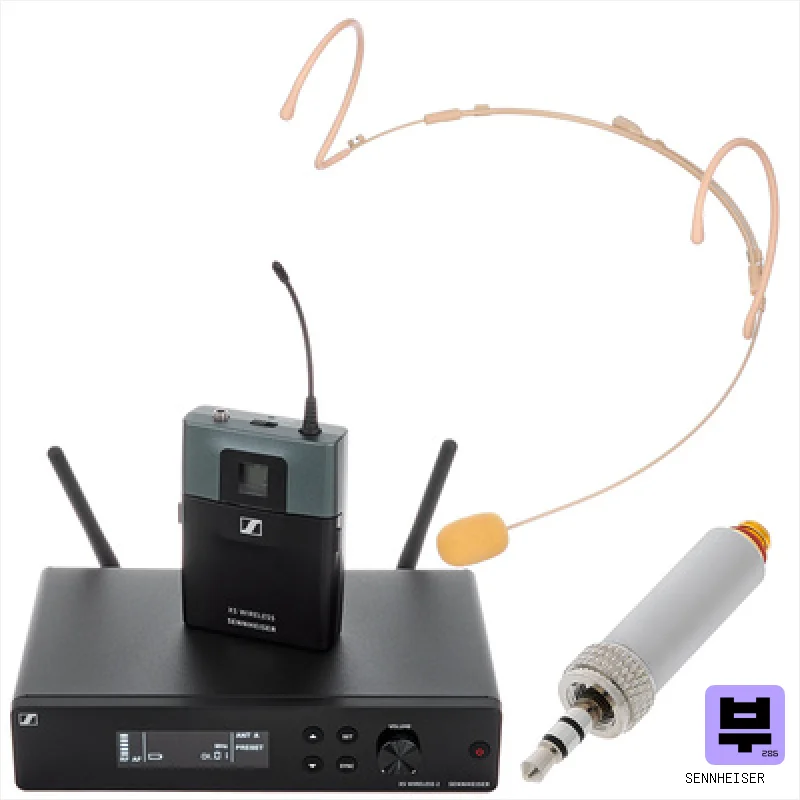
This system lets you run six wireless rigs at once without getting tangled up in frequencies. You can move settings from the pocket transmitter to the handheld one easily. It works best when you can see the receiver, so it's great for studio stages but tricky in open fields. The affordable price makes it a smart choice for small bands needing reliable wireless audio.
Pros
- Six systems run parallel without interference
- Infrared transfer updates settings instantly
- Diversity antennas boost signal reliability
Cons
- Pocket and handheld transmitters share channels
- Battery life duration is not stated
58AudioFu
IndexStableno change since Aug 17Aug 17$212 now$212€189 at Thomann · in stockCheck price ↗ -
Boss WL-50 Wireless Pedal Board System
WL-50 Wireless System · Boss
58 for sale on Reverb1 finish at Thomann
The Boss WL-50 is a fantastic solution for gigging musicians wanting wireless freedom without the usual setup fuss. Its compact design and long battery life make it perfect for bassists and guitarists who need reliable, low-latency performance on smaller to mid-sized stages.
Pros
- Plug-and-play design eliminates frustrating wireless setup headaches.
- Compact pedal format integrates seamlessly into existing pedalboards.
- Impressive 12-hour battery life offers reliable performance on stage.
Cons
- Limited channel availability may pose issues in crowded RF environments.
- 20-meter range is adequate, but can be restrictive for larger stages.
56AudioFu
IndexStableno change since Aug 17Aug 17$228 now$228€204 at Thomann · in stockCheck price ↗ -
Fender Telepath Wireless Instrument System
Telepath Wireless System · Fender
52 for sale on Reverb1 finish at Thomann
The Fender Telepath is a solid entry into the wireless guitar/bass world. It’s incredibly easy to set up and use, perfect for gigging musicians needing a no-fuss solution or studio players who want freedom of movement. The low latency is a real plus, meaning it feels just like a cable – no noticeable delay.
Pros
- 5.8 GHz clarity minimizes interference from common stage gear
- Active/passive switch provides versatility with diverse instrument setups
- Auto-pairing simplifies setup, a huge time-saver on gig days
Cons
- Limited channel count restricts use in crowded RF environments
- 21m range, while decent, can be a limiting factor for larger stages
54AudioFu
IndexStableno change since Aug 17Aug 17$189 now$189€169 at Thomann · in stockCheck price ↗ -
The Nux C-5RC is a surprisingly capable wireless system for guitar and bass players on a budget. It’s a great solution for gigging musicians needing freedom of movement or for studio use where cable clutter is a hassle – just be mindful of potential interference in crowded RF environments.
Pros
- Compact and lightweight transmitter ideal for pedalboards.
- 5.8 GHz band offers cleaner signal than congested 2.4 GHz.
- Power case provides extended battery life and convenient charging.
Cons
- Plastic construction feels less robust than metal alternatives.
- 30m range can be limiting in larger venues or with interference.
53AudioFu
IndexStableno change since Aug 17Aug 17$151 now$151€135 at Thomann · in stockCheck price ↗ -
The Boss WL-60 is a brilliant solution for gigging musicians who want wireless freedom without the complexity. It's ideal for bassists and guitarists who need a reliable, low-latency connection for rehearsals, smaller gigs, or recording – the plug-and-play design is a huge time saver.
Pros
- Plug-and-play simplicity eliminates wireless setup headaches.
- Low 2.3ms latency feels completely transparent during performance.
- Cable simulation offers tonal flexibility for different rigs.
Cons
- Limited range compared to higher-end, dedicated wireless systems.
- Relies on AA batteries; power adapter is sold separately.
50AudioFu
IndexStableno change since Aug 17Aug 17$313 now$313€280 at Thomann · in stockCheck price ↗ -
NuX B-5RC 2.4GHz Wireless Guitar System
B-5RC Wireless System · Nux
26 for sale on Reverb1 finish at Thomann
The Nux B-5RC is a surprisingly capable and affordable wireless system. It’s a great option for gigging musicians or practice situations where cabling is a hassle – especially for bass players who want freedom of movement. The compact design and ease of use make it a solid value for the price.
Pros
- Pocket-sized charging case provides excellent portability and extended runtime
- Auto-match system simplifies setup, avoiding channel conflicts
- Lightweight transmitter is comfortable for extended playing sessions
Cons
- Plastic construction feels somewhat cheap compared to metal alternatives
- Limited frequency band may encounter interference in densely populated areas
48AudioFu
IndexStableno change since Aug 17Aug 17$130 now$130€116 at Thomann · in stockCheck price ↗ -
The XVive A 58 is a surprisingly capable wireless system, especially considering the price point. It's a great solution for gigging musicians who need reliable wireless freedom without the premium cost. Perfect for working musicians needing a budget-friendly, dependable wireless setup for rehearsals or smaller venues.
Pros
- 5.8GHz band minimizes interference, crucial for crowded RF environments.
- Robust ABS construction feels solid; survives gigging without worry.
- 24-bit/48kHz conversion provides clean, detailed audio reproduction.
Cons
- 30m range is realistic, but line-of-sight is *essential* for consistent signal.
- ABS, while durable, lacks the premium feel of metal-bodied units.
47AudioFu
Index↓ 4.1%since Aug 17 · lowest so far$162 · Aug 17$156 now$156€139 at Thomann · in stockCheck price ↗
All 70 wireless guitar / bass systems
Same index, same nightly prices — compact. Colour options of one model share a row. Tap a photo to zoom.
- 11
Shure BLX14 S8Shure · 8 finishes44Stable$402€359$402€359Check ↗
- 12
Fun Generation AirZone 5.8Ghz InstrumentFun Generation41Stable$44€39$44€39Check ↗
- 13
Audio-Technica ATW-1101 System 10 Unipak Digital Wireless Bodypack…System 10 Bodypack ATW-1101 · Audio-Technica41Stable$357€319$357€319Check ↗
- 14
Sennheiser XSW 1-Ci1 A-Band InstrumentSennheiser39↓ 10.8%$279€249$279€249Check ↗
- 15
Sennheiser XSW 1-Ci1 B-Band InstrumentSennheiser39↓ 10.8%$279€249$279€249Check ↗
- 16
Sennheiser XSW 1-Ci1 E-Band InstrumentSennheiser39↓ 10.8%$279€249$279€249Check ↗
- 17
Sennheiser XSW 2-Ci1 A-Band InstrumentSennheiser38↓ 7.9%$391€349$391€349Check ↗
- 18
Sennheiser XSW 2-Ci1 GB-Band InstrumentSennheiser37↓ 6.5%$386€345$386€345Check ↗
- 19
Sennheiser XSW 2-Ci1 B-Band InstrumentSennheiser37↓ 6.9%$391€349$391€349Check ↗
- 20
Positive Grid Spark LINK Wireless Guitar SystemSpark Link · Positive Grid36Stable$114€102$114€102Check ↗
- 21
AKG WMS 40 Mini Instrument ISM2AKG · 3 finishes36Stable$122€109$122€109Check ↗
- 22
Ortega ODWS-1 Digital Wireless Instrument SystemODWS-1 · Ortega34Stable$118€105$118€105Check ↗
- 23
the t.bone freeU PT 823the t.bone34Stable$156€139$156€139Check ↗
- 24
the t.bone freeU PT 600the t.bone34Stable$156€139$156€139Check ↗
- 25
the t.bone freeU PT 863the t.bone34Stable$156€139$156€139Check ↗
- 26
the t.bone free solo PT 600 MHzthe t.bone34Stable$222€198$222€198Check ↗
- 27
the t.bone free solo PT 823 MHzthe t.bone34Stable$222€198$222€198Check ↗
- 28
the t.bone free solo PT 863 MHzthe t.bone34Stable$222€198$222€198Check ↗
- 29
the t.bone freeU Twin PT 823the t.bone34Stable$222€198$222€198Check ↗
- 30
the t.bone freeU Twin PT 863the t.bone34Stable$222€198$222€198Check ↗
- 31
the t.bone free solo PT 1.8 GHzthe t.bone34Stable$245€219$245€219Check ↗
- 32
Sennheiser XSW 2-Ci1 E-Band InstrumentSennheiser34Stable$391€349$391€349Check ↗
- 33
the t.bone free solo Twin PT 520 MHzthe t.bone34Stable$445€398$445€398Check ↗
- 34
the t.bone free solo Twin PT 590 MHzthe t.bone34Stable$445€398$445€398Check ↗
- 35
the t.bone free solo Twin PT 660 MHzthe t.bone34Stable$445€398$445€398Check ↗
- 36
the t.bone free solo Twin PT 823 MHzthe t.bone34Stable$445€398$445€398Check ↗
- 37
Swiff Audio WS-70 Wireless SystemSwiff Audio · 2 finishes33Stable$39€35$39€35Check ↗
- 38
Ibanez WS1 Wireless Guitar SystemWS1 Wireless System · Ibanez33↓ 11.8%$151€135$151€135Check ↗
- 39
Swiff Audio WS-80 Wireless SystemSwiff Audio31Stable$54€48$54€48Check ↗
- 40
Mooer GTRS GWU4 Wireless Plug GreenMooer · 2 finishes31Stable$83€74$83€74Check ↗
- 41
Swiff Audio WX501 Wireless SystemSwiff Audio31Stable$100€89$100€89Check ↗
- 42
Swiff Audio WX502 Wireless SystemSwiff Audio31Stable$110€98$110€98Check ↗
- 43
Swiff Audio WX503 Wireless SystemSwiff Audio31Stable$178€159$178€159Check ↗
- 44
Swiff Audio WT09a Wireless SystemSwiff Audio31Stable$223€199$223€199Check ↗
- 45
Sennheiser XSW-D Pedalboard SetSennheiser30↑ 2.9%$402€359$402€359Check ↗
- 46
Mooer Air P05 Wireless SystemMooer29Stable$43€38$43€38Check ↗
- 47
Fender Telepath Wireless TransmitterFender29Stable$111€99$111€99Check ↗
- 48
Nux C-58RC Wireless SystemNux29Stable$178€159$178€159Check ↗
- 49
LD Systems U308 BPGLD Systems29Stable$223€199$223€199Check ↗
- 50
Nux B-8S Wireless-System Git/BassNux29Stable$275€246$275€246Check ↗
Wireless Guitar/Bass systems by the numbers
Measured across all 114 models we track, not a sample.
Median $209 — half of all wireless guitar/bass systems here cost less.
median of 9 models · 0.04 kg–1.95 kg
How the AudioFu Index works
Five measured signals and nothing else — no stars from strangers, no “tested by experts” we didn’t do. The weights are fixed and public. We don’t play these instruments; we measure the market around them.
This chart covers 114 wireless guitar/bass systems from the Thomann catalogue. Before you buy, read hands-on reviews and, where you can, play it. Full methodology.
AudioFu earns a commission when you buy through our Thomann links. It never changes the order — the index does.
- Demand40%
How many of this exact model are for sale on Reverb right now — what musicians actually buy and resell.
- Lineup20%
How many finishes Thomann stocks — makers expand the models that sell.
- Price15%
Where the price has moved since we started tracking in August.
- Specs15%
How completely the maker documents it.
- Maker10%
How deep the brand’s range is in this category.
Questions
What should I look for when buying wireless guitar/bass systems?
Key factors include build quality, sound characteristics, playability, brand reputation, warranty coverage, and value for money. Consider your musical style, skill level, and intended use to find the best match.
How much should I spend on wireless guitar/bass systems?
Budget depends on your needs and experience level. Beginners can find quality options for $200-500, intermediate players should consider $500-1500 range, while professionals often invest $1500+ for premium features.
Are expensive wireless guitar/bass systems worth the investment?
Higher-priced wireless guitar/bass systems typically offer better materials, craftsmanship, and performance. They're worth it if you're serious about music, perform regularly, or need professional-grade features.
What are the best brands for wireless guitar/bass systems?
Top brands combine quality, innovation, and reliability. We evaluate brands based on build quality, sound performance, durability, and customer satisfaction to recommend the best options for different budgets.
Should I buy wireless guitar/bass systems online or in-store?
Both have advantages. Online offers better prices and selection, while stores allow hands-on testing. We recommend researching online first, then testing in stores if possible. Many online retailers offer excellent return policies.