
Best Wireless Guidesystems Under $5,000 2026
Okay, so you need a wireless guidesystem but your bank account isn't screaming 'platinum.' That's a totally reasonable situation - wireless isn't just for stadium headliners anymore. We're focusing on systems under $5000 that'll actually work reliably on stage or in a studio, giving you freedom without crippling your budget. Let's find something that cuts the cord without cutting your tone too much.
Last updated: April 11, 2026
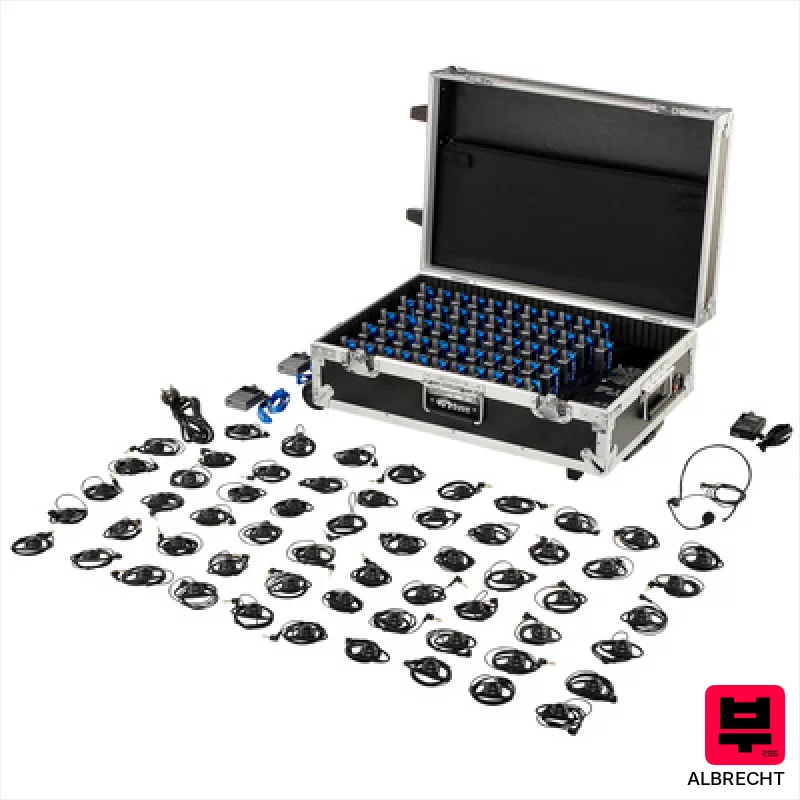
Albrecht ATR400 Charging Trolley Set 60
- • Robust trolley build provides reliable transport of the extensive system.
- • 2.4GHz band offers broad usability across Europe with minimal licensing hassle.
- • 18-hour battery life ensures full-day operation for demanding tour schedules.
- • Simultaneous charging of all 60 units streamlines workflow and reduces downtime.
- • The sheer size and weight of the trolley will be a challenge for single operators.
- • While 200m range is stated, real-world performance depends heavily on environmental interference.
- • The 2.4GHz band can still experience interference in densely populated areas.

Albrecht ATR400 Charging Trolley Set 40
- • Robust trolley construction simplifies transport across venues and tours.
- • 2.4 GHz ISM band offers reliable operation across Europe.
- • Long 18-hour battery life minimizes downtime during extended events.
- • Integrated charging case streamlines device management and charging.
- • The trolley itself adds significant weight, impacting portability for single users.
- • 20m range, while adequate, may be limiting for larger outdoor spaces.
- • Lacks advanced features like individual device volume control or user profiles.
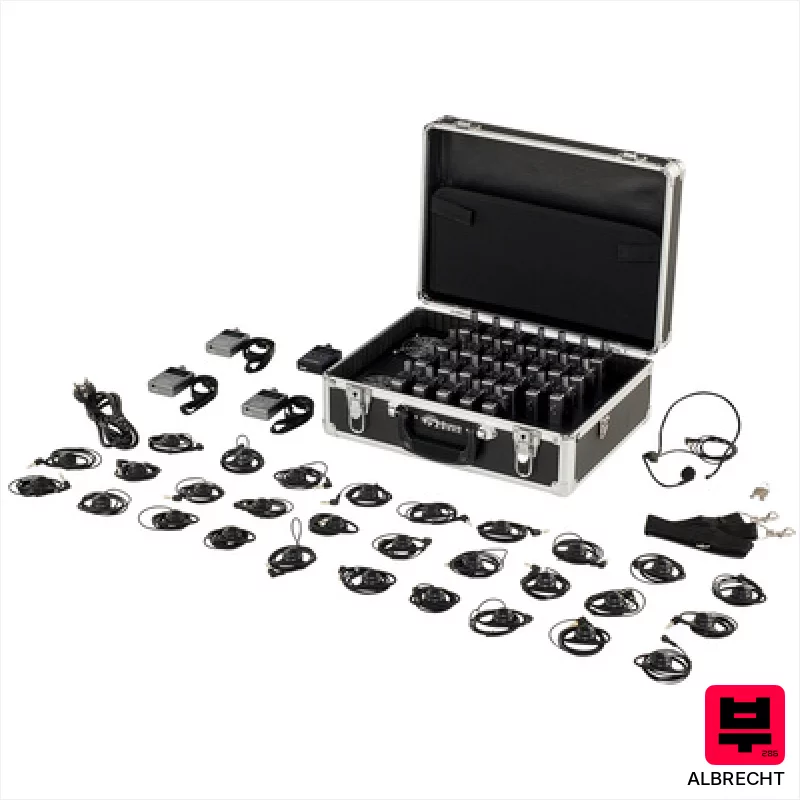
Albrecht ATR400 Charging Case Set 30
- • Excellent range for large venues; up to 200 meters is impressive.
- • Charging case simplifies logistics and battery management significantly.
- • Digital transmission minimizes interference common in crowded RF environments.
- • Lightweight receiver design (50g) ensures user comfort during extended use.
- • 2.4GHz band can still experience interference from other devices.
- • The 3.5mm headset jack limits compatibility with higher-end professional headsets.
- • Premium-priced, making it a substantial investment for smaller operations.
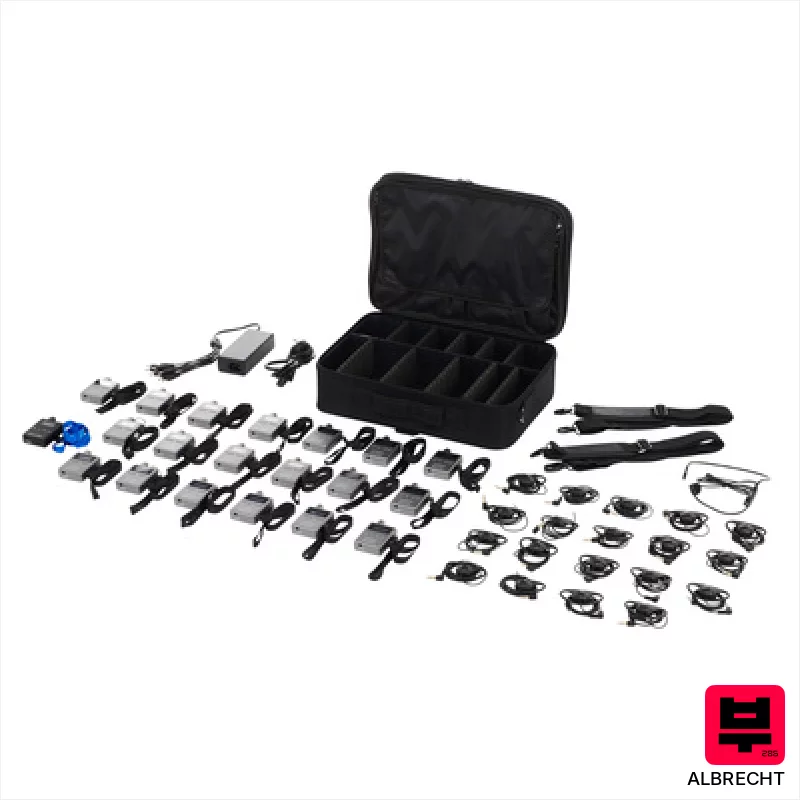
Albrecht ATR400 Carry Bag Set 20pcs.
- • Robust shoulder bag comfortably carries a large device count
- • 2.4GHz band ensures reliable operation across Europe
- • Excellent battery life minimizes downtime during long tours
- • Integrated lithium battery offers consistent performance and rechargeability
- • The receiver size could be cumbersome for some users' comfort
- • Limited frequency band flexibility restricts use outside Europe
- • The 20m range may be insufficient for larger venues or outdoor spaces
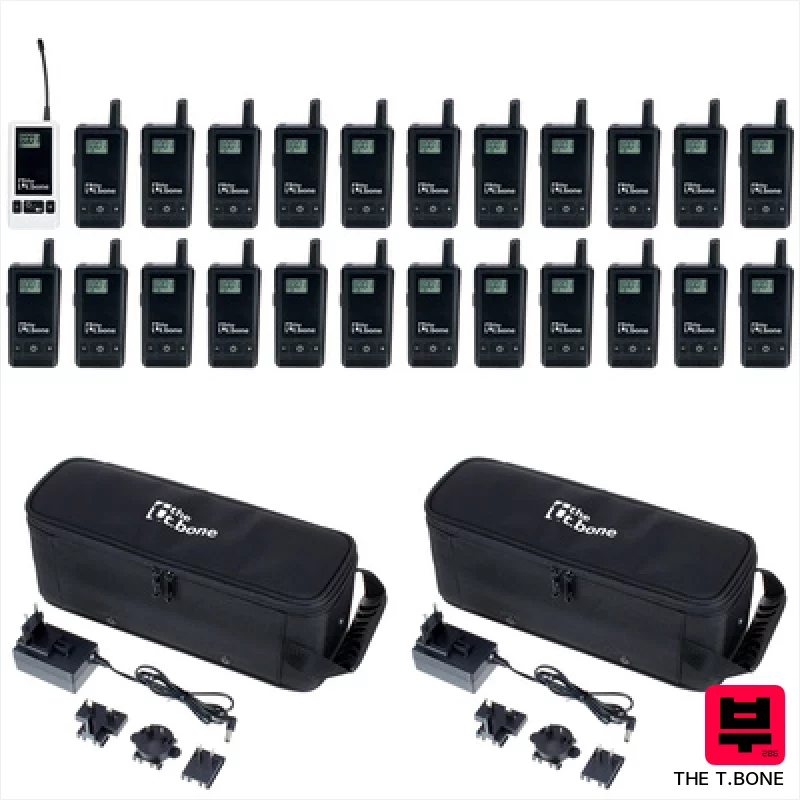
the t.bone Tour Guide Set Talkback II
- • Excellent battery life for extended operation, easily 17 hours
- • Limited frequency range restricts operation in some regions
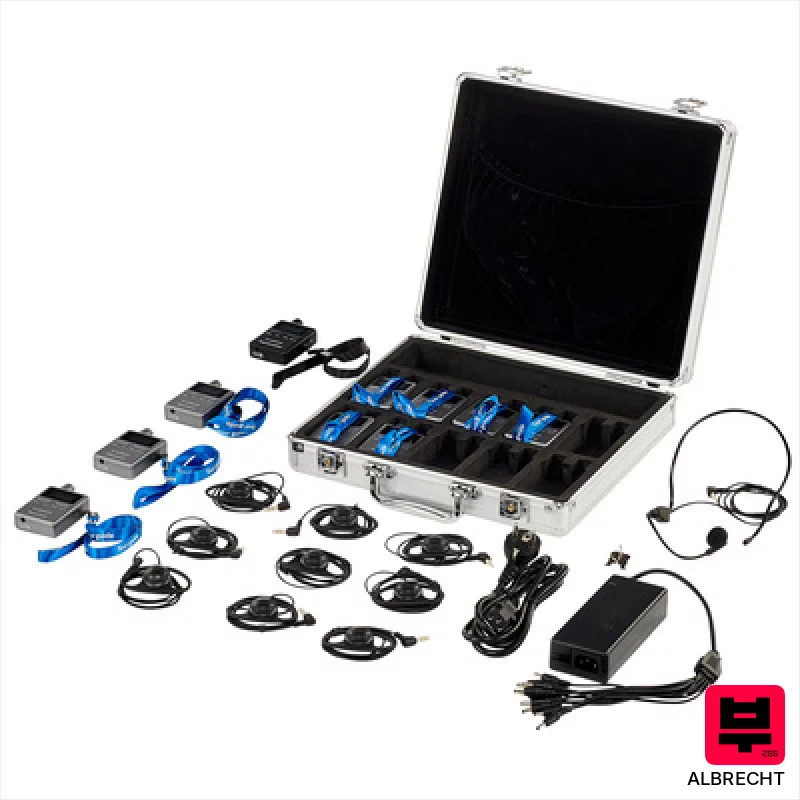
Albrecht ATR400 Hard Case Set 10pcs.
- • Robust hard case protects equipment during demanding touring schedules.
- • 2.4GHz band offers reliable operation across Europe with minimal interference.
- • Lightweight receiver units (50g) promote user comfort during extended use.
- • Integrated lithium batteries provide impressive 18-hour operating time.
- • Limited frequency band restricts use outside of Europe’s 2.4 GHz ISM band.
- • While functional, the case's dimensions might be restrictive for some travel setups.
- • The 20m range, while adequate, could be limiting for larger venues or outdoor settings.
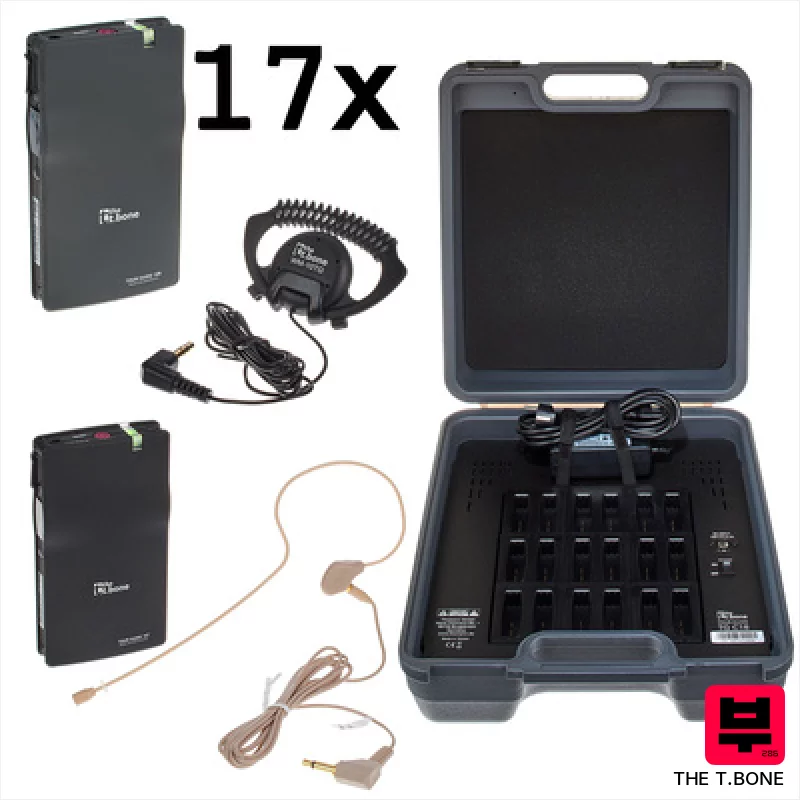
the t.bone Tour Guide Set III
- • Robust charging station simplifies management of multiple bodypacks
- • UHF frequency range offers good penetration through obstacles
- • Compact bodypacks are comfortable for extended wear during tours
- • Clear audio reproduction suitable for speech and basic music
- • Limited frequency band restricts scalability in congested areas
- • TG C18 charging station is bulky, takes up considerable space
- • Mono audio output restricts use for stereo applications
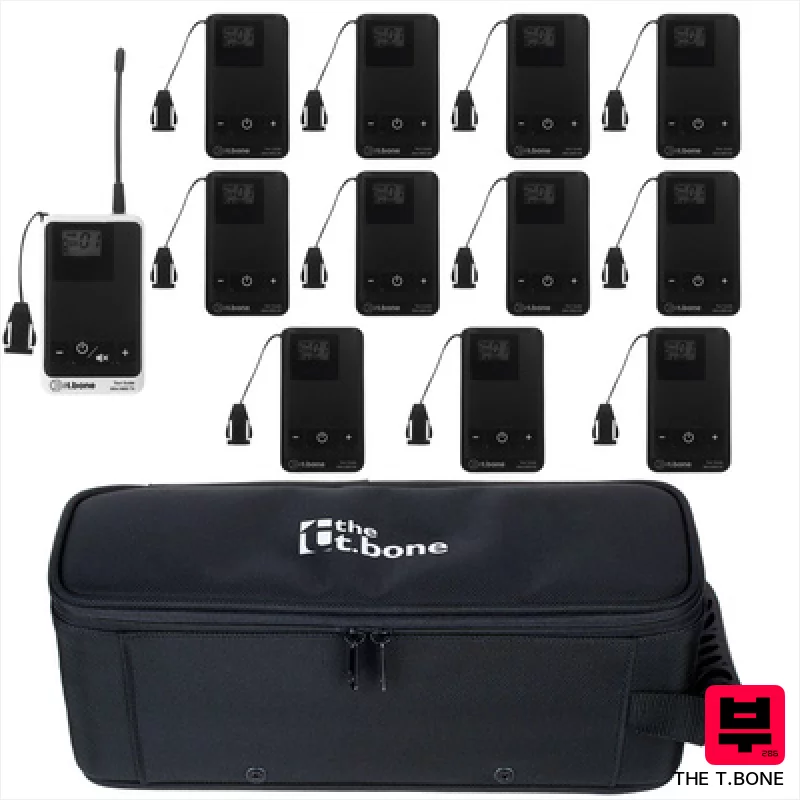
the t.bone Tour Guide Mini MKII Bundle
- • Compact bodypacks offer excellent portability for guiding groups.
- • 16 switchable frequencies minimize interference in crowded areas.
- • Integrated lithium polymer battery provides convenient, USB-C charging.
- • Rugged nylon carrying bag protects gear during transport and storage.
- • Limited frequency band (863-865 MHz) restricts channel availability in some regions.
- • External microphone is not included, adding to the overall cost.
- • The white housing may be prone to showing scuffs and marks with heavy use.
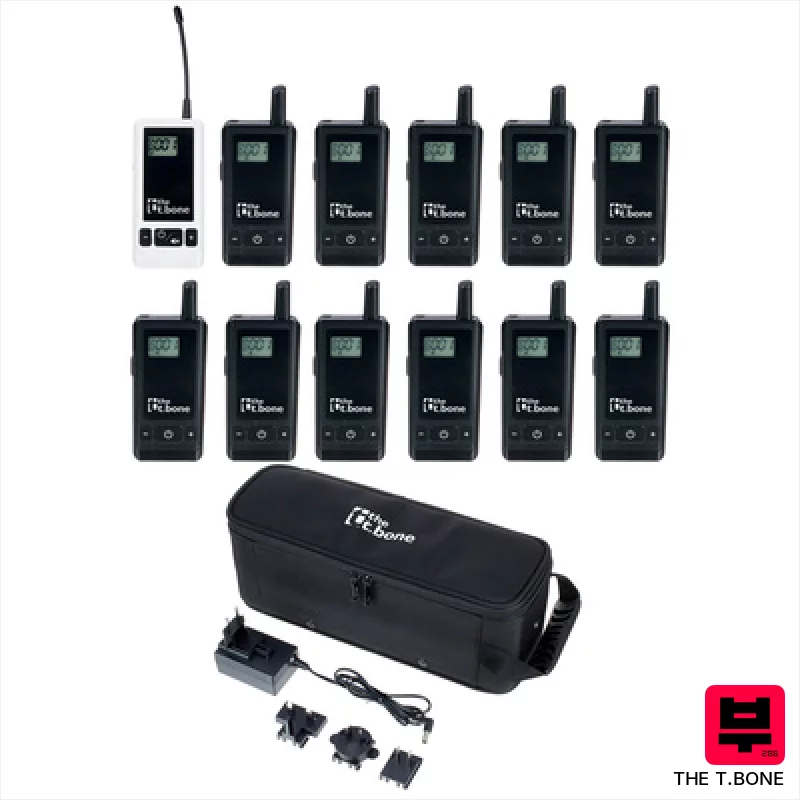
the t.bone Tour Guide Set Talkback I
- • Excellent battery life for extended tours and events
- • Integrated return channel enables clear communication with receivers
- • Compact bodypack charger handles up to 12 units efficiently
- • UHF frequency offers reliable performance in most environments
- • Limited frequency range restricts channel availability in congested areas
- • Micro USB charging feels dated compared to newer standards
- • The plastic construction feels a little less robust than higher-end systems
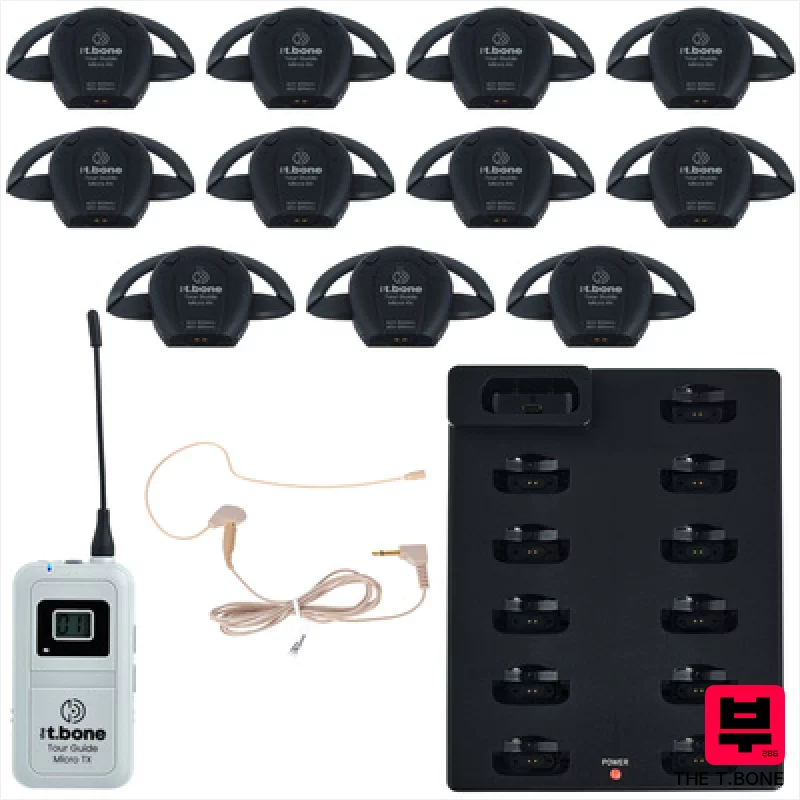
the t.bone Tour Guide Micro TX Bundle
- • Lightweight design (50g) minimizes user fatigue during extended use.
- • Integrated Li-Polymer battery delivers impressive 16-hour runtime.
- • Charging station manages 12 receivers and 1 transmitter efficiently.
- • Clear LCD display simplifies operation and monitoring of settings.
- • Limited frequency response (300Hz-3400Hz) restricts low-end clarity and high-frequency detail.
- • 823-832/863-865 MHz frequency band may face interference in crowded RF environments.
- • Microphone input is only 3.5mm TRS, lacking XLR versatility.

the t.bone Tour Guide Set II
- • Robust grey casing offers excellent durability for field use
- • Integrated mic provides immediate functionality; external mic option adds flexibility
- • Multiple parallel systems allow for complex group communication scenarios
- • Charging contacts enable optional charging station for streamlined workflow
- • Limited frequency range might encounter interference in densely populated areas
- • Grey casing, while durable, lacks a premium aesthetic feel
- • Integrated microphone's quality is adequate, not high-end for critical audio
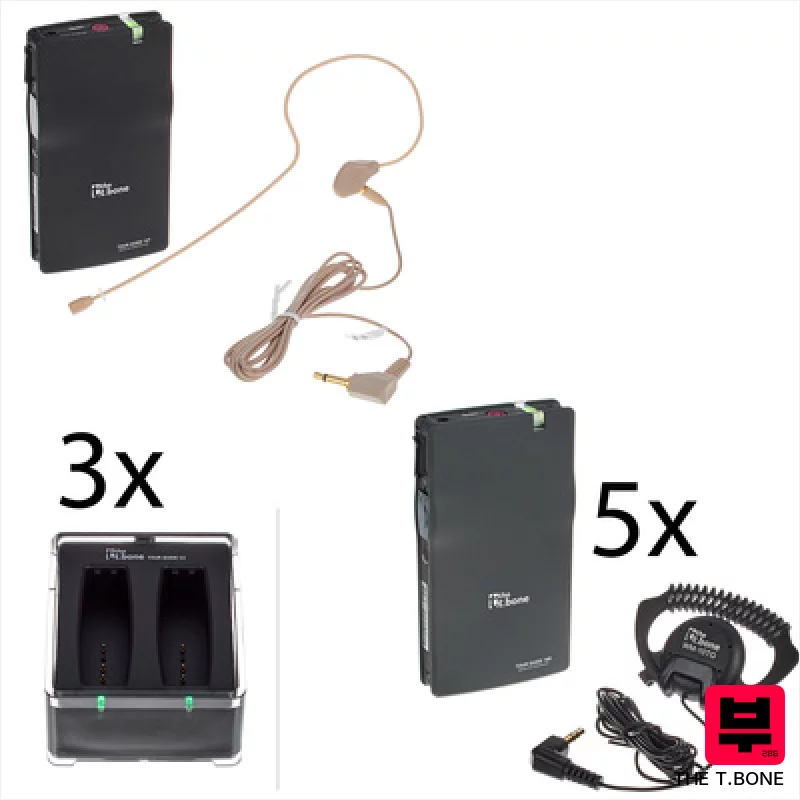
the t.bone Tour Guide Set I
- • Rugged grey casing offers excellent durability for field use
- • Integrated mic is surprisingly clear for basic announcements
- • Multiple parallel systems avoid interference in crowded environments
- • Compact receiver design makes it comfortable for extended wear
- • Limited frequency band restricts operation in some regions
- • Internal lithium battery necessitates careful power management
- • Integrated microphone lacks the quality for professional audio capture
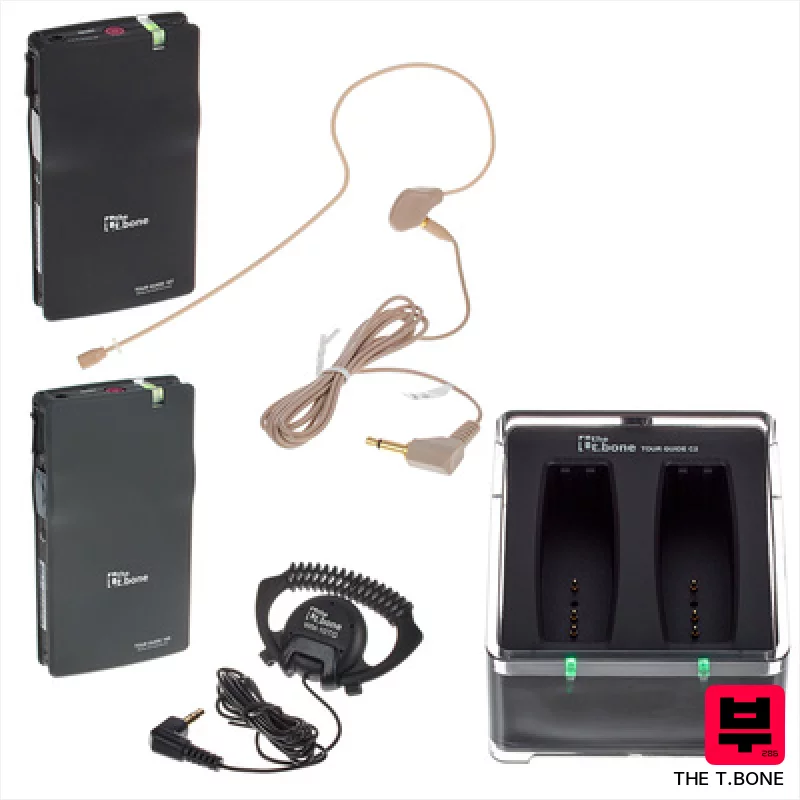
the t.bone Tour Guide Basic Set
- • Compact and lightweight design promotes comfortable, all-day use
- • ISM band operation minimizes licensing hassles and interference
- • Integrated microphone provides immediate usability for quick announcements
- • Charging contacts offer convenient, optional charging station compatibility
- • Limited frequency range restricts channel availability in densely populated areas
- • Plastic construction feels budget-oriented, lacking premium durability
- • Mono audio output restricts stereo sound reproduction for certain applications

the t.bone Tour Guide Talkback RC
- • Lightweight design (<50g) ensures comfortable extended wear
- • Integrated lithium polymer battery provides impressive 17-hour runtime
- • Clear LC display simplifies channel selection and status monitoring
- • Included earphones and lanyard offer immediate usability and portability
- • Limited frequency range restricts usage in crowded RF environments
- • Micro USB charging feels dated compared to modern USB-C standards
- • Incompatibility with t.bone Tour Guide Mini limits system expandability

Sennheiser EK 2020-DII TourGuideReceiver
- • Compact and lightweight for extended wear during tours
- • Six switchable channels offer flexibility in crowded RF environments
- • Clear LCD display provides vital status information at a glance
- • Durable plastic housing suggests reasonable resilience for field use
- • Limited frequency band restricts operation in some regions
- • Battery system 543604 is a separate purchase, adding to overall cost
- • Basic features lack advanced options like headphone amplification
How to Choose the Best Wireless Guidesystems
Frequency Band
UHF is generally your best bet for avoiding interference, but 2.4GHz digital systems are becoming viable. Think about your local RF environment - crowded cities are a nightmare. More channels are always better, especially if you're sharing space with other bands.
Dynamic Range
This is critical for handling loud sources like drums or brass. A low dynamic range will result in clipping and a compressed, lifeless sound. Look for at least 90dB, preferably more if you're dealing with a dynamic range monster.
Latency
The delay between the mic and the sound. Too much latency is unmusical - it messes with your timing and makes communication awkward. Anything over 5ms is noticeable; under 3ms is ideal. Digital systems can introduce more latency, so check the specs carefully.
Build Quality & Durability
Gigs are rough. Dropped mics, stomped-on transmitters... your gear needs to survive. Solid construction, reliable battery life, and a good warranty are essential. Cheap plastic often means early failure.
Sound Quality & Articulation
A wireless system shouldn't color your tone. It should be transparent. Listen for clarity, detail, and how well it reproduces subtle nuances in your playing or singing. A muddy or compressed sound defeats the purpose.
Buying Guide
Under $5000, you're making compromises. Don't expect the rock-solid reliability of a $10,000 system. You'll likely be trading off channel count, build quality, or a bit of dynamic range. Digital systems offer convenience and sometimes better range, but be wary of latency and potential digital artifacts. Spend a bit more on a receiver with a good antenna; that's where a lot of the performance comes from.
How This List Is Built
We don't play these instruments — we're a catalog, not a review desk, and we'd rather say so than pretend otherwise. This page ranks 15 wireless guidesystems from the Thomann catalogue, which is the largest single source of specification data in this category.
Position is computed, not curated. Four signals, in order of weight: how completely the manufacturer documents the instrument (number of published specifications), where it sits in the price range, how specific the model designation is — which filters out generic accessories — and whether a product image exists. The same inputs always produce the same order, so nothing here is shuffled to look fresh.
What this list is good for: narrowing a category down to a shortlist by spec and budget. What it isn't: a substitute for hearing an instrument. Before you buy, read hands-on reviews and, where you can, play it. Full methodology.

