 AudioFu
AudioFu Chart · October 2026
Best Doepfer Trigger, CV Sequencer 2026
The top pick is Doepfer A-155 Analog / Trigger Sequencer ($373). Doepfer A-155-2 gives you the most for the money at $200. Ranked by the AudioFu Index from 4 models, prices checked every night.
Last updated: October 15, 2026
Top 4
Full detail for the 4 highest AudioFu Index scores. Every other model is listed below.
-
The A-155 is a workhorse sequencer, plain and simple. It's a great starting point for understanding modular sequencing and perfect for those wanting a reliable, no-frills trigger and CV source for driving basslines or creating intricate rhythmic textures. Its straightforward design makes it accessible while still offering surprising depth.
Pros
- Rock-solid Doepfer build quality, feels incredibly durable
- Flexible step sequencing for complex rhythmic patterns
- Clear, precise analog triggers for reliable timing
Cons
- Limited polyphonic capabilities; primarily monophonic sequencing
- Expanders are essential for extended functionality, adds cost
70AudioFu
Index↓ 1.8%since Aug 14 · lowest so far$380 · Aug 14$373 now$373€333 at Thomann · in stockCheck price ↗ -
The A-155-2 is a dependable, no-frills sequencer perfect for anyone wanting a reliable foundation for their modular system. It's great for generating simple basslines, rhythmic patterns, or triggering effects, and its compact size makes it a good fit for smaller racks. If you’re new to modular sequencing, this is a fantastic and affordable starting point.
Pros
- Rock-solid Doepfer build quality, feels immediately durable.
- Compact 12HP footprint maximizes precious rack space.
- Versatile playback modes spark creative sequencing ideas.
Cons
- Limited eight steps can feel restrictive for complex patterns.
- Basic display offers no visual feedback on voltage levels.
49AudioFu
IndexStableno change since Aug 14Aug 14$200 now$200€179 at Thomann · in stockCheck price ↗ -
The A-157 is a powerhouse for intricate rhythmic patterns and sequencing, especially if you're deep into modular synthesis. It’s fantastic for experimental electronic music, glitch, and anyone needing a dense, compact trigger matrix. While not a CV sequencer, its trigger capabilities are top-notch and its modularity opens up a world of possibilities.
Pros
- Robust build quality characteristic of Doepfer’s Subsys line
- Extremely dense trigger pattern creation within a compact footprint
- LED matrix offers clear visual feedback and intuitive step editing
Cons
- Can feel cramped for extended use due to high trigger density
- Steep learning curve for users unfamiliar with trigger matrix systems
44AudioFu
Index↓ 4.0%since Aug 14 · lowest so far$535 · Aug 14$514 now$514€459 at Thomann · in stockCheck price ↗ -
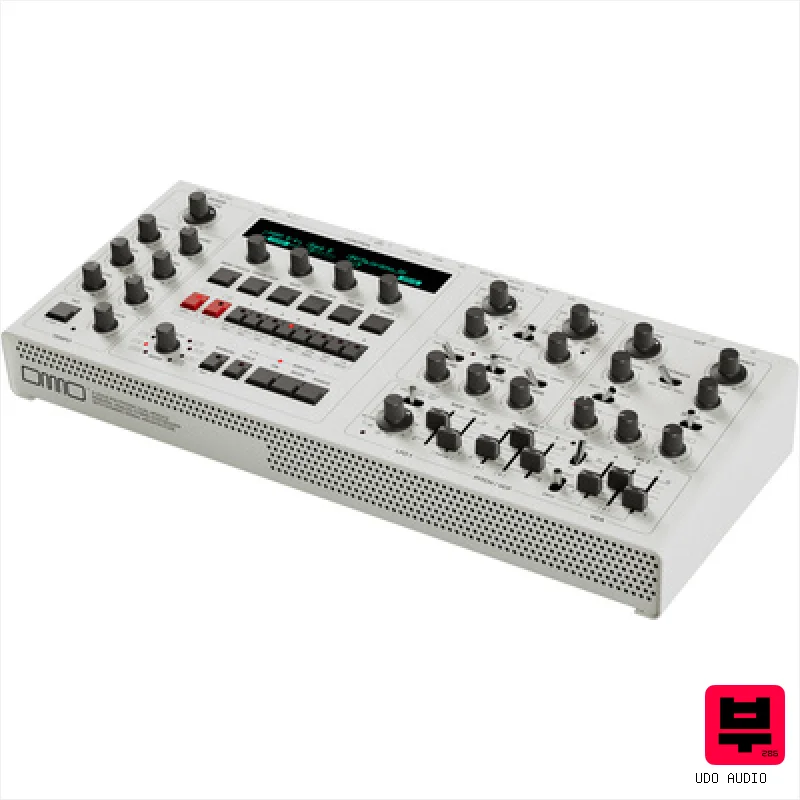
This tiny sequencer packs an analog 8-step engine into a small 1U rack space. It lets you save eight presets and tweak every step with dedicated knobs. Perfect for studio musicians who want a reliable, low-profile trigger that plays nicely with other gear.
Pros
- Internal storage holds up to eight preset sequences
- Offers flexible ratcheting programming for x2, x3, or x4 repeats
- Includes play modes like pendulum, random, and repeating
Cons
- Very compact 1U size limits expansion options
- Lacks built-in sequencer display or touch controls
How to choose the best trigger, CV sequencer
Heritage & Design Philosophy
Doepfer's approach is fundamentally about utility and stability. The original A-145 sequencer, and subsequent iterations, defined a standard for reliable, step-based sequencing. It's a no-nonsense design, prioritizing functionality over aesthetics.
Step Resolution & Accuracy
These sequencers are renowned for their incredibly precise timing. You're not dealing with any of that quantized, 'lo-fi' feel unless you deliberately introduce it. This accuracy is crucial for complex polyrhythms or tight, syncopated patterns - things that really shine in a band rehearsal or live situation.
Glide & Delay
Doepfer's glide and delay implementations aren't just effects; they're integral to the sequencer's character. The glide, especially, can add a subtle warmth and organic feel that's missing in many digital sequencers. It's not a wild, swooshing effect; it's more like a gentle easing between steps, adding sustain and movement.
Build Quality & Reliability
This is where Doepfer truly shines. The robust construction and quality components mean these sequencers can withstand the rigors of gigging. You're not going to have pots failing or unreliable triggers - they're built to last, which is a huge deal when you're relying on them in a live environment.
Signal Integrity & Voltage Range
Doepfer sequencers operate with a clean, stable voltage output. You won't get any unwanted noise or voltage drift that can muddy your signal chain. This is especially important when driving sensitive oscillators or filters - preserving the purity of your sound is paramount.
Buying guide
Okay, so you're diving into the modular world and need a solid sequencer. Forget those flashy, feature-bloated units - let's talk Doepfer. For years, Doepfer sequencers have been the bedrock of countless modular rigs, from studio recordings to sweaty club gigs, and for good reason. They're not about bells and whistles; they're about rock-solid reliability and a specific, characterful way of working.
If you're new to modular, a Doepfer sequencer is a fantastic starting point. Don't be fooled by their relatively simple interface - they're incredibly powerful. Used units are readily available and often a great value.
Be aware that earlier models might have slightly different voltage ranges, so double-check compatibility with your other modules. Paying extra for a newer, fully tested unit is often worth it for peace of mind.
How the AudioFu Index works
Five measured signals and nothing else — no stars from strangers, no “tested by experts” we didn’t do. The weights are fixed and public. We don’t play these instruments; we measure the market around them.
This chart covers 6 trigger, CV sequencer from the Thomann catalogue (of 42 in the category). Before you buy, read hands-on reviews and, where you can, play it. Full methodology.
AudioFu earns a commission when you buy through our Thomann links. It never changes the order — the index does.
- Demand40%
How many of this exact model are for sale on Reverb right now — what musicians actually buy and resell.
- Lineup20%
How many finishes Thomann stocks — makers expand the models that sell.
- Price15%
Where the price has moved since we started tracking in August.
- Specs15%
How completely the maker documents it.
- Maker10%
How deep the brand’s range is in this category.
Questions
Are Doepfer sequencers difficult to learn?
They're not inherently difficult, but their simplicity means you need to understand the fundamentals of sequencing. There's less hand-holding than with some modern sequencers, which can be a good thing if you want to really learn how sequencing works.
Can I sequence more than one oscillator at a time?
Absolutely. You can fan out the gate and CV outputs to control multiple modules simultaneously. The number depends on the voltage range and current handling of those modules, of course.
Do I need a power supply?
Doepfer sequencers are Eurorack format, so yes, they require a Eurorack power supply to operate. Factor that into your budget if you're just starting out.
How do Doepfer sequencers compare to software sequencers?
Software is convenient, but Doepfer sequencers offer a tactile, hands-on experience and a unique sonic character. The slight imperfections and analog warmth are hard to replicate in software, and the physical interaction can be more inspiring.
Are they still made?
Doepfer's production has been somewhat sporadic in recent years, but they do still occasionally release new modules. Used units are your most reliable bet, and the vintage ones are highly sought after.