AudioFu Chart · October 2026
Best Baton Rouge Tenor Ukuleles 2026
The top pick is Baton Rouge V2-TACE Sun ($224). Baton Rouge UTAS-T Ash gives you the most for the money at $134. Ranked by the AudioFu Index from 5 models, prices checked every night.
Last updated: October 22, 2026
Top 5
Full detail for the 5 highest AudioFu Index scores. Every other model is listed below.
-
- Nut width37 mm (1.46")
- Scale430 mm (16.93")
- Frets18 frets
- BodyMahogany body
- FingerboardWalnut fingerboard
This tenor uke has a nice mahogany body and a cutaway for easy high-note access. The rechargeable pickup makes it great for playing in noisy rooms. While it lacks a listed weight or top wood, the armrest and walnut fingerboard make it a solid choice for players who want a bit more range than a soprano or concert model.
Pros
- Cutaway design lets you reach high frets easily.
- Mahogany body offers a warm, rich tone.
- Rechargeable UKB pickup adds volume for practice.
Cons
- Scale length is longer than standard ukulele size.
- No top wood material is specified in text.
56AudioFu
IndexStableno change since Aug 17Aug 17$224 now$224€199 at Thomann · in stockCheck price ↗ -
- Nut width37 mm (1.46")
- Scale430 mm (16.93")
- Frets18 frets
This Baton Rouge UTAS-T Ash is a surprisingly capable tenor ukulele. The solid wood construction gives it a richer, more mature voice than many in its class, and the Nubone hardware is a nice touch. It's an excellent choice for intermediate players looking for a well-built, affordable instrument with a warm, inviting tone.
Pros
- Solid German spruce top delivers a surprisingly bright and resonant tone.
- Solid ash back and sides add warmth and complexity to the sound.
- Nubone nut and saddle enhance sustain and tuning stability.
Cons
- Eucalyptus fingerboard/bridge might feel a little 'soft' to experienced players.
- Open-pored matte finish can be susceptible to moisture and requires careful maintenance.
42AudioFu
IndexStableno change since Aug 17Aug 17$134 now$134€119 at Thomann · in stockCheck price ↗ -
- Nut width37 mm (1.46")
- Scale430 mm (16.93")
- Frets18 frets
The Baton Rouge UTM-T offers a surprisingly refined tone for its price point. The solid woods give it a mature sound, and the comfortable neck makes it a joy to play. This is a fantastic option for intermediate players or anyone looking for a beautiful, well-built tenor ukulele without the premium price tag.
Pros
- Solid German spruce top delivers a bright, responsive tone.
- Solid maple back and sides add warmth and sustain.
- Nubone nut and saddle improve clarity and intonation.
Cons
- Maple construction can be a bit less resonant than Koa.
- Open-pored matte finish may require more careful maintenance.
42AudioFu
IndexStableno change since Aug 17Aug 17$134 now$134€119 at Thomann · in stockCheck price ↗ -
- Nut width37 mm (1.46")
- Scale430 mm (16.93")
- Frets18 frets
The Baton Rouge UTC-T Cherry is a surprisingly well-appointed tenor uke. The solid woods give it a richer sound than many in its price range, and the Nubone hardware is a nice touch. This is a fantastic option for intermediate players looking for a quality instrument with a warm, balanced tone and comfortable feel.
Pros
- Solid German spruce top delivers a bright, articulate, and responsive tone.
- Solid cherry back and sides add warmth and sustain, balancing the spruce's brightness.
- Nubone nut and saddle enhance sustain and tuning stability compared to standard plastic.
Cons
- Walnut binding, while aesthetically pleasing, might feel less robust than more premium options.
- Open guitar tuners, while visually appealing, might not offer the same precision as geared tuners.
42AudioFu
IndexStableno change since Aug 17Aug 17$145 now$145€129 at Thomann · in stockCheck price ↗ -
- Nut width37 mm (1.46")
- Scale430 mm (16.93")
- Frets18 frets
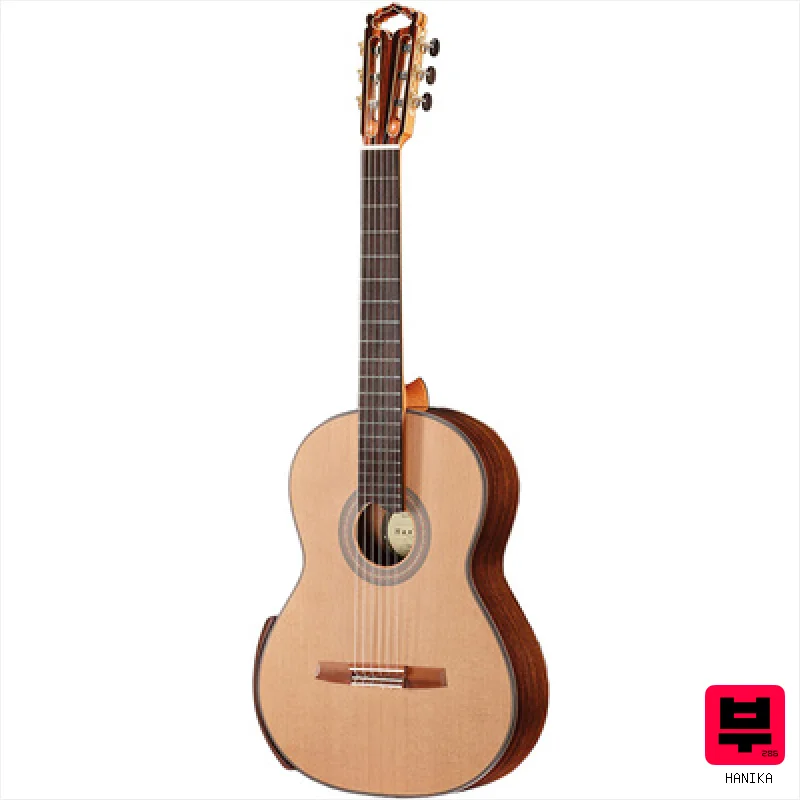
This tenor uke feels like a small guitar thanks to its solid spruce top and apple wood body. The extra frets make it great for slide players who want more room. It plays with a nice nylon string sound but has no pickup for live gigs.
Pros
- Solid German spruce top for strong projection
- Solid apple wood back and sides for warmth
- 18 frets allow for easy slide playing
Cons
- Natural satin finish shows wood grain clearly
- No built-in electronics for amplification
42AudioFu
IndexStableno change since Sep 24Sep 24$246 now$246€219 at Thomann · in stockCheck price ↗
Tenor Ukuleles by the numbers
Measured across all 130 models we track, not a sample.
median of 79 models · 35 mm (1.38")–38 mm (1.5")
median of 101 models · 425 mm (16.73")–440 mm (17.32")
median of 110 models · 18–22
most common · 49 models
How to choose the best tenor ukuleles
Tone
Baton Rouge ukes generally deliver a warm, round tone with a surprising amount of projection. It's not a bright, sparkly clean - more of a mellow, woody vibe that sits nicely in a mix. The low-end thump is surprisingly present, which helps it cut through when playing with other instruments - a real plus for band settings.
Build Quality
The construction is generally very good for the money. You're getting solid wood tops (often spruce or mahogany) which is a significant step up from laminate, but the back and sides are typically Sapele or Okume. This is a common trade-off to keep costs down, and it's not a dealbreaker, but it does mean the sustain isn't going to be as long as a fully solid instrument.
Playability
The neck profiles are comfortable - not too thick, not too thin - and the action is typically set reasonably low from the factory. Still, a quick setup by a local tech can really unlock the uke's potential and improve playability, especially if you're a more aggressive strummer.
Hardware
The tuners are... adequate. They'll hold tune well enough for most players, but if you're a stickler for precision tuning or plan on doing a lot of dropped tunings, you might want to upgrade them down the line. It's a common upgrade across all price points, really.
Aesthetics
Baton Rouge ukes have a clean, understated aesthetic. They're not flashy, but the wood grain is often quite beautiful, and the simple designs let the instrument's tone speak for itself. It's a mature look, which is a nice change from some of the more cartoonish ukulele designs out there.
Buying guide
So, you're looking at a Baton Rouge tenor uke? Smart move. They've really carved out a niche for themselves as a surprisingly solid option for the price, especially for gigging musicians who don't want to drop serious cash on a KoAloha or Kala. I've seen these things hold up on stages from smoky blues bars to outdoor festivals, and they consistently outperform their price point - they're not just bedroom instruments.
For the price, you can't really go wrong with a Baton Rouge tenor. Watch out for overly bright action - a simple adjustment can fix it. Don't expect the sustain or nuanced complexity of a much more expensive instrument, but for gigging or just jamming around, they're a fantastic value.
Spending a little extra for a model with a solid wood back and sides is worthwhile if your budget allows, but the solid top models are still excellent.
How the AudioFu Index works
Five measured signals and nothing else — no stars from strangers, no “tested by experts” we didn’t do. The weights are fixed and public. We don’t play these instruments; we measure the market around them.
This chart covers 7 tenor ukuleles from the Thomann catalogue (of 130 in the category). Before you buy, read hands-on reviews and, where you can, play it. Full methodology.
AudioFu earns a commission when you buy through our Thomann links. It never changes the order — the index does.
- Demand40%
How many of this exact model are for sale on Reverb right now — what musicians actually buy and resell.
- Lineup20%
How many finishes Thomann stocks — makers expand the models that sell.
- Price15%
Where the price has moved since we started tracking in August.
- Specs15%
How completely the maker documents it.
- Maker10%
How deep the brand’s range is in this category.
Questions
Are Baton Rouge ukuleles made overseas?
Yes, they are manufactured in China, but Baton Rouge has a reputation for quality control and working with skilled luthiers. It's not a 'cheap' Chinese instrument; they're actively trying to elevate the build standards.
What's the difference between the different Baton Rouge tenor models?
The main differences come down to the wood used - spruce vs. mahogany top, different back and side woods, and occasionally different binding or rosette details. The wood choices will slightly affect the tonal character - spruce is generally brighter, mahogany warmer.
Can I record a Baton Rouge ukulele effectively?
Absolutely! The warm tone works really well in a recording setting, especially for folk, blues, or indie music. A small-diaphragm condenser mic placed well will capture a lot of detail. Just be mindful of any unwanted string noise.
Are the tuners any good?
They're functional, but not exceptional. They'll get you in the ballpark, but serious players might want to upgrade to geared tuners for more precise tuning stability, especially if you're doing a lot of alternate tunings.
What's the best way to care for a Baton Rouge ukulele?
Keep it away from extreme temperatures and humidity changes - that's good advice for any wood instrument. Wipe it down after playing, and occasionally apply a thin coat of lemon oil to the fretboard to keep it hydrated.