AudioFu Chart · November 2026
Best Tenor Trombones Under $800 2026
The top pick is pBone music pBone Orange ($157). Jupiter JTB730Q Tenor Trombone leads the high end. Ranked by the AudioFu Index from 17 models across 5 brands, prices checked every night.
Last updated: November 16, 2026
Top 10
Full detail for the 10 highest AudioFu Index scores. Every other model is listed below.
-
- Size8"
If you want a tenor trombone that can take a few knocks, the orange pBone is a good choice to look at. It is made of ABS plastic, has a fiberglass slide, and weighs about 800 g, so it is easy to carry and hold. It comes with a plastic mouthpiece and a gig bag, which makes it a handy pick if you play outdoors or move your horn around often.
Pros
- ABS plastic body is built to be very resistant
- Fiberglass slide keeps the instrument light to handle
- Built ergonomically for comfortable holding
Cons
- Plastic mouthpiece is a small shaft, not a standard brass one
59AudioFu
Index↓ 8.4%since Aug 17 · lowest so far$171 · Aug 17$157 now$157€142 at Thomann · in stockCheck price ↗ -
- Size8"
- Weight1.72 kg
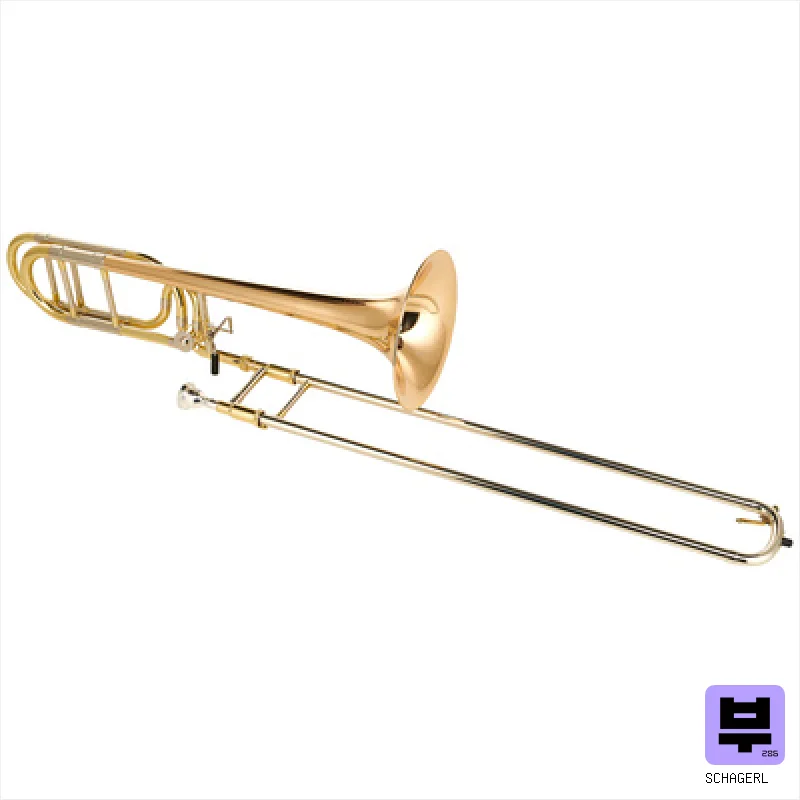
You get a traditional closed-wrap tenor trombone that switches between Bb and F with its F-attachment. It has a medium large bore and an 8-inch brass bell, and it comes with a mouthpiece, a Reka Super Slide and a case with a backpack strap. It suits you if you want a tenor trombone with a case and extras already in the box.
Pros
- Traditional closed-wrap design with a Bb/F tenor layout
- Brass bell measuring 203 mm (8 inches) in diameter
- Completely silver-plated finish over nickel silver slides
59AudioFu
IndexStableno change since Aug 17Aug 17$717 now$717€649 at Thomann · in stockCheck price ↗ -
- Size8"
- Weight1.6 kg
You get a Bb/F tenor trombone with a completely expanded quart valve and a dual bore of 12.7 / 13.34 mm. It has an 8" gold-brass bell, a nickel-silver exterior, and comes with a case with backpack straps, so it is easy to carry. It suits you if you want a tenor trombone with an F-attachment and a complete kit in one package.
Pros
- Dual bore of 12.7 / 13.34 mm (.525") gives you two bore sizes in one instrument
- Traditional closed-wrap construction with a completely expanded quart valve
- Gold-brass 8" bell paired with a nickel-silver exterior
Cons
- Weighs 1.6 kg and measures 103.5 cm, so it is not the lightest option
52AudioFu
IndexStableno change since Aug 17Aug 17$661 now$661€598 at Thomann · in stockCheck price ↗ -
- Size8"
This is a Bb tenor trombone with a medium bore and an 8-inch brass bell. The slides are nickel silver, and the inner slide has a hard chrome plating. It comes with a mouthpiece, a Reka Super Slide, and a case with a backpack strap, so you can carry it and start playing right away.
Pros
- Medium 12.70 mm (.500") bore is a common size for tenor trombone
- Brass bell measures 203 mm (8") across
- Hard chrome-plated nickel silver inner slide on a nickel silver outer slide
Cons
- Weighs approximately 1.5 kg, which is heavier to hold for long sessions
49AudioFu
IndexStableno change since Aug 17Aug 17$329 now$329€298 at Thomann · in stockCheck price ↗ -
- Size8"
This is a Bb tenor trombone with a medium large bore and an 8 inch messing bell. It comes with a mouthpiece, a Reka Super Slide and a case with backpack straps, so you can start playing right away. It suits you if you want a standard-size tenor trombone at an affordable price.
Pros
- Medium large .525" bore, a size that suits a full-size tenor trombone
- Messing bell at 8" (203 mm) diameter gives a sturdy brass bell
- Nickel silver slide with a hard chromed new silver inner slide
Cons
- Only a case with backpack straps is included, with no other extras
49AudioFu
IndexStableno change since Aug 17Aug 17$364 now$364€329 at Thomann · in stockCheck price ↗ -
The Thomann Classic TF547 L is a solid, affordable tenor trombone for students and intermediate players. The large bore delivers a full, warm tone, and the included Super Slide is a nice touch for reliable intonation. It’s a great option for those wanting a traditional feel without breaking the bank.
Pros
- Large bore provides a rich, resonant low range.
- Nickel silver outerslides offer smooth, responsive action.
- Ergonomic thumb levers improve playing comfort and control.
Cons
- Traditional closed wrap may limit high register projection slightly.
- Lacquer finish, while clear, might show wear more readily than heavier coatings.
46AudioFu
IndexStableno change since Aug 17Aug 17$574 now$574€519 at Thomann · in stockCheck price ↗ -
This Startone trombone is a fantastic entry point for students or players on a tight budget. The ABS construction keeps it incredibly light and easy to manage, while the Bb/F keys provide a surprising amount of flexibility. It’s a great practice instrument, but don’t expect the same resonance as a higher-end brass model.
Pros
- Lightweight ABS construction makes it very easy to handle
- Bb/F configuration expands range and versatility for players
- Includes a soft gig bag for convenient transport and storage
Cons
- ABS plastic won't offer the tonal complexity of brass
- Mouthpiece quality is likely basic, may need upgrading later
45AudioFu
IndexStableno change since Aug 17Aug 17$154 now$154€139 at Thomann · in stockCheck price ↗ -
The Thomann SL-39 is a surprisingly capable student or intermediate trombone. The bore size and brass bell give it a decent projection and tonal warmth – a good starting point for players wanting a reliable, affordable instrument. It's ideal for school bands, beginners, or players needing a backup trombone.
Pros
- Solid brass bell provides a warm, resonant tone.
- Hard chrome inner slide ensures smooth, reliable action.
- Nickel silver outer slide offers a good balance of durability and feel.
Cons
- The molded case is basic and offers limited protection for transport.
- The lacquer finish, while clear, might be thinner than higher-end instruments.
39AudioFu
IndexStableno change since Aug 17Aug 17$308 now$308€279 at Thomann · in stockCheck price ↗ -
The Startone SSL-45 is a surprisingly capable student-level trombone. Its brass construction gives it a decent tone, and the ML bore makes it manageable for players transitioning from smaller horns. It's a great starting point for young players or those on a budget looking for a functional instrument.
Pros
- Solid brass body provides a warm, resonant tonal foundation
- ML bore offers a comfortable, responsive feel for intermediate players
- 205mm bell projects sound effectively without being overly bright
Cons
- Lacquered finish may be prone to wear with heavy use and less-than-ideal care
- Entry-level mouthpiece will likely need upgrading for serious playing
38AudioFu
IndexStableno change since Aug 17Aug 17$209 now$209€189 at Thomann · in stockCheck price ↗ -
This trombone uses a single leadpipe to make playing easier for beginners. The nickel silver slides feel smooth and durable, while the brass bell shines well. It comes with everything you need to start, so you can play right away.
Pros
- One-piece leadpipe offers easy response for new players
- Hard-chrome plated nickel silver inner slide lasts long
- Lacquered brass bell provides bright, focused sound
Cons
- Lack of weight spec may hide heavy instrument reality
- No valve or piston mechanism mentioned for portability
36AudioFu
Index↓ 9.7%since Aug 17 · lowest so far$868 · Aug 17$784 now$784€709 at Thomann · in stockCheck price ↗
All 17 tenor trombones
Same index, same nightly prices — compact. Colour options of one model share a row. Tap a photo to zoom.
- 11
Thomann SL 600 Jazz Bb- Tenor TromboneThomann35Stable$364€329$364€329Check ↗
- 12
Thomann Jazz Bb- Tenor TromboneThomann35Stable$386€349$386€349Check ↗
- 13
Thomann Blacky Bb-Tenor TromboneThomann35Stable$408€369$408€369Check ↗
- 14
Thomann proBONE 1 Bb-Tenor TromboneThomann35Stable$717€649$717€649Check ↗
- 15
Startone PTB-10 Bb- Jazz Trombone BlueStartone32Stable$127€115$127€115Check ↗
- 16
Sierman STB-511 Tenor TromboneSierman28Stable$518€469$518€469Check ↗
- 17
Thomann Blacky Trombone Starter SetThomann26Stable$463€419$463€419Check ↗
Tenor Trombones by the numbers
Measured across all 40 models we track, not a sample.
Median $364 — half of all tenor trombones here cost less.
median of 7 models · 1.1 kg–1.6 kg
median of 18 models · 8"–8"
How to choose the best tenor trombones
Valve Section (if applicable)
Many in this price range will have a valve section. A smooth, quiet action is key - sluggish valves kill articulation. Expect some maintenance needs with cheaper valve trombones; they're not built to the same tolerances as a fully nickel-silver horn.
Bell Material & Size
Brass bells are standard, but the alloy matters. Look for something that offers a balanced tone - too much brightness can be fatiguing, while a muddy low end won't cut through the mix. Larger bells (2.5"+) tend to offer more projection.
Slide Construction & Finish
A well-lubricated, free-moving slide is non-negotiable. Expect nickel-silver slides, but the quality of the finish impacts corrosion resistance and smoothness. Don't be surprised if you need to clean and oil it regularly.
Neck Profile & Throat Size
This hugely affects the horn's response and tone. A comfortable neck profile is crucial for extended playing, and a slightly larger throat can improve low-end projection and sustain. This is something you'll really feel when you play it.
Intonation
Let's be honest, perfect intonation is a myth. But a horn that's consistently sharp or flat across the range is a headache. Listen carefully for any major intonation issues and see if they can be addressed with mouthpiece changes.
Buying guide
So you need a tenor trombone, but you're not looking to drop a grand? Been there. Finding a horn that breathes, has decent intonation, and won't fall apart after a few gigs under $800 is totally doable, but you gotta know what to look for. This list isn't about the Stradella copies the pros use, it's about getting the most reliable, playable instrument for your money.
At this price point, you're trading something. Don't expect a buttery-smooth slide like a $2,000 horn. You might find a slightly thinner bell or a less refined finish.
Focus on playability and overall tone - those are the things that matter when you're laying down a solid groove. Consider buying used; you can often find a higher-end instrument at a discount.
How the AudioFu Index works
Five measured signals and nothing else — no stars from strangers, no “tested by experts” we didn’t do. The weights are fixed and public. We don’t play these instruments; we measure the market around them.
This chart covers 40 tenor trombones from the Thomann catalogue. Before you buy, read hands-on reviews and, where you can, play it. Full methodology.
AudioFu earns a commission when you buy through our Thomann links. It never changes the order — the index does.
- Demand40%
How many of this exact model are for sale on Reverb right now — what musicians actually buy and resell.
- Lineup20%
How many finishes Thomann stocks — makers expand the models that sell.
- Price15%
Where the price has moved since we started tracking in August.
- Specs15%
How completely the maker documents it.
- Maker10%
How deep the brand’s range is in this category.
Questions
Are student models okay for gigging?
Some student models are surprisingly decent, but be realistic. They're built for beginners, not professional use. Expect more maintenance and a less robust build. If you're gigging regularly, invest a little more.
What about nickel-silver versus brass?
Nickel-silver is generally more durable and corrosion-resistant. Most horns in this range will have a brass bell, but a nickel-silver slide is a plus. Full nickel-silver horns are rare under $800.
Can I improve the tone with a different mouthpiece?
Absolutely. The mouthpiece is a huge factor in tone production. Experiment with different cup sizes and rim shapes to find what complements the horn's natural voicing.
How often should I oil my trombone?
Regularly! At least once a month, more often if you play in dusty or humid environments. A dry slide will quickly become stiff and difficult to play.
What's the deal with valve trombones - are they better?
Valve trombones offer extended range, but the valve section is a potential weak point. They require more maintenance and can be less responsive than a traditional slide trombone. It's a trade-off.