AudioFu
AudioFu Chart · October 2026
Best Synthesizer Modules 2026
The top pick is Doepfer A-111-6 Miniature Synthesizer Voice ($223). Behringer 110 VCO/VCF/VCA gives you the most for the money at $60. Verbos Electronics Sawtooth Stack leads the high end. Ranked by the AudioFu Index from 16 models across 14 brands, prices checked every night.
Last updated: October 15, 2026
Narrow the chart
All Synthesizer ModulesTop 10
Full detail for the 10 highest AudioFu Index scores. Every other model is listed below.
-
Doepfer A-111-6 Miniature Synthesizer Voice
A-111-6 Vintage Edition · Doepfer
6 for sale on Reverb2 finishes at Thomann
The A-111-6 Vintage Edition is a fantastic entry point into modular synthesis, offering a classic, warm sound reminiscent of early European synths. It's a solid foundation for a basic voice, perfect for those wanting a vintage vibe without the complexity of modern modules. Ideal for beginners or those building a focused, character-driven system.
Pros
- Classic Doepfer build quality: robust metal chassis and reliable components
- Versatile VCO waveforms offer a wide range of sonic possibilities
- The 24dB filter provides a warm, resonant vintage character
Cons
- Limited modulation options compared to modern modules
- Vintage-style components may exhibit slightly higher noise floor
77AudioFu
Index↓ 9.1%since Aug 14 · lowest so far$245 · Aug 14$223 now$223€199 at Thomann · in stockCheck price ↗ -
Strymon SuperKar+ 32-Voice String Synthesis Module
SuperKar+ · Strymon
26 for sale on Reverb1 finish at Thomann
This module gives you 32 voices to play realistic strings and winds. You can run solo lines or generate chords with external control. It needs a power supply and fits in tight cases.
Pros
- 32-voice polyphony handles complex arrangements effortlessly.
- Dual independent engines separate solo lines from chords.
- Realistic string, wind, and percussion sounds out of the box.
Cons
- Harmony selection relies on V/Oct CV which needs external setup.
- No built-in power supply requires a dedicated Eurorack power unit.
76AudioFu
IndexStableno change since Aug 17Aug 17$480 now$480€429 at Thomann · in stockCheck price ↗ -
The Pico Voice is a seriously clever little module – you get a surprising amount of sonic territory crammed into just 3HP. It’s perfect for experimental sound design, adding unique textures to a larger modular system, or for someone just starting out and wanting to explore a wide range of synthesis techniques without a massive investment.
Pros
- Remarkable sound palette for its size, incredibly versatile algorithms
- Impressive sound quality, especially the TB-303 emulation
- Tiny footprint, ideal for dense modular setups
Cons
- Limited parameter control per algorithm, requiring external modulation
- 3HP width demands careful panel planning and space management
68AudioFu
IndexStableno change since Aug 14Aug 14$156 now$156€139 at Thomann · in stockCheck price ↗ -
The Erica Synths Bassline is a fantastic, focused module for anyone wanting that classic acid bass sound without a massive modular setup. Its core design is simple but powerful, delivering a raw, aggressive character that’s perfect for techno, industrial, and experimental music – it’s a real workhorse for driving a system’s low end.
Pros
- Acidbox filter delivers a uniquely aggressive, resonant tone.
- Suboscillator adds significant low-end weight and character.
- BBD circuit convincingly emulates vintage analog instability.
Cons
- Limited waveform selection compared to more complex VCOs.
- Accent input can be tricky to dial in for subtle nuances.
68AudioFu
IndexStableno change since Aug 14Aug 14$391 now$391€349 at Thomann · in stockCheck price ↗ -
Doepfer A-111-5 Mini Synthesizer Voice
A-111-5 Synthesizer Voice · Doepfer
4 for sale on Reverb2 finishes at Thomann
The A-111-5 is a fantastic entry point into Eurorack, delivering a complete voice in a compact package. It’s ideal for those seeking a raw, classic analog sound and wanting to learn the fundamentals of synthesis without overwhelming complexity – a great foundation for any modular journey.
Pros
- Classic Doepfer sound: warm, raw, and undeniably analog.
- Flexible FM options provide surprising timbral complexity.
- Versatile LFOs offer diverse modulation possibilities.
Cons
- Limited polyphony restricts layering and complex arrangements.
- Envelope response can feel a bit slow compared to modern modules.
67AudioFu
IndexStableno change since Aug 14Aug 14$324 now$324€289 at Thomann · in stockCheck price ↗ -
The Oneiroi is a quirky little gem for experimental sound design. It’s perfect for those who love sculpting evolving textures and unusual soundscapes – think ambient artists or anyone wanting to add a unique digital flavor to their modular setup. It’s not a powerhouse, but it's a remarkably creative and fun voice.
Pros
- Unique sound sources create textures unavailable elsewhere.
- The looper's variable start/end point adds expressive possibilities.
- Resonator section provides surprisingly nuanced and characterful effects.
Cons
- 5-second looper limits complexity for longer phrases.
- Digital nature can feel sterile without careful parameter tweaking.
-
This module lets you build eight different sounds at once, each with its own noise generator and effects. You can split the voices however you like and control everything with MIDI. It works well as a compact studio tool or a sidekick for your rack.
Pros
- Eight distinct synthesis types for varied sound creation
- Full voice division allows unique part configurations
- Integrated noise generator adds texture to every voice
Cons
- No dedicated audio input for external sample playback
- Master bus effects lack dedicated mixing or routing options
55AudioFu
IndexStableno change since Aug 17Aug 17$435 now$435€389 at Thomann · in stockCheck price ↗ -
The Sawtooth Stack is a powerhouse for creating lush, evolving soundscapes. It’s a truly unique voice – the discrete oscillators and flexible harmonics section create sounds you just won’t find elsewhere. This module is a dream for experimental sound designers and anyone seeking a distinctive West Coast character in their modular setup.
Pros
- Discrete oscillators deliver a uniquely rich, complex, and harmonically interesting sound.
- Harmonics section allows for nuanced timbre shaping from pure sine to aggressive sawtooth.
- Spread control offers incredible stereo width and movement, ideal for evolving textures.
Cons
- The price point places it firmly in the premium-priced modular category.
- Limited modulation destinations may require additional modules for complex sequencing.
52AudioFu
IndexStableno change since Aug 14Aug 14$984 now$984€879 at Thomann · in stockCheck price ↗ -
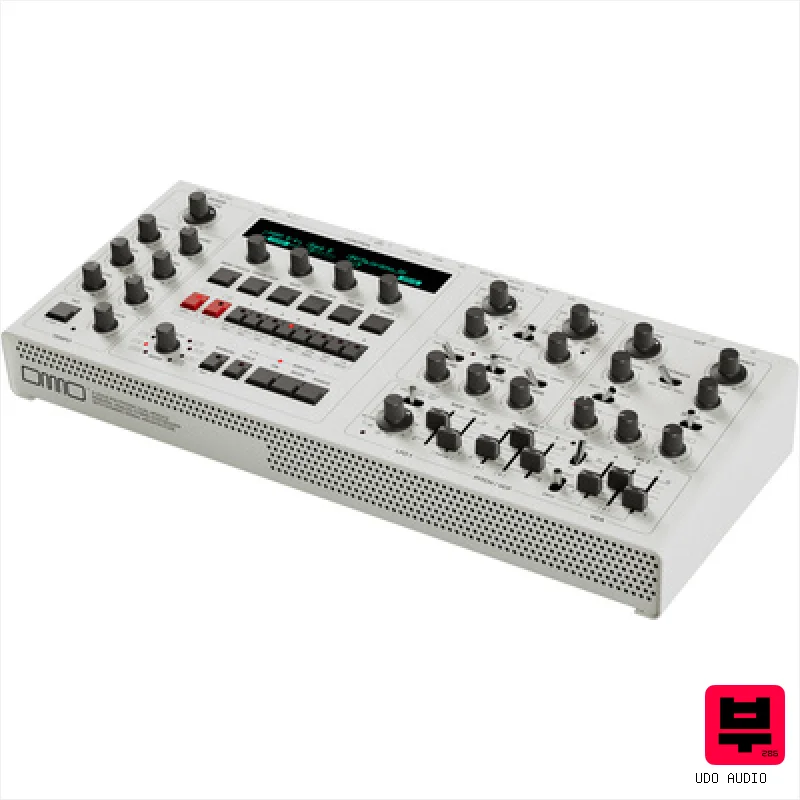
This little Behringer 110 module is a seriously fun way to get into analog synthesis, especially if you're after that classic Moog-style sound. It's perfect for beginners or anyone wanting a budget-friendly voice module to add some warmth and character to their modular patch. Don't expect a studio centerpiece, but it's a fantastic, surprisingly capable building block.
Pros
- Classic Moog-inspired architecture delivers warm, vintage tones
- Pulse width modulation adds significant expressive potential
- Compact 16HP footprint maximizes space in modular systems
Cons
- Plastic construction feels less robust than higher-end modules
- Limited waveform selection beyond the core basics
47AudioFu
Index↓ 8.5%since Aug 14 · lowest so far$66 · Aug 14$60 now$60€54 at Thomann · in stockCheck price ↗ -
The Jomox Mod FM is a serious FM powerhouse for Eurorack enthusiasts. It delivers a rich, complex sound palette with a surprisingly intuitive interface, making it ideal for sound designers and electronic music producers wanting deep FM capabilities without extreme complexity. This is a great option for those wanting a self-contained FM engine.
Pros
- Robust metal chassis feels incredibly solid and well-built
- Dual filter design offers immense tonal flexibility and character
- Extensive LFO waveforms provide complex and nuanced modulation
Cons
- Power draw is considerable, requiring a robust PSU
- Encoder layout could be more intuitive for quick parameter adjustments
45AudioFu
Index↓ 4.9%since Aug 14 · lowest so far$1,117 · Aug 14$1,062 now$1,062€949 at Thomann · in stockCheck price ↗
All 16 synthesizer modules
Same index, same nightly prices — compact. Colour options of one model share a row. Tap a photo to zoom.
- 11
Bastl Instruments Citadel AlchemistBastl Instruments43Stable$279€249$279€249Check ↗
- 12
Dreadbox TelepathyDreadbox43Stable$301€269$301€269Check ↗
- 13
Shakmat Modular Ballista BlastShakmat Modular43Stable$469€419$469€419Check ↗
- 14
Intellijel Designs AtlantixIntellijel Designs43Stable$894€799$894€799Check ↗
- 15
Rides In The Storm SED-CSMRides In The Storm40↑ 4.8%$616€550$616€550Check ↗
- 16
ADDAC 107 Acid SourceADDAC35↑ 14.4%$268€239$268€239Check ↗
Synthesizer Modules by the numbers
Measured across all 19 models we track, not a sample.
Median $391 — half of all synthesizer modules here cost less.
How to choose the best synthesizer modules
Oscillator Stability
A wandering oscillator is a headache. You want something rock-solid, especially if you're layering oscillators or using FM. Instability shows up as phasing issues and a general lack of tightness - it'll kill your low-end thump.
Filter Resonance
The sweet spot. A filter that's too polite won't cut through the mix; one that's too aggressive will sound like nails on a chalkboard. We're looking for filters with a usable range, a good response to modulation, and that satisfying self-oscillation point.
Envelope Response
How quickly does it attack? How long does it sustain? Sloppy envelopes make sounds feel sluggish and undefined. Tight envelopes are essential for percussive sounds and snappy transients.
Modulation Depth/Range
Can you really shape the sound? Limited modulation ranges can feel restrictive. You need enough depth to create subtle movement or wild, chaotic textures.
Build Quality & Reliability
Cheap pots scratch, jacks wiggle, and PCBs can crack. A module is an investment; it needs to withstand gigging and studio use. Solid construction and quality components are worth the extra money - especially if you plan on traveling with your system.
Buying guide
So, you're diving into the modular world? Awesome. But just grabbing a bunch of modules without a plan is like buying a bunch of guitar pedals without knowing what a fuzz does. These modules are the building blocks of your synth voice, and choosing the right ones is crucial for getting the sounds you hear in your head - whether that's a throbbing bassline for a techno set or a shimmering pad for a dreamy soundscape.
Don't chase hype. Start with the basics: a good oscillator, a versatile filter, an envelope generator, and a VCA. Cheaper modules often use lower-quality components, which means more noise and less dynamic range.
Paying a bit more for something from a reputable manufacturer will almost always result in a module that's more reliable and sounds better-and you'll be less likely to be replacing it six months down the line.
How the AudioFu Index works
Five measured signals and nothing else — no stars from strangers, no “tested by experts” we didn’t do. The weights are fixed and public. We don’t play these instruments; we measure the market around them.
This chart covers 19 synthesizer modules from the Thomann catalogue. Before you buy, read hands-on reviews and, where you can, play it. Full methodology.
AudioFu earns a commission when you buy through our Thomann links. It never changes the order — the index does.
- Demand40%
How many of this exact model are for sale on Reverb right now — what musicians actually buy and resell.
- Lineup20%
How many finishes Thomann stocks — makers expand the models that sell.
- Price15%
Where the price has moved since we started tracking in August.
- Specs15%
How completely the maker documents it.
- Maker10%
How deep the brand’s range is in this category.
Questions
What's the difference between a VCO and a DCO?
VCOs (Voltage-Controlled Oscillators) are analog and drift slightly, adding a 'warmer' character. DCOs (Digitally-Controlled Oscillators) are more stable and accurate, often mimicking classic analog designs. Both have their place - it depends on the sound you're after.
Do I need Eurorack power supplies?
Absolutely. Eurorack modules require specific voltage and current. Don't skimp on the power supply; a cheap one can damage your modules. Get one with plenty of headroom, especially if you plan on expanding your system.
What's a 'ladder filter'?
It's a classic filter design, popularized by the Moog. It has a distinct, resonant sound - sometimes described as 'creamy' or 'aggressive.' Great for basses and leads, but can be a bit harsh for more delicate sounds.
Can I use modules from different manufacturers together?
Generally, yes! Eurorack is a standard. However, be mindful of voltage ranges and compatibility. Some modules might have unusual control voltage requirements.
I'm on a tight budget, where should I cut costs?
Focus on the core modules first. Oscillators, filters, and envelopes are essential. You can always add effects and modulation sources later. Don't buy cheap cables - good quality patch cables will save you headaches.