
Best Subwoofers Under $800 2026
Okay, so you need some serious low-end without dropping a grand on a subwoofer. It's a common situation, especially for gigging bands, smaller venues, or even just getting that room-shaking thump for rehearsals. Let's be honest, under $800 you're not getting a studio-grade behemoth, but you can find some seriously capable subs that'll add a lot of weight to your PA. We're focusing on passive subs here - gotta have that power amp separately.
Last updated: September 29, 2026
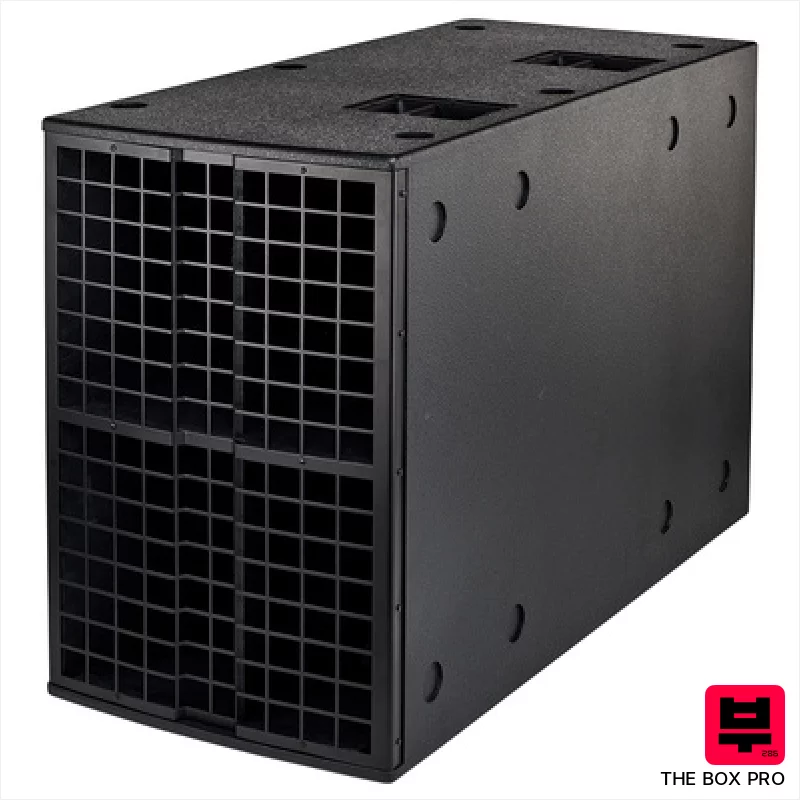
the box pro Achat 212H-SUB
- • Robust horn design delivers surprising low-end projection.
- • Dual 12 in woofers provide ample headroom for demanding gigs.
- • Solid build quality; textured paint resists wear and tear.
- • Versatile NL4 connections simplify system integration and flexibility.
- • 86 kg weight makes transport a serious two-person job.
- • Horn-loaded design might be too colored for certain applications.
- • Passive design requires a powerful amplifier to achieve full potential.
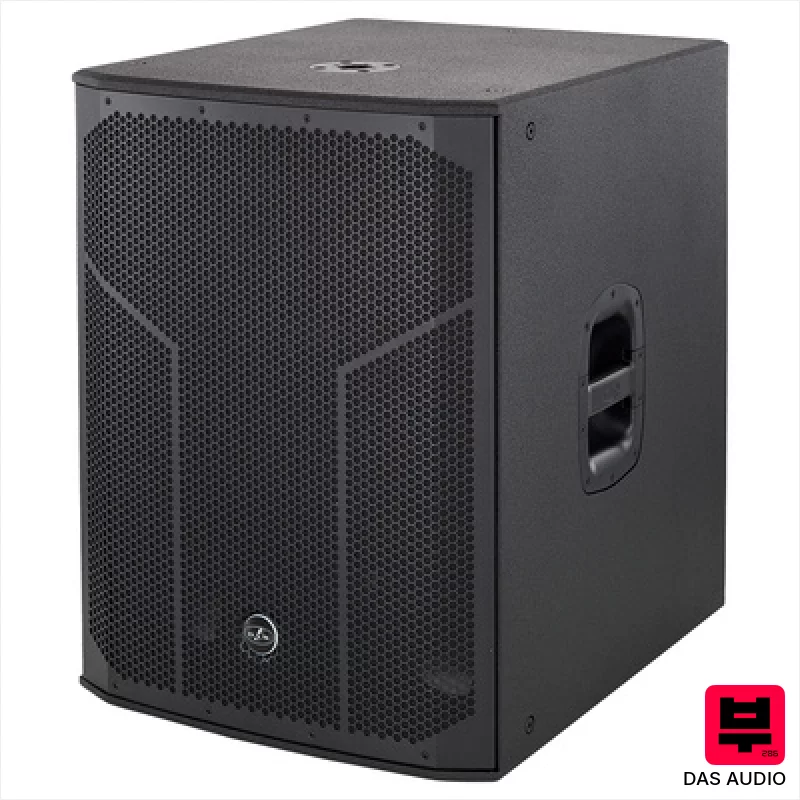
DAS Audio Action-S18
- • Robust birch plywood construction feels incredibly solid and roadworthy.
- • 18” woofer delivers deep, impactful bass with surprising clarity.
- • High 133dB max SPL handles large venues with ease.
- • DAS’s DSP integration potential offers flexible sound shaping.
- • Significant weight (40.5kg) makes transport a two-person job.
- • 8 Ohm impedance requires more powerful amplifiers for optimal performance.
- • Limited frequency response above 160Hz necessitates pairing with full-range speakers.
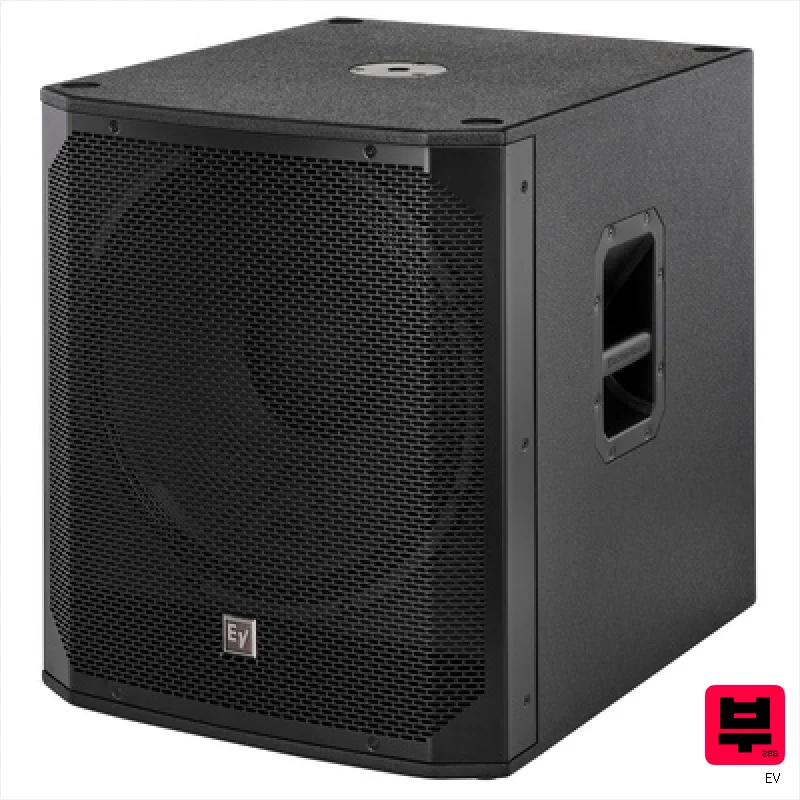
EV EVIVA 18SP
- • Solid 15mm wood housing builds a sturdy, reliable cabinet for touring.
- • Very heavy at 30.7 kg makes solo lifting difficult for some.
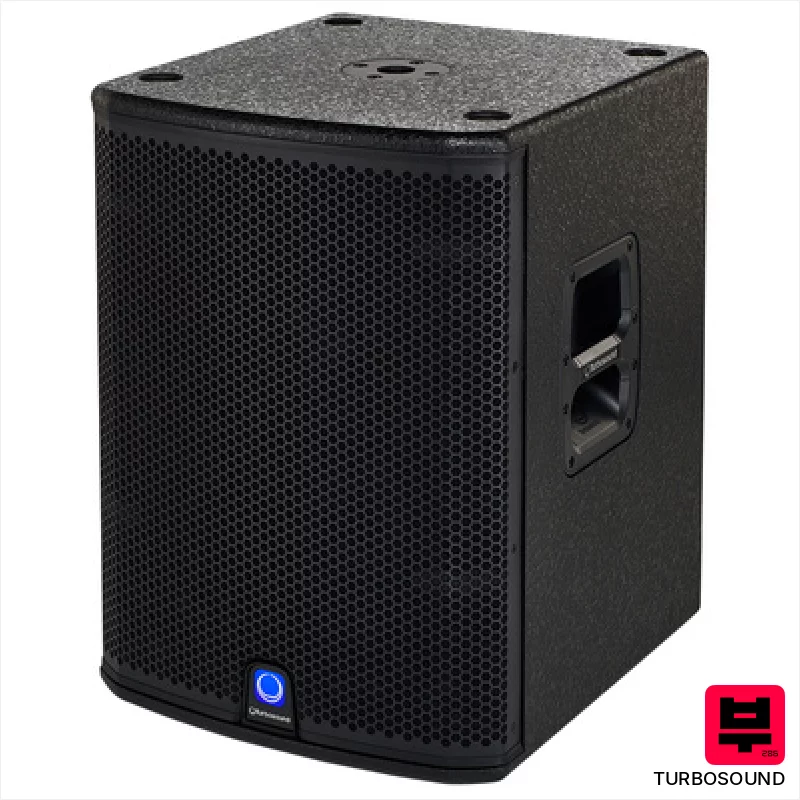
Turbosound iQ15B
- • Robust birch ply construction ensures durability for gigging.
- • Klark Teknik amp delivers clean, powerful low-end response.
- • Digital processing provides precise control and protection.
- • RJ45 Ultranet connectivity simplifies system expansion and routing.
- • Significant weight makes transport a two-person job.
- • Limited frequency extension below 40Hz might lack true sub-bass impact.
- • Lack of user-adjustable EQ beyond DSP presets.
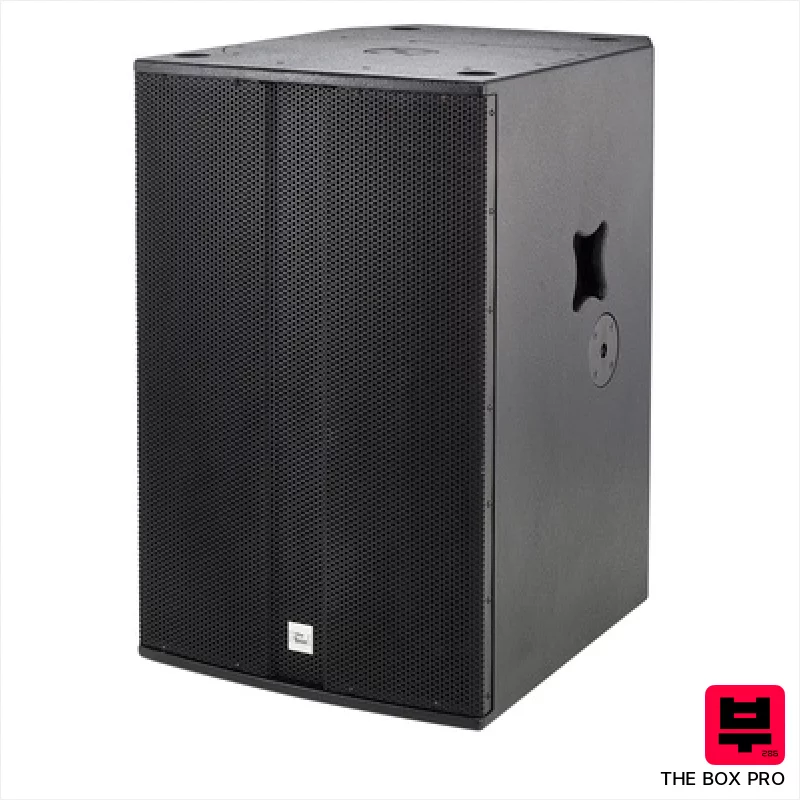
the box pro Achat 118 A
- • Robust road-ready construction with textured paint, built to withstand touring.
- • Horn-loaded design delivers impressive projection and tight low-end clarity.
- • Class D amplifier provides efficient power without excessive heat.
- • Versatile XLR input/output and top output for flexible system integration.
- • Weight (55kg) makes transport challenging without a dedicated dolly or team.
- • Limited EQ controls on board; may require external processing for fine-tuning.
- • While broad, the frequency response’s sub-bass extension might be less impactful than dedicated ultra-low subs.
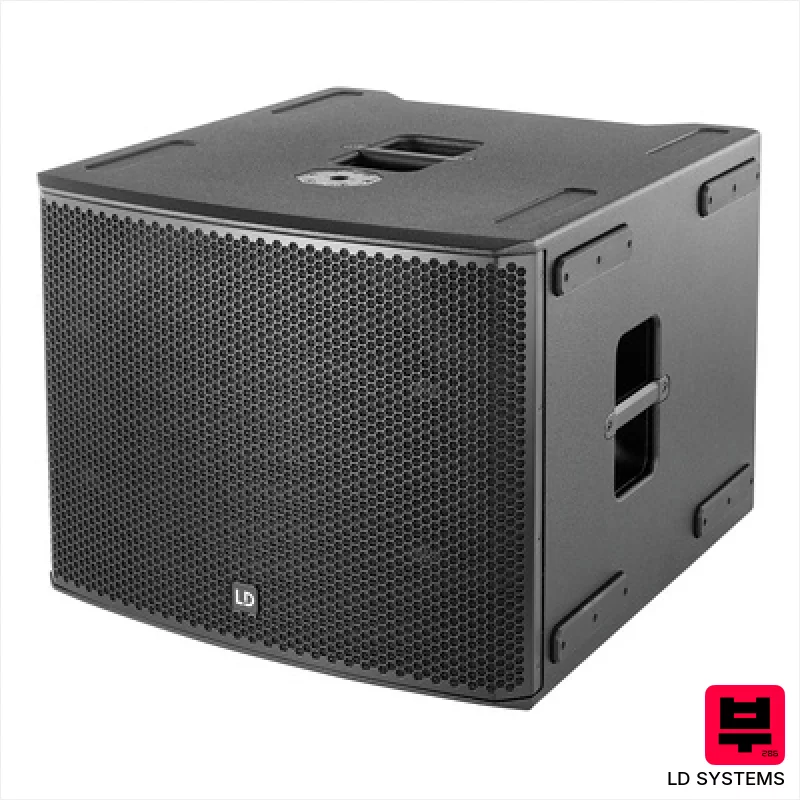
LD Systems Stinger Sub 18 G3
- • Robust 18mm plywood construction ensures excellent durability on the road.
- • High 129dB sensitivity maximizes output with less amplifier power.
- • Powerful 800W RMS output delivers substantial low-frequency impact.
- • Speaker Twist connectors simplify cabling and secure connections.
- • The substantial weight makes transport and setup a two-person job.
- • Limited frequency response compared to more premium subwoofer options.
- • Passive design necessitates a powerful amplifier for optimal performance.

Alto TS 18S Subwoofer
- • Robust MDF construction offers surprising rigidity for the price.
- • Deep, clean low-end extension thanks to the 18” driver and DSP.
- • High maximum SPL allows for serious volume without distortion.
- • DSP modes provide flexibility for different PA system configurations.
- • Limited frequency response above 100Hz restricts broader sound applications.
- • 42.2 kg makes transport a two-person job, especially for smaller venues.
- • DSP modes, while useful, might feel simplistic for seasoned sound engineers.
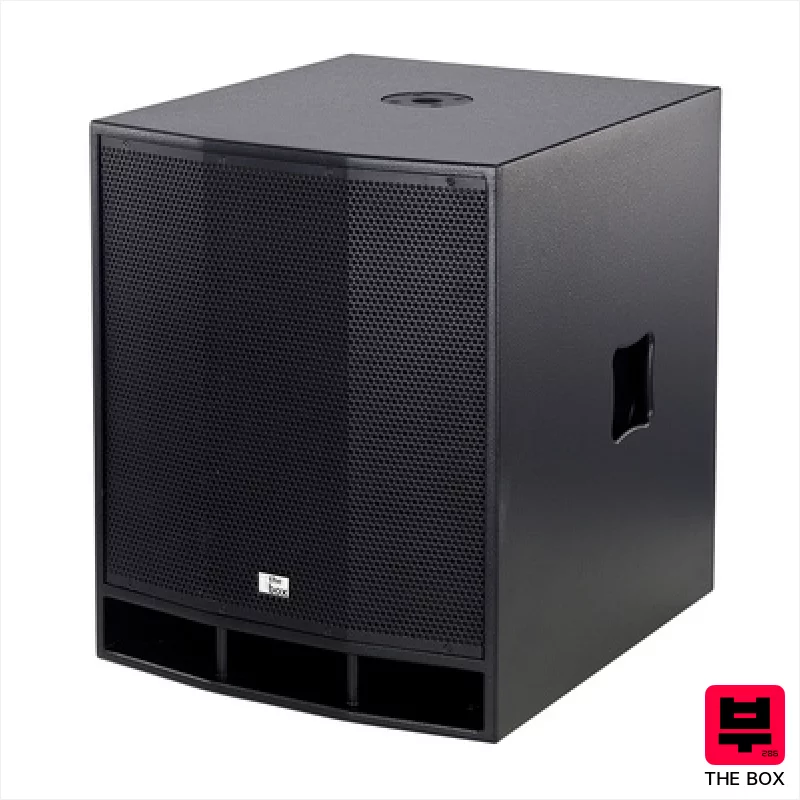
the box CL 118 Sub MK II
- • Robust PU coating protects from gigging wear and tear.
- • Butterfly handles and wheels ease transport despite the weight.
- • 350W RMS provides significant headroom for larger venues.
- • Internal crossover simplifies setup and optimizes speaker performance.
- • Weight (47kg) makes solo transport challenging for many.
- • Limited frequency extension might require pairing for true low-end extension.
- • Lack of DSP options restricts advanced tuning capabilities.
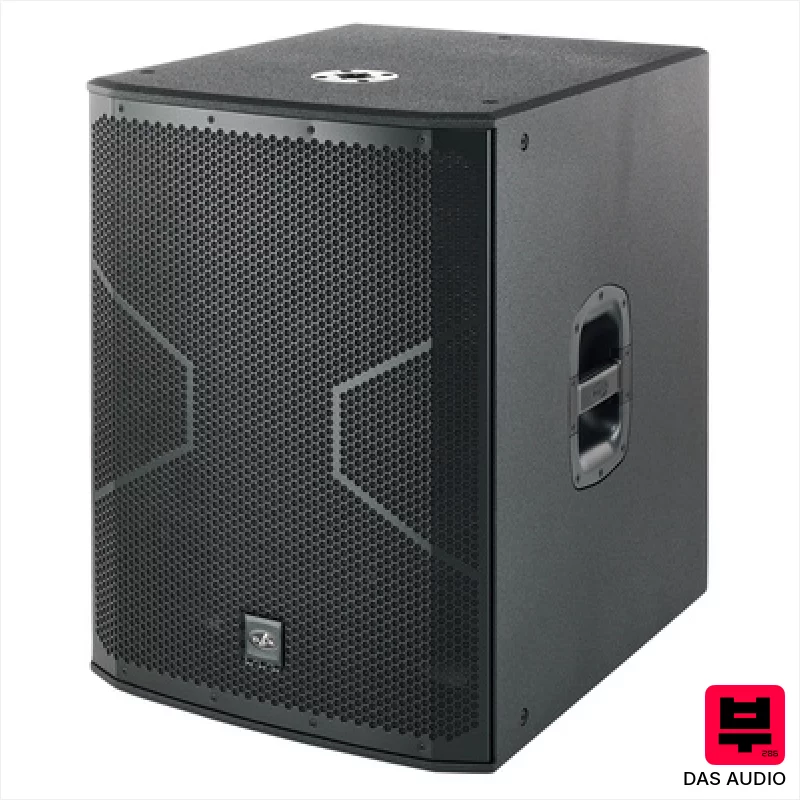
DAS Audio Altea-718
- • Robust birch plywood cabinet provides excellent rigidity and dampening.
- • High-power Class D amplifier compatibility ensures efficient and clean low-frequency reproduction.
- • 18” neodymium woofer delivers tight, impactful bass with minimal distortion.
- • The large port design maximizes airflow for extended low-frequency response.
- • Significant weight makes transportation and setup a two-person job.
- • Passive design requires a separate amplifier, adding to the overall system cost.
- • Frequency response leans towards sub-bass, limiting versatility for some applications.
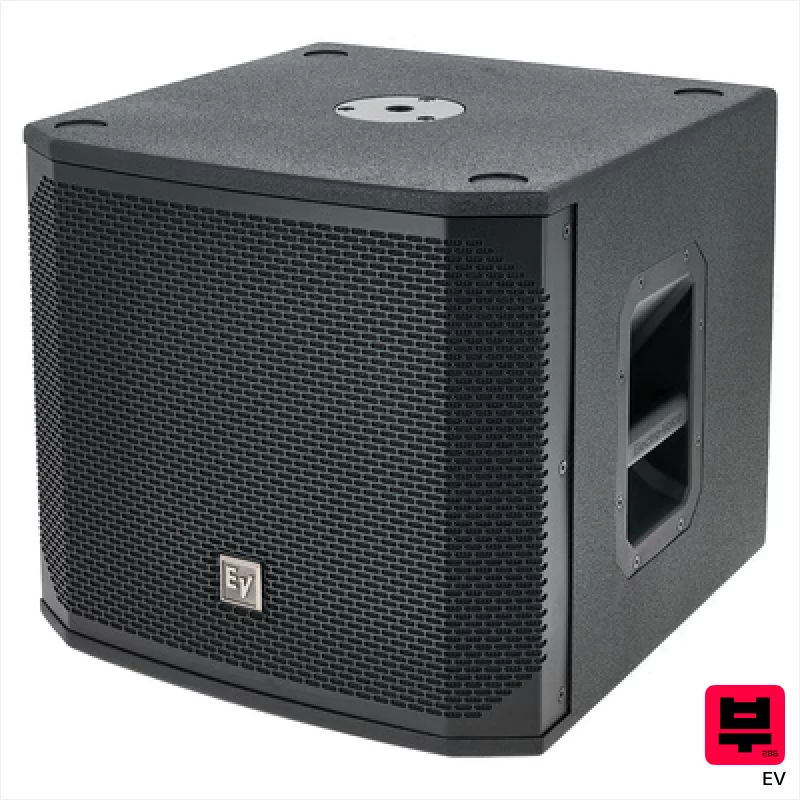
EV ELX200-12S
- • Robust wooden enclosure provides excellent resonance and protection
- • 12 in woofer delivers surprisingly deep, clean low-end extension
- • Integrated mounting plate simplifies rigging for live sound applications
- • Handles are well-placed and sturdy for manageable transport
- • 17.2 kg makes it a workout, especially for solo riggers
- • Limited frequency response necessitates pairing with full-range speakers
- • NL4 connectors are less common, potentially requiring adapter
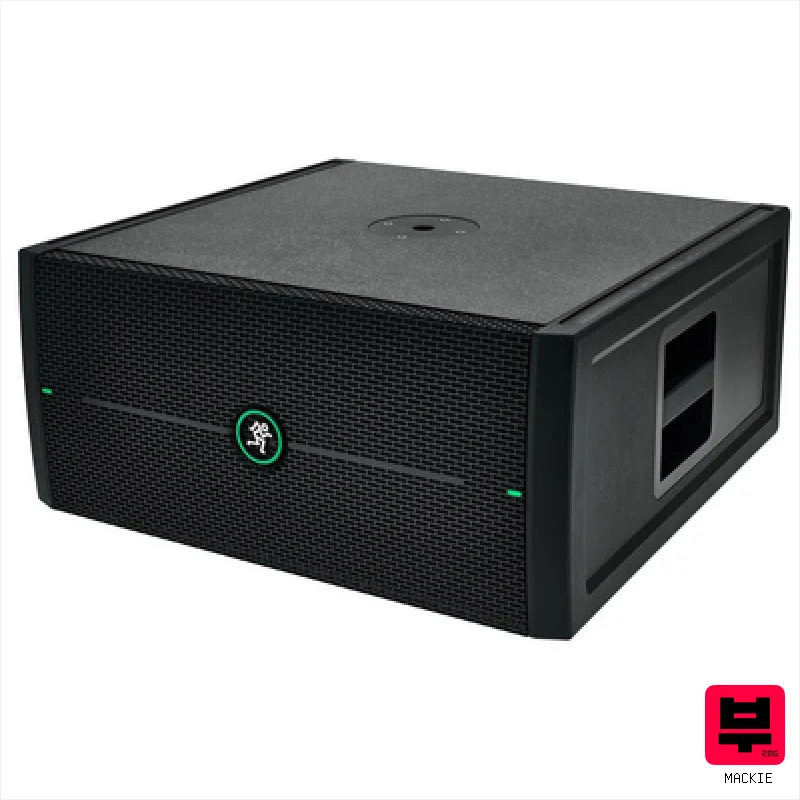
Mackie Thump Sub GO
- • Hot swap batteries let you keep playing without stopping.
- • Dual 8-inch woofers pack deep bass into a small box.
- • Bluetooth 5.4 connects wirelessly to phones and tablets.
- • Built-in protection stops overheating and power supply issues.
- • No weight is listed in the official description provided.
- • Crossover switching requires external hardware or settings.
- • Battery life varies significantly depending on how many packs you use.
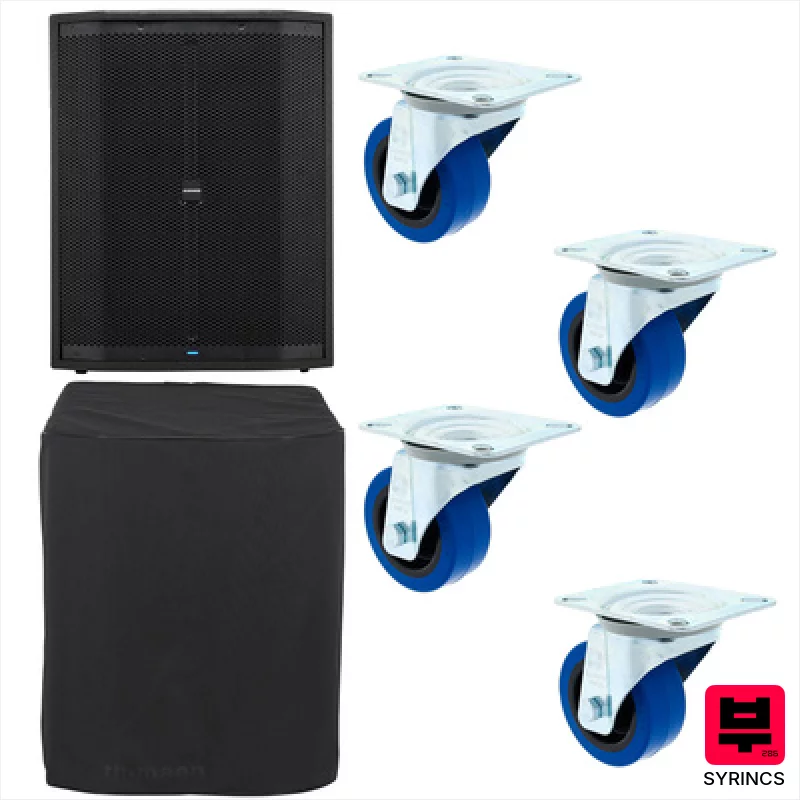
Syrincs D18 Sub Wheel CVR Bundle
- • Robust multiplex housing offers excellent durability for gigging.
- • Compression driver adds clarity and punch beyond typical subwoofers.
- • Class D amplification provides efficient power and headroom.
- • Casters (optional) significantly improve portability for frequent transport.
- • 41kg weight makes solo transport challenging, even with casters.
- • 30Hz low-end extension might be limited for extreme sub-bass applications.
- • Crossover frequency options are somewhat basic for complex system tuning.
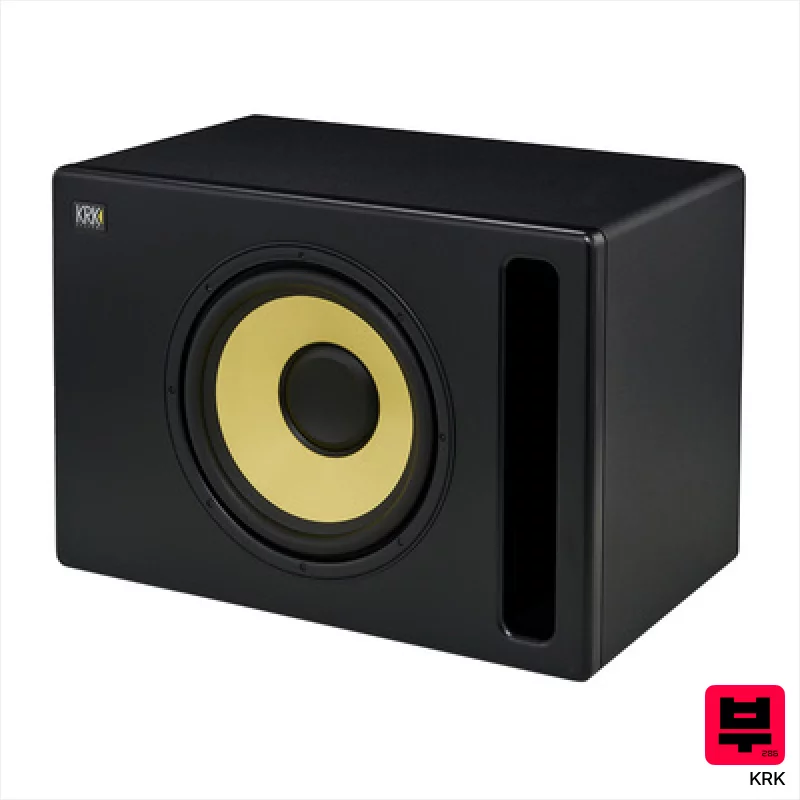
KRK S12G4
- • Glass-aramid composite woofer delivers tight, controlled low-end response.
- • Class D amplifier provides ample power without excessive heat or noise.
- • Adjustable crossover allows seamless integration with existing monitor setup.
- • Robust MDF construction minimizes resonance and provides a stable platform.
- • Bass can be slightly boomy in untreated rooms, requiring careful placement.
- • Size and weight make it less suitable for smaller, mobile setups.
- • Limited EQ controls beyond the basic switches; lacks more advanced shaping.

HK Audio Sonar 115 Sub D
- • Solid wooden cabinet provides excellent resonance and dampening.
- • Class D amplification delivers significant power with efficient cooling.
- • DSP offers precise control over EQ and limiting for clean, powerful bass.
- • Balanced XLR/jack combo inputs ensure pristine signal reception.
- • Size and weight make transport a two-person job for regular gigs.
- • Crossover frequency is fixed, limiting low-frequency extension for some applications.
- • Limited color options—black is the only available finish.
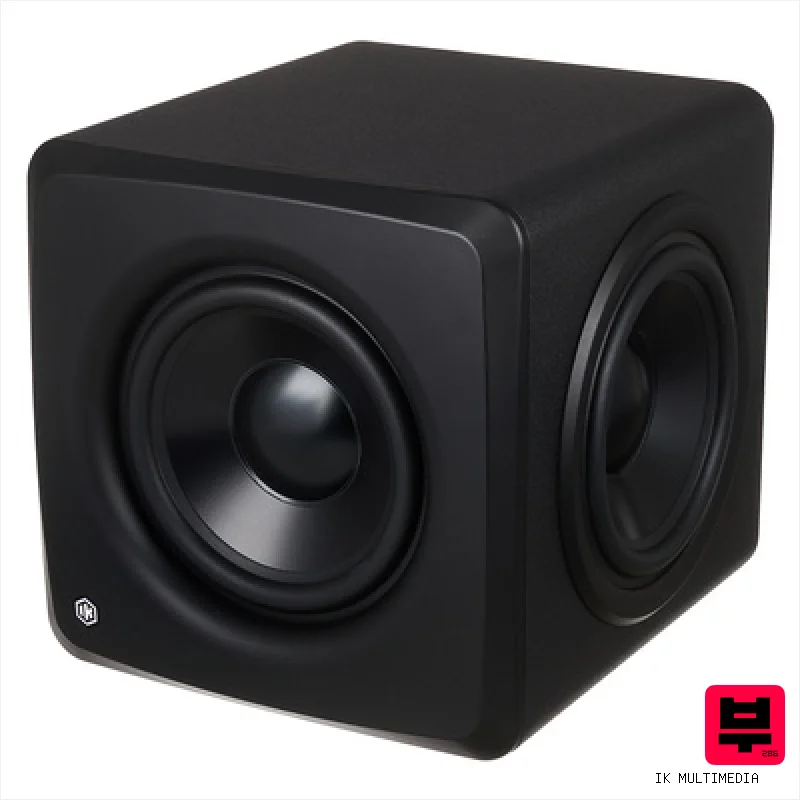
IK Multimedia iLoud Sub
- • Ultra-compact design fits small studios easily
- • Built-in room correction calibrates sound automatically
- • Dual passive radiators boost low-end output
- • Multiple input options connect various gear
- • No crossover frequency is listed in specs
- • Weight is not provided in the description
- • Immersive mode requires specific multi-channel setup
Every subwoofers that matches
75 models match this page. The 15 above are covered in detail; the rest are listed here with their published specifications.
| # | Model | Specifications | Price |
|---|---|---|---|
| 16 | the box pro Achat 115 Sub A | Size 15" · Weight 32.5 kg | $693 |
| 17 | Turbosound Milan M15B | Size 15" · Weight 37 kg | $680 |
| 18 | the box Pyrit 212 Sub A | Size 12" · Weight 41 kg | $680 |
| 19 | Kali Audio WS-6.2 | Size 6.5" · Weight 14 kg | $659 |
| 20 | Proel S18A | Size 18" · Weight 36 kg | $659 |
| 21 | Alto TS 15S Subwoofer | Size 15" · Weight 39.6 kg | $647 |
| 22 | Alto TS 15S Subwoofer Cover Bundle | Size 15" · Weight 39.6 kg | $647 |
| 23 | dB Technologies Sub 615 | Size 15" · Weight 25.5 kg | $647 |
| 24 | Syrincs D18 Sub | Size 18" · Weight 41 kg | $625 |
| 25 | EVE Audio TS107 | Size 6.5" · Weight 8.2 kg | $613 |
| 26 | Yamaha HS 8S | Size 8" · Weight 12.5 kg | $597 |
| 27 | dB Technologies LVX PSW15 | Size 15" · Weight 26.7 kg | $597 |
| 28 | Alto TX 18S Subwoofer | Size 18" · Weight 39.8 kg | $591 |
| 29 | the box pro TP 118/800 | Size 18" · Weight 37 kg | $568 |
| 30 | the box TA18 | Size 18" · Weight 45 kg | $567 |
| 31 | the box CL 115 Sub MK II | Size 15" · Weight 40 kg | $567 |
| 32 | Alto TS 12S Subwoofer | Size 12" · Weight 25.9 kg | $563 |
| 33 | LD Systems Stinger Sub 15 G3 | Size 15" · Weight 29.7 kg | $562 |
| 34 | JBL JRX 218S | Size 18" · Weight 32.2 kg | $556 |
| 35 | JBL LSR 310 S | Size 10" · Weight 15.6 kg | $554 |
| 36 | the box pro DSP 18 Sub | Size 18" · Weight 39 kg | $505 |
| 37 | Proel S15A | Size 15" · Weight 26 kg | $499 |
| 38 | the box Pyrit 212 Sub | Size 12" · Weight 39.5 kg | $488 |
| 39 | the box Pyrit 112 Sub A | Size 12" · Weight 24 kg | $488 |
| 40 | dB Technologies SUB 612 | Size 12" · Weight 19.8 kg | $482 |
| 41 | ADAM Audio T10S | Size 10" · Weight 12.2 kg | $477 |
| 42 | the box pro Achat 115 Sub | Size 15" · Weight 30 kg | $477 |
| 43 | Behringer DR18SUB | Size 18" · Weight 41 kg | $453 |
| 44 | the box pro TL 110 | Size 10" · Weight 17 kg | $443 |
| 45 | Presonus Eris Pro Sub 10 | Size 10" · Weight 16.8 kg | $431 |
| 46 | Proel S12A | Size 12" · Weight 19 kg | $431 |
| 47 | the box CL 112 Sub MK II | Size 12" · Weight 29 kg | $431 |
| 48 | the box pro Achat 112 Sub A WH | Size 12" · Weight 22 kg | $431 |
| 49 | Alto TX 12S Subwoofer | Size 12" · Weight 22.4 kg | $420 |
| 50 | LD Systems Curv 500 ISUB | Size 10" · Weight 14.5 kg | $408 |
| 51 | LD Systems Curv 500 ISUB W | Size 10" · Weight 14.5 kg | $408 |
| 52 | Behringer VQ1800D | Size 18" · Weight 38.2 kg | $397 |
| 53 | KRK S10G4 | Size 10" · Weight 15.88 kg | $397 |
| 54 | the box PA 18 ECO MKII | Size 18" · Weight 41 kg | $397 |
| 55 | the box pro Achat 112 Sub A | Size 12" · Weight 23 kg | $397 |
| 56 | Behringer VQ1500D | Size 15" · Weight 33.1 kg | $370 |
| 57 | LD Systems Sub 88 A | Size 8" · Weight 15 kg | $340 |
| 58 | KRK S8G4 | Size 8" · Weight 12 kg | $329 |
| 59 | Proel S10A | Size 10" · Weight 14 kg | $324 |
| 60 | Behringer B1200D Pro | Size 12" · Weight 19.5 kg | $317 |
| 61 | Behringer PK15S | Size 15" · Weight 32 kg | $317 |
| 62 | Behringer VP1800S | Size 18" · Weight 41.4 kg | $306 |
| 63 | the box pro Achat 112 Sub | Size 12" · Weight 17 kg | $283 |
| 64 | the box pro Achat 112 Sub WH | Size 12" · Weight 17 kg | $283 |
| 65 | Fun Generation PL 15 Sub A | Size 15" · Weight 30 kg | $249 |
| 66 | the box pro Achat 108 Sub | Size 8" · Weight 10 kg | $192 |
| 67 | the box pro TP 118/800 A | Weight 38 kg | $794 |
| 68 | LD Systems Maui 11 G3 W Subwoofer | Size 8" | $709 |
| 69 | the box pro Achat 118 | Weight 52 kg | $680 |
| 70 | Sirus DownFire 10 Black | Weight 17.8 kg | $283 |
| 71 | the box pro Achat 108 Sub A | Weight 11.5 kg | $261 |
| 72 | the box pro Achat 108 Sub A WH | Weight 11.5 kg | $261 |
| 73 | Mackie CR8S BT | Weight 11.5 kg | $249 |
| 74 | Presonus Eris Sub 8BT | Weight 7.38 kg | $215 |
| 75 | LD Systems Sub 88 | Weight 11 kg | $181 |
Subwoofers by the numbers
Measured across all 75 models in this category, so «wide», «short» or «expensive» mean something you can check.
How to Choose the Best Subwoofers
Driver Size
Obviously, bigger drivers generally move more air, but driver size isn't everything. A well-designed 12" sub can often outperform a poorly-executed 15". Look for drivers from reputable brands - you can often tell by the construction quality.
Frequency Response
Pay attention to the low-end extension. You want something that goes deep enough to feel the rumble, not just reproduce mid-bass frequencies. Anything below 40Hz is a bonus, but expect trade-offs in efficiency.
Power Handling
This is crucial. You need a sub that can handle your amp without distortion or damage. Don't push it to its absolute limit, but make sure it has enough headroom for those unexpected peaks in the mix.
Construction Quality
In this price range, you'll notice a difference between plywood and MDF. Plywood is usually cheaper, and the bracing might be less robust. This affects durability and resonance - a poorly braced sub will sound 'boxy'.
Port Design
A well-designed port can improve efficiency and extend the low-end response. Look for flared ports, as they generally minimize turbulence and distortion. Beware of overly large ports - they can create unwanted resonances.
Buying Guide
Realistically, at this price point, you're making compromises. You'll likely be trading off some efficiency, build quality, or low-frequency extension. Don't expect pristine, studio-monitor clarity - these are gigging subs, built to handle the abuse. Prioritize driver quality and a decent enclosure over raw power; a well-built 12" sub with a solid driver will often sound better than a flimsy 15" model.
How This List Is Built
We don't play these instruments — we're a catalog, not a review desk, and we'd rather say so than pretend otherwise. This page covers 75 subwoofers from the Thomann catalogue, which is the largest single source of specification data in this category: 15 in detail, the rest listed with their specifications.
Position is computed, not curated. We parse the manufacturer's own description into actual values — nut width, scale, fret count, fingerboard radius, size, alloy — and rank on them: how many specifications a model has published, how many of them are measurable numbers, and how precisely it meets this page's criterion. A product image adds a little. Price is not a ranking signal: it tells you nothing about whether a neck fits your hand. The same inputs always produce the same order, so nothing here is shuffled to look fresh.
What this list is good for: narrowing a category down to a shortlist by spec and budget. What it isn't: a substitute for hearing an instrument. Before you buy, read hands-on reviews and, where you can, play it. Full methodology.

