
Best Stage Boxes for Digital Mixers Under $500 2026
Affordable stage boxes for digital mixers under $500 - great value without compromising quality
Last updated: September 29, 2026
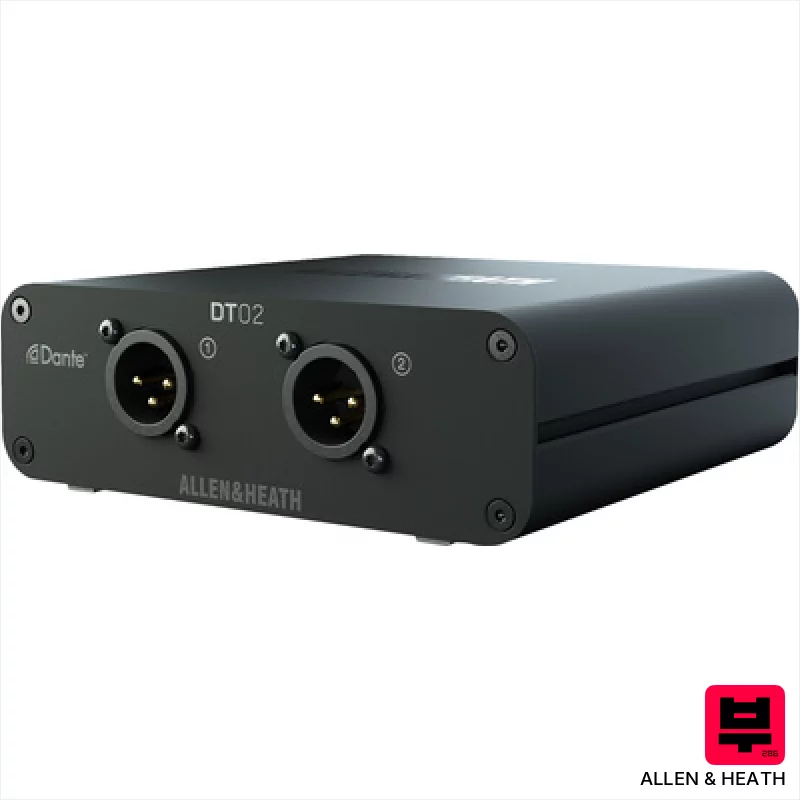
Allen & Heath DT02
- • Incredibly compact form factor simplifies installation in tight spaces.
- • Dante integration offers robust, low-latency audio transport.
- • PoE power option reduces cabling clutter and complexity.
- • Allen & Heath's build quality ensures reliable operation in demanding environments.
- • Limited to two outputs restricts flexibility for larger setups.
- • Dante infrastructure required, adding to overall system cost.
- • Lack of analog inputs limits integration with non-Dante devices.

Behringer S16
- • Klark Teknik AES50 networking offers remarkably low latency.
- • Solid metal chassis feels surprisingly robust for the price point.
- • Dual ADAT outputs expand flexibility for recording or effects sends.
- • Long cable runs (100m) via CAT-5e simplifies stage setup.
- • AES50 protocol requires compatible digital mixers or interfaces.
- • Limited routing options compared to higher-end digital snakes.
- • USB connectivity primarily for firmware updates, not audio I/O.
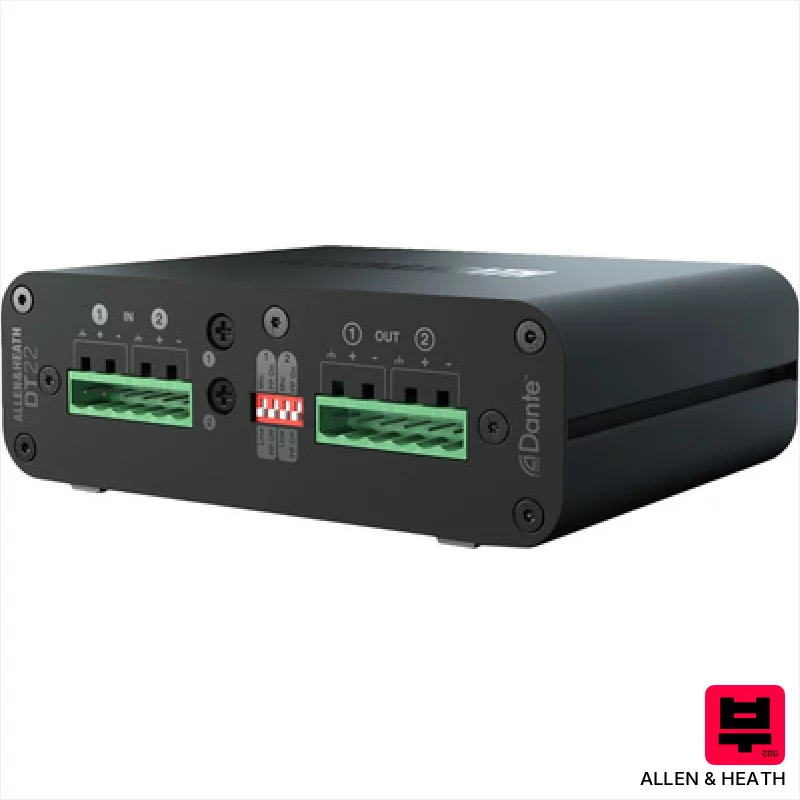
Allen & Heath DT22
- • Compact size ideal for tight stage setups or permanent installs
- • Dante integration simplifies complex audio routing workflows
- • Phoenix Euroblock connectors offer robust, secure connectivity
- • PoE option reduces cabling clutter and simplifies power
- • Limited to two inputs/outputs restricts scalability for larger rigs
- • Requires Dante infrastructure; not a standalone solution
- • Rack mount kit is optional, adding to the overall cost
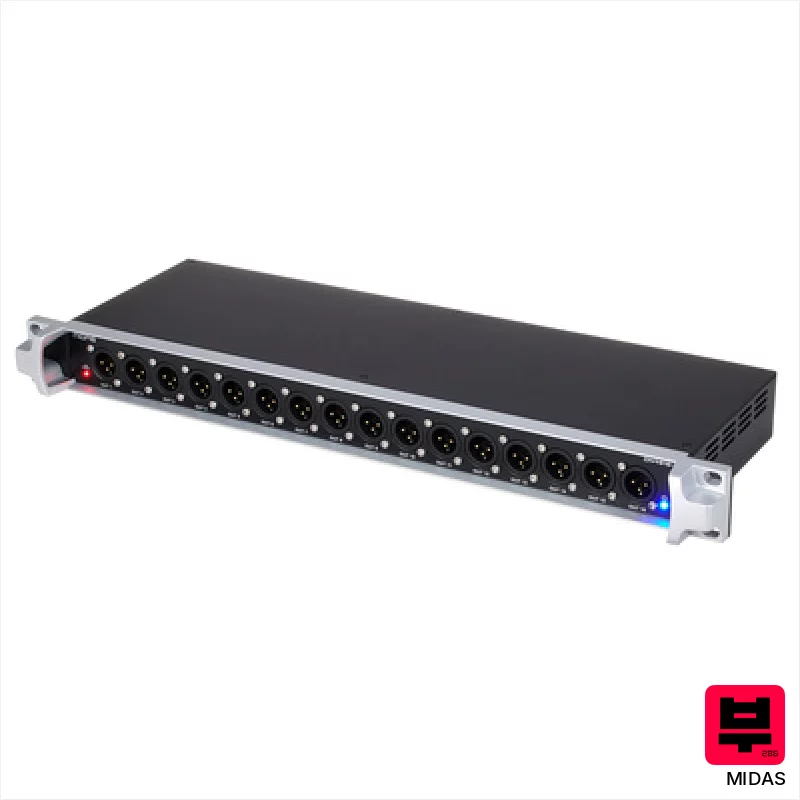
Midas DN4816-O
- • Rock-solid Midas build quality; feels incredibly durable.
- • StageCONNECT simplifies cabling, a genuine time-saver.
- • Ultranet provides low-latency digital signal transmission.
- • 16 balanced XLR outputs offer flexible routing options.
- • Limited input count; best suited for output distribution.
- • Power supply dependency can be a logistical challenge.
- • StageCONNECT requires compatible digital mixing consoles.
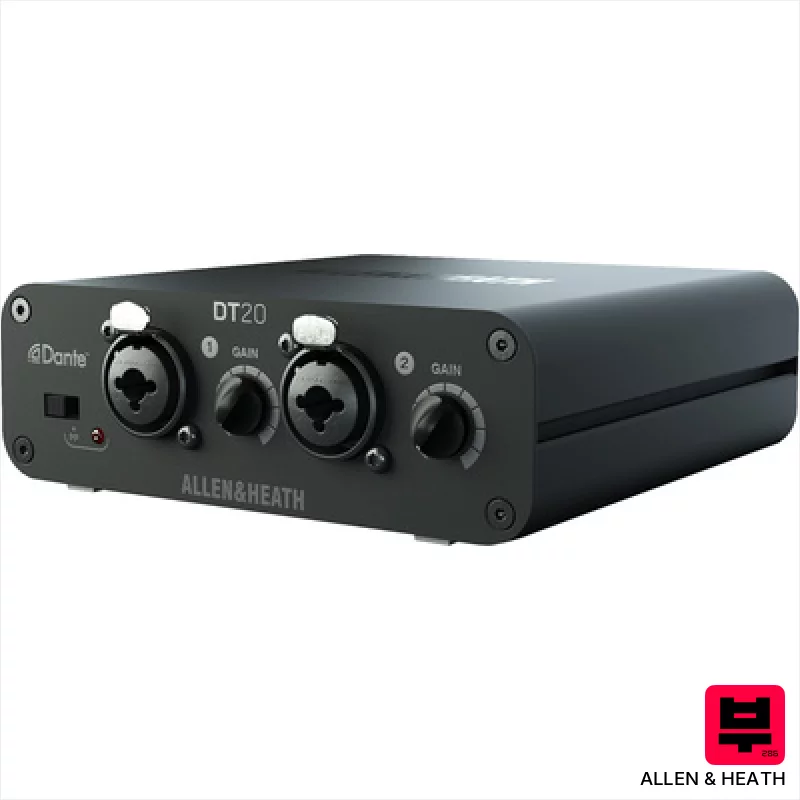
Allen & Heath DT20
- • Compact size ideal for tight stage setups and discreet installations.
- • Dante integration simplifies complex routing and signal management.
- • PoE power option minimizes cabling clutter and installation complexity.
- • Allen & Heath's robust build quality ensures reliable performance over time.
- • Limited to two inputs restricts use for larger, more complex productions.
- • Requires Dante infrastructure, adding to initial system investment.
- • No physical gain controls necessitate digital mixer adjustments.
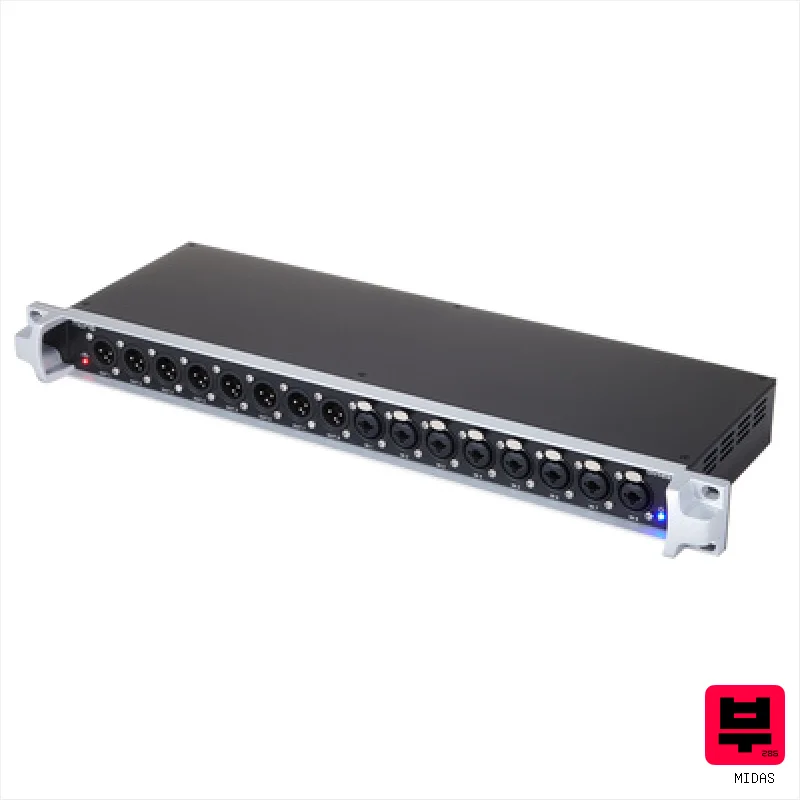
Midas DN4888
- • Transmits up to 32 signals over a single XLR cable
- • Ultra-low latency ensures timing stays tight on stage
- • Supports phantom power for easy equipment setup
- • Compact size fits easily in small PA racks
- • Only offers two specific StageCONNECT I/O ports
- • No digital audio interfaces built into the unit
- • Limited to analogue line inputs and outputs only

Midas DN4816-I
- • Rock-solid Midas build quality; feels incredibly durable.
- • StageCONNECT simplifies cabling dramatically, saving time and effort.
- • Ultranet provides high-channel-count transmission with low latency.
- • Flexible power options offer convenient deployment scenarios.
- • Limited input processing beyond basic gain and routing.
- • The single USB port restricts functionality for advanced control.
- • StageCONNECT requires compatible digital mixing consoles.
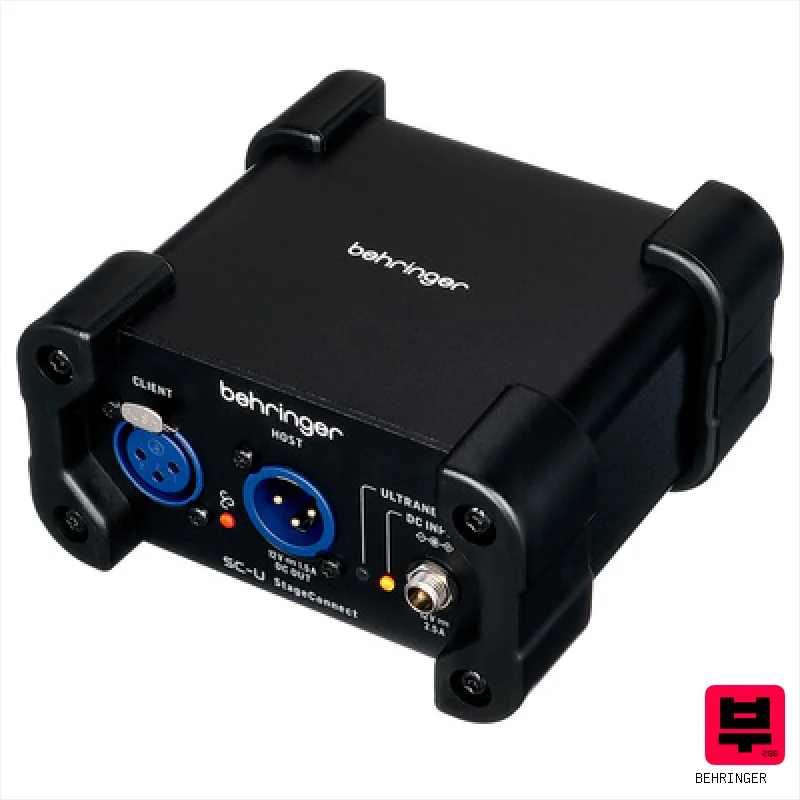
Behringer SC-U
- • Lightweight 0.37 kg unit fits easily on any stage rack.
- • 32-channel interface handles large setups without signal loss.
- • Low latency ensures audio tracks stay perfectly in time.
- • USB-MIDI pass-through expands control options for connected gear.
- • No input or output counts are listed in the text.
- • Rack mount dimensions are not provided in the description.
- • Specific audio codec details or latency numbers are missing.

Behringer SD8
- • AES50 network provides low-latency digital signal transmission
- • Klark Teknik DSP offers routing flexibility and potential for future expansion
- • Robust metal chassis provides reliable stage-ready durability
- • P-16 connector simplifies monitor mixing for touring applications
- • Limited gain staging flexibility compared to higher-end stage boxes
- • USB connectivity solely for updates, no audio interface functionality
- • AES50 cable length limitations require careful planning for larger stages
Stage Boxes for Digital Mixers by the numbers
Measured across all 9 models in this category, so «wide», «short» or «expensive» mean something you can check.
How This List Is Built
We don't play these instruments — we're a catalog, not a review desk, and we'd rather say so than pretend otherwise. This page covers 9 stage boxes for digital mixers from the Thomann catalogue, which is the largest single source of specification data in this category: 9 in detail, the rest listed with their specifications.
Position is computed, not curated. We parse the manufacturer's own description into actual values — nut width, scale, fret count, fingerboard radius, size, alloy — and rank on them: how many specifications a model has published, how many of them are measurable numbers, and how precisely it meets this page's criterion. A product image adds a little. Price is not a ranking signal: it tells you nothing about whether a neck fits your hand. The same inputs always produce the same order, so nothing here is shuffled to look fresh.
What this list is good for: narrowing a category down to a shortlist by spec and budget. What it isn't: a substitute for hearing an instrument. Before you buy, read hands-on reviews and, where you can, play it. Full methodology.
How to Choose the Best Stage Boxes for Digital Mixers
Budget Planning
- • Under $200: Entry-level
- • $200-$500: Intermediate
- • $500-$1000: Advanced
- • $1000+: Professional
Quality Check
- • Sound clarity & tone
- • Build materials & finish
- • Hardware durability
- • Overall craftsmanship
Key Features
- • Your musical style
- • Skill level match
- • Intended use case
- • Brand reputation

