AudioFu Chart · October 2026
Best Stage Boxes for Digital Mixers for Advanced 2026
The top pick is Allen & Heath GX4816 Expander Module ($5,029). Allen & Heath DT168 Dante Stagebox gives you the most for the money at $2,351. DiGiCo DQ Rack leads the high end. Ranked by the AudioFu Index from 43 models across 10 brands, prices checked every night.
Last updated: October 18, 2026
Top 10
Full detail for the 10 highest AudioFu Index scores. Every other model is listed below.
-
The GX4816 is a powerhouse expander for serious touring rigs and large venues. It's a fantastic solution for dLive and SQ users needing to significantly increase their input/output count, offering that classic Allen & Heath sonic clarity and reliability. This is ideal for production companies and bands running complex setups where scalability and rock-solid performance are essential.
Pros
- Rock-solid build quality; feels like it can handle serious road abuse
- Allen & Heath’s renowned preamps deliver clean, transparent gain
- Seamless integration with dLive and SQ ecosystems simplifies workflows
Cons
- Price point places it firmly in the professional, high-end category
- Requires familiarity with Allen & Heath’s digital mixing workflow
62AudioFu
Index↑ 1.8%since Aug 17$4,939 · Aug 17$5,029 now$5,029€4,469 at Thomann · in stockCheck price ↗ -
- Size19"
- Weight7.89 kg
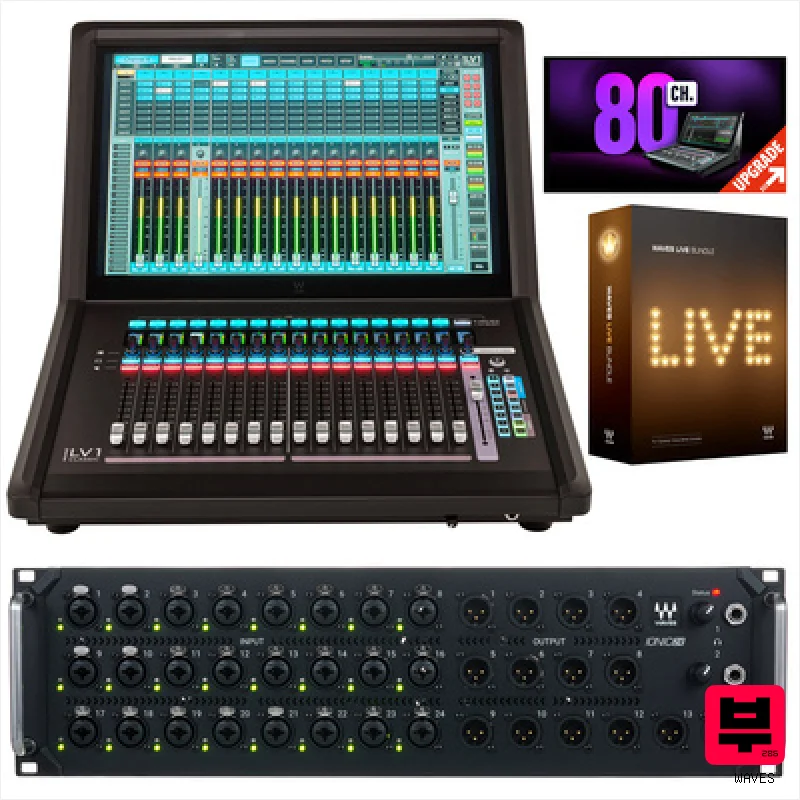
The StageGrid 4000 is a serious piece of kit – a high-end stagebox built for professional live sound engineers using the Waves eMotion LV1. It’s all about rock-solid reliability, massive I/O, and the low-latency power of SoundGrid, letting you handle incredibly complex routing and processing scenarios without a hiccup. This is for the big shows, the demanding tours, and anyone needing absolute confidence in their signal chain.
Pros
- Rock-solid build quality with robust internal power supply
- Extensive I/O provides unparalleled flexibility for complex setups
- SoundGrid protocol enables incredibly low-latency processing
Cons
- High-end price point makes it inaccessible for many smaller rigs
- Limited to Waves eMotion LV1 mixer, restricts broader use
52AudioFu
IndexStableno change since Aug 17Aug 17$6,750 now$6,750€5,998 at Thomann · in stockCheck price ↗ -
- Weight9.4 kg
The RIO1608-D3 is a serious piece of kit, especially for Yamaha CL/QL series users. It's a rock-solid stagebox offering incredible clean gain and Dante flexibility—perfect for touring bands, theaters, or anyone needing a robust, scalable analog/Dante interface. Just be aware it’s a premium investment and requires a Dante infrastructure.
Pros
- Exceptional dynamic range (120dB) minimizes noise floor for pristine audio.
- Dante network flexibility offers unparalleled routing and scalability.
- Redundant PSU ensures reliable operation during critical performances.
Cons
- Premium-priced, making it a significant investment for smaller setups.
- Requires Dante-enabled devices for full functionality; ecosystem lock-in.
50AudioFu
Index↓ 6.7%since Aug 17 · lowest so far$7,200 · Aug 17$6,717 now$6,717€5,969 at Thomann · in stockCheck price ↗ -
- Weight13.2 kg
The RIO3224-D3 is a serious piece of kit for larger touring rigs or venues needing extensive I/O and Dante integration. It’s a workhorse for engineers who need rock-solid reliability and flexible routing capabilities, especially when paired with a Yamaha CL or QL series mixer. The local control is a huge bonus for quick adjustments on stage.
Pros
- Exceptional dynamic range (120dB) minimizes noise floor significantly.
- Dante protocol provides robust, scalable, and flexible signal routing.
- Comprehensive local control offers immediate adjustments without a computer.
Cons
- High-end price point restricts accessibility for smaller, budget-conscious setups.
- 5U rack height demands considerable rack space within a mobile rig.
47AudioFu
IndexStableno change since Aug 17Aug 17$12,704 now$12,704€11,289 at Thomann · in stockCheck price ↗ -
- Weight11 kg
This rack handles a lot of microphones and supports high sample rates. It has a big screen for adjusting settings and a backup power unit for safety. It is great for live sound where you need many inputs but no analog lines. You get solid performance with MADI connectivity.
Pros
- Handles up to 48 microphones without signal dropouts.
- Supports high sample rates at 48 kHz and 96 kHz.
- Includes a large TFT LCT menu screen for easy setup.
Cons
- Lacks analog line inputs for traditional signal routing.
- Weight of 11 kg may be heavy for some venues.
47AudioFu
IndexStableno change since Aug 17Aug 17$12,930 now$12,930€11,490 at Thomann · in stockCheck price ↗ -
- Weight11 kg
This rack is great for live sound where you need many mic channels without losing quality. It handles both 48 and 96 kHz, which is useful if you need crisp highs or smooth depth. The built-in oscillator helps when you need extra tones quickly. It fits easily into a standard rack and runs reliably thanks to the dual power supply.
Pros
- Handles 48 microphone inputs with clean gain tracking
- Supports 48 kHz or 96 kHz sample rate flexibility
- Includes built-in oscillator for sound generation
Cons
- Limited to four switchable AES/Line outputs
- Only two Dante EtherCON ports available
47AudioFu
IndexStableno change since Aug 17Aug 17$13,942 now$13,942€12,390 at Thomann · in stockCheck price ↗ -
- Size19"
- Weight4.75 kg
The DT168 is a seriously useful stagebox, especially if you're already in the Allen & Heath dLive or SQ ecosystem. It’s built like a tank for gigging, and the Dante connectivity makes it a breeze to expand your I/O without running tons of analog cables. Perfect for bands and touring engineers needing reliable, high-quality remote mic preamps.
Pros
- Robust rubber corners offer excellent road-worthiness for frequent travel.
- Allen & Heath's preamps deliver a clean, musical gain with low noise.
- Dante Primary/Secondary ports ensure reliable, redundant network connectivity.
Cons
- The unit's weight, while manageable, will be a consideration for solo operators.
- Limited analog connectivity compared to some larger format mixers.
73AudioFu
IndexStableno change since Aug 17Aug 17$2,351 now$2,351€2,089 at Thomann · in stockCheck price ↗ -
The D-Rack 2P is a powerhouse stagebox, plain and simple. It's a no-brainer for serious touring sound engineers and larger venues running a DiGiCo SD console—the rock-solid build and pristine audio quality are worth the investment. If you’re looking for clean, reliable signal distribution, this is your ticket.
Pros
- Rock-solid build quality with DiGiCo’s renowned robust chassis.
- Flexible I/O configuration with expandable output card slot.
- AESOP protocol ensures ultra-low latency and pristine audio.
Cons
- Premium-priced, a significant investment for smaller setups.
- Requires DiGiCo SD series console for full functionality.
39AudioFu
IndexStableno change since Aug 17Aug 17$6,403 now$6,403€5,690 at Thomann · in stockCheck price ↗ -
The D2-Rack BNC 48/16 is a serious workhorse, ideal for larger touring rigs and high-profile installations where pristine audio and rock-solid reliability are paramount. It's a digital multicore that expands your console’s capabilities without adding a ton of physical clutter – just be prepared to dive into the DiGiCo ecosystem to truly unlock its potential.
Pros
- Rock-solid DiGiCo build quality; feels incredibly robust.
- 48 mic preamps deliver exceptionally clean, low-noise performance.
- Dual expansion slots offer future-proofing and flexibility.
Cons
- Premium-priced, representing a significant investment for smaller rigs.
- 9U height demands substantial rack space and careful planning.
39AudioFu
IndexStableno change since Aug 17Aug 17$9,000 now$9,000€7,998 at Thomann · in stockCheck price ↗ -
- Weight6.7 kg
The Ionic 24 Stagebox is a serious piece of kit for engineers deeply embedded in the Waves ecosystem, particularly those using the eMotion LV1 mixer. The build quality feels rock-solid, and those Signature preamps are genuinely excellent—clean and punchy. It’s a premium-priced investment, but if you need that level of integration and pristine audio, it’s hard to beat.
Pros
- Waves Signature preamps deliver transparent, detailed gain staging.
- Robust 3U rack housing ensures road-worthy durability and stability.
- Flexible input impedance selection caters to diverse microphone types.
Cons
- High price point makes it inaccessible for smaller, budget-conscious setups.
- Reliance on SoundGrid ecosystem limits compatibility outside Waves workflows.
45AudioFu
IndexStableno change since Aug 17Aug 17$4,161 now$4,161€3,698 at Thomann · in stockCheck price ↗
All 43 stage boxes for digital mixers
Same index, same nightly prices — compact. Colour options of one model share a row. Tap a photo to zoom.
- 11
DiGiCo A168D Stage Dante I/ODiGiCo · 2 finishes54Stable$2,811€2,498$2,811€2,498Check ↗
- 12
Waves Ionic 16 StageboxWaves45Stable$3,261€2,898$3,261€2,898Check ↗
- 13
Yamaha RUio1608SB-DYamaha47Stable$2,924€2,598$2,924€2,598Check ↗
- 14
Allen & Heath DX164-WAllen & Heath50Stable$2,396€2,129$2,396€2,129Check ↗
- 15
Yamaha RUio16-D Dante USB Audio InterfaceRUio16FLX-D · Yamaha43Stable$2,924€2,598$2,924€2,598Check ↗
- 16
Klark Teknik DN9680Klark Teknik42Stable$3,036€2,698$3,036€2,698Check ↗
- 17
TASCAM BO-16DX/IN 16-Channel D-Sub XLR Breakout BoxSB-16D · Tascam38Stable$3,262€2,899$3,262€2,899Check ↗
- 18
Soundcraft Stagebox Mini 32iSoundcraft42Stable$2,340€2,079$2,340€2,079Check ↗
- 19
Allen & Heath AR-84 8-Channel AudioRack Expansion InterfaceAR84 · Allen & Heath78Stable$899€799$899€799Check ↗
- 20
Allen & Heath AB-168 16-Channel Portable AudioRack Stage BoxAB168 · Allen & Heath · 2 finishes76Stable$1,338€1,189$1,338€1,189Check ↗
- 21
Allen & Heath AR-2412 24-Channel AudioRack Expansion InterfaceAR2412 · Allen & Heath74↑ 11.1%$1,686€1,498$1,686€1,498Check ↗
- 22
Allen & Heath DX168 16-Channel Digital StageboxDX168/X · Allen & Heath · 2 finishes72↑ 8.8%$1,798€1,598$1,798€1,598Check ↗
- 23
Behringer S32 Digital Snake IO Box 32 Preamps 16 OutputsS32 · Behringer69Stable$854€759$854€759Check ↗
- 24
Midas DL32 32-Input 16-Output Stage BoxDL32 · Midas67Stable$1,428€1,269$1,428€1,269Check ↗
- 25
PreSonus NSB 32.16 32-Channel StageboxNSB 32.16 · Presonus66Stable$1,248€1,109$1,248€1,109Check ↗
- 26
Behringer S16 Digital Snake 16 Input 8 Output IO BoxS16 · Behringer64Stable$472€419$472€419Check ↗
- 27
Midas DL16 16-Input 8-Output Stage BoxDL16 · Midas64Stable$836€743$836€743Check ↗
- 28
PreSonus NSB 16.8 16x8 AVB Network StageboxNSB 16.8 · Presonus64Stable$915€813$915€813Check ↗
- 29
Behringer SC16-OBehringer · 2 finishes62Stable$235€209$235€209Check ↗
- 30
Allen & Heath DT02Allen & Heath57Stable$336€299$336€299Check ↗
- 31
Midas DN4816-IMidas · 2 finishes54Stable$335€298$335€298Check ↗
- 32
Behringer SD16 I O Box 16-Preamps 8-OutputsSD16 · Behringer54Stable$662€588$662€588Check ↗
- 33
Midas DN4888 8-Channel UltraNet InterfaceDN4888 · Midas53Stable$336€299$336€299Check ↗
- 34
Behringer SD8 I O Box 8-Preamps 8-OutputsSD8 · Behringer51Stable$360€320$360€320Check ↗
- 35
Allen & Heath DT20Allen & Heath50Stable$336€299$336€299Check ↗
- 36
Allen & Heath DT22Allen & Heath50Stable$449€399$449€399Check ↗
- 37
Allen & Heath DX88-PAllen & Heath50↓ 1.1%$1,023€909$1,023€909Check ↗
- 38
Allen & Heath AH-DX012 12-Channel Output ExpanderDX012 · Allen & Heath49Stable$1,586€1,409$1,586€1,409Check ↗
- 39
Behringer SC-UBehringer48Stable$134€119$134€119Check ↗
- 40
Behringer SC88Behringer48Stable$314€279$314€279Check ↗
- 41
Yamaha RUio0804-DYamaha47Stable$1,968€1,749$1,968€1,749Check ↗
- 42
Yamaha Tio 1608-D2Yamaha47Stable$1,968€1,749$1,968€1,749Check ↗
- 43
Midas DL8Midas39Stable$550€489$550€489Check ↗
Stage Boxes for Digital Mixers by the numbers
Measured across all 49 models we track, not a sample.
Median $1,686 — half of all stage boxes for digital mixers here cost less.
median of 17 models · 19"–19"
median of 31 models · 0.8 kg–11 kg
How the AudioFu Index works
Five measured signals and nothing else — no stars from strangers, no “tested by experts” we didn’t do. The weights are fixed and public. We don’t play these instruments; we measure the market around them.
This chart covers 49 stage boxes for digital mixers from the Thomann catalogue. Before you buy, read hands-on reviews and, where you can, play it. Full methodology.
AudioFu earns a commission when you buy through our Thomann links. It never changes the order — the index does.
- Demand40%
How many of this exact model are for sale on Reverb right now — what musicians actually buy and resell.
- Lineup20%
How many finishes Thomann stocks — makers expand the models that sell.
- Price15%
Where the price has moved since we started tracking in August.
- Specs15%
How completely the maker documents it.
- Maker10%
How deep the brand’s range is in this category.
Questions
What should I look for when buying stage boxes for digital mixers?
Key factors include build quality, sound characteristics, playability, brand reputation, warranty coverage, and value for money. Consider your musical style, skill level, and intended use to find the best match.
How much should I spend on stage boxes for digital mixers?
Budget depends on your needs and experience level. Beginners can find quality options for $200-500, intermediate players should consider $500-1500 range, while professionals often invest $1500+ for premium features.
Are expensive stage boxes for digital mixers worth the investment?
Higher-priced stage boxes for digital mixers typically offer better materials, craftsmanship, and performance. They're worth it if you're serious about music, perform regularly, or need professional-grade features.
What are the best brands for stage boxes for digital mixers?
Top brands combine quality, innovation, and reliability. We evaluate brands based on build quality, sound performance, durability, and customer satisfaction to recommend the best options for different budgets.
Should I buy stage boxes for digital mixers online or in-store?
Both have advantages. Online offers better prices and selection, while stores allow hands-on testing. We recommend researching online first, then testing in stores if possible. Many online retailers offer excellent return policies.