AudioFu Chart · October 2026
Best Special Microphones for Professional 2026
The top pick is DPA 5100 5.1 Surround Microphone ($3,637). Catchbox Plus Transmitter Clip Red gives you the most for the money at $738. Ranked by the AudioFu Index from 19 models across 12 brands, prices checked every night.
Last updated: October 26, 2026
Top 10
Full detail for the 10 highest AudioFu Index scores. Every other model is listed below.
-
The DPA 5100 is a seriously impressive piece of kit for location sound recordists and immersive audio specialists. It’s built like a tank, delivers pristine, natural sound, and the plug-and-play nature simplifies complex surround recordings. If you need a reliable, high-performance surround mic for film, broadcast, or serious field recording, this is a top contender.
Pros
- Exceptional transient response captures subtle nuances in immersive audio
- Five pressure transducers minimize wind and proximity effects effectively
- Robust, weatherproof construction ideal for demanding outdoor location recordings
Cons
- Premium-priced investment, likely beyond hobbyist budgets
- Relatively bulky design limits portability in some scenarios
43AudioFu
IndexStableno change since Aug 17Aug 17$3,637 now$3,637€3,249 at Thomann · in stockCheck price ↗ -
The PM40 is a game-changer for serious piano recording. Its incredibly fast transient response and natural omni pickup create a remarkably realistic soundstage – perfect for concert pianists, recording engineers, and institutions wanting to capture the true character of a grand piano. Just be mindful of your room acoustics!
Pros
- Exceptional transient response captures piano’s nuances beautifully
- Omnidirectional pickup provides incredibly natural, balanced stereo imaging
- Robust, machined aluminum body ensures durability within the piano
Cons
- Premium-priced, a significant investment for most home studios
- Omnidirectional nature picks up room noise; requires careful acoustic treatment
36AudioFu
IndexStableno change since Aug 17Aug 17$3,525 now$3,525€3,149 at Thomann · in stockCheck price ↗ -
Soyuz Microphones 013 Ambisonic Omnidirectional Condenser Microphone
013 Ambisonic · Soyuz
2 for sale on Reverb1 finish at Thomann
This Soyuz 013 Ambisonic is a serious tool for immersive audio capture. It’s perfect for location sound recordists, VR/AR content creators, and anyone needing a truly enveloping soundstage. The included software really elevates the possibilities, allowing for creative manipulation after the fact.
Pros
- Exceptional transient response thanks to gold-plated 25mm diaphragms.
- The included Transcoder/Decoder plugin offers unparalleled post-recording flexibility.
- Robust build quality; feels like a true Soyuz, solid and dependable.
Cons
- The large size and weight (579g) can make mounting challenging.
- First-order Ambisonics limits resolution compared to higher-order systems.
37AudioFu
IndexStableno change since Aug 17Aug 17$3,133 now$3,133€2,799 at Thomann · in stockCheck price ↗ -
- Size4"
This mic lets you record full 3D audio from just one device. It packs 19 tiny sensors inside to catch sound everywhere. You can mix and decode the tracks with the included software. It works great for live shows or studio practice where you need clean, separate channels. Perfect for musicians who want high-end results without managing many microphones.
Pros
- Captures full 3D audio from one single mic
- Uses 19 digital MEMS microphones for clarity
- Supports multitrack recording in rehearsals and live
Cons
- Heavy array likely makes it hard to carry
- No physical knobs or controls on the body
51AudioFu
IndexStableno change since Oct 16Oct 16$2,126 now$2,126€1,899 at Thomann · in stockCheck price ↗ -
Sennheiser Ambeo VR 3D Ambisonic Virtual Reality Microphone
Ambeo VR Mic · Sennheiser
7 for sale on Reverb1 finish at Thomann
The Ambeo VR Mic is a seriously impressive piece of kit, perfect for VR content creators, sound designers, and anyone needing truly immersive audio. It’s a hefty investment, but the sound quality and 3D capture capabilities are unlike anything else on the market, allowing for incredible spatial realism.
Pros
- KE 14 capsules deliver exceptional clarity and detail, a hallmark of Sennheiser's high-end mics.
- Ambeo A-B converter plug-in simplifies complex 3D audio workflows significantly.
- Robust build quality with a solid, reassuring heft, suggesting long-term durability.
Cons
- High-end price point makes it inaccessible for casual or hobbyist recording setups.
- Requires significant processing power and expertise for optimal 3D audio manipulation.
49AudioFu
Index↓ 0.6%since Aug 17 · lowest so far$1,678 · Aug 17$1,668 now$1,668€1,490 at Thomann · in stockCheck price ↗ -
The NT-SF1 is a serious tool for immersive audio creators – VR filmmakers, 3D sound designers, and anyone wanting to capture a truly enveloping sonic picture. The build quality is outstanding, the capsule array is impressive, and the included SoundField plugin is a huge help. It’s not a general-purpose mic, though; you really need to be committed to ambisonics to make the most of it.
Pros
- Solid brass housing offers exceptional durability and resonance
- Four matched capsules deliver remarkably accurate ambisonic capture
- SoundField plugin simplifies immersive audio decoding and workflow
Cons
- Steep learning curve for optimal ambisonic recording techniques
- High-end price point restricts accessibility for casual users
42AudioFu
Index↓ 2.0%since Aug 17 · lowest so far$1,286 · Aug 17$1,260 now$1,260€1,126 at Thomann · in stockCheck price ↗ -
This Catchbox Plus is a seriously clever solution for interactive presentations and live events where audience participation is key. The build quality is surprisingly solid for a throwable mic, and the sound is natural enough for decent recordings. It’s a premium-priced, niche tool, but it’s hard to beat for engaging crowds.
Pros
- Robust, impact-resistant polymer shell handles rough handling well.
- Omnidirectional pickup offers exceptionally natural, uncolored sound capture.
- Wireless freedom eliminates cable clutter, boosting stage mobility.
Cons
- Requires a Catchbox Hub for operation, adding to the overall investment.
- The size and weight make it less discreet for close-mic applications.
-
This Catchbox Plus is a seriously clever solution for interactive events and presentations. It’s built tough for some abuse, and the wireless freedom is a game-changer for audience engagement. Perfect for conferences, theater, or anywhere you need to get sound from a moving crowd – just be aware you'll need a compatible Catchbox Hub to make it work.
Pros
- Durable construction with robust, impact-resistant polymer casing.
- ViralOff technology offers a practical, though not foolproof, disinfection feature.
- Excellent 100m range provides considerable freedom of movement.
Cons
- The cube's size and weight (370g) can be tiring for prolonged throwing.
- Requires a Catchbox Hub (sold separately), increasing the overall system cost.
41AudioFu
IndexStableno change since Aug 17Aug 17$883 now$883€789 at Thomann · in stockCheck price ↗ -
The ASF-1 MKII is a seriously impressive piece of kit for professional marine biologists, documentary filmmakers, or anyone needing high-fidelity underwater audio. Its robust build and extended frequency response give you a level of clarity and detail you just won't find in cheaper hydrophones, making it ideal for capturing the subtle nuances of aquatic life.
Pros
- Aluminum bronze housing provides excellent corrosion resistance in saltwater.
- AHS plug ensures a reliable, low-noise underwater connection.
- Extended frequency response captures subtle underwater details, up to 90kHz.
Cons
- Significant weight makes long deployments or mounting tricky.
- Premium-priced, limiting accessibility for hobbyist underwater recording.
39AudioFu
IndexStableno change since Aug 17Aug 17$1,969 now$1,969€1,759 at Thomann · in stockCheck price ↗ -
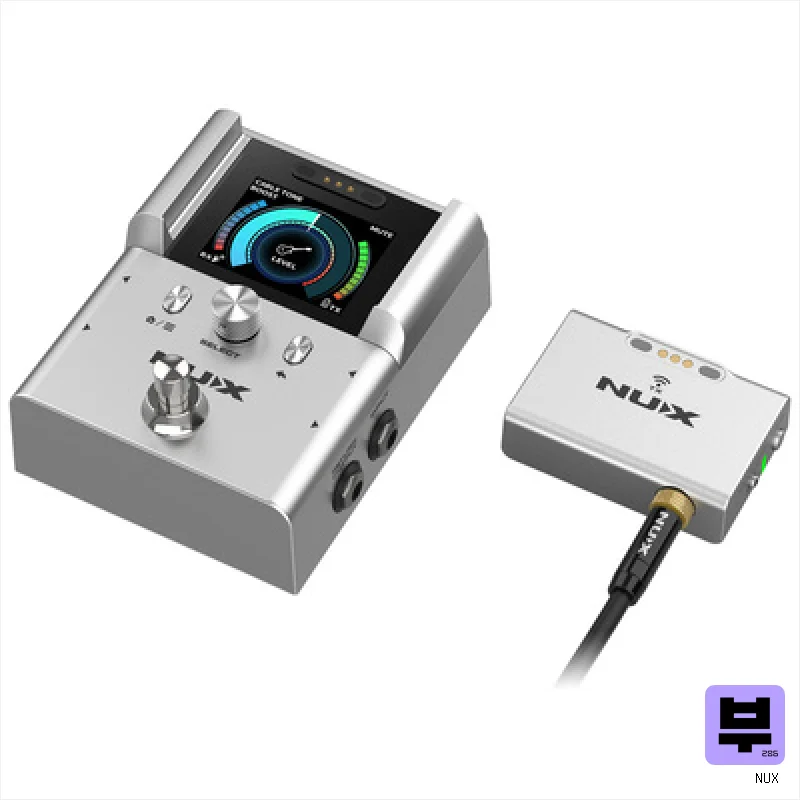
This Catchbox Plus Transmitter Clip is a solid choice for presenters, event organizers, and anyone needing truly wireless audio in dynamic situations. The robust build and range warning system are game-changers for live performance, but be aware of the ecosystem lock-in with the required Catchbox Hub. It's premium-priced, but delivers reliable audio where wired mics just won't cut it.
Pros
- Robust, impact-resistant housing ideal for active performance environments
- 1.8/1.9 GHz band minimizes interference common in crowded RF spaces
- Quick-mute functionality offers immediate control during presentations or recordings
Cons
- Hub2/Hub2D/Hub4/Hub4D requirement significantly limits compatibility and increases cost
- Relatively bulky clip design might be uncomfortable for some users over extended periods
41AudioFu
IndexStableno change since Aug 17Aug 17$738 now$738€659 at Thomann · in stockCheck price ↗
All 19 special microphones
Same index, same nightly prices — compact. Colour options of one model share a row. Tap a photo to zoom.
- 11
DPA 4097-DP-G-B90-010DPA42Stable$632€565$632€565Check ↗
- 12
DPA KIT-4097-DP-INKDPA34Stable$704€629$704€629Check ↗
- 13
Ambient ASF-2 MKIIAmbient39Stable$603€539$603€539Check ↗
- 14
DPA 4097 Interview KitDPA35↓ 2.0%$559€499$559€499Check ↗
- 15
Leaf Audio Geophone LLeaf Audio · 2 finishes46Stable$301€269$301€269Check ↗
- 16
Shure MOTIV MV88+ Video Kit with iOS / USB Condenser MicrophoneMV88-USBC · Shure64Stable$189€169$189€169Check ↗
- 17
Soundman OKM I Classic SoloSoundman39Stable$66€59$66€59Check ↗
- 18
Soundman OKM I Classic Solo D1Soundman39Stable$118€105$118€105Check ↗
- 19
Teenage Engineering Handy MicTeenage Engineering36Stable$32€29$32€29Check ↗
Special Microphones by the numbers
Measured across all 20 models we track, not a sample.
Median $738 — half of all special microphones here cost less.
How to choose the best special microphones
Polar Pattern Flexibility
It's not just about cardioid. Ribbon mics with figure-8, condensers with multiple patterns - the ability to shape the mic's pickup to isolate sources or create room tone is essential for professional applications.
Transient Response & Detail
You need to hear every nuance - the subtle pick attack, the breathy vocal quality, the snap of a snare. A mic that smears transients will muddy your mix, especially when layering instruments.
Off-Axis Rejection
How does the mic sound when it's not directly facing the source? Poor off-axis response creates phase issues and unwanted coloration, which is a killer in a tight, complex recording.
Sensitivity & Noise Floor
High-gain preamps amplify everything, including noise. A mic with a low self-noise is critical for clean recordings, especially when capturing quiet instruments or delicate vocals.
Build Quality & Durability
Gigs happen. Road cases get dropped. A mic that can take a beating and still deliver consistent performance is worth the investment; cheap mics often have fragile capsules or flimsy construction.
Buying guide
Alright, let's talk about special mics. We're past the days of grabbing the SM58 and calling it a day. When you're chasing that perfect vocal shimmer, nailing a specific cabinet resonance, or blending a weird percussion element, a standard dynamic just won't cut it. This isn't about the 'best' mic overall, but about the best specialized mics for players who already know what they're doing and aren't afraid to experiment.
Don't chase hype. Seriously. These specialized mics often require a skilled hand to get the most out of them.
The 'magic' everyone talks about often comes from the engineer and the player understanding the mic's quirks. Ribbon mics are notoriously fragile - handle with care. Condensers can be finicky with phantom power; check your preamp's specs.
Paying more usually buys you better components and more consistent performance, but it also means a steeper learning curve.
How the AudioFu Index works
Five measured signals and nothing else — no stars from strangers, no “tested by experts” we didn’t do. The weights are fixed and public. We don’t play these instruments; we measure the market around them.
This chart covers 20 special microphones from the Thomann catalogue. Before you buy, read hands-on reviews and, where you can, play it. Full methodology.
AudioFu earns a commission when you buy through our Thomann links. It never changes the order — the index does.
- Demand40%
How many of this exact model are for sale on Reverb right now — what musicians actually buy and resell.
- Lineup20%
How many finishes Thomann stocks — makers expand the models that sell.
- Price15%
Where the price has moved since we started tracking in August.
- Specs15%
How completely the maker documents it.
- Maker10%
How deep the brand’s range is in this category.
Questions
I'm on a budget. Are there any decent ribbon mics under $500?
Yeah, but temper your expectations. The Royer R-121 is the benchmark, and cheaper ribbons will often have a darker, less detailed sound and might be more susceptible to noise. They're still useful, but you'll hear the trade-offs.
My condenser mic sounds harsh. What's going on?
It's likely a combination of the mic's voicing, your preamp, and the room acoustics. Try different polar patterns, move the mic further away, or use a pop filter and reflection filter.
I keep getting feedback when micing an acoustic guitar live. What can I do?
Feedback is a battle. Try a hypercardioid pattern, position the mic further from the soundhole, and work with your sound engineer to notch out problem frequencies. A boundary layer mic can also help.
What's the deal with multi-pattern mics? Are they worth the extra cost?
Absolutely, if you're serious about versatility. Being able to switch from cardioid to figure-8 for stereo recordings or omni for room mics opens up a world of possibilities.
My ribbon mic seems really quiet. Is it broken?
Ribbon mics naturally have a lower output than dynamic or condenser mics. You'll need a preamp with plenty of clean gain to get a usable signal. Don't push it too hard, though, or you'll introduce noise.