
Best Sampler Modules Under $800 2026
So, you want to get into sampling in your modular rig but aren't looking to drop a grand on a boutique module? Totally get it. Sampling can add a whole new dimension to your sound - from gritty, lo-fi textures to lush, evolving pads - and thankfully, there's a surprisingly decent crop of sampler modules that won't break the bank. Let's break down the best options under $800, focusing on bang-for-your-buck and what you can realistically expect.
Last updated: September 4, 2026
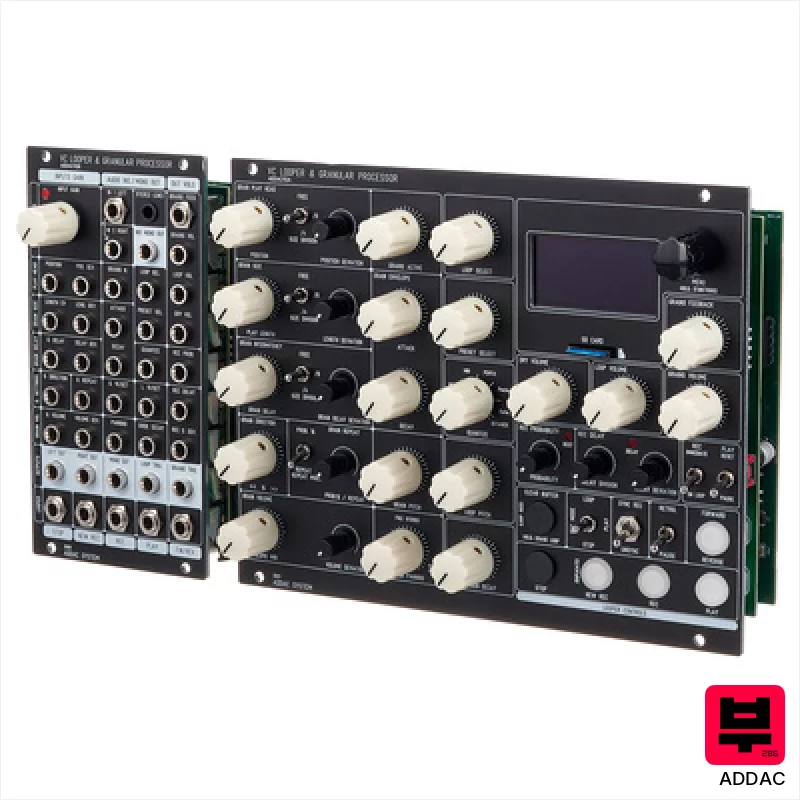
ADDAC 112 VC Looper & Granular Proc.
- • Exceptional granular engine offers incredible textural possibilities.
- • Comprehensive CV control unlocks deep, expressive manipulation.
- • SD card storage simplifies loop management and preset recall.
- • Dual mono inputs and stereo line input provide flexible routing options.
- • The 32HP/13HP footprint can be restrictive in smaller racks.
- • Mono .wav recording limits stereo field manipulation post-capture.
- • Learning curve is steep for granular synthesis newcomers.
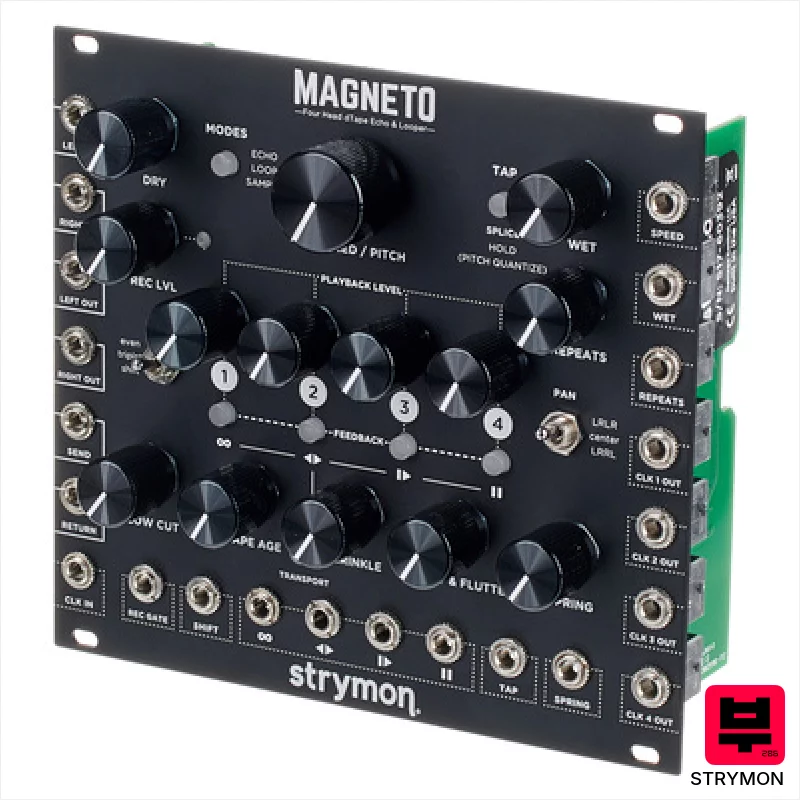
Strymon Magneto
- • Strymon’s Varispeed algorithm delivers incredibly nuanced, evolving textures.
- • Four playback heads allow for complex, interwoven delay patterns and rhythmic loops.
- • The spring reverb emulation is remarkably authentic, adding warmth and character.
- • Phase-aligned clocking ensures tight synchronization with other Eurorack modules.
- • 15-second maximum duration limits longer phrase sampling and looping capabilities.
- • Power draw is relatively high, requiring a robust power supply.
- • The learning curve can be steep for users unfamiliar with tape delay mechanics.

Make Noise Morphagene
- • Exceptional voltage control offers incredible sonic manipulation possibilities
- • Layering capability creates rich, evolving textures and soundscapes
- • SD card storage allows for extensive sample libraries and experimentation
- • 24-bit codec ensures high-fidelity recordings and playback
- • Limited sample time necessitates creative, concise sound design
- • 20HP footprint demands careful modular system planning
- • Steep learning curve for users unfamiliar with granular synthesis
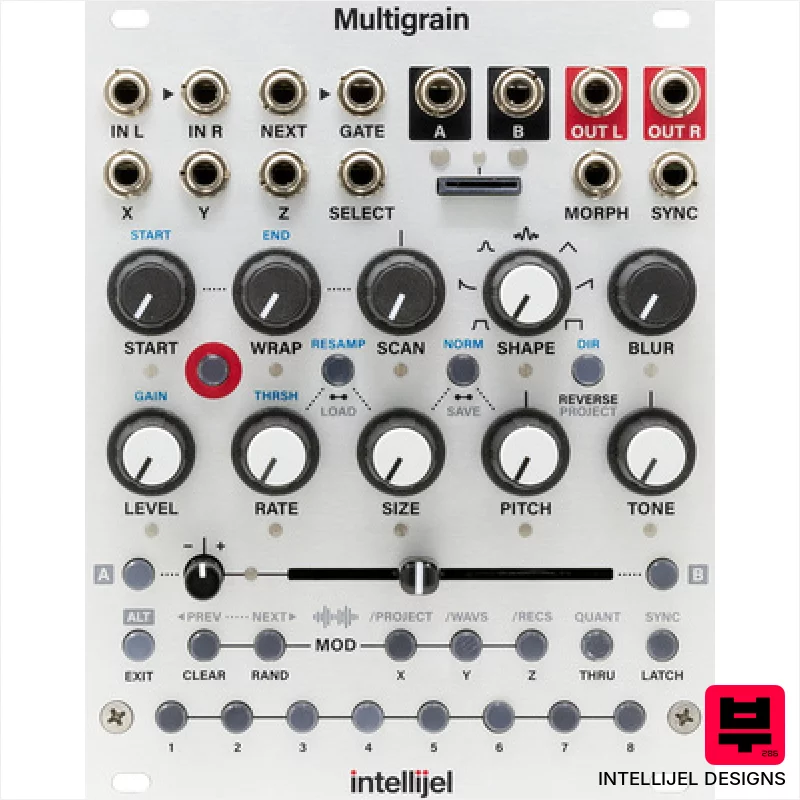
Intellijel Designs Multigrain
- • Exceptional granular engine delivers truly unique, evolving textures.
- • Intuitive parameter mapping allows for deep sonic exploration on the fly.
- • MicroSD card storage enables vast sample libraries and project portability.
- • Morph CV input unlocks incredibly expressive, evolving soundscapes.
- • The learning curve can be steep for granular synthesis newcomers.
- • Limited sample length (32s) restricts complex, long-form sample manipulation.
- • Intellijel’s aesthetic, while iconic, might not appeal to all.
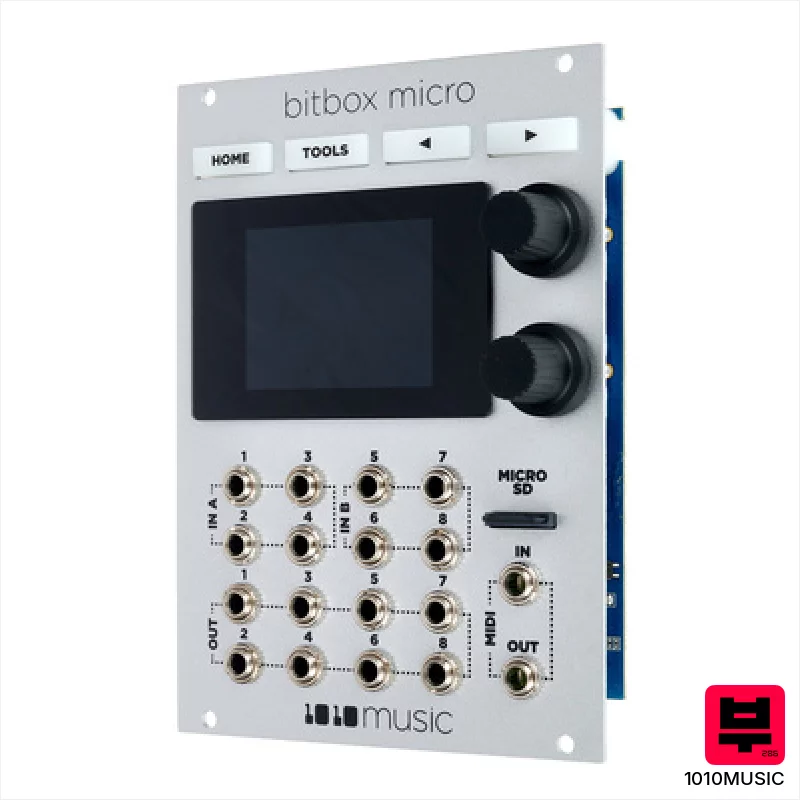
1010music bitbox micro
- • Intuitive touchscreen provides precise control over complex sampling workflows
- • DC-coupled audio paths allow for seamless integration with Eurorack systems
- • MicroSD card support unlocks massive sample libraries and extended playback
- • Automated multisampling via CV/MIDI streamlines creative experimentation
- • 18HP footprint might be restrictive for smaller Eurorack cases
- • Touchscreen resolution, while functional, isn't the highest fidelity
- • Limited physical controls demand reliance on CV/MIDI for nuanced adjustments
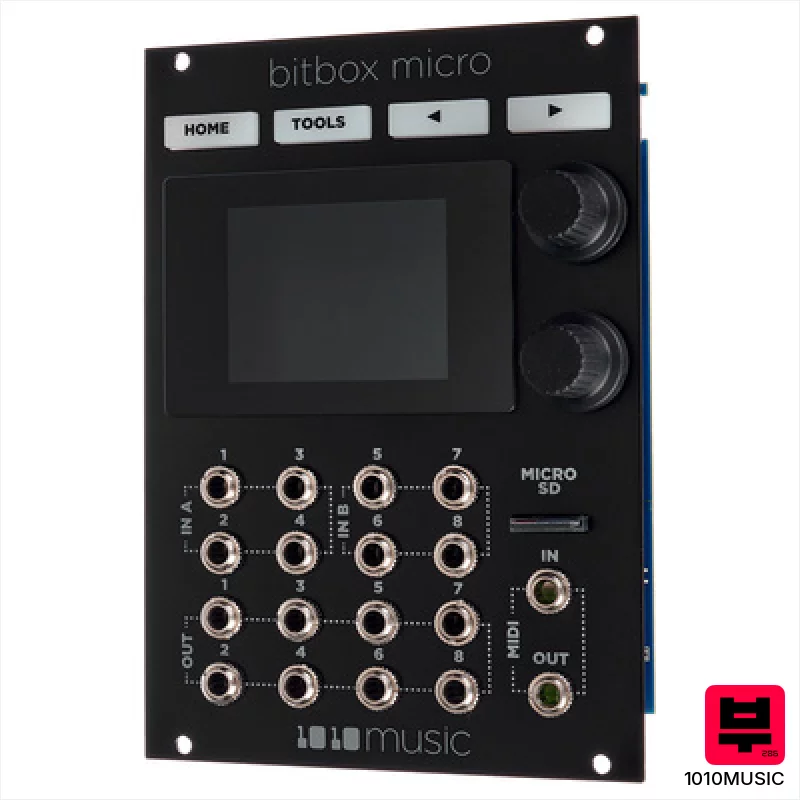
1010music bitbox micro Black Edition
- • Intuitive touchscreen interface significantly streamlines sample manipulation.
- • Robust build quality; the black anodized aluminum feels premium and durable.
- • Flexible routing options allow for complex, evolving soundscapes.
- • MicroSD card support unlocks vast sample libraries and extended playback.
- • 18HP footprint can be limiting in smaller Eurorack cases.
- • Steep learning curve for users unfamiliar with granular synthesis techniques.
- • DC-coupled design might require careful voltage considerations with certain modules.
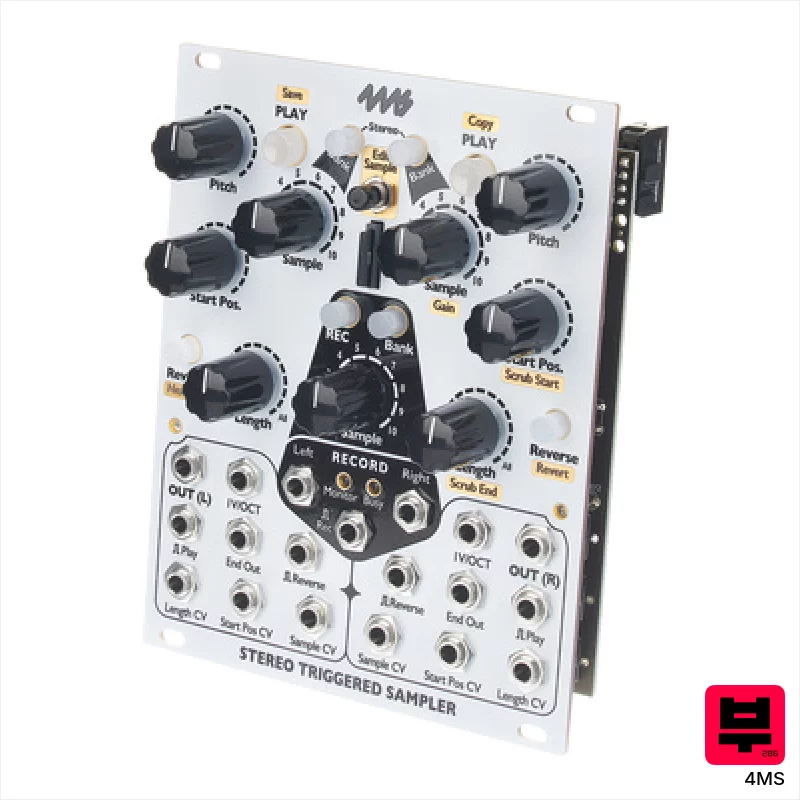
4ms Stereo Triggered Sampler
- • Exceptional stereo fidelity captures nuances often lost in mono samplers.
- • Intuitive on-module editing drastically simplifies workflow, a 4ms hallmark.
- • MicroSD card storage offers immense flexibility and sample library potential.
- • CV control over key parameters unlocks complex, generative sequencing possibilities.
- • 20 TE width demands significant space in a Eurorack setup.
- • Steeper learning curve compared to simpler sampler modules.
- • Power draw is relatively high, requiring a robust power supply.
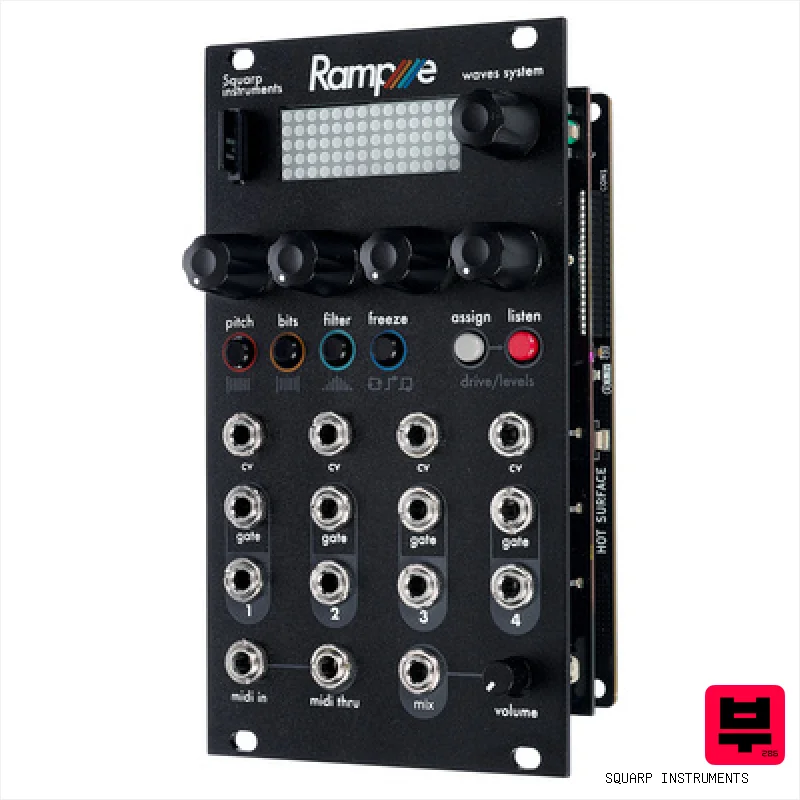
Squarp Instruments Rample Turbo
- • Four independent voices handle long samples easily.
- • Twelve layered samples per voice create rich textures.
- • High signal-to-noise ratio ensures clean audio output.
- • DC-coupled outputs play back control voltages like LFOs.
- • No specific CPU speed or clock rate details provided.
- • SD card slot lacks external drive or USB support.
- • No listed sample format compatibility beyond WAV.

Erica Synths Sample Drum
- • Dual channels offer incredible flexibility for layered drum patterns
- • MicroSD storage provides vast sample library potential
- • 6 encoders grant precise, real-time control over sample playback
- • Solid build quality typical of Erica Synths’ robust design
- • 14TE width can be restrictive in smaller Eurorack cases
- • Sample editing features are basic; more advanced editing requires external tools
- • Limited polyphony restricts complex, multi-sample drum kits

4ms WAV Recorder
- • High-resolution 24-bit/96kHz recording captures nuanced sonic details.
- • Robust microSD card support enables extensive sample libraries.
- • 4ms's signature build quality ensures long-term reliability.
- • Seamless integration with other 4ms Listen modules expands creative workflows.
- • 6 TE width can be limiting in smaller Eurorack cases.
- • MicroSD card not included; an unexpected extra expense.
- • Gain control lacks fine-grained resolution for delicate recordings.

4ms Sampler
- • Excellent sample fidelity with 24-bit/48kHz resolution.
- • 60 banks offer a surprising amount of sonic flexibility.
- • MicroSD card provides expandable storage for extensive sample libraries.
- • CV inputs offer deep modulation possibilities for creative sound design.
- • Limited polyphony restricts layering complex sample arrangements.
- • The interface, while functional, lacks the visual feedback of more modern samplers.
- • Power consumption could be a concern for power-constrained modular systems.
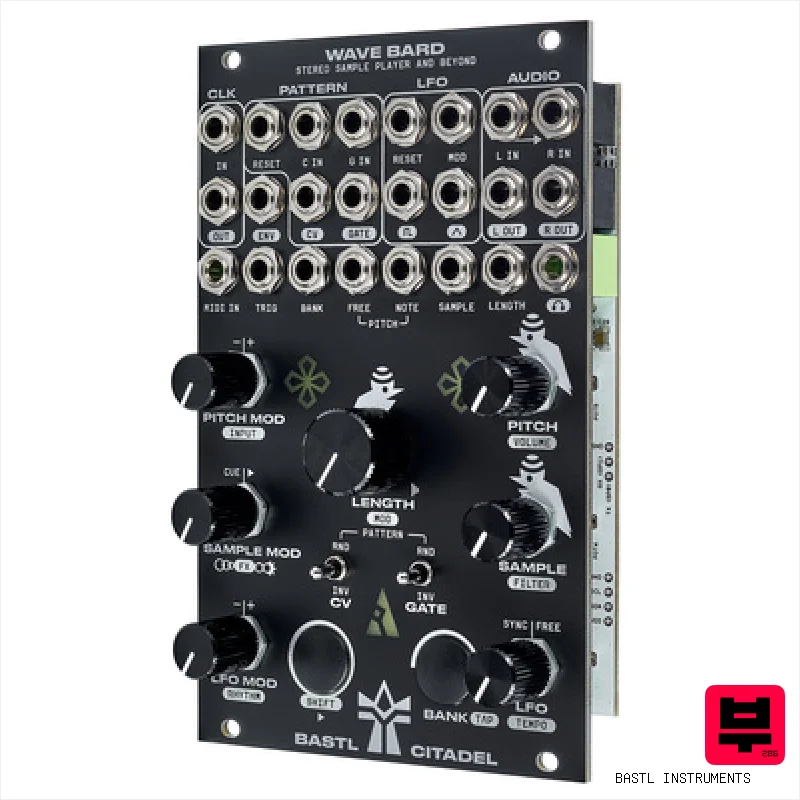
Bastl Instruments Citadel Wave Bard
- • 89 second mono and 44 second stereo sampling time
- • 32 banks holding 32 samples each for deep layering
- • Web app allows editing of banks and samples easily
- • CV inputs control pitch, LFO, filters, and more
- • Sampling time is relatively short for long phrases
- • No specific power consumption or battery life listed
- • USB-C port location on rear panel may be inconvenient
Sampler Modules by the numbers
Measured across all 12 models in this category, so «wide», «short» or «expensive» mean something you can check.
How to Choose the Best Sampler Modules
Sample Time
This is the obvious one. Longer sample times mean more complex sounds and the ability to layer multiple samples. Expect around 6-12 seconds at 44.1kHz in this price range; anything less will feel limiting quickly.
Polyphony
How many samples can play simultaneously? 4-voice is workable for pads and textures, but 8 or more is really what you want if you're planning on playing more complex arrangements or triggering multiple samples at once.
Sample Manipulation
Looping, pitch shifting, granular synthesis - these features can take a basic sample and transform it into something truly unique. Don't expect full-blown granular engines at this price point, but basic looping and pitch transposition are essential.
Envelope Flexibility
The envelopes control the attack, decay, sustain, and release of your samples. More envelope stages and modulation options (like looping or syncing to external clocks) will give you far more expressive control over your sounds.
User Interface/Workflow
A clunky interface can kill your creativity. Look for modules with clear displays, intuitive controls, and a logical layout. You'll be spending a lot of time tweaking, so make sure it's a process you enjoy.
Buying Guide
At this price point, you're making trade-offs. Sample quality is often limited by the module's DAC (digital-to-analog converter) - don't expect pristine, studio-quality audio. You'll also likely see compromises in sample time or polyphony. Prioritize the features that matter most to your workflow and sound design goals, and don't be afraid to experiment with creative resampling techniques to get the most out of your module.
How This List Is Built
We don't play these instruments — we're a catalog, not a review desk, and we'd rather say so than pretend otherwise. This page covers 12 sampler modules from the Thomann catalogue, which is the largest single source of specification data in this category: 12 in detail, the rest listed with their specifications.
Position is computed, not curated. We parse the manufacturer's own description into actual values — nut width, scale, fret count, fingerboard radius, size, alloy — and rank on them: how many specifications a model has published, how many of them are measurable numbers, and how precisely it meets this page's criterion. A product image adds a little. Price is not a ranking signal: it tells you nothing about whether a neck fits your hand. The same inputs always produce the same order, so nothing here is shuffled to look fresh.
What this list is good for: narrowing a category down to a shortlist by spec and budget. What it isn't: a substitute for hearing an instrument. Before you buy, read hands-on reviews and, where you can, play it. Full methodology.

