
Best PCIe Audio Interfaces for Desktop Studio 2026
So, you're building a desktop studio? Smart move. Ditching the USB interface for a PCIe card is a legit upgrade - especially if you're tired of latency headaches and want to push your sample rates without your computer choking. We're not talking about chasing specs here; we're talking about getting a reliable, transparent signal chain that lets your music breathe. Let's find the right PCIe interface for your workflow.
Last updated: July 22, 2026 • Next update: July 29, 2026
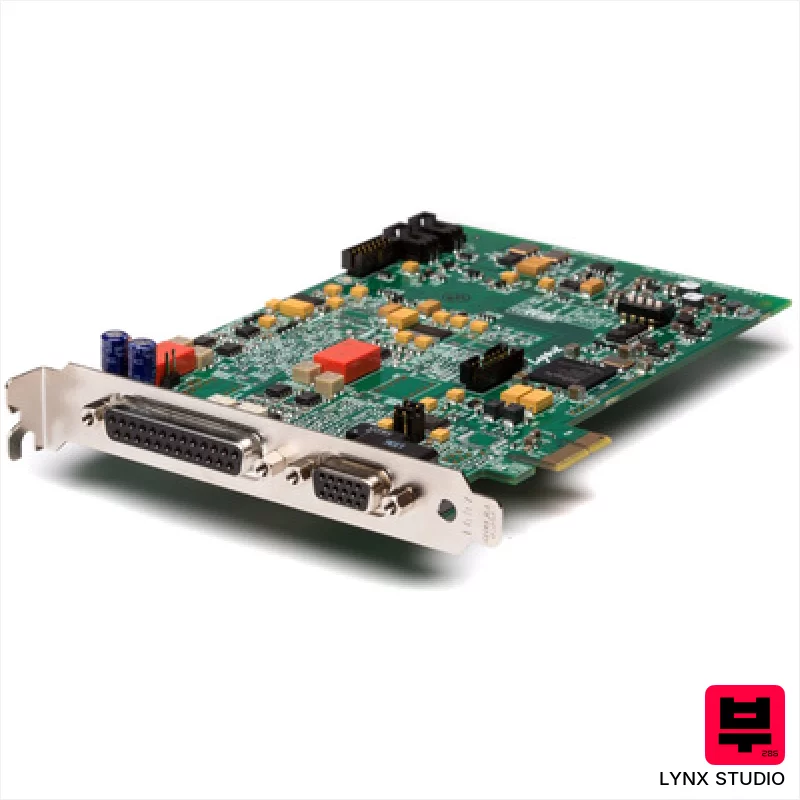
Lynx Studio E22
- • Exceptional low-jitter clocking provides pristine audio clarity
- • FPGA-based mixer offers incredibly flexible routing options
- • Robust build quality; feels like a serious, professional tool
- • De-Thump feature protects speakers during switching, a thoughtful touch
- • PCIe interface limits compatibility with modern, fanless systems
- • Analog I/O and digital I/O cables are separate, adding to initial expense
- • Limited input/output count restricts larger recording setups
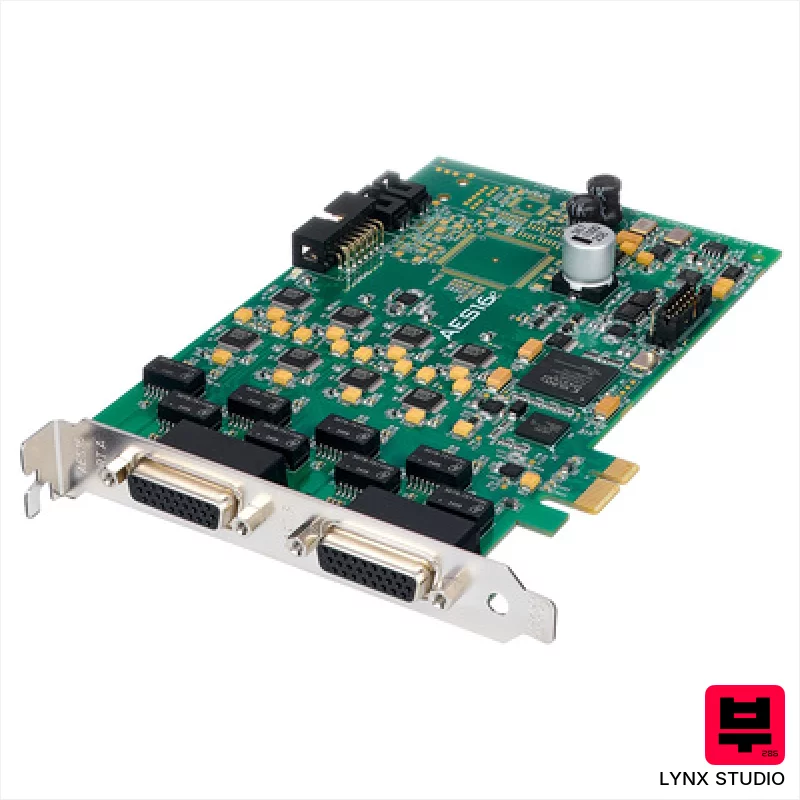
Lynx Studio AES-16e PCI Express
- • Exceptional clocking performance minimizes jitter for pristine digital audio
- • Robust build quality; feels like it'll withstand years of studio use
- • Flexible routing engine allows complex signal flow configurations
- • SynchroLock provides rock-solid synchronization with other digital gear
- • PCIe interface limits platform compatibility compared to newer USB solutions
- • Requires breakout cable for connectivity, adding to overall cost and complexity
- • Driver support is somewhat limited to older operating systems
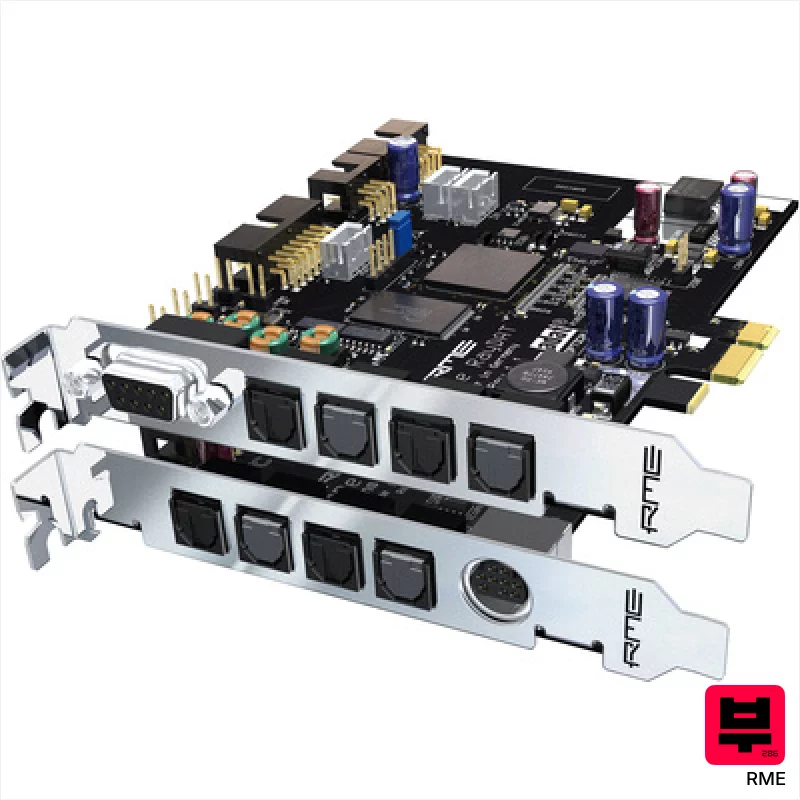
RME HDSPe RayDAT
- • Exceptional channel count for complex recording setups
- • RME's TotalMix DSP mixer is a genuine workflow booster
- • Flexible ADAT, AES/EBU, and SPDIF I/O options offer broad compatibility
- • Rock-solid RME build quality ensures long-term reliability
- • PCIe interface limits portability; desktop systems only
- • Can be complex to configure initially, steep learning curve
- • Premium-priced, a significant investment for smaller studios
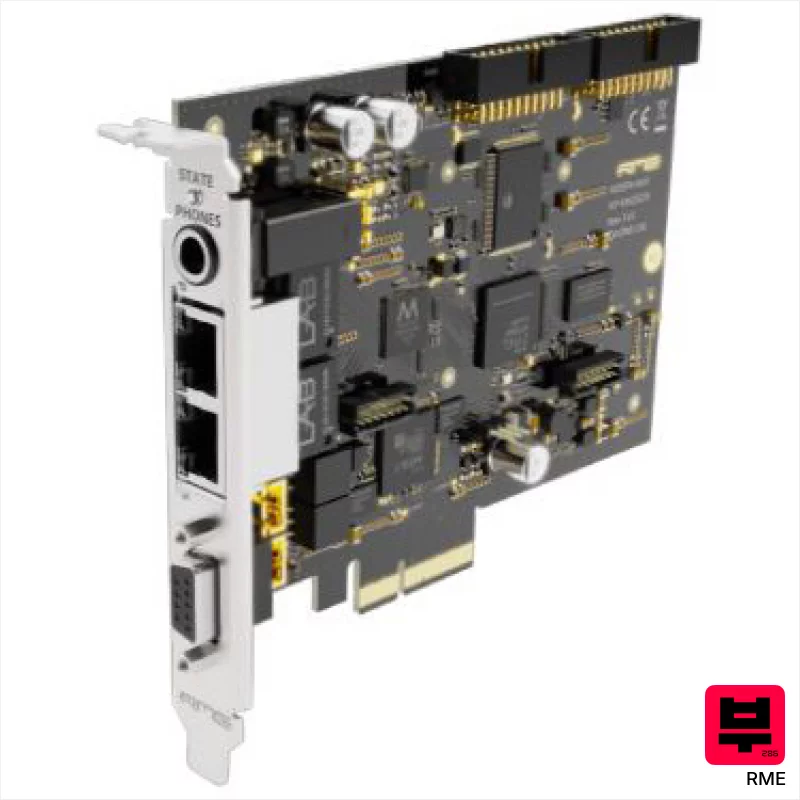
RME HDSPe AoX-D
- • Rock-solid SteadyClock ensures pristine digital audio transfer.
- • DANTE and MADI provide unparalleled routing flexibility and scalability.
- • TotalMix offers incredibly granular control over signal flow and monitoring.
- • PCIe x4 interface delivers exceptionally low latency for demanding workflows.
- • PCIe card format limits system compatibility and upgrade paths.
- • Expansion cards for MADI add significantly to the overall system cost.
- • Steep learning curve for TotalMix, especially for less experienced users.
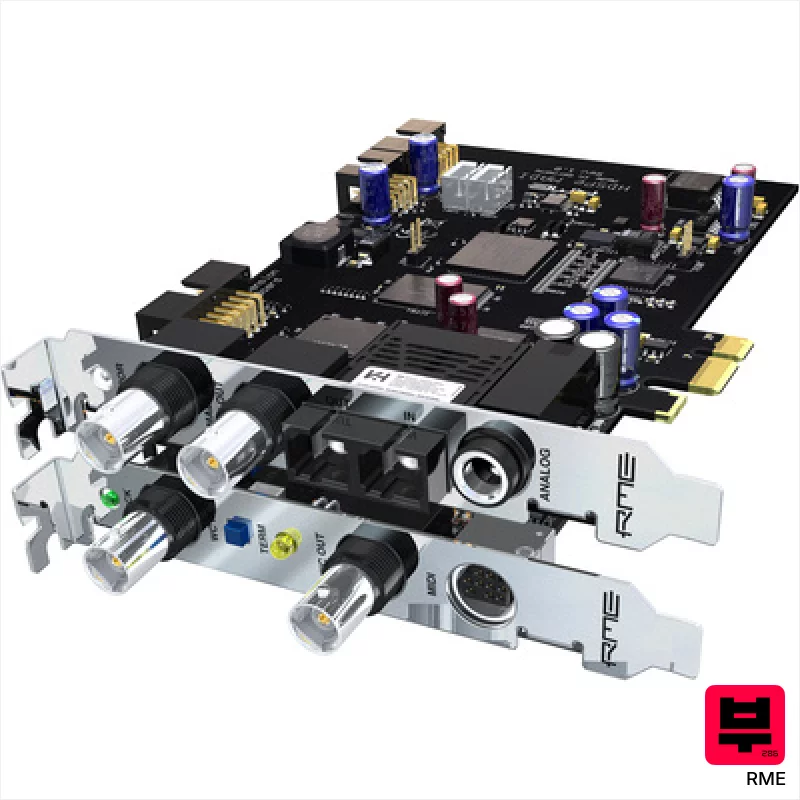
RME HDSPe MADI
- • Rock-solid MADI connectivity for massive channel counts.
- • RME's Total Compensation (TCO) is legendary for stability.
- • Flexible routing allows complex signal chains and mixes.
- • ASIO 2.0 compatibility ensures low-latency performance.
- • PCIe card format limits platform compatibility.
- • The user interface can feel dated compared to newer interfaces.
- • High price point puts it out of reach for many home studios.
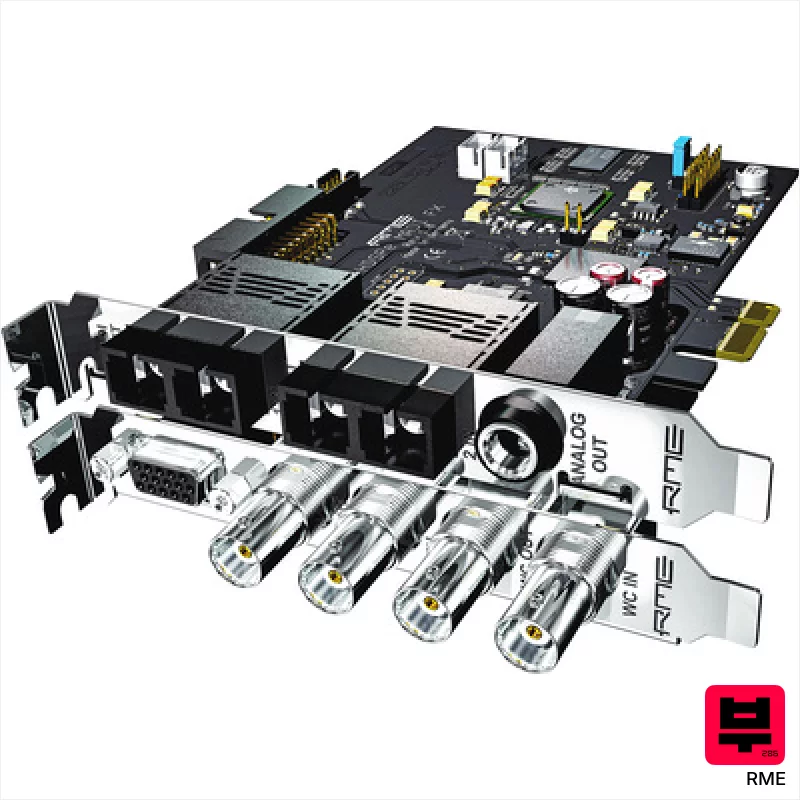
RME HDSPe Madi FX
- • Unmatched channel count provides extreme routing flexibility.
- • SteadyClock minimizes jitter, resulting in pristine audio clarity.
- • TotalMix FX offers powerful, latency-free processing capabilities.
- • MADI optical/coax conversion simplifies complex studio setups.
- • PCIe interface limits portability and upgrade options.
- • Steep learning curve for TotalMix FX's advanced features.
- • Premium-priced, representing a significant investment.
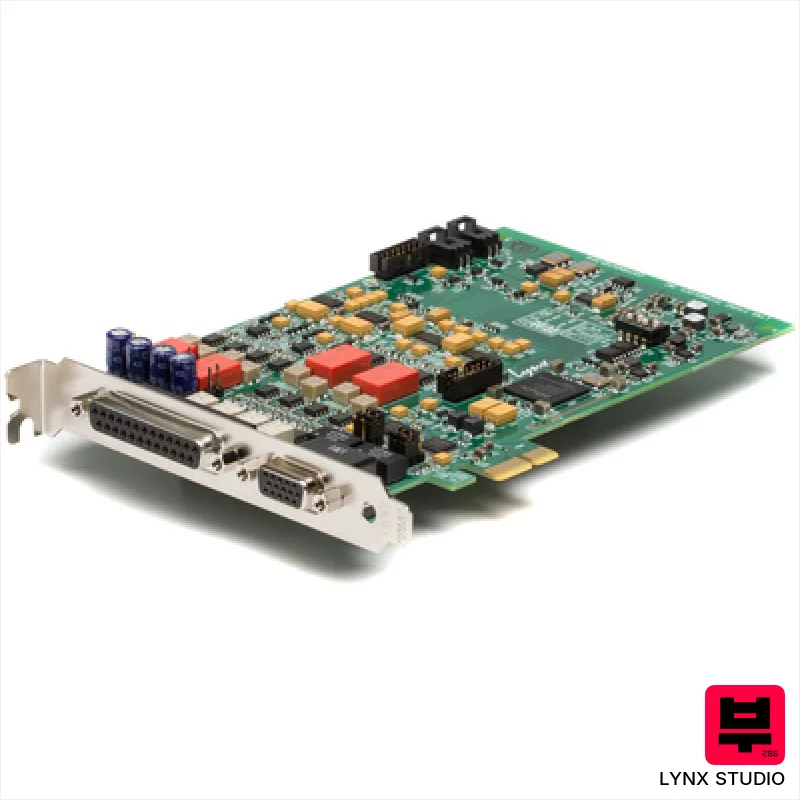
Lynx Studio E44
- • Exceptional low-jitter clocking improves overall audio clarity
- • FPGA-based hardware mixer offers real-time routing flexibility
- • Robust build quality reflects Lynx’s long-standing reputation
- • De-Thump feature protects speakers from unwanted pops and clicks
- • PCIe connectivity limits system compatibility and upgrade paths
- • Analog I/O and digital I/O cables are sold separately, increasing cost
- • Limited to four analog channels, may not suit large recording setups
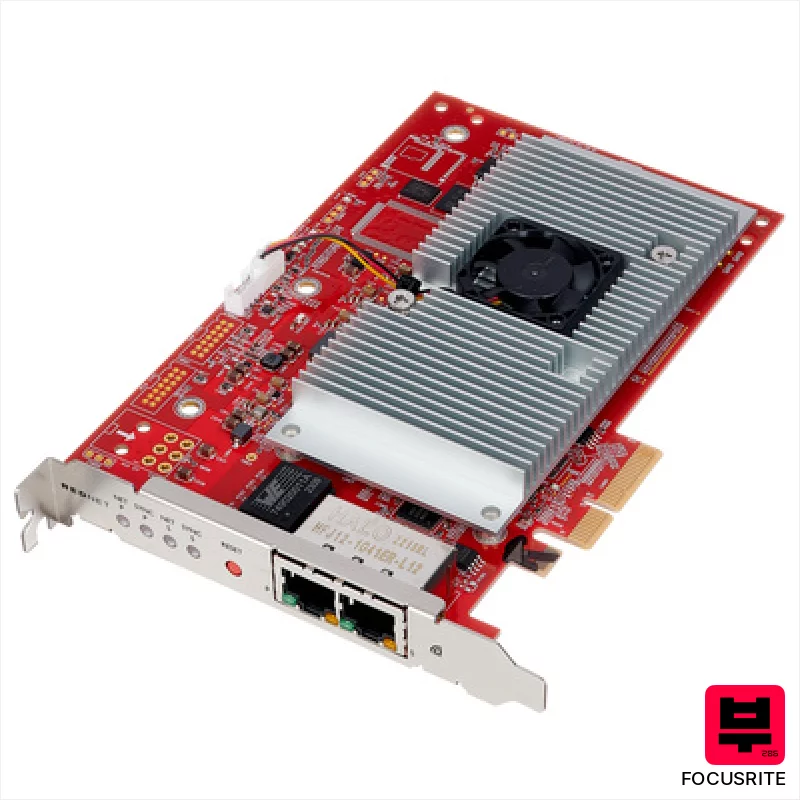
Focusrite RedNet PCIeNX
- • Rock-solid Dante integration offers unparalleled flexibility for complex routing.
- • Dual Ethernet ports provide critical redundancy for mission-critical workflows.
- • Extremely low latency performance crucial for live tracking and virtual instruments.
- • Focusrite’s renowned preamps deliver clean, transparent gain with excellent headroom.
- • PCIe card format limits compatibility; requires available slot and driver support.
- • Steep learning curve for Dante configuration and network management.
- • Premium-priced, making it a significant investment for smaller studios.
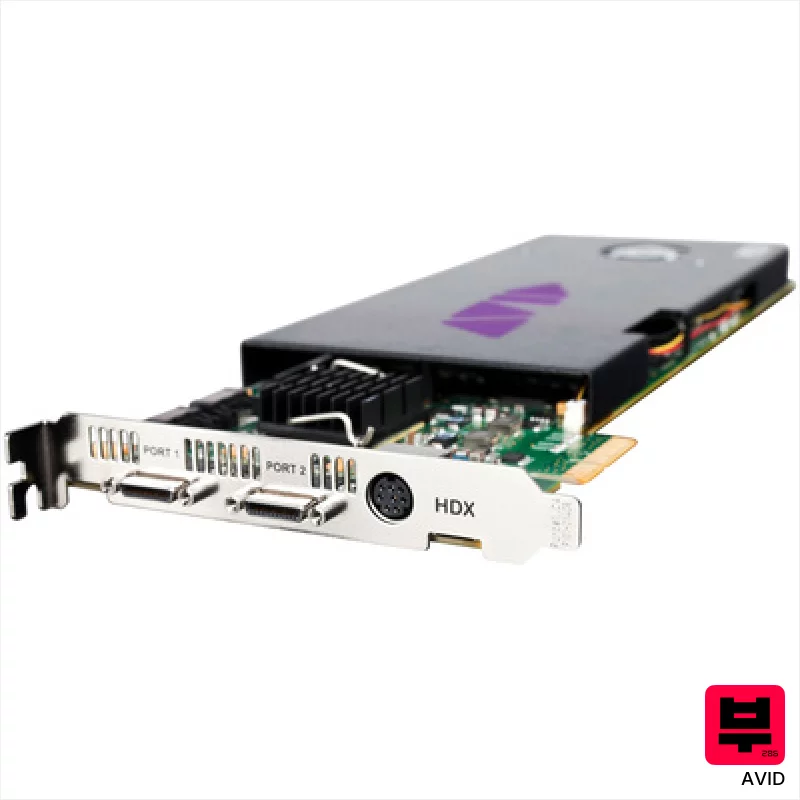
Avid HDX PCIe Card only
- • Unmatched Pro Tools integration for complex, large-scale projects
- • Robust DigiLink connectivity ensures rock-solid, low-latency performance
- • 64 channels offer incredible routing flexibility for demanding workflows
- • High-resolution audio (32-bit) provides exceptional dynamic range
- • Extremely premium-priced, a significant investment for any studio
- • Requires Pro Tools Ultimate for full functionality, adding to the cost
- • Limited compatibility outside of the Avid ecosystem, restricts versatility
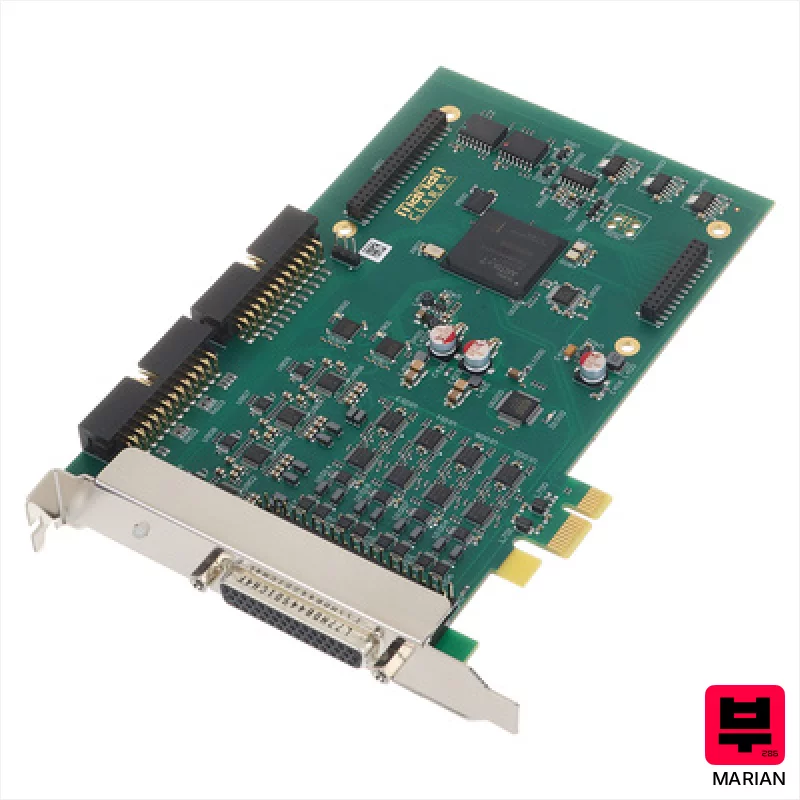
Marian Clara A XLR
- • Cascadeable TDM SyncBus enables complex, multi-interface setups.
- • Auto-mute prevents disruptive pops during system boot-up.
- • Beast DSP mixer provides substantial headroom for processing.
- • Low jitter (<1ns) guarantees pristine, accurate audio capture.
- • D-Sub adapter cables for XLR connectivity add complexity and potential points of failure.
- • Windows-only driver support limits accessibility for Mac users.
- • PCIe interface restricts portability; not ideal for mobile recording.
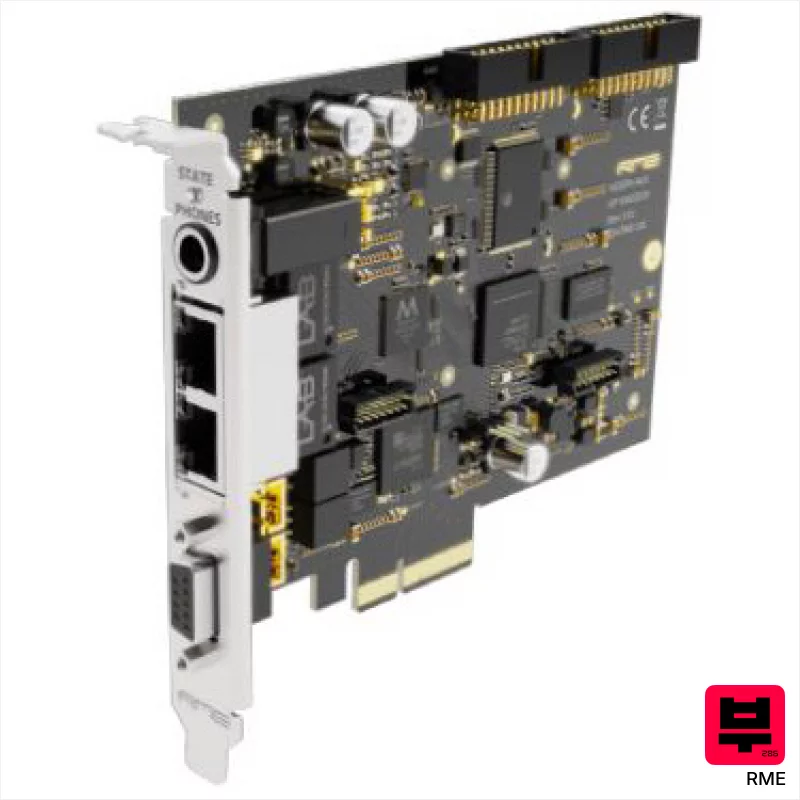
RME HDSPe AoX-M
- • Rock-solid SteadyClock minimizes jitter, crucial for critical tracking.
- • AVB/Milan compatibility offers unparalleled network flexibility and scalability.
- • TotalMix provides exceptional routing and monitoring capabilities on-device.
- • PCIe x4 interface delivers high bandwidth for demanding channel counts.
- • PCIe card format limits system compatibility; not USB or Thunderbolt.
- • Expansion cards for MADI add significant cost and complexity.
- • Steep learning curve for TotalMix, requires dedicated time to master.
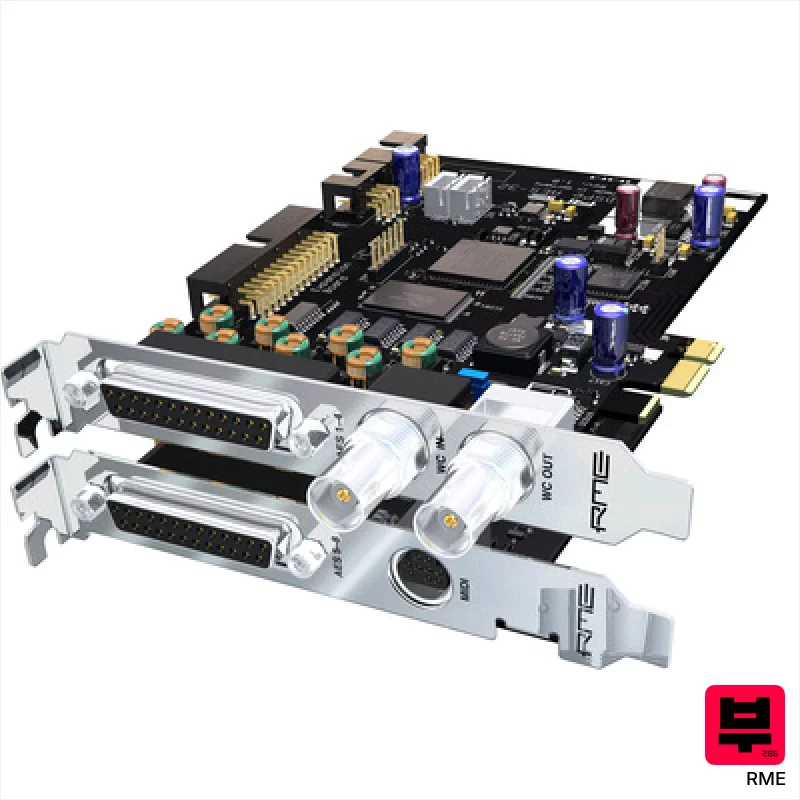
RME HDSPe AES
- • Rock-solid RME drivers offer unparalleled stability and low latency.
- • Eight AES/EBU I/O provides premium digital connectivity options.
- • TotalMix FX offers flexible routing and processing capabilities.
- • Robust build quality; feels like it'll withstand years of studio use.
- • PCIe interface limits system compatibility; no Thunderbolt option.
- • Limited analog I/O compared to some other interfaces in its class.
- • Can be complex to configure initially, steep learning curve for beginners.
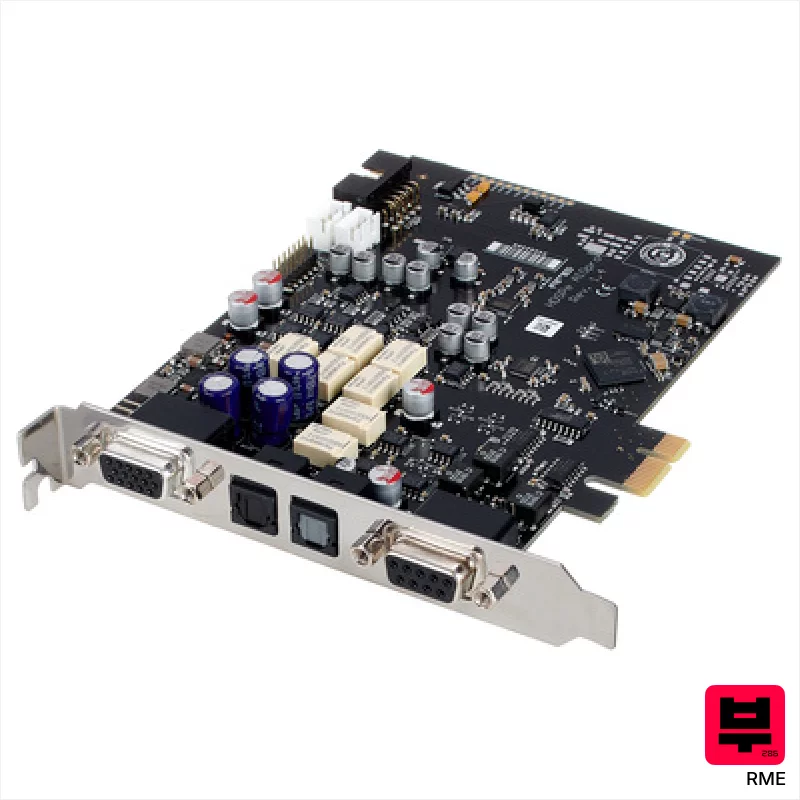
RME HDSPe AIO Pro
- • ADI-2 Pro converters deliver exceptionally clean, detailed audio reproduction
- • SteadyClock FS minimizes jitter for pristine digital clarity
- • Flexible output level options (+24dBu to -2dBu) accommodate diverse setups
- • Mute relays prevent pops and noise during computer startup/shutdown
- • PCIe interface limits portability and upgrade flexibility
- • Complex feature set demands a steeper learning curve for novice users
- • Premium-priced, representing a significant investment for smaller studios
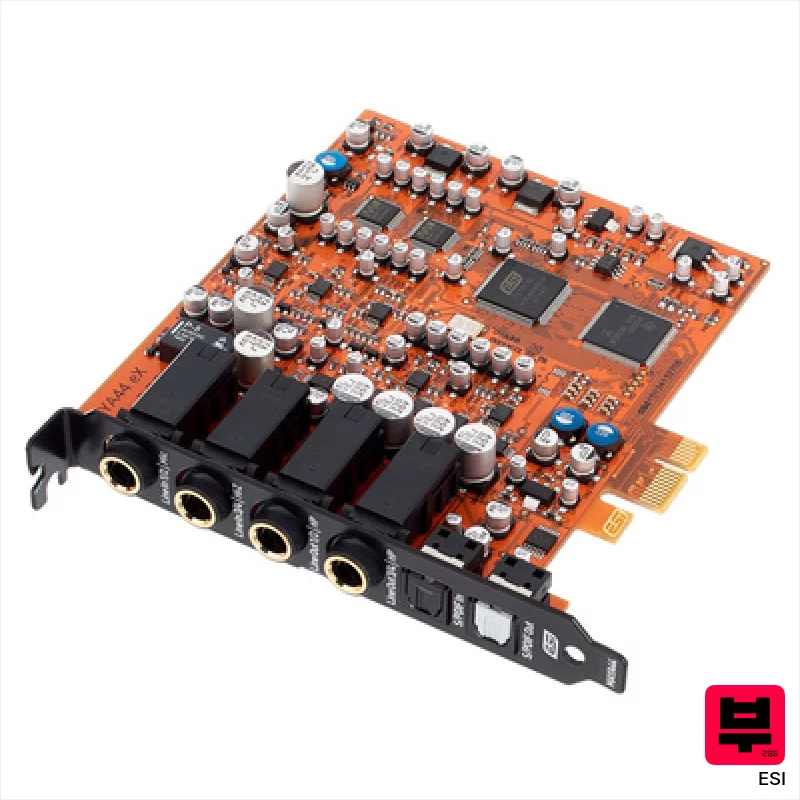
ESI MAYA44 eX
- • Solid build quality for the price point, feels robust in the chassis
- • DirectWIRE 3.0 offers surprisingly low latency for a PCIe interface
- • The single preamp provides clean gain, suitable for vocal recording
- • Optical S/PDIF offers flexible routing options for expanded setups
- • Limited input/output count restricts larger recording projects
- • Driver support is Windows-only, a significant limitation for Mac users
- • Preamp's headroom is modest; struggles with very hot signals
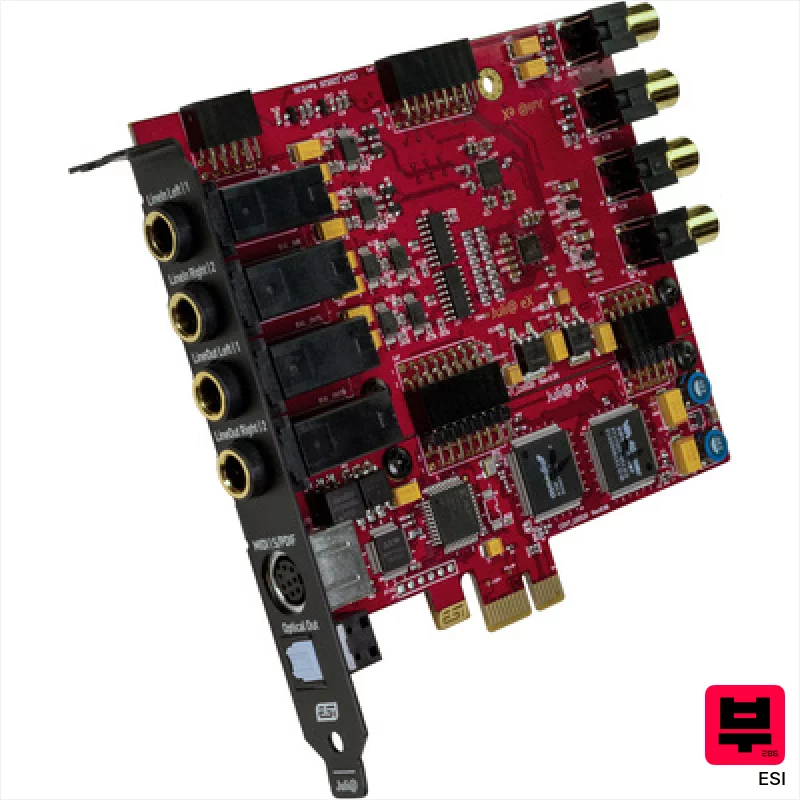
ESI Juli@ eX
- • Sabre ESS converters deliver clean, transparent audio reproduction
- • EWDM driver ensures impressively low latency for real-time tracking
- • Interchangeable I/O panels offer flexible connectivity options
- • Compact form factor suits tight studio spaces and mobile setups
- • Limited preamp gain range restricts use with low-output microphones
- • Plastic enclosure feels less robust than metal alternatives
- • Software bundle is entry-level and may require upgrades soon
How to Choose the Best PCIe Audio Interfaces
Latency
This is HUGE for desktop studios. You need near-zero latency for tracking guitars or synths - otherwise, playing feels disconnected. A good PCIe card will get you sub-10ms roundtrip latency with your plugins loaded, which is essential for a responsive feel.
Preamps
Cleanliness is king, but character matters too. Some PCIe preamps are sterile, others have a subtle warmth that can be a real asset, especially for vocals or acoustic instruments. We're listening for that subtle harmonic richness, not colored distortion.
Driver Stability
Seriously, a flaky driver will ruin your day faster than a blown fuse. We're looking for rock-solid performance across different DAWs and operating systems - no crashes, no pops, no frustration.
Connectivity
Beyond the basic inputs and outputs, consider ADAT or S/PDIF for expanding your I/O. A headphone amp with enough juice for your studio cans is also a must-have. Think about your future needs, not just your current setup.
Headroom
Virtual instruments and plugins can eat up headroom fast. A PCIe interface with ample headroom will prevent clipping and distortion, especially when tracking multiple sources or using aggressive processing.
Buying Guide
Don't fall for the 'more is always better' trap. A cheap PCIe card might look tempting, but those corners they cut usually show up as noisy preamps or unstable drivers. Spending a little more upfront for a reputable brand with a solid driver reputation will save you headaches down the road. Think about your long-term goals-do you need expansion options, or is a simple, reliable 2-in/2-out enough?
Our Methodology
We don't just look at the numbers on a spec sheet. We put these interfaces through the paces - recording guitars, vocals, drums (simulated, of course, for a desktop setup), and running virtual instruments. We A/B them against other interfaces and even some high-end consoles to gauge their tonal character and how they handle dynamics. It's about real-world performance, not marketing hype.

