AudioFu Chart · October 2026
Best Microphone Bundles Under $100 2026
The top pick is the t.bone MB 85 Beta Set ($89). the t.bone Microphone Set 1 gives you the most for the money at $33. Ranked by the AudioFu Index from 16 models across 2 brands, prices checked every night.
Last updated: October 19, 2026
Top 10
Full detail for the 10 highest AudioFu Index scores. Every other model is listed below.
-
- Weight2.1 kg
This t.bone set is a real surprise for the money. It's a great entry point for anyone on a budget needing a basic vocal or instrument mic setup, especially for live gigs where isolation is key. The boom stand is surprisingly well-built, too.
Pros
- Solid metal boom stand offers surprising stability for the price
- Supercardioid pattern effectively isolates sound sources
- Rean XLR connectors ensure reliable signal transfer and durability
Cons
- Plastic box feels flimsy and offers minimal protection during transport
- Supercardioid pattern demands precise mic placement for optimal results
-
- Size8"
- Weight1.6 kg
Look, this t.bone set is a serious steal for the budget-conscious. It's perfect for beginners or anyone needing a basic vocal and instrument recording setup, or a backup rig for live gigs. Don't expect studio-grade sound, but for the price, you're getting a functional and surprisingly versatile package.
Pros
- Dynamic mic handles loud sources well, good for stage use
- Boom stand offers flexibility for recording setups
- XLR cable provides decent signal quality for the price
Cons
- Supercardioid pattern demands precise mic placement
- Dynamic mic lacks the detail of condenser alternatives
-
- Size8"
- Weight1.6 kg
Okay, so the Superlux D108A bundle is a crazy deal. It’s a solid entry-level option for vocal recording or basic live performance, especially if you need a supercardioid pattern to tame a noisy room. Don't expect studio-grade quality, but for the price, it's a surprisingly capable setup for beginners or budget-conscious creators.
Pros
- Surprisingly robust metal mic clip, a welcome upgrade.
- Boom stand offers decent height and stability for the price.
- Supercardioid pattern minimizes room noise effectively.
Cons
- Mic's high-end response is noticeably rolled off, sounding slightly dull.
- Stand's cast metal base feels a little lightweight and can be tippy.
-
- Size8"
This t.bone bundle is a surprisingly solid entry-level option for anyone needing a directional mic on a budget. It’s perfect for vloggers, budding filmmakers, or podcasters who need to isolate a sound source and don’t want to spend a fortune. Don't expect studio-grade performance, but it's a real workhorse for basic recording needs.
Pros
- Lightweight aluminum housing minimizes handling noise and fatigue.
- Super-cardioid pattern offers excellent off-axis rejection.
- Included Superlux mount provides versatile camera mounting options.
Cons
- Sound quality is acceptable, but lacks the detail of higher-end mics.
- Super-cardioid pattern requires careful mic placement for optimal results.
-
- Size8"
This t.bone bundle is a solid choice for beginners or anyone on a budget looking to capture a powerful bass drum sound. The mic’s supercardioid pattern helps minimize bleed, making it great for smaller rooms, and the included tripod is a real convenience. It's not going to compete with pro-level gear, but it's surprisingly capable for the price.
Pros
- Robust build for demanding bass drum use
- Supercardioid pattern isolates drum sound effectively
- Tripod provides stable mic placement within the drum
Cons
- Limited frequency response compared to higher-end mics
- Supercardioid pattern can be tricky to position correctly
-
- Weight0.45 kg
The t.bone GC 300 is a budget-friendly option for basic recording and voice capture. It’s a great starter kit for podcasters or anyone needing a simple, directional microphone for online meetings – just be aware it's not a high-end studio mic and requires phantom power.
Pros
- Includes a surprisingly robust table stand for basic setup
- Cardioid pattern effectively rejects room noise and feedback
- Neutrik XLR connectors are a sign of decent quality components
Cons
- Electret capsule will lack the warmth of a dynamic or condenser mic
- Gooseneck is somewhat flimsy and prone to bending permanently
-
- Size8"
This Superlux bundle is a surprisingly solid deal for anyone dipping their toes into drum recording. The mic’s got the guts to handle loud drums, and the tripod makes setup a breeze. It’s perfect for home studios or gigging musicians on a budget who need a dependable bass drum sound.
Pros
- Robust dynamic mic handles high SPLs without distortion
- Millennium tripod provides stable, adjustable bass drum placement
- Supercardioid pattern minimizes bleed from other instruments
Cons
- Supercardioid pattern demands precise mic placement for optimal results
- Lacks the finesse of more expensive condenser bass drum mics
-
The t.bone MB 60 set is a seriously budget-friendly option for anyone just starting out or needing a few extra microphones for basic use. Don’t expect studio-grade sound, but for the price, you’re getting a surprisingly functional set, especially for vocal or instrument reinforcement in less-than-ideal acoustic spaces.
Pros
- Solid build for the price, surprisingly robust plastic case
- Supercardioid pattern minimizes room noise effectively
- Decent transient response for vocal and instrument recording
Cons
- 600 Ohm impedance requires a preamp or impedance matching
- Supercardioid pattern can be tricky to manage on stage
-
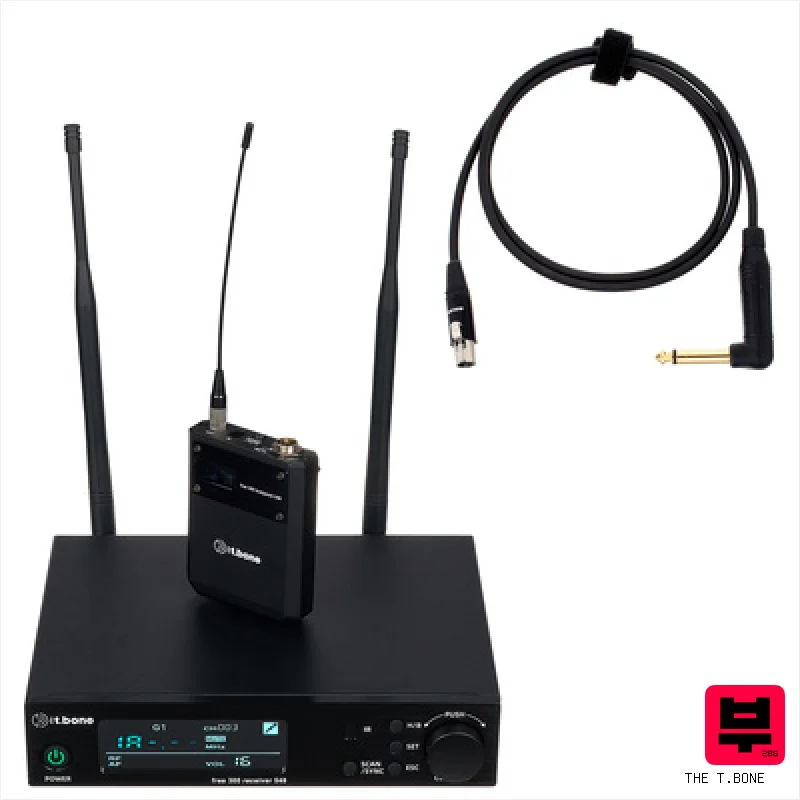
This t.bone Ovid System is a surprisingly clever little package for anyone on a tight budget wanting to mic their drums. The clip-on design makes it incredibly easy to set up, and the wireless compatibility is a neat bonus. It's perfect for beginner drummers or those needing a basic, portable drum mic solution.
Pros
- Lightweight condenser mic simplifies drum overhead/isolation mic setups
- Mini-XLR connector expands wireless system compatibility options
- Included phantom power adapter allows use without dedicated preamps
Cons
- Plastic case feels flimsy and offers minimal protection during transport
- Cardioid pattern limits versatility for capturing room ambience
-
This t.bone Ovid bundle is a clever, affordable solution for double bass players needing amplification or recording. The clip-on design is remarkably convenient, and the gooseneck provides good positioning. It's perfect for gigging musicians or home recording setups where a premium-priced, dedicated double bass microphone isn't in the budget.
Pros
- Gooseneck offers precise mic placement for double bass
- XLR phantom power adapter adds flexibility for various setups
- Modular clip protects instrument finish and simplifies mounting
Cons
- Gooseneck can be prone to accidental bumps and adjustments
- Sound quality won’t rival higher-end dedicated double bass mics
All 16 microphone bundles
Same index, same nightly prices — compact. Colour options of one model share a row. Tap a photo to zoom.
- 11
the t.bone Ovid System Guitar Bundlethe t.bone39Stable$91€81$91€81Check ↗
- 12
the t.bone Ovid System Cello Bundlethe t.bone39Stable$91€81$91€81Check ↗
- 13
the t.bone Ovid System Flute Bundlethe t.bone39Stable$91€81$91€81Check ↗
- 14
the t.bone Ovid System Piano Bundlethe t.bone39Stable$91€81$91€81Check ↗
- 15
the t.bone Ovid System Sax Bundlethe t.bone39Stable$91€81$91€81Check ↗
- 16
the t.bone Ovid System Violin Bundlethe t.bone39Stable$91€81$91€81Check ↗
Microphone Bundles by the numbers
Measured across all 16 models we track, not a sample.
Median $89 — half of all microphone bundles here cost less.
median of 5 models · 8"–8"
How to choose the best microphone bundles
Frequency Response
Don't expect a perfectly flat response. What we're looking for is a usable character - a little warmth for vocals, a bit of presence for acoustic instruments. Harsh peaks and muddy lows are dealbreakers.
Polar Patterns
Most of these bundles offer multiple patterns (cardioid, omni, figure-8). Cardioid is your bread and butter for vocals and instruments, while omni can be great for room tone or group recordings.
Build Quality
Plastic feels cheap, but it's often unavoidable at this price. We're looking for mics that feel reasonably solid and won't fall apart after a few gigs.
Self-Noise
Low self-noise is crucial for clean recordings. Anything above 15dB-A starts to become noticeable, especially on quieter sources like acoustic guitars or vocals.
Included Accessories
Cables, stands, and pop filters are essential. A decent stand makes a big difference - a flimsy tripod will just amplify vibrations.
Buying guide
Alright, so you're on a budget but need to mic something up - vocals, a rehearsal, a podcast, whatever. Spending a ton on a single mic isn't always the answer; sometimes a decent bundle gives you more flexibility. We've hunted down the best microphone bundles you can snag for under $100, focusing on bang-for-your-buck and what you actually get for your money, not just inflated marketing hype.
Let's be real, under $100 you're making compromises. You're probably looking at dynamic mics or condenser mics with smaller diaphragms - which means less detail and potentially more noise. Don't expect studio-grade clarity; these are for getting the job done, not chasing perfection.
Focus on versatility and a usable character - a mic that sounds 'good enough' in multiple situations is worth more than one that's amazing for a single application.
How the AudioFu Index works
Five measured signals and nothing else — no stars from strangers, no “tested by experts” we didn’t do. The weights are fixed and public. We don’t play these instruments; we measure the market around them.
This chart covers 16 microphone bundles from the Thomann catalogue. Before you buy, read hands-on reviews and, where you can, play it. Full methodology.
AudioFu earns a commission when you buy through our Thomann links. It never changes the order — the index does.
- Demand40%
How many of this exact model are for sale on Reverb right now — what musicians actually buy and resell.
- Lineup20%
How many finishes Thomann stocks — makers expand the models that sell.
- Price15%
Where the price has moved since we started tracking in August.
- Specs15%
How completely the maker documents it.
- Maker10%
How deep the brand’s range is in this category.
Questions
Are these mics any good for vocals?
Some are surprisingly decent for vocals, especially if you're okay with a slightly colored sound. Don't expect pristine, airy vocals like you'd get with a high-end condenser, but they can work well with some EQ and compression. Dynamics are generally more forgiving for louder vocalists.
Can I use these for recording drums?
You can, but don't expect miracles. They're better suited for a single overhead or snare than a full drum kit. The low-end thump might be lacking, and you'll need to be careful with gain staging to avoid distortion.
What's the difference between a dynamic and condenser mic in this price range?
Dynamics are generally tougher, less sensitive, and handle higher SPLs better - great for loud sources. Condensers are more sensitive, potentially offering more detail, but are noisier and require phantom power. At this price, the condenser's detail often comes with more self-noise.
Do I need a pop filter?
Absolutely. Plosives (those harsh 'p' and 'b' sounds) can ruin a vocal recording. A pop filter is cheap insurance against that. Even a DIY solution (like pantyhose stretched over a wire hanger) is better than nothing.
What about phantom power?
Condenser mics need phantom power (48V), supplied by your audio interface or mixer. Dynamic mics don't. Make sure your gear can provide phantom power if you're buying a condenser bundle.