
Best Arturia Master Keyboards (up to 25 Keys) 2026
Premium Arturia master keyboards (up to 25 keys) - legendary tone and craftsmanship
Last updated: September 29, 2026
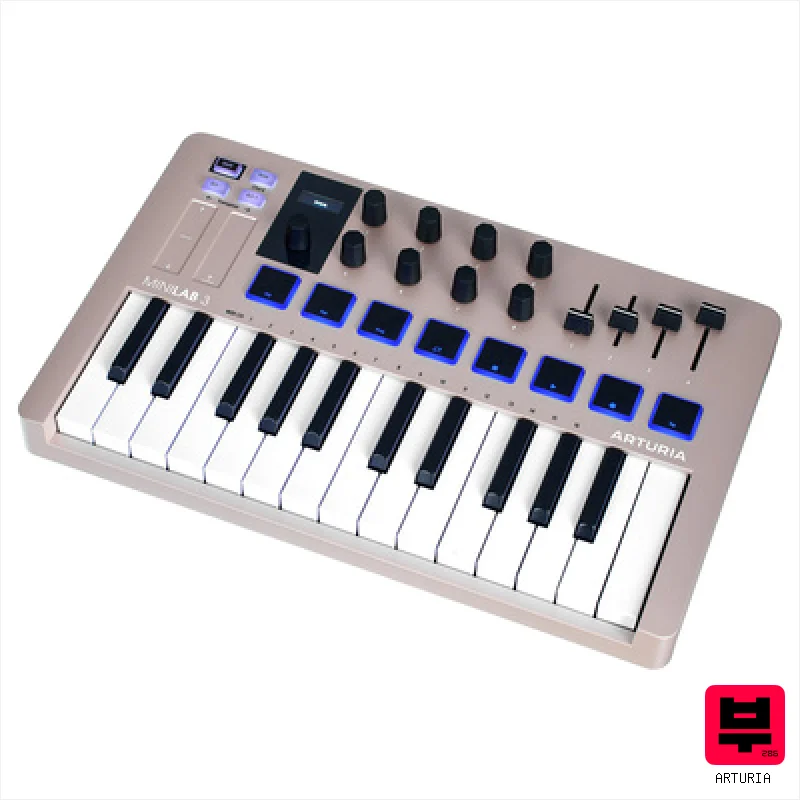
Arturia MiniLab 3 Champagne
- • USB-C bus powered means no extra power bricks needed.
- • Limited to just 25 keys for a full keyboard.
- • No built-in sounds or built-in synthesizer.
- • Requires separate software and instruments to play.
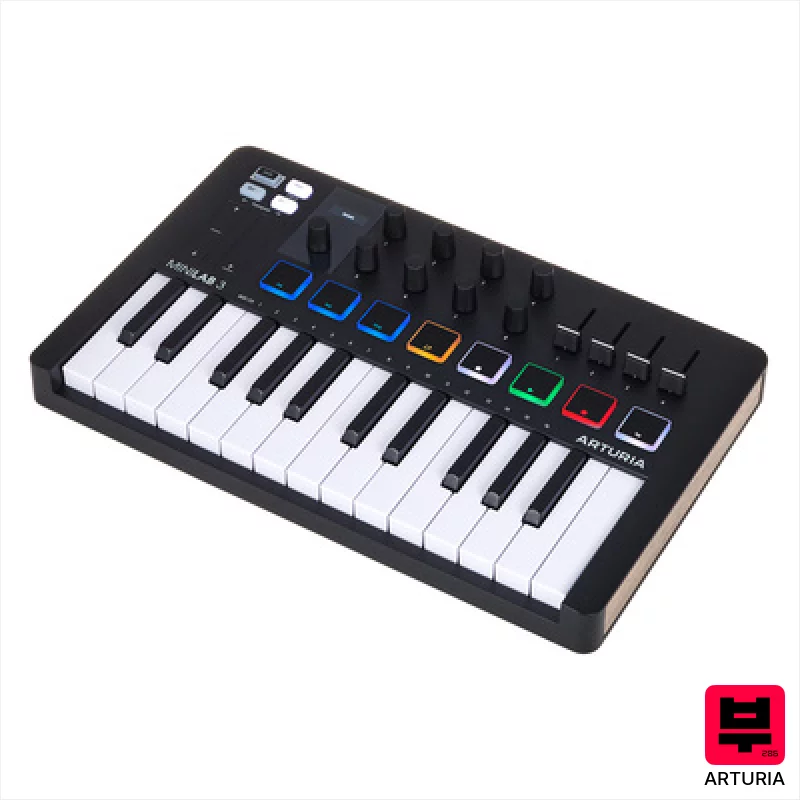
Arturia MiniLab 3 Black
- • Excellent build quality for the size; feels solid and well-assembled.
- • The OLED display is a significant upgrade, offering clear visual feedback.
- • NKS compatibility unlocks a massive library of instruments instantly.
- • Compact size and USB bus-power make it supremely portable and convenient.
- • 25 keys limit creativity for complex chord progressions and arrangements.
- • Slim keys can feel cramped for players with larger hands or experience.
- • Assignable encoders lack dedicated detents, making precise adjustments tricky.

Arturia MiniLab 3 White
- • Excellent value; the included Komplete Select is a huge bonus.
- • The OLED display is crisp and genuinely useful for parameter identification.
- • Slim keys offer surprising playability for a mini-keyboard.
- • Assignable encoders and faders provide flexible control over software.
- • The mini-keys are undeniably cramped; not ideal for extended piano playing.
- • Plastic build feels a little budget-oriented, though surprisingly sturdy.
- • Limited key range restricts certain chord voicings and playing styles.
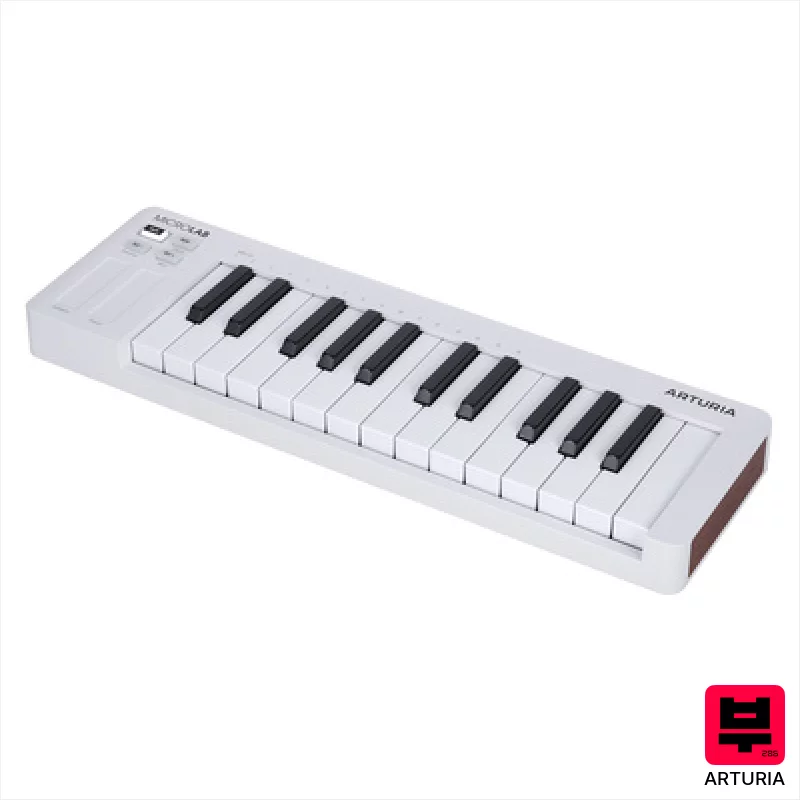
Arturia MicroLab Mk3 White
- • Compact size ideal for travel and tight workspaces
- • Velocity-sensitive keys offer surprisingly expressive playing feel
- • Chord mode is genuinely useful for quick arrangement ideas
- • Software bundle (Analog Lab Intro) provides immediate creative utility
- • 25 keys severely limits playing complex chords/voicings
- • Plastic build feels a bit flimsy despite reasonable weight
- • Limited knob/fader options restrict detailed DAW control
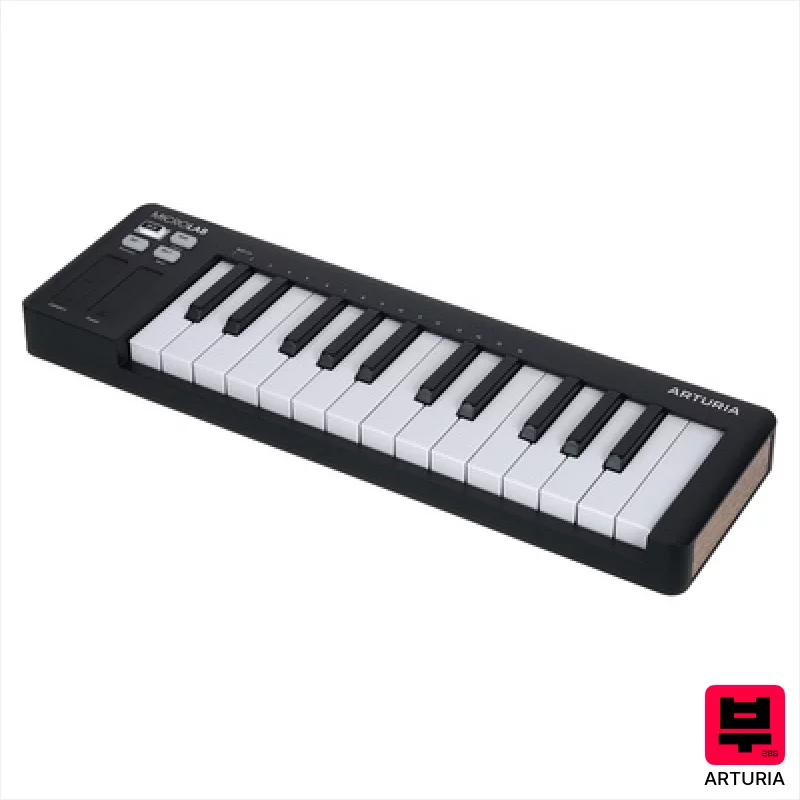
Arturia MicroLab Mk3 Black
- • Surprisingly solid build for its size; matte black finish resists fingerprints
- • Chord mode is genuinely useful for quick arrangement ideas
- • Compact footprint makes it ideal for travel or small studios
- • Software bundle provides immediate creative options – Analog Lab Intro is a bonus
- • 25 keys severely limits playing complex pieces comfortably
- • Slim keys lack the feel of a full-sized, actioned keyboard
- • USB-C only connection might require an adapter for older systems
Master Keyboards (up to 25 Keys) by the numbers
Measured across all 39 models in this category, so «wide», «short» or «expensive» mean something you can check.
How This List Is Built
We don't play these instruments — we're a catalog, not a review desk, and we'd rather say so than pretend otherwise. This page covers 5 of 39 master keyboards (up to 25 keys) from the Thomann catalogue, which is the largest single source of specification data in this category: 5 in detail, the rest listed with their specifications.
Position is computed, not curated. We parse the manufacturer's own description into actual values — nut width, scale, fret count, fingerboard radius, size, alloy — and rank on them: how many specifications a model has published, how many of them are measurable numbers, and how precisely it meets this page's criterion. A product image adds a little. Price is not a ranking signal: it tells you nothing about whether a neck fits your hand. The same inputs always produce the same order, so nothing here is shuffled to look fresh.
What this list is good for: narrowing a category down to a shortlist by spec and budget. What it isn't: a substitute for hearing an instrument. Before you buy, read hands-on reviews and, where you can, play it. Full methodology.
How to Choose the Best Master Keyboards (up to 25 Keys)
Budget Planning
- • Under $200: Entry-level
- • $200-$500: Intermediate
- • $500-$1000: Advanced
- • $1000+: Professional
Quality Check
- • Sound clarity & tone
- • Build materials & finish
- • Hardware durability
- • Overall craftsmanship
Key Features
- • Your musical style
- • Skill level match
- • Intended use case
- • Brand reputation

