
Best Line Arrays for Beginner 2026
So, you're thinking about a line array? That's a big step up from a couple of powered monitors, no doubt. They're not just for stadium rock acts anymore, but they are a commitment. Let's cut through the marketing hype and figure out which line arrays are actually practical for someone just starting to explore the world of larger PA systems - because throwing a stack of drivers at a gig isn't always the answer.
Last updated: April 11, 2026

the box pro A 8 LA Line Array Module
- • Eighteen Sound transducers deliver a remarkably clean, articulate sound.
- • SHARC processor provides excellent DSP control and preset flexibility.
- • Class D amplifier ensures efficient power delivery with minimal heat.
- • Robust European construction promises longevity and road-worthiness.
- • The 27.5 kg weight makes transport and rigging a two-person job.
- • 100° x 10° dispersion might be too wide for some focused applications.
- • Lacks a built-in Dante option, limiting network integration.

dB Technologies DVA K5
- • DigiPro G3 amps deliver clean, powerful headroom.
- • Horn-loaded midrange provides excellent clarity and projection.
- • Bandpass woofer design enhances low-frequency response and efficiency.
- • Integrated flyware simplifies rigging for line array configurations.
- • Power twist connector omission is a frustrating, cost-saving detail.
- • Plastic housing, while lightweight, might feel less robust than metal alternatives.
- • Limited versatility; primarily designed for line array configurations.
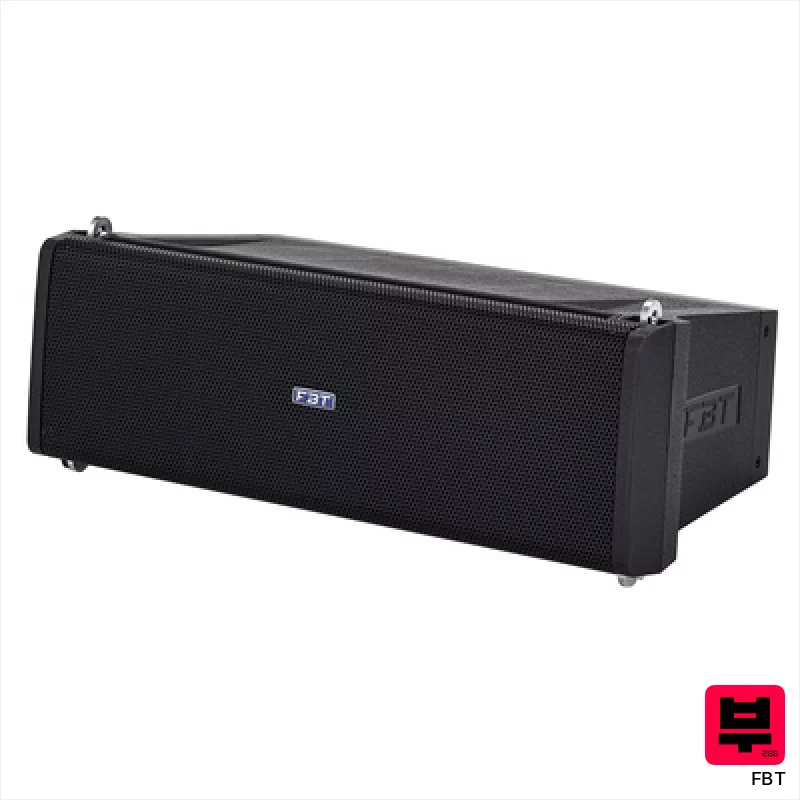
FBT Mitus 206LA
- • Birch multiplex housing offers excellent resonance damping and durability.
- • Class-D bi-amp delivers clean power and efficient headroom.
- • DSP presets simplify setup and optimize sound for various applications.
- • Compact size and relatively low weight (for a line array) aid portability.
- • 10° vertical coverage is restrictive; requires careful aiming or additional modules.
- • Limited horizontal dispersion demands precise placement for even coverage.
- • While powerful, lacks sub-bass extension for truly full-range applications.
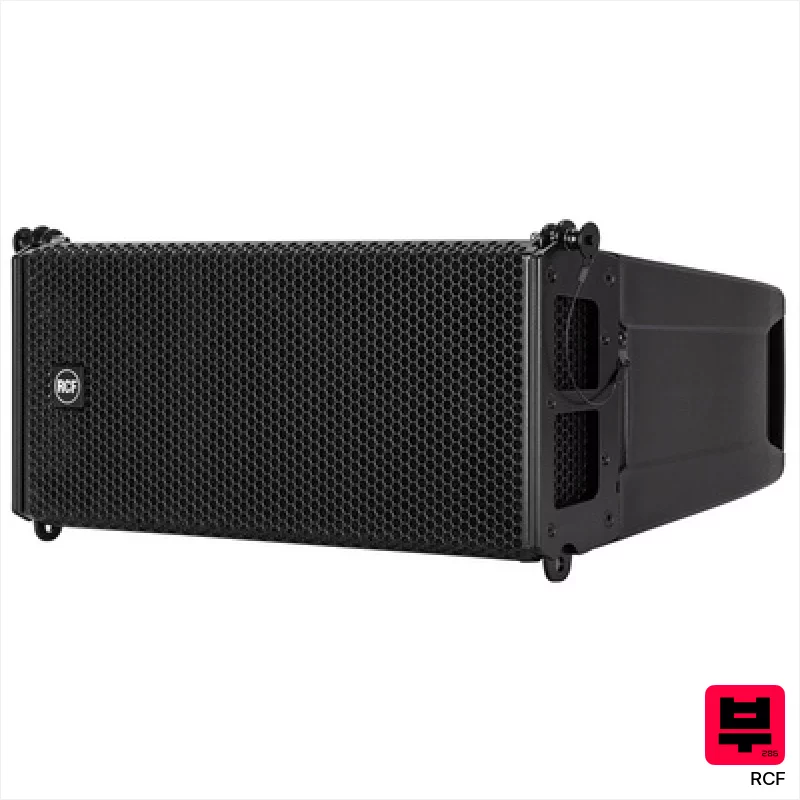
RCF HDL 6-A
- • Excellent clarity and headroom thanks to the digital bi-amp design
- • RCF's woofer construction delivers tight, controlled low-end response
- • The adjustable waveguide offers precise coverage control for various venues
- • Robust build quality; feels solid and ready for demanding touring applications
- • Vertical coverage is limited to 10° per module, requiring more modules for wider throws
- • Weight makes handling and transport a two-person job, especially when rigged
- • DSP presets may require tweaking for optimal performance in different environments
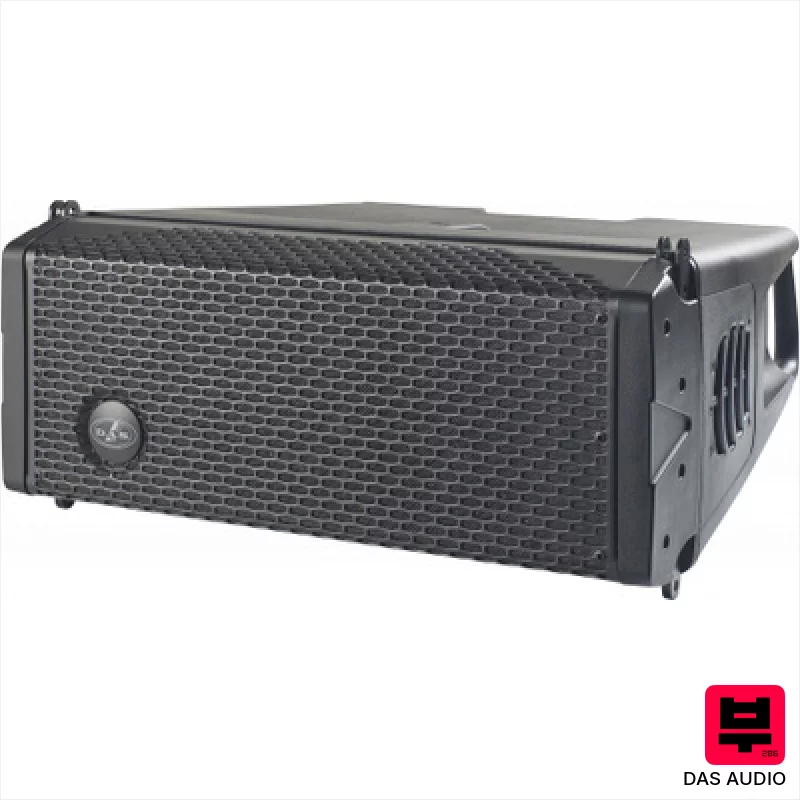
DAS Audio EVENT-26A
- • Robust polypropylene housing offers excellent durability for touring.
- • DAScontrol LCD provides intuitive, precise DSP control on-board.
- • FIR filtering delivers clean, predictable sound with minimal distortion.
- • Fast-set splay system simplifies array configuration and rigging.
- • Polypropylene, while durable, can feel less premium than metal enclosures.
- • Weight, while manageable, requires two people for comfortable handling.
- • Limited low-frequency extension necessitates subwoofer pairing for full-range applications.
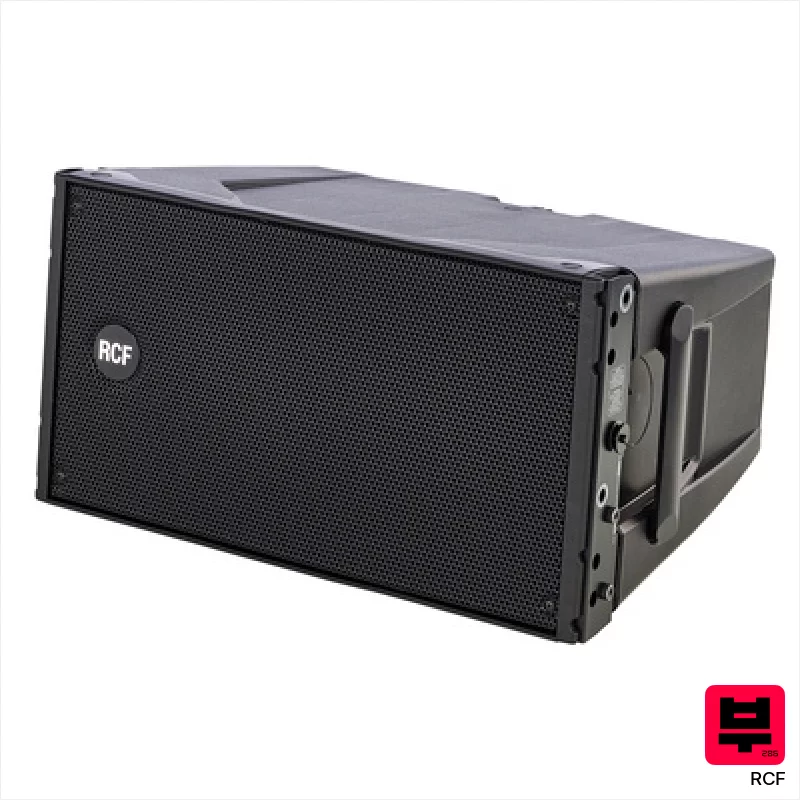
RCF HDL 10-A
- • Excellent clarity and punch from the neodymium HF driver.
- • Robust woofer construction handles demanding low-frequency reproduction.
- • DSP provides genuinely useful and transparent tonal shaping options.
- • Adjustable angles offer versatility for various room configurations.
- • The weight makes transport and rigging a two-person job regularly.
- • While versatile, it's primarily designed for direct sound reinforcement.
- • The 15° vertical dispersion might be too narrow for some applications.
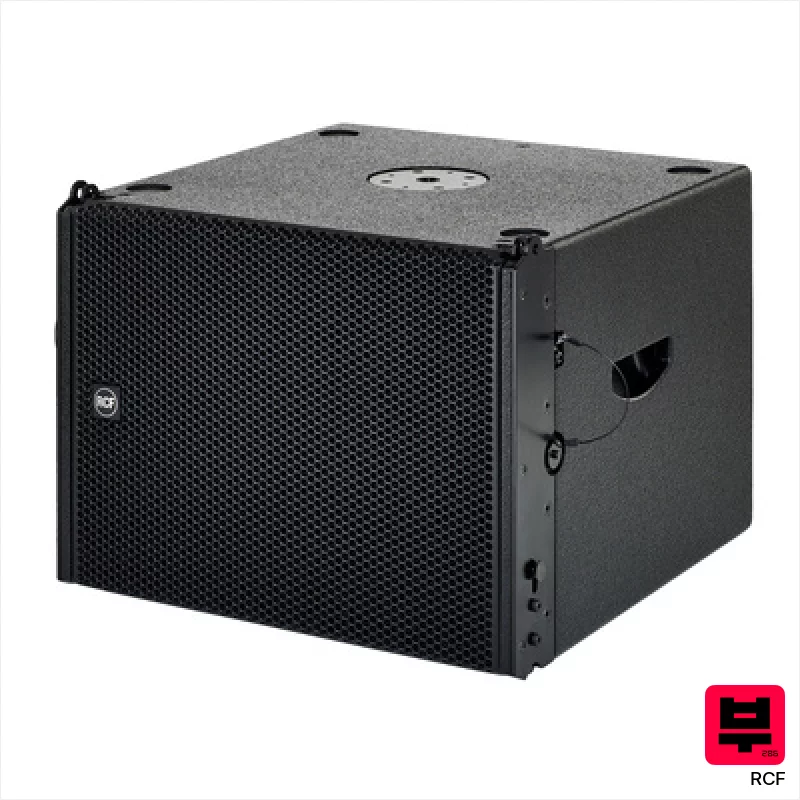
RCF HDL 12-AS
- • Robust neodymium woofer delivers tight, impactful low-end response.
- • DSP provides excellent system optimization and predictable coverage.
- • Cluster configuration offers flexibility for varied venue sizes and setups.
- • Bi-amped design ensures clean power and headroom for demanding applications.
- • Weight makes transport and setup a two-person job, realistically.
- • Frequency response leans heavily towards the low end, limiting upper midrange clarity.
- • Rigging hardware is an optional extra, adding to overall cost.
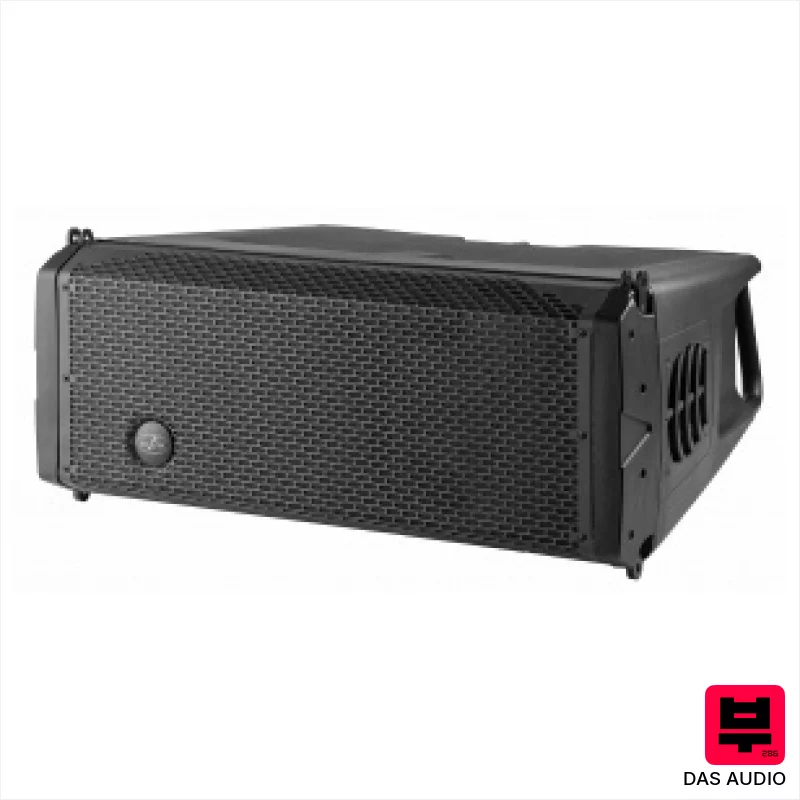
DAS Audio EVENT-28A
- • Excellent clarity and punch from the HT driver.
- • Robust polypropylene housing provides durability and weather protection.
- • DAScontrol LCD offers intuitive and precise DSP adjustments.
- • Rigging system allows for flexible array configurations up to 16 units.
- • Weight (20.5kg) makes transport and setup a two-person job.
- • Narrow vertical dispersion (10°) limits use in certain room scenarios.
- • Polypropylene housing, while durable, lacks the premium feel of metal.

the box pro A 10 LA Line Array Module
- • Robust European build quality ensures durability for frequent touring.
- • Integrated DSP presets simplify setup and optimize sound for various applications.
- • Pronet CanBus networking provides seamless integration with other pro audio equipment.
- • High max SPL of 131 dB delivers substantial headroom for demanding live performances.
- • 40 kg weight makes transport and rigging a two-person job.
- • Limited vertical dispersion (10°) restricts flexibility in complex room acoustics.
- • Premium-priced, potentially a barrier for smaller bands or budget-conscious users.

Seeburg Acoustic Line Galeo S 100 Line Array Bundle
- • Baltic birch construction ensures exceptional rigidity and resonance control.
- • Neodymium drivers provide efficient power and reduced overall system weight.
- • Integrated rigging mechanics simplify complex line array configurations safely.
- • Wide 100° x 16° coverage minimizes dead spots in larger venues.
- • At 13.5 kg per module, handling becomes tiring during frequent setups.
- • 16 Ohm impedance demands careful amplifier selection and power management.
- • Limited vertical dispersion (16°) restricts adaptability for certain room shapes.

the box pro A 8 LA Line Array Basic Set
- • Eighteen Sound transducers deliver exceptional clarity and headroom.
- • SHARC processor offers precise DSP control for tailored sound.
- • Robust European construction ensures durability for touring applications.
- • Flying frame design simplifies rigging and allows for scalable configurations.
- • The substantial weight (27.5 kg per module) demands a strong handling crew.
- • Beam angle is relatively wide, limiting vertical control in some situations.
- • Premium-priced, making it a significant investment for smaller venues.
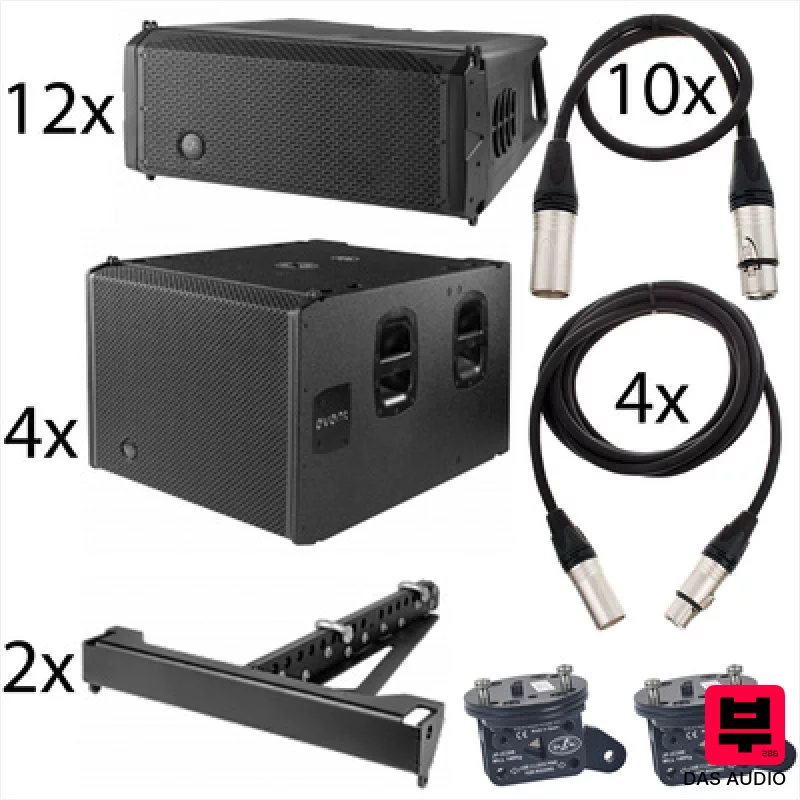
DAS Audio EVENT 12x28A/4x118A Bundle
- • Birch plywood construction ensures robust durability and resonance.
- • Class-D amplification offers efficiency and ample clean power.
- • Integrated FIR-filter delivers exceptionally clear and controlled sound.
- • Riggable design simplifies complex line array configurations for touring.
- • The substantial weight demands careful handling and robust transport solutions.
- • Premium-priced, representing a significant investment for smaller operations.
- • Low-frequency extension, while powerful, might lack sub-bass for certain genres.
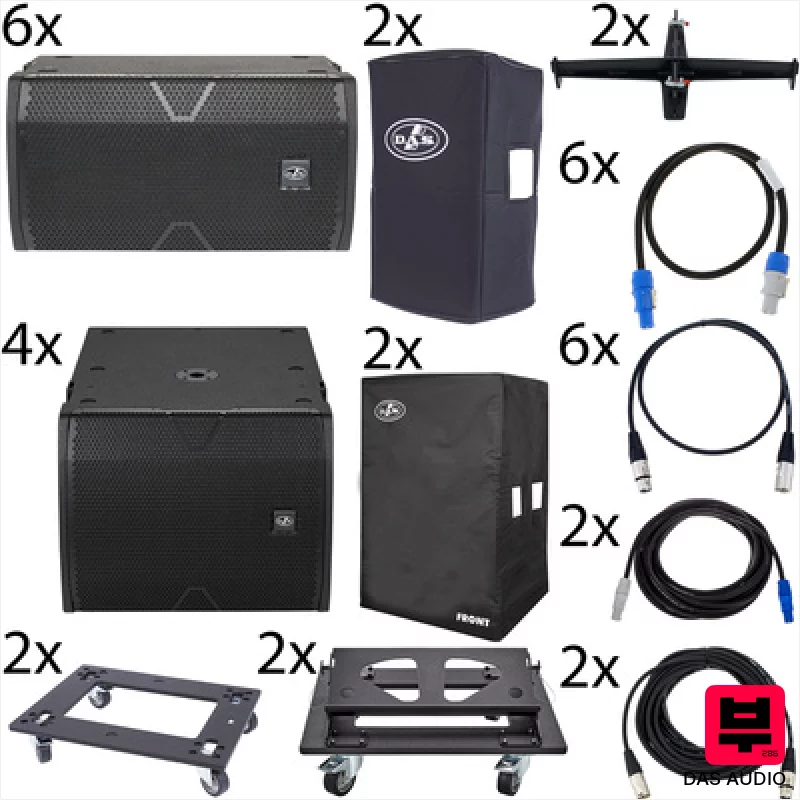
DAS Audio Vantec 6x20A/4x118A Bundle
- • Impressive SPL output for large venues and demanding applications.
- • DAS's DSP provides excellent control over voicing and tuning.
- • The Vantec-118A subs deliver tight, impactful low-end extension.
- • Robust construction suggests long-term reliability under touring conditions.
- • Significant weight makes transportation and setup a logistical challenge.
- • The 90° x 15° vertical coverage might be restrictive for wider stages.
- • Premium-priced, representing a substantial investment for smaller operations.
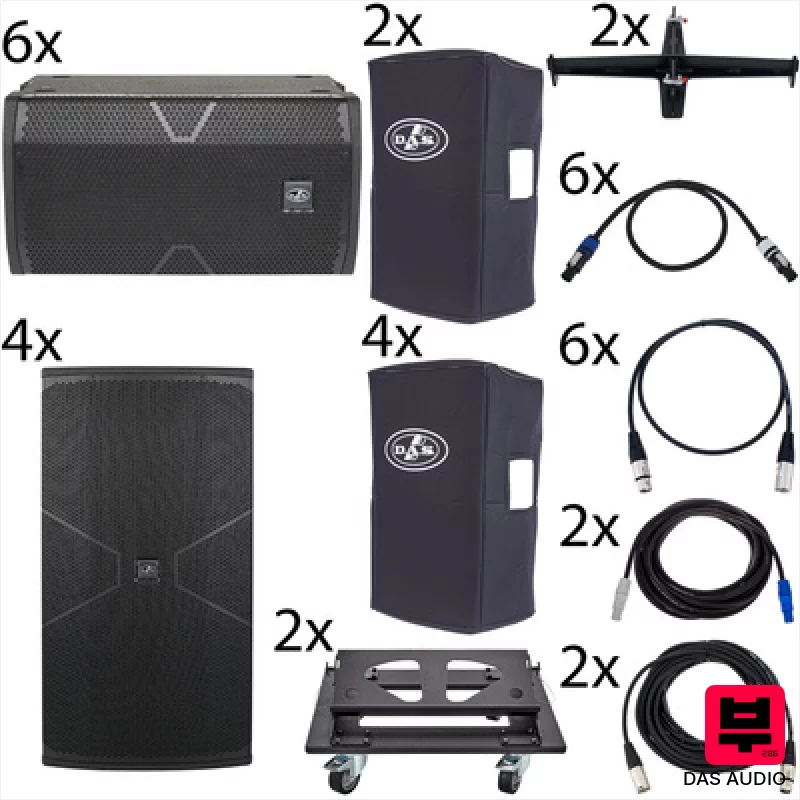
DAS Audio Vantec 6x20A/4x218A Bundle
- • Robust Class-D amplification ensures clean, powerful output across the spectrum.
- • Vantec-218A subs deliver serious low-end extension and headroom.
- • The line array design provides excellent coverage and controlled dispersion.
- • DAS Audio’s waveguide technology enhances clarity and minimizes feedback.
- • The substantial weight makes transportation and setup a two-person job.
- • The vertical dispersion of the Vantec-20A is relatively narrow, limiting flexibility.
- • The price point positions this bundle as a premium investment.

DAS Audio Vantec 6x20A/2x118A Bundle
- • Exceptional SPL output for its class, easily handling large venues.
- • The integrated DSP offers impressive control and tuning flexibility.
- • Robust Class-D amplification provides clean power and efficiency.
- • Vantec’s compact design allows for efficient rigging and transport.
- • The substantial weight makes handling a two-person job, even with proper equipment.
- • Line array dispersion can be restrictive for smaller, less controlled spaces.
- • Premium-priced, representing a significant investment for smaller operations.
How to Choose the Best Line Arrays
Portability
Line arrays, even smaller ones, can be heavy and awkward. Consider how you'll transport and set them up, especially if you're on your own or with a small crew. Weight and space in your vehicle are a huge factor.
Throw & Coverage
Line arrays are designed to project sound further and more evenly than point-source speakers. But a beginner doesn't need massive throw. Look for systems with manageable coverage angles - 90x60 degrees is a good starting point.
Ease of Rigging
Some line arrays require complex rigging systems with angles and bracing. As a beginner, you want something that's relatively straightforward to set up safely and accurately. Think about the learning curve and whether you'll need to hire a rigger.
Power & Headroom
You don't need a ton of wattage, but you do need enough headroom to handle unexpected peaks without the system distorting and sounding muddy. A good rule of thumb is to have at least 2-3 dB of headroom for dynamic music.
DSP & Processing
Built-in DSP (Digital Signal Processing) can be a lifesaver for shaping the sound and managing feedback. Look for systems with user-friendly EQ presets and high-pass filters, but don't get bogged down in complex routing options - simplicity is key.
Buying Guide
Don't fall for the 'line array magic' hype. Entry-level systems often cut corners on build quality and driver components, leading to a lack of clarity and potential reliability issues. Prioritize systems with decent waveguide design and a reasonable amplifier section - you'll hear the difference. Spending a little more upfront is almost always cheaper than replacing blown drivers down the line.
How This List Is Built
We don't play these instruments — we're a catalog, not a review desk, and we'd rather say so than pretend otherwise. This page ranks 15 line arrays from the Thomann catalogue, which is the largest single source of specification data in this category.
Position is computed, not curated. Four signals, in order of weight: how completely the manufacturer documents the instrument (number of published specifications), where it sits in the price range, how specific the model designation is — which filters out generic accessories — and whether a product image exists. The same inputs always produce the same order, so nothing here is shuffled to look fresh.
What this list is good for: narrowing a category down to a shortlist by spec and budget. What it isn't: a substitute for hearing an instrument. Before you buy, read hands-on reviews and, where you can, play it. Full methodology.

