
Best Line Arrays for Festivals 2026
Alright, so you're running a festival - that's a whole different ballgame than your local bar. Line arrays are basically mandatory for decent coverage and headroom at that scale, but picking the right one isn't just about throwing a bunch of speakers at the problem. It's about delivering clarity and punch across a massive field, handling feedback, and having enough power to handle a double-stacked doom metal band and a bluegrass quartet. Let's break down what to look for.
Last updated: July 1, 2026 • Next update: July 8, 2026

Seeburg Acoustic Line Galeo S 100 Line Array Bundle
- • Baltic birch construction ensures exceptional rigidity and resonance control.
- • Neodymium drivers provide efficient power and reduced overall system weight.
- • Integrated rigging mechanics simplify complex line array configurations safely.
- • Wide 100° x 16° coverage minimizes dead spots in larger venues.
- • At 13.5 kg per module, handling becomes tiring during frequent setups.
- • 16 Ohm impedance demands careful amplifier selection and power management.
- • Limited vertical dispersion (16°) restricts adaptability for certain room shapes.
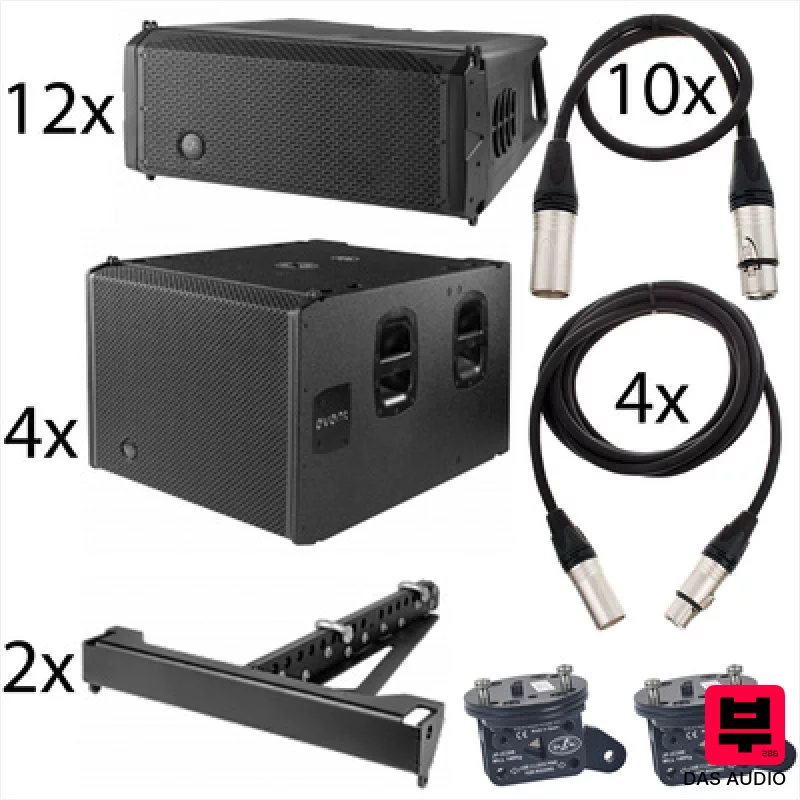
DAS Audio EVENT 12x28A/4x118A Bundle
- • Birch plywood construction ensures robust durability and resonance.
- • Class-D amplification offers efficiency and ample clean power.
- • Integrated FIR-filter delivers exceptionally clear and controlled sound.
- • Riggable design simplifies complex line array configurations for touring.
- • The substantial weight demands careful handling and robust transport solutions.
- • Premium-priced, representing a significant investment for smaller operations.
- • Low-frequency extension, while powerful, might lack sub-bass for certain genres.
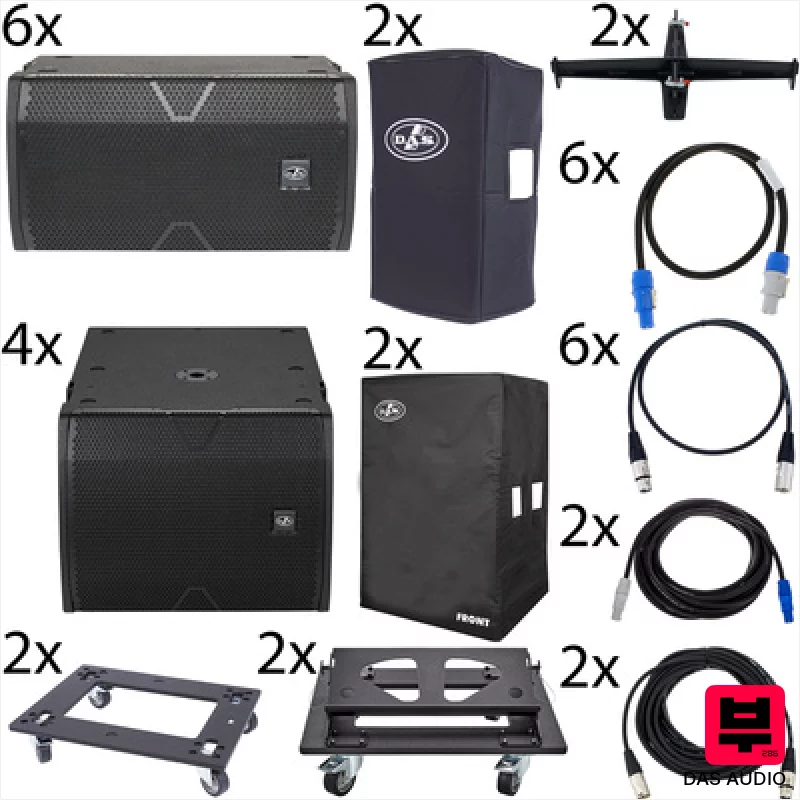
DAS Audio Vantec 6x20A/4x118A Bundle
- • Impressive SPL output for large venues and demanding applications.
- • DAS's DSP provides excellent control over voicing and tuning.
- • The Vantec-118A subs deliver tight, impactful low-end extension.
- • Robust construction suggests long-term reliability under touring conditions.
- • Significant weight makes transportation and setup a logistical challenge.
- • The 90° x 15° vertical coverage might be restrictive for wider stages.
- • Premium-priced, representing a substantial investment for smaller operations.

DAS Audio EVENT 8x26A/4x115A Bundle
- • Exceptional clarity and punch from the EVENT-26A modules.
- • The EVENT-115A subs deliver substantial low-end extension.
- • DAScontrol LCD provides detailed system monitoring and control.
- • Robust build quality; evident in the metal chassis and internal bracing.
- • The overall weight makes transport and setup demanding for smaller teams.
- • The beam angle is relatively narrow, limiting versatility in wider spaces.
- • Premium-priced, representing a significant investment for smaller venues.

Seeburg Acoustic Line Galeo S 100
- • Baltic birch construction ensures exceptional durability and resonance.
- • Neodymium drivers provide a lightweight design without sacrificing power.
- • 126dB SPL delivers impressive volume for medium-to-large venues.
- • Integrated rigging mechanics simplify setup and deployment for touring.
- • 16 Ohm impedance requires careful amplifier selection and power management.
- • Limited vertical coverage (16°) restricts adaptability in certain room configurations.
- • Polyurea coating, while durable, might show wear with heavy use.

dB Technologies DVA K5
- • DigiPro G3 amps deliver clean, powerful headroom.
- • Horn-loaded midrange provides excellent clarity and projection.
- • Bandpass woofer design enhances low-frequency response and efficiency.
- • Integrated flyware simplifies rigging for line array configurations.
- • Power twist connector omission is a frustrating, cost-saving detail.
- • Plastic housing, while lightweight, might feel less robust than metal alternatives.
- • Limited versatility; primarily designed for line array configurations.
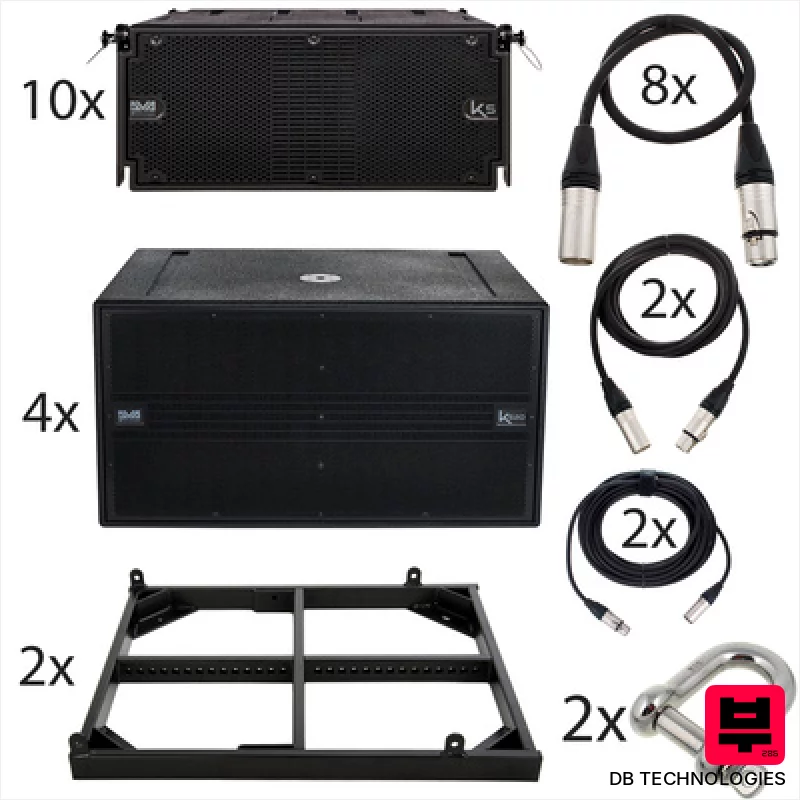
dB Technologies DVA 10xK5/4xKS20 Bundle
- • KS20 subs offer seriously deep, controlled low-end extension.
- • K5 modules provide a remarkably clear and even soundstage.
- • Digipro G3 amplifiers deliver clean, efficient power.
- • Robust bandpass woofer design minimizes unwanted cabinet resonance.
- • The overall system weight makes transport a significant undertaking.
- • Line array design limits versatility for non-line array applications.
- • Premium-priced, requiring a substantial investment.
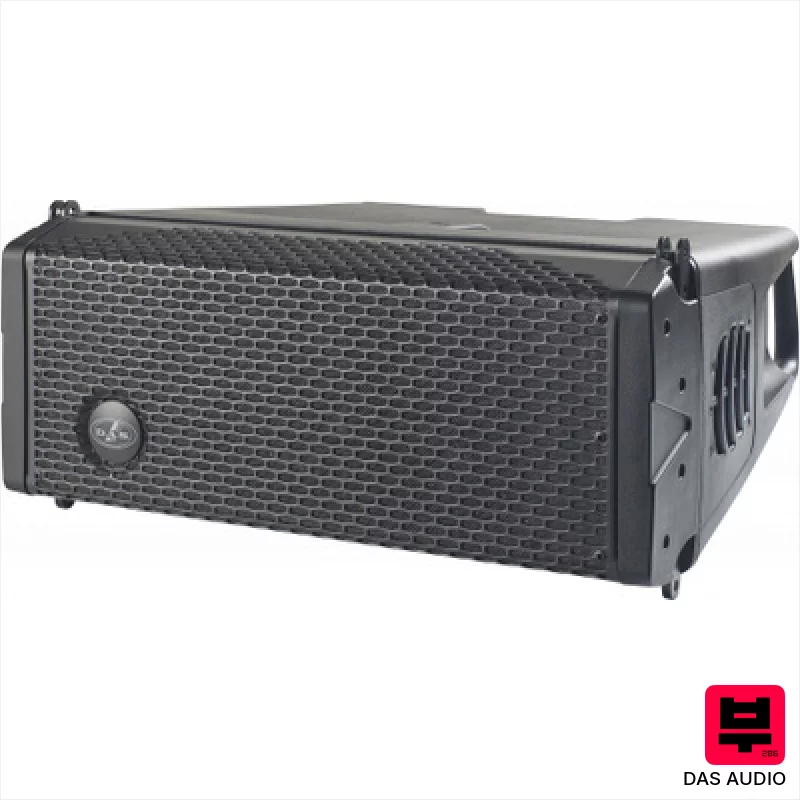
DAS Audio EVENT-26A
- • Robust polypropylene housing offers excellent durability for touring.
- • DAScontrol LCD provides intuitive, precise DSP control on-board.
- • FIR filtering delivers clean, predictable sound with minimal distortion.
- • Fast-set splay system simplifies array configuration and rigging.
- • Polypropylene, while durable, can feel less premium than metal enclosures.
- • Weight, while manageable, requires two people for comfortable handling.
- • Limited low-frequency extension necessitates subwoofer pairing for full-range applications.

QSC LA112 Line Array Bundle
- • Exceptional clarity and power thanks to the polyimide compression drivers.
- • QSC SysNav simplifies complex array configuration and optimization.
- • RapidDeploy Rigging System drastically reduces setup time and labor.
- • LEAF waveguide ensures predictable and controlled sound dispersion patterns.
- • The substantial weight makes transport and handling a serious consideration.
- • High-end price point positions it firmly within professional touring budgets.
- • While versatile, optimal performance is best suited for larger venues.

DAS Audio Vantec 6x20A/2x118A Bundle
- • Exceptional SPL output for its class, easily handling large venues.
- • The integrated DSP offers impressive control and tuning flexibility.
- • Robust Class-D amplification provides clean power and efficiency.
- • Vantec’s compact design allows for efficient rigging and transport.
- • The substantial weight makes handling a two-person job, even with proper equipment.
- • Line array dispersion can be restrictive for smaller, less controlled spaces.
- • Premium-priced, representing a significant investment for smaller operations.

the box pro A 10 LA Line Array Module
- • Robust European build quality ensures durability for frequent touring.
- • Integrated DSP presets simplify setup and optimize sound for various applications.
- • Pronet CanBus networking provides seamless integration with other pro audio equipment.
- • High max SPL of 131 dB delivers substantial headroom for demanding live performances.
- • 40 kg weight makes transport and rigging a two-person job.
- • Limited vertical dispersion (10°) restricts flexibility in complex room acoustics.
- • Premium-priced, potentially a barrier for smaller bands or budget-conscious users.
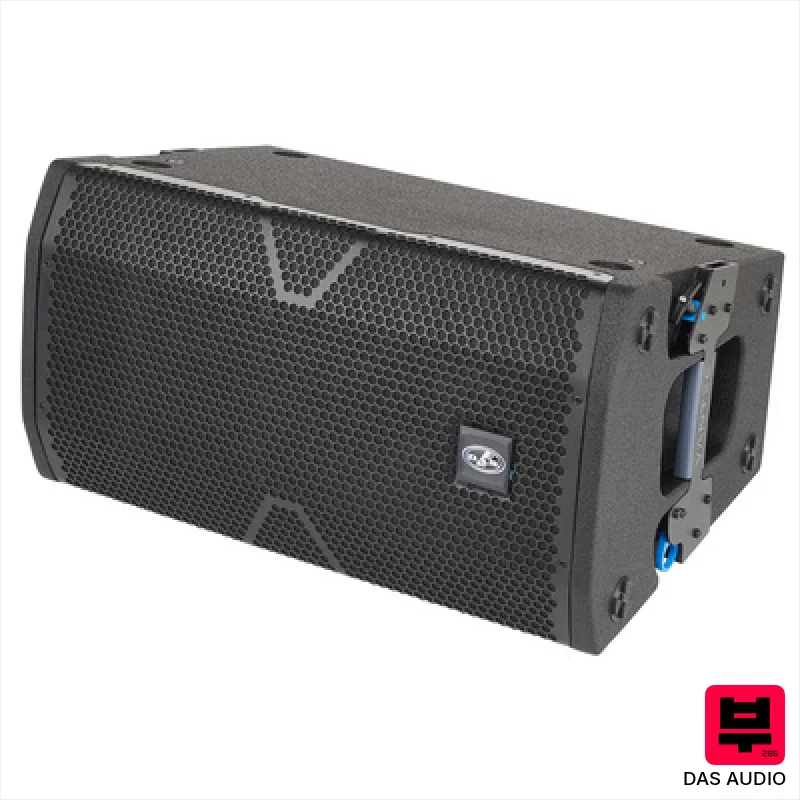
DAS Audio Vantec-20A
- • Excellent clarity and punch from the 1” compression driver, surprisingly detailed.
- • Robust Class-D amplifier delivers serious headroom without overheating.
- • Integrated DSP offers genuine flexibility for precise sound shaping.
- • DASlink app provides intuitive remote control and group management capabilities.
- • Weight at 28.5kg makes transport and rigging a two-person job.
- • Vertical dispersion of 15° limits flexibility in some room configurations.
- • While versatile, the 90° horizontal coverage might require more units for larger spaces.
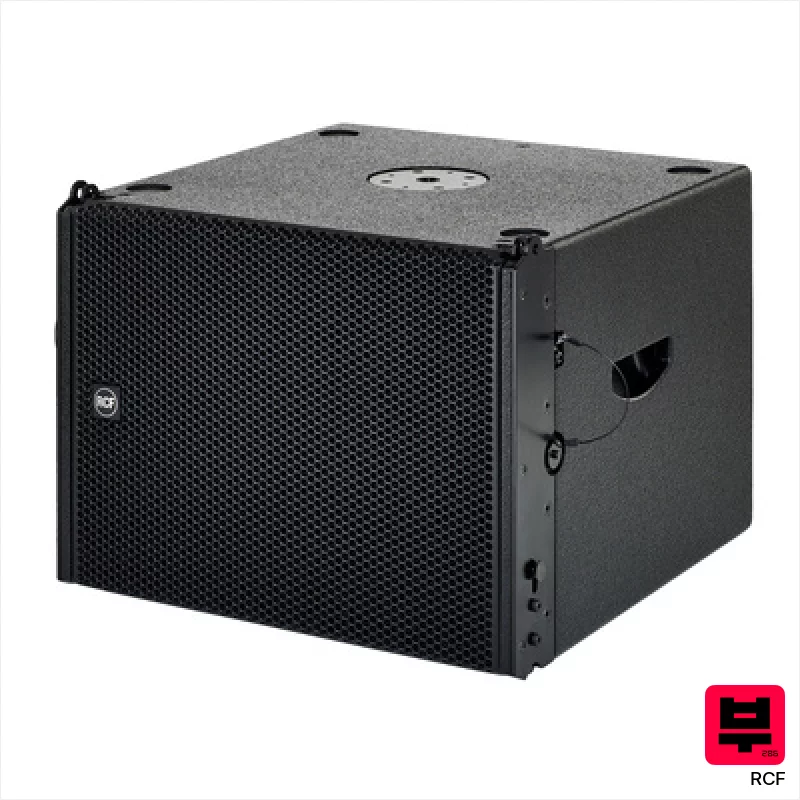
RCF HDL 12-AS
- • Robust neodymium woofer delivers tight, impactful low-end response.
- • DSP provides excellent system optimization and predictable coverage.
- • Cluster configuration offers flexibility for varied venue sizes and setups.
- • Bi-amped design ensures clean power and headroom for demanding applications.
- • Weight makes transport and setup a two-person job, realistically.
- • Frequency response leans heavily towards the low end, limiting upper midrange clarity.
- • Rigging hardware is an optional extra, adding to overall cost.

the box pro A 8 LA Line Array Module
- • Eighteen Sound transducers deliver a remarkably clean, articulate sound.
- • SHARC processor provides excellent DSP control and preset flexibility.
- • Class D amplifier ensures efficient power delivery with minimal heat.
- • Robust European construction promises longevity and road-worthiness.
- • The 27.5 kg weight makes transport and rigging a two-person job.
- • 100° x 10° dispersion might be too wide for some focused applications.
- • Lacks a built-in Dante option, limiting network integration.
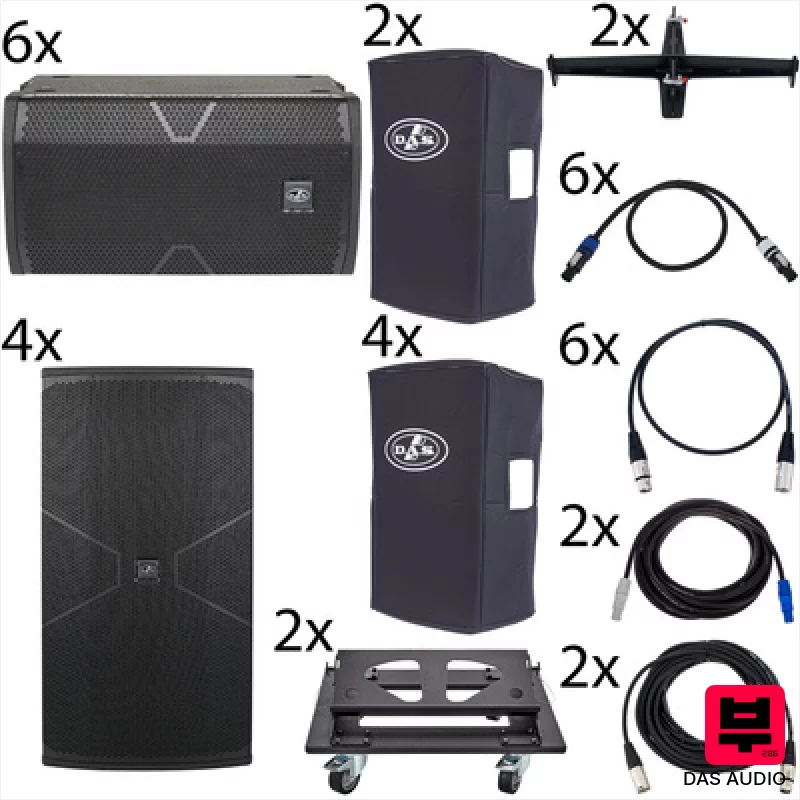
DAS Audio Vantec 6x20A/4x218A Bundle
- • Robust Class-D amplification ensures clean, powerful output across the spectrum.
- • Vantec-218A subs deliver serious low-end extension and headroom.
- • The line array design provides excellent coverage and controlled dispersion.
- • DAS Audio’s waveguide technology enhances clarity and minimizes feedback.
- • The substantial weight makes transportation and setup a two-person job.
- • The vertical dispersion of the Vantec-20A is relatively narrow, limiting flexibility.
- • The price point positions this bundle as a premium investment.
How to Choose the Best Line Arrays
Coverage & Throw
Festivals demand serious distance. You need a system that can consistently deliver intelligible sound to the back of the field without resorting to excessive volume that creates feedback and muddiness. Look at the manufacturer's coverage patterns - don't just take their word for it, test it.
Low-End Extension & Clarity
That low-end thump is essential for driving the energy, but it can't be just a blurry rumble. You want defined, articulate bass that doesn't smear the mids. Many cheaper arrays sacrifice clarity for sheer volume in the low end - it sounds good from 50 feet away, a mess up close.
Midrange Definition & Vocal Clarity
Vocals are king at a festival. You need a system that cuts through the chaos without sounding harsh or brittle. That "fat midrange honk" is crucial for making vocals sit well in the mix, and avoiding that ice-picky top end that will make everyone cringe.
Headroom & Transient Response
Festivals aren't predictable. You need headroom to handle unexpected peaks and dynamic shifts - a sudden blast beat or a screaming vocalist. A system with poor transient response will sound compressed and lifeless, losing all the nuances of the performance.
Rigging & Tuning
Let's be honest, rigging a line array is a pain. Consider the weight of the boxes, the ease of setup, and the availability of accessories. A system that's a nightmare to rig will cost you time and money in labor - and a poorly tuned array sounds terrible regardless of its inherent quality.
Buying Guide
Don't chase the biggest numbers. A system with slightly less power but better efficiency and a more refined sound will always outperform a brute force solution. Pay attention to the waveguide design - it's a huge factor in coverage and clarity. And seriously, factor in rigging costs and labor - a cheap system becomes expensive fast when you have to pay someone to wrestle it into place.
Our Methodology
We're not looking at spec sheets here. We've spent years hauling gear, running soundchecks, and sweating it out on stage, so our evaluations are based on real-world performance - how a system sounds in a space, how it handles dynamics, and how easy it is to rig and tune. We A/B test against other systems in similar environments, paying close attention to detail and listening for those subtle tonal nuances that separate the good from the truly great.

