
Best Interface Modules Under $1,000 2026
Alright, so you're diving into modular and realizing the Eurorack ecosystem can eat your wallet alive fast. Interface modules are essential - you need to get that sweet analog signal into your computer for recording or routing it for live performance. Let's be honest, dropping a grand on an interface module is overkill for most of us, so we're hunting down the best bang-for-your-buck options under $1000 - gear that won't leave you eating ramen for a month.
Last updated: April 11, 2026

Expert Sleepers Super Disting EX Plus Alpha
- • Exceptional algorithm flexibility; truly a Swiss Army knife for synthesis.
- • Spitfire Audio/Goldbaby sample content provides immediate creative inspiration.
- • DC-coupled CV connections allow for true bipolar modulation ranges.
- • Robust build quality; the OLED screen feels premium and the encoders are smooth.
- • Steep learning curve; requires significant time investment to master.
- • Power hungry; demands a robust power supply to avoid instability.
- • The interface, while functional, can feel visually dense and overwhelming.

ADDAC 220 Dual Envelope Follower+
- • Analog input stage provides warmth and musicality to the followed signal.
- • Flexible response curve (log to exp) offers nuanced envelope shaping.
- • Dual channel operation allows for complex stereo processing and creative routing.
- • Average output provides a useful, predictable control signal for modulation.
- • 10HP footprint can be restrictive in smaller modular systems.
- • Limited input headroom; may clip with very hot signals without careful gain staging.
- • Digital processing, while flexible, introduces a slight latency compared to purely analog followers.
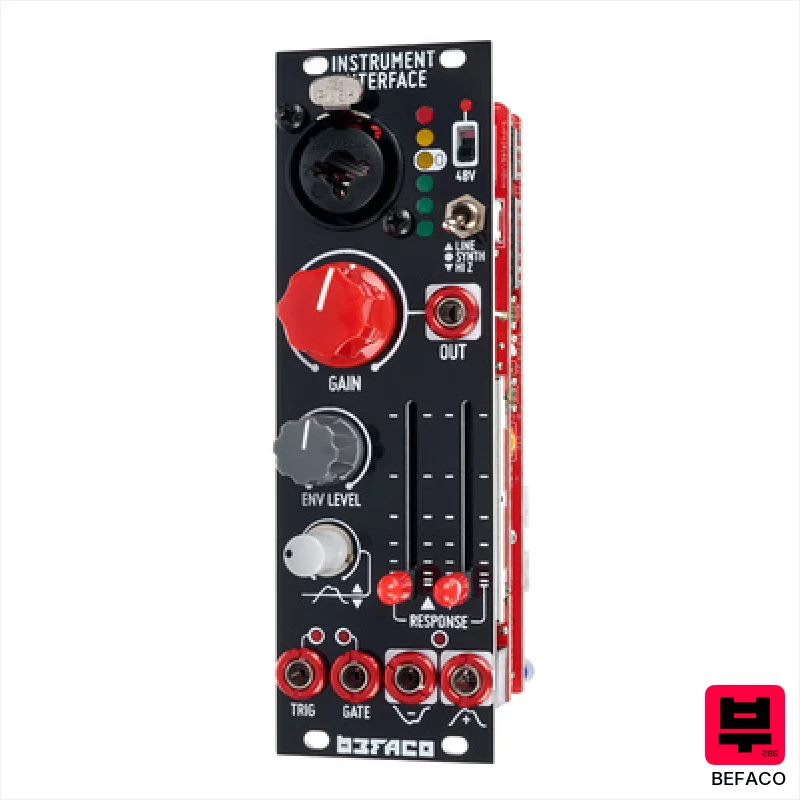
Befaco I4 Instrument Interface
- • Excellent preamps deliver clean, detailed signal amplification
- • Envelope follower offers precise control over modular modulation
- • Phantom power simplifies mic integration without external power supplies
- • Compact 8HP form factor maximizes space in tight Eurorack setups
- • Limited input gain range may struggle with extremely quiet signals
- • Envelope follower’s sensitivity can be tricky to dial in consistently
- • Lack of MIDI connectivity restricts its versatility as a standalone interface
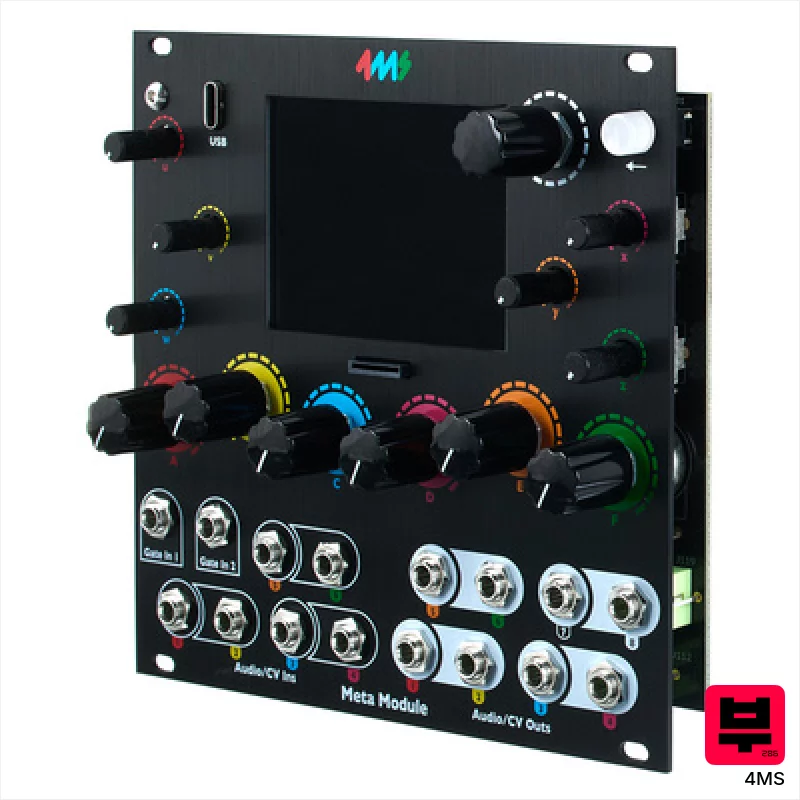
4ms Meta Module
- • Seamless VCV Rack integration expands sonic possibilities significantly.
- • Rotary controls offer surprisingly nuanced parameter tweaking.
- • Pre-installed module library provides immediate creative exploration.
- • Compact 26HP footprint maximizes valuable rack space.
- • Reliance on software means no purely analog standalone operation.
- • Limited RAM might restrict very large, complex patch deployments.
- • Steep learning curve for those unfamiliar with VCV Rack workflow.

Expert Sleepers Disting NT
- • Incredible algorithm depth provides limitless sound design possibilities.
- • DC-coupled CV connections enable complex modulation routing and experimentation.
- • MicroSD card playback offers a unique, self-contained performance tool.
- • Robust OLED display ensures excellent visibility even in low-light conditions.
- • Steep learning curve; requires significant time investment to master functionality.
- • 22HP footprint can be restrictive in smaller modular systems.
- • USB-C port lacks dedicated audio interface capabilities.
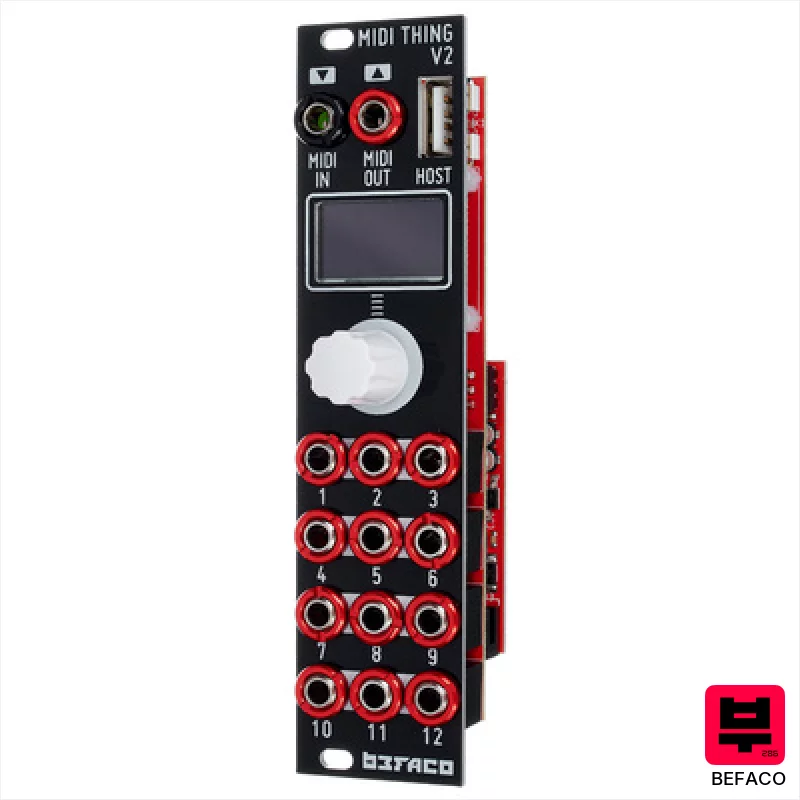
Befaco MIDI Thing V2
- • 12 outputs offer unparalleled routing flexibility for complex modular setups.
- • Web editor simplifies configuration, eliminating frustrating menu diving.
- • Robust OLED display provides clear, at-a-glance parameter information.
- • USB-A host eliminates the need for additional interface hardware.
- • The included expander cable feels a bit flimsy for frequent use.
- • Configuration can be overwhelming for beginners without modular experience.
- • Power consumption, while not excessive, is noticeable in smaller systems.
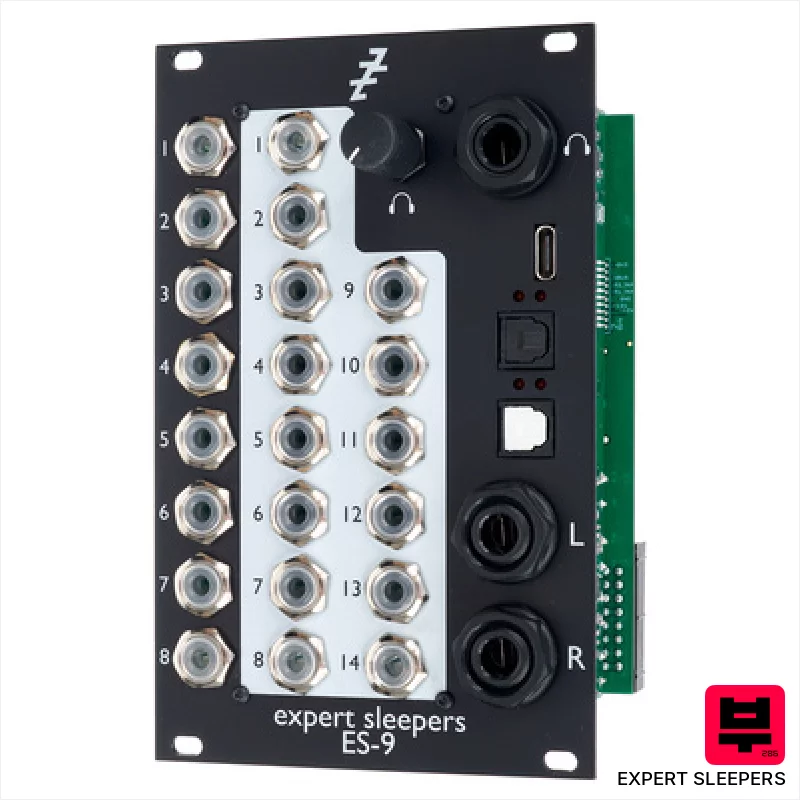
Expert Sleepers ES-9
- • Rock-solid USB performance, crucial for live modular patching.
- • DC-coupled audio/CV signals unlock advanced modulation possibilities.
- • Flexible I/O configuration handles complex routing scenarios.
- • Compact 16TE width maximizes space in crowded modular racks.
- • Requires optional MIDI breakout for full MIDI functionality.
- • Limited operating system support might exclude some users.
- • Price point places it in the premium-priced modular interface category.
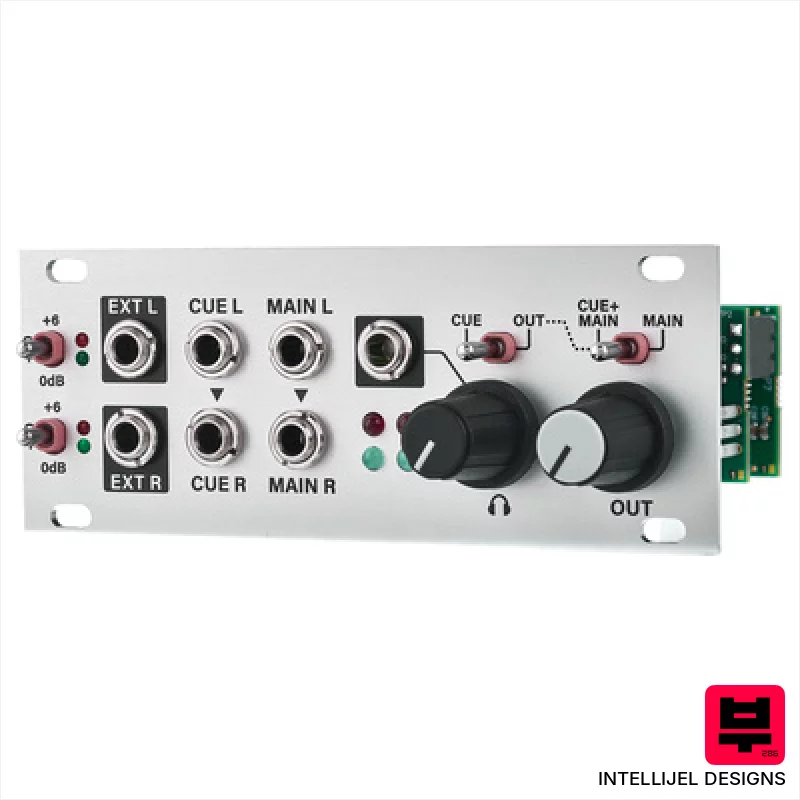
Intellijel Designs Stereo I/O 1U
- • Excellent gain staging provides flexibility for various signal levels.
- • Compact 20HP footprint maximizes space in tight Eurorack setups.
- • Cue output routing is incredibly useful for monitoring and live performance.
- • Solid Intellijel build quality ensures longevity and reliable operation.
- • 3.5mm headphone jack feels a little flimsy compared to the module's overall build.
- • Limited gain range might be restrictive for exceptionally hot signals.
- • No dedicated metering for individual channels; only overall levels shown.
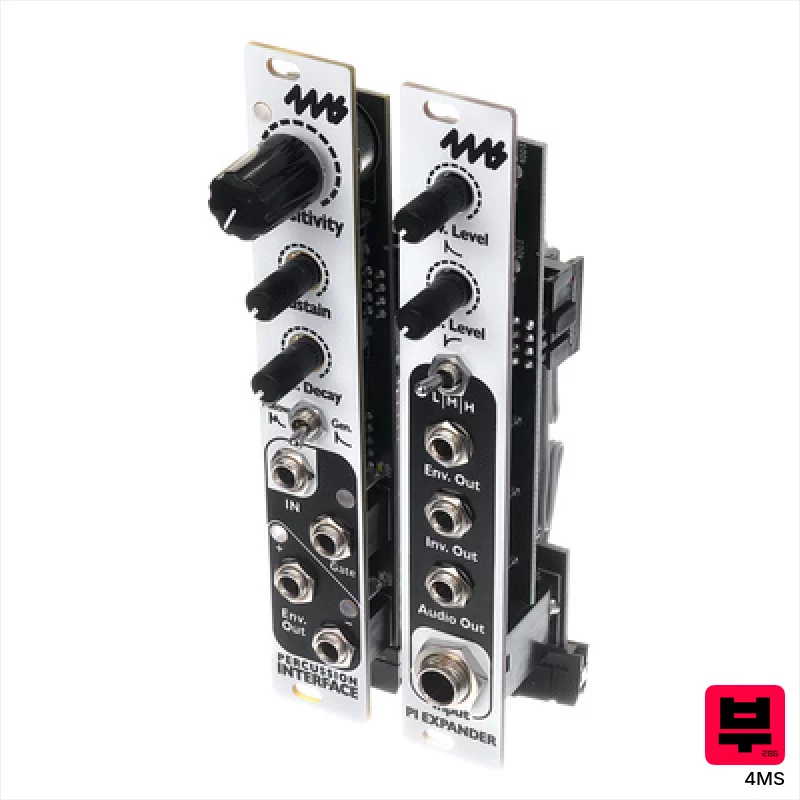
4ms Percussion Interface + Exp.
- • Excellent transient response for tight, defined percussion triggers
- • Expander adds significant flexibility for envelope shaping and attenuation
- • 4ms's characteristic robust build quality and reliable operation
- • Envelope follower mode expands utility beyond simple percussion gating
- • Power consumption is relatively high for a module of this size
- • Limited input gain range may struggle with very quiet signals
- • The interface can be a bit finicky with extremely complex or noisy audio inputs
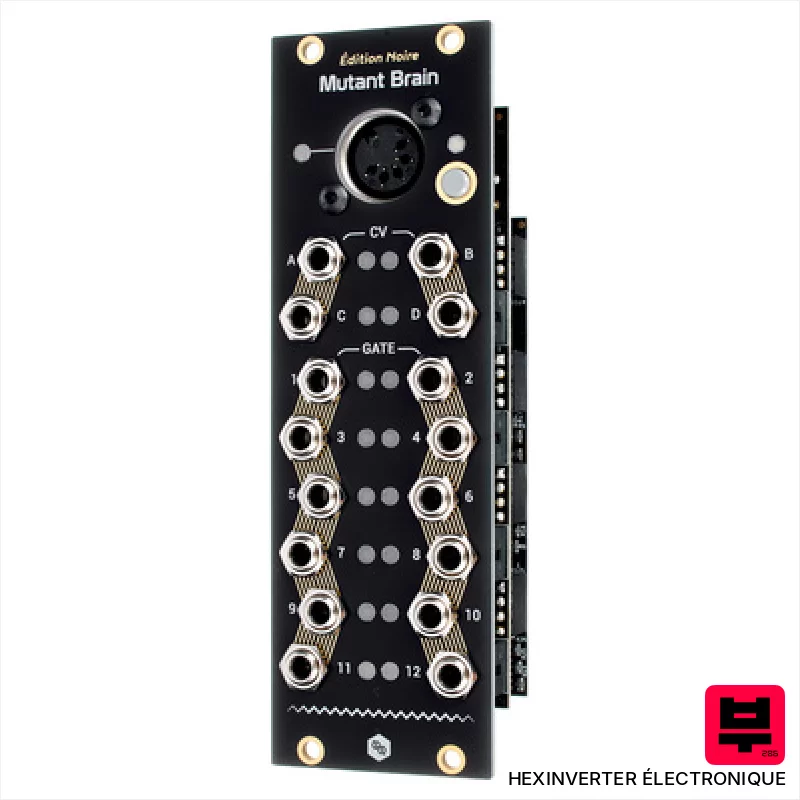
Hexinverter Électronique Mutant Brain
- • Exceptional SysEx programmability offers deep, granular control.
- • 12 Gate outputs unlock complex rhythmic possibilities.
- • Web editor simplifies parameter adjustments and patch management.
- • Robust build quality; Hexinverter modules are known for durability.
- • Steep learning curve; SysEx programming requires dedication.
- • Limited input options; only a standard 5-pin DIN MIDI.
- • Size (8HP) can be restrictive in smaller Eurorack cases.

Expert Sleepers ES-8
- • DC-coupled I/O allows for true CV control and manipulation.
- • ADAT input/output expands routing and recording possibilities significantly.
- • Class-compliant operation simplifies setup and eliminates driver headaches.
- • Robust build quality and compact form factor enhance modular integration.
- • Power draw is relatively high, demanding a capable PSU.
- • 3.5mm mini-jack connections can feel a bit flimsy over time.
- • Limited number of inputs might be restrictive for complex setups.
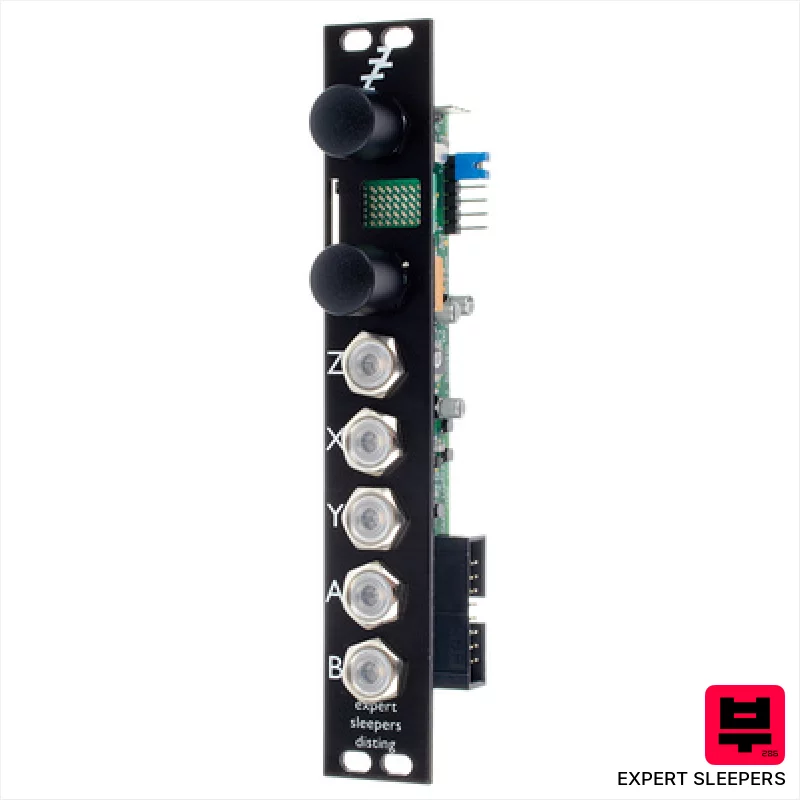
Expert Sleepers Disting mk4
- • Incredibly dense feature set for its size, a true Swiss Army knife.
- • Micro SD card slot unlocks a vast library of sample possibilities.
- • Dot matrix display is surprisingly readable and functional for navigation.
- • MIDI breakout header offers flexible sequencing and control options.
- • 4HP footprint demands careful patching and planning in smaller racks.
- • Steep learning curve due to the sheer number of algorithms available.
- • Limited screen resolution can make complex parameter adjustments tedious.

Behringer Perfect Pitch PP1
- • Excellent pitch extraction from diverse mono sources, including microphones
- • Hi-Z input accommodates passive instruments without signal loss
- • Flexible gain control (+50dB) handles weak signals effectively
- • Compact 8HP footprint maximizes Eurorack space utilization
- • Build quality feels somewhat plasticky, typical of budget-focused Behringer modules
- • USB-B connection is limiting compared to more modern USB-C options
- • CV output range may require attenuation depending on modular system needs

Befaco VCMC
- • Eight faders offer precise, nuanced control over multiple parameters
- • Button assignments provide tactile, immediate modulation options
- • Excellent recall functionality preserves complex performance setups
- • Class-compliant USB simplifies integration with DAWs and computers
- • 20HP width can be restrictive in smaller Eurorack cases
- • Limited display makes parameter tweaking somewhat less intuitive
- • Initial configuration can be a bit daunting for absolute beginners
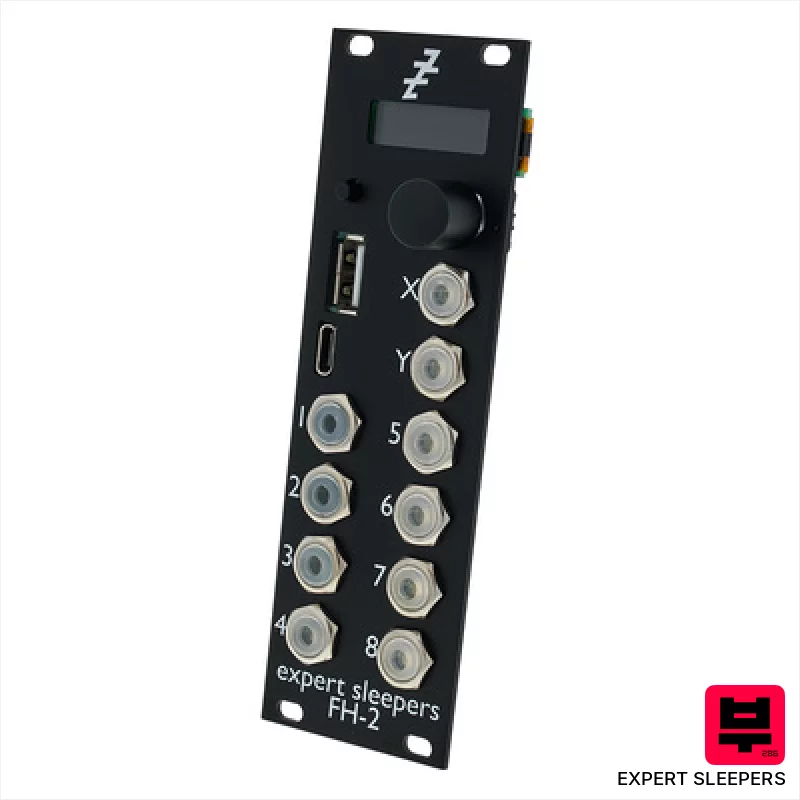
Expert Sleepers FH-2
- • Remarkably clean D/A conversion for Eurorack applications
- • Versatile USB host functionality expands modular possibilities
- • Intuitive OLED display simplifies complex parameter adjustments
- • Compact 8HP footprint maximizes space in tight modular setups
- • Software configuration can be initially daunting for beginners
- • Limited CV input count restricts complex modulation routing
- • Power draw is a consideration for power-constrained systems
How to Choose the Best Interface Modules
Noise Floor
Crucial. A noisy interface module will contaminate everything downstream. We're looking for modules that stay quiet even when driven hard, especially in the low frequencies.
Dynamic Range/Headroom
You don't want clipping on subtle movements. Good headroom lets you hit those peaks without distortion, and a wide dynamic range captures the nuances of your sound.
Connectivity/Routing
How many ins/outs do you really need? Consider stereo vs. mono, multiple outputs for effects sends, and the flexibility to re-route signals.
Latency
Especially important for live performance and monitoring. Lower latency means a more responsive feel when playing through your DAW.
Build Quality/Reliability
Let's be real, cheap plastic feels cheap, and a flaky connection is a nightmare onstage. We're looking for solid construction and reliable performance, even if it means a few compromises elsewhere.
Buying Guide
At this price point, you're making trade-offs. You won't get the absolute pristine transparency of a $2000 module, but you can get something that sounds great and works reliably. Watch out for modules with limited headroom - they'll clip easily. Paying a bit more for multiple outputs or better routing options is often worth it, especially if you plan on gigging or recording more complex setups. Don't chase features you won't use; a clean, reliable interface is more valuable than a million bells and whistles.
How This List Is Built
We don't play these instruments — we're a catalog, not a review desk, and we'd rather say so than pretend otherwise. This page ranks 15 interface modules from the Thomann catalogue, which is the largest single source of specification data in this category.
Position is computed, not curated. Four signals, in order of weight: how completely the manufacturer documents the instrument (number of published specifications), where it sits in the price range, how specific the model designation is — which filters out generic accessories — and whether a product image exists. The same inputs always produce the same order, so nothing here is shuffled to look fresh.
What this list is good for: narrowing a category down to a shortlist by spec and budget. What it isn't: a substitute for hearing an instrument. Before you buy, read hands-on reviews and, where you can, play it. Full methodology.

