
Best Installation Matrix Mixers Under $1,000 2026
So, you're running a small venue, a rehearsal space, or maybe a church and need a matrix mixer - something more flexible than your basic 16-channel board. Staying under a grand for an installation matrix mixer is doable, but you've gotta know what you're getting. Forget about pristine, studio-grade preamps and a ton of routing options; this is about getting the job done reliably without breaking the bank.
Last updated: September 30, 2026
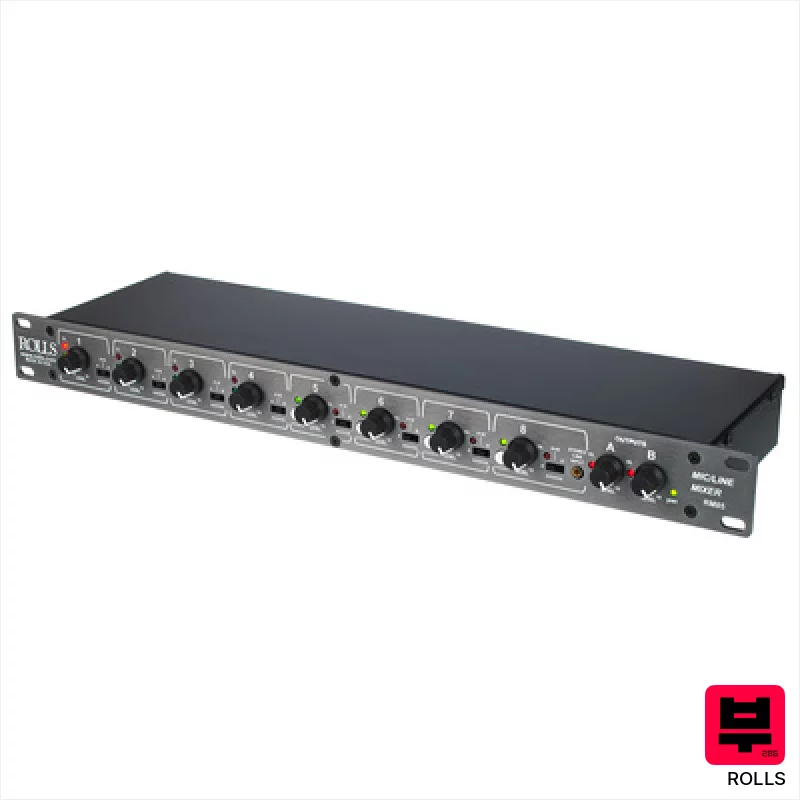
Rolls RM85
- • Compact 1U rack design saves valuable space in installations
- • Solid build quality with robust metal chassis for reliable use
- • Versatile routing options (A/B/A+B) suit diverse applications
- • Phantom power supports condenser mics for professional recordings
- • Limited EQ capabilities restrict fine-tuning audio characteristics
- • Lack of digital connectivity limits integration with modern workflows
- • Basic feature set lacks advanced processing found in higher-end mixers

ART MX225
- • Solid build quality for the price range, feels robust.
- • Flexible zone routing provides excellent signal distribution.
- • XLR connectivity offers professional-grade signal handling.
- • Compact 1U rackmount saves valuable space in installations.
- • Limited EQ options restrict detailed sound shaping.
- • ART's preamps are serviceable, but lack high-end clarity.
- • No digital connectivity restricts integration with modern workflows.
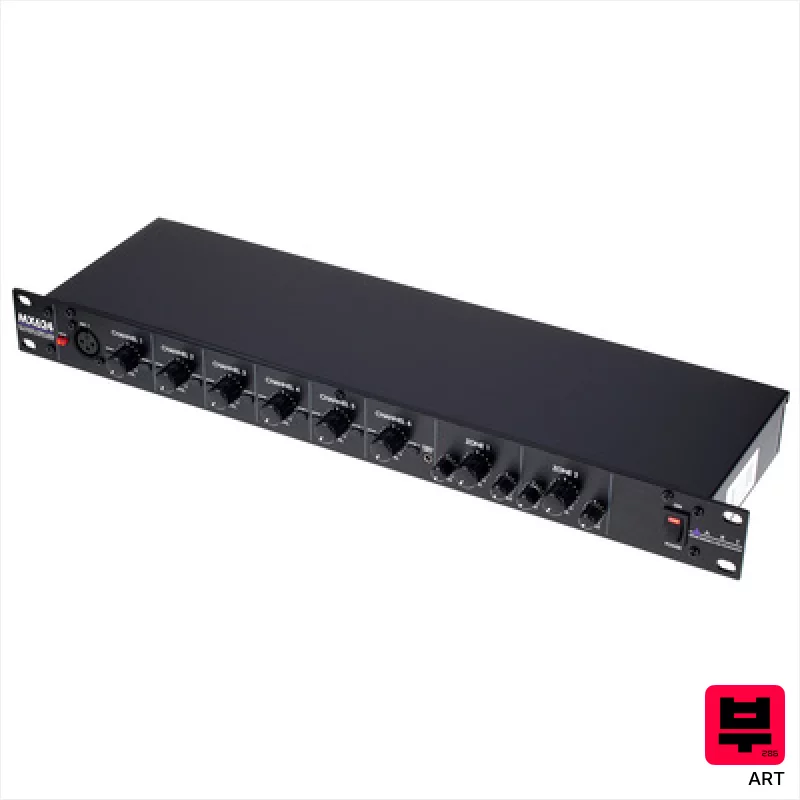
ART MX 624
- • Routable channels offer flexible zone control for varied applications
- • Compact 1U rackmount design saves valuable space in installations
- • Ducking function simplifies background music level management
- • Multiple input options cater to diverse audio sources and setups
- • ART's build quality is generally utilitarian, not premium
- • Limited EQ per channel restricts detailed sound shaping
- • RCA connections feel dated compared to more modern connectors

Sonifex Redbox RB-PMX4
- • Robust 1U rackmount chassis ensures reliable installation.
- • DIP switch routing offers flexible zone control without software.
- • Sonifex build quality delivers professional-grade durability.
- • 10 XLR inputs handle a wide range of microphone and line signals.
- • Limited DSP capabilities compared to more modern matrix mixers.
- • DIP switch configuration can be tedious for complex routing changes.
- • The small form factor can feel cramped for extensive patching.
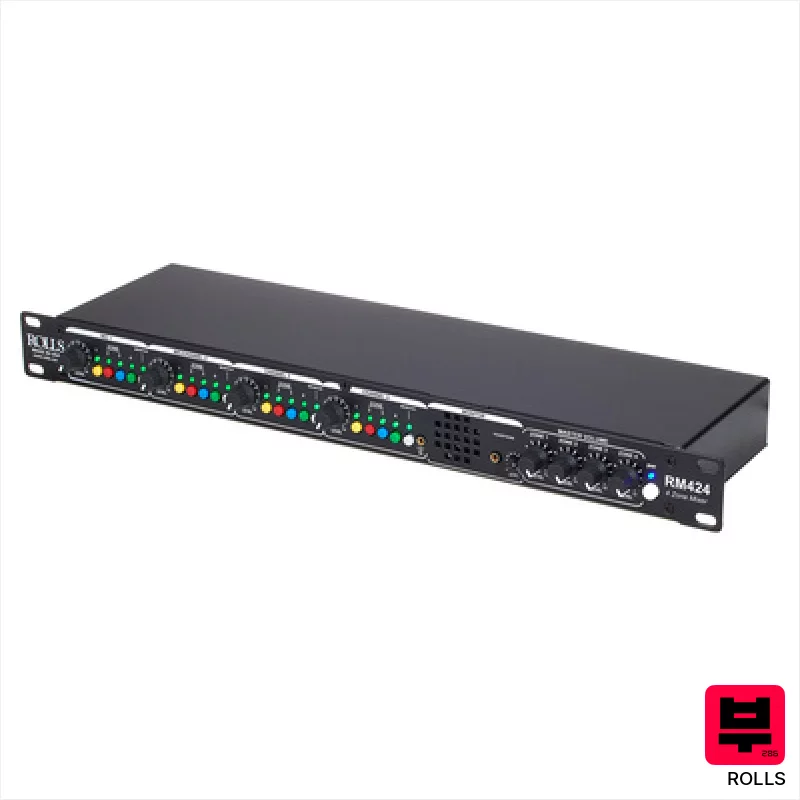
Rolls RM 424
- • Balanced XLR inputs offer clean, professional-grade signal capture
- • Individual zone level control provides precise audio distribution
- • Ducking functionality simplifies announcements and paging sequences
- • Compact 1U rackmount format suits installation and mobile setups
- • Limited channel count restricts complex mixing scenarios
- • Lack of onboard DSP limits sonic shaping capabilities
- • RCA inputs feel a bit dated compared to modern digital options
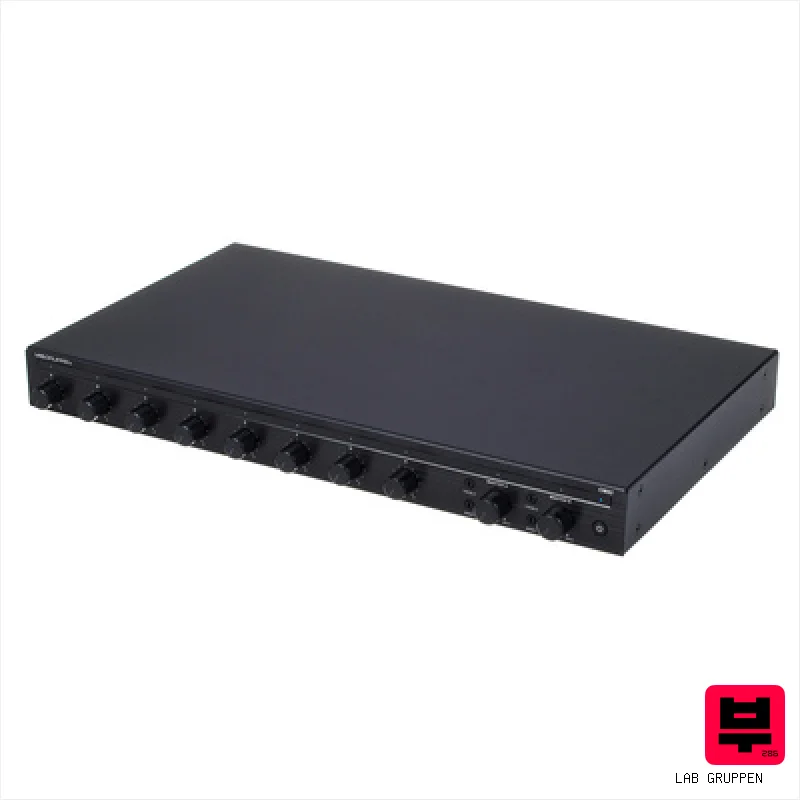
LAB Gruppen CM82
- • Eight dedicated microphone or line inputs for flexible stage setups.
- • Built-in bass and treble controls let you fix low-end issues quickly.
- • Compact 1U rack design saves valuable space in small venues.
- • Ethernet remote volume control allows silent adjustments from anywhere.
- • No digital signal processing or EQ curves listed in the specs.
- • Only two zone outputs means fewer mixing options for complex rooms.
- • No input gain staging knobs mentioned, potentially causing signal noise.
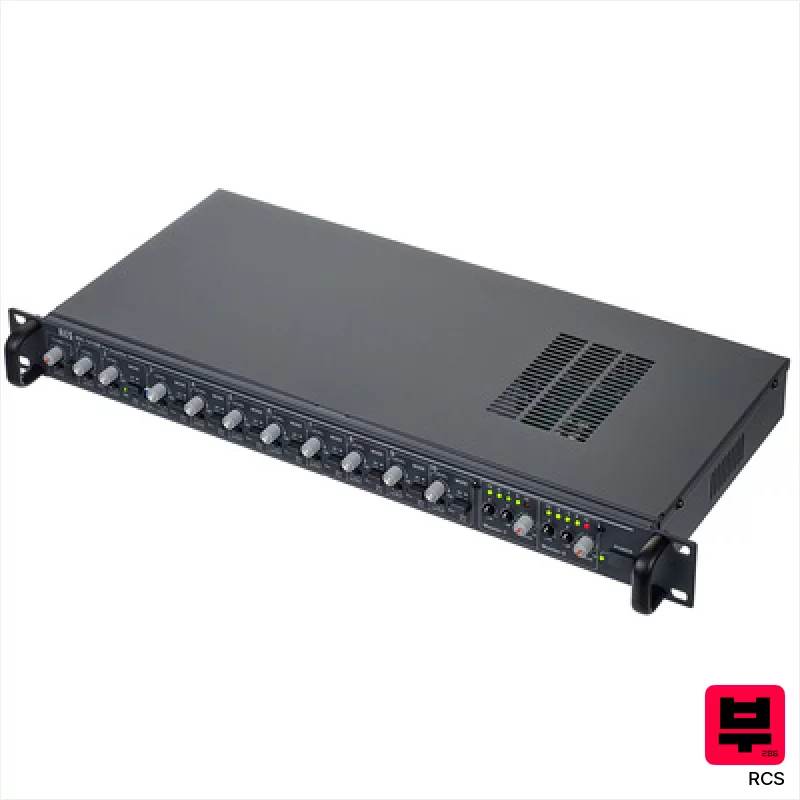
RCS MA-1410 B Mixer Preamp
- • Robust construction suggests durable stage or install use
- • Dual output routing offers flexible signal management
- • MIC-LINE selector provides versatility for varied signal sources
- • 24V DC operation is a significant advantage for emergency power
- • Limited DSP functionality compared to modern, pricier mixers
- • 10 channels might be restrictive for larger, complex setups
- • Lack of individual channel EQ is a notable omission
Installation Matrix Mixers by the numbers
Measured across all 7 models in this category, so «wide», «short» or «expensive» mean something you can check.
How to Choose the Best Installation Matrix Mixers
Preamps
At this price point, don't expect boutique clarity. You're looking for clean gain up to a reasonable level, without excessive noise or that brittle, harsh top end. Some will have a characteristic 'honk' in the midrange - not necessarily bad, but something to be aware of when miking vocals.
Routing Flexibility
Matrix mixers are about routing, plain and simple. Look for enough aux sends/returns and the ability to route signals to multiple outputs. Limited routing is a deal-breaker - it defeats the purpose.
EQ
Don't expect surgical precision. You'll mostly find basic 3-band EQ. It's enough for basic shaping, but don't expect to be fixing phase issues or sculpting complex tonal landscapes. It's about taming unruly frequencies, not magic.
Build Quality
Plastic cases are common at this price. Check for solid faders and knobs - anything flimsy will fail under gigging conditions. Durability is key for an installation piece.
Phantom Power & Gain
Consistent phantom power is vital for condenser mics. Check the gain range - you need enough clean headroom for loud sources like drums without introducing excessive noise for quieter instruments like acoustic guitars.
Buying Guide
Realistically, at this budget, you're making trade-offs. The biggest corner that gets cut is usually preamp quality - they'll be usable, but not inspiring. Don't expect a ton of features; focus on core functionality and reliable routing. Spend a little extra for a mixer with decent EQ if you regularly deal with problematic frequencies. Solid build is more important than a fancy feature set - this is an installation mixer, it needs to last.
How This List Is Built
We don't play these instruments — we're a catalog, not a review desk, and we'd rather say so than pretend otherwise. This page covers 7 installation matrix mixers from the Thomann catalogue, which is the largest single source of specification data in this category: 7 in detail, the rest listed with their specifications.
Position is computed, not curated. We parse the manufacturer's own description into actual values — nut width, scale, fret count, fingerboard radius, size, alloy — and rank on them: how many specifications a model has published, how many of them are measurable numbers, and how precisely it meets this page's criterion. A product image adds a little. Price is not a ranking signal: it tells you nothing about whether a neck fits your hand. The same inputs always produce the same order, so nothing here is shuffled to look fresh.
What this list is good for: narrowing a category down to a shortlist by spec and budget. What it isn't: a substitute for hearing an instrument. Before you buy, read hands-on reviews and, where you can, play it. Full methodology.

