
Best In-Ear Transmitters Under $500 2026
So, you're wanting to ditch the wedge monitors and go wireless in-ear? Smart move - the clarity and control are a game-changer, especially when you're trying to hear yourself over a loud drummer or a singer with a mic that's closer to the PA than your face. Getting into IEMs used to mean dropping serious cash, but there are now some surprisingly decent transmitters under $500 that won't leave you wanting. Let's break down what you can realistically expect for your money.
Last updated: September 28, 2026

LD Systems MEI 1000 G2 T
- • Solid build quality with a metal chassis for stage durability
- • Dual combo inputs offer flexibility for instrument and vocal use
- • Detachable BNC antenna allows for optimized reception
- • Compact 9.5in form factor suits tight stage setups
- • Limited frequency range compared to higher-end systems
- • Antenna performance can be susceptible to interference in crowded RF environments
- • No Dante connectivity for network integration
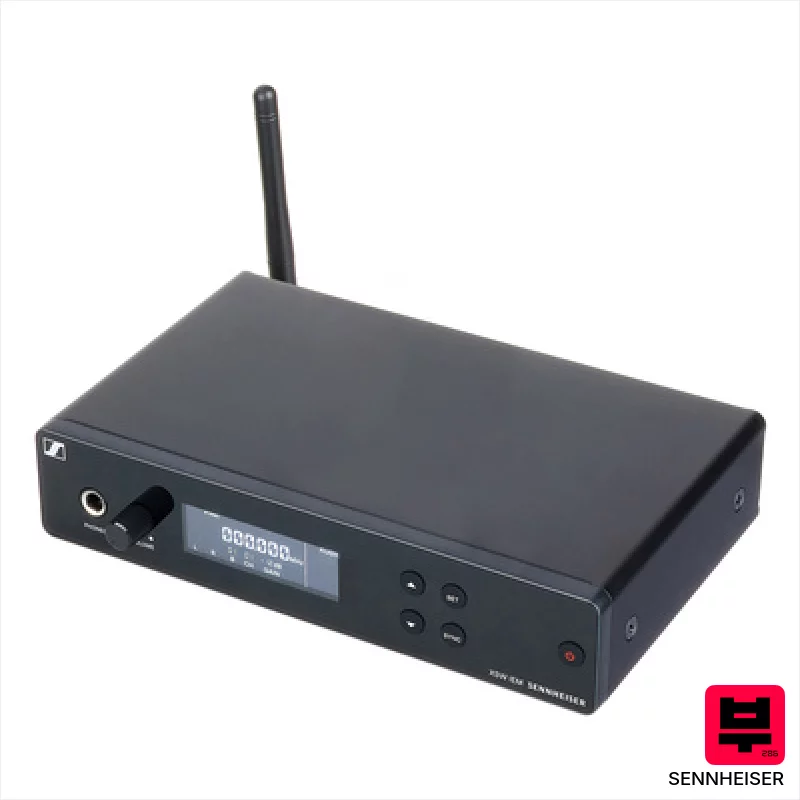
Sennheiser XSW IEM SR C-Band
- • Robust C-band operation avoids common RF congestion issues.
- • Infrared sync simplifies frequency matching across multiple units.
- • Solid Sennheiser build quality ensures reliable gig-to-gig performance.
- • Sufficient transmitting power delivers a respectable range for most stage setups.
- • The 700g weight makes it a bit cumbersome for extended handheld use.
- • Limited channel count compared to higher-end systems restricts scalability.
- • C-band licensing requirements can be a hurdle in certain regions.
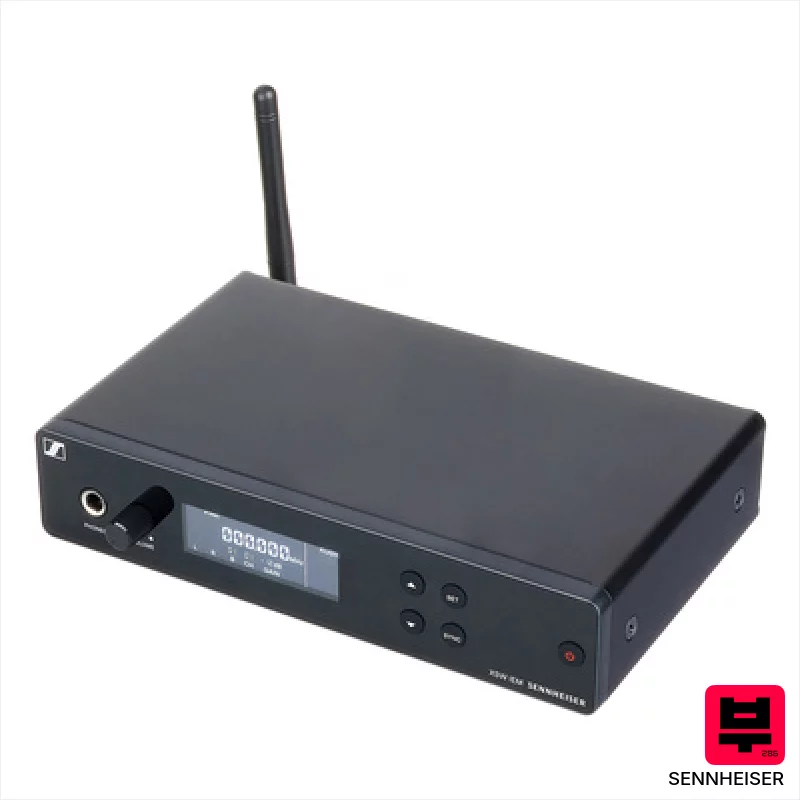
Sennheiser XSW IEM SR B-Band
- • Solid build quality; feels robust and reliable for stage use.
- • Infrared sync simplifies channel matching, a real time-saver.
- • B-band offers relatively clean spectrum, minimizing interference potential.
- • Good frequency response; delivers clear audio for vocals and instruments.
- • B-band availability varies geographically; check local regulations.
- • Limited channel count compared to wider-band systems.
- • The unit is fairly heavy, can be a burden for extended handheld use.
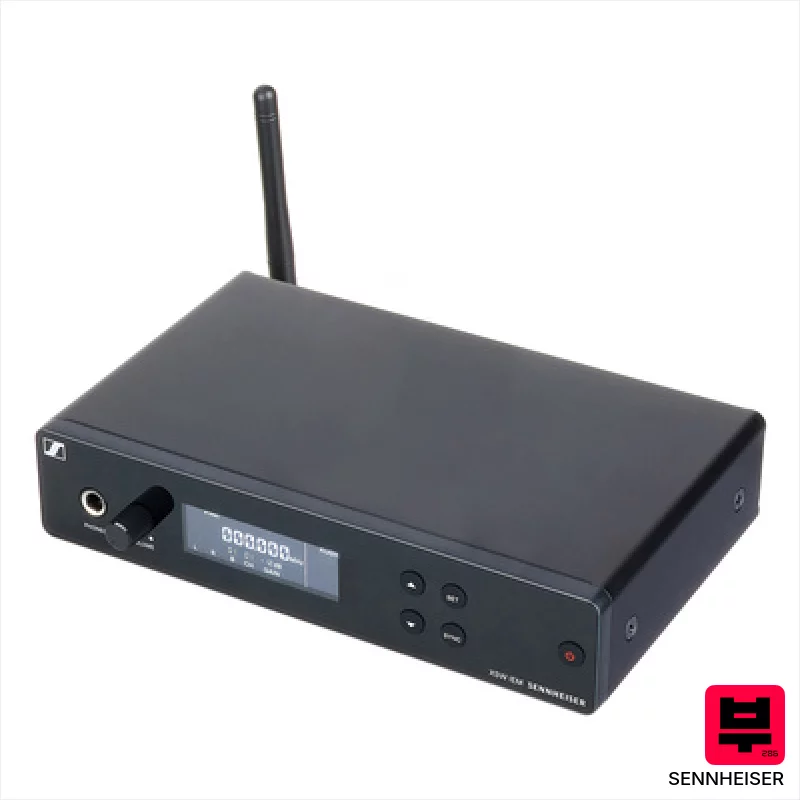
Sennheiser XSW IEM SR A-Band
- • Solid Sennheiser build quality; feels robust and reliable.
- • Infrared sync simplifies frequency matching across multiple units.
- • Wide 24 MHz bandwidth allows for greater channel flexibility.
- • Excellent audio clarity; handles complex mixes well.
- • A-Band frequencies can be susceptible to interference in crowded RF environments.
- • Relatively heavy; portability might be a concern for frequent travel.
- • Limited channel count compared to higher-end systems.

XVive U45 In-Ear Monitor Transmitter
- • Robust ABS/metal housing offers excellent stage durability.
- • Integrated rechargeable battery simplifies setup and eliminates external power needs.
- • Switchable channels provide flexibility in crowded RF environments.
- • Aux/Line switch caters to diverse mixer output levels, ensuring optimal signal.
- • 5.8 GHz band can be susceptible to interference in dense urban areas.
- • ABS plastic housing, while durable, isn't as premium as all-metal options.
- • Limited frequency range (20Hz-20kHz) might slightly restrict high-end detail for critical listening.
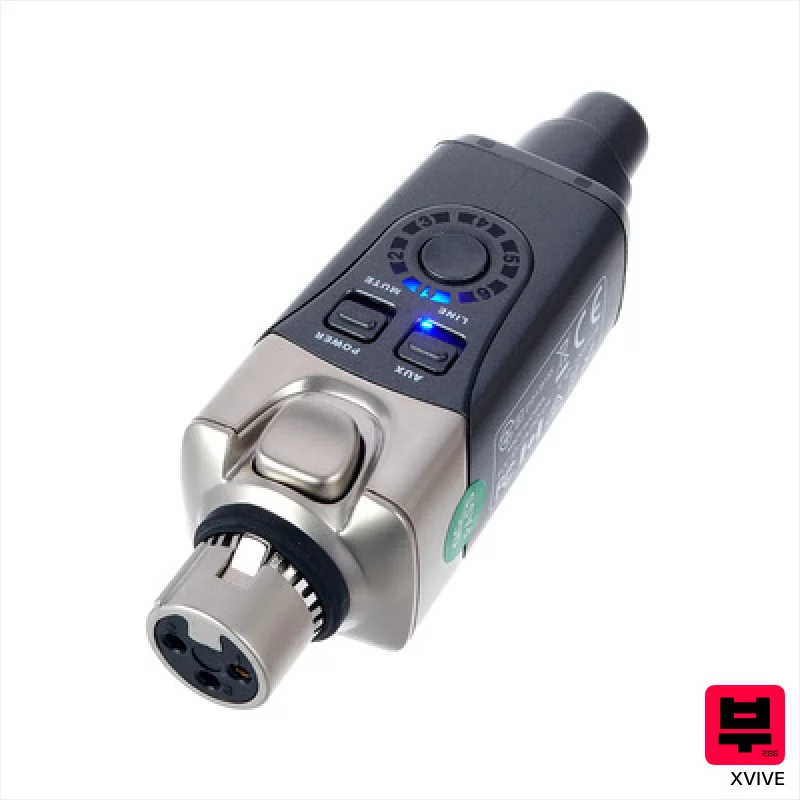
XVive U4 Wireless System Transmitter
- • Robust ABS/metal housing offers surprising durability for the price.
- • Integrated rechargeable battery simplifies setup and eliminates external power needs.
- • Switchable channels provide flexibility in crowded RF environments.
- • Aux/Line switch caters to varied signal levels and mixer outputs.
- • The 2.4 GHz band can be susceptible to interference in dense urban areas.
- • Limited channel count (6) might require frequent frequency changes at large events.
- • ABS plastic, while durable, doesn't feel as premium as all-metal construction.
In-Ear Transmitters by the numbers
Measured across all 6 models in this category, so «wide», «short» or «expensive» mean something you can check.
How to Choose the Best In-Ear Transmitters
Frequency Response & Clarity
A muddy low-end or harsh highs will ruin your mix. We're looking for a relatively flat response that lets your IEMs do the talking, not the transmitter. Expect some roll-off at the extremes at this budget.
Dynamic Range & Headroom
Can it handle a loud gig without clipping and distorting? Limited headroom means you'll have to keep your stage volume down, which isn't ideal when you're competing with a loud band. Expect less headroom than a high-end unit.
Build Quality & Durability
Gigs are rough. These transmitters are going to get knocked around, stepped on, and generally abused. We're looking for something that can take a beating without dying a quick death.
RF Performance & Range
How well does it cut through interference and maintain a stable signal? A weak signal means dropouts and frustration - nobody wants that mid-song. Range will be shorter than pricier options; expect around 50-75 feet line of sight.
Latency
Delay between the sound source and your ears. Excessive latency is disorienting and makes playing together a nightmare. While sub-millisecond latency is the goal, anything over 5ms starts to become noticeable at this price.
Buying Guide
Under $500, you're making trade-offs. Don't expect broadcast-quality audio or a mile-long range. Build quality is often the first thing to suffer - plastic enclosures are common. Look for models with decent reviews regarding RF stability; dropouts are the biggest annoyance. Consider a used unit from a reputable source to stretch your budget further - you might snag a slightly older, higher-end model for less.
How This List Is Built
We don't play these instruments — we're a catalog, not a review desk, and we'd rather say so than pretend otherwise. This page covers 6 in-ear transmitters from the Thomann catalogue, which is the largest single source of specification data in this category: 6 in detail, the rest listed with their specifications.
Position is computed, not curated. We parse the manufacturer's own description into actual values — nut width, scale, fret count, fingerboard radius, size, alloy — and rank on them: how many specifications a model has published, how many of them are measurable numbers, and how precisely it meets this page's criterion. A product image adds a little. Price is not a ranking signal: it tells you nothing about whether a neck fits your hand. The same inputs always produce the same order, so nothing here is shuffled to look fresh.
What this list is good for: narrowing a category down to a shortlist by spec and budget. What it isn't: a substitute for hearing an instrument. Before you buy, read hands-on reviews and, where you can, play it. Full methodology.

