AudioFu Chart · October 2026
Best Hanging Microphones for Intermediate 2026
The top pick is Audio-Technica U853R Cardioid Condenser Hanging Microphone ($309). the t.bone HMC 1 gives you the most for the money at $44. Sennheiser ME 36W MZH Series Hypercardioid / Lobar Shotgun Condenser… leads the high end. Ranked by the AudioFu Index from 6 models across 4 brands, prices checked every night.
Last updated: October 19, 2026
Top 6
Full detail for the 6 highest AudioFu Index scores. Every other model is listed below.
-
Audio-Technica U853R Cardioid Condenser Hanging Microphone
U853RW · Audio-Technica
9 for sale on Reverb2 finishes at Thomann
The U853RW is a solid choice for houses of worship, conference rooms, and public address systems where clear, focused sound is paramount. Its cardioid pattern and built-in power supply make it a straightforward install, and the robust build means it'll hold up to constant use. If you need a dependable, no-fuss hanging mic that rejects unwanted noise, this is a great option.
Pros
- Excellent off-axis rejection minimizes room noise, crucial for installations.
- Robust construction and white finish handle demanding environments reliably.
- Integrated power supply and mounting hardware simplify installation and setup.
Cons
- Cardioid pattern limits flexibility for diverse sound sources.
- Relatively heavy for discreet, lightweight hanging applications.
92AudioFu
Index↓ 11.0%since Aug 17 · lowest so far$348 · Aug 17$309 now$309€275 at Thomann · in stockCheck price ↗ -
AKG CHM99 Hanging Cardioid Condenser Microphone
CHM 99 B · AKG
5 for sale on Reverb2 finishes at Thomann
The AKG CHM 99 B is a solid, dependable choice for choir and vocal ensembles in fixed installations. Its robust build and focused cardioid pickup make it easy to manage sound in reverberant spaces – a real workhorse for churches, schools, and performance halls.
Pros
- Robust zinc die-cast housing handles demanding installations.
- Cardioid pattern effectively isolates choirs, minimizing room noise.
- Integrated spring clamp simplifies precise and secure alignment.
Cons
- Relatively heavy build might require stronger hanging hardware.
- Limited polar pattern choice restricts use in diverse acoustic scenarios.
76AudioFu
IndexStableno change since Aug 17Aug 17$163 now$163€145 at Thomann · in stockCheck price ↗ -
Sennheiser ME 36W MZH Series Hypercardioid / Lobar Shotgun Condenser…
ME36 Hanging Microphone Bundle · Sennheiser
5 for sale on Reverb2 finishes at Thomann
This bundle is great for live gigs where you need reliable sound without background noise. The windscreen keeps it safe in the wind, and the long cable lets you place the mic exactly where it works best. It locks onto standard gooseneck heads easily, making installation a breeze.
Pros
- Supercardioid pickup pattern for tight sound isolation
- Includes MZW36 windscreen for outdoor weather protection
- Heavy-duty 9m cable allows flexible placement
Cons
- No frequency response data listed in description
- Weight specifications are completely missing
83AudioFu
Index↓ 3.8%since Aug 17 · lowest so far$560 · Aug 17$539 now$539€479 at Thomann · in stockCheck price ↗ -
Sennheiser ME 34 MZH Series Cardioid Gooseneck Condenser Microphone…
ME34 Hanging Microphone Set W · Sennheiser
2 for sale on Reverb2 finishes at Thomann
This set gives you a ready-to-hang solution for Sennheiser goosenecks. The long cable lets you place the mic exactly where you need it, and the white finish keeps things tidy. It's a solid choice for live sound or studio setups where you want simple, reliable pickup without extra parts.
Pros
- Includes matching white gooseneck mount for clean installation.
- Long 9-meter cable allows flexible positioning anywhere.
- Built for Sennheiser gooseneck heads like the MZH series.
Cons
- Heavy mic head may strain older ceiling mounts.
- No specific weight data provided in the description.
68AudioFu
Index↓ 2.6%since Aug 17 · lowest so far$438 · Aug 17$426 now$426€379 at Thomann · in stockCheck price ↗ -
Sennheiser ME 35 MZH Series Supercardioid Gooseneck Condenser…
ME35 Hanging Microphone Bundle · Sennheiser
1 for sale on Reverb1 finish at Thomann
This bundle is great for church or large rooms where you need to reach far without signal loss. The nine-meter cable and thin design make it easy to install on standard goosenecks. It offers good side rejection thanks to the supercardioid pattern, but you won't know exactly how it sounds without hearing it live.
Pros
- 9-meter cable lets you place the mic far from the source
- 1.1 mm thin cable fits easily into small gooseneck mounts
- 48 V phantom power support ensures long cable runs work
Cons
- No frequency range data provided for this specific model
- Bundle description omits the weight of the ceiling mount itself
51AudioFu
Index↓ 2.4%since Aug 17 · lowest so far$460 · Aug 17$449 now$449€399 at Thomann · in stockCheck price ↗ -
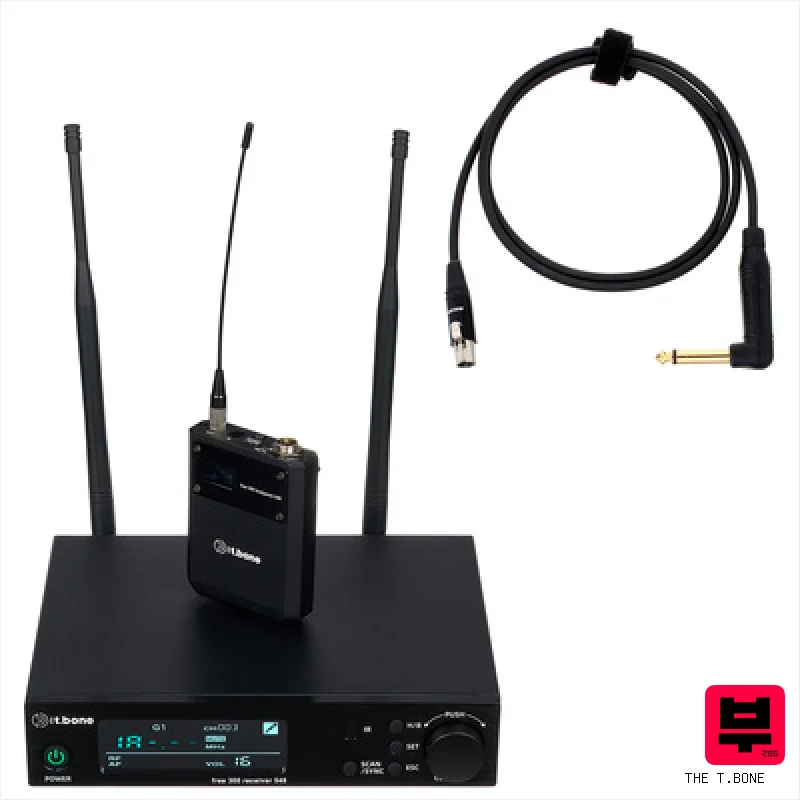
The t.bone HMC 1 is a budget-friendly option for basic sound reinforcement – think conference calls, simple public address, or ambient sound gathering where absolute sonic fidelity isn't crucial. It's a decent choice for installers needing a small, lightweight mic that won't break the bank, but don't expect studio-grade performance.
Pros
- Surprisingly robust capsule for the price point.
- Cardioid pattern offers decent isolation in noisy environments.
- Lightweight design minimizes stress on hanging points.
Cons
- Sound quality is basic; lacks detail and nuance.
- Thin body construction feels a little fragile.
Hanging Microphones by the numbers
Measured across all 10 models we track, not a sample.
Median $426 — half of all hanging microphones here cost less.
How to choose the best hanging microphones
Polar Pattern Versatility
Intermediate players often juggle multiple recording scenarios. A mic that can switch between cardioid, figure-8, and omni offers serious flexibility for drums, vocals, acoustic instruments, and even room ambience.
Off-Axis Rejection
Hanging mics pick up everything - stage noise, reflections, bleed. Good off-axis rejection keeps those unwanted sounds out without sacrificing naturalness. That 'ice-picky' harshness? Usually a sign of poor off-axis response.
Low-Frequency Response & Proximity Effect
A decent low-end thump is crucial for drums and bass, but too much proximity effect (that boomy bass boost when you get close) can muddy a mix. Finding a balance is key.
Handling Noise & Suspension
Let's be honest, hanging mics move. Low self-noise is a must, and a well-designed suspension system minimizes rumble and vibrations - especially important if you're gigging.
Durability & Build Quality
Gigs are rough. You need a mic that can take a few bumps and bruises without sounding like garbage. Cheap plastic parts and flimsy capsules don't cut it.
Buying guide
So you're thinking about hanging mics? It's a huge step up from just slapping a SM58 on a stand - instantly cleaner, more natural drum sounds, more immersive vocal recordings. But hanging mics isn't just about aesthetics; it's about phase coherence, accurate room tone, and understanding how those elements shape your sound. This isn't for total beginners, but if you're comfortable with mic placement basics and want to level up your recording game, let's dive into some solid options for intermediate players.
Don't chase the 'cheapest' option - you'll end up frustrated. Hanging mics require more precise placement, and a poorly performing mic will just amplify your mistakes. Look for models with good reviews regarding off-axis response and handling noise.
Spend a little more on a decent suspension system too; it makes a bigger difference than you'd think. Remember, the mic isn't making the sound; it's capturing it - so a good room and careful placement are still paramount.
How the AudioFu Index works
Five measured signals and nothing else — no stars from strangers, no “tested by experts” we didn’t do. The weights are fixed and public. We don’t play these instruments; we measure the market around them.
This chart covers 10 hanging microphones from the Thomann catalogue. Before you buy, read hands-on reviews and, where you can, play it. Full methodology.
AudioFu earns a commission when you buy through our Thomann links. It never changes the order — the index does.
- Demand40%
How many of this exact model are for sale on Reverb right now — what musicians actually buy and resell.
- Lineup20%
How many finishes Thomann stocks — makers expand the models that sell.
- Price15%
Where the price has moved since we started tracking in August.
- Specs15%
How completely the maker documents it.
- Maker10%
How deep the brand’s range is in this category.
Questions
What's the biggest mistake I'll make with hanging mics?
Ignoring room acoustics. Hanging mics reveal everything about your room - the good and the bad. Treat your space before you start hanging mics, or you'll be chasing phantom noises.
Do I need a dedicated hanging rig?
Not necessarily. You can use strong mic stands and careful cable management, but a proper hanging rig provides stability and reduces cable clutter. It's a worthwhile investment if you plan on using hanging mics regularly.
What's the deal with phase coherence?
When you have multiple mics, their signals need to arrive at the mixer at roughly the same time. Phase cancellation happens when signals are out of sync, resulting in a thin, weak sound. Hanging mics, due to their precise placement, help minimize phase issues, but you still need to be mindful of mic angles.
How do I know if a mic has good off-axis rejection?
Listen for it. Have someone move around the mic while you record. If you hear a lot of extraneous noise or a harsh, brittle tone, the off-axis response is likely poor. Reviews often mention this, but your ears are the ultimate judge.
Are condenser mics always better for hanging?
Not always. Dynamic mics like the Sennheiser MD 421-II can be surprisingly good for certain applications (like toms) due to their robust build and ability to handle high SPLs. It depends on the source and the desired tone.