
Best Equalizer Pedals for Professional Setup 2026
Let's be honest, a decent EQ pedal isn't just for chasing a slightly warmer tone. For a professional setup, it's a surgical tool-balancing frequencies to cut through a dense mix, taming harshness, or adding that subtle 'oomph' for a recording. It's about problem-solving and sculpting your sound, not just adding a vibe. We're looking at pedals that offer real control and don't just give you a few muddy presets.
Last updated: July 8, 2026 • Next update: July 15, 2026
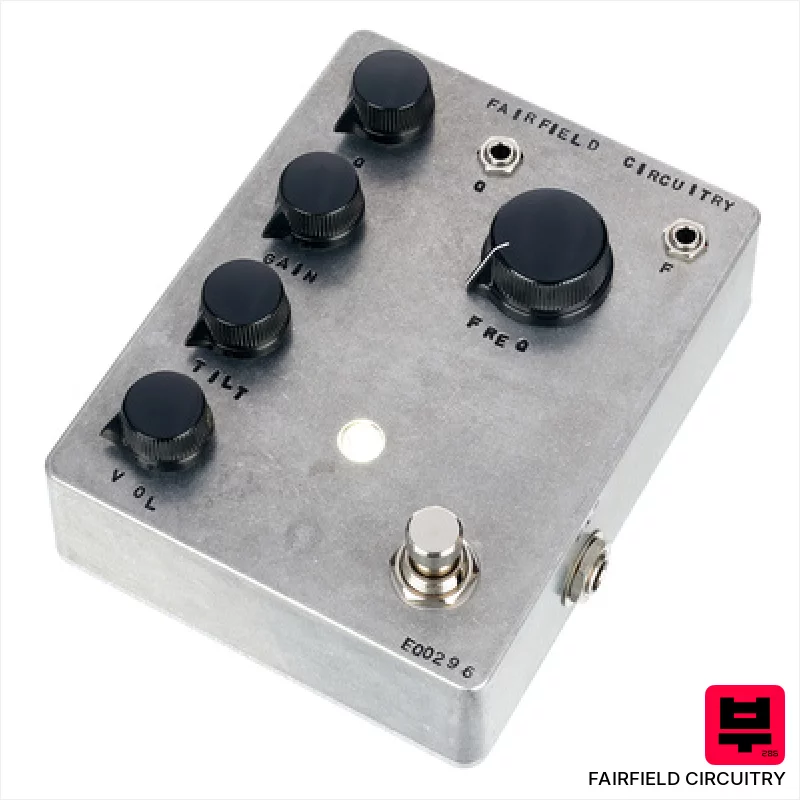
Fairfield Circuitry Long Life Parametric EQ
- • Exceptional single-band precision for targeted frequency sculpting
- • Unique 'Tilt' function adds broad tonal shaping possibilities
- • CV control offers deep integration with modular synth setups
- • Robust build quality hints at longevity and reliable performance
- • Single-band design limits complex EQ adjustments
- • Higher current draw necessitates a quality power supply
- • Learning curve for mastering the 'Tilt' and CV functions
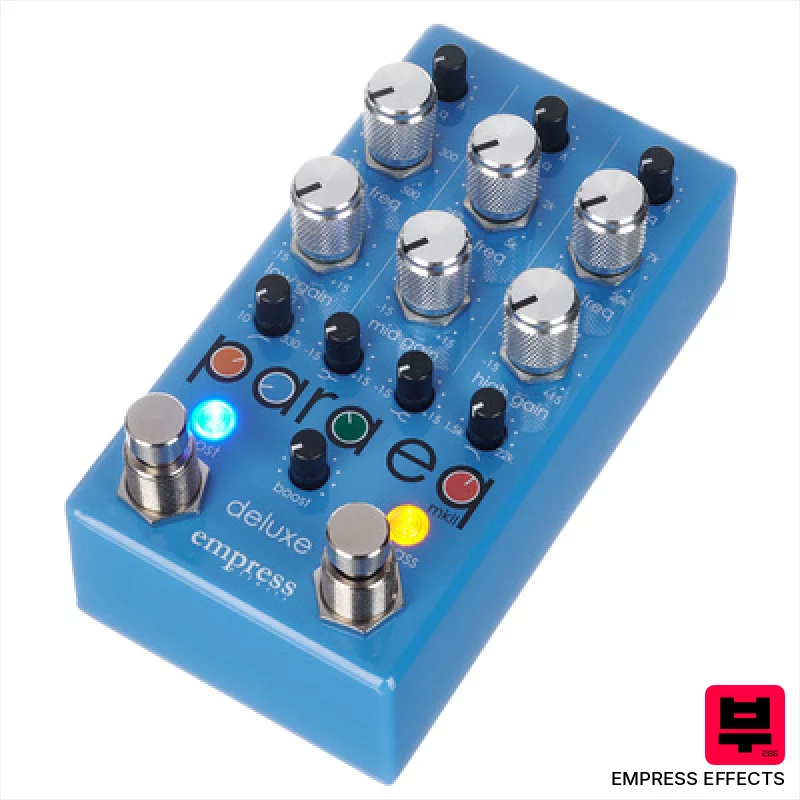
Empress Effects ParaEQ MKII Deluxe
- • Exceptional clarity and precision shaping tonal possibilities with surgical accuracy.
- • The boost provides a clean, powerful gain for solos or adding sustain.
- • Robust, aircraft-grade aluminum enclosure ensures durability for gigging musicians.
- • Flexible filter options (high-pass, low-pass, shelves) add unique sculpting capabilities.
- • Relatively complex controls require time and effort to master fully.
- • Lack of battery operation limits portability and convenience on stage.
- • Premium-priced, potentially prohibitive for budget-conscious players.
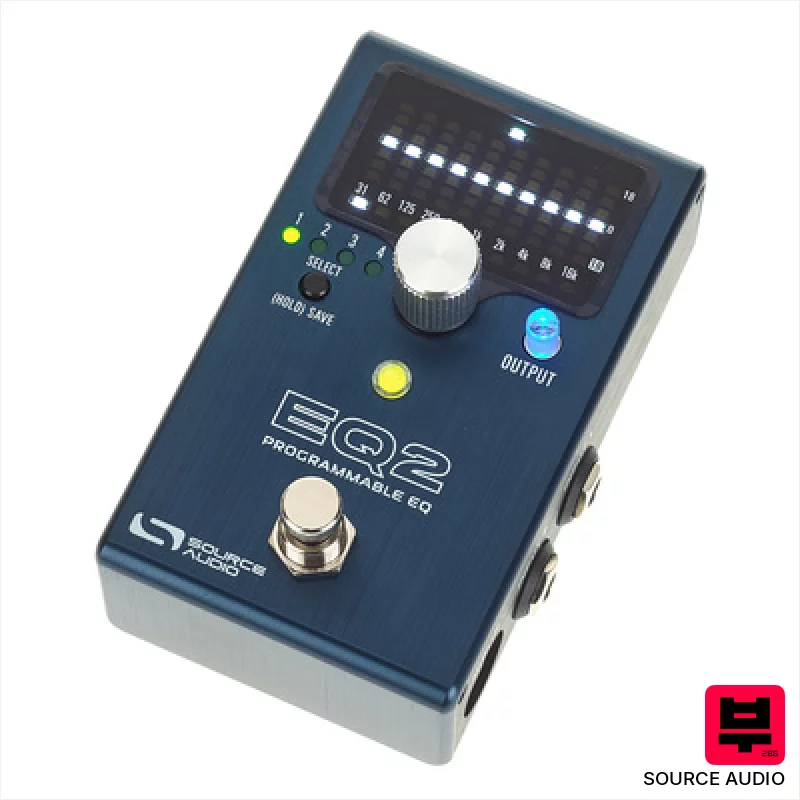
Source Audio SA 270 - One Series EQ2
- • Exceptional parametric control offers sculpting precision beyond typical EQs
- • Integrated noise gate and limiter are surprisingly effective, cleaning up signal
- • Comprehensive MIDI implementation unlocks deep preset customization possibilities
- • Clean boost provides useful volume shaping without added coloration.
- • Complex interface demands time investment to fully master its features
- • Relatively large footprint might be an issue for smaller pedalboards
- • The sheer number of options can be overwhelming for casual users.
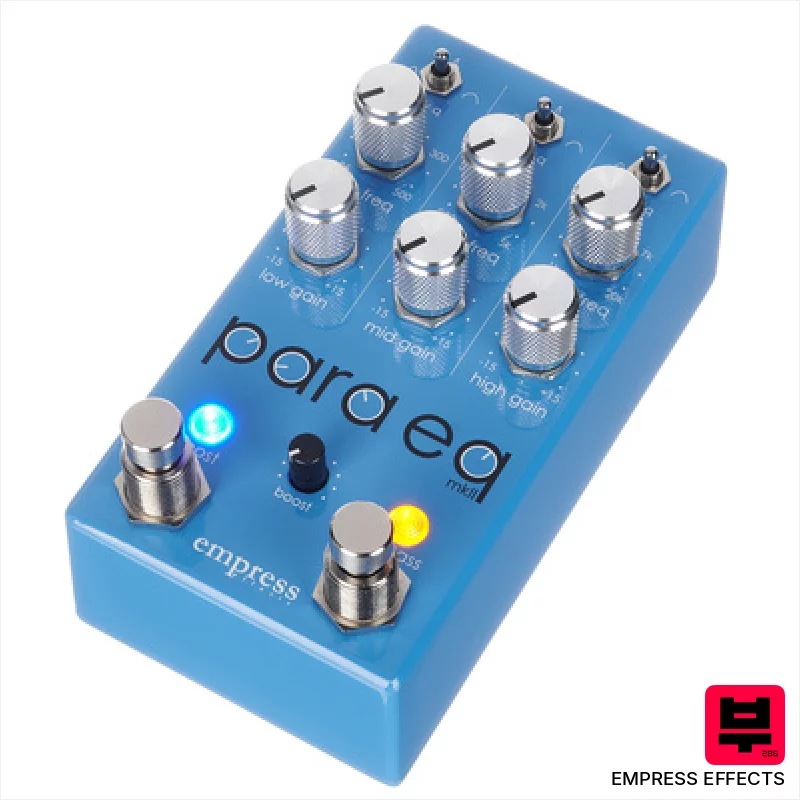
Empress Effects ParaEQ MKII
- • Exceptional clarity and control over tonal shaping.
- • Robust, milled aluminum enclosure provides excellent durability.
- • The boost function adds significant headroom and a warm, musical gain.
- • Intuitive rotary controls offer precise frequency adjustments.
- • Limited to three bands, restricting complex EQ sculpting.
- • Lack of battery operation adds power supply dependency.
- • Premium-priced, potentially prohibitive for budget-conscious players.
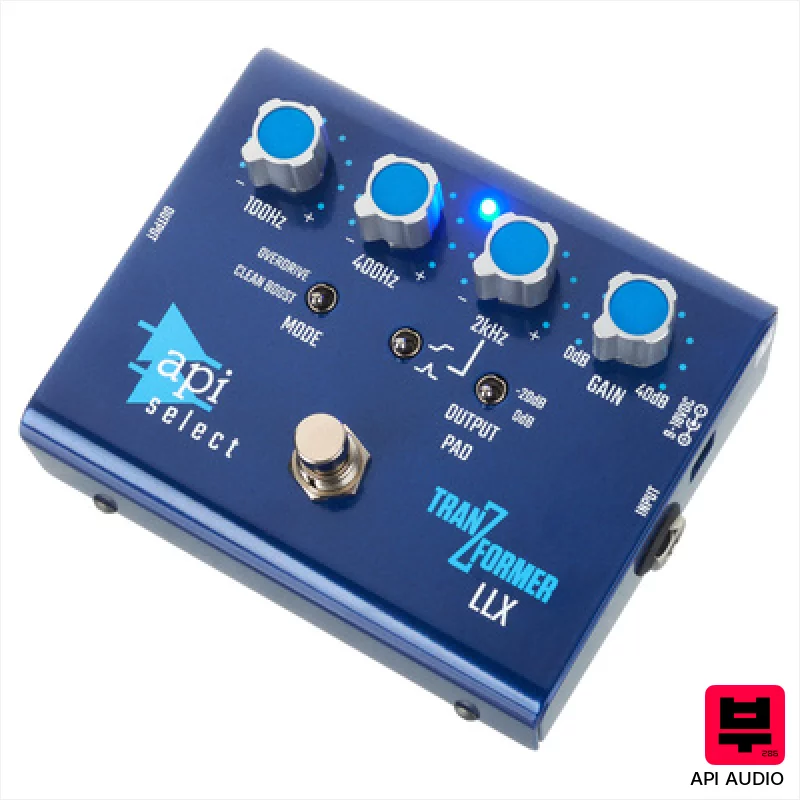
API Audio TranZformer LLX Bass Pedal
- • API 2510 OpAmp delivers a signature API warmth and clarity.
- • The output transformer adds crucial harmonic richness and low-end authority.
- • Hi-Z input/output handles active and passive basses with exceptional fidelity.
- • Robust build quality; feels solid and well-engineered for pedalboard use.
- • Limited EQ band flexibility compared to more complex parametric EQs.
- • Requires external power supply, adding to overall cost and cable clutter.
- • The overdrive, while usable, isn't a primary focus and lacks versatility.

Boss EQ-200 Graphic Eq
- • Boss’s renowned build quality ensures long-term reliability and road-worthiness
- • Flexible routing options (parallel, serial, stereo) offer creative tonal sculpting
- • The 32-bit processing provides pristine audio quality with minimal noise
- • Comprehensive MIDI and USB connectivity expands integration with digital setups
- • The 10-band EQ might feel limiting for users needing very precise adjustments
- • The physical size makes it less ideal for extremely compact pedalboards
- • The lack of a true TRS insert point restricts complex signal chain configurations
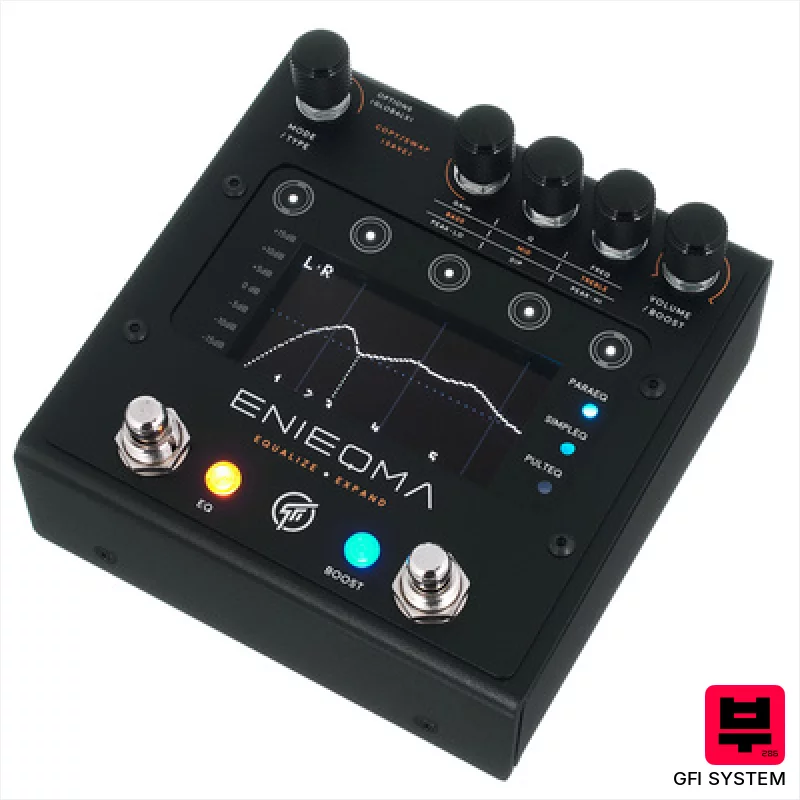
GFI System Enieqma Equalizer
- • Exceptional flexibility with multiple EQ modes and routing options.
- • Pultec emulation delivers a truly vintage, warm midrange character.
- • The stereo expander adds significant width and depth to the signal.
- • Intuitive interface and high-contrast display enhance usability in low light.
- • Premium-priced, representing a significant investment for many players.
- • Size and weight might be cumbersome for smaller pedalboards.
- • Complex feature set may present a learning curve for less experienced users.

Vahlbruch BBQ Buffer/Boost/EQ
- • Solid, all-analog circuitry ensures pristine signal integrity and warmth.
- • German craftsmanship delivers exceptional build quality and reliability.
- • Effective EQ range allows subtle shaping or more aggressive tonal sculpting.
- • Silent button eliminates unwanted noise during EQ adjustments, a crucial feature.
- • Lack of battery operation limits portability and convenience.
- • Relatively compact size might be restrictive for some pedalboard layouts.
- • EQ band spacing isn't ideal for precise mid-range adjustments.
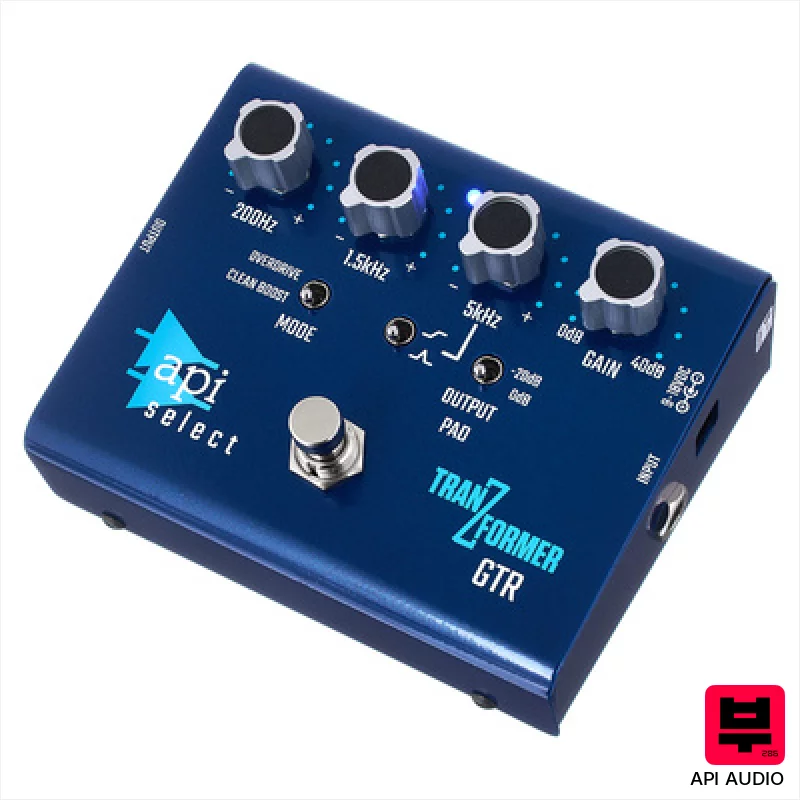
API Audio TranZformer GTR
- • API 2510 OpAmp delivers characteristic API warmth and punch.
- • Transformer output adds desirable harmonic richness and output drive.
- • Fixed frequencies offer targeted EQ shaping for common guitar tones.
- • Buffered bypass preserves signal integrity and eliminates pickup noise.
- • Limited 3-band EQ restricts complex tonal sculpting options.
- • Fixed frequencies may not suit all playing styles or guitars.
- • Relatively premium-priced compared to simpler EQ pedals.
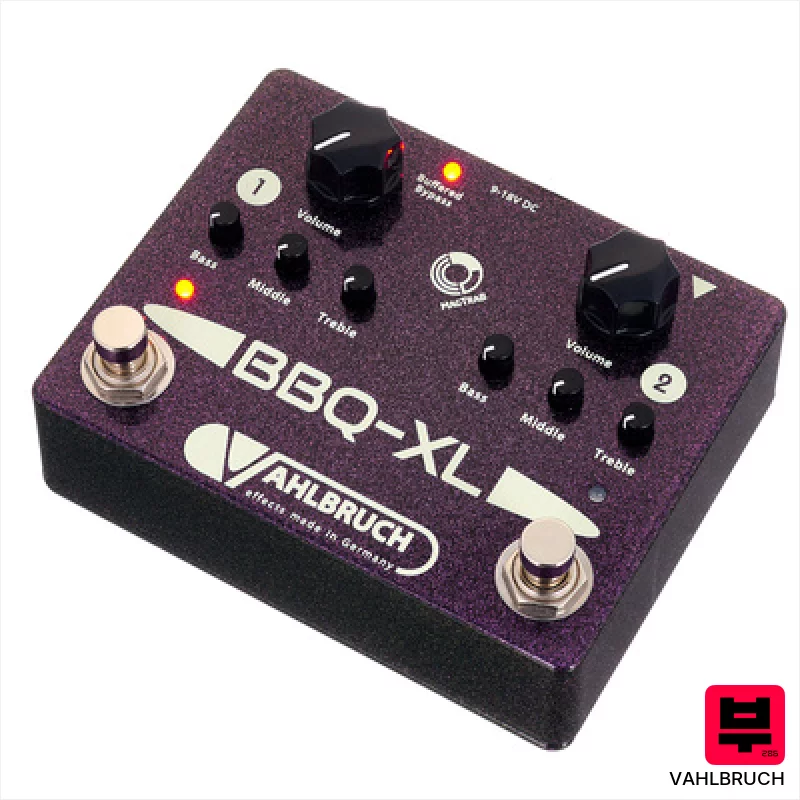
Vahlbruch BBQ-XL Buffer,Booster,EQ
- • Dual-channel design offers unparalleled flexibility for stereo rigs or complex signal chains.
- • MagTraB footswitch provides absolutely silent switching – a crucial feature for stage use.
- • German craftsmanship ensures exceptional build quality and longevity; feels solid and well-made.
- • The EQ section delivers musical boosts and cuts, avoiding harshness common in cheaper pedals.
- • Limited power options; requires a dedicated mains adapter, adding to the overall cost.
- • Relatively compact size might feel cramped for players with larger feet or limited dexterity.
- • EQ range, while musical, isn't as extreme as some dedicated parametric EQs.
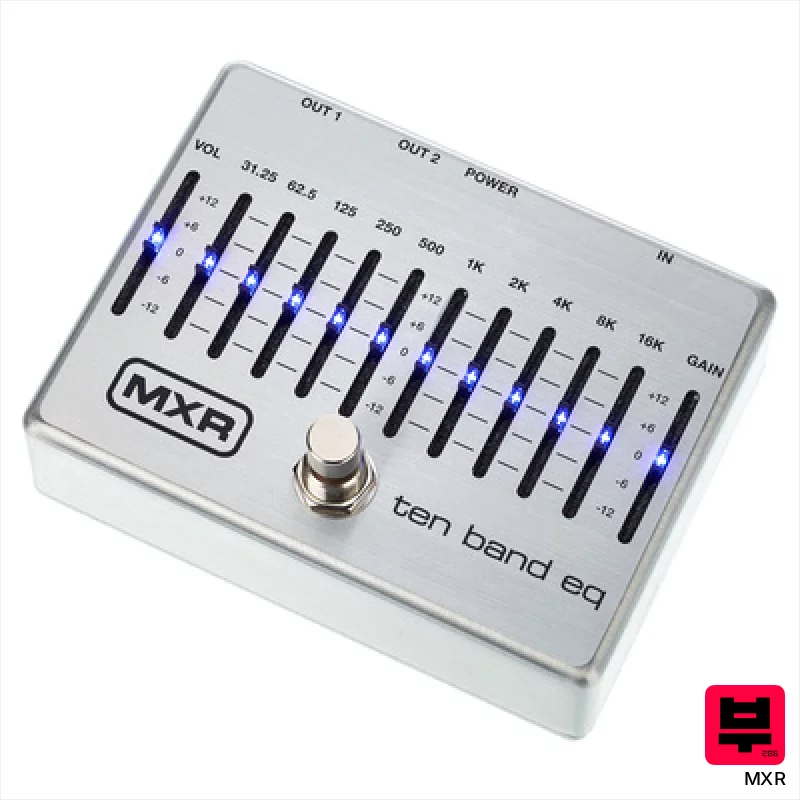
MXR 10 Band Equalizer Silver
- • Robust aluminum housing offers excellent protection and a premium feel
- • Dual outputs allow for flexible signal routing and parallel processing
- • True bypass preserves your signal when the pedal is disengaged
- • Wide frequency range provides substantial tonal shaping capabilities.
- • Can be overwhelming for beginners due to the numerous controls
- • The size and weight make it less ideal for smaller pedalboards
- • The 18V power supply, while included, is a slightly less common voltage.
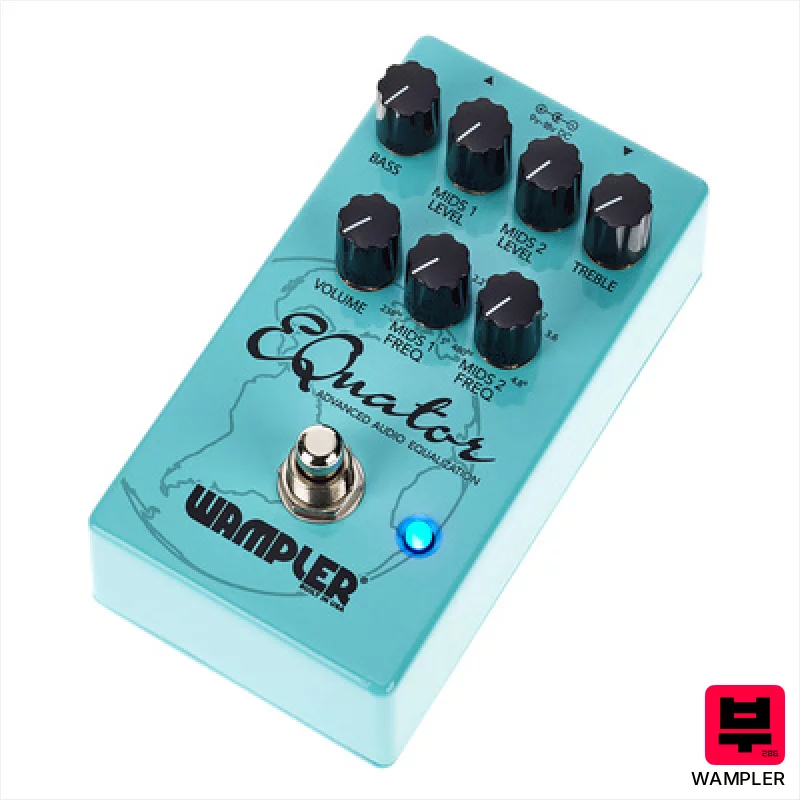
Wampler EQuator Equalizer
- • Precise parametric control offers exceptional tonal sculpting ability
- • High headroom allows for significant boost without harsh distortion
- • Robust enclosure and quality components ensure long-term reliability
- • True bypass preserves your signal integrity when the effect is off
- • Limited frequency range compared to more expansive EQ solutions
- • Lack of battery operation adds to setup complexity
- • Size, while compact, can be restrictive on smaller pedalboards
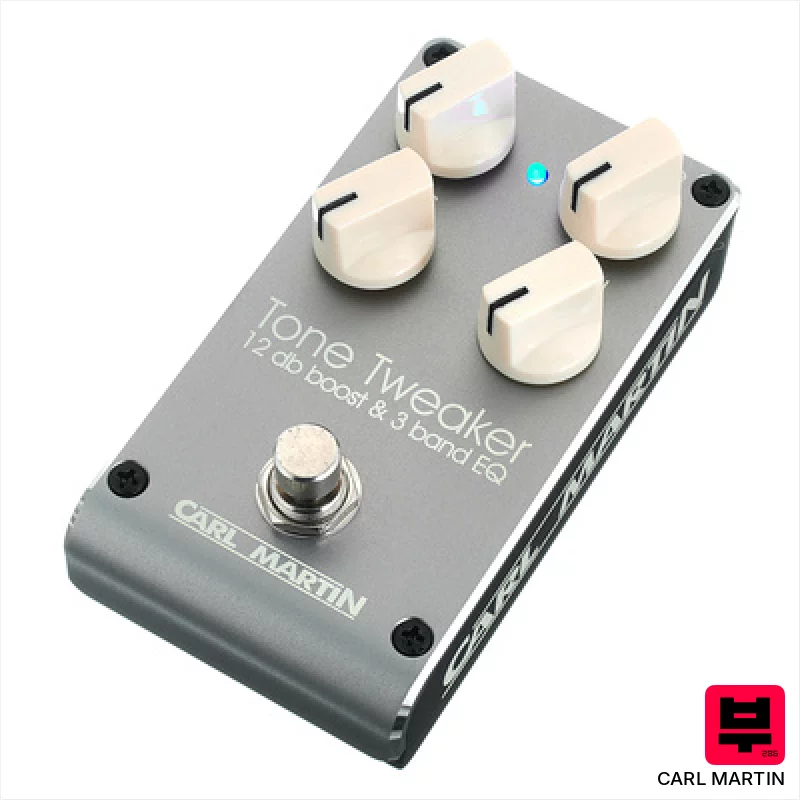
Carl Martin Tone Tweaker
- • Solid steel enclosure feels robust and ready for gigging abuse.
- • The mid control offers surprisingly nuanced tonal shaping.
- • Boost function adds significant gain for lead work and solos.
- • Carl Martin's classic Scandinavian amp voicing shines through.
- • Limited EQ band flexibility compared to more complex processors.
- • Barrel power jack can feel a bit flimsy for frequent use.
- • Smaller footprint means pedalboard space is at a premium.
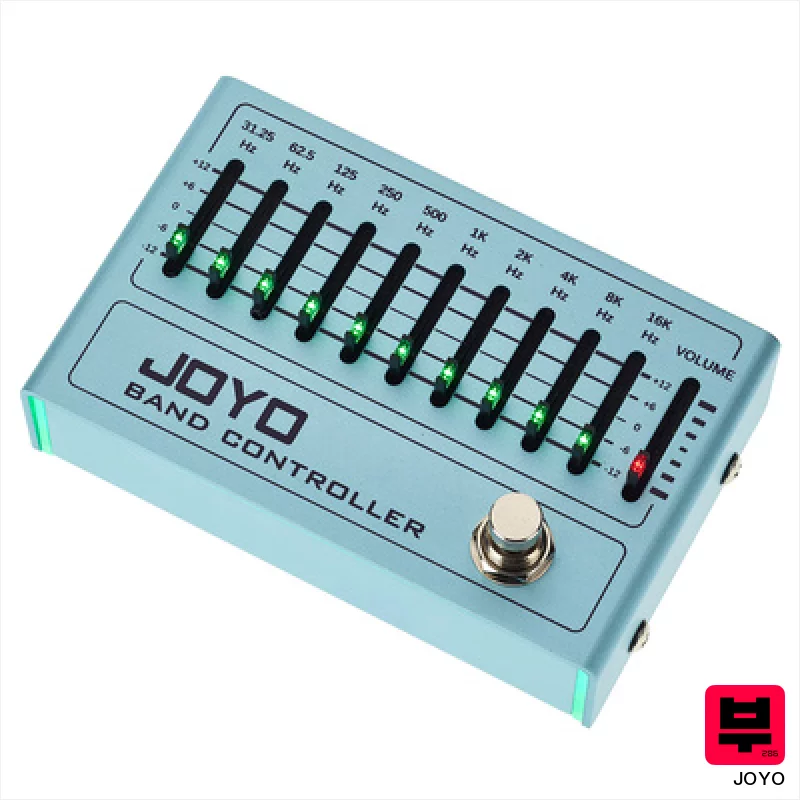
Joyo R-12 Band Controller EQ
- • Solid aluminum housing feels surprisingly robust for the price
- • 10-band EQ offers decent tonal shaping versatility
- • True bypass preserves your signal when the effect is off
- • Compact size makes it easy to fit on crowded pedalboards
- • Potentiometers feel a bit plasticky and may develop noise over time
- • Power supply not included is a common but frustrating omission
- • EQ bands are somewhat widely spaced, limiting fine adjustments
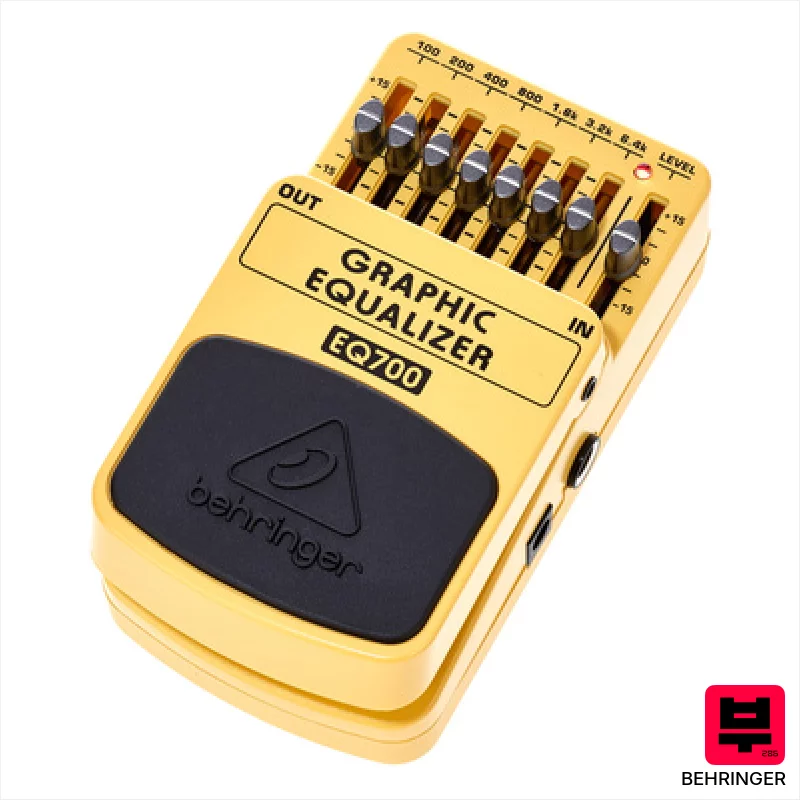
Behringer EQ700
- • Surprisingly clean boost with minimal coloration when bypassed.
- • 7-band graphic EQ offers decent flexibility for basic tone shaping.
- • Electronic bypass virtually eliminates unwanted noise during switching.
- • Extremely affordable, making it accessible for budget-conscious players.
- • Plastic construction feels flimsy and not very durable for gigging.
- • Limited frequency range restricts its usefulness for bass frequencies.
- • EQ bands are spaced relatively wide, lacking precise control.
How to Choose the Best Equalizer Pedals
Frequency Range & Bandwidth
A truly professional EQ needs a wide frequency range - don't just look for bass and treble. Having narrow and wide bandwidth options on each band is crucial for precise shaping. Think surgically removing a harsh resonance versus a broad, muddy boost.
Control Precision
Linear EQ controls are generally preferred for predictable results, but a good semi-parametric EQ with adjustable Q (bandwidth) can be incredibly versatile. Cheap pedals often have stepped pots that make fine-tuning impossible.
Noise Floor
Pro gear needs to be quiet. A noisy EQ will expose weakness in your entire signal chain, especially when stacking multiple pedals. Listen carefully for hiss and hum, especially when boosting.
True Bypass/Buffered Bypass
True bypass is a personal preference, but a good buffered bypass is almost essential for maintaining signal strength, especially when using long cable runs or multiple pedals. A weak buffer can introduce its own coloration.
Stereo/Mid-Sweep Capabilities
For recording and more complex live setups, stereo EQ and the ability to sweep mids are invaluable for creating space and dimension in your sound. A mono EQ is fine for simpler setups, but limits your options.
Buying Guide
Don't fall for the hype. Many 'pro' EQ pedals are just overpriced versions of basic designs. Spend your money on something with surgical control-linear pots, adjustable Q, and a low noise floor. Be wary of pedals that promise 'vintage warmth'-that's often just a euphemism for muddy and undefined. Ultimately, the best EQ is the one that solves your specific problems, so test thoroughly before committing.
Our Methodology
We don't just look at specs here. We've spent countless hours A/B testing these pedals in various scenarios: live gigs with full bands, tracking sessions in a studio, and even just dialing in tones for bedroom recording. Our evaluation focuses on how these pedals actually sound and perform in a real-world context, not just what the manufacturer claims.

