AudioFu
AudioFu Chart · October 2026
Best Electric Cellos for Intermediate 2026
The top pick is NS Design NXT4A-CO-BK Active Series Electric Cello ($2,924). Yamaha SVC-50 Silent Cello gives you the most for the money at $2,475. Ranked by the AudioFu Index from 21 models across 5 brands, prices checked every night.
Last updated: October 17, 2026
Top 10
Full detail for the 10 highest AudioFu Index scores. Every other model is listed below.
-
NS Design NXT4A-CO-BK Active Series Electric Cello
NXT4a-CO-BK Cello · NS Design
6 for sale on Reverb1 finish at Thomann
- Strings4-string
- BodyMaple body
- Weight1.9 kg
The NS Design NXT4a-CO-BK is a solid entry into the electric cello world. It’s well-built, sounds surprisingly natural thanks to the Polar pickup, and the included accessories make it ready to play straight out of the box. This is a great choice for students or gigging musicians wanting a versatile and relatively affordable electric cello.
Pros
- Richlite fingerboard offers excellent playability and consistent feel.
- Polar pickup system delivers a warm, natural acoustic cello tone.
- Maple construction provides a resonant body with good projection.
Cons
- Dual-mode output might require experimentation to find preferred settings.
- Maple body, while resonant, lacks the extreme projection of higher-end instruments.
78AudioFu
Index↑ 4.3%since Aug 14$2,802 · Aug 14$2,924 now$2,924€2,598 at Thomann · in stockCheck price ↗ -
NS Design NXT4A-CO-BK Active Series Electric Cello
NXT4a-CO-SB Cello · NS Design
6 for sale on Reverb1 finish at Thomann
- Strings4-string
- BodyMaple body
- Weight1.9 kg
The NS Design NXT4a-CO-SB is a solid entry into the electric cello world. It’s surprisingly lightweight and offers a warm, usable amplified tone – perfect for gigging cellists who need a stage-ready instrument or studio players looking for a versatile, portable option. The build quality is very good for the price point.
Pros
- Richlite fingerboard offers consistent playability and resists temperature changes
- Polar pickup system delivers a surprisingly natural and warm amplified tone
- Maple construction provides a resonant body with good projection
Cons
- Richlite, while stable, lacks the traditional feel of ebony for some players
- Dual-mode active output can be a bit noisy if gain staging isn't careful
76AudioFu
Index↑ 8.3%since Aug 14$2,700 · Aug 14$2,924 now$2,924€2,598 at Thomann · in stockCheck price ↗ -
- BodyAlder body
- FingerboardEbony fingerboard
- Weight3.5 kg
The Yamaha SVC 50 is a seriously clever bit of kit for cellists needing silent practice or reliable stage amplification. It's a great option for students, gigging musicians, or anyone wanting to play without disturbing others – just don't expect a completely acoustic cello experience. The build quality is solid, and it's surprisingly portable.
Pros
- Maple neck & bridge offer a familiar, responsive feel for cellists
- Alder body provides a lightweight, resonant platform for the electronics
- Piezo pickup system delivers surprisingly natural and usable amplified tone
Cons
- Piezo pickups, while improved, still lack the nuance of a microphone
- Ebony fingerboard might feel slightly harder than traditional oiled ebony
75AudioFu
Index↓ 8.0%since Aug 14 · lowest so far$2,689 · Aug 14$2,475 now$2,475€2,199 at Thomann · in stockCheck price ↗ -
- Strings5-string
This WAV5c is a fantastic option for cellists wanting to explore electric possibilities without sacrificing too much acoustic feel. The High E string adds a unique dimension, and the Coform fretboard makes playing consistently a breeze. It's particularly appealing to gigging musicians or those wanting a portable, amplified cello solution.
Pros
- The High E string expands range, opening unique harmonic possibilities.
- NS Design’s Coform fretboard dramatically improves intonation consistency.
- Polar piezo pickup delivers a surprisingly natural, warm acoustic tone.
Cons
- The self-powered pickup can introduce noise if not properly shielded.
- The body, while resonant, isn't as tonally complex as a traditional wood cello.
54AudioFu
IndexStableno change since Aug 14Aug 14$2,009 now$2,009€1,785 at Thomann · in stockCheck price ↗ -
- Strings5-string
- BodyMaple body
- Weight1.9 kg
The NS Design NXT5a-CO-SB is a seriously cool option for gigging cellists or anyone wanting to explore extended range. The high E string opens up a whole new world of possibilities, and the active electronics give you a really usable amplified sound without being overly processed. It's a fantastic blend of portability and performance.
Pros
- Richlite fingerboard offers exceptional playability and stability.
- Polar pickup system delivers a clear, amplified acoustic cello tone.
- Maple construction provides a warm, resonant body with good projection.
Cons
- The lighter weight (1.9 kg) might feel insubstantial to experienced cellists.
- Satin Sunburst finish, while attractive, can be prone to fingerprints and smudges.
52AudioFu
IndexStableno change since Aug 14Aug 14$3,083 now$3,083€2,740 at Thomann · in stockCheck price ↗ -
- Strings5-string
- BodyMaple body
- Weight1.9 kg
The NXT5a-CO-SB is a fantastic option for gigging cellists or those wanting a low F without the acoustic cello's volume limitations. It's surprisingly comfortable and the Polar pickups really capture the cello's warmth; perfect for studio work and smaller stage performances where you need direct amplification.
Pros
- Richlite fingerboard offers excellent playability and stability.
- Polar pickup system delivers a remarkably natural and balanced tone.
- Low F string expands range and provides cello bass versatility.
Cons
- Richlite, while stable, lacks the traditional feel of ebony.
- Dual-mode output might require experimentation to find preferred settings.
50AudioFu
Index↑ 3.6%since Aug 14$3,083 · Aug 14$3,196 now$3,196€2,840 at Thomann · in stockCheck price ↗ -
- Strings5-string
- BodyMaple body
- Weight1.9 kg
The NXT5a-CO-BK is a seriously impressive electric cello, especially for players wanting that low F extension. The build quality is solid, the maple body gives it a good tonal base, and the Polar pickups are surprisingly articulate and natural sounding—a great choice for studio work, contemporary performance, or anyone wanting a versatile amplified cello.
Pros
- Richlite fingerboard offers consistent playability and avoids temperature-related issues
- Polar pickup system delivers a remarkably natural and balanced amplified tone
- Low F string expands range, ideal for solo work and orchestral passages
Cons
- Lightweight design may feel 'floaty' for players accustomed to heavier cellos
- Richlite, while stable, lacks the traditional feel of ebony for some players
50AudioFu
Index↑ 3.6%since Aug 14$3,083 · Aug 14$3,196 now$3,196€2,840 at Thomann · in stockCheck price ↗ -
- Strings5-string
- BodyMaple body
- Weight1.9 kg
The NXT5a-CO-BK High E is a fantastic entry point into amplified cello, especially for those wanting a fifth string for extended range. The maple body gives it a pleasing acoustic tone, while the Polar pickups deliver a solid amplified sound—ideal for studio work, smaller gigs, or anyone wanting to experiment with cello beyond the traditional acoustic setting.
Pros
- Richlite fingerboard offers exceptional playability and stability.
- Polar pickup system delivers a clear, amplified cello tone with good projection.
- Maple body provides a warm, resonant acoustic foundation.
Cons
- The lighter weight (1.9 kg) may feel 'floaty' for some experienced cellists.
- High E string can be a bit finicky to tune initially, requiring patience.
50AudioFu
Index↑ 3.6%since Aug 14$3,083 · Aug 14$3,196 now$3,196€2,840 at Thomann · in stockCheck price ↗ -
- Strings4-string
The NS Design WAV4c is a fantastic option for cellists wanting a reliable, amplified instrument without the bulk and expense of some higher-end models. Its carbon fiber construction keeps it light, and the built-in pickup system makes it stage-ready straight out of the box. It's a great choice for students, gigging musicians, or anyone needing a portable, amplified cello solution.
Pros
- Corform fingerboard offers exceptional stability and playability.
- Polar Piezo pickup delivers a surprisingly natural and warm amplified tone.
- Lightweight carbon fiber construction makes it easy to transport and play for extended periods.
Cons
- The piezo pickup, while good, lacks the nuanced dynamics of a magnetic system.
- Black gloss finish is prone to fingerprints and scratches, requiring careful maintenance.
50AudioFu
Index↑ 3.0%since Aug 14$1,845 · Aug 14$1,902 now$1,902€1,690 at Thomann · in stockCheck price ↗ -
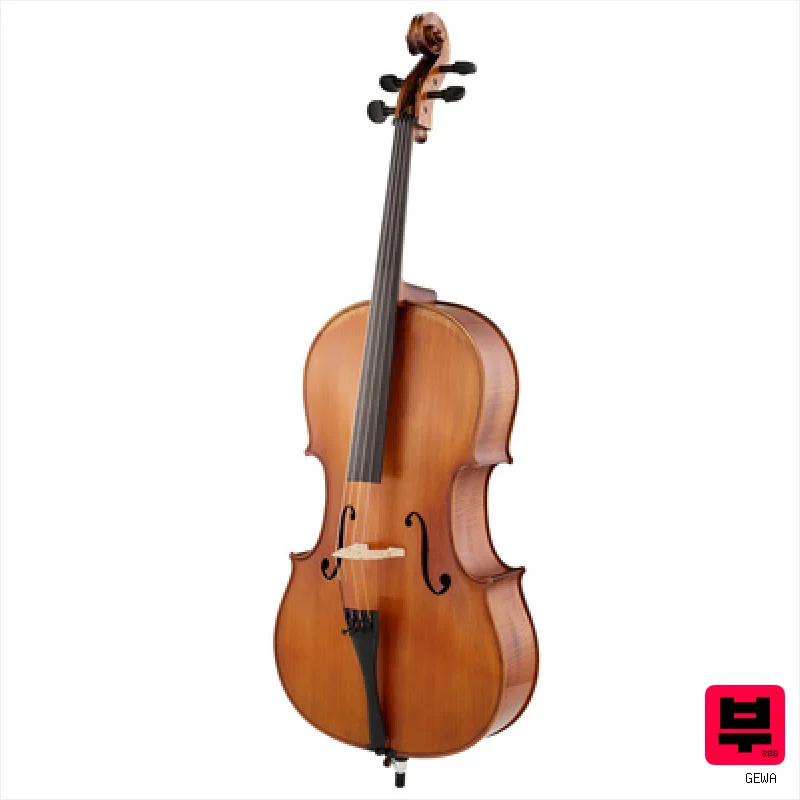
- BodyBasswood body
The Gewa Novita 3.0 is a solid entry point into amplified cello playing. It’s surprisingly well-built for the price, offering a respectable sound and comfortable feel. Ideal for students, gigging musicians, or anyone wanting a versatile, amplified cello without a premium-priced investment.
Pros
- Solid maple neck provides excellent sustain and response.
- GEWA pickup delivers a usable, amplified acoustic cello tone.
- Carbon frame enhances structural stability and reduces feedback.
Cons
- Basswood body offers a warmer tone, potentially lacking brightness for some styles.
- Piezo pickup system may exhibit a characteristic 'quack' when overdriven.
44AudioFu
IndexStableno change since Aug 14Aug 14$2,915 now$2,915€2,590 at Thomann · in stockCheck price ↗
All 21 electric cellos
Same index, same nightly prices — compact. Colour options of one model share a row. Tap a photo to zoom.
- 11
Gewa Novita 3.0 E-Cello RD HGGewa · 3 finishes39Stable$3,365€2,990$3,365€2,990Check ↗
- 12
Harley Benton Artist Solo Electric Cello 4/4Harley Benton51↓ 8.4%$1,123€998$1,123€998Check ↗
- 13
sbip C4171BL Electric Cello 4/4sbip30↑ 7.8%$1,564€1,390$1,564€1,390Check ↗
- 14
NS Design NXT5a-CO-SB-F Fretted Low FNS Design · 2 finishes56Stable$3,815€3,390$3,815€3,390Check ↗
- 15
NS Design CR5-CO-AM Low F CelloNS Design · 6 finishes54Stable$5,446€4,840$5,446€4,840Check ↗
- 16
NS Design NXT4a-CO-SB-F Fretted CelloNS Design52Stable$3,488€3,100$3,488€3,100Check ↗
- 17
Harley Benton HBCE 990WH Electric CelloHarley Benton · 6 finishes51↓ 11.4%$448€398$448€398Check ↗
- 18
NS Design CR4-CO-AM Amber CelloNS Design · 3 finishes50↓ 3.3%$4,996€4,440$4,996€4,440Check ↗
- 19
Yamaha SVC300FPW Silent CelloYamaha · 4 finishes48↓ 14.4%$3,757€3,339$3,757€3,339Check ↗
- 20
NS Design NXT4a-CO-BK-F Fretted CelloNS Design46↑ 1.6%$3,590€3,190$3,590€3,190Check ↗
- 21
NS Design CR6-CO-AM Amber CelloNS Design · 2 finishes46Stable$5,840€5,190$5,840€5,190Check ↗
Electric Cellos by the numbers
Measured across all 50 models we track, not a sample.
Median $3,196 — half of all electric cellos here cost less.
median of 12 models · 1.9 kg–3.3 kg
median of 30 models · 4-string–5-string
most common · 11 models
How to choose the best electric cellos
Playability
This isn't just about action (though that's important - too high and you'll be fighting it, too low and you'll get fret buzz). Neck profile is key; a comfortable, consistent shape will make a huge difference in your playing speed and accuracy. You need something you can gig with for hours without your hand cramping.
Pickup Voicing
Electric cellos often have a reputation for sounding sterile or overly bright. We're looking for pickups that offer a usable range of tones - something with a bit of warmth and character, not just a harsh, ice-picky top end. The ability to dial back the brightness is a huge plus.
Output Options
A simple 1/4" output is fine, but consider something with a built-in preamp and EQ controls. This gives you more headroom and allows you to shape your tone before it hits the mixer - crucial for cutting through a band without needing a ton of amp volume.
Body Resonance & Construction
Even though it's amplified, the cello's body still contributes to the overall tone. A solid wood body (even a lower-grade wood) will generally resonate better than a laminate one. Look for a well-braced construction to minimize unwanted vibrations and feedback.
Overall Build Quality & Durability
Let's be real, you're probably going to be hauling this thing around. Cheap hardware, a flimsy neck joint, or a poorly finished body can all lead to headaches down the road. It doesn't have to be perfect, but it needs to be reasonably solid.
Buying guide
Alright, so you've been playing acoustic cello for a while, you're comfortable with vibrato and shifting, and you're thinking about plugging in. Electric cellos aren't just for studio cats - they open up a whole new world for gigging, looping, and exploring different tones. But jumping into an electric cello isn't like swapping a Les Paul for a Strat; there's a learning curve and a lot of variables. This guide will help you find something that'll actually inspire you to play, not frustrate you with weird pickup quirks and uncomfortable ergonomics.
For an intermediate player, you're likely looking at a budget of $800-$2000. Don't chase the high-end piezo systems just yet - they're often more trouble than they're worth. Focus on playability and a usable pickup voicing.
Many cheaper models cut corners on the neck joint or bracing, which can lead to instability and a compromised tone. A good, solid setup from a luthier is almost mandatory, regardless of the model you choose.
How the AudioFu Index works
Five measured signals and nothing else — no stars from strangers, no “tested by experts” we didn’t do. The weights are fixed and public. We don’t play these instruments; we measure the market around them.
This chart covers 50 electric cellos from the Thomann catalogue. Before you buy, read hands-on reviews and, where you can, play it. Full methodology.
AudioFu earns a commission when you buy through our Thomann links. It never changes the order — the index does.
- Demand40%
How many of this exact model are for sale on Reverb right now — what musicians actually buy and resell.
- Lineup20%
How many finishes Thomann stocks — makers expand the models that sell.
- Price15%
Where the price has moved since we started tracking in August.
- Specs15%
How completely the maker documents it.
- Maker10%
How deep the brand’s range is in this category.
Questions
Are piezo pickups really that bad?
They can be. Piezo pickups are notorious for their harshness and lack of warmth. They often emphasize string noise and can be difficult to EQ properly. Some models have gotten better, but be prepared to spend time tweaking or even replacing them.
Does the body wood really matter for an electric cello?
It does, more than you might think. Even with amplification, the body's resonance contributes to the overall tone. Solid wood will generally have more character and sustain than laminate wood, although the pickups are the biggest factor.
Can I use an acoustic cello amplifier with an electric cello?
Technically, yes, but it's usually not ideal. Acoustic amps are often voiced for acoustic guitars and may not be the best match for the electric cello's pickup. A bass amp or a keyboard amp is often a better choice, or even a full-range PA speaker.
What about MIDI output?
MIDI is a cool feature, but it's often a gimmick on cheaper electric cellos. The tracking can be unreliable, and the latency can be frustrating. Focus on getting a good core sound first, then consider MIDI later if it's a priority.
How important is a good setup?
Critically important. Even a well-made electric cello can be unplayable if the setup is off. A proper setup - including action adjustment, intonation correction, and bridge placement - can make a huge difference in playability and tone. Budget for it.