
Best Drum Modules for Rhythm Generation 2026
So, you're diving into rhythm generation? Awesome. Forget about simulating a Ludwig kit - we're talking about crafting sounds from scratch, building grooves that don't exist. Drum modules are your palette, and choosing the right one is about more than just a library of decent snares; it's about sonic flexibility, tweakability, and the ability to sculpt rhythms that cut through the mix. Let's find a module that inspires your beatmaking.
Last updated: July 22, 2026 • Next update: July 29, 2026
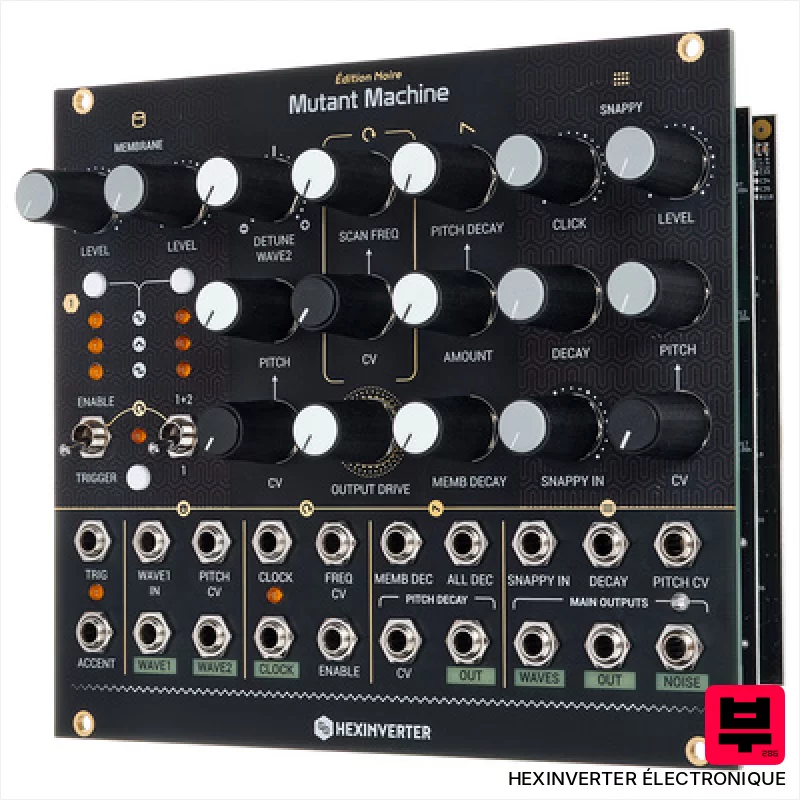
Hexinverter Électronique Mutant Machine
- • Inverter core oscillators deliver uniquely complex and evolving drum timbres.
- • Snappy section emulates percussive transients with voltage-controlled noise.
- • Waveform scanning provides dynamic timbre shifts controllable via CV.
- • Extensive input/output options enable deep integration within a modular system.
- • Requires a solid understanding of modular synthesis for optimal use.
- • Power draw is relatively high, demanding a robust power supply.
- • Limited preset capabilities necessitate significant manual tweaking.

Endorphin.es Queen of Pentacles
- • Hybrid engine delivers surprisingly organic, punchy drum sounds.
- • Sample loading expands sonic palette beyond analog limitations.
- • Comprehensive effects section offers immediate, creative sound sculpting.
- • Compact 30HP footprint maximizes space in modular setups.
- • Limited sample time per bank restricts longer sample usage.
- • Analog section's character might be too 'lo-fi' for some.
- • Effect algorithms, while diverse, lack deep parameter control.
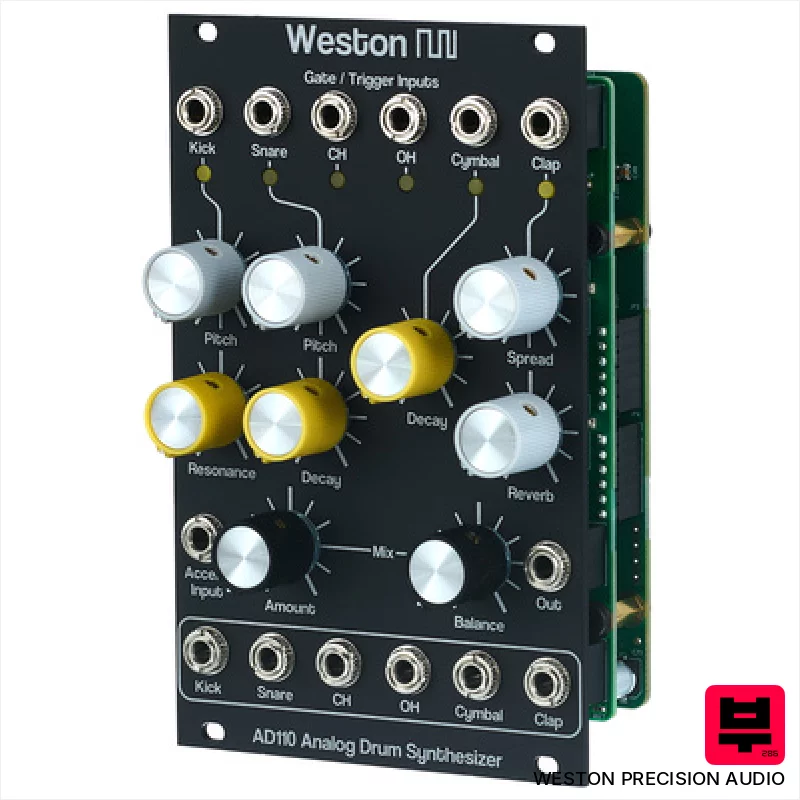
Weston Precision Audio AD110 Analog Drums
- • Warm, punchy kick drum delivers satisfying low-end thump.
- • Snare has a crisp attack with controllable decay shaping.
- • Individual outputs allow for detailed drum buss processing.
- • Compact 16HP footprint ideal for dense Eurorack systems.
- • Limited sound palette compared to sample-based drum modules.
- • Accent input lacks nuanced modulation options.
- • Cymbal sound leans towards metallic, not realistically organic.
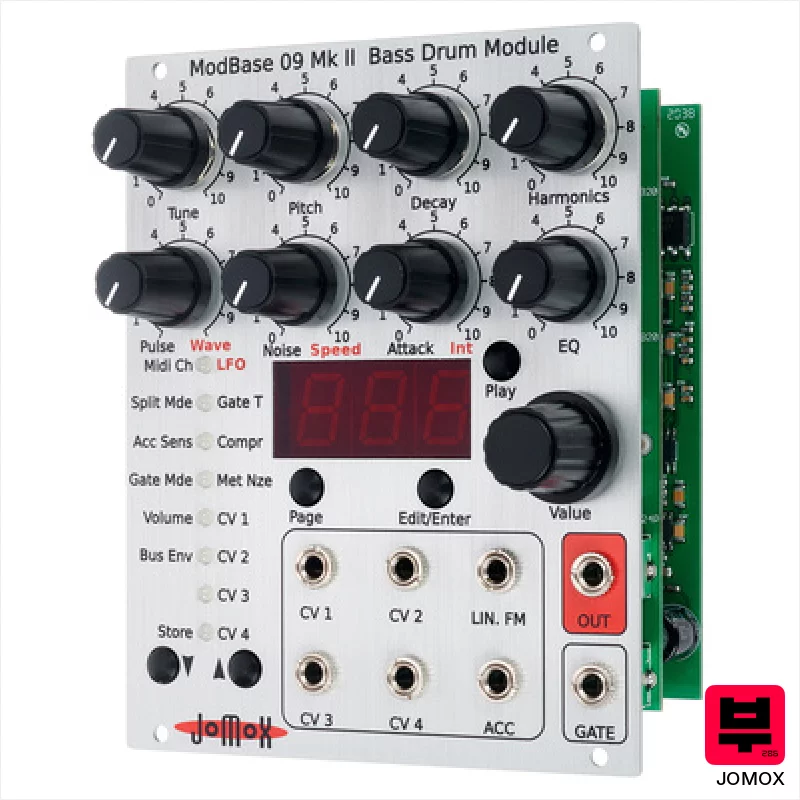
Jomox ModBase 09 MKII
- • Exceptional low-end thump with surprisingly complex harmonic content
- • Highly tunable range (10-175Hz) allows for diverse bass sounds
- • The dual LFOs offer significant sound design possibilities and modulation
- • Robust build quality; feels solid and durable for rackmount use
- • 20HP footprint can be restrictive in smaller modular systems
- • Limited preset recall compared to some modern drum modules
- • EQ is basic; lacks the finesse of more advanced modules

Erica Synths Perkons Voice
- • Unique percussion algorithms offer distinct, characterful sounds.
- • Hybrid design blends digital precision with analog warmth.
- • Compact 14HP footprint maximizes modular space efficiency.
- • User preset storage enables quick recall and experimentation.
- • Limited sound design control compared to full modular setups.
- • Power draw could be a constraint in power-limited systems.
- • Algorithm complexity might be daunting for absolute beginners.
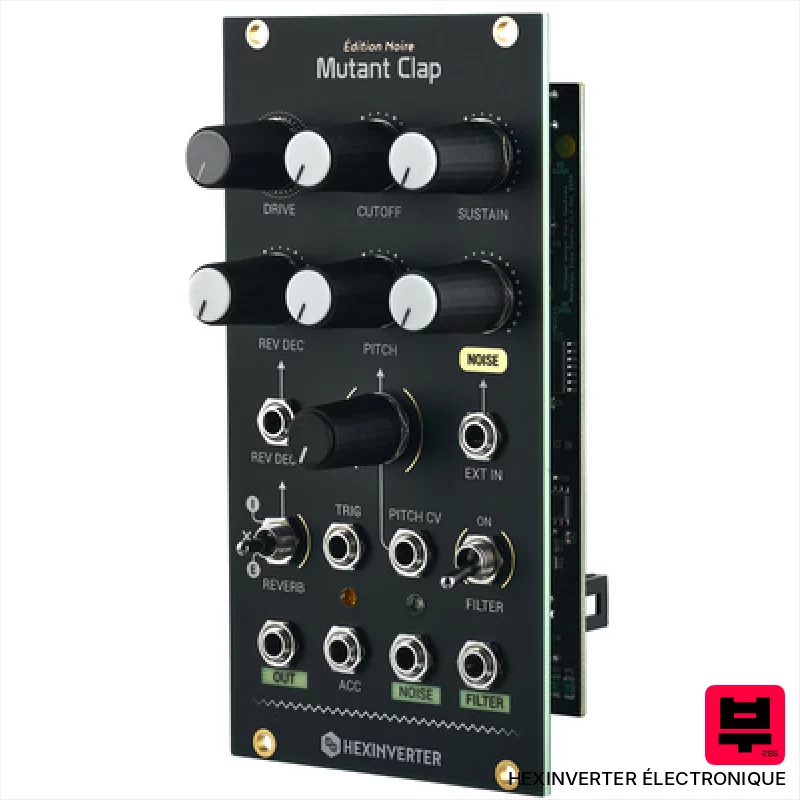
Hexinverter Électronique Mutant Clap
- • Aggressive, TR-909-inspired claps offer immediate rhythmic impact.
- • Drive circuit delivers satisfying grit and character beyond basic claps.
- • CV control over reverb decay adds dynamic, evolving textures.
- • Compact 13HP footprint maximizes modular space efficiency.
- • Limited tonal palette; primarily focused on clap sounds, less versatile.
- • Noise output can be overpowering if not carefully managed in a mix.
- • Analog design means some drift may occur, requiring occasional calibration.

vpme.de QD
- • Versatile sound generation with modelling, wavetable, and sample options
- • Compact 22HP footprint maximizes modular space efficiency
- • Integrated mixer and EQ offer immediate sound shaping capabilities
- • Freely assignable LFOs enable complex and evolving drum patterns
- • Limited sample time per voice compared to dedicated samplers
- • 120mA power draw may strain power supplies in smaller systems
- • Parameter control per voice, while flexible, could be more intuitive
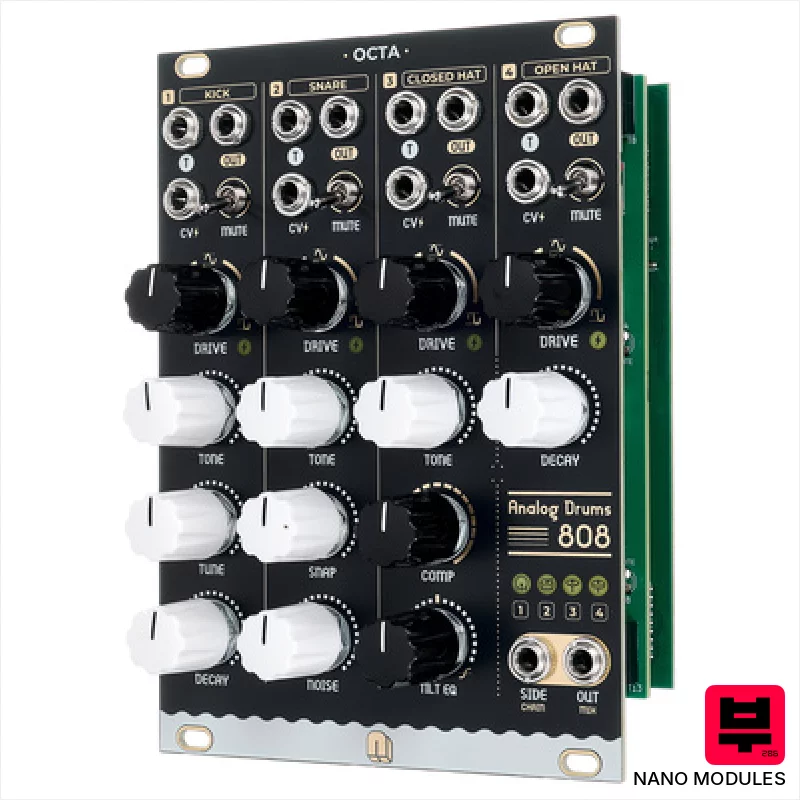
NANO Modules OCTA
- • Analog warmth and grit delivers authentic 808 character.
- • Compact 18HP footprint maximizes modular space efficiency.
- • Individual instrument level controls with overdrive offer creative shaping.
- • Sidechain output allows for dynamic interaction with other modules.
- • Limited parameter control compared to dedicated drum machines.
- • The compressor on the main output can be a bit aggressive out of the box.
- • Hi-hat sounds, while usable, lack the complexity of some higher-end modules.

Hexinverter Électronique Mutant Rimshot
- • Unique percussive sounds not easily replicated elsewhere.
- • The filter section adds surprising textural complexity.
- • Compact 8HP footprint maximizes modular space efficiency.
- • Analog circuitry delivers warmth and character absent in digital emulations.
- • Limited tonal palette; primarily rimshot and clave sounds.
- • The decay control can be finicky, requiring precise adjustments.
- • 5V control voltage inputs may limit compatibility with some modules.
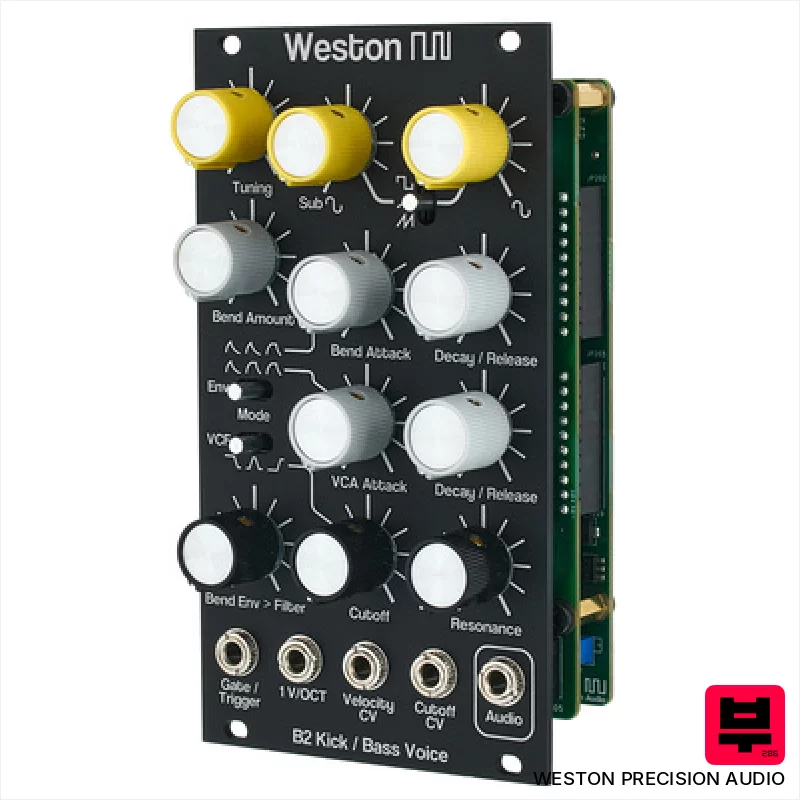
Weston Precision Audio B2 Kick / Bass Voice
- • Excellent low-end thump with surprisingly tight transient response.
- • Bend envelope offers unique pitch/filter modulation possibilities.
- • Multimode filter provides tonal flexibility beyond basic kick duties.
- • Compact 14HP footprint maximizes rack space efficiency.
- • Limited waveform selection compared to broader synth voices.
- • Bend intensity control can be tricky to dial in precisely.
- • 80mA negative rail draw might be restrictive in some power setups.
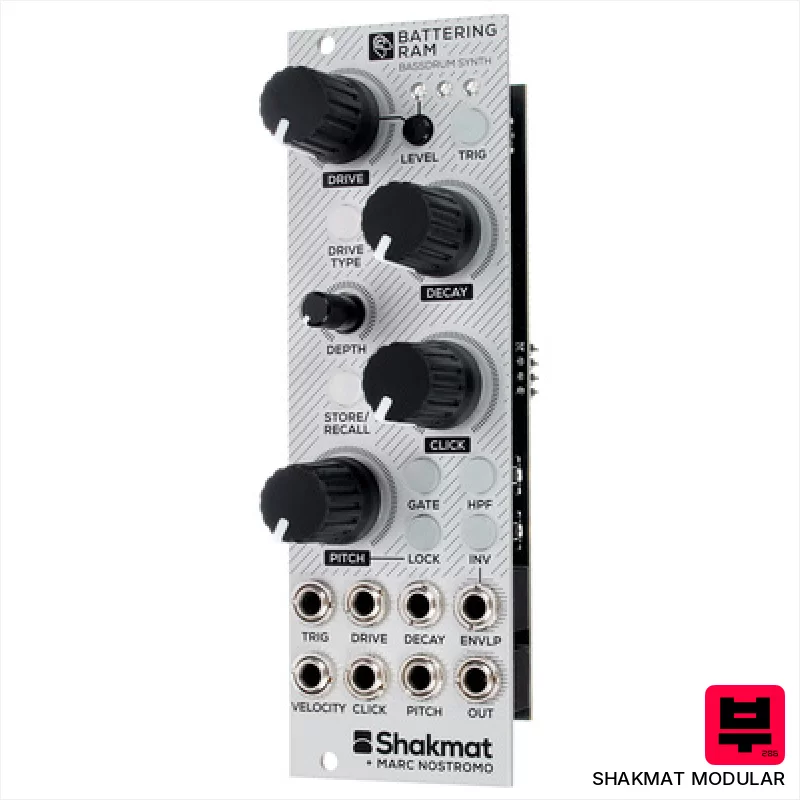
Shakmat Modular Battering Ram
- • Djtechtools knobs offer excellent tactile feel and precise control.
- • Dual drive options provide a surprisingly wide range of kick drum textures.
- • Compact 8HP footprint maximizes space in dense Eurorack setups.
- • Pitch locking simplifies tuning and experimentation with sub-bass frequencies.
- • Limited parameter recall can be cumbersome for complex sound design.
- • 85mA power draw is relatively high for a single module.
- • The high-pass filter, while useful, lacks resonance control.
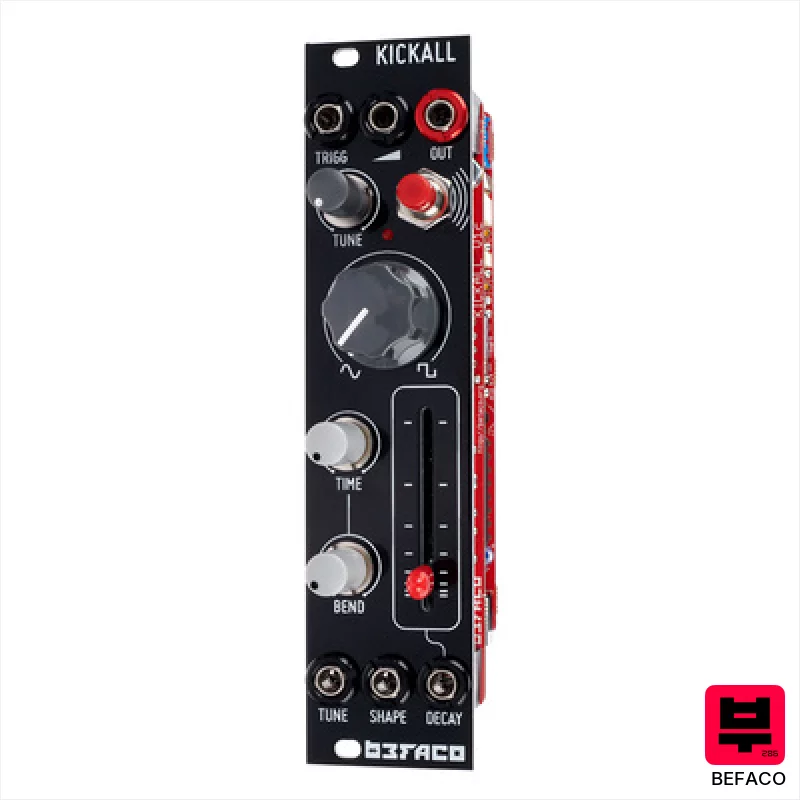
Befaco Kickall
- • Excellent punch and low-end thump, surprisingly deep for its size
- • Wave shaping offers a wide range of kick drum textures
- • CV control allows for dynamic and sequenced kick patterns
- • Compact 6HP footprint is ideal for dense modular setups
- • Limited tonal palette compared to more complex drum modules
- • Bend control can be a bit unpredictable, requiring careful tuning
- • Manual trigger button feels a little flimsy, not the most robust
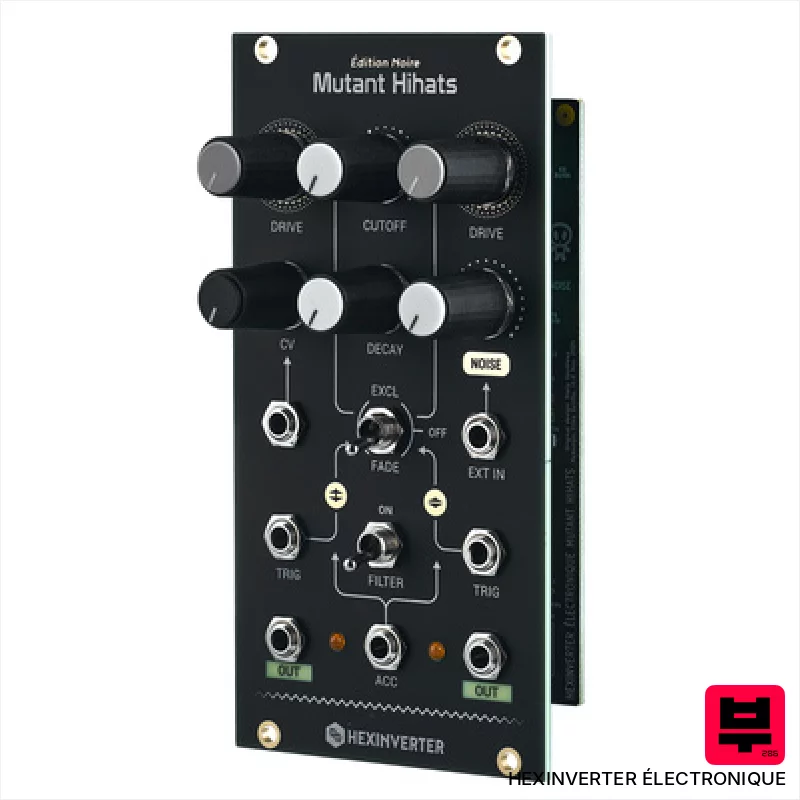
Hexinverter Électronique Mutant Hi-Hats
- • OTA VCAs deliver a uniquely gritty, characterful hi-hat tone.
- • Resonance filter adds significant sonic sculpting possibilities.
- • Compact 13HP footprint maximizes modular space efficiency.
- • Dual trigger inputs allow for complex rhythmic patterns and sequences.
- • Limited parameter control compared to more complex drum modules.
- • OTA-based design can introduce noise if gain staging isn't meticulous.
- • The '808-inspired' sound is a specific flavor; lacks broader hi-hat versatility.
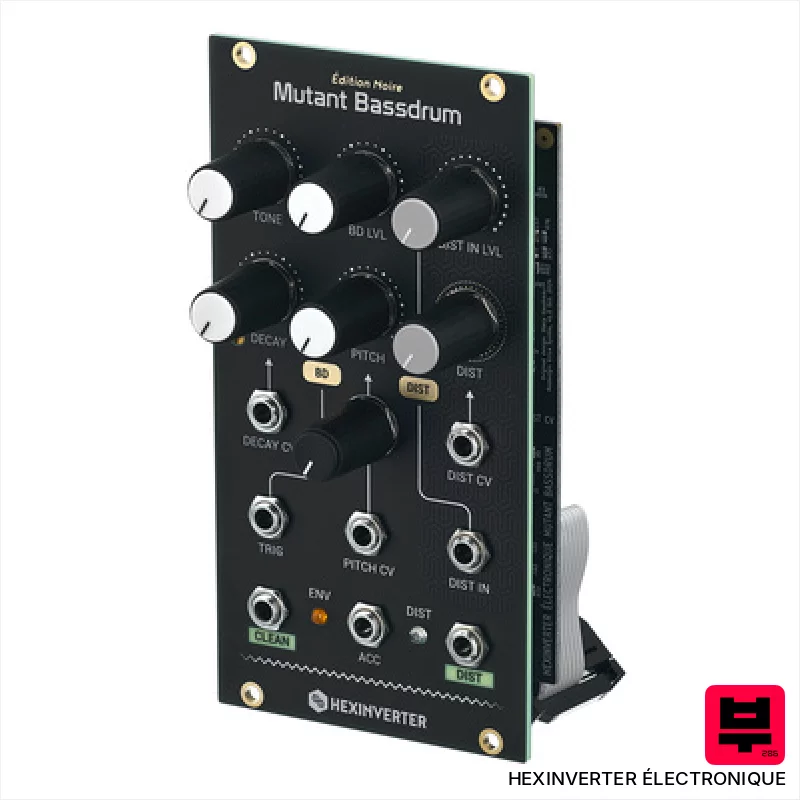
Hexinverter Électronique Mutant Bass Drum
- • Warm, punchy 808-inspired tones with surprising depth.
- • Flexible distortion section adds grit and character easily.
- • CV control over pitch and decay opens creative sequencing possibilities.
- • Compact 13HP footprint maximizes modular space efficiency.
- • Limited tonal palette; primarily focused on kick drum sounds.
- • Distortion, while useful, can be a bit harsh at higher gain settings.
- • Lack of a dedicated filter severely restricts sound sculpting options.

Hexinverter Électronique Mutant BD9
- • Punchy, 909-inspired kick with a satisfyingly gritty character.
- • Excellent CV modulation capabilities for dynamic drum programming.
- • Compact 13HP footprint maximizes valuable Eurorack space.
- • Robust build quality; Hexinverter is known for reliable modules.
- • Limited tonal variation compared to more complex drum modules.
- • Sub octave control is a bit coarse, lacks fine-grained adjustment.
- • Output drive can easily overload downstream modules, requiring careful gain staging.
How to Choose the Best Drum Modules
Sound Engine Architecture
A sample-based module is fine, but a hybrid or synthesis-based engine gives you more control over tone - think gritty textures, evolving sounds, and the ability to manipulate individual drum components. It's the difference between a photocopy and a custom painting.
Modulation Options
LFOs, envelopes, filters - these are your tools for adding movement and character to your rhythms. Look for modules with deep modulation routings; a simple filter sweep can transform a basic kick into something truly unique.
Sequencing Capabilities
Beyond just triggering samples, a good rhythm generation module should have a sequencer - step sequencers, pattern repeaters, even basic sequencing engines. The more sequencing power, the less you'll need to rely on external gear.
Sound Library Quality & Expandability
A decent starting library is nice, but the ability to import your own samples or expand with third-party sound packs is essential for long-term inspiration. Beware of modules with locked-down libraries.
Hands-On Controls & Workflow
Knobs, buttons, pads - the more tactile control you have, the more immediate and intuitive your workflow will be. Fiddling with menus on a small screen gets old fast, especially when you're in the zone.
Buying Guide
Don't be fooled by sheer sample count; a few well-crafted, versatile sounds are better than a library of mediocre ones. Cheaper modules often skimp on the sound engine, relying on basic sample playback with limited modulation-that's why they sound...flat. Spending a bit more for a module with a synthesis engine and robust modulation capabilities will pay dividends in sonic creativity. Think about your gigging needs too - portability and a reliable power supply are key.
Our Methodology
We don't just look at specs here. We've spent countless hours playing these modules through studio monitors, PA systems, and headphones, putting them through the wringer in band rehearsals and tracking sessions. It's about hearing how they really sound and how they perform in the situations you'll actually use them-that's how we separate the gear that inspires from the gear that collects dust.

