
Best Drum Modules for Modular Percussion 2026
So, you're diving into modular percussion? Awesome. It's a rabbit hole, but one with incredible sonic potential. Forget those stock drum machine sounds - we're talking about sculpting percussive textures from the ground up, patching in crazy modulation, and building rhythms that defy categorization. This isn't about finding the "best" drum module in the traditional sense; it's about finding the right sonic palette and flexibility for your modular workflow.
Last updated: July 22, 2026 • Next update: July 29, 2026
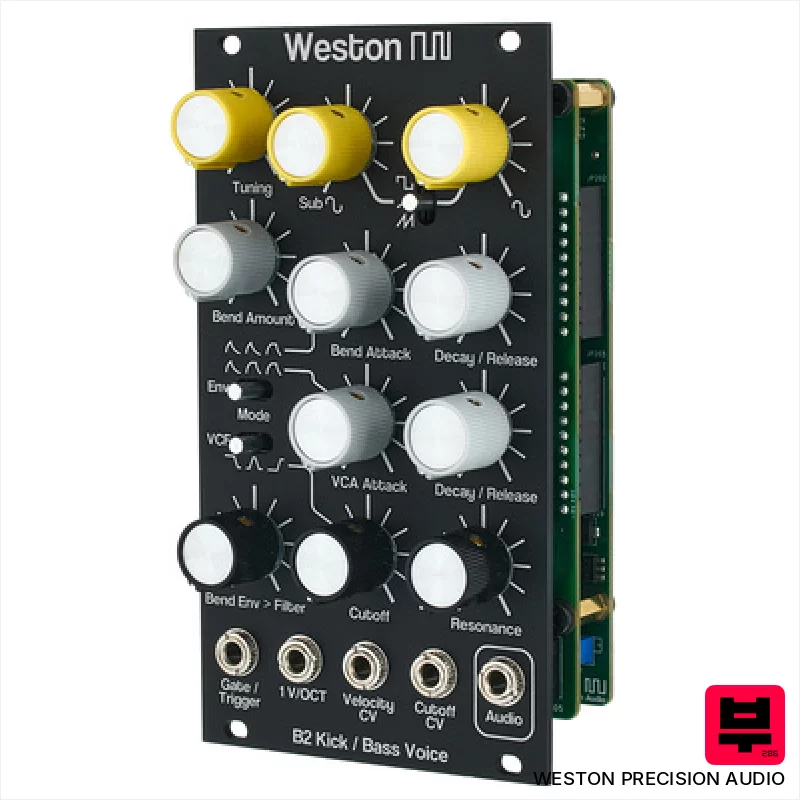
Weston Precision Audio B2 Kick / Bass Voice
- • Excellent low-end thump with surprisingly tight transient response.
- • Bend envelope offers unique pitch/filter modulation possibilities.
- • Multimode filter provides tonal flexibility beyond basic kick duties.
- • Compact 14HP footprint maximizes rack space efficiency.
- • Limited waveform selection compared to broader synth voices.
- • Bend intensity control can be tricky to dial in precisely.
- • 80mA negative rail draw might be restrictive in some power setups.
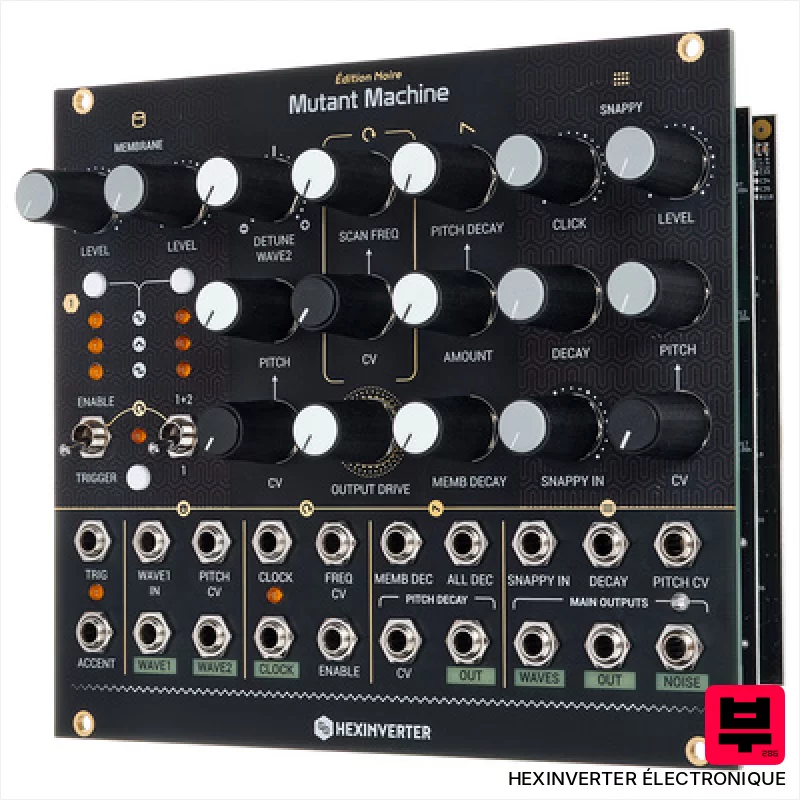
Hexinverter Électronique Mutant Machine
- • Inverter core oscillators deliver uniquely complex and evolving drum timbres.
- • Snappy section emulates percussive transients with voltage-controlled noise.
- • Waveform scanning provides dynamic timbre shifts controllable via CV.
- • Extensive input/output options enable deep integration within a modular system.
- • Requires a solid understanding of modular synthesis for optimal use.
- • Power draw is relatively high, demanding a robust power supply.
- • Limited preset capabilities necessitate significant manual tweaking.

Endorphin.es Queen of Pentacles
- • Hybrid engine delivers surprisingly organic, punchy drum sounds.
- • Sample loading expands sonic palette beyond analog limitations.
- • Comprehensive effects section offers immediate, creative sound sculpting.
- • Compact 30HP footprint maximizes space in modular setups.
- • Limited sample time per bank restricts longer sample usage.
- • Analog section's character might be too 'lo-fi' for some.
- • Effect algorithms, while diverse, lack deep parameter control.
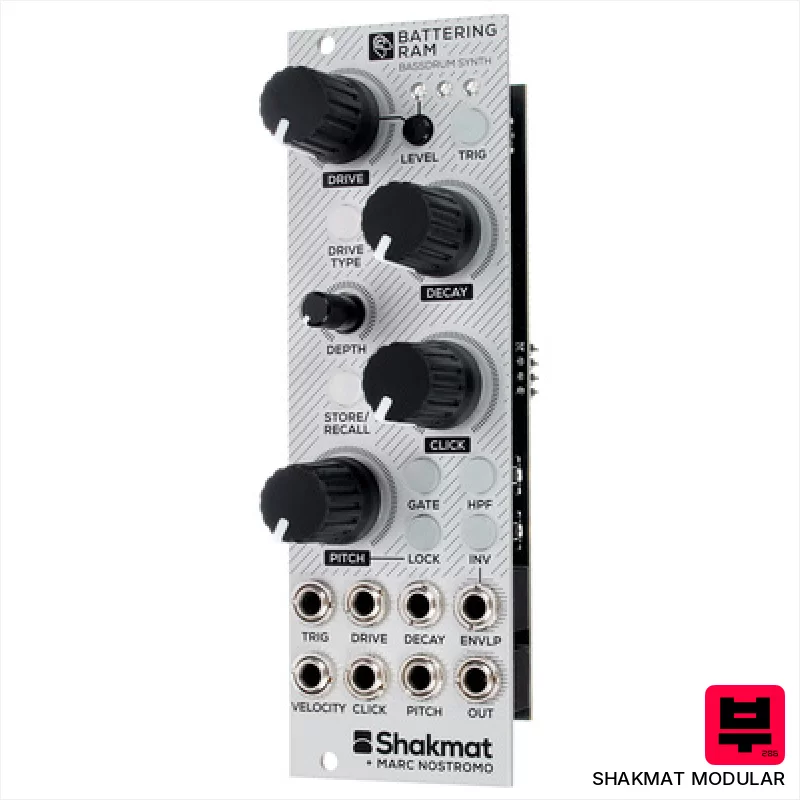
Shakmat Modular Battering Ram
- • Djtechtools knobs offer excellent tactile feel and precise control.
- • Dual drive options provide a surprisingly wide range of kick drum textures.
- • Compact 8HP footprint maximizes space in dense Eurorack setups.
- • Pitch locking simplifies tuning and experimentation with sub-bass frequencies.
- • Limited parameter recall can be cumbersome for complex sound design.
- • 85mA power draw is relatively high for a single module.
- • The high-pass filter, while useful, lacks resonance control.

Erica Synths Bass Drum2
- • Exceptional low-end thump with surprising harmonic complexity.
- • CV modulation offers incredible rhythmic and tonal sculpting possibilities.
- • The dual output design allows for creative routing and layering.
- • Solid build quality; Erica Synths' characteristic robust panel construction.
- • 14HP footprint can be restrictive in smaller modular setups.
- • Drive control can quickly become overwhelming and harsh without careful adjustment.
- • Limited tonal palette; primarily focused on bass drum sounds.
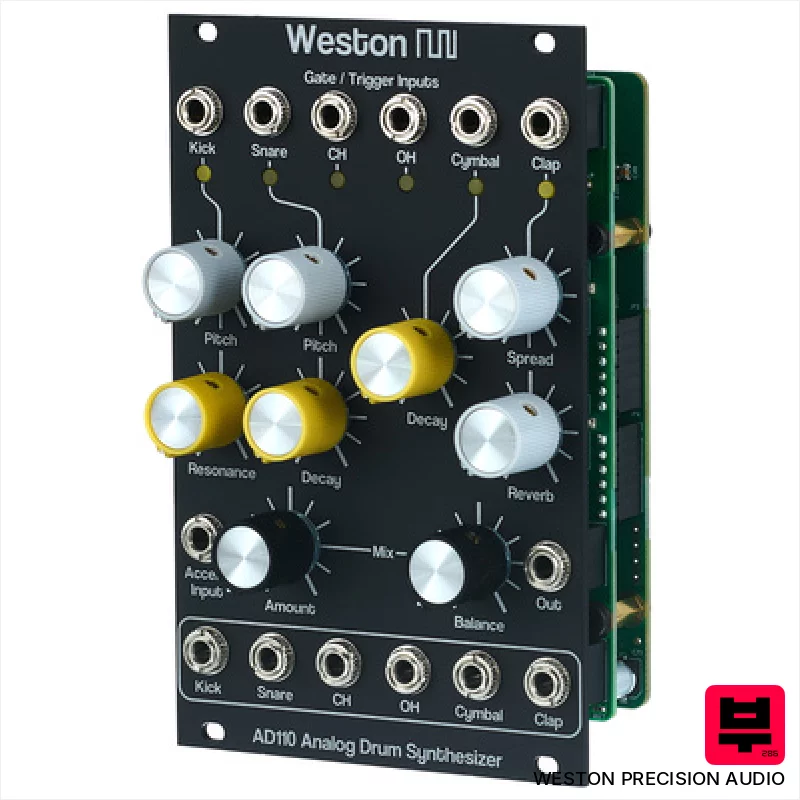
Weston Precision Audio AD110 Analog Drums
- • Warm, punchy kick drum delivers satisfying low-end thump.
- • Snare has a crisp attack with controllable decay shaping.
- • Individual outputs allow for detailed drum buss processing.
- • Compact 16HP footprint ideal for dense Eurorack systems.
- • Limited sound palette compared to sample-based drum modules.
- • Accent input lacks nuanced modulation options.
- • Cymbal sound leans towards metallic, not realistically organic.
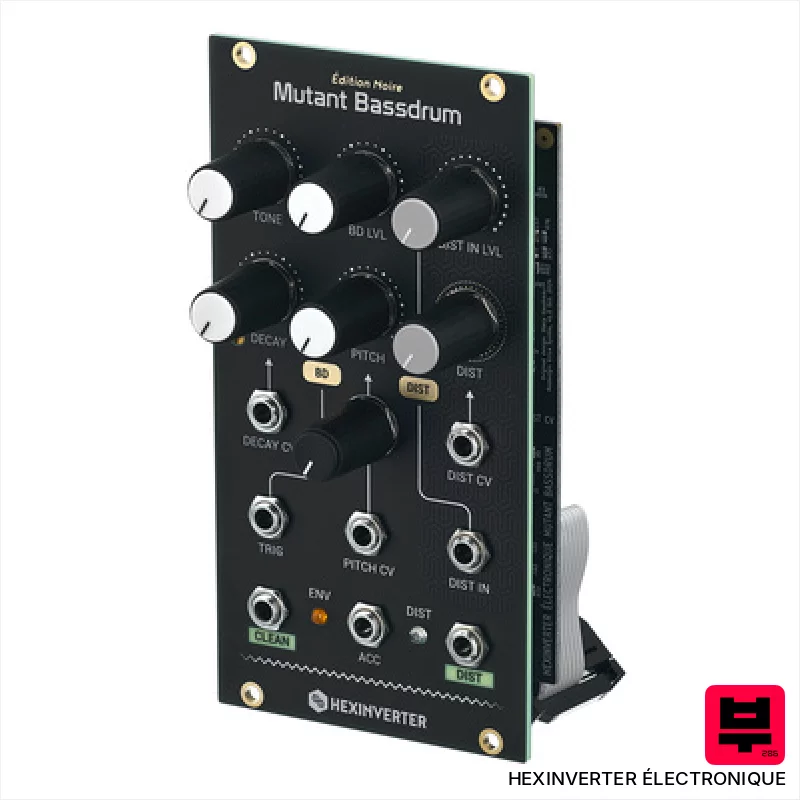
Hexinverter Électronique Mutant Bass Drum
- • Warm, punchy 808-inspired tones with surprising depth.
- • Flexible distortion section adds grit and character easily.
- • CV control over pitch and decay opens creative sequencing possibilities.
- • Compact 13HP footprint maximizes modular space efficiency.
- • Limited tonal palette; primarily focused on kick drum sounds.
- • Distortion, while useful, can be a bit harsh at higher gain settings.
- • Lack of a dedicated filter severely restricts sound sculpting options.

vpme.de QD
- • Versatile sound generation with modelling, wavetable, and sample options
- • Compact 22HP footprint maximizes modular space efficiency
- • Integrated mixer and EQ offer immediate sound shaping capabilities
- • Freely assignable LFOs enable complex and evolving drum patterns
- • Limited sample time per voice compared to dedicated samplers
- • 120mA power draw may strain power supplies in smaller systems
- • Parameter control per voice, while flexible, could be more intuitive
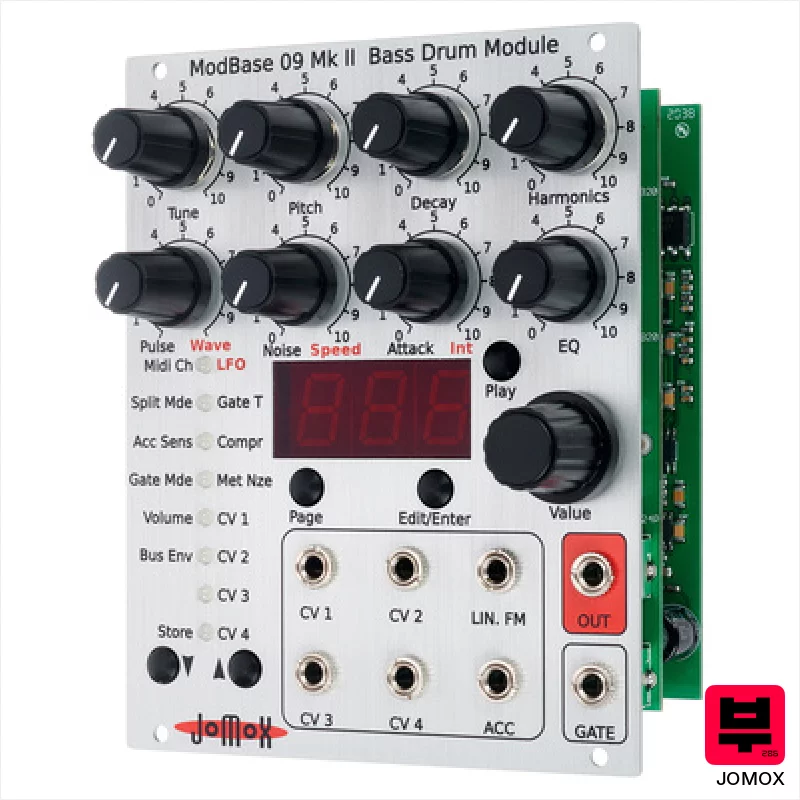
Jomox ModBase 09 MKII
- • Exceptional low-end thump with surprisingly complex harmonic content
- • Highly tunable range (10-175Hz) allows for diverse bass sounds
- • The dual LFOs offer significant sound design possibilities and modulation
- • Robust build quality; feels solid and durable for rackmount use
- • 20HP footprint can be restrictive in smaller modular systems
- • Limited preset recall compared to some modern drum modules
- • EQ is basic; lacks the finesse of more advanced modules
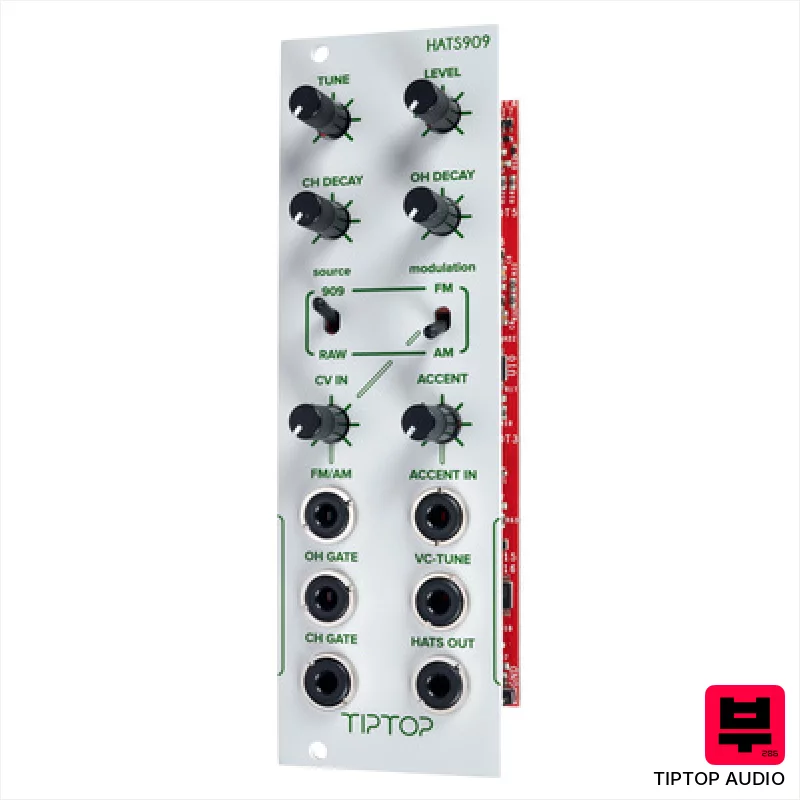
Tiptop Audio HATS909
- • Authentic 909 hi-hat character, surprisingly nuanced for a module
- • VC-Tune offers expressive, voltage-controlled sonic manipulation
- • Compact 8HP footprint ideal for space-constrained modular systems
- • Analog filtering adds warmth and grit absent in purely digital hi-hats
- • Limited modulation options beyond AM/FM
- • Sample-based nature lacks the organic feel of fully analog hi-hats
- • Power draw, while manageable, is higher than some modules
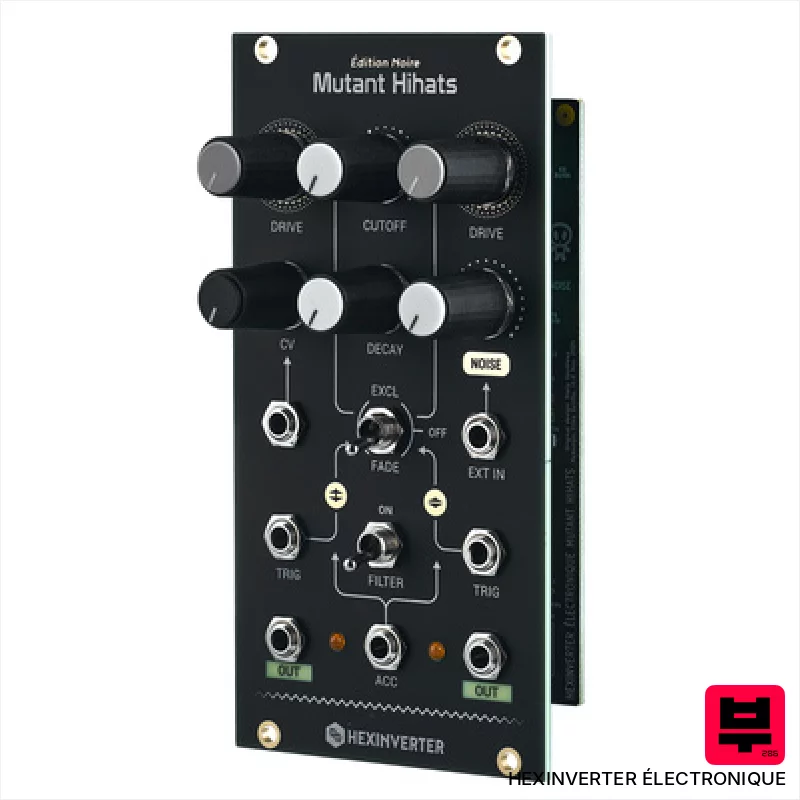
Hexinverter Électronique Mutant Hi-Hats
- • OTA VCAs deliver a uniquely gritty, characterful hi-hat tone.
- • Resonance filter adds significant sonic sculpting possibilities.
- • Compact 13HP footprint maximizes modular space efficiency.
- • Dual trigger inputs allow for complex rhythmic patterns and sequences.
- • Limited parameter control compared to more complex drum modules.
- • OTA-based design can introduce noise if gain staging isn't meticulous.
- • The '808-inspired' sound is a specific flavor; lacks broader hi-hat versatility.
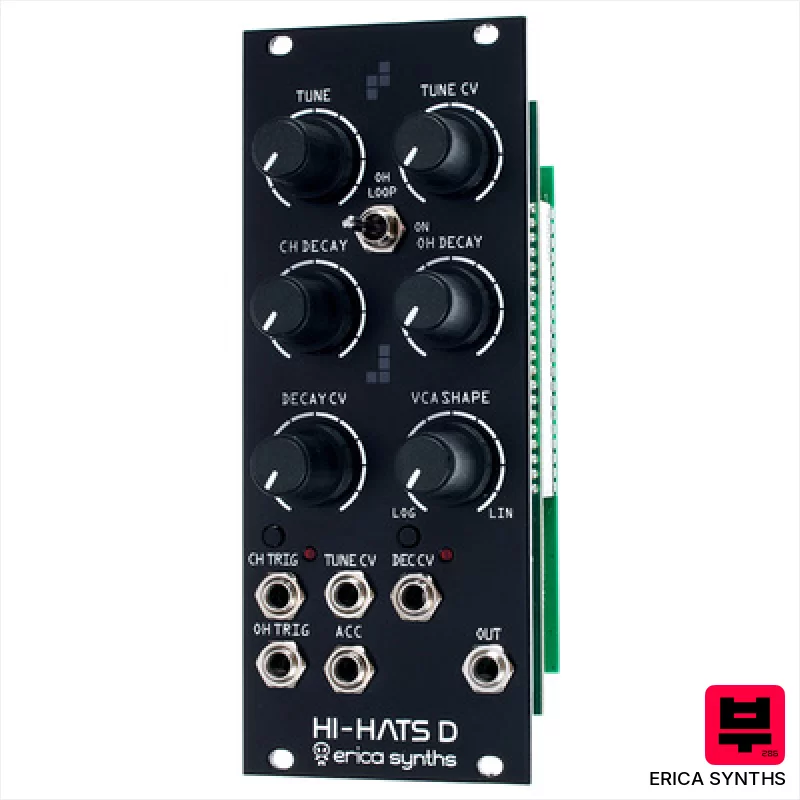
Erica Synths Hi-Hats D
- • Discrete 6-bit DAC delivers a wonderfully gritty, vintage hi-hat tone
- • AS3330 VCA provides punch and dynamic response
- • CV control over tuning and decay unlocks expressive possibilities
- • Compact 10TE module efficiently integrates into tight Eurorack setups
- • Limited tonal palette compared to more complex drum modules
- • 6-bit DAC can sound harsh for some users seeking pristine sounds
- • No built-in noise generation; relies on external sources
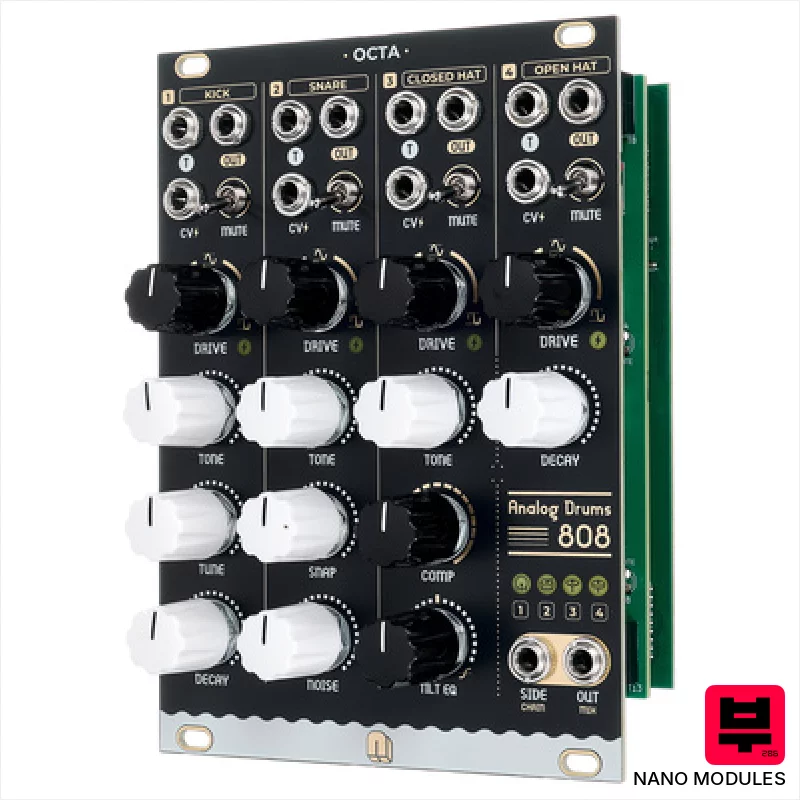
NANO Modules OCTA
- • Analog warmth and grit delivers authentic 808 character.
- • Compact 18HP footprint maximizes modular space efficiency.
- • Individual instrument level controls with overdrive offer creative shaping.
- • Sidechain output allows for dynamic interaction with other modules.
- • Limited parameter control compared to dedicated drum machines.
- • The compressor on the main output can be a bit aggressive out of the box.
- • Hi-hat sounds, while usable, lack the complexity of some higher-end modules.

Tiptop Audio BD909
- • Faithful recreation of the iconic 909 bass drum punch
- • VC tuning adds unique sound design possibilities
- • Compact 8HP footprint saves precious modular space
- • Robust build quality; feels solid and dependable
- • Limited to only the bass drum sound; lacks versatility
- • Power draw is moderate; consider power supply capacity
- • Accent control can be a little sensitive to tweak
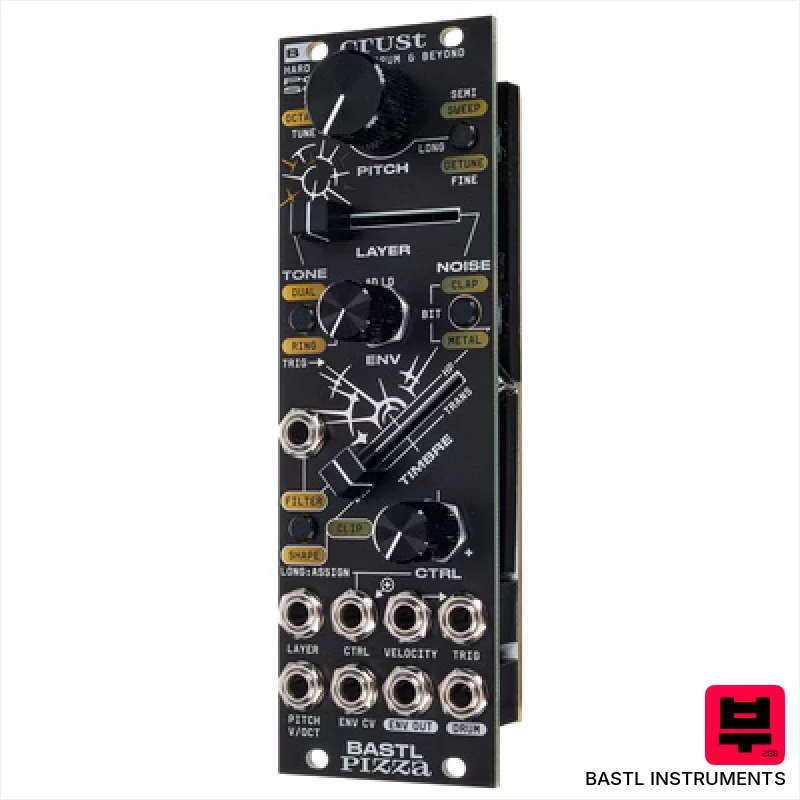
Bastl Instruments Crust
- • Dual-layer design offers surprisingly complex percussive textures.
- • Bastl’s signature quirky, characterful sound – raw and immediate.
- • Crossfader and CV control provide expressive, dynamic performance options.
- • Compact 8HP footprint makes it ideal for smaller modular systems.
- • Limited layer count restricts complex, multi-layered drum patterns.
- • Noise layer options, while creative, lack conventional drum sounds.
- • The bipolar controller's range can feel restrictive for nuanced adjustments.
How to Choose the Best Drum Modules
Sound Engine Flexibility
Modular percussion thrives on weirdness. Can the module be easily tweaked and modulated? Look for things like adjustable decay times, layered oscillators, and filters with serious character - not just a clean, sterile sound.
Modulation Input Response
How does the module react to incoming CV/Gate signals? Does it feel responsive and nuanced, or sluggish and predictable? A module that can truly respond to your modular environment is essential.
Sound Palette Breadth
Obviously, you want a range of sounds, but more importantly, you want sounds that can be shaped. Modules that offer a foundation of raw, interesting samples or synth-based tones are far more valuable than those with pre-baked, limited kits.
Latency & Triggering
Modular setups demand tight timing. High latency will kill your groove. Pay attention to trigger response - can you get glitchy, stuttered rhythms without the module feeling like it's lagging behind?
Connectivity & Routing
Beyond the obvious MIDI and CV inputs, consider how the module handles audio outputs. Multiple outputs for layering or individual processing? Sample import capabilities? These details can seriously expand your creative possibilities.
Buying Guide
Don't get caught up in the hype. A lot of these modules are expensive, and you're paying for sonic character and flexibility as much as you are for raw features. Cheaper modules often cut corners on sound engine quality or responsiveness, leading to a less inspiring experience. If you're just starting out, consider a module with a strong foundation of sounds and a clear modulation path - you can always add more specialized modules later.
Our Methodology
We're not just looking at spec sheets here. We've spent hours patching these modules into various modular setups - Eurorack, Serge, Moog - and A/B'ing them against each other and against samples. We've considered how they perform in a live setting, how they track dynamics, and how well they integrate into a mix, because that's what matters when you're actually making music.

