
Best Drum Machines Under $5,000 2026
So you need a drum machine, huh? Forget about spending five figures on a vintage LinnDrum - we're talking serious groove potential without emptying your bank account. This list focuses on drum machines under $5000 that deliver real usable sounds and workflow, whether you're layering beats in a bedroom studio, gigging with a band, or just need a solid foundation for electronic music production. Let's find you something that actually sounds good, not just looks cool.
Last updated: April 11, 2026

SOMA Pulsar-23 Rust Edition
- • Oxidized metal housing provides a unique, tactile, and visually striking aesthetic.
- • Semi-modular design unlocks immense sonic exploration and patching possibilities.
- • Individual instrument loop recorders foster creative layering and evolving rhythms.
- • Master clock and LFO offer complex rhythmic modulation and generative sequencing.
- • The learning curve is steep; requires dedication to fully unlock its potential.
- • Limited preset storage demands significant time investment in sound design.
- • The metal pin patching system can be fiddly and less convenient than knobs.

Elektron Analog Rytm MKII Black
- • Solid metal chassis feels incredibly robust and inspires confidence.
- • Analog filters deliver a warmth and character that’s hard to replicate.
- • Individual voice outputs allow for intricate, layered drum mixes.
- • Sequencing capabilities are deeply creative, facilitating complex rhythms.
- • Steep learning curve; Elektron’s workflow isn't immediately intuitive.
- • Sampling workflow can feel a bit clunky compared to dedicated samplers.
- • Black finish is a fingerprint magnet, requiring frequent cleaning.
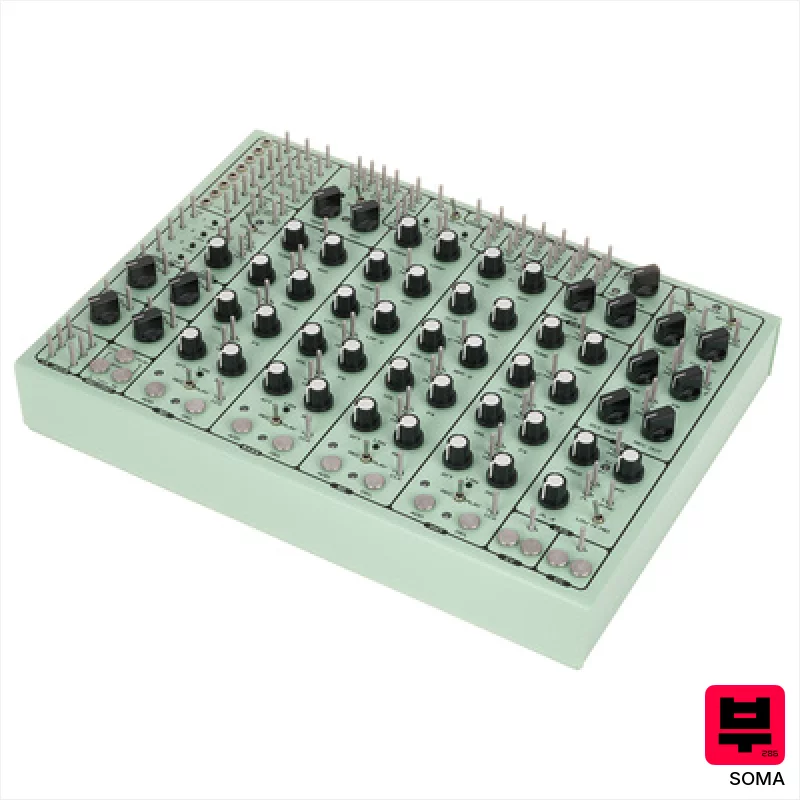
SOMA Pulsar-23 Green (Screw)
- • M3 threaded patch points offer unparalleled modular flexibility.
- • Analog drum sounds possess a raw, organic character lacking in digital alternatives.
- • Real-time loop recorder fosters experimentation and unique rhythmic textures.
- • Comprehensive MIDI-to-CV conversion expands integration possibilities.
- • The complex patching system has a steep learning curve for beginners.
- • Limited drum voice count restricts layering and intricate arrangements.
- • The all-analog design can be susceptible to drift and require occasional calibration.

SOMA Pulsar-23 Rust (Screw)
- • Oxidized metal housing provides unique aesthetic and tactile feel, enhancing the experience.
- • Extensive M3 threaded patch points offer incredible sonic flexibility and experimentation.
- • Individual loop recorders per instrument allow for complex, evolving rhythmic textures.
- • Analog circuitry delivers warm, punchy drum sounds with a distinct organic character.
- • The semi-modular design has a steep learning curve; not beginner-friendly.
- • Limited preset storage demands significant time investment in patch creation.
- • The complex routing can be intimidating and requires meticulous organization.
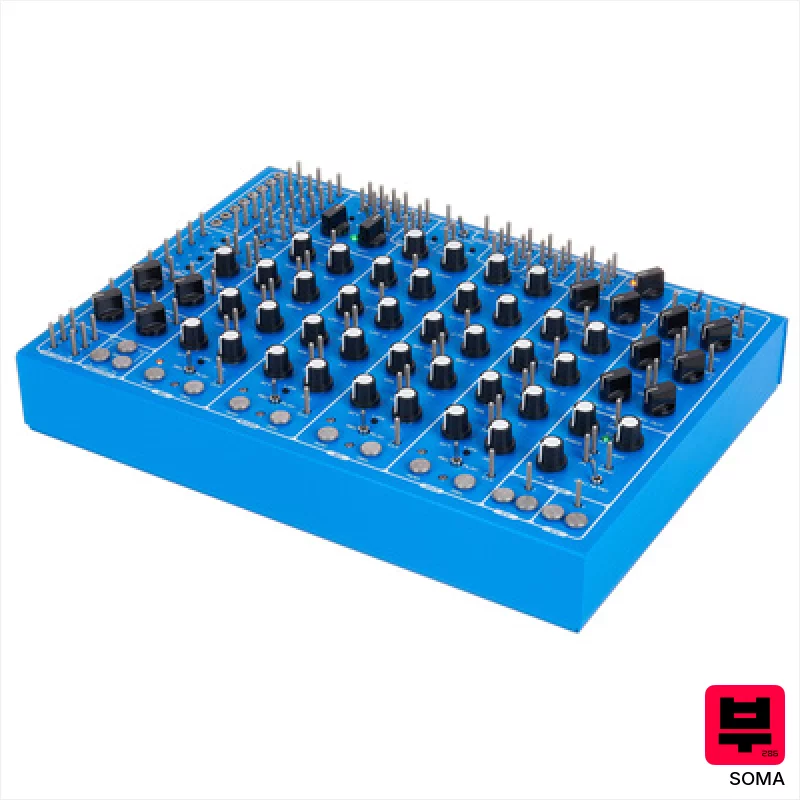
SOMA Pulsar-23 Blue (Screw)
- • M3 threaded patch points offer unparalleled sonic experimentation and modularity.
- • Analog drum voices deliver a raw, punchy character lacking in purely digital machines.
- • The semi-modular design fosters creative exploration and happy accidents.
- • Real-time loop recorder per instrument unlocks unique rhythmic textures and layering.
- • Steep learning curve; requires dedication to understand its patching system.
- • Limited pre-programmed sounds; relies heavily on user-created patches.
- • The size and weight make it less than ideal for portable performance.
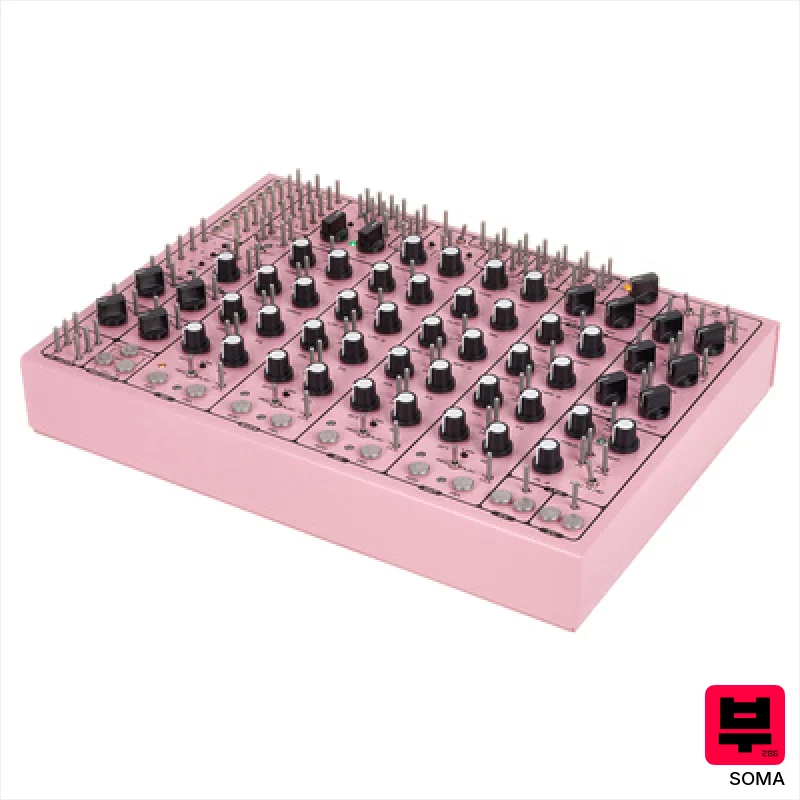
SOMA Pulsar-23 Pink (Screw)
- • M3 threaded rods enable unparalleled modular patching flexibility.
- • Analog drum sounds possess a warm, organic, and surprisingly punchy character.
- • Real-time loop recording adds instant performance and experimental possibilities.
- • Comprehensive MIDI-to-CV conversion unlocks seamless integration with external gear.
- • The complex patching system presents a steep learning curve for newcomers.
- • The semi-modular design requires external sequencing for full control.
- • The relatively compact size can feel cramped during intricate patching sessions.
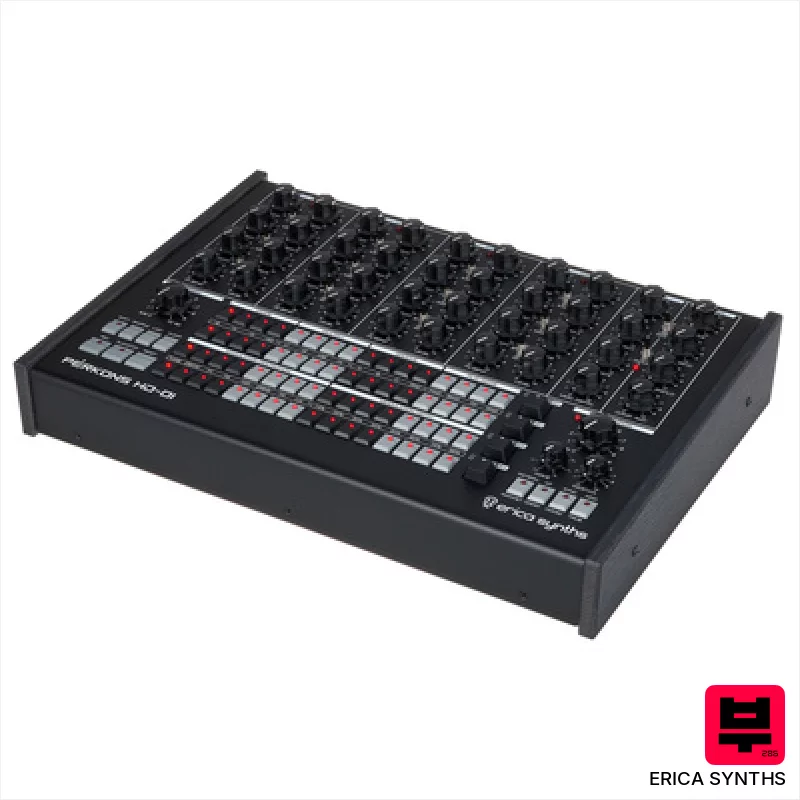
Erica Synths Perkons HD-01 Black
- • Hybrid engine delivers surprisingly organic, nuanced drum sounds.
- • Analog filter adds warmth and grit beyond purely digital drums.
- • Flexible sequencer with ratchets and probability unlocks complex rhythms.
- • BBD delay with modulation provides a uniquely characterful reverb effect.
- • The workflow can be initially daunting due to the density of controls.
- • Limited polyphony restricts layering complex drum arrangements.
- • Black finish shows fingerprints easily, impacting long-term aesthetics.

Elektron Syntakt EVA Case Bundle
- • EVA case provides excellent protection during travel and storage.
- • Hybrid digital/analog engine delivers a uniquely versatile sonic palette.
- • The sequencer's parameter locks offer deep, nuanced sound design possibilities.
- • Compact form factor maximizes portability without sacrificing functionality.
- • Steep learning curve; Elektron's workflow takes dedication to master.
- • Limited polyphony compared to some software alternatives.
- • Digital tracks, while powerful, lack the organic warmth of purely analog options.
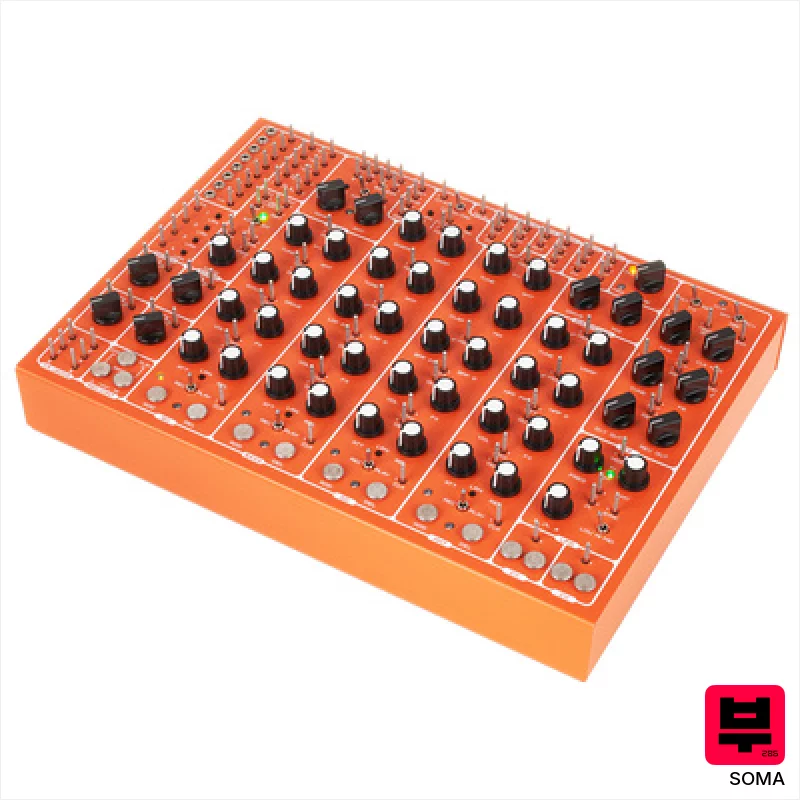
SOMA Pulsar-23 Orange
- • Metal pin patching offers immense sonic flexibility and experimentation.
- • Analog drum voices deliver a uniquely organic and percussive character.
- • Real-time loop recorder per instrument enables immediate performance capture.
- • Comprehensive MIDI-to-CV conversion expands integration possibilities significantly.
- • Steep learning curve; requires significant time investment to master patching.
- • Limited drum voice count restricts complex, layered rhythmic arrangements.
- • Semi-modular design demands external modules for truly expansive sound design.
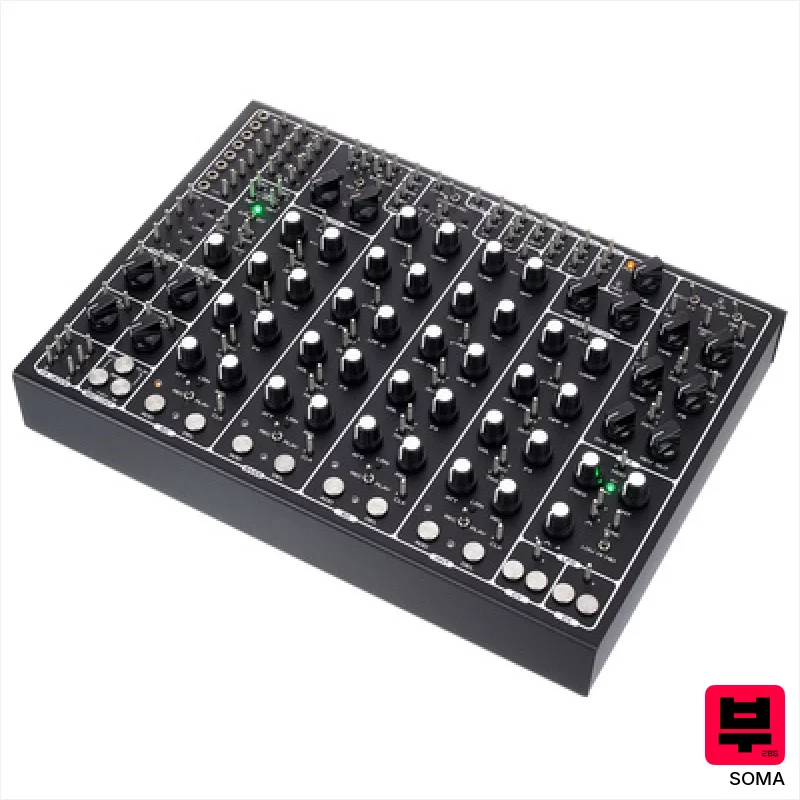
SOMA Pulsar-23 Black
- • Metal pin patching unlocks incredibly deep, organic sound design possibilities.
- • Analog drum voices deliver a uniquely warm, percussive character – not sterile digital.
- • The integrated loop recorder provides immediate, expressive performance capture.
- • Robust build quality with metal chassis suggests longevity and serious use.
- • The semi-modular design has a steep learning curve for those unfamiliar with patching.
- • Limited drum voice count restricts complex, layered drum programming.
- • Its premium-priced nature puts it out of reach for many aspiring producers.
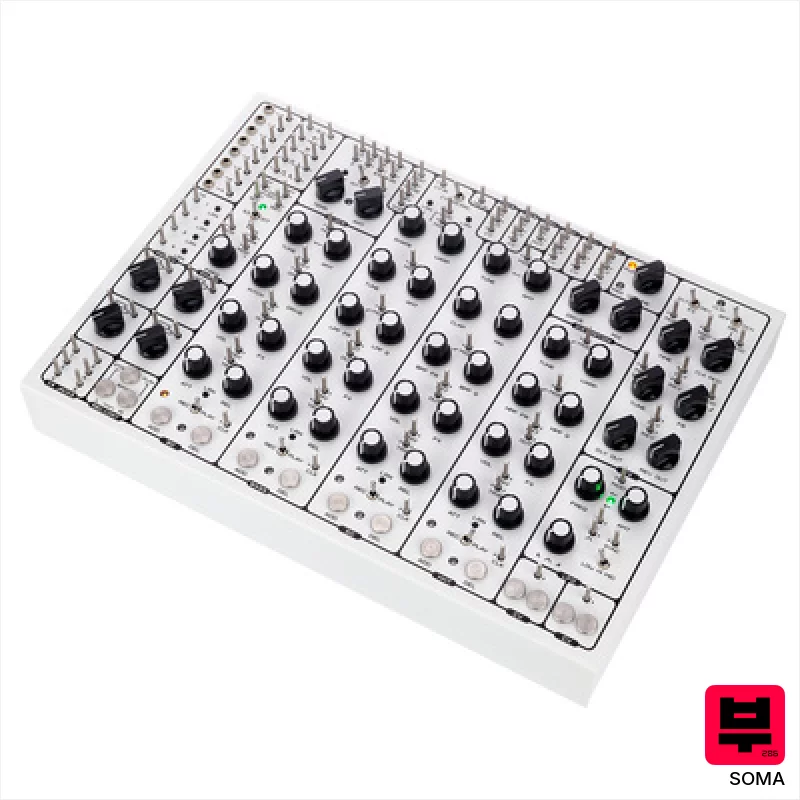
SOMA Pulsar-23 White
- • Fournalogue instruments deliver uniquely organic, percussive textures.
- • Semi-modular design encourages deep sonic exploration and patching.
- • Comprehensive MIDI-to-CV conversion unlocks extensive external control.
- • Real-time loop recorder fosters creative experimentation and live performance.
- • Steep learning curve; requires significant time investment to master.
- • Limited preset storage necessitates diligent patching and saving.
- • The metal pin patching system can feel fiddly and less convenient.
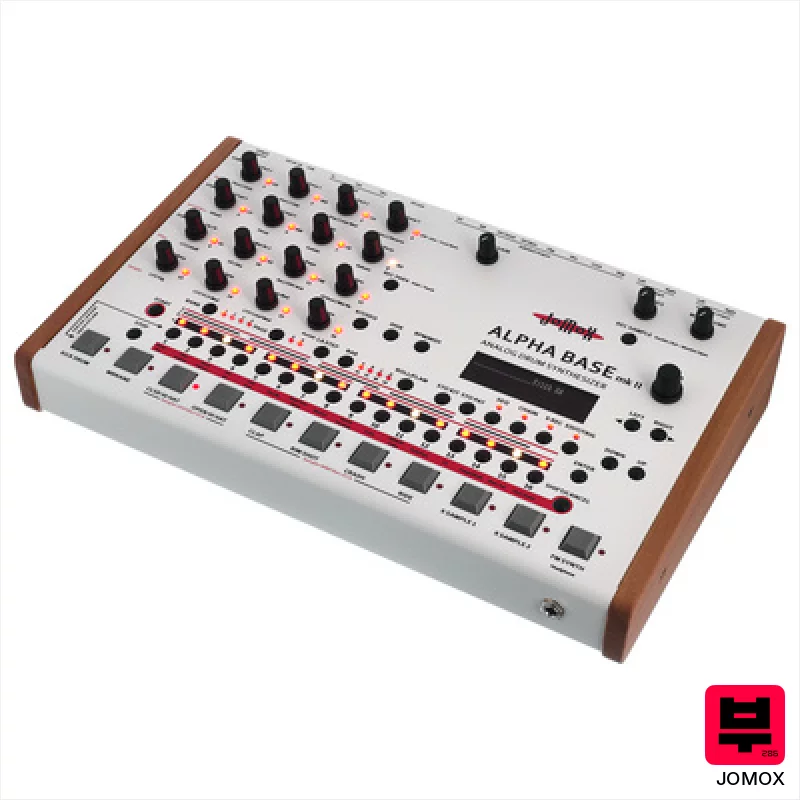
Jomox Alpha Base MKII
- • Exceptional Jomox kick drum sound – punchy and deep, a signature quality.
- • Flexible FM synthesis offers unique percussive textures and tones.
- • Comprehensive filter and envelope options for shaping sounds creatively.
- • External sampling input expands sonic possibilities beyond pre-loaded samples.
- • The workflow can be initially complex, demanding a learning curve.
- • Limited polyphony in the FM synth restricts layering capabilities.
- • Relatively high-end price point puts it out of reach for many.

Elektron Syntakt Case Bundle
- • The included case offers robust protection and a professional presentation.
- • Hybrid digital/analog architecture delivers a uniquely flexible sonic palette.
- • Parameter locks and retrig capabilities foster deep, evolving sound design.
- • The four performance modifiers unlock expressive real-time manipulation.
- • Steep learning curve; Elektron’s workflow demands dedication and practice.
- • Limited polyphony restricts complex chord progressions and layering.
- • Analog drum tracks, while characterful, lack the outright punch of dedicated drum machines.
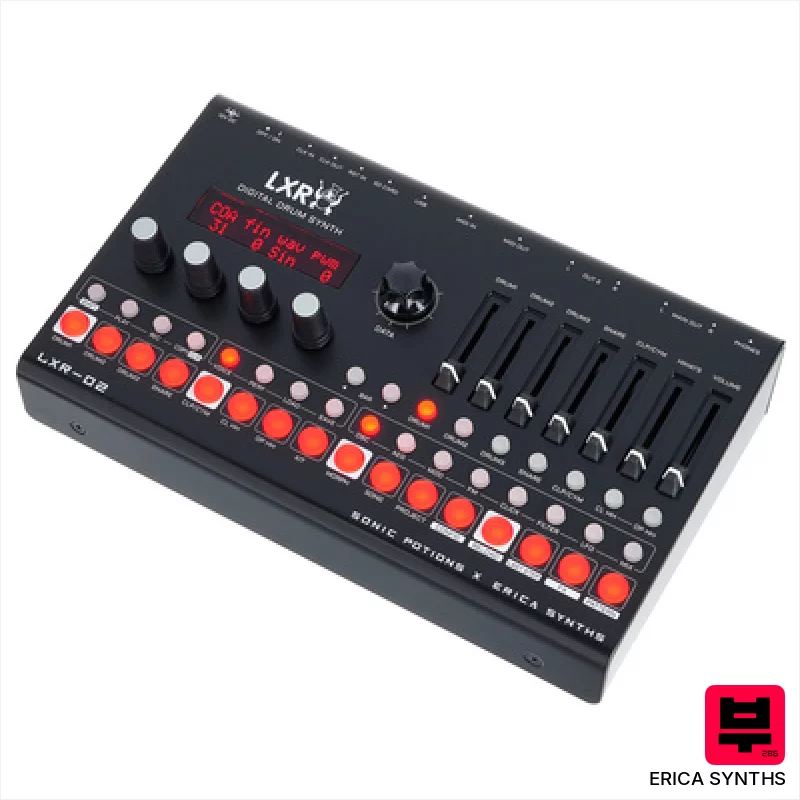
Erica Synths Drum Synthesizer LXR-02
- • Highly flexible sound design with extensive parameter control.
- • Excellent sequencer for intricate rhythmic patterns and song structures.
- • Micro SD card expands memory for vast sound kit libraries.
- • Solid build quality; feels robust despite its compact size.
- • Limited polyphony restricts complex layered drum sounds.
- • Workflow can be initially challenging for those unfamiliar with parameter-heavy interfaces.
- • Audio outputs are line level only, requiring amplification for direct monitoring.

Elektron Syntakt Bag Bundle
- • Deep sequencing capabilities offer unparalleled rhythmic complexity.
- • Hybrid digital/analog engine provides a unique sonic palette.
- • Compact form factor makes it incredibly portable for studio or live use.
- • Expressive modifiers provide nuanced performance control and immediacy.
- • Steep learning curve; Elektron's workflow takes dedication to master.
- • Limited polyphony can feel restrictive for complex arrangements.
- • Digital tracks, while versatile, lack the warmth of purely analog sounds.
How to Choose the Best Drum Machines
Sound Quality
This isn't just about 'nice' sounds; it's about character, dynamic range, and how well the drums cut through a mix. A weak low-end thump or brittle hi-hats can ruin a track. We're listening for that sweet spot where the sounds have personality without being a headache to EQ.
Workflow & Sequencing
A fantastic sound engine is useless if the sequencer is clunky. We're assessing ease of use, programming options (step sequencing, real-time recording, etc.), and the overall intuitiveness of the interface - especially crucial for live performance.
Polyphony & Sequencing Depth
How many sounds can you layer simultaneously? How many patterns can you chain? Limitations here can stifle creativity, especially when building complex arrangements. More isn't always better, but it's good to know what you're getting.
Connectivity & Expansion
MIDI in/out is a must. Audio I/O is a huge bonus. The ability to load custom samples or integrate with other gear expands the machine's potential far beyond its stock sounds.
Build Quality & Reliability
Let's be real, gear gets abused. We're looking for something that can handle the rigors of gigging and studio life, with robust construction and reliable components - because a dead drum machine mid-set is a disaster.
Buying Guide
At this price point, you're making trade-offs. Some machines might excel in sound design but have a less-than-ideal sequencer. Others might have a stellar workflow but rely on slightly generic-sounding samples. Don't get caught up in flashy features; prioritize a good core sound and a sequencer you enjoy using. Spending a little extra for better build quality will save you headaches down the line, especially if you plan on gigging.
How This List Is Built
We don't play these instruments — we're a catalog, not a review desk, and we'd rather say so than pretend otherwise. This page ranks 15 drum machines from the Thomann catalogue, which is the largest single source of specification data in this category.
Position is computed, not curated. Four signals, in order of weight: how completely the manufacturer documents the instrument (number of published specifications), where it sits in the price range, how specific the model designation is — which filters out generic accessories — and whether a product image exists. The same inputs always produce the same order, so nothing here is shuffled to look fresh.
What this list is good for: narrowing a category down to a shortlist by spec and budget. What it isn't: a substitute for hearing an instrument. Before you buy, read hands-on reviews and, where you can, play it. Full methodology.

