AudioFu Chart · October 2026
Best Drum Machines for Techno 2026
The top pick is Soma Laboratory Pulsar-23 Organismic Drum Machine ($2,536). Behringer RD-6 Analog Drum Machine gives you the most for the money at $122. Ranked by the AudioFu Index from 59 models across 24 brands, prices checked every night.
Last updated: October 20, 2026
Top 10
Full detail for the 10 highest AudioFu Index scores. Every other model is listed below.
-
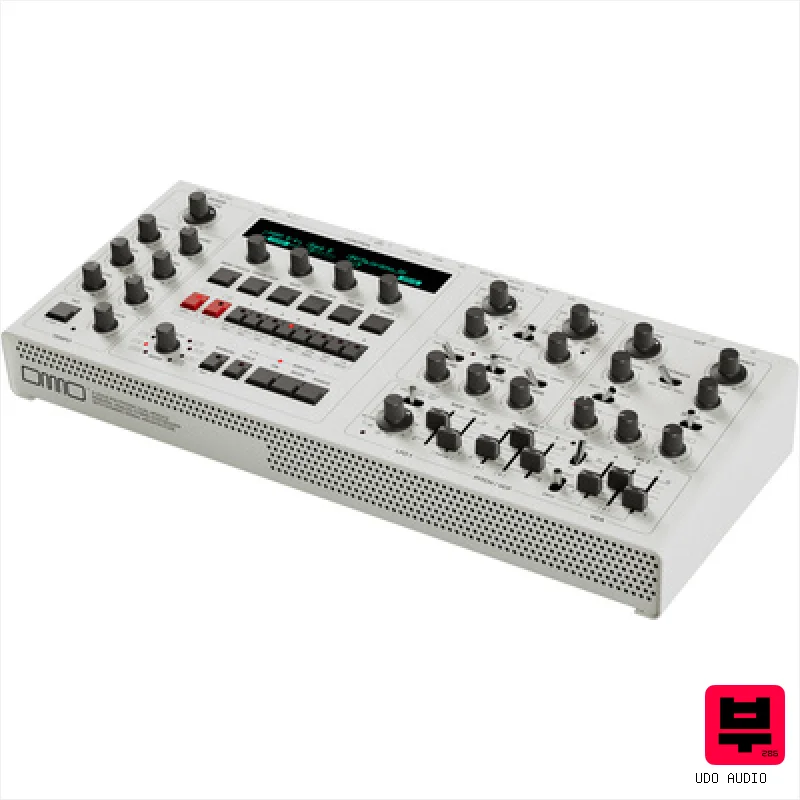
Soma Laboratory Pulsar-23 Organismic Drum Machine
Pulsar-23 Orange · SOMA
49 for sale on Reverb2 finishes at Thomann
- Weight4 kg
The Pulsar-23 Orange isn't your typical drum machine; it's a sonic playground. It's perfect for experimental musicians and sound designers who crave a hands-on, organic approach to rhythm creation and are willing to invest the time to unlock its full potential. It's a true instrument, not just a box of sounds.
Pros
- Metal pin patching offers immense sonic flexibility and experimentation.
- Analog drum voices deliver a uniquely organic and percussive character.
- Real-time loop recorder per instrument enables immediate performance capture.
Cons
- Steep learning curve; requires significant time investment to master patching.
- Limited drum voice count restricts complex, layered rhythmic arrangements.
92AudioFu
IndexStableno change since Aug 17Aug 17$2,536 now$2,536€2,259 at Thomann · in stockCheck price ↗ -
Elektron Analog Four MKII 4-Voice Tabletop Analog Synthesizer
Analog Rytm MKII Black · Elektron
36 for sale on Reverb1 finish at Thomann
- Weight2.5 kg
The Rytm MKII Black is a powerhouse for anyone serious about crafting electronic and hybrid music. Its analog drum sounds paired with sample flexibility offer a unique sonic palette, and the sequencing is ridiculously deep. It's perfect for producers who want a hands-on, tactile approach to beatmaking and sound design.
Pros
- Solid metal chassis feels incredibly robust and inspires confidence.
- Analog filters deliver a warmth and character that’s hard to replicate.
- Individual voice outputs allow for intricate, layered drum mixes.
Cons
- Steep learning curve; Elektron’s workflow isn't immediately intuitive.
- Sampling workflow can feel a bit clunky compared to dedicated samplers.
82AudioFu
IndexStableno change since Aug 17Aug 17$1,760 now$1,760€1,568 at Thomann · in stockCheck price ↗ -
- Weight0.814 kg
The Model:Samples is Elektron's brilliant take on a compact, powerful groovebox. It’s fantastic for producers and electronic musicians wanting a portable, immediate creative tool—perfect for sketching out ideas on the go or building full tracks. The sequencing is what makes it sing, offering that signature Elektron depth in a surprisingly accessible package.
Pros
- Intuitive Elektron sequencing workflow delivers complex rhythms quickly
- Compact size belies powerful sampling and sequencing capabilities
- Velocity-sensitive pads offer expressive performance possibilities
Cons
- Limited sample memory demands careful curation and management
- Audio output lacks dedicated level controls per track
80AudioFu
IndexStableno change since Aug 17Aug 17$324 now$324€289 at Thomann · in stockCheck price ↗ -
- Weight1.1 kg
The Alesis SR16 is a solid choice for bedroom producers, beatmakers, and anyone just starting out with drum machines. It’s got a decent range of sounds and those velocity-sensitive pads give you some expressive control, even if the sequencing isn't incredibly deep. Great for laying down basic grooves and experimenting with rhythms.
Pros
- Affordable entry point into drum machine sequencing.
- Surprisingly realistic stereo sounds for the price point.
- Velocity-sensitive pads offer decent dynamic response.
Cons
- Plastic construction feels a bit flimsy and less robust.
- Limited sequencing capabilities compared to more advanced units.
79AudioFu
IndexStableno change since Aug 17Aug 17$154 now$154€137 at Thomann · in stockCheck price ↗ -
Elektron Syntakt 12 Track Drum Computer & Synthesizer
Syntakt · Elektron
23 for sale on Reverb1 finish at Thomann
- Weight1.53 kg
The Syntakt is a powerhouse for electronic music production, blending digital precision with analog warmth. It’s perfect for producers who love intricate sequencing and sculpting unique sounds, but be prepared to invest time learning its idiosyncratic workflow. A serious tool for sound design and experimental music creation.
Pros
- Exceptional sequencing depth with parameter locks and retrig capabilities.
- Hybrid analog/digital design delivers unique sonic textures and flexibility.
- Compact form factor belies a vast range of creative possibilities.
Cons
- Steep learning curve; Elektron's workflow takes dedicated study.
- Limited polyphony restricts complex chord voicings and arrangements.
78AudioFu
IndexStableno change since Aug 17Aug 17$1,043 now$1,043€929 at Thomann · in stockCheck price ↗ -
- Weight5.5 kg
This machine packs real analogue drums from the classic TR-808 and TR-909 plus extra digital sounds. You can load your own samples into its big storage. It feels like a pro tool for making beats with both old and new sounds.
Pros
- 16 real analogue instruments including TR-808 and TR-909 sounds
- 50 distinct ACB sound engines for deep parameter control
- FM generation creates unique digital percussion textures
Cons
- No specific pad or keyboard size mentioned in text
- No explicit sequencing step count provided in description
78AudioFu
IndexStableno change since Aug 17Aug 17$3,030 now$3,030€2,699 at Thomann · in stockCheck price ↗ -
Yamaha Seqtrak Mobile Music Ideastation
SEQTRAK Orange · Yamaha
38 for sale on Reverb2 finishes at Thomann
- Weight0.8 kg
The SEQTRAK Orange is a seriously clever little music production station. It's perfect for beatmakers, electronic musicians, or anyone wanting a portable, self-contained system for sketching out ideas – think a pocket-sized studio. The workflow is surprisingly deep given the size, and the FM engine adds a unique flavor.
Pros
- Compact design maximizes portability for music creation on the go.
- AWM2 engine delivers surprisingly rich and detailed synthesized sounds.
- Built-in mic and speaker offer immediate, self-contained creative workflow.
Cons
- Small keys can be challenging for players accustomed to full-sized keyboards.
- Limited polyphony in AWM2 may restrict complex layering scenarios.
-
- Weight0.9 kg
This tiny orange drum machine packs a surprising punch for the price. It gives you eight classic drum sounds and a built-in distortion effect to make them gritty. The 16-step sequencer lets you chain up to 16 patterns, which is perfect for making quick loops in the studio. It's ideal for beginners who need a reliable starter, or as a backup instrument on tour.
Pros
- Compact 0.9 kg design fits easily in small gear cases.
- Integrated distortion effect adds grit directly to drum tracks.
- 8 distinct drum sounds cover basic kit needs effectively.
Cons
- No pads section for creating custom percussion sounds.
- Limited to only 8 drum sounds without expandable kits.
76AudioFu
IndexStableno change since Aug 17Aug 17$122 now$122€109 at Thomann · in stockCheck price ↗ -
Arturia DrumBrute Impact Analogue Drum Machine
DrumBrute Impact · Arturia
37 for sale on Reverb1 finish at Thomann
- Weight1.84 kg
The DrumBrute Impact is a seriously fun, compact analog drum machine perfect for electronic music producers, live performers, or anyone wanting a raw, immediate beat-making experience. It’s a great way to inject some analog grit into your tracks without overwhelming complexity, offering a unique tactile workflow.
Pros
- Robust metal chassis provides excellent build quality and durability
- Analog circuitry delivers punchy, characterful drum sounds
- Flexible sync options cater to diverse studio and live setups
Cons
- Limited sound palette compared to sample-based drum machines
- Lack of individual output control beyond the grouped outputs
75AudioFu
IndexStableno change since Aug 17Aug 17$287 now$287€255 at Thomann · in stockCheck price ↗ -
Erica Synths HexDrums 10-Voice Desktop Drum Machine
HexDrums · Erica Synths
20 for sale on Reverb1 finish at Thomann
- Weight2.65 kg
This desktop drum computer uses real analogue circuits for most of its core drum voices, giving you that warm, organic feel musicians love. It still adds digital cymbals and loads of sample sets for extra texture. The sequencer handles up to 64 steps and lets you save many patterns, making it great for both studio recording and live backing. It suits anyone who wants authentic drum sounds without needing a huge rack of modules.
Pros
- Truly analogue voice generation for BD, Snare, and Hat sounds
- Includes 2 digital cymbal voices plus 10 sample sets
- Full individual tuning control for every single voice
Cons
- Only 8 fully analogue voices while cymbals are digital
- Lacks specific MIDI or USB input options listed here
74AudioFu
Index↓ 2.5%since Aug 17 · lowest so far$1,492 · Aug 17$1,455 now$1,455€1,296 at Thomann · in stockCheck price ↗
All 59 drum machines
Same index, same nightly prices — compact. Colour options of one model share a row. Tap a photo to zoom.
- 11
Erica Synths Bullfrog Desktop Monophonic SynthesizerBullfrog Drums · Erica Synths72Stable$751€669$751€669Check ↗
- 12
Erica Synths Perkons HD-01Perkons HD-01 Black · Erica Synths70Stable$1,997€1,779$1,997€1,779Check ↗
- 13
Korg Volca Beats Analogue Rhythm MachineVolca Drum · Korg68↓ 2.3%$146€130$146€130Check ↗
- 14
Korg Drumlogue Hybrid Drum MachineDrumlogue · Korg68↑ 4.8%$469€418$469€418Check ↗
- 15
Korg Volca Beats Analogue Rhythm MachineVolca Beats · Korg67Stable$148€132$148€132Check ↗
- 16
1010music nanobox razzmatazz1010music66Stable$392€349$392€349Check ↗
- 17
Polyend Mess Multi-Effect Step SequencerStep · Polyend66Stable$661€589$661€589Check ↗
- 18
Roland Boutique Series TR-08 Analog Modeling Drum MachineTR-08 · Roland65Stable$448€399$448€399Check ↗
- 19
Behringer RD-8 MKIIBehringer · 2 finishes64Stable$268€239$268€239Check ↗
- 20
Singular Sound BeatBuddy MINI 2BeatBuddy Mini 2 · Singular Sound62Stable$161€143$161€143Check ↗
- 21
Roland T-8 AIRA Compact Beat MachineAIRA Compact T-8 Beat Machine · Roland62Stable$222€198$222€198Check ↗
- 22
Singular Sound BeatBuddy MINI 2BeatBuddy 2 · Singular Sound62↓ 1.6%$605€539$605€539Check ↗
- 23
Polyend Drums SilverPolyend · 2 finishes61Stable$3,030€2,699$3,030€2,699Check ↗
- 24
Alesis SR-18 Drum MachineSR18 · Alesis59Stable$274€244$274€244Check ↗
- 25
Erica Synths LXR-02 Digital Drum SynthDrum Synthesizer LXR-02 · Erica Synths57Stable$592€527$592€527Check ↗
- 26
Behringer LM DrumBehringer56Stable$392€349$392€349Check ↗
- 27
Behringer BMXBehringer56Stable$414€369$414€369Check ↗
- 28
SOMA Pulsar-23 Blue (Screw)SOMA56Stable$1,948€1,735$1,948€1,735Check ↗
- 29
SOMA Pulsar-23 Rust (Screw)SOMA56Stable$2,132€1,899$2,132€1,899Check ↗
- 30
SOMA Pulsar-23 Rust EditionSOMA56Stable$2,502€2,229$2,502€2,229Check ↗
- 31
Teenage Engineering PO-32 Pocket Operator Tonic Drum SynthesizerPO-32 tonic · Teenage Engineering53Stable$106€94$106€94Check ↗
- 32
Mooer Drummer X2Stereo Drummer X2 · Mooer52Stable$134€119$134€119Check ↗
- 33
Jomox Alpha Base MKIIJomox52Stable$2,132€1,899$2,132€1,899Check ↗
- 34
cre8audio Boom Chickcre8audio51↓ 1.3%$331€295$331€295Check ↗
- 35
Swissonic DR-101Swissonic50Stable$77€69$77€69Check ↗
- 36
Boss DR-01sBoss50Stable$276€246$276€246Check ↗
- 37
Behringer RD-9 Rhythm DesignerRD-9 · Behringer50Stable$290€258$290€258Check ↗
- 38
Clavia Nord Drum 3PClavia Nord50Stable$785€699$785€699Check ↗
- 39
Elektron Analog Four MKII 4-Voice Tabletop Analog SynthesizerAnalog Rytm MKII Case Bundle · Elektron49Stable$1,907€1,699$1,907€1,699Check ↗
- 40
Elektron Model:Samples GrooveboxModel:Samples Case Set · Elektron48↑ 1.8%$376€335$376€335Check ↗
- 41
Korg KR-11Korg47↓ 15.5%$122€109$122€109Check ↗
- 42
Elektron Syntakt 12 Track Drum Computer & SynthesizerSyntakt Bag Bundle · Elektron47Stable$1,072€955$1,072€955Check ↗
- 43
Elektron Syntakt 12 Track Drum Computer & SynthesizerSyntakt Case Bundle · Elektron47Stable$1,084€966$1,084€966Check ↗
- 44
Behringer RD-78 Computer Controlled Analog Drum MachineRD-78 · Behringer46Stable$185€165$185€165Check ↗
- 45
SOMA Pulsar-23 Pink (Screw)SOMA41Stable$1,963€1,749$1,963€1,749Check ↗
- 46
SOMA Pulsar-23 Green (Screw)SOMA41Stable$1,997€1,779$1,997€1,779Check ↗
- 47
Korg Volca Beats Analogue Rhythm MachineVolca Beats Bundle · Korg40Stable$186€166$186€166Check ↗
- 48
Stylophone BeatStylophone37Stable$44€39$44€39Check ↗
- 49
Flamma FF03 Loop & DrumFlamma37Stable$89€79$89€79Check ↗
- 50
Mooer Micro Drummer IIMooer37Stable$94€84$94€84Check ↗
Drum Machines by the numbers
Measured across all 63 models we track, not a sample.
Median $402 — half of all drum machines here cost less.
median of 36 models · 0.55 kg–4 kg
How to choose the best drum machines
Tonal Character
Techno isn't about pristine, hyper-realistic drums. You want that raw, punchy, sometimes slightly distorted character - that's what cuts through. A machine with inherent grit or the ability to add it is gold. Think that 808 low-end thump with a little bit of edge.
Sequencing Flexibility
Techno demands intricate patterns and evolving rhythms. Look for machines with robust sequencing options - step sequencing, real-time recording, parameter randomization - anything that lets you go beyond basic loops.
Sound Engine Architecture
Sample-based machines are great, but synthesis engines (like FM or analog emulation) offer unique sonic possibilities and that extra layer of control. The ability to tweak individual drum elements beyond just volume and pan is key.
Performance Features
Live Techno demands responsiveness. Drum machines with pads, knobs, and assignable parameters are invaluable for on-the-fly adjustments and creative experimentation during a set.
Build Quality & Reliability
You're gonna be gigging with this thing. A flimsy plastic casing and unreliable components are a recipe for disaster. Solid construction and a dependable sequencer are non-negotiable for the road.
Buying guide
So you're diving into Techno? Awesome. A solid drum machine is absolutely foundational, and it's not just about slapping some 909 samples in there. The character, the feel, the sound of your drums are gonna make or break your tracks. Let's talk about machines that'll actually get you there, not just give you a digital imitation.
Don't fall for the hype. A lot of machines market themselves as 'Techno machines' but are just glorified sample players. Consider your budget: while vintage gear has a certain allure, modern machines often offer more features and reliability.
Used gear is your friend, but check those potentiometers - scratchy knobs are a pain.
How the AudioFu Index works
Five measured signals and nothing else — no stars from strangers, no “tested by experts” we didn’t do. The weights are fixed and public. We don’t play these instruments; we measure the market around them.
This chart covers 63 drum machines from the Thomann catalogue. Before you buy, read hands-on reviews and, where you can, play it. Full methodology.
AudioFu earns a commission when you buy through our Thomann links. It never changes the order — the index does.
- Demand40%
How many of this exact model are for sale on Reverb right now — what musicians actually buy and resell.
- Lineup20%
How many finishes Thomann stocks — makers expand the models that sell.
- Price15%
Where the price has moved since we started tracking in August.
- Specs15%
How completely the maker documents it.
- Maker10%
How deep the brand’s range is in this category.
Questions
Are 909 samples enough?
They're a starting point, sure, but relying solely on samples limits your creativity. Layering them with synthesized sounds or processing them heavily is where the real magic happens. Think of samples as raw ingredients.
What's the deal with analog emulation?
It's not true analog, obviously. But good emulations capture the warmth and subtle imperfections of analog circuitry - that slight variance in timing, that gentle saturation. It's about the vibe more than the electronics.
I'm on a tight budget - what should I compromise on?
You might have to sacrifice some sequencing depth or advanced synthesis features. Focus on getting a machine with a solid core sound and a reliable sequencer, and build your sound design skills around that.
Should I get a drum machine with a sampler?
It's a double-edged sword. A sampler adds versatility, but it can also muddy the sound if you're not careful. A dedicated drum machine with a tight sound engine often delivers a more focused Techno palette.
What about software drum machines?
Software is fantastic for flexibility and often cheaper, but the tactile experience of a hardware machine is hard to replicate. Plus, that hardware workflow can really spark creativity in a way a DAW sometimes doesn't.