
Best Digital Mixer Expansion Cards Under $300 2026
Affordable digital mixer expansion cards under $300 - great value without compromising quality
Last updated: September 28, 2026

Klark Teknik DN32-Madi
- • Redundant optical/copper links provide rock-solid reliability.
- • Fiber optic transmission allows for exceptionally long cable runs.
- • MADI clock master/slave capability offers flexible system integration.
- • Seamlessly expands Midas/X32 channel count with professional MADI connectivity.
- • Requires careful cable termination for optimal fiber optic performance.
- • Adds complexity to routing, demanding MADI knowledge.
- • Limited to 32 bidirectional channels – may bottleneck larger setups.
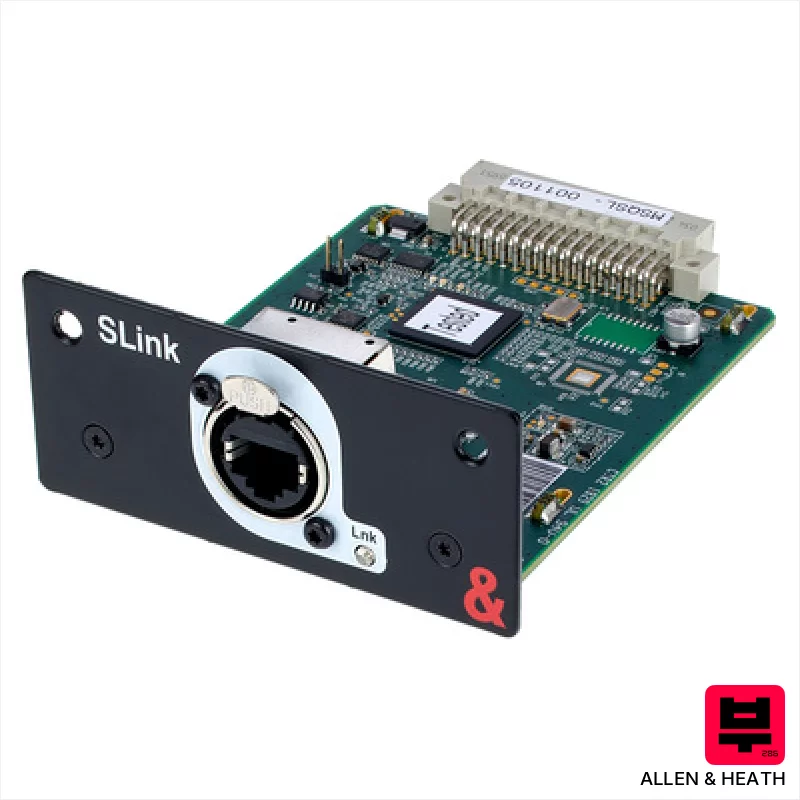
Allen & Heath SQ SLink
- • Seamlessly extends SQ series console channel count.
- • Supports multiple protocols for flexible network integration.
- • Offers high-resolution audio with robust clocking.
- • Provides a cost-effective solution for expanding I/O.
- • Requires an existing SQ console for functionality; not standalone.
- • Adds complexity to system architecture; demands networking expertise.
- • Limited to Allen & Heath's SLink ecosystem; vendor lock-in.
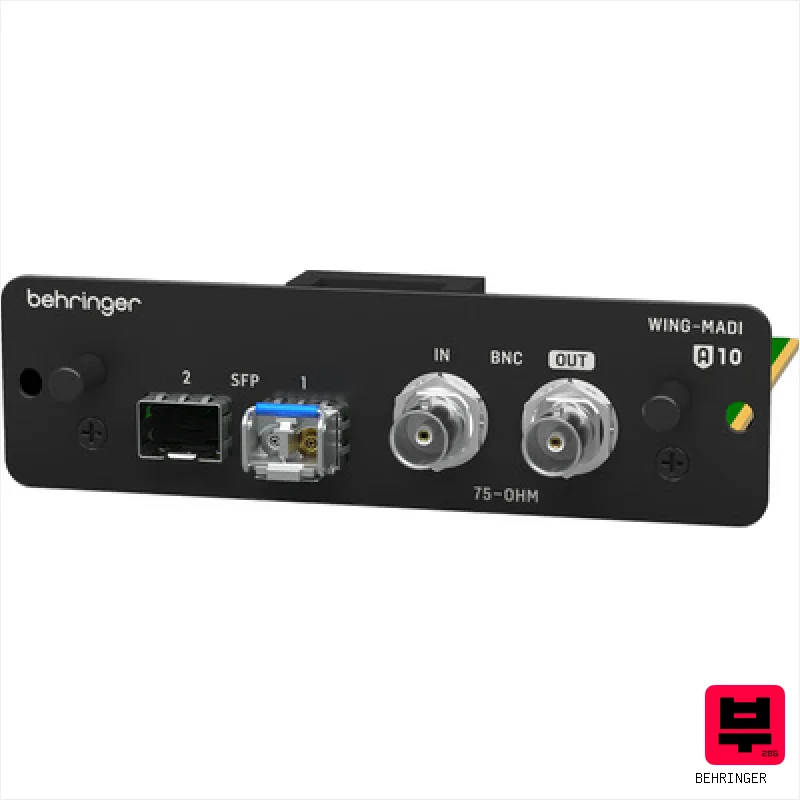
Behringer WING-MADI
- • 64 input and output channels for large setups
- • Supports high-resolution audio up to 96 kHz
- • Dual SFP slots for flexible MADI redundancy
- • Ultra-low latency under 210 microseconds
- • No physical knobs for manual mixing adjustments
- • Relies entirely on digital network timing
- • Lacks built-in EQ or effects processing

Behringer Aoip-Wsg
- • Expands Wing console channel count significantly, addressing a common bottleneck.
- • SoundGrid integration unlocks powerful processing and routing possibilities.
- • Leverages existing Wing console network infrastructure for streamlined connectivity.
- • Provides a cost-effective solution for complex live sound setups.
- • Requires a Behringer Wing console; standalone functionality is nonexistent.
- • SoundGrid compatibility necessitates familiarity with the protocol and software.
- • Potential latency issues if network infrastructure isn't properly configured.
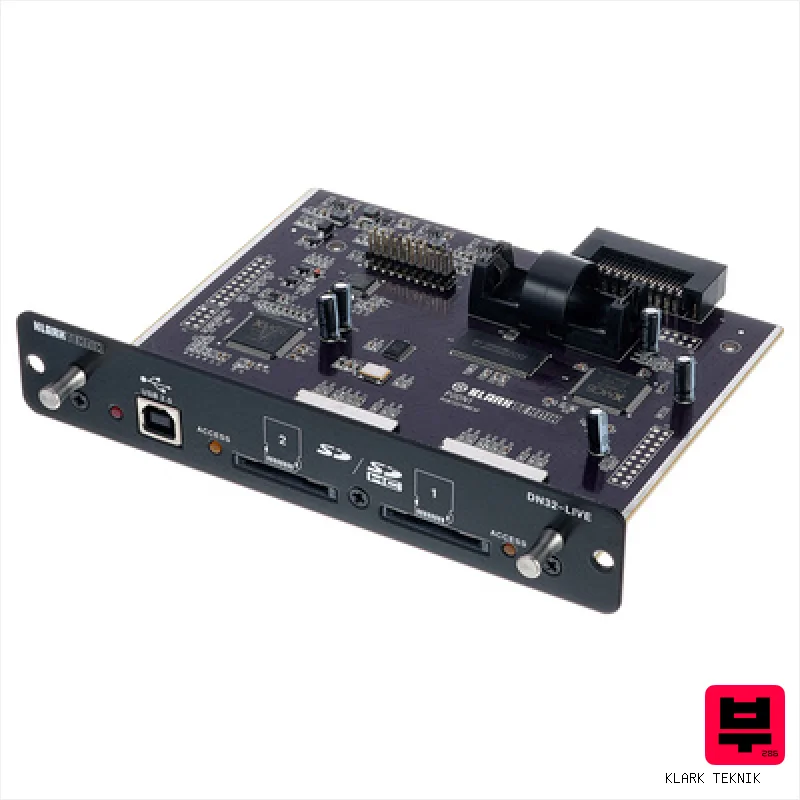
Klark Teknik DN32-Live
- • 32-channel live recording with 48 kHz sample rate
- • Independent SD and USB interfaces for flexibility
- • Sample-accurate automatic spanning for long sessions
- • Instant live playback with remote app support
- • Limited to Midas and Behringer console models
- • No built-in speakers or monitoring hardware
- • Requires separate SD cards for storage
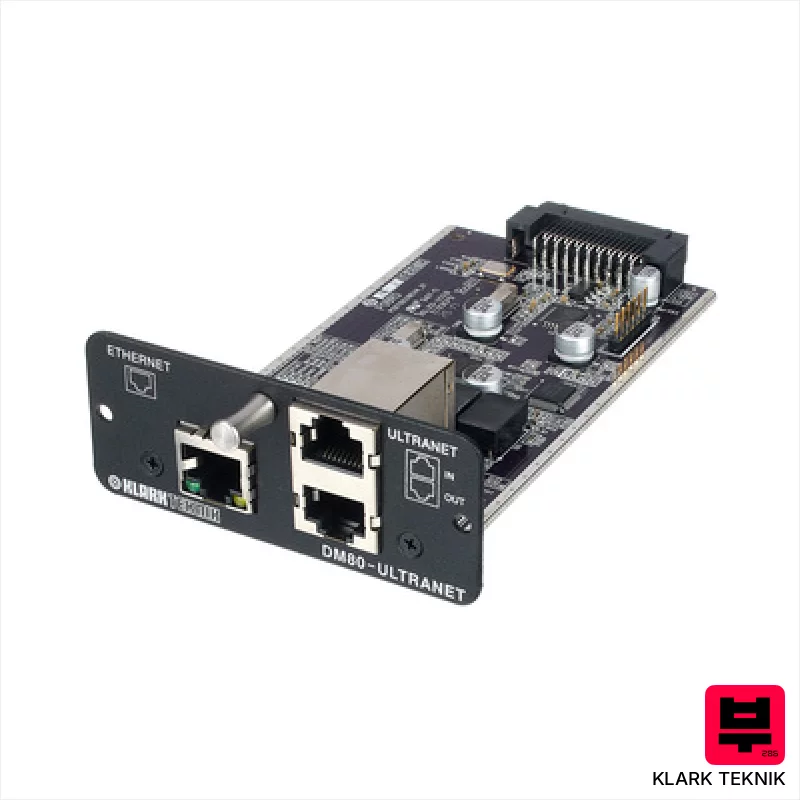
Klark Teknik DM80-Ultranet
- • Robust transformer isolation eliminates frustrating ground loop hum.
- • ULTRANET offers reliable, low-latency digital audio transport.
- • Ethernet control simplifies complex routing and processing changes.
- • Expands DM8000 capabilities to integrate with diverse systems.
- • Requires existing Klark Teknik DM8000 for functionality; not standalone.
- • ULTRANET adoption isn't universal; compatibility limited.
- • Configuration can be complex, requiring some technical aptitude.
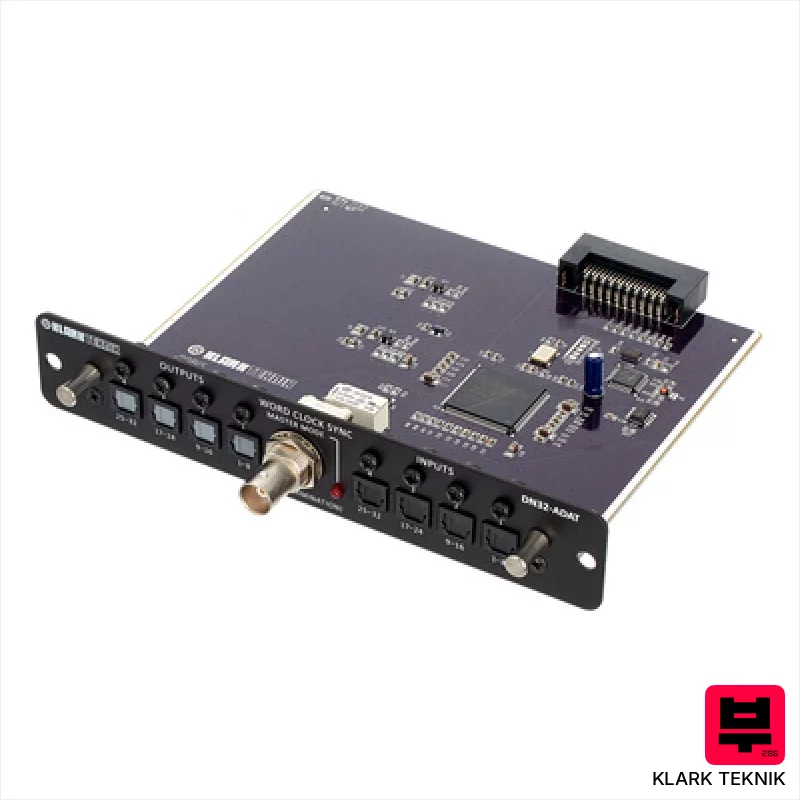
Klark Teknik DN32 ADAT
- • Excellent channel count for expanded Midas/Behringer workflows
- • Optical TOSLINK connection offers clean, reliable digital transfer
- • Word clock I/O ensures precise synchronization with external gear
- • Compact form factor minimizes rack space requirements.
- • Limited to 48kHz sample rate, restricts high-resolution recording
- • Relies on Midas/Behringer ecosystem; less versatile standalone
- • Potential latency issues depending on system configuration.
Digital Mixer Expansion Cards by the numbers
Measured across all 7 models in this category, so «wide», «short» or «expensive» mean something you can check.
How This List Is Built
We don't play these instruments — we're a catalog, not a review desk, and we'd rather say so than pretend otherwise. This page covers 7 digital mixer expansion cards from the Thomann catalogue, which is the largest single source of specification data in this category: 7 in detail, the rest listed with their specifications.
Position is computed, not curated. We parse the manufacturer's own description into actual values — nut width, scale, fret count, fingerboard radius, size, alloy — and rank on them: how many specifications a model has published, how many of them are measurable numbers, and how precisely it meets this page's criterion. A product image adds a little. Price is not a ranking signal: it tells you nothing about whether a neck fits your hand. The same inputs always produce the same order, so nothing here is shuffled to look fresh.
What this list is good for: narrowing a category down to a shortlist by spec and budget. What it isn't: a substitute for hearing an instrument. Before you buy, read hands-on reviews and, where you can, play it. Full methodology.
How to Choose the Best Digital Mixer Expansion Cards
Budget Planning
- • Under $200: Entry-level
- • $200-$500: Intermediate
- • $500-$1000: Advanced
- • $1000+: Professional
Quality Check
- • Sound clarity & tone
- • Build materials & finish
- • Hardware durability
- • Overall craftsmanship
Key Features
- • Your musical style
- • Skill level match
- • Intended use case
- • Brand reputation

