
Best Diffusors for Live Room 2026
So, you're building a live room? Awesome. It's easy to get caught up in bass traps and absorption, but diffusion is the secret sauce for a space that feels good and actually sounds inspiring. A live room shouldn't be a dead zone; it needs to breathe, let reflections bounce, and give instruments room to bloom - without devolving into a muddy mess. We're talking about creating that natural reverb and sense of space that makes a band rehearsal or live recording sound huge.
Last updated: July 22, 2026 • Next update: July 29, 2026
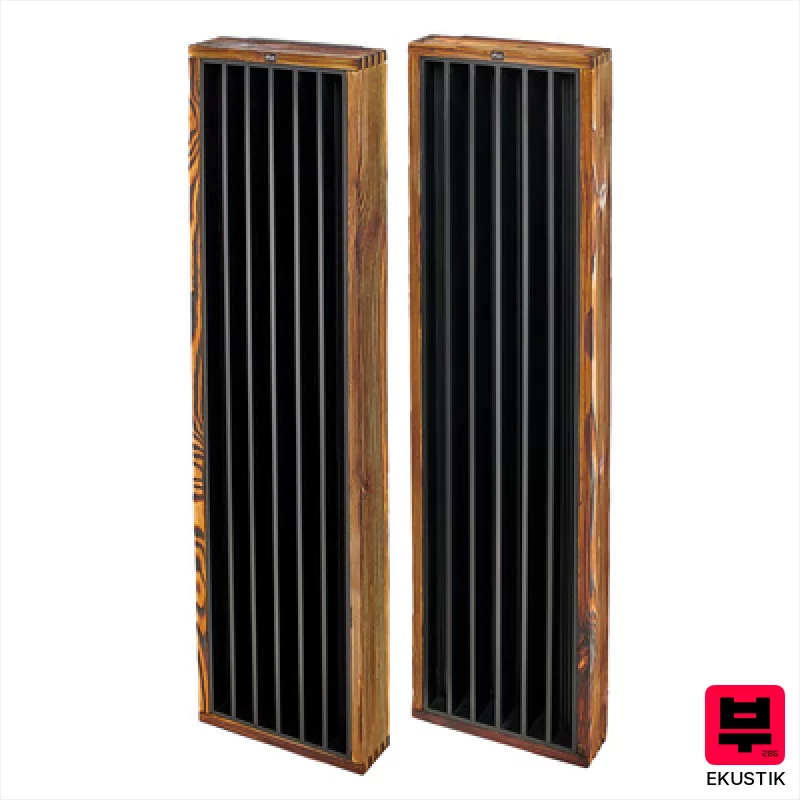
Ekustik Woody Fractal 34 Duopack
- • Excellent diffusion across a wide frequency spectrum, noticeably improving stereo imaging.
- • The 10cm depth is surprisingly effective for smaller rooms or tighter spaces.
- • Solid, handmade construction using quality wood – feels very robust.
- • Integrated mounting system simplifies installation, saving time and effort.
- • The black finish might absorb more light and could look stark in some rooms.
- • While effective, the Schroeder design might not offer the ultimate in complex diffusion.
- • At this price point, they represent a premium investment for acoustic treatment.

Vicoustic Multifuser Wood MKII 64 White
- • Solid wood construction offers a warmer, more natural diffusion than foam.
- • Rotating panel sections allow for tailored diffusion patterns.
- • Pearl White Matte finish blends subtly into most studio aesthetics.
- • VicFix mounting system provides secure, professional installation.
- • Weight (18kg) makes installation a two-person job.
- • Frequency range, while broad, might not cover very low frequencies effectively.
- • Relatively high-end price point compared to basic foam alternatives.
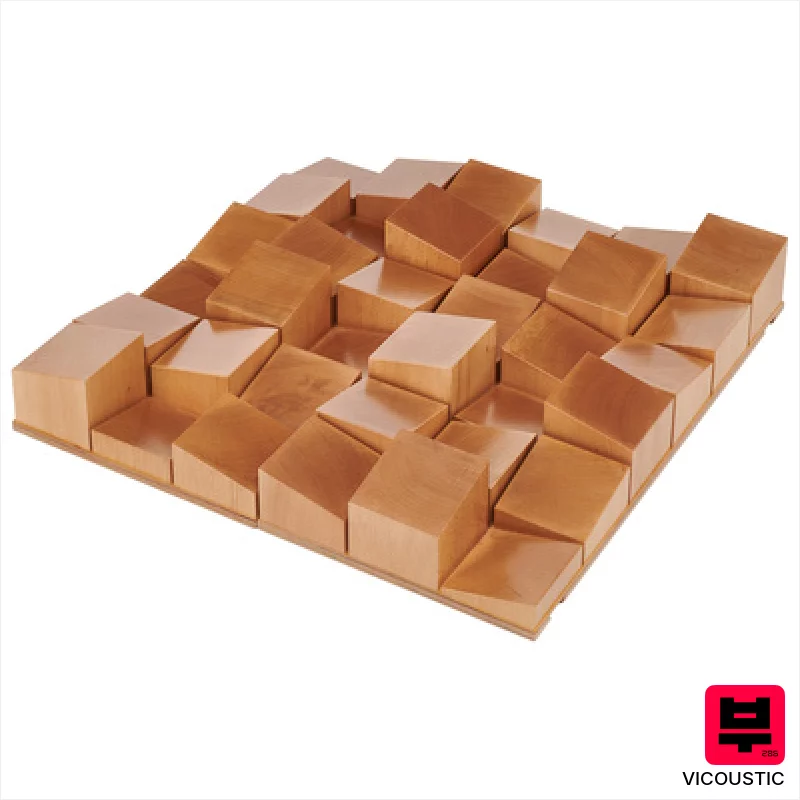
Vicoustic Multifuser Wood MKII 36 Wood
- • Solid wood construction offers a warmer, more natural sound diffusion.
- • Rotating panel sections allow for fine-tuning of reflection patterns.
- • QRD sequence provides effective broadband diffusion across a useful range.
- • VicFix mounting system ensures secure and relatively easy installation.
- • The natural wood finish might not suit all studio aesthetics.
- • 13 kg weight makes it a two-person job for mounting.
- • Effective frequency range leans towards higher frequencies; bass diffusion is limited.

Vicoustic Multifuser Wood MKII 36 Black
- • Solid wood construction provides a warm, natural diffusion character.
- • Rotatable panels offer flexibility in tailoring sound dispersion patterns.
- • Euroclass E fire rating provides a crucial safety feature for studios.
- • VicFix mounting system simplifies installation and ensures secure placement.
- • Relatively heavy, requiring careful handling and potentially stronger wall mounting.
- • Effective frequency range leans towards higher frequencies; low-end diffusion is limited.
- • The black matte finish, while aesthetically pleasing, can show dust easily.
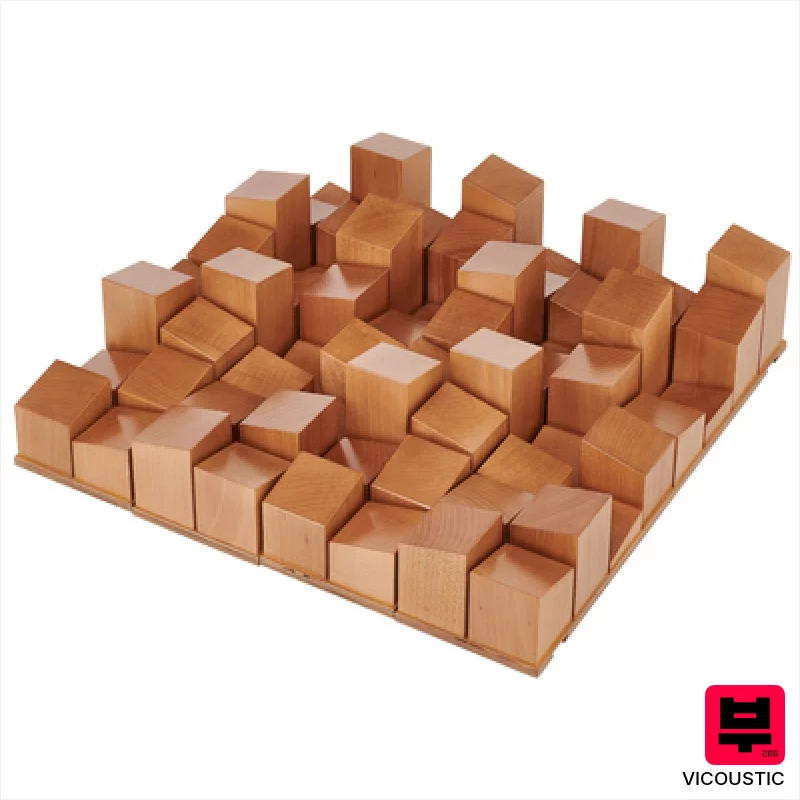
Vicoustic Multifuser Wood MKII 64 Wood
- • Solid wood construction lends a warm, natural aesthetic and robust feel
- • Adjustable panel sections allow for fine-tuning of diffusion pattern
- • QRD sequence provides effective broadband diffusion across a useful range
- • VicFix mounting system simplifies installation and offers secure hold
- • Natural wood finish may require occasional maintenance to preserve appearance
- • Relatively heavy; requires two people for safe handling and installation
- • Frequency response leans towards higher frequencies; may need pairing with bass traps
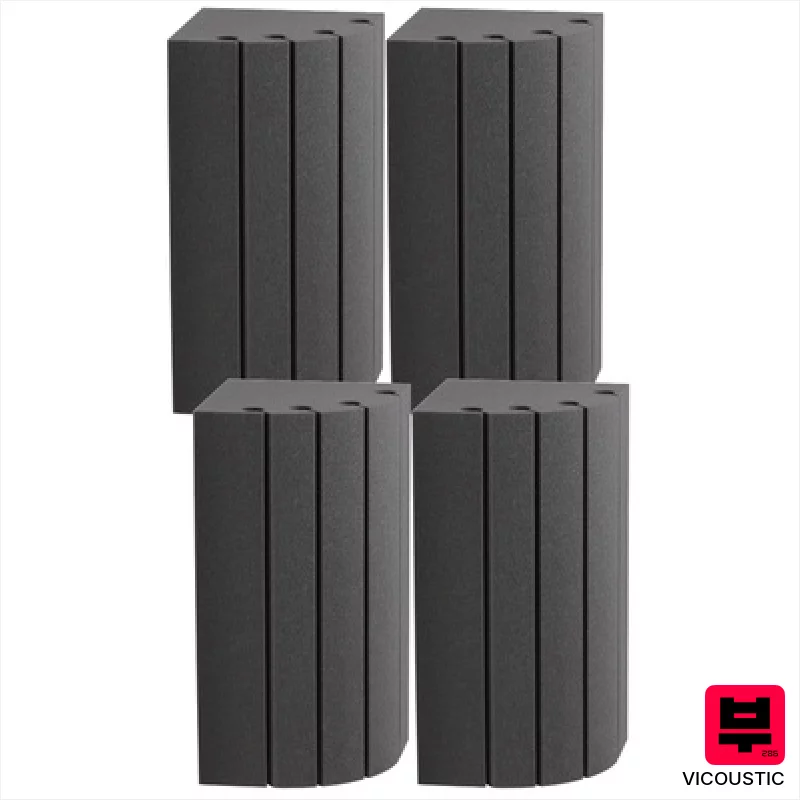
Vicoustic Super Bass 90
- • Excellent low-frequency absorption, noticeably tames room modes.
- • Proprietary VMT technology delivers broad, even bass response.
- • Relatively compact footprint for effective bass trapping.
- • Durable construction with a clean, modern aesthetic.
- • Can be quite heavy, making placement a two-person job.
- • The aesthetic might not suit all studio design preferences.
- • Price point puts it in the mid-range, a significant investment.
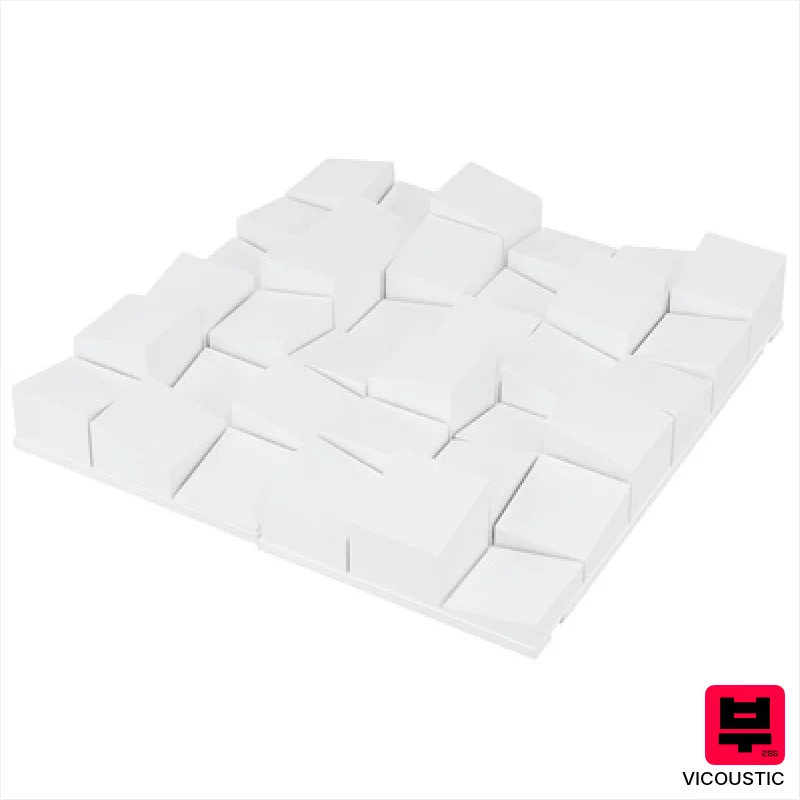
Vicoustic Multifuser Wood MKII 36 White
- • Solid wood construction offers a warmer, more natural diffusion.
- • Rotatable panels allow for surprisingly versatile acoustic shaping.
- • The matte white finish blends well in most studio environments.
- • VicFix mounting system provides a secure and clean installation.
- • Price point places it above some basic foam alternatives.
- • Effective frequency range leans towards higher frequencies; low-end diffusion is limited.
- • Relatively heavy, requiring careful wall mounting considerations.
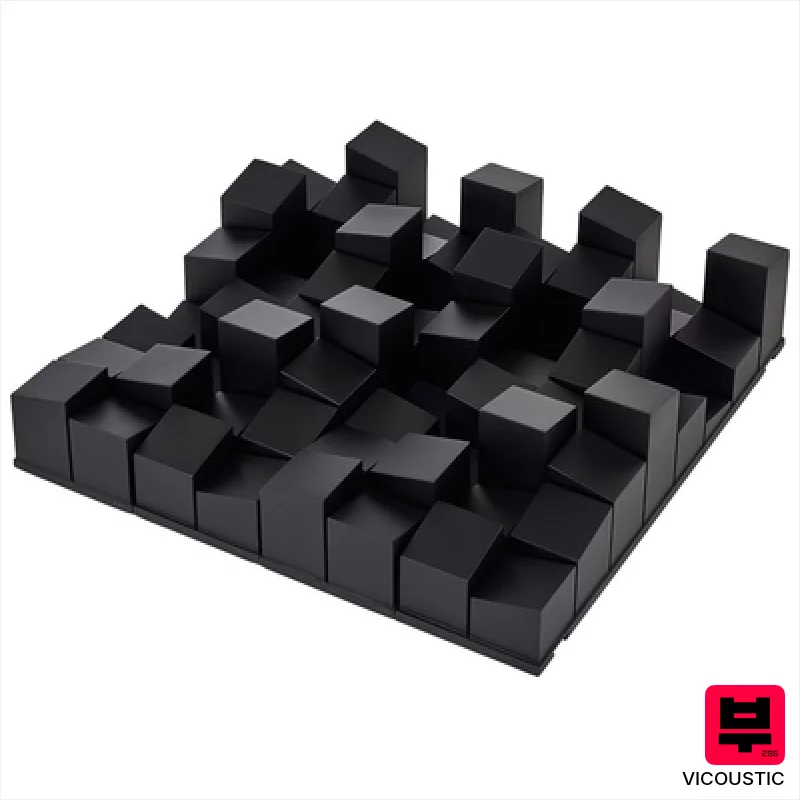
Vicoustic Multifuser Wood MKII 64 Black
- • Solid wood construction provides a warm, natural diffusion profile
- • Rotating panels offer excellent flexibility in tailoring the diffusion pattern
- • Euroclass E fire rating adds a layer of safety and peace of mind
- • VicFix mounting system simplifies installation and ensures secure placement
- • The black matte finish can show dust and fingerprints readily
- • Weight (approx. 18kg) makes it a two-person job to hang
- • Lower frequency performance is limited; needs bass trapping support
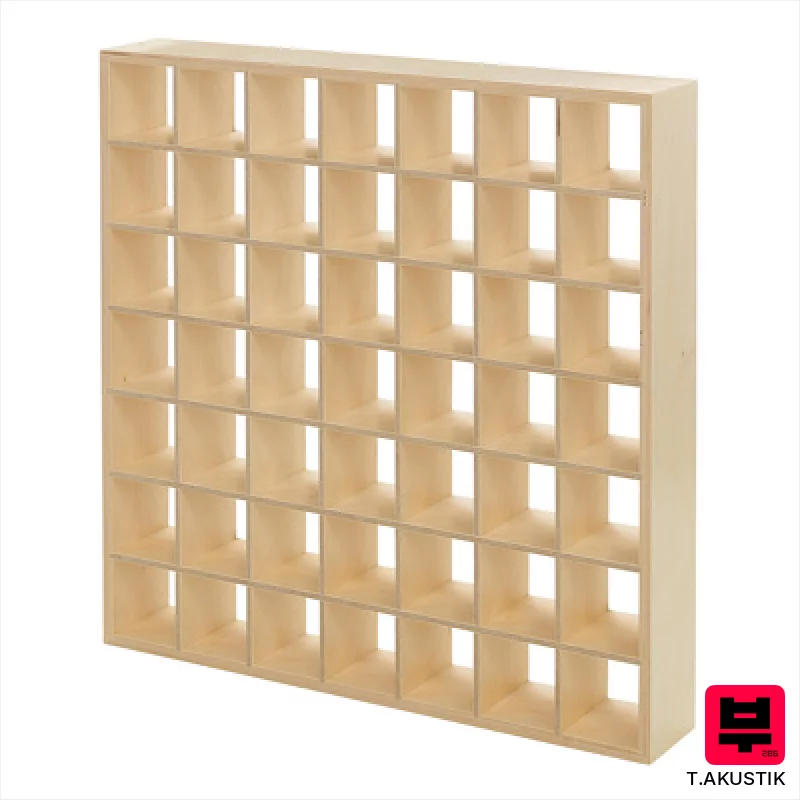
t.akustik Spektrum D10 Diffusor
- • Birch multiplex construction provides excellent rigidity and sonic performance
- • Lattice design effectively scatters sound waves, reducing flutter echoes
- • Attractive aesthetic blends well with various room décor styles
- • Relatively compact size (600x600x100mm) suits smaller project studios
- • Cell size limits low-frequency diffusion effectiveness; best for mid/high frequencies
- • Weight (4.85kg) requires careful wall mounting and potentially two people
- • Clear lacquer finish may show dust and fingerprints more readily
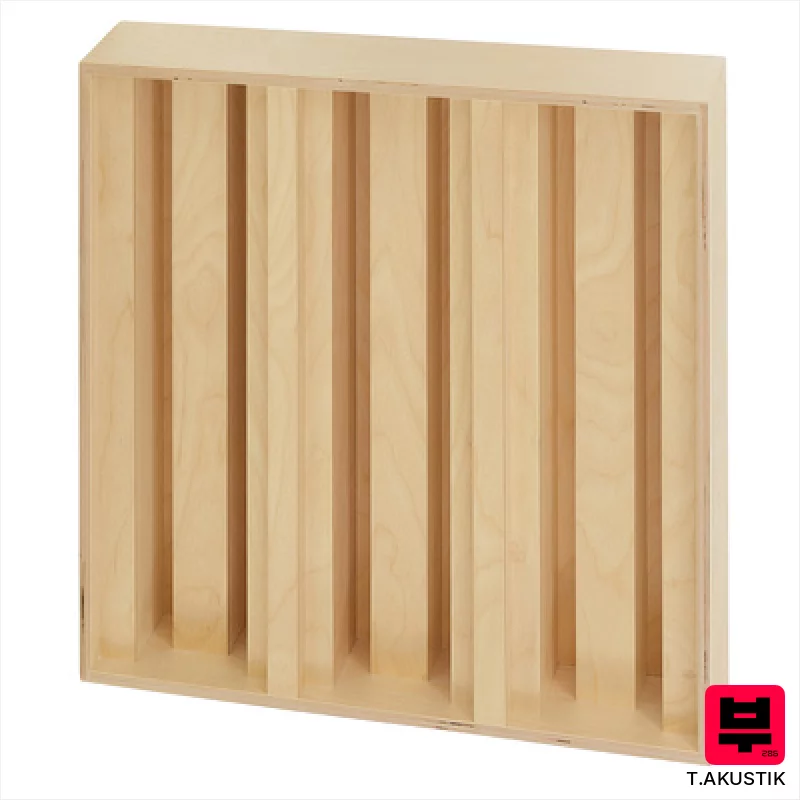
t.akustik Spektrum D30 Diffusor
- • Birch plywood construction offers a naturally warm sonic signature
- • Quadratic residue design effectively scatters mid-range frequencies
- • Solid weight indicates robust build quality and longevity
- • Included mounting clips simplify installation, a thoughtful addition
- • Frequency range leans towards mid-highs, limiting low-frequency diffusion
- • Relatively heavy for a single person to handle during installation
- • Birch plywood finish might be aesthetically limiting for some studios
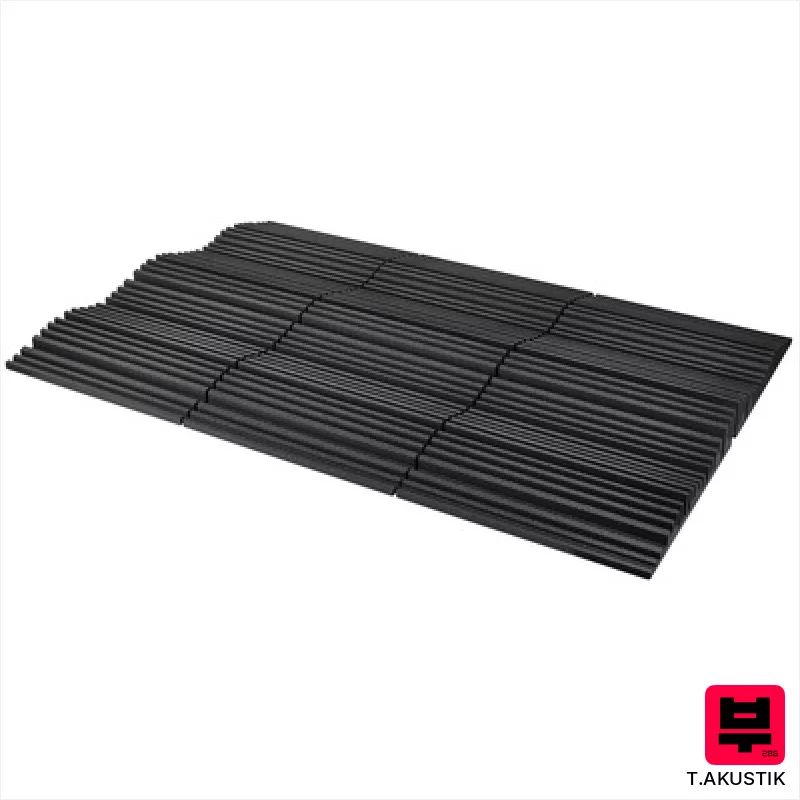
t.akustik Diffusor Wave GR eps set
- • EPS foam construction offers surprisingly effective broadband diffusion for the price.
- • Graphite color is subtle and blends well in most studio environments.
- • Modular design allows for flexible placement and room configuration.
- • Lightweight EPS makes handling and repositioning the diffusers relatively easy.
- • EPS foam is inherently less durable than wood or fabric-covered diffusers.
- • Frequency range leans towards mid-range; won't handle extreme low frequencies.
- • Requires separate adhesive for mounting, adding to the overall cost and effort.
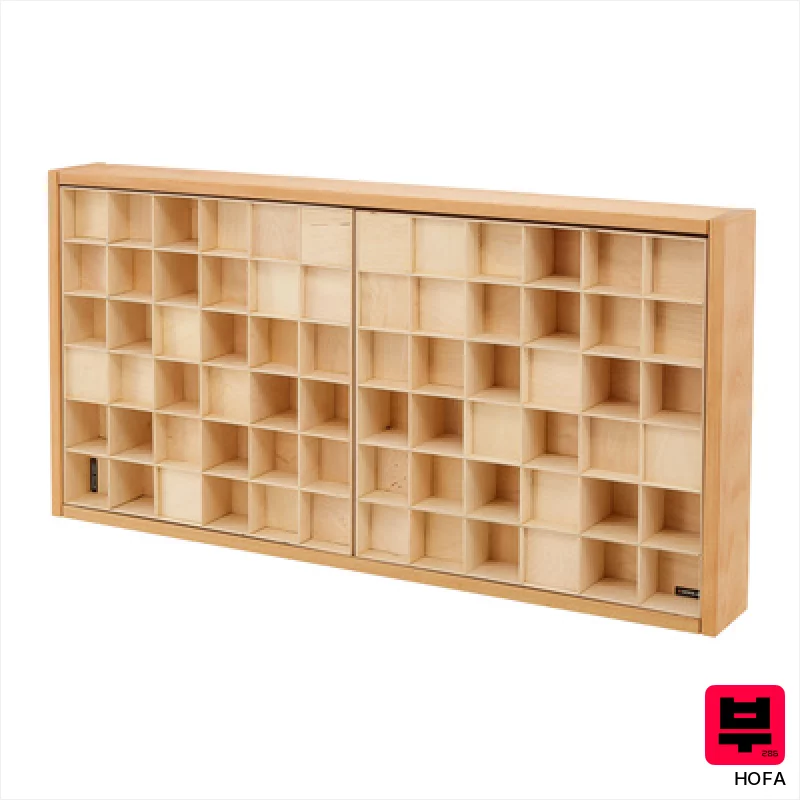
HOFA Diffusor Set nature
- • Beech timber frame offers a warm, natural aesthetic and robust construction.
- • Birch plywood diffusers provide effective scattering of mid-high frequencies.
- • Exchange frame allows for easy module swapping and room acoustic customization.
- • Included wall-mounting hardware simplifies initial installation.
- • Weight (4kg each) makes ceiling mounting significantly more challenging without assistance.
- • Birch plywood finish, while attractive, may require sealing for long-term durability.
- • Limited low-frequency diffusion; best paired with bass traps for comprehensive treatment.
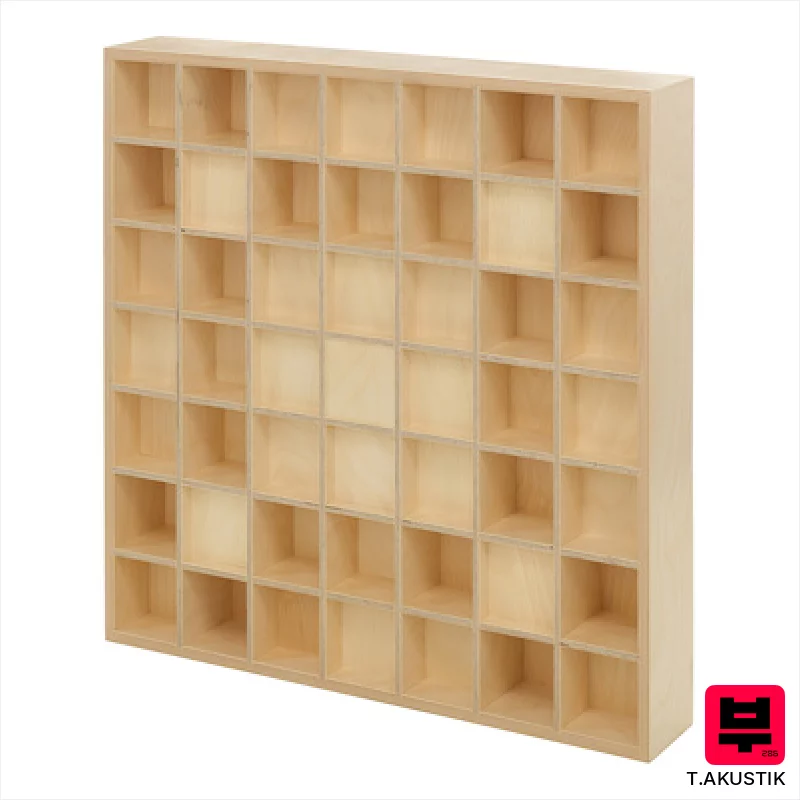
t.akustik Spektrum D20 Diffusor
- • Effective broadband scattering across a useful mid-frequency range
- • Hemispheric scattering provides even coverage, minimizing dead spots
- • Compact depth allows for use in smaller, more constrained spaces
- • QRD design based on prime number 7 offers predictable and controlled diffusion
- • Limited low-frequency performance; won't address serious bass issues
- • Primarily effective in the mid-range; requires complementary bass traps
- • Appearance is purely functional; may not suit all aesthetic preferences
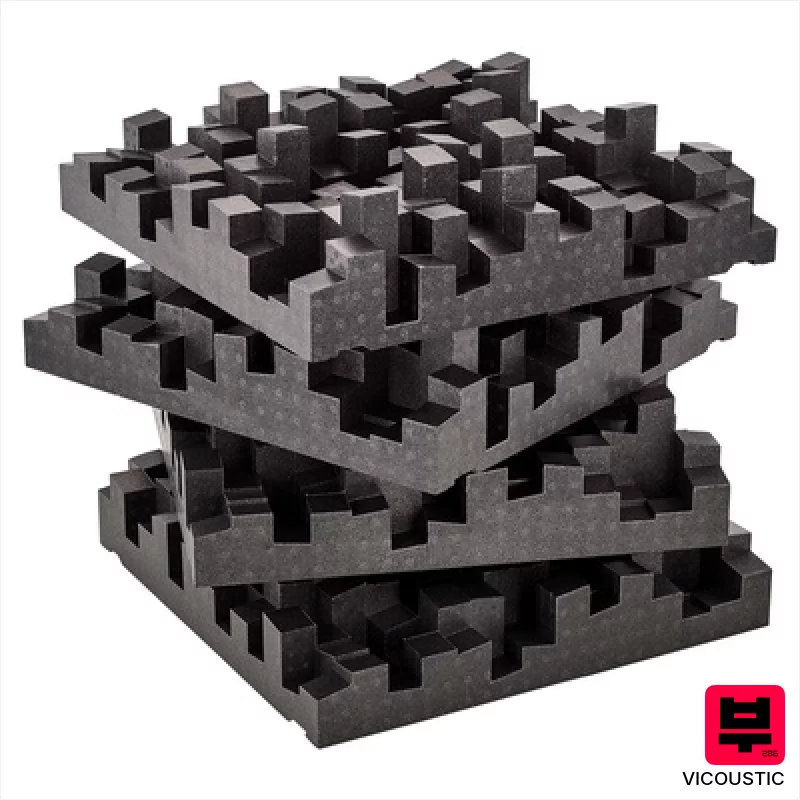
Vicoustic Multifuser DC3 Black
- • Effective diffusion for improved stereo imaging and clarity.
- • EPS construction provides surprisingly rigid and lightweight panels.
- • VicFix mounting system simplifies installation and allows for repositioning.
- • Paintable surface allows for seamless integration with room aesthetics.
- • EPS material isn't as durable as wood or fabric-wrapped options.
- • Diffusion performance is most effective in mid-range frequencies.
- • Limited low-frequency absorption requires additional bass trapping.
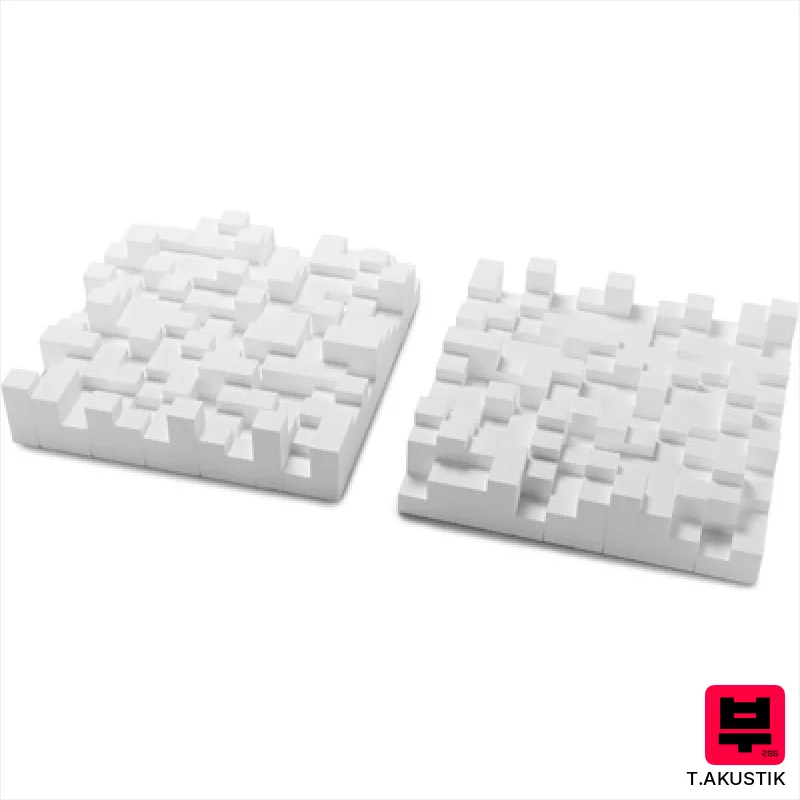
t.akustik Diffusor Manhattan eps set
- • Lightweight EPS construction simplifies installation and handling.
- • Water-based paint compatibility allows for aesthetic customization.
- • The 13-element design provides a decent level of diffusion.
- • Affordable entry point for basic room acoustic treatment.
- • EPS foam offers limited low-frequency absorption capabilities.
- • Diffusion effectiveness is primarily concentrated in the mid-range.
- • The cured EPS material is less durable than wood or fabric-covered diffusers.
How to Choose the Best Diffusors
Effective Diffusion Range
A diffuser's effectiveness is tied to its range of frequencies it scatters. A live room needs low-midrange diffusion to avoid that boomy, indistinct low-end build-up. Cheap panels often only scatter highs, leaving the muddiness untouched.
Pattern and Depth
The more complex the pattern (like Schroeder or Quadratic residue), the wider the frequency range it'll handle. Deeper diffusers generally offer better low-midrange performance, but also cost more and take up more space - a trade-off.
Sky-High vs. Low-Midrange Performance
Some diffusers are designed for a bright, airy sound (good for vocals, maybe), but can make guitars sound brittle and thin. Others prioritize that low-midrange warmth and sustain, which is what you usually want in a live room for instruments.
Construction Quality & Durability
Live rooms take a beating. Diffusers need to be robust enough to handle being bumped, moved, and potentially even walked on. Particleboard and thin fabric are gonna fail fast; look for solid wood, proper bracing, and durable finishes.
Aesthetic Integration
Let's be honest, these things are gonna be visible. A diffuser that clashes with the room's vibe is a distraction - it affects the feel of the space and can even subtly impact the musicians' performance. Consider how it looks alongside your amps and drums.
Buying Guide
Don't cheap out. Seriously. A poorly designed or built diffuser will just create a weird, phasey mess. Spend your money on something with a proven design and solid construction, even if it means fewer panels. Think about the size of your room - too few diffusers will just make the reflections uneven, too many can create a strange, artificial reverb. Ultimately, listen with your ears - if it sounds good and feels inspiring, it's probably a good choice.
Our Methodology
We don't just look at specs here. We've spent years tracking bands in various live rooms, both professionally and DIY, and we've A/B'd diffusers against untreated walls and other solutions. We're listening for how they affect sustain, articulation, and the overall tonal balance - does it add warmth, clarity, or just a weird, phasey echo? It's about real-world performance, not lab results.

