
Best Diffusors for Large Studios 2026
So, you've got a big studio space. Congratulations - that's a lot of potential, but also a lot of acoustic headaches. Diffusion isn't just about making a room sound 'nice'; it's about creating a natural, spacious soundstage that lets your recordings breathe, prevents comb filtering from muddying your mixes, and keeps your tracking sessions from feeling like a sonic telephone. Getting diffusion right in a large studio is a serious game changer, and it's not as simple as slapping up some foam.
Last updated: July 15, 2026 • Next update: July 22, 2026
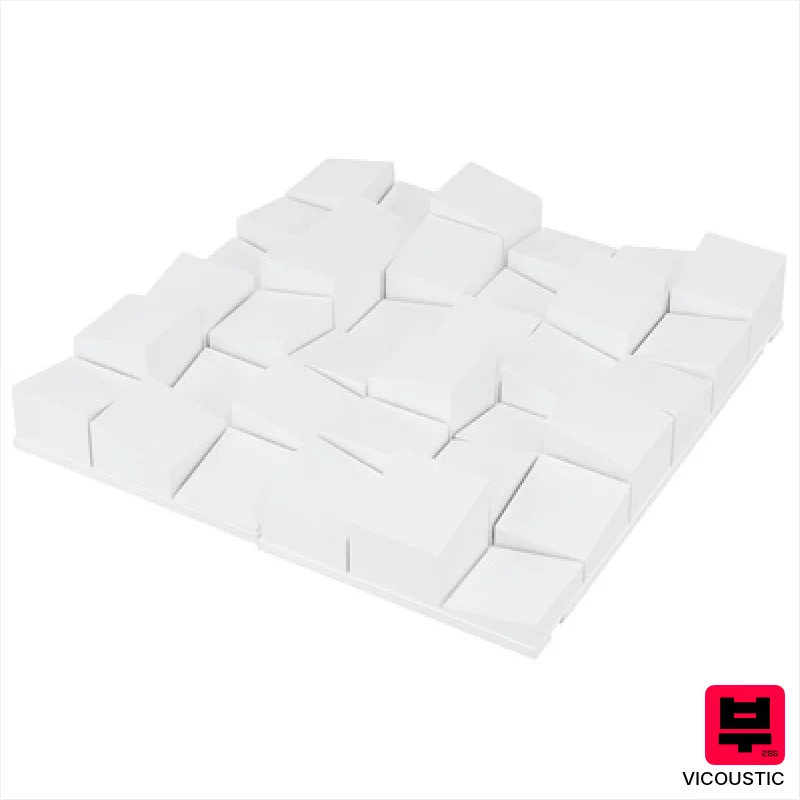
Vicoustic Multifuser Wood MKII 36 White
- • Solid wood construction offers a warmer, more natural diffusion.
- • Rotatable panels allow for surprisingly versatile acoustic shaping.
- • The matte white finish blends well in most studio environments.
- • VicFix mounting system provides a secure and clean installation.
- • Price point places it above some basic foam alternatives.
- • Effective frequency range leans towards higher frequencies; low-end diffusion is limited.
- • Relatively heavy, requiring careful wall mounting considerations.
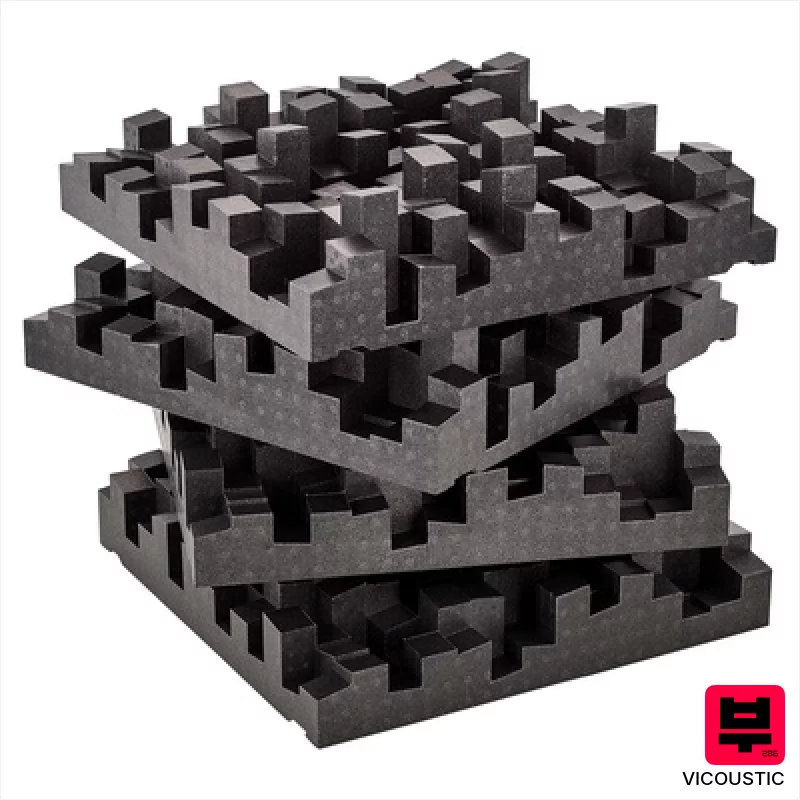
Vicoustic Multifuser DC3 Black
- • Effective diffusion for improved stereo imaging and clarity.
- • EPS construction provides surprisingly rigid and lightweight panels.
- • VicFix mounting system simplifies installation and allows for repositioning.
- • Paintable surface allows for seamless integration with room aesthetics.
- • EPS material isn't as durable as wood or fabric-wrapped options.
- • Diffusion performance is most effective in mid-range frequencies.
- • Limited low-frequency absorption requires additional bass trapping.
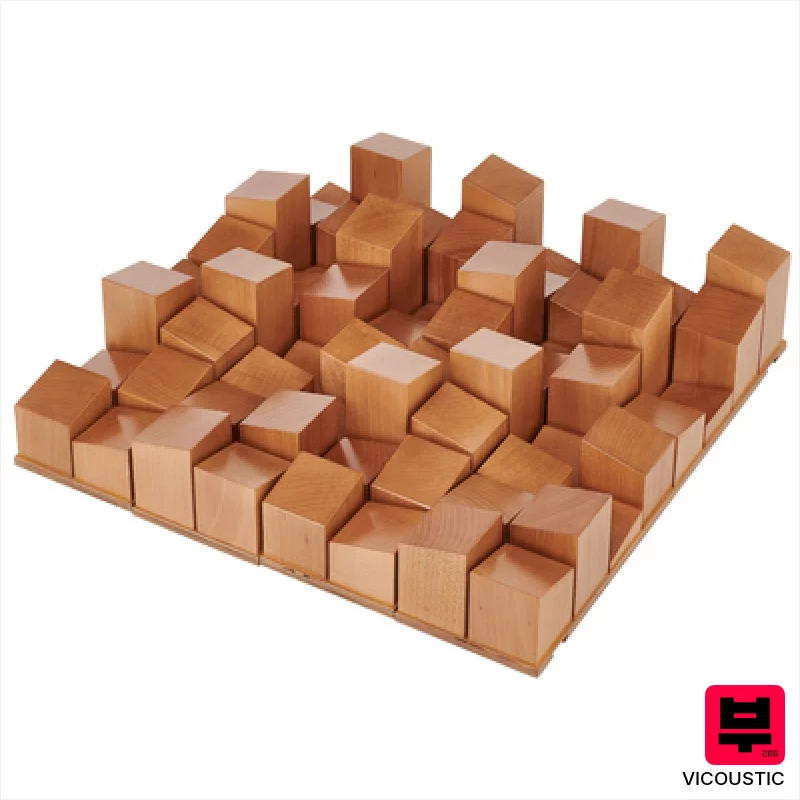
Vicoustic Multifuser Wood MKII 64 Wood
- • Solid wood construction lends a warm, natural aesthetic and robust feel
- • Adjustable panel sections allow for fine-tuning of diffusion pattern
- • QRD sequence provides effective broadband diffusion across a useful range
- • VicFix mounting system simplifies installation and offers secure hold
- • Natural wood finish may require occasional maintenance to preserve appearance
- • Relatively heavy; requires two people for safe handling and installation
- • Frequency response leans towards higher frequencies; may need pairing with bass traps

Vicoustic Multifuser Wood MKII 64 White
- • Solid wood construction offers a warmer, more natural diffusion than foam.
- • Rotating panel sections allow for tailored diffusion patterns.
- • Pearl White Matte finish blends subtly into most studio aesthetics.
- • VicFix mounting system provides secure, professional installation.
- • Weight (18kg) makes installation a two-person job.
- • Frequency range, while broad, might not cover very low frequencies effectively.
- • Relatively high-end price point compared to basic foam alternatives.
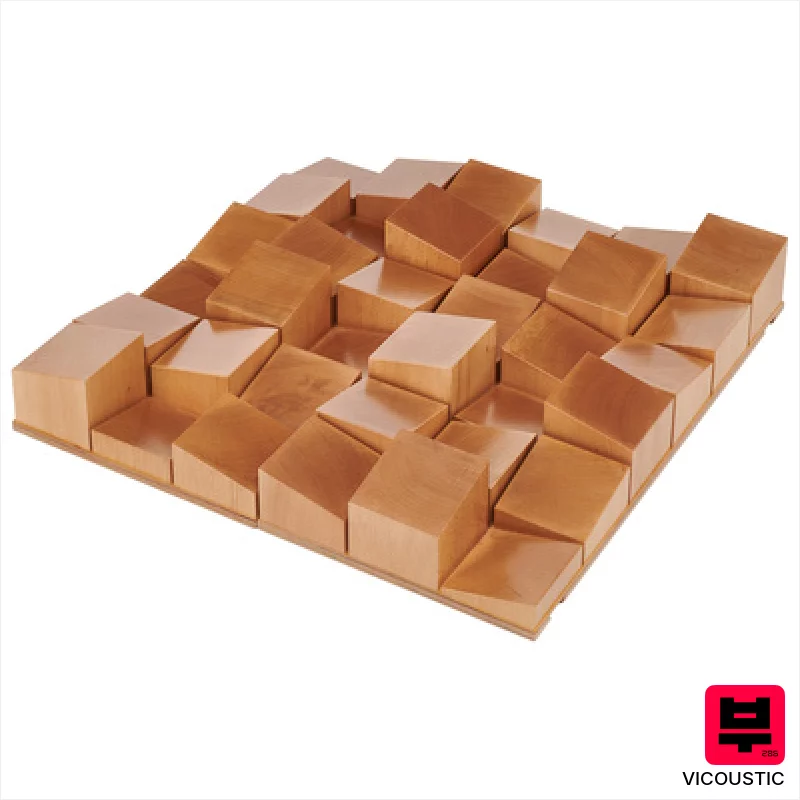
Vicoustic Multifuser Wood MKII 36 Wood
- • Solid wood construction offers a warmer, more natural sound diffusion.
- • Rotating panel sections allow for fine-tuning of reflection patterns.
- • QRD sequence provides effective broadband diffusion across a useful range.
- • VicFix mounting system ensures secure and relatively easy installation.
- • The natural wood finish might not suit all studio aesthetics.
- • 13 kg weight makes it a two-person job for mounting.
- • Effective frequency range leans towards higher frequencies; bass diffusion is limited.
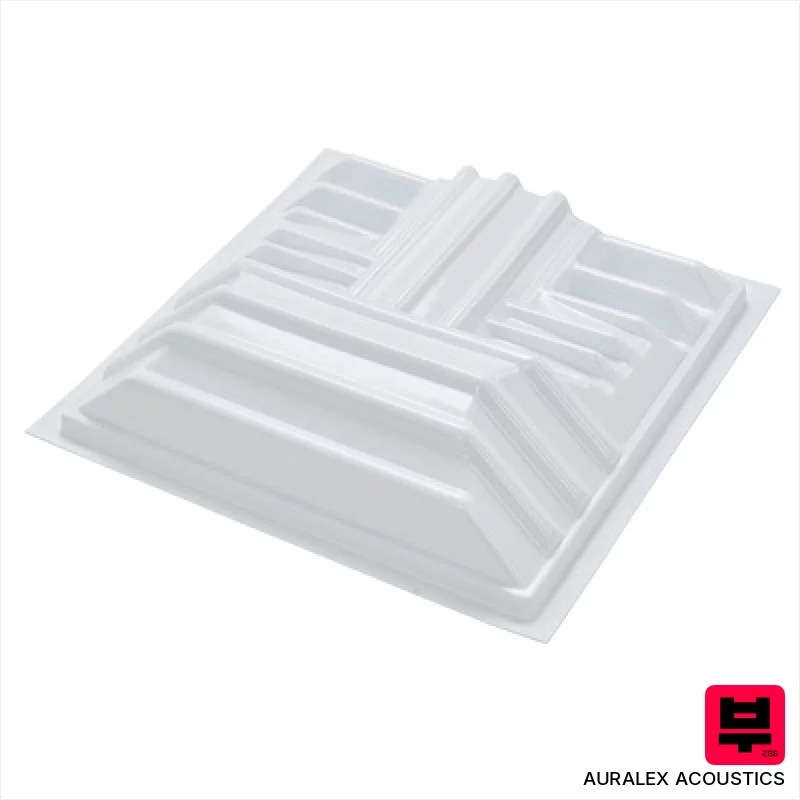
Auralex Acoustics T'Fusor Diffuser single
- • Durable thermoplastic construction resists warping and damage.
- • Quadratic design offers predictable, effective sound diffusion.
- • Lightweight and manageable for DIY acoustic treatment projects.
- • Neutral white finish allows for easy customization and blending.
- • Limited diffusion effectiveness compared to larger, more complex diffusers.
- • Thermoplastic can exhibit a slight plasticky odor initially.
- • Mounting options are basic, requiring additional hardware.

Vicoustic Multifuser Wood MKII 36 Black
- • Solid wood construction provides a warm, natural diffusion character.
- • Rotatable panels offer flexibility in tailoring sound dispersion patterns.
- • Euroclass E fire rating provides a crucial safety feature for studios.
- • VicFix mounting system simplifies installation and ensures secure placement.
- • Relatively heavy, requiring careful handling and potentially stronger wall mounting.
- • Effective frequency range leans towards higher frequencies; low-end diffusion is limited.
- • The black matte finish, while aesthetically pleasing, can show dust easily.
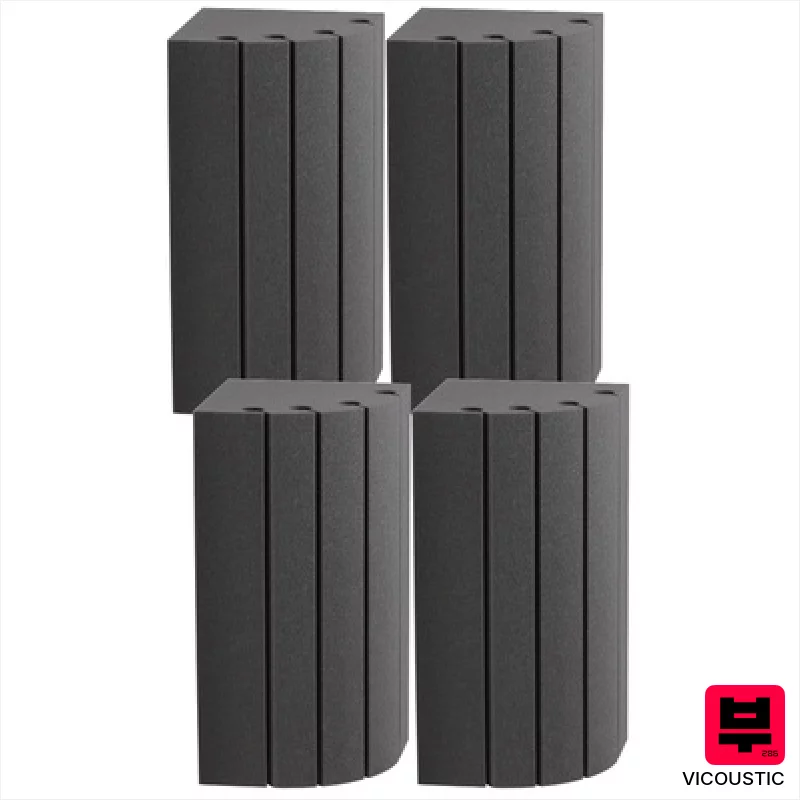
Vicoustic Super Bass 90
- • Excellent low-frequency absorption, noticeably tames room modes.
- • Proprietary VMT technology delivers broad, even bass response.
- • Relatively compact footprint for effective bass trapping.
- • Durable construction with a clean, modern aesthetic.
- • Can be quite heavy, making placement a two-person job.
- • The aesthetic might not suit all studio design preferences.
- • Price point puts it in the mid-range, a significant investment.
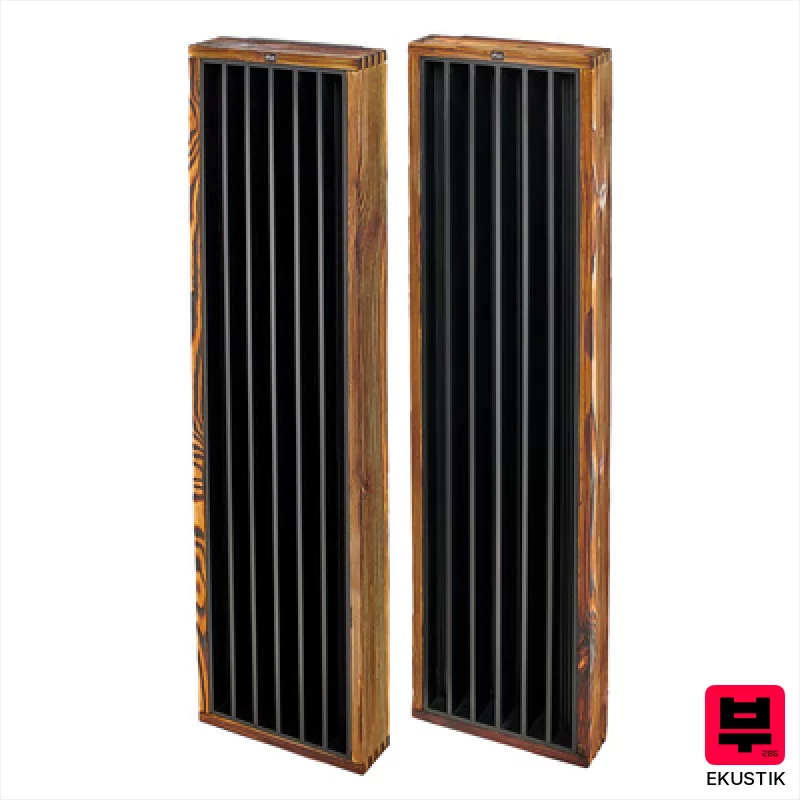
Ekustik Woody Fractal 34 Duopack
- • Excellent diffusion across a wide frequency spectrum, noticeably improving stereo imaging.
- • The 10cm depth is surprisingly effective for smaller rooms or tighter spaces.
- • Solid, handmade construction using quality wood – feels very robust.
- • Integrated mounting system simplifies installation, saving time and effort.
- • The black finish might absorb more light and could look stark in some rooms.
- • While effective, the Schroeder design might not offer the ultimate in complex diffusion.
- • At this price point, they represent a premium investment for acoustic treatment.
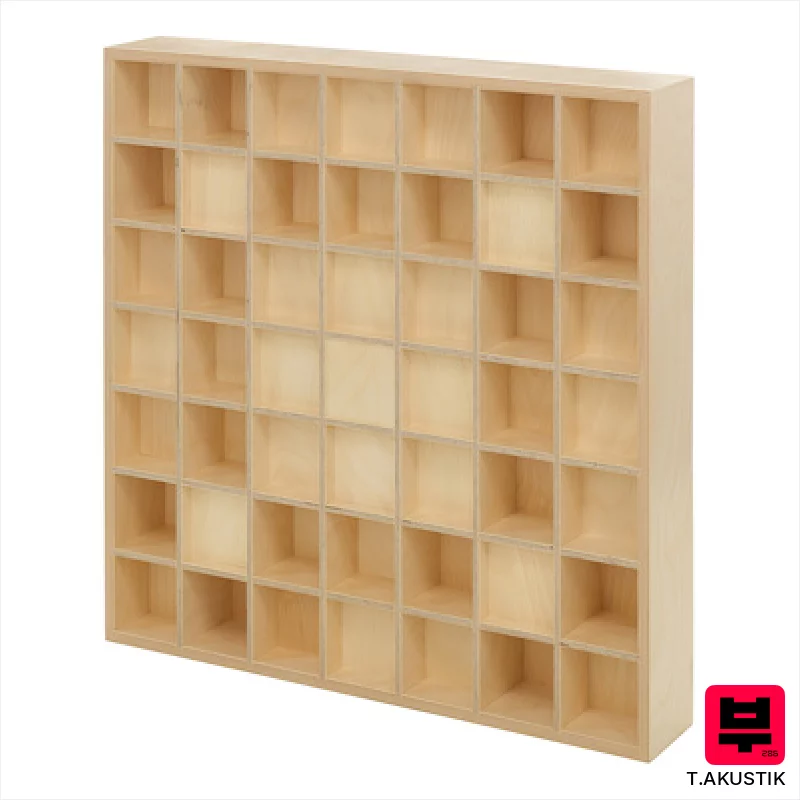
t.akustik Spektrum D20 Diffusor
- • Effective broadband scattering across a useful mid-frequency range
- • Hemispheric scattering provides even coverage, minimizing dead spots
- • Compact depth allows for use in smaller, more constrained spaces
- • QRD design based on prime number 7 offers predictable and controlled diffusion
- • Limited low-frequency performance; won't address serious bass issues
- • Primarily effective in the mid-range; requires complementary bass traps
- • Appearance is purely functional; may not suit all aesthetic preferences
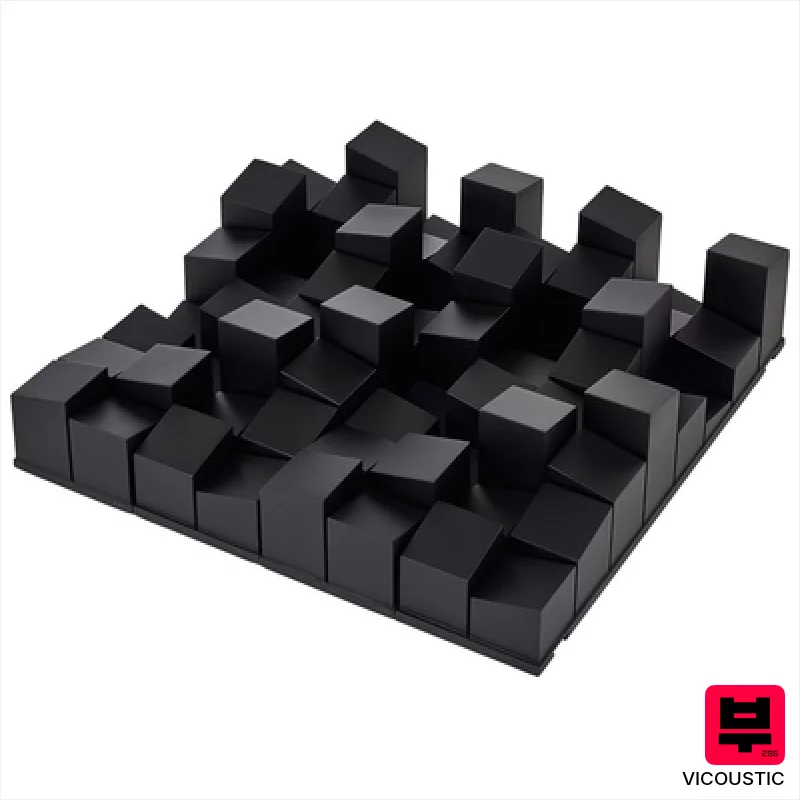
Vicoustic Multifuser Wood MKII 64 Black
- • Solid wood construction provides a warm, natural diffusion profile
- • Rotating panels offer excellent flexibility in tailoring the diffusion pattern
- • Euroclass E fire rating adds a layer of safety and peace of mind
- • VicFix mounting system simplifies installation and ensures secure placement
- • The black matte finish can show dust and fingerprints readily
- • Weight (approx. 18kg) makes it a two-person job to hang
- • Lower frequency performance is limited; needs bass trapping support
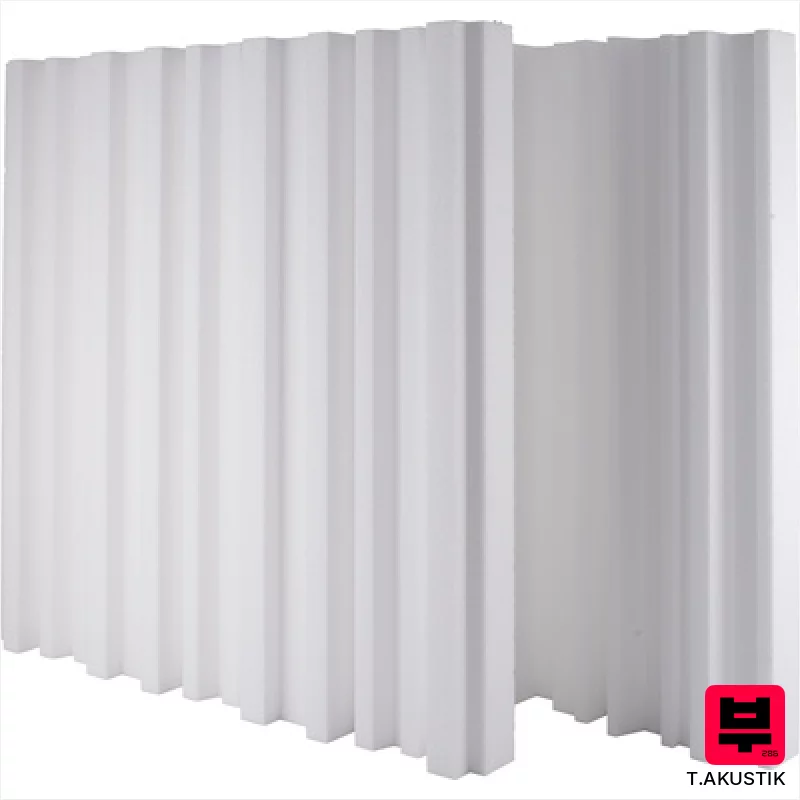
t.akustik WDS-7 Diffuser Set 8pcs
- • Lightweight EPS construction simplifies installation and handling
- • B1 fire rating offers a degree of safety and peace of mind
- • Optimized design helps scatter sound for improved room acoustics
- • Affordable entry point for basic room diffusion treatment
- • EPS material may resonate at lower frequencies, limiting low-end diffusion
- • Limited aesthetic options; painting is restricted to water-based paints
- • Smaller size restricts diffusion effectiveness in larger rooms
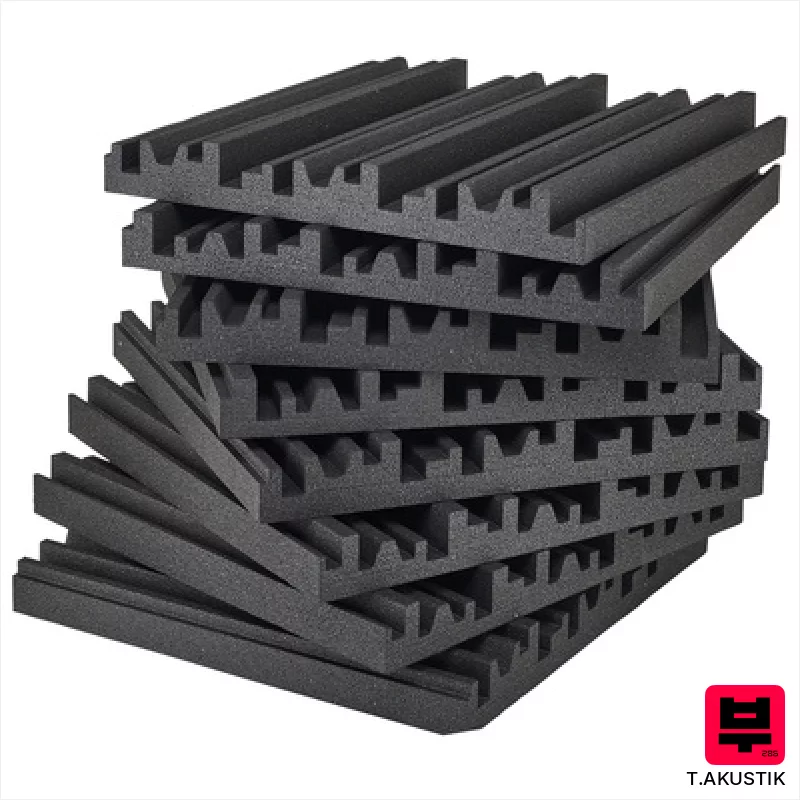
t.akustik WDS-7 GR Diffuser 8pcs Set
- • Lightweight EPS construction simplifies installation and handling
- • B1 fire rating offers a degree of safety and peace of mind
- • Levels profile provides a decent broadband diffusion
- • Graphite color blends well with most studio aesthetics
- • EPS material isn't as durable as wood or fabric-covered options
- • Contact adhesive required for installation adds to overall cost
- • Diffusion effectiveness is moderate; not a high-end solution
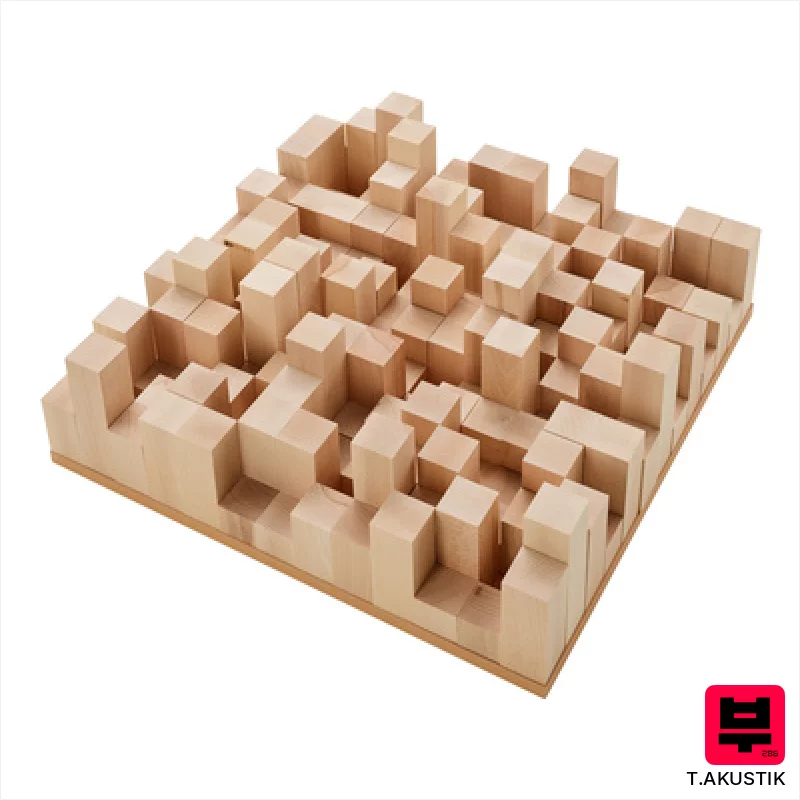
t.akustik Diffusor Manhattan wood
- • Solid beech wood construction lends a warm, natural aesthetic.
- • Modular design allows for some customization of diffusion pattern.
- • Plywood base plate provides a stable and rigid foundation.
- • Relatively effective within a useful mid-range frequency spectrum.
- • Weight (30 kg) makes installation potentially difficult for one person.
- • Effective range leans towards mid-frequencies; less impact on low-end.
- • Assembly required, which adds to the initial setup time.
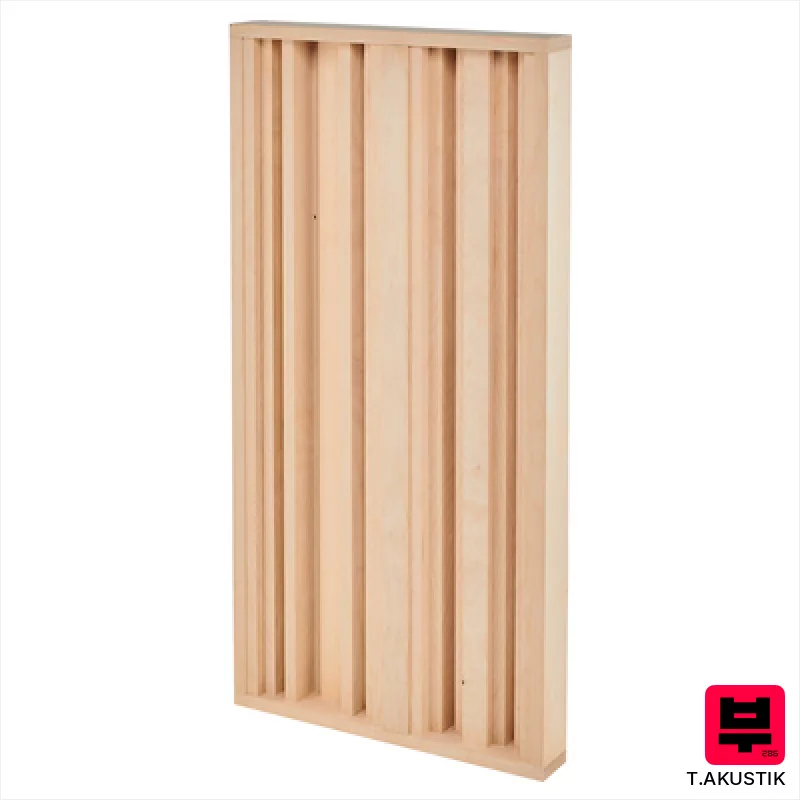
t.akustik SC Diffusor Birch
- • Solid birch construction lends a warm, natural sound diffusion.
- • Square residual design effectively scatters mid-high frequencies.
- • Birch veneer back panel enhances aesthetic appeal and rigidity.
- • Relatively compact size makes it suitable for smaller control rooms.
- • Frequency range starts at 1250 Hz; low-frequency diffusion is minimal.
- • Weight (16.4 kg) requires two people for safe installation.
- • Birch plywood, while beautiful, can be susceptible to humidity changes.
How to Choose the Best Diffusors
Effective Range
Large studios need diffusers that work across a broad frequency spectrum. A diffuser that only handles high-mids won't do you any good when you're trying to tame low-mid resonances. Look for Schroeder diffusers or hybrid designs with a wider scattering range.
Polarity and Scattering Pattern
Some diffusers simply scatter sound randomly, which can create an uneven and potentially chaotic soundfield. The best ones, like optimized quadratic residue diffusers, provide a more controlled and predictable scattering pattern, preserving image integrity.
Construction Quality & Durability
We're talking about pieces that need to withstand years of use and potentially a lot of movement during room treatments. Cheaply built diffusers can fall apart, lose their effectiveness as the materials degrade, or just sound brittle and lifeless.
Aesthetic Integration
Let's be honest, these things are going to be visible. While sound is paramount, a chaotic-looking studio isn't inspiring. Consider the design and how it fits with your studio's overall aesthetic - it's a subtle factor but it impacts the vibe.
Size and Modularity
Large studios often require a significant amount of diffusion. Modular designs that can be scaled and arranged to fit your specific room dimensions are essential for flexibility and future-proofing your acoustic treatment.
Buying Guide
Don't chase the cheapest option. Seriously, you'll end up spending more in the long run fixing the problems it creates. Look beyond the advertised diffusion coefficient; listen to how the diffuser sounds in a room. A well-designed diffuser is an investment, and it's worth paying for the quality construction and predictable performance. Be wary of anything that looks too good to be true - often, corners are being cut somewhere, usually in material quality or construction accuracy.
Our Methodology
We're not looking at spec sheets here. We've spent countless hours A/B'ing diffusers in actual recording scenarios - tracking drums, recording vocals, mixing complex orchestral arrangements - listening for how they affect transient response, stereo width, and overall tonal balance. We've compared DIY builds to high-end commercial units, judging them purely on what they deliver in the listening space, not on their marketing materials.

