
Best Landerer Diatonic Harmonica Accordions 2026
Alright, let's talk Landerer diatonic harmonica accordions. These aren't your dime-a-dozen, plastic-reed instruments you find at tourist traps. If you're chasing a specific, earthy European folk tone - think Alpine yodeling, old-school polka, or even a gritty blues edge - Landerer's a name you absolutely need to know. They've been quietly building a reputation for a sound and feel that's genuinely different, a throwback to a golden age of accordion making.
Last updated: April 11, 2026
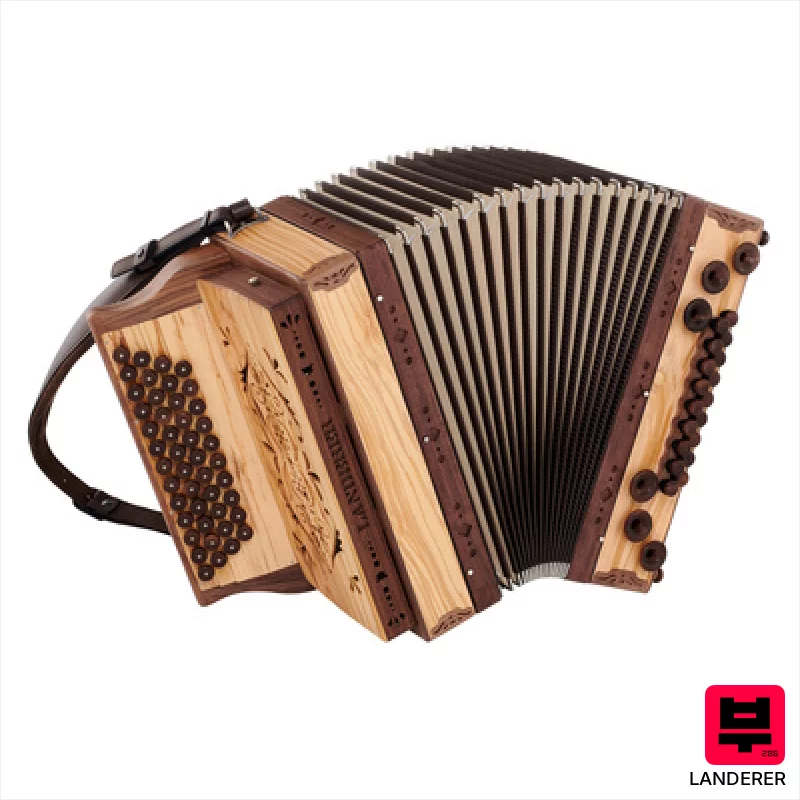
Landerer De Luxe Olive Bb/Eb/Ab/Db
- • Solid olive wood construction delivers exceptional resonance and warmth.
- • Tipo A MANO reedplates provide a remarkably responsive and nuanced touch.
- • The Michlbauer system offers a comfortable and efficient playing experience.
- • Hand-readjusted tuning guarantees exceptional precision and optimal playability.
- • The olive wood, while beautiful, is susceptible to humidity changes requiring careful maintenance.
- • The complex tuning makes it less adaptable to non-traditional musical styles.
- • Premium-priced, representing a significant investment for many musicians.
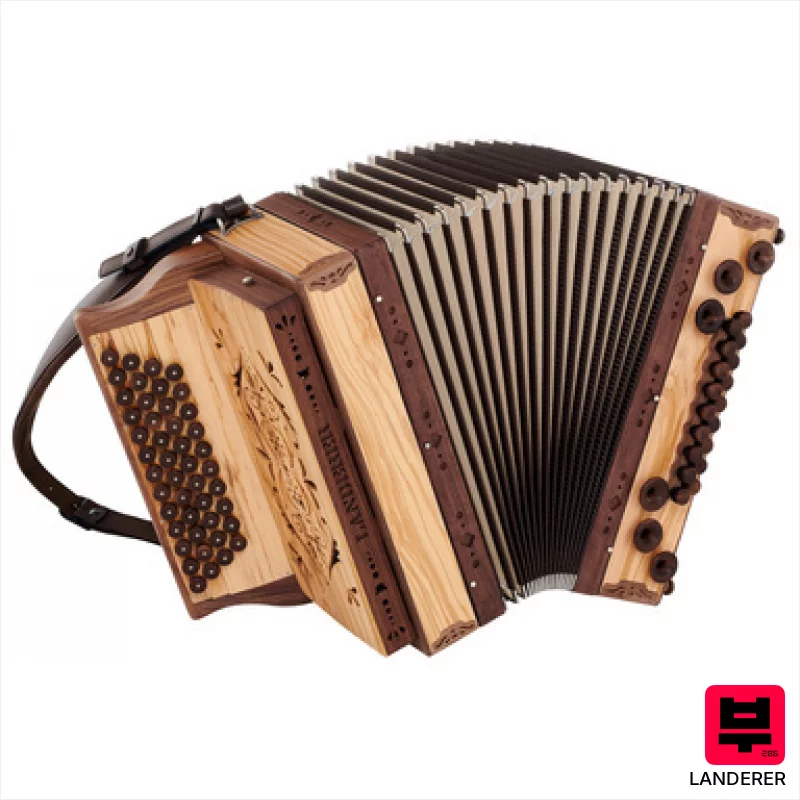
Landerer De Luxe Olive G/C/F/Bb
- • Olive wood construction delivers exceptional warmth and resonance
- • Michlbauer system provides incredibly responsive and nuanced playing
- • Tipo-a-mano reed plates offer a refined, complex tonal palette
- • Hand-tuned for optimal response minimizes fatigue and maximizes expression
- • The G/C/F/Bb tuning limits versatility for some playing styles
- • Solid olive wood construction makes it relatively heavy compared to alternatives
- • Premium-priced, representing a significant investment for most players

Landerer Mini Classic G/C/F/Bb Olive B
- • Olive wood construction delivers a warm, resonant, and pleasing tonal character.
- • Tipo A MANO reedplates offer exceptional responsiveness and a refined touch.
- • Michlbauer system provides a comfortable and intuitive playing experience.
- • Low air consumption allows for extended playing without fatigue, crucial for smaller players.
- • The G/C/F/Bb tuning limits versatility compared to chromatic options.
- • Premium-priced, representing a significant investment for many musicians.
- • Smaller size might feel cramped for players with larger hands.

Landerer Mini Classic G/C/F/Bb Olive R
- • Olive wood construction provides exceptional resonance and warmth.
- • Michlbauer system offers a remarkably responsive and intuitive playing experience.
- • Tipo A MANO reedplates contribute to a clean, articulate, and expressive tone.
- • Red bellows add visual appeal and contribute to a lively, responsive feel.
- • The G/C/F/Bb tuning limits versatility for certain musical styles.
- • Premium-priced, making it a significant investment for many players.
- • The smaller size, while advantageous for portability, might feel cramped for larger hands.

Landerer De Luxe Bog Oak G/C/F/Bb
- • Bog oak construction imparts a uniquely warm, resonant, and complex tonal character.
- • Tipo A MANO reed plates deliver exceptional responsiveness and dynamic range.
- • Michlbauer system provides a comfortable and intuitive playing experience for Styrian style.
- • Hand-readjusted tuning and low air consumption allow for effortless, extended playing sessions.
- • Bog oak instruments are premium-priced, representing a significant investment.
- • The Styrian layout limits versatility for players accustomed to piano or button accordion systems.
- • While relatively light, the bog oak construction still results in a substantial heft compared to plastic instruments.
How to Choose the Best Diatonic Harmonica Accordions
Tone
Landerer's signature tone is what sets them apart. It's got a certain 'roundness' - not overly bright or brittle like some others - with a warm, woody character that sits really well in a mix. It's got a surprising amount of sustain for a diatonic, which is crucial when you're trying to fill out a song without sounding thin. This isn't a sparkly, pristine sound; it's got some grit, some character.
Reed Quality & Voicing
The reeds themselves are a big deal. They're not the cheapest, mass-produced variety; Landerer seems to prioritize a slightly thicker reed stock that contributes to that darker, more complex tone. The voicing isn't overly precise, which some might see as a negative, but it's what gives them that unique, slightly 'off' charm that's so appealing for folk and blues applications.
Bellows Response
The bellows action on a Landerer feels surprisingly smooth, especially considering the price point. They aren't as lightweight as some modern instruments, which means they require a bit more muscle to really drive the volume, but that also contributes to the control and responsiveness. It's a trade-off, but one I'm willing to make for the feel.
Build Quality & Materials
You're not getting exotic woods or aerospace-grade alloys here, but the construction is solid. The wood is generally good quality - often basswood or similar - and the reed blocks are well-secured. There's a certain robustness that speaks to their heritage; these are instruments built to last, even with regular gigging.
Key Action & Articulation
The key action is generally responsive, allowing for decent articulation, though it's not as lightning-fast as some concert-level instruments. This isn't necessarily a flaw; it encourages a more deliberate, expressive playing style that suits the traditional genres they're best suited for. It's not going to be ideal for rapid-fire tremolo runs, but it's fantastic for phrasing and dynamics.
Buying Guide
Landerer accordions aren't the cheapest option, but they offer incredible value for the money. Be aware that older models might have some cosmetic wear - that's part of their charm. Pay close attention to the bellows condition; a leaky bellows will seriously impact the volume and responsiveness. Don't expect pristine, modern precision - embrace the slightly quirky, vintage feel.
How This List Is Built
We don't play these instruments — we're a catalog, not a review desk, and we'd rather say so than pretend otherwise. This page ranks 5 diatonic harmonica accordions from the Thomann catalogue, which is the largest single source of specification data in this category.
Position is computed, not curated. Four signals, in order of weight: how completely the manufacturer documents the instrument (number of published specifications), where it sits in the price range, how specific the model designation is — which filters out generic accessories — and whether a product image exists. The same inputs always produce the same order, so nothing here is shuffled to look fresh.
What this list is good for: narrowing a category down to a shortlist by spec and budget. What it isn't: a substitute for hearing an instrument. Before you buy, read hands-on reviews and, where you can, play it. Full methodology.

