
Best Diatonic Harmonica Accordions for Advanced 2026
So, you've mastered the basics on a diatonic harmonica accordion - you can bang out a passable polka and aren't scared of a tremolo. Now you're hungry for something more, something that'll let you really phrase and explore the instrument's potential. Forget those beginner boxes; we're talking about instruments that offer real nuance and responsiveness for players who want to push the boundaries of what a diatonic accordion can do. Let's dive into what separates the good from the truly exceptional.
Last updated: April 11, 2026

Alpengold Tirol 2 Olive Ash G/C/F/Bb
- • Olive ash veneer offers stunning aesthetics and resonant tonal character.
- • Tipo-a-mano reed plates deliver exceptional responsiveness and a rich, complex tone.
- • The shallow depth makes it surprisingly comfortable for extended playing sessions.
- • Helikon basses provide a warm, full low end for a truly authentic Styrian sound.
- • The weight, while manageable, will still be a factor for smaller players or longer performances.
- • The limited key selection restricts versatility compared to chromatic accordions.
- • Premium-priced, making it a significant investment for many musicians.

Alpengold Tirol 2 Macassar G/C/F/Bb
- • Macassar veneer offers stunning aesthetics and enhanced resonance.
- • Tipo-a-mano reed plates deliver exceptional responsiveness and tonal complexity.
- • Helikon basses provide a richer, more nuanced low-end than standard options.
- • Austrian craftsmanship ensures robust construction and long-term reliability.
- • The weight, while manageable, will be tiring for extended playing sessions.
- • The limited key selection restricts versatility for some musical styles.
- • Premium-priced, representing a significant investment for most players.

Alpengold Tirol 1 Limba G/C/F/Bb
- • Limba veneer offers a warm, resonant tone and striking visual appeal.
- • Tipo-a-mano reed plates deliver exceptional responsiveness and nuanced expression.
- • The Helikon basses provide a rich, full low-end foundation for traditional music.
- • Austrian craftsmanship ensures superb build quality and long-term durability.
- • The weight, while manageable, can be tiring for extended playing sessions.
- • The limited key selection restricts versatility for non-traditional genres.
- • The premium price point puts it out of reach for many aspiring players.

Butolen Apple G/C/F/Bb
- • Handmade Binci reed plates deliver a uniquely rich, complex, and responsive tone.
- • Solid apple wood construction provides exceptional resonance and a beautiful, natural aesthetic.
- • Schaborack key assignment offers a familiar and efficient layout for traditional Styrian playing.
- • Santos wood buttons and antique silver plates showcase exquisite craftsmanship and premium materials.
- • The 7.4 kg weight can be fatiguing for extended playing sessions, especially for beginners.
- • Limited to a specific key arrangement; customization is possible but requires direct contact.
- • The premium-priced nature makes it inaccessible to many aspiring accordionists.
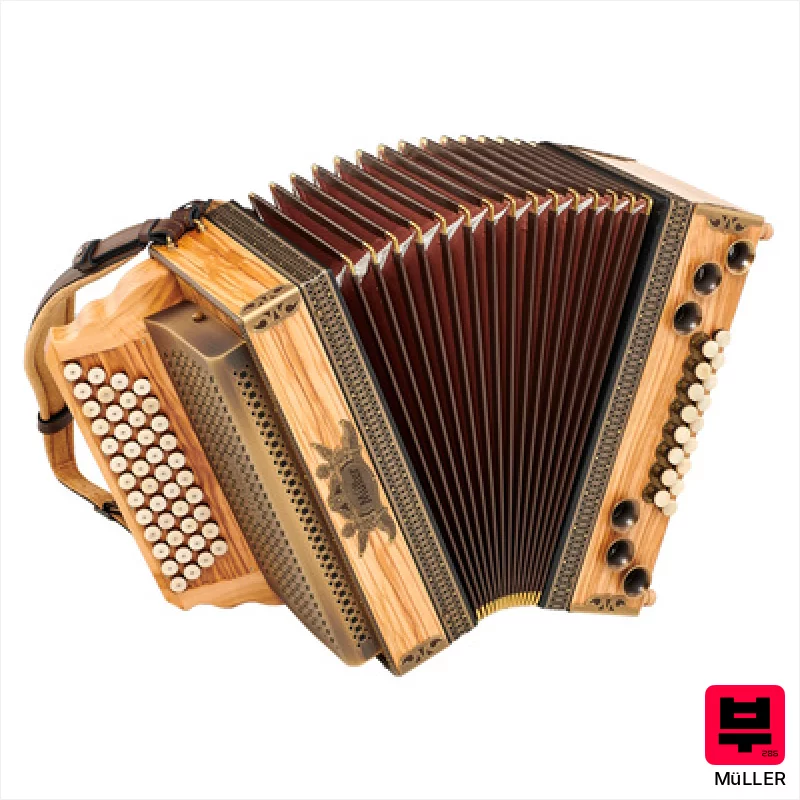
Müller Olive G/C/F/Bb
- • Tipo-a-mano reed plates deliver exceptional responsiveness and tonal complexity.
- • Antique bronze patina plates offer a visually striking, heirloom-quality aesthetic.
- • Camello bellows provide excellent air handling and a pleasing, traditional feel.
- • Aluminium keyboard is lightweight and provides a crisp, precise playing experience.
- • The four-row layout limits versatility compared to full chromatic accordions.
- • The weight, while not excessive, can be tiring during extended playing sessions.
- • The specific key configuration (G/C/F/Bb) demands a dedicated learning curve.
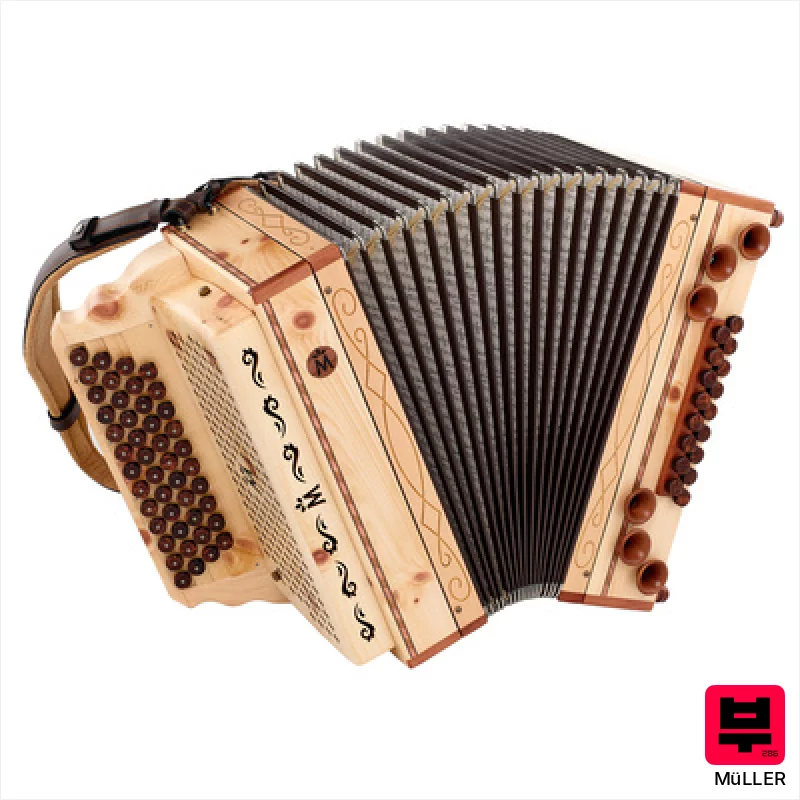
Müller Arve G/C/F/Bb
- • A Mano reed plates deliver exceptional responsiveness and a uniquely rich, complex tone.
- • Austrian craftsmanship ensures robust construction and a lifetime of reliable performance.
- • The aluminium keyboard offers a lightweight feel while maintaining durability and precise action.
- • The G/C/F/Bb key configuration provides a versatile range for traditional folk styles.
- • The 7kg weight can be tiring for extended playing sessions, especially for beginners.
- • The limited bass button range (17) restricts complex chordal accompaniment options.
- • The traditional diatonic tuning is not suitable for all musical genres or playing styles.

Lanzinger 34 Alma Massive G/C/F/Bb
- • A Mano reed plates deliver exceptional responsiveness and a remarkably complex, rich tone.
- • Hazel spruce construction provides a lively resonance and beautiful aesthetic appeal.
- • The robust, hand-built construction ensures incredible durability and longevity.
- • The well-considered key layout (G/C/F/Bb) facilitates a wide range of folk and traditional tunes.
- • The weight (7.1 kg) makes it less suitable for extended playing or younger players.
- • The limited key range restricts versatility outside of traditional folk music styles.
- • The premium-priced nature puts it out of reach for many aspiring players.

Beltuna Alpstar Excl. Fly G/C/F/Bb Elm
- • Elm burl wood offers exceptional resonance and a beautiful aesthetic.
- • Carbon fiber construction significantly reduces weight for extended play.
- • A Mano reeds provide a remarkably responsive and nuanced tone.
- • Michlbauer full equipment expands tonal possibilities and bass range.
- • The G/C/F/Bb tuning limits versatility for non-traditional Styrian music.
- • Premium-priced, representing a significant investment for many musicians.
- • Elm burl, while beautiful, can be susceptible to humidity changes.

Lanzinger 34 Alma Dark Edition G/C/F/Bb
- • A Mano reed plates deliver exceptional responsiveness and tonal complexity.
- • Walnut finish offers a rich aesthetic and subtly enhances resonance.
- • The G/C/F/Bb key arrangement unlocks a wide range of traditional folk tunes.
- • Solid construction ensures durability and a comfortable, stable playing experience.
- • The weight (7.1 kg) can be fatiguing during extended playing sessions.
- • The limited key configuration restricts versatility for non-traditional styles.
- • Premium-priced, representing a significant investment for many musicians.

Kärntnerland Gipfelstürmer G/C/F/Bb
- • Exceptional TIPO A MANO 1A tongues deliver a remarkably rich, complex tone.
- • Brushed spruce construction provides a lively, resonant acoustic foundation.
- • Real wood buttons offer precise feel and a traditional aesthetic.
- • Black bellows and matte fittings contribute to a sophisticated, understated elegance.
- • The instrument's weight will be a consideration for extended playing sessions.
- • The tuning, while traditional, limits versatility for modern musical styles.
- • Premium-priced, representing a significant investment for most players.
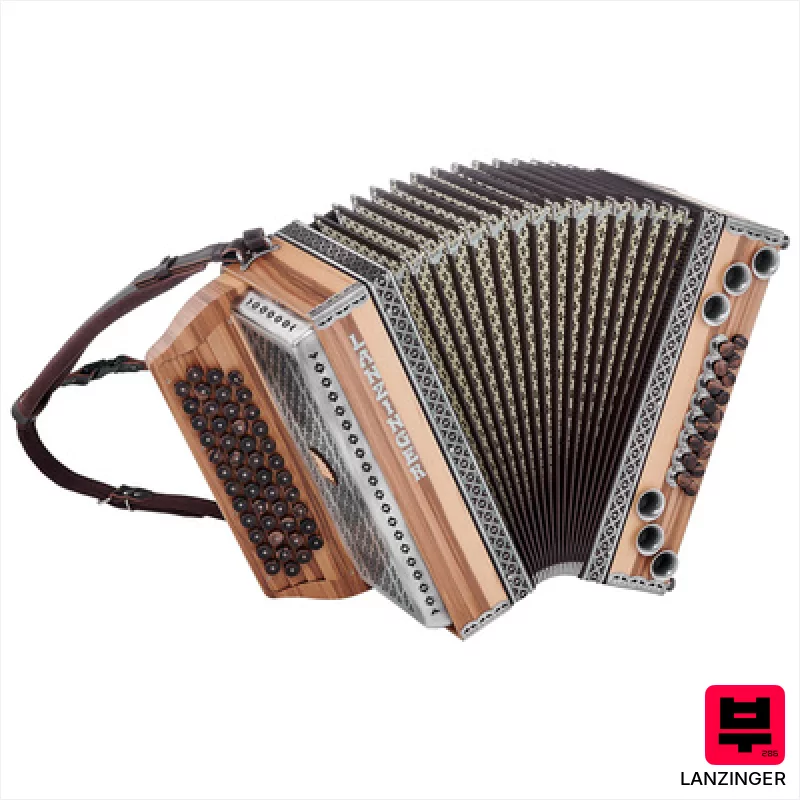
Lanzinger 34 Alma Nut G/C/F/Bb
- • Exceptional Lanzinger craftsmanship; A Mano reed plates deliver rich, complex tones.
- • Nut bellows offer responsiveness and a warm, full sound profile.
- • The G/C/F/Bb key layout is ideal for traditional folk and dance music.
- • Solid walnut construction ensures durability and a pleasing aesthetic.
- • The weight (7.1 kg) can be tiring for extended playing sessions.
- • Limited key options restrict versatility for certain musical styles.
- • Premium-priced, making it a significant investment for most players.
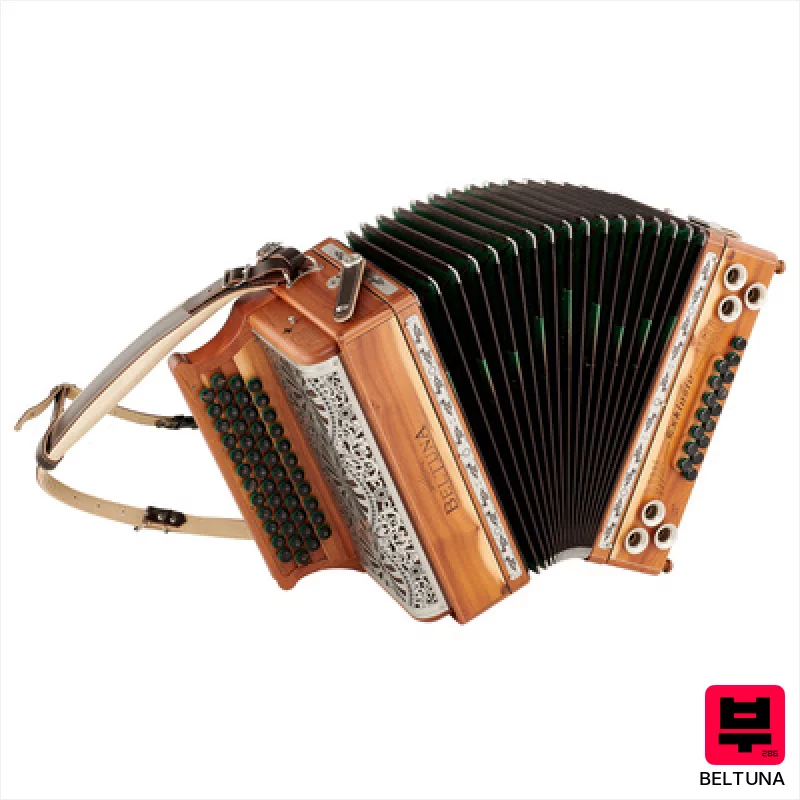
Beltuna Alpstar Excl. G/C/F/Bb Yew
- • Yew construction delivers exceptional resonance and warmth.
- • Michlbauer system provides extended bass range and versatility.
- • Tipo A Mano voices offer a uniquely expressive, nuanced tone.
- • Stainless steel fittings ensure durability and resistance to corrosion.
- • The 7.2kg weight makes it physically demanding for extended playing.
- • Limited key range restricts its application to traditional Styrian folk music.
- • Premium-priced, representing a significant investment for most players.
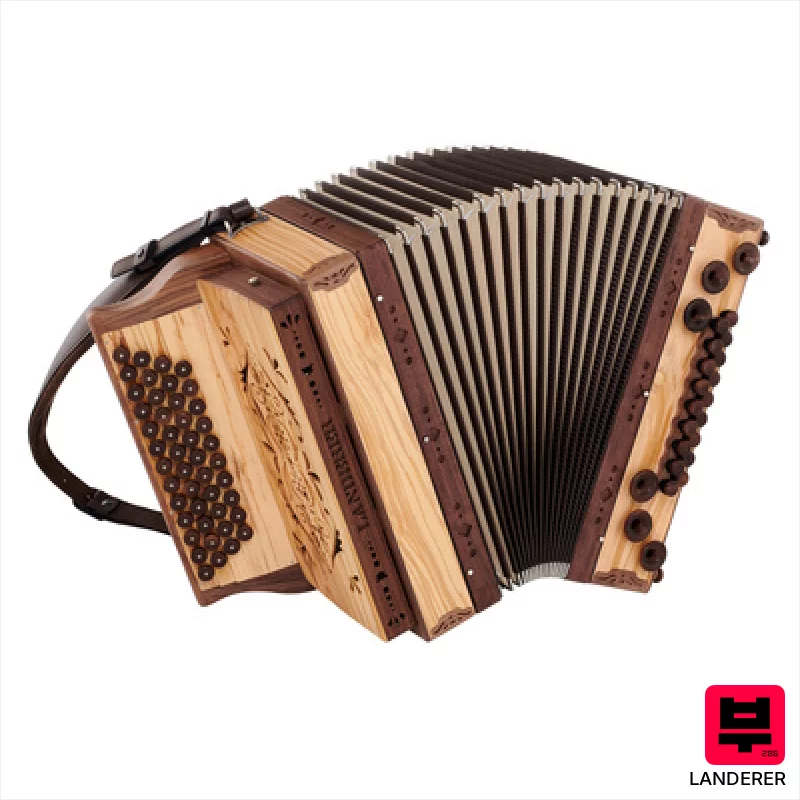
Landerer De Luxe Olive Bb/Eb/Ab/Db
- • Solid olive wood construction delivers exceptional resonance and warmth.
- • Tipo A MANO reedplates provide a remarkably responsive and nuanced touch.
- • The Michlbauer system offers a comfortable and efficient playing experience.
- • Hand-readjusted tuning guarantees exceptional precision and optimal playability.
- • The olive wood, while beautiful, is susceptible to humidity changes requiring careful maintenance.
- • The complex tuning makes it less adaptable to non-traditional musical styles.
- • Premium-priced, representing a significant investment for many musicians.
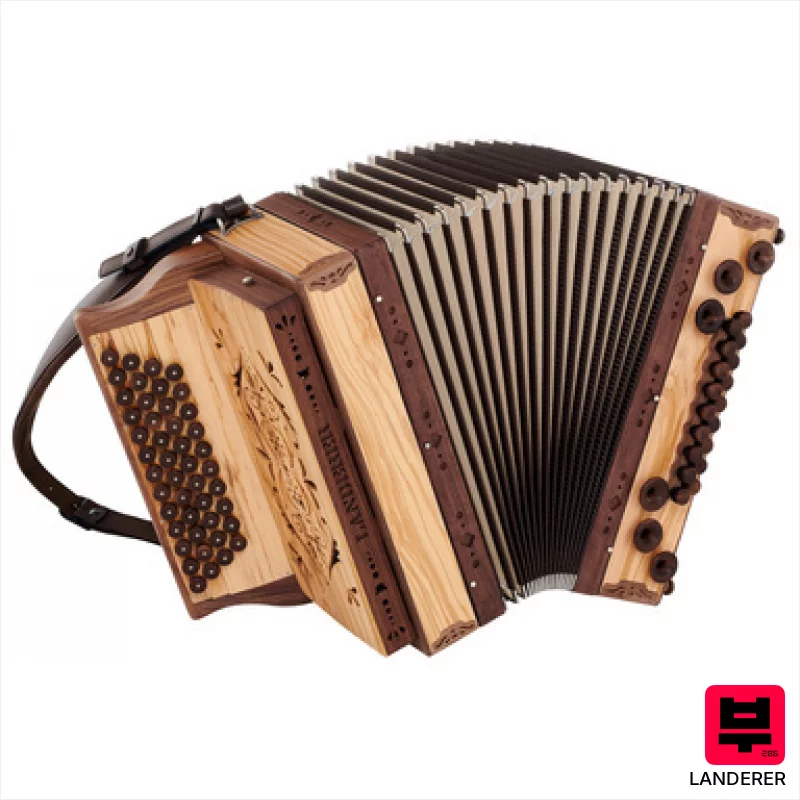
Landerer De Luxe Olive G/C/F/Bb
- • Olive wood construction delivers exceptional warmth and resonance
- • Michlbauer system provides incredibly responsive and nuanced playing
- • Tipo-a-mano reed plates offer a refined, complex tonal palette
- • Hand-tuned for optimal response minimizes fatigue and maximizes expression
- • The G/C/F/Bb tuning limits versatility for some playing styles
- • Solid olive wood construction makes it relatively heavy compared to alternatives
- • Premium-priced, representing a significant investment for most players

Landerer De Luxe Bog Oak G/C/F/Bb
- • Bog oak construction imparts a uniquely warm, resonant, and complex tonal character.
- • Tipo A MANO reed plates deliver exceptional responsiveness and dynamic range.
- • Michlbauer system provides a comfortable and intuitive playing experience for Styrian style.
- • Hand-readjusted tuning and low air consumption allow for effortless, extended playing sessions.
- • Bog oak instruments are premium-priced, representing a significant investment.
- • The Styrian layout limits versatility for players accustomed to piano or button accordion systems.
- • While relatively light, the bog oak construction still results in a substantial heft compared to plastic instruments.
How to Choose the Best Diatonic Harmonica Accordions
Reed Configuration & Layout
Advanced players often want non-standard reed configurations - bass buttons beyond the standard row, altered tunings, or even custom layouts. This opens up harmonic possibilities and allows for unique voicings and phrasing that aren't possible with a basic model. It's about expanding your tonal palette.
Bellows Response & Action
A sluggish bellows or an overly stiff action will kill your dynamics and articulation. We're looking for a bellows that feels responsive and predictable, allowing for subtle shifts in volume and tone. The action needs to be light and consistent across all registers.
Button Design & Placement
Small, poorly spaced buttons become a nightmare when you're trying to execute complex passages. Advanced players need buttons that are easily distinguishable by feel, and a layout that minimizes awkward hand movements. This directly impacts speed and accuracy.
Tone & Voicing
Forget that generic, bright accordion sound. We want instruments with character - a warm, woody tone, a pronounced low-end thump for bass lines, or a cutting edge for soloing. The voicing needs to have sustain and a pleasing breakup when pushed, allowing for expressive phrasing.
Construction Quality & Materials
Cheap accordions use flimsy materials that warp and rattle. We're looking for solid construction, quality reeds (often steel rather than brass for a brighter, more responsive tone), and a well-sealed reed block to prevent air leaks and unwanted noise. This directly impacts longevity and reliability on stage.
Buying Guide
Don't be fooled by flashy finishes or excessive chrome. The best diatonic harmonica accordions for advanced players are often understated. Be prepared to invest - a truly responsive instrument with a custom layout and quality reeds isn't cheap. Watch out for accordions with uneven action or poorly aligned buttons; those are signs of rushed manufacturing and will frustrate you quickly. Consider a repairer's opinion - a well-maintained older model can often outperform a new, budget option.
How This List Is Built
We don't play these instruments — we're a catalog, not a review desk, and we'd rather say so than pretend otherwise. This page ranks 15 diatonic harmonica accordions from the Thomann catalogue, which is the largest single source of specification data in this category.
Position is computed, not curated. Four signals, in order of weight: how completely the manufacturer documents the instrument (number of published specifications), where it sits in the price range, how specific the model designation is — which filters out generic accessories — and whether a product image exists. The same inputs always produce the same order, so nothing here is shuffled to look fresh.
What this list is good for: narrowing a category down to a shortlist by spec and budget. What it isn't: a substitute for hearing an instrument. Before you buy, read hands-on reviews and, where you can, play it. Full methodology.

