
Best Butolen Diatonic Harmonica Accordions 2026
Alright, so you're diving into the world of Butolen diatonic harmonica accordions? Smart move. These aren't your grandpa's squeezeboxes - they've got a history and a sound that's really special, particularly if you're looking for something with a bit of grit and character. They're a bit less common than Hohner or Weltmir, but when they hit right, they really hit.
Last updated: April 11, 2026
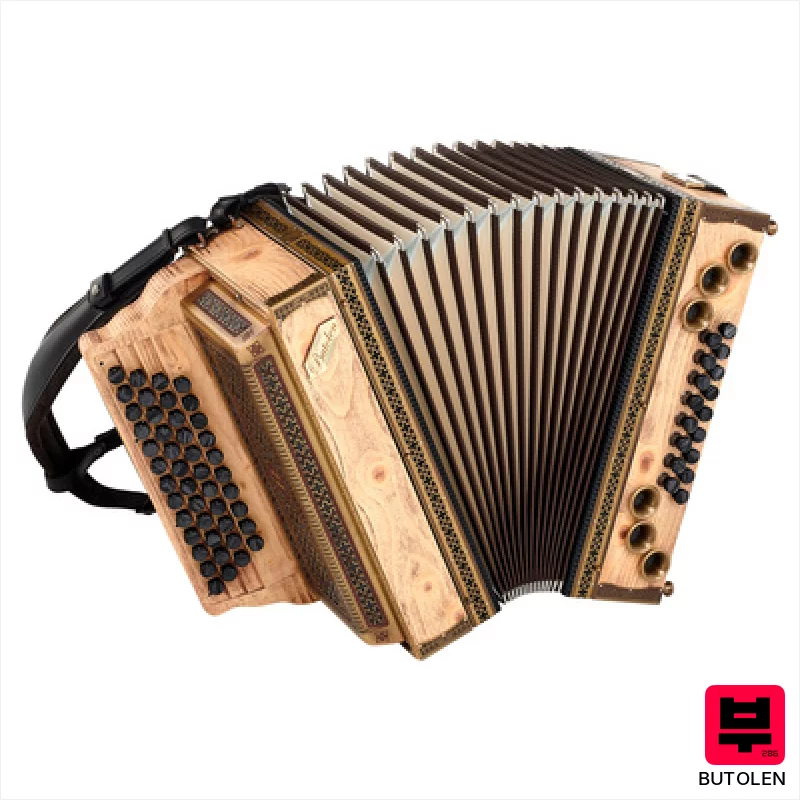
Butolen Stained Spruce G/C/F/Bb
- • Spruce construction delivers a bright, responsive, and lively tone.
- • Tipo-a-mano reed plates ensure exceptional reed response and tonal complexity.
- • Solid Slovenian craftsmanship guarantees robust build quality and longevity.
- • Compact size and relatively light weight (7kg) make it manageable for most players.
- • The G/C/F/Bb key configuration limits versatility for certain musical styles.
- • Brushed spruce finish, while attractive, might be susceptible to scratches.
- • Limited bass button range (16) restricts complex chord voicings.

Butolen Apple G/C/F/Bb
- • Handmade Binci reed plates deliver a uniquely rich, complex, and responsive tone.
- • Solid apple wood construction provides exceptional resonance and a beautiful, natural aesthetic.
- • Schaborack key assignment offers a familiar and efficient layout for traditional Styrian playing.
- • Santos wood buttons and antique silver plates showcase exquisite craftsmanship and premium materials.
- • The 7.4 kg weight can be fatiguing for extended playing sessions, especially for beginners.
- • Limited to a specific key arrangement; customization is possible but requires direct contact.
- • The premium-priced nature makes it inaccessible to many aspiring accordionists.
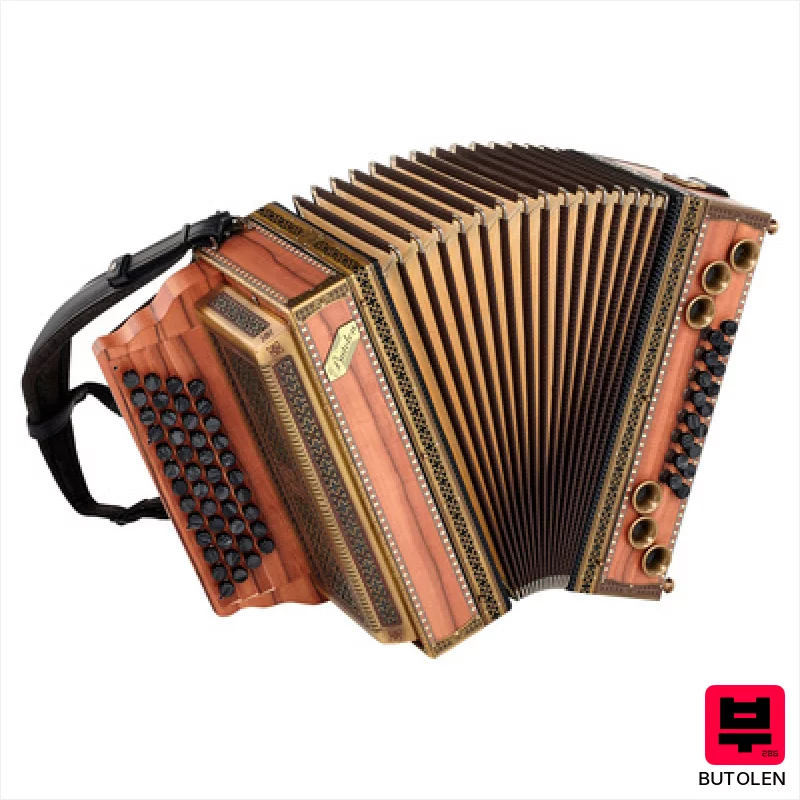
Butolen Indian Apple G/C/F/Bb
- • Exceptional Slovenian craftsmanship; Butolen's reputation is deserved.
- • Tipo-a-mano reed plates deliver a rich, complex, and responsive tone.
- • Indian apple finish is visually striking and offers a comfortable feel.
- • The G/C/F/Bb key configuration is ideal for traditional folk styles.
- • The 7kg weight will be tiring for extended playing sessions, especially beginners.
- • Limited key options restrict versatility compared to piano accordions.
- • The three-reed ranks, while characteristic, might lack the volume for larger ensembles.
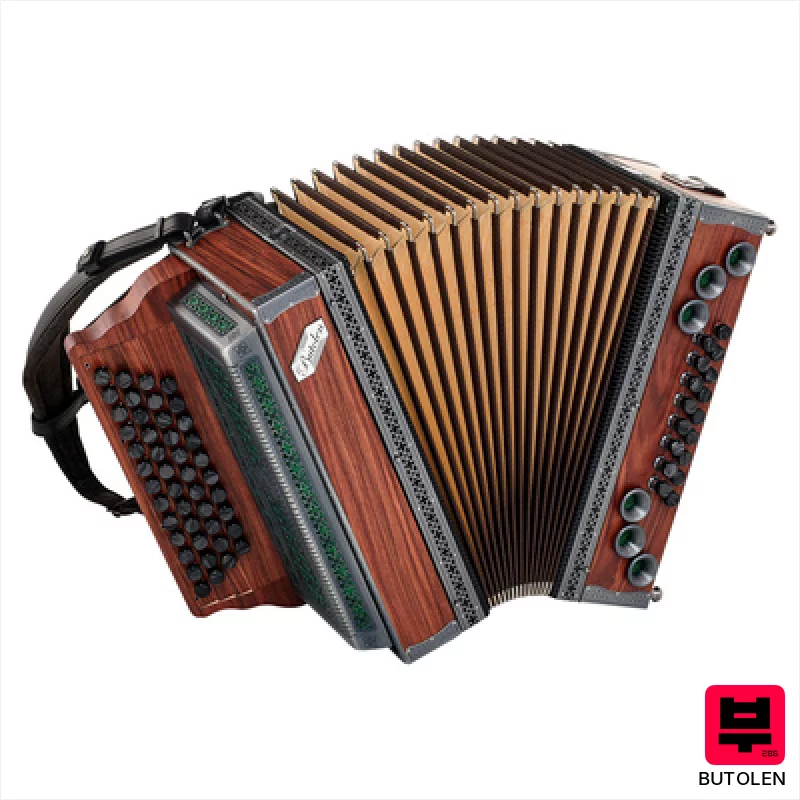
Butolen Rosewood G/C/F/Bb
- • Rosewood finish provides a warm, resonant tone and striking visual appeal.
- • Tipo-a-mano reed plates offer exceptional responsiveness and nuanced expression.
- • Slovenian craftsmanship ensures high build quality and lasting durability.
- • Compact size and relatively light weight (7kg) enhances portability and comfort.
- • G/C/F/Bb key configuration limits versatility for players needing other keys.
- • Styrian layout restricts melodic possibilities compared to full chromatic accordions.
- • Premium-priced, representing a significant investment for many musicians.
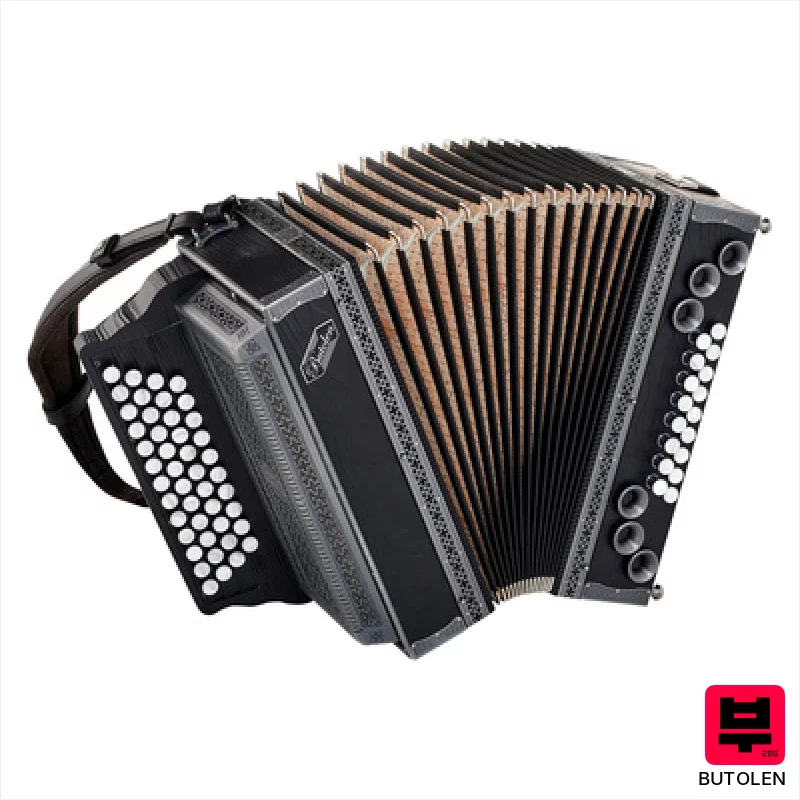
Butolen Spruce G/C/F/Bb
- • Spruce construction delivers a warm, resonant, and surprisingly powerful tone.
- • Tipo-a-mano reed plates offer exceptional responsiveness and dynamic range.
- • Antique silver fittings add a touch of elegance and durability to the instrument.
- • The compact size and relatively light weight (for a Styrian) enhance portability.
- • The G/C/F/Bb key configuration limits versatility for players accustomed to other tunings.
- • Styrian accordions, in general, have a more limited repertoire compared to piano accordions.
- • The brushed spruce finish, while attractive, is susceptible to scratches and wear.
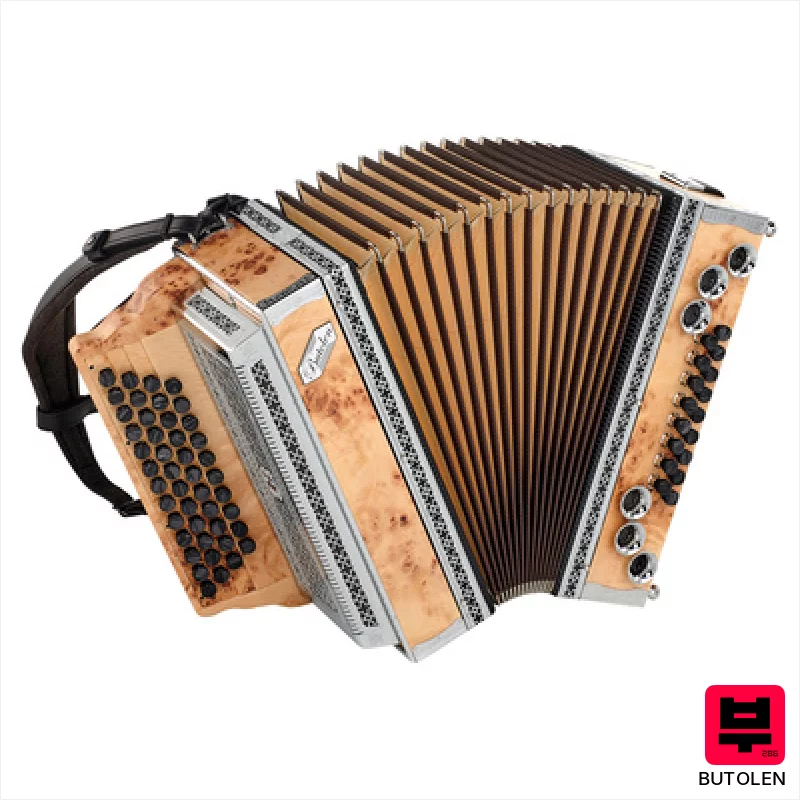
Butolen Poplar G/C/F/Bb
- • Poplar veneer offers a warm, resonant tone and attractive aesthetics.
- • Tipo-a-mano reed plates deliver exceptional responsiveness and tonal complexity.
- • Compact size (38x20cm) and relatively light weight (7kg) enhance portability.
- • Slovenian craftsmanship ensures high build quality and meticulous attention to detail.
- • G/C/F/Bb key configuration limits versatility for some playing styles.
- • The 3-reed ranks, while characteristic, may lack the sheer power of higher-end models.
- • Poplar veneer, while beautiful, is softer than harder woods and requires careful handling.
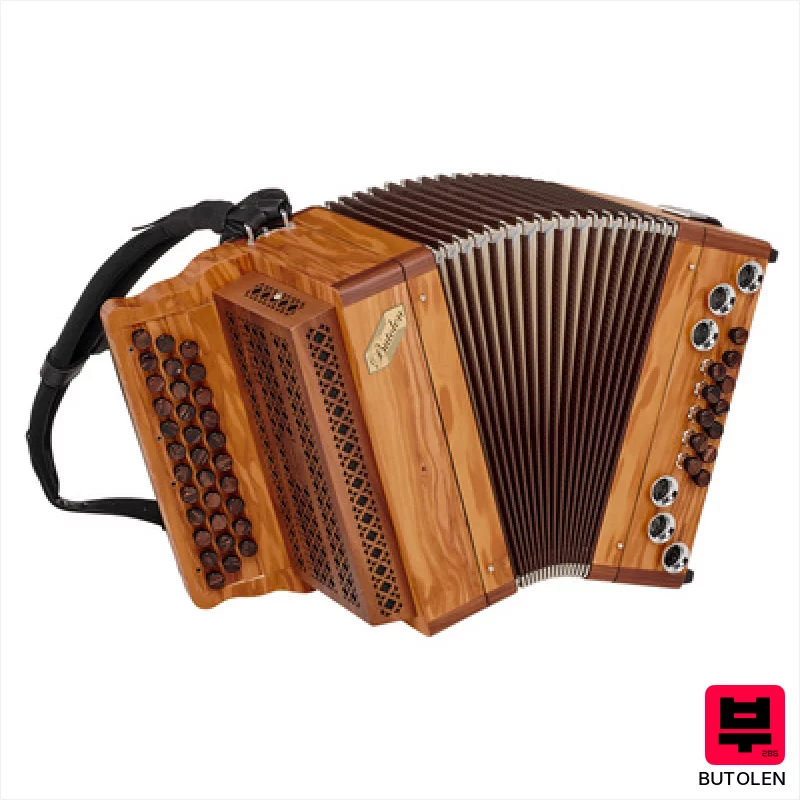
Butolen Olive G/C/F
- • Cagnoni reed plates deliver a remarkably rich, complex, and traditional Slovenian sound.
- • The Olive wood casing provides a warm aesthetic and contributes to the instrument’s resonant character.
- • The X-Bass system adds a surprising depth and sustain to the bass response for a Styrian.
- • Well-built bellows offer a comfortable feel and reliable airtightness, crucial for extended playing.
- • The G/C/F key arrangement limits versatility for players accustomed to other tunings.
- • At 4.4kg, it can become tiring for extended performances, especially for smaller players.
- • The 12 bass buttons represent a relatively limited range compared to some other accordion styles.
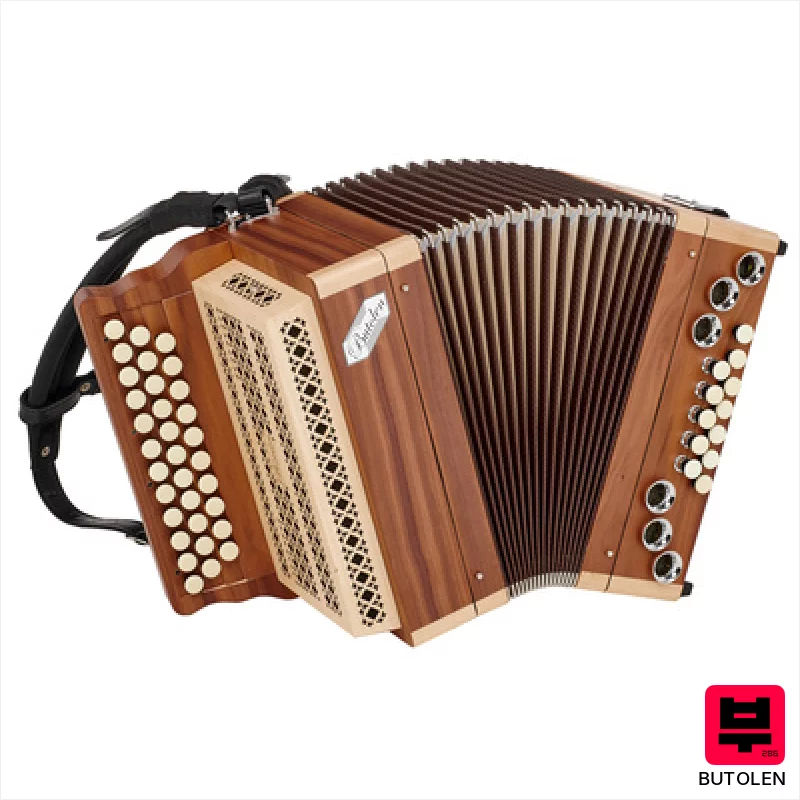
Butolen Nut G/C/F
- • Cagnoni reed plates deliver a rich, complex, and characterful tone typical of Styrian harmonicas.
- • Walnut finish provides a warm aesthetic and a pleasing feel in the hands, enhancing the playing experience.
- • The X-Bass adds depth and a satisfying low-end rumble, expanding the instrument's sonic palette.
- • Butolen's reputation for build quality shines; the instrument feels solid and well-assembled for reliable performance.
- • The weight (4.4 kg) can be tiring for extended playing sessions, especially for smaller players.
- • The G/C/F key combination limits versatility for players needing a broader range of keys.
- • Being a traditional Styrian, its timbre isn't as adaptable to modern genres as some other accordions.
How to Choose the Best Diatonic Harmonica Accordions
Tone
Butolen accordions are known for a distinctive, slightly raspy tone, especially in the lower registers. It's not a bright, sparkly clean; think more of a warm, woody resonance with a subtle 'honk' that cuts through a folk or blues band without being harsh. It's a tone that sits well in a mix without needing a ton of EQ.
Reed Construction
Butolen's reed profiles are a key to their sound. They're often voiced a little looser than some competitors, which contributes to that breathy, almost vocal quality. This also means they respond incredibly well to dynamics - a subtle change in pressure can dramatically alter the tone.
Build Quality & Action
The build quality is generally solid, though you'll find variations across models. The action is typically lighter than some older European brands, making them more responsive for quicker runs and more nuanced playing. However, some models can benefit from a reed adjustment to smooth out any slight buzzing.
Bass Response
The bass response on Butolens is surprisingly robust. You get a definite low-end thump that's more than just a rumble; it's got a real presence, especially useful when playing with drums or other instruments with low frequencies. It avoids that thin, anemic bass you find on some cheaper accordions.
Bellows Feel
The bellows on a Butolen feel quite responsive, allowing for a wide range of expression. The resistance isn't too heavy, making them comfortable for extended playing sessions, but they still offer enough feedback to know exactly how much pressure you're applying.
Buying Guide
When buying a Butolen, be aware that older models often have quirks - a reed might need adjusting, or the bellows might need a little TLC. Don't be afraid of used instruments, but factor in a potential service. Spending a bit more on a well-maintained model is usually worth it, as the core tone is what you're paying for; you can always tweak the action yourself later.
How This List Is Built
We don't play these instruments — we're a catalog, not a review desk, and we'd rather say so than pretend otherwise. This page ranks 8 diatonic harmonica accordions from the Thomann catalogue, which is the largest single source of specification data in this category.
Position is computed, not curated. Four signals, in order of weight: how completely the manufacturer documents the instrument (number of published specifications), where it sits in the price range, how specific the model designation is — which filters out generic accessories — and whether a product image exists. The same inputs always produce the same order, so nothing here is shuffled to look fresh.
What this list is good for: narrowing a category down to a shortlist by spec and budget. What it isn't: a substitute for hearing an instrument. Before you buy, read hands-on reviews and, where you can, play it. Full methodology.

