
Best Cymbal Stacks Under $300 2026
So, you need some cymbal stacks but your wallet's looking a little thin? Totally get it. Stacks can really fill out your kit's sound, adding those shimmering washes and explosive accents that cut through a loud band. Let's be real, a Zildjian A Custom stack for $300? Forget about it. We're digging for value here, finding stacks that'll give you pro sounds without breaking the bank.
Last updated: September 29, 2026

Masterwork Troy Traditional FX Stack
- • B25 bronze delivers a warm, complex wash of sound.
- • Hand-hammering creates unique sonic character and responsiveness.
- • Lighter weight facilitates fast, expressive cymbal swells and splashes.
- • Traditional finish provides a darker, more vintage-inspired tone.
- • Limited size range might not suit all playing styles.
- • Traditional finish can be more prone to oxidation than brighter finishes.
- • FX stacks inherently lack the focused projection of single cymbals.
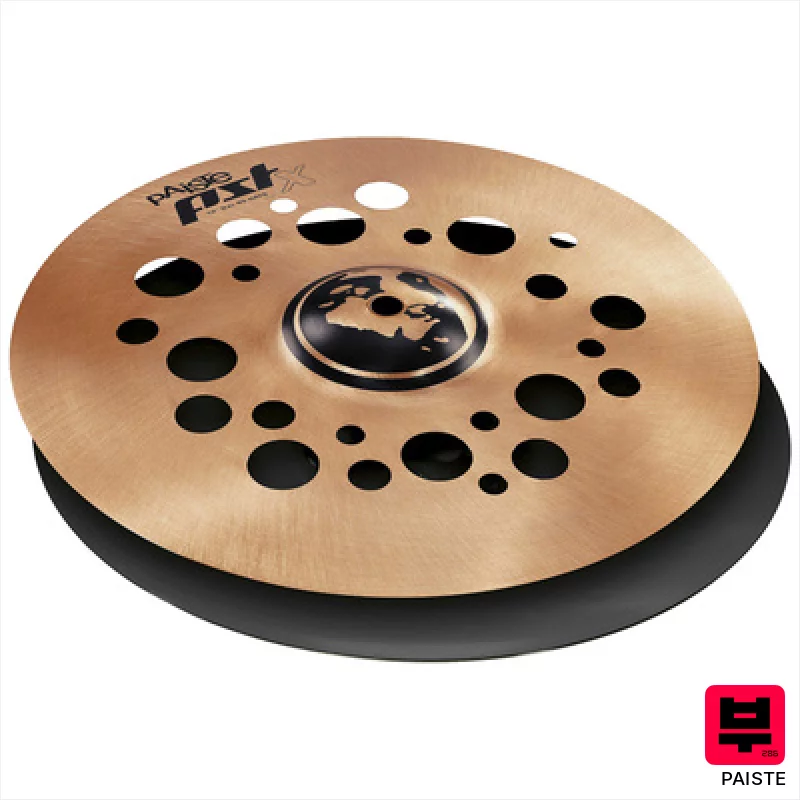
Paiste 16" PSTX Swiss Flanger Stack
- • Dry, assertive sound cuts through dense mixes effectively.
- • Paiste’s PSTX series offers excellent durability for gigging.
- • The bronze/brass combination provides a unique sonic signature.
- • Rotating design allows for dynamic, adjustable sound character.
- • PSTX series isn’t Paiste’s highest-end offering; some tonal complexity is missing.
- • The flanger stack’s sound is somewhat specialized; lacks broad versatility.
- • The silk-matte finish can be prone to minor scratching with heavy use.
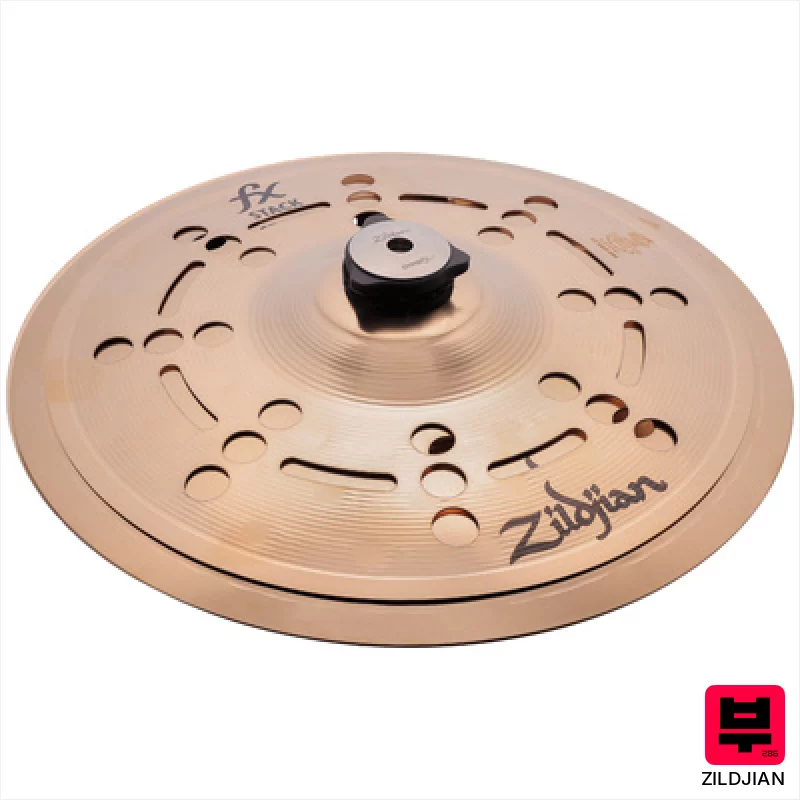
Zildjian 10" FX Stack Cymbals
- • B8 bronze provides a bright, responsive initial attack.
- • Cymbolt holder offers quick tension adjustments for varied sounds.
- • Compact 10-inch size is ideal for tighter kits and unique effects.
- • Versatile setup allows for hi-hat or expanded effect combinations.
- • B8 bronze isn't as complex or nuanced as higher-end alloys.
- • The smaller size limits the low-end fundamental resonance.
- • Sound can become somewhat brittle at higher volumes, lacking sustain.
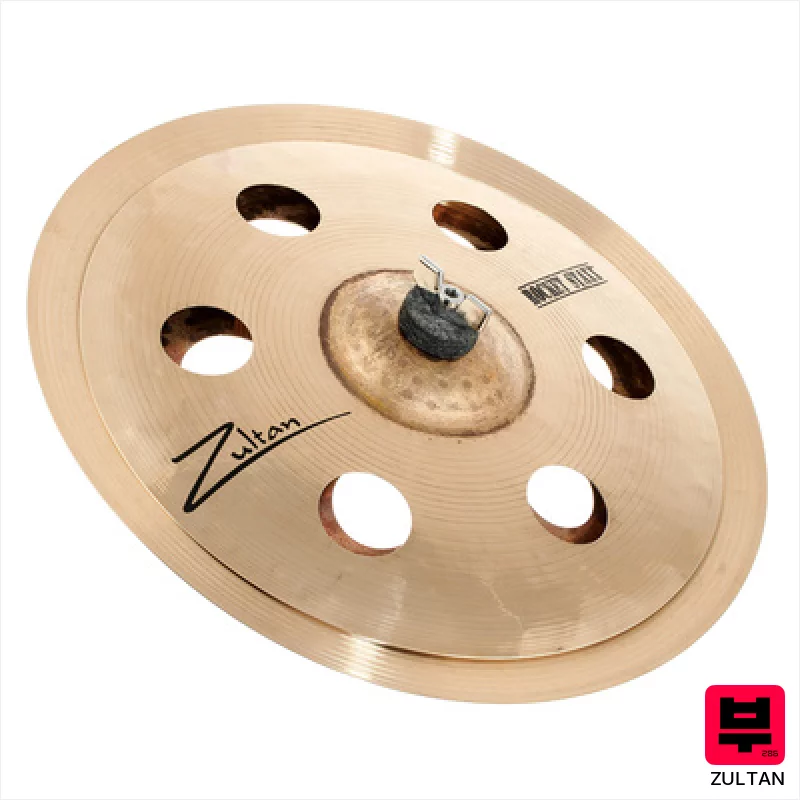
Zultan 12"/14" Rocket Staxx
- • Trashy, chaotic sound ideal for modern, experimental drumming
- • B20 bronze alloy delivers a complex, shimmering trashiness
- • Compact size makes them surprisingly manageable for smaller kits
- • China cymbal offers unique, piercing accents and trashy overtones
- • Limited tonal versatility – best suited for specific, effect-driven styles
- • Short decay might not satisfy drummers needing longer sustain
- • The aggressive trashiness can be overwhelming in quieter musical contexts
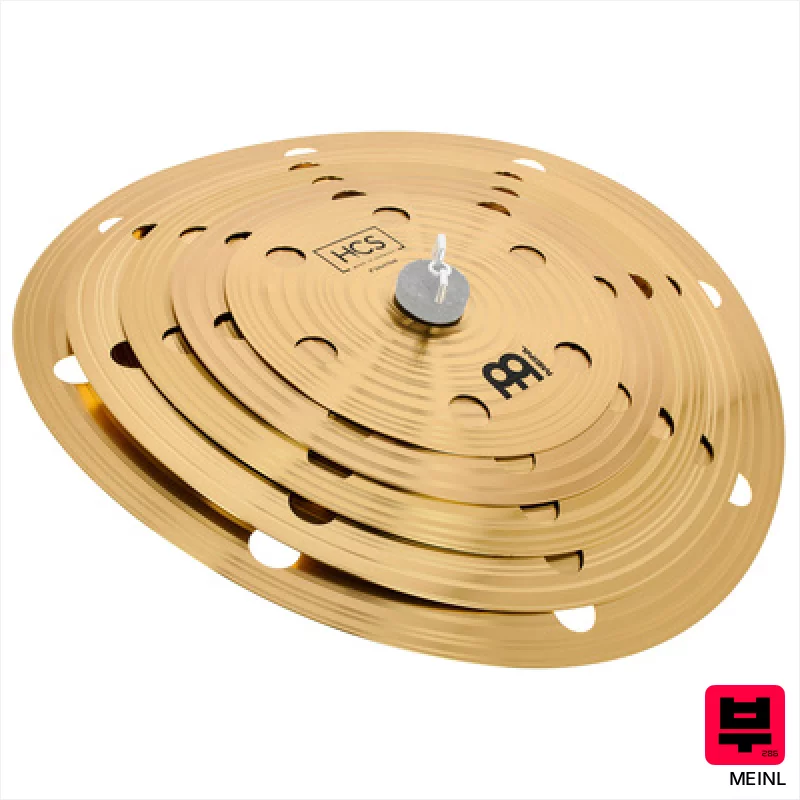
Meinl HCS Smack Stack 5 pcs.
- • The brass construction delivers a bright, cutting, and relatively quick response.
- • The varied sizes (8-16") offer a surprising range of tonal possibilities.
- • Meinl’s HCS series offers a solid, dependable build for consistent performance.
- • The short sustain allows for tight, controlled accents and rhythmic complexity.
- • The regular finish will tarnish and require occasional cleaning to maintain brightness.
- • Lacks the complex overtones and articulation of higher-end cymbal stacks.
- • The HCS brass alloy doesn't offer the darker, more vintage tones of B20 bronze.
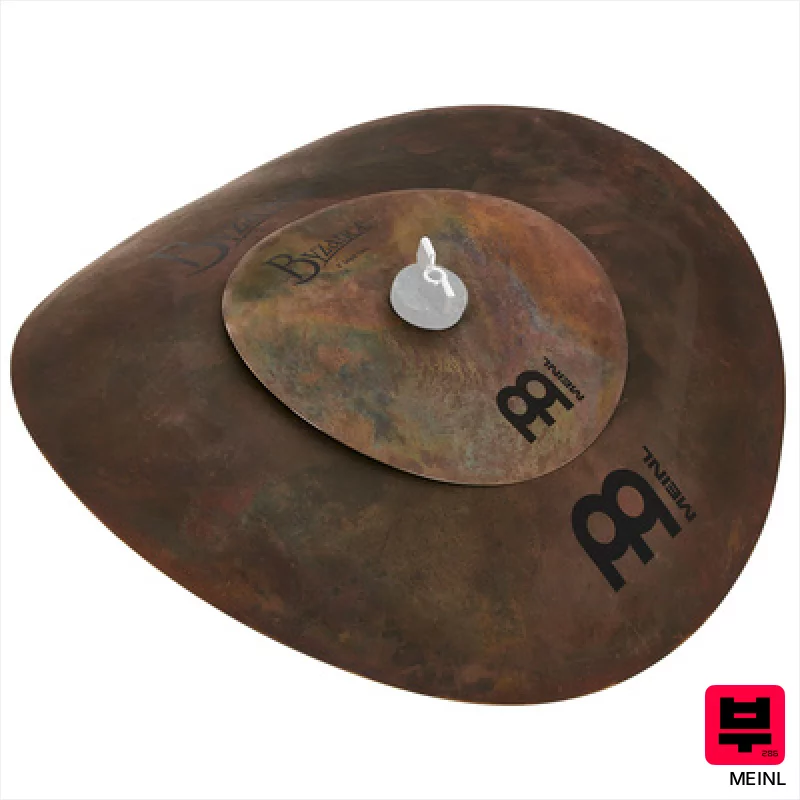
Meinl Byzance V. Smack Stack Add On
- • Unique trashy character adds immediate sonic texture.
- • B20 bronze construction ensures durability and tonal complexity.
- • Compact 8”/16” size offers controlled, focused sound.
- • Natural finish preserves the bronze's inherent tonal qualities.
- • Limited versatility; not ideal for traditional cymbal sounds.
- • Dry sound may require careful mic placement for optimal capture.
- • Surface variations are cosmetic but could affect long-term patina.
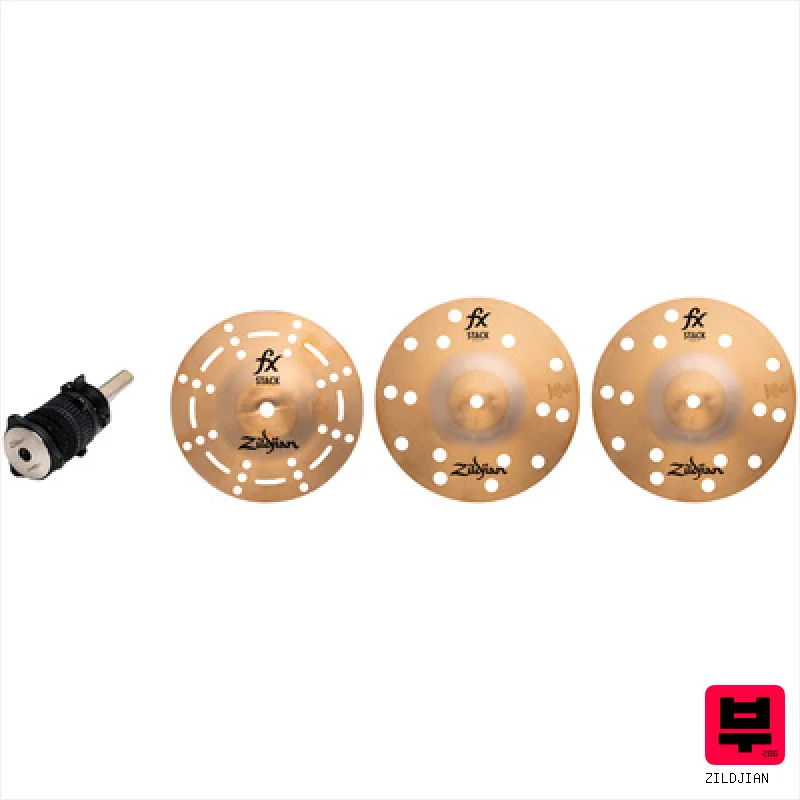
Zildjian 8" FX Stack Cymbals
- • Instantly adds many effect sounds to any drum kit
- • Made from durable B8 bronze alloy
- • Adjustable tension changes sound character easily
- • Replaces wing nuts and felts on standard stands
- • No sound samples provided to hear actual tone
- • Weight is not listed so it feels heavy
- • Limited to one cymbal per holder unit

Zultan 12" Dark Matter Splatter Staxx
- • B20 bronze provides warm, complex overtones and sustain.
- • Hand-hammering creates unique sonic characteristics and responsiveness.
- • Perforated cymbal adds a trashy, textured wash to the sound.
- • Versatile enough for hi-hats, crashes, and unique ride patterns.
- • Dark Matter splatter finish may not appeal to all aesthetic preferences.
- • Smaller 12 in size limits low-end projection and volume.
- • Stack construction can be prone to cracking with aggressive playing.
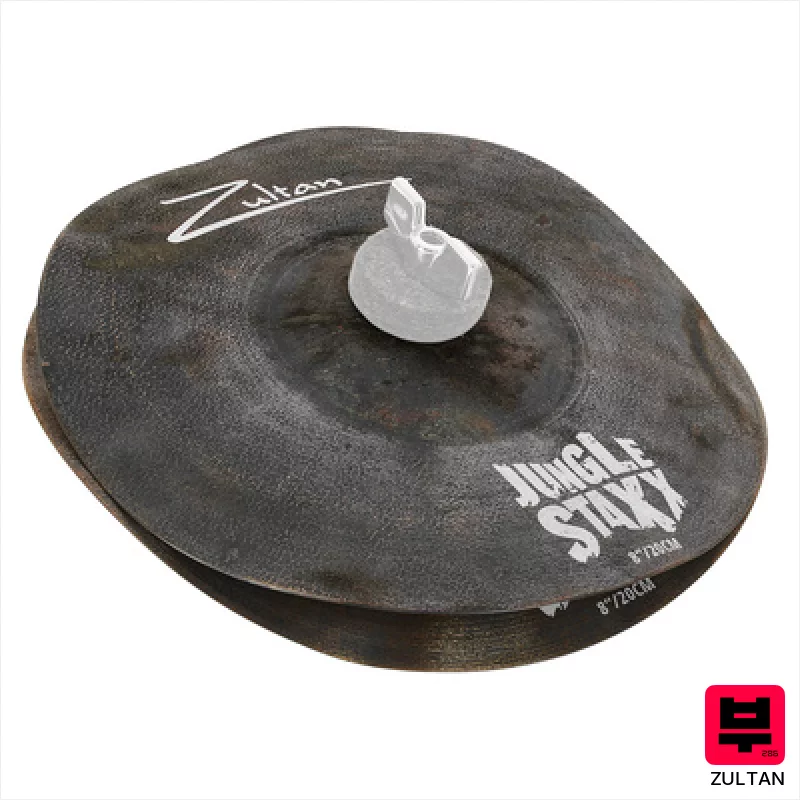
Zultan 8" Jungle Staxx with jingles
- • Bright, shimmering jingles cut through dense mixes effectively.
- • B20 bronze provides a warm, responsive core tone.
- • Compact 8” size is incredibly versatile for smaller kits and gigs.
- • Handmade construction ensures consistent quality and attention to detail.
- • Limited tonal palette compared to larger, more complex stacks.
- • Jingles can be prone to cracking with aggressive playing.
- • The overall volume isn't suited for the loudest, stadium-level performances.
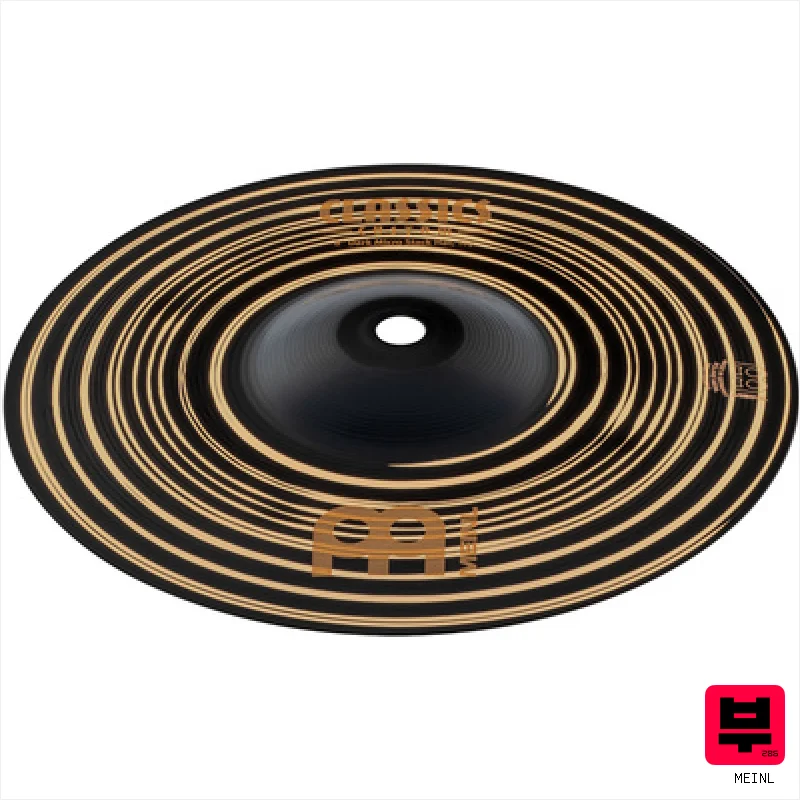
Meinl 8" Cl. Cust. Dark Micro Stack
- • Delivers a very dry attack right out of the box
- • Features bright tone for cutting through loud mixes
- • Extremely short decay keeps rhythm tight and precise
- • Built with durable B12 bronze alloy construction
- • Very short decay may lack sustain for some players
- • Bright tone could cut too harsh in quiet rooms
- • No information given about weight or head thickness

Zultan 10/8" Jungle Staxx
- • B20 bronze provides a warm, complex overtone blend.
- • The perforation creates unique trashy, unpredictable accents.
- • Compact 10/8” size makes it versatile for smaller kits.
- • Handmade quality ensures consistent tone and durability.
- • The sound is quite specialized; lacks broad cymbal versatility.
- • B20 bronze can be prone to fingerprints and patina.
- • Smaller size limits the volume and projection potential.
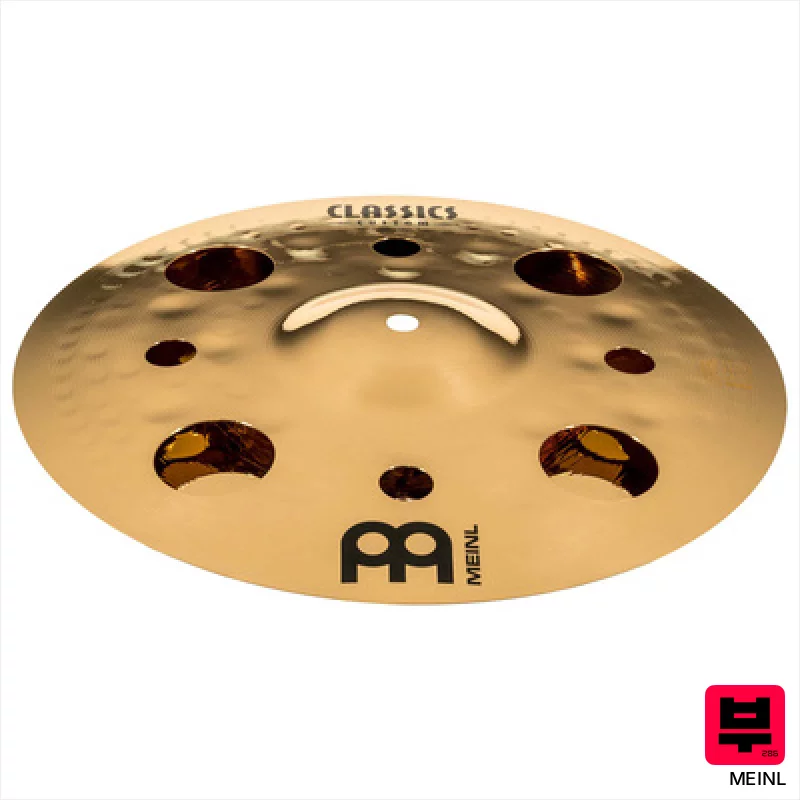
Meinl 12" Classic Custom Trash Stack
- • Trashy, complex overtones provide unique rhythmic textures.
- • B20 bronze construction delivers a dark, dry, and controlled sound.
- • Compact 12 in size is ideal for smaller kits or focused effects.
- • Well-laced hammering creates a consistent, usable trash character.
- • Limited versatility; not a substitute for traditional cymbals.
- • Sustain is short, making it unsuitable for shimmering washes.
- • Can sound brittle if played aggressively or with heavy sticks.
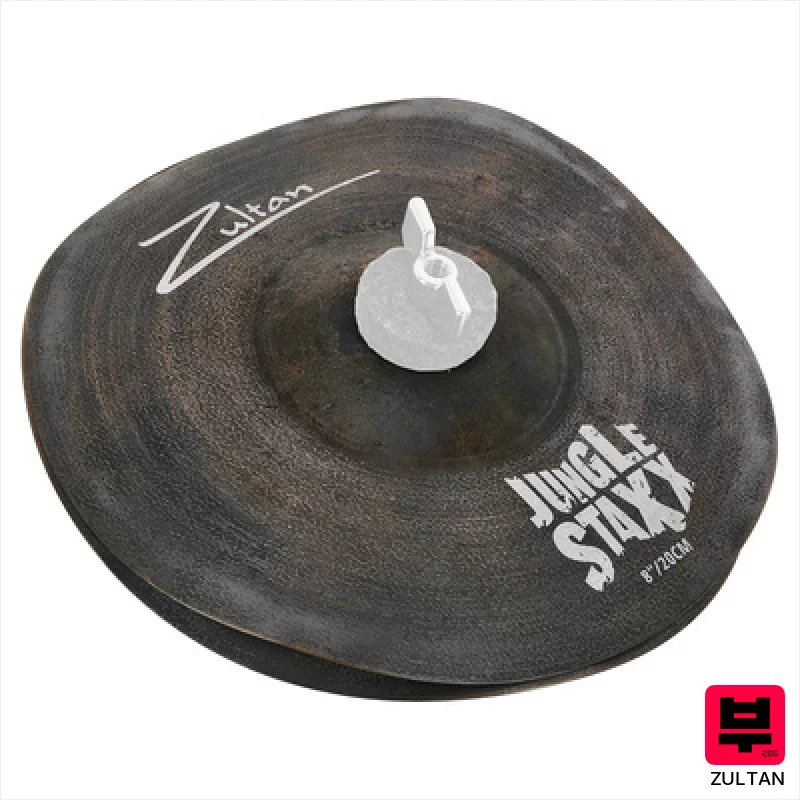
Zultan 8" Jungle Staxx
- • B20 bronze construction delivers a warm, complex, and responsive tone.
- • Compact 8-inch size makes it highly portable and versatile for various setups.
- • Handmade Turkish craftsmanship ensures consistent quality and attention to detail.
- • Wavy top cymbal creates unique, shimmering textures and interesting overtones.
- • Limited tonal range compared to larger, more complex cymbal stacks.
- • B20 bronze, while warm, might lack the bright sizzle some drummers prefer.
- • Smaller size may get lost in a very loud, full drum kit mix.
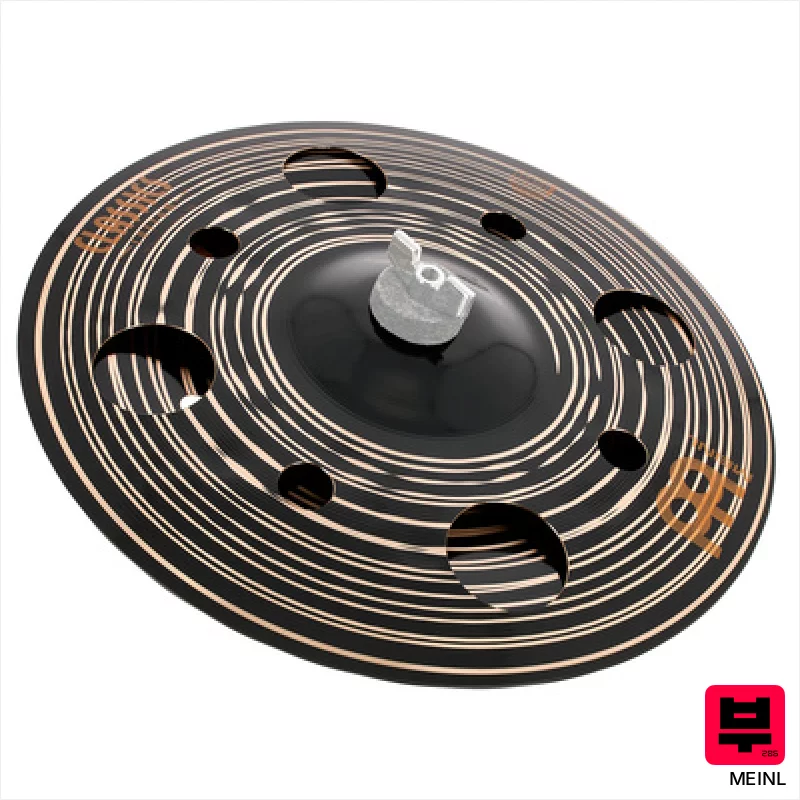
Meinl 12" Class. Cust. Dark Tr. St.
- • B-12 bronze delivers a uniquely trashy, cutting edge tone.
- • Short decay ideal for layered rhythms and fast fills.
- • Compact 12 in size offers excellent maneuverability and control.
- • Meinl’s Class series provides a solid, reliable build quality.
- • Limited versatility; excels in aggressive styles, less suited for subtle dynamics.
- • Dark finish may dampen high-frequency shimmer; not for bright sounds.
- • Stacking inherently creates a less defined, more chaotic sound.
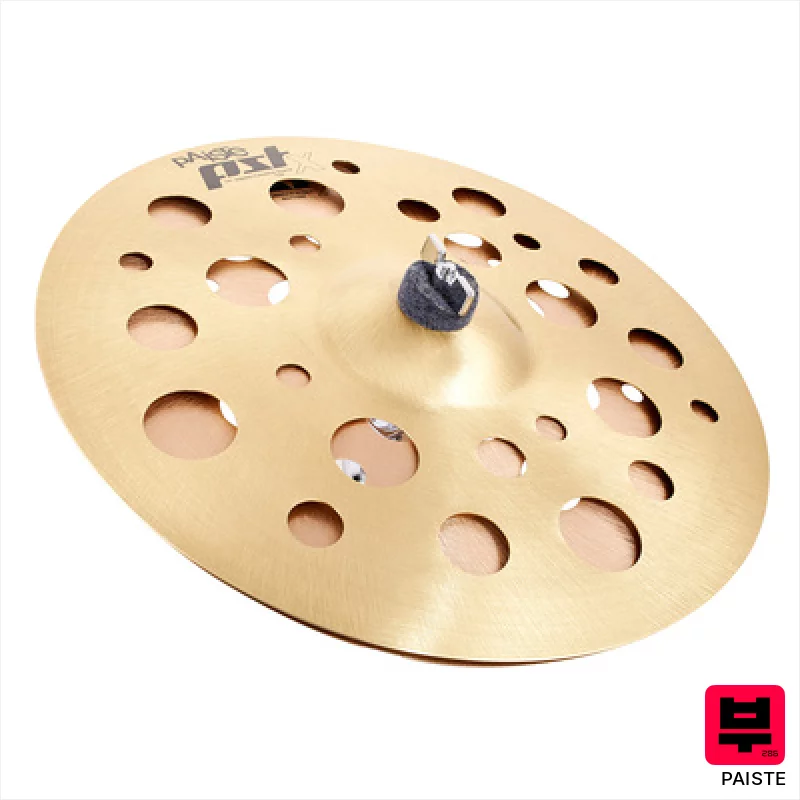
Paiste 14" PSTX Swiss Flanger Stack
- • Solid bronze/brass construction offers a unique, controlled wash.
- • The silk matte finish reduces stickiness and visual glare.
- • Versatile sound – easily adjusted from open to closed with tension.
- • PSTX series provides a durable, professional-grade build for gigging.
- • The dry sound may lack the shimmer desired for some genres.
- • Limited tonal range compared to higher-end cymbal stacks.
- • PSTX series isn't Paiste’s flagship, affecting perceived prestige.
Every cymbal stacks that matches
21 models match this page. The 15 above are covered in detail; the rest are listed here with their published specifications.
| # | Model | Specifications | Price |
|---|---|---|---|
| 16 | Paiste 12" PSTX Swiss Flanger Stack | Size 12" | $181 |
| 17 | Meinl HCS Smack Stack 3 pcs | Size 10" | $170 |
| 18 | Paiste 12" PSTX Splash Stack 12/10 | Size 12" | $147 |
| 19 | Paiste 10" PSTX Splash Stack 10/08 | Size 10" | $131 |
| 20 | Meinl 12" HCS Trash Stacks | Size 12" | $90 |
| 21 | Meinl 8" HCS Micro Stack Hats | Size 8" | $89 |
Cymbal Stacks by the numbers
Measured across all 21 models in this category, so «wide», «short» or «expensive» mean something you can check.
How to Choose the Best Cymbal Stacks
Sustain
How long the sound rings after the initial impact. Cheap stacks often have truncated sustain - it's noticeable, especially in a band setting.
Articulation
The clarity and definition of the sound. A muddy, undefined crash stack is useless; you need to hear the individual frequencies.
Trashiness/Complexity
Some stacks are clean and shimmering, others have a more raw, trashy character. It depends on your style - rock and metal benefit from a bit of grit.
Weight & Action
A heavier stack will have more low-end thump and sustain, but can be fatiguing to play. Action refers to how easily it responds to lighter stick hits - crucial for dynamics.
Overall Tone
This isn't just about 'bright' or 'dark'. It's about the harmonic content - does it have that fat midrange honk, or is it just ice-picky high-end? Does it blend well with your other cymbals?
Buying Guide
At this price point, you're making trade-offs. Don't expect the perfect, perfectly-lapped finish of a flagship series. You'll likely see more obvious lathing marks, and the metal itself might not be as refined, which can translate to a slightly shorter sustain and a little more 'ping'. Focus on finding a stack that has good overall articulation and a pleasing sonic character for your genre - a decent crash and ride stack is more important than chasing a specific brand.
How This List Is Built
We don't play these instruments — we're a catalog, not a review desk, and we'd rather say so than pretend otherwise. This page covers 21 cymbal stacks from the Thomann catalogue, which is the largest single source of specification data in this category: 15 in detail, the rest listed with their specifications.
Position is computed, not curated. We parse the manufacturer's own description into actual values — nut width, scale, fret count, fingerboard radius, size, alloy — and rank on them: how many specifications a model has published, how many of them are measurable numbers, and how precisely it meets this page's criterion. A product image adds a little. Price is not a ranking signal: it tells you nothing about whether a neck fits your hand. The same inputs always produce the same order, so nothing here is shuffled to look fresh.
What this list is good for: narrowing a category down to a shortlist by spec and budget. What it isn't: a substitute for hearing an instrument. Before you buy, read hands-on reviews and, where you can, play it. Full methodology.

