
Best Crossovers Under $200 2026
Alright, so you're running a small rig - a couple of powered speakers, maybe some subs - and you're realizing your amp's built-in crossover just isn't cutting it. That muddy low-end thump you're getting, or the harsh, brittle highs? A dedicated crossover can fix that, and you don't need to drop a grand to do it. We're diving into the best crossovers you can snag for under $200, focusing on bang-for-your-buck and getting you a sound that actually cuts through the mix.
Last updated: April 11, 2026

Behringer CX3400 Super X Pro V2
- • Excellent Linkwitz-Riley filters offer precise frequency separation.
- • Subsonic filter effectively protects speakers from low-frequency rumble.
- • Flexible routing options cater to both stereo and mono setups.
- • Comprehensive limiter section prevents clipping and protects components.
- • Build quality feels plasticky; not as robust as higher-end units.
- • The sheer number of features can be overwhelming for novice users.
- • EQ switch for CD horns is a bit gimmicky and lacks nuance.

Behringer CX2310 Super X Pro V2
- • Solid Linkwitz-Riley filters offer precise frequency separation.
- • Gold-plated XLRs provide reliable, low-noise signal transfer.
- • Subwoofer output offers flexibility for 3-way systems.
- • Compact size makes it ideal for portable PA setups.
- • Plastic enclosure feels less robust than higher-end crossovers.
- • Limited EQ options restrict fine-tuning capabilities.
- • Gain staging can be tricky, requiring careful adjustment.
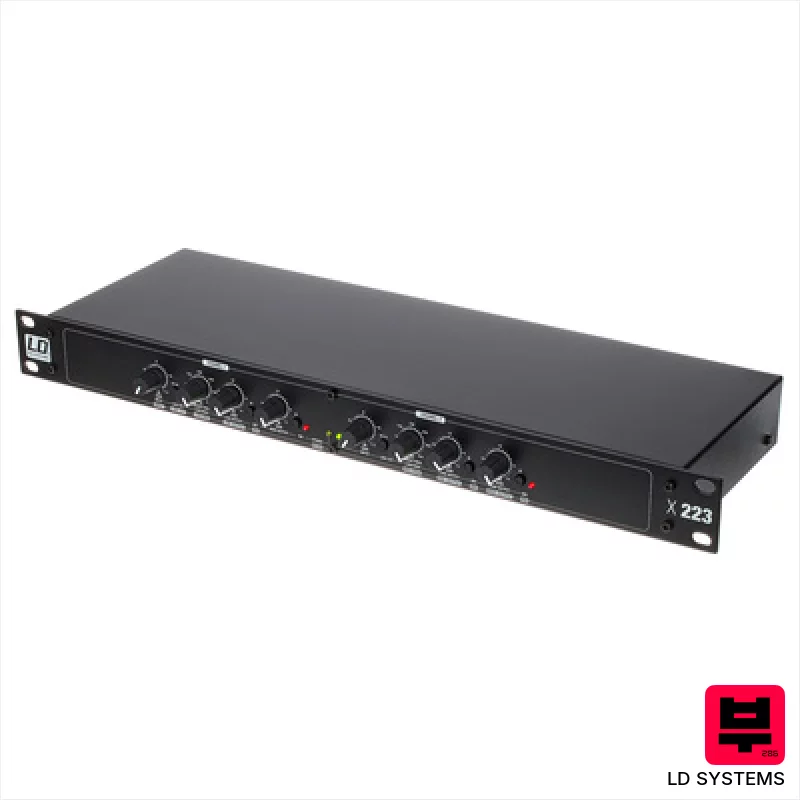
LD Systems X 223
- • Flexible routing handles 2-way and 3-way systems effectively
- • Solid build quality for a budget-friendly unit; feels robust
- • High gain inputs provide ample headroom for dynamic performances
- • Switchable frequencies offer precise crossover point adjustment
- • Limited processing beyond basic crossover functions; lacks EQ
- • Physical size (482mm width) can be restrictive in smaller rigs
- • Mono/Stereo switch is a bit clunky and not immediately intuitive
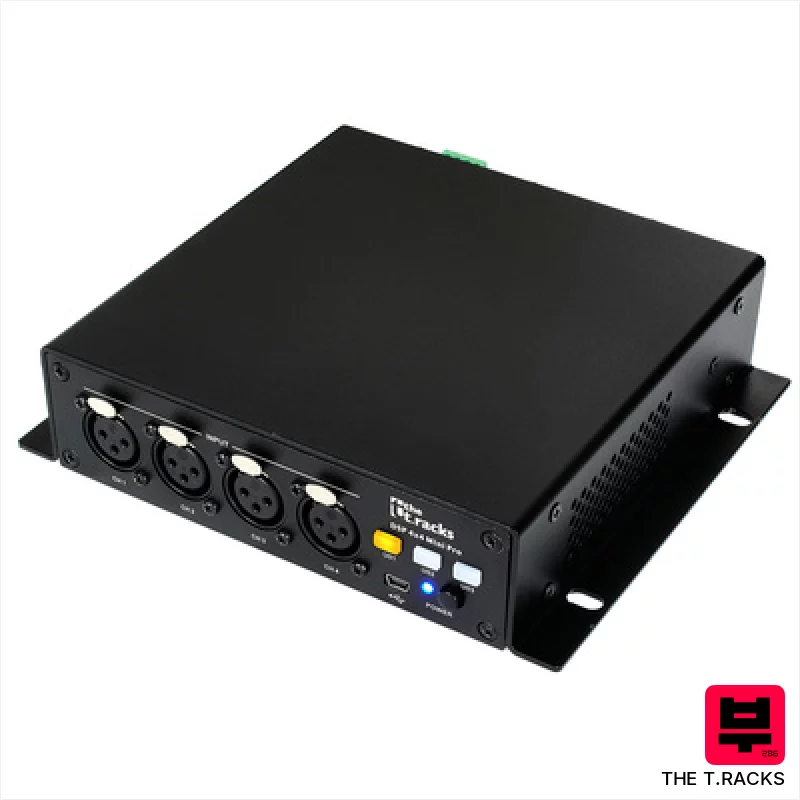
the t.racks DSP 4x4 Mini Pro
- • Extremely compact footprint saves valuable rack space.
- • USB programming offers flexible and detailed crossover adjustments.
- • Solid build quality; feels robust despite its small size.
- • Preset buttons allow for quick, on-the-fly sound adjustments during live performances.
- • Windows-only programming significantly limits Mac users’ accessibility.
- • Limited channel count restricts its use for complex, multi-way systems.
- • External power brick adds clutter and potential cable management issues.
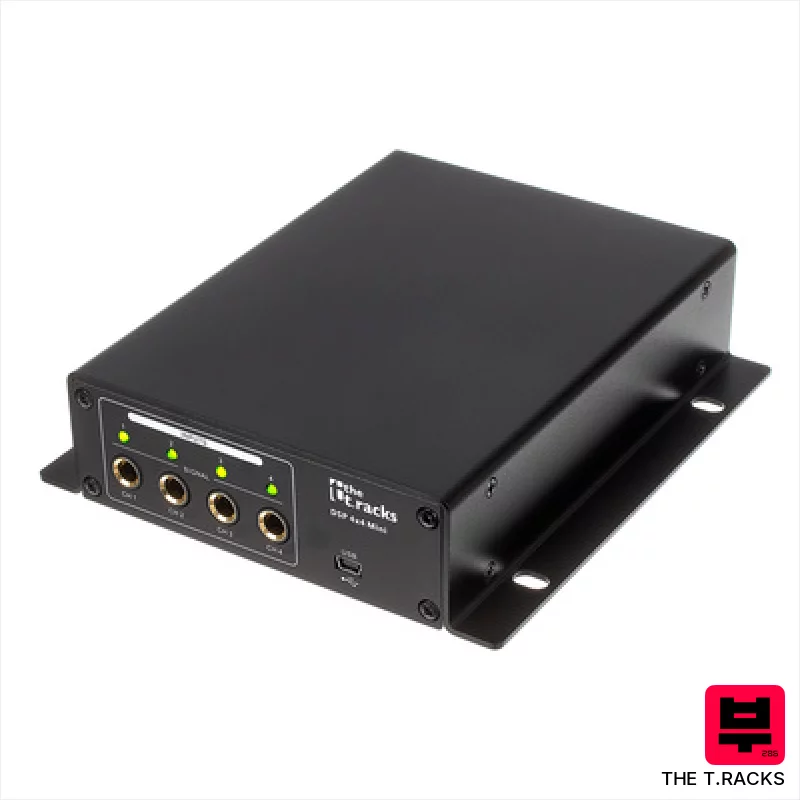
the t.racks DSP 4x4 Mini
- • Compact size makes it ideal for small rigs and mobile setups
- • USB programming offers flexible routing and customization options
- • Balanced connections ensure clean signal transfer, reducing noise
- • Robust 12V power supply provides reliable operation on the road
- • Windows-only programming limits accessibility for Mac users
- • Limited channel count restricts complexity of crossover designs
- • Physical size, while compact, can still be a constraint in very tight spaces
How to Choose the Best Crossovers
Frequency Adjustment Range
A wider range lets you dial in the crossover point to perfectly match your speaker's capabilities. Limited ranges can box you in, especially with less common speaker sizes.
Slope (dB/octave)
A steeper slope (24dB/octave) provides a sharper cutoff, minimizing overlap and phase issues between drivers. 12dB/octave is common in this price range and can work, but you'll need to be more careful with placement.
Signal-to-Noise Ratio
Low noise is crucial. Hiss and hum are a dead giveaway of cheap components and will bury your signal, especially at lower volumes. Listen for it - it's a real killer.
Build Quality & Reliability
Let's be honest, sub-$200 gear often cuts corners. Check reviews for reports of flaky pots, loose connections, or other reliability issues. A crossover failing mid-gig is a nightmare.
Input/Output Connectivity
Balanced XLR inputs and outputs are a must for minimizing noise. RCA inputs are a sign it's probably a more consumer-grade unit, and will introduce more noise into your signal chain.
Buying Guide
At this price point, you're making trade-offs. Don't expect pristine, audiophile-grade performance. The biggest compromise will likely be in the build quality - plastic enclosures and potentially less robust potentiometers are common. Focus on getting a decent frequency adjustment range and a reasonable slope; a clean signal is more important than fancy features you won't use. Read reviews carefully and be prepared to treat it gently.
How This List Is Built
We don't play these instruments — we're a catalog, not a review desk, and we'd rather say so than pretend otherwise. This page ranks 5 crossovers from the Thomann catalogue, which is the largest single source of specification data in this category.
Position is computed, not curated. Four signals, in order of weight: how completely the manufacturer documents the instrument (number of published specifications), where it sits in the price range, how specific the model designation is — which filters out generic accessories — and whether a product image exists. The same inputs always produce the same order, so nothing here is shuffled to look fresh.
What this list is good for: narrowing a category down to a shortlist by spec and budget. What it isn't: a substitute for hearing an instrument. Before you buy, read hands-on reviews and, where you can, play it. Full methodology.

