AudioFu Chart · October 2026
Best Closed Hole Flutes 2026
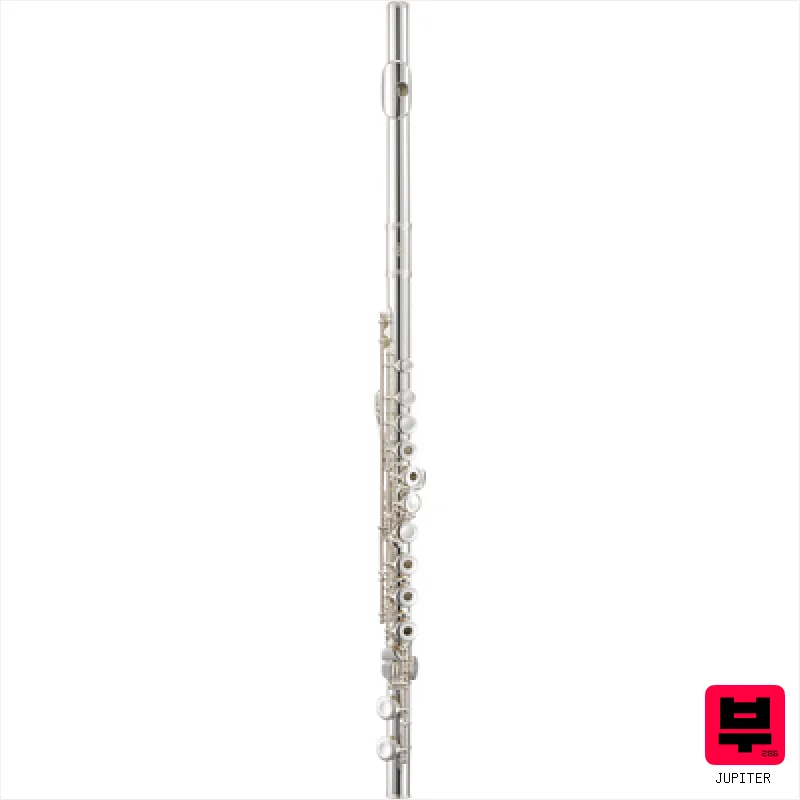
The top pick is Yamaha YFL-222 Standard Flute ($672). Startone SFL-55 Flute gives you the most for the money at $134. Yamaha YFL-312 Flute leads the high end. Ranked by the AudioFu Index from 50 models across 13 brands, prices checked every night.
Last updated: October 22, 2026
Narrow the chart
All Closed Hole FlutesTop 10
Full detail for the 10 highest AudioFu Index scores. Every other model is listed below.
-
The Yamaha YFL-222 is a solid, dependable choice for beginning flute students or those needing a reliable secondary instrument. It offers a surprisingly good tone and comfortable ergonomics for its class, striking a good balance between playability and affordability. This flute’s build quality is impressive for its price range, making it an excellent starter instrument.
Pros
- Nickel silver construction provides reliable durability for student use
- CY headjoint delivers a surprisingly warm and responsive tone for the price
- Offset G key improves hand comfort, especially for younger players
Cons
- Nickel silver finish is prone to wear and tear with heavy use
- Lacks the complexity and projection of higher-end, solid silver flutes
65AudioFu
IndexStableno change since Aug 17Aug 17$672 now$672€598 at Thomann · in stockCheck price ↗ -
This flute plays with a full, warm sound that cuts through a band easily. The nickel silver body and silver-plated parts feel solid and last well. It fits beginners and pros alike who want accurate notes without extra gadgets.
Pros
- Nickel silver construction for strong sound
- Silver plating adds a bright touch
- Full and warm tone quality
Cons
- Closed keys limit expression options
- E mechanism may be less precise
47AudioFu
IndexStableno change since Sep 25Sep 25$635 now$635€565 at Thomann · in stockCheck price ↗ -
The Yamaha YFL-212 is a solid choice for beginning flute students. It offers a good balance of playability, a pleasingly warm tone for a student instrument, and reliable construction—it’s a great first flute that will allow students to develop good habits without being overly challenging.
Pros
- Nickel silver construction provides reliable durability and a bright tone.
- CY headjoint delivers a surprisingly warm and responsive sound for a student model.
- Offset G and E mechanism improve ergonomics for smaller hands and younger players.
Cons
- Nickel silver can tarnish relatively quickly, requiring more frequent polishing.
- The poly-conical bore, while warm, lacks the complex overtones of higher-end headjoints.
47AudioFu
IndexStableno change since Aug 17Aug 17$672 now$672€598 at Thomann · in stockCheck price ↗ -
The Startone SFL-55 is a surprisingly capable flute for the budget-conscious student or casual player. It’s a solid starting point with a brighter tone than you’d expect, and the offset G makes it comfortable to play. Don't expect professional-level performance, but it's a great value for the price.
Pros
- Nickel silver construction offers a decent, bright tone for the price.
- Closed hole keys improve response and intonation, especially for beginners.
- Offset G simplifies fingering, beneficial for smaller hands and younger players.
Cons
- Nickel silver isn't as resonant as higher-grade alloys like solid silver.
- The machine heads will likely feel a bit stiff and require occasional lubrication.
46AudioFu
IndexStableno change since Aug 17Aug 17$134 now$134€119 at Thomann · in stockCheck price ↗ -
The Thomann FL-200 is a surprisingly decent student flute, offering a usable tone and comfortable ergonomics for a budget-friendly price. It’s a great starting point for beginners or those needing a reliable, secondary instrument – don’t expect professional-level performance, but it’s a solid value for the money.
Pros
- Silver-plated headjoint offers a surprisingly warm, responsive tone.
- Closed hole design facilitates faster articulation and improved intonation.
- Offset G enhances comfort, especially for smaller hands and younger players.
Cons
- Nickel body and keys will tarnish faster than solid silver, requiring more frequent cleaning.
- E mechanism limits advanced playing techniques and higher register exploration.
45AudioFu
IndexStableno change since Aug 17Aug 17$179 now$179€159 at Thomann · in stockCheck price ↗ -
The Thomann FL-1000 CE is a solid, budget-friendly option for beginner flute students. The offset G and easy response make it comfortable to play, and the nickel silver construction ensures it can withstand some wear and tear. It’s a great starting point for those getting into the flute without a huge investment.
Pros
- Nickel silver construction offers good durability for a student instrument
- Offset G enhances comfort and reach for younger players
- Italian Pisoni pads provide a reliable and airtight seal
Cons
- Nickel silver finish, while durable, lacks the warmth of solid silver
- Silver plating can tarnish relatively quickly, requiring occasional cleaning
45AudioFu
IndexStableno change since Aug 17Aug 17$280 now$280€249 at Thomann · in stockCheck price ↗ -
The YFL-312 is a solid intermediate flute – a real step up for students or advancing players. The silver headjoint gives it a surprisingly rich and warm voice, while the offset G makes it comfortable to play. It’s a dependable instrument offering great value for the money.
Pros
- Sterling silver headjoint delivers a noticeably warmer tone.
- Pointed arm design improves key action and response speed.
- Offset G enhances ergonomics for smaller hands and easier reach.
Cons
- Nickel-silver body isn't as resonant as solid silver construction.
- CY headjoint, while good, might lack the ultimate complexity of a higher-end model.
45AudioFu
IndexStableno change since Aug 17Aug 17$1,392 now$1,392€1,239 at Thomann · in stockCheck price ↗ -
The Quantz B505E-HC is a fantastic, well-built student to intermediate flute. The Brezza headjoint delivers a surprisingly mature tone for its price point, and the offset G makes it comfortable to play for a wide range of hand sizes. This is a great choice for serious students or players looking for a reliable, affordable upgrade.
Pros
- Brezza headjoint offers a remarkably balanced and responsive tone.
- Heavy crown improves stability, crucial for higher registers.
- Offset G provides ergonomic comfort, reducing hand strain.
Cons
- Nickel silver plating, while durable, lacks the warmth of solid silver.
- E mechanism is a nice addition, but limits some advanced playing options.
43AudioFu
IndexStableno change since Aug 17Aug 17$841 now$841€749 at Thomann · in stockCheck price ↗ -
This is a solid entry-level flute with a durable nickel silver body and smooth E keys. The pointed arm design helps you reach difficult notes without straining your hand. While the closed keys make it simple to play, they won't let you do the fancy finger tricks some pros love. It comes with a case and Pisoni pads to keep the tone tight. Great for students who want a reliable instrument that sounds good right out of the box.
Pros
- Nickel silver body for strong projection
- Pointed arm design for better reach
- E mechanism ensures smooth key action
Cons
- Closed keys limit advanced finger techniques
- Silver plating may wear over time
42AudioFu
IndexStableno change since Aug 17Aug 17$447 now$447€398 at Thomann · in stockCheck price ↗ -
- Weight0.235 kg
The Guo Tocco Chocolate is a solid choice for the serious student or intermediate player looking for a warmer, more approachable sound than a typical silver flute. The inline key system makes it surprisingly easy to play, and the composite material offers a pleasant feel without the hefty price tag of a professional-grade instrument. It's a great value for the money.
Pros
- Composite material offers a warmer tone than standard silver.
- Closed hole keys provide enhanced responsiveness and intonation.
- Inline keys simplify fingering, ideal for intermediate players.
Cons
- Composite material may not offer the ultimate projection of silver or gold.
- Fixed C-foot limits versatility for advanced players’ extended techniques.
42AudioFu
IndexStableno change since Aug 17Aug 17$784 now$784€698 at Thomann · in stockCheck price ↗
All 50 closed hole flutes
Same index, same nightly prices — compact. Colour options of one model share a row. Tap a photo to zoom.
- 11
Guo Tocco Flute HyacinthusGuo42Stable$784€698$784€698Check ↗
- 12
Guo Tocco+ Flute LavandulaGuo42Stable$954€849$954€849Check ↗
- 13
Guo Tocco+ Flute Caramel MacchiatoGuo42Stable$954€849$954€849Check ↗
- 14
Guo Tocco+ Flute AquamarinGuo42Stable$954€849$954€849Check ↗
- 15
Pearl Flutes 795RB-2RB Elegante C FluteElegante PF-795 E · Pearl Flutes42Stable$4,491€3,998$4,491€3,998Check ↗
- 16
Thomann FL-100 Junior FluteThomann37Stable$167€149$167€149Check ↗
- 17
Thomann Kotori KF-CCEO FluteThomann37Stable$403€359$403€359Check ↗
- 18
Thomann FL-300 FluteThomann37Stable$448€399$448€399Check ↗
- 19
Thomann Kotori KF-CBEO FluteThomann37Stable$482€429$482€429Check ↗
- 20
Yamaha YFL-322 FluteYamaha37Stable$1,324€1,179$1,324€1,179Check ↗
- 21
Yamaha YFL-412 FluteYamaha37Stable$2,650€2,359$2,650€2,359Check ↗
- 22
Yamaha YFL-517 FluteYamaha37Stable$3,762€3,349$3,762€3,349Check ↗
- 23
Muramatsu EX-III- CCE FluteMuramatsu36Stable$4,033€3,590$4,033€3,590Check ↗
- 24
Muramatsu EX-III-CBE FluteMuramatsu36Stable$4,604€4,098$4,604€4,098Check ↗
- 25
Muramatsu GX-CCE FluteMuramatsu36Stable$6,617€5,890$6,617€5,890Check ↗
- 26
Muramatsu GX-CBE FluteMuramatsu36Stable$7,516€6,690$7,516€6,690Check ↗
- 27
Muramatsu DS-CCEO Flute HandmadeMuramatsu36Stable$10,445€9,298$10,445€9,298Check ↗
- 28
Muramatsu DS-CCEOH Flute HandmadeMuramatsu36Stable$10,782€9,598$10,782€9,598Check ↗
- 29
Muramatsu DS-CBEO Flute HandmadeMuramatsu36Stable$11,906€10,598$11,906€10,598Check ↗
- 30
Muramatsu DS-CBEOH Flute HandmadeMuramatsu36Stable$12,580€11,198$12,580€11,198Check ↗
- 31
Jupiter JFL700EC-CBox FluteJupiter35Stable$662€589$662€589Check ↗
- 32
Pearl Flutes Quantz B525E-HC FlutePearl Flutes35Stable$998€888$998€888Check ↗
- 33
Pearl Flutes Quantz B665E-HC FlutePearl Flutes35Stable$1,740€1,549$1,740€1,549Check ↗
- 34
Pearl Flutes Dolce PF-695 EPearl Flutes35Stable$2,582€2,298$2,582€2,298Check ↗
- 35
Azumi AZ-Z1 E FluteAzumi34Stable$1,291€1,149$1,291€1,149Check ↗
- 36
Azumi AZ-Z2 E FluteAzumi34Stable$1,841€1,639$1,841€1,639Check ↗
- 37
Azumi AZ-S2 E FluteAzumi34Stable$1,841€1,639$1,841€1,639Check ↗
- 38
Azumi AZ-Z3 E FluteAzumi34Stable$2,673€2,379$2,673€2,379Check ↗
- 39
Sankyo CF 201 FluteSankyo34Stable$2,938€2,615$2,938€2,615Check ↗
- 40
Azumi AZ-S3 E FluteAzumi34Stable$2,998€2,669$2,998€2,669Check ↗
- 41
Sankyo CF 301 FluteSankyo34Stable$4,707€4,190$4,707€4,190Check ↗
- 42
Yamaha YFL-617 FluteYamaha34↑ 6.1%$5,839€5,198$5,839€5,198Check ↗
- 43
Sankyo CF 401 FluteSankyo34Stable$6,503€5,789$6,503€5,789Check ↗
- 44
Sankyo CF 501 HandmadeSankyo34Stable$8,256€7,349$8,256€7,349Check ↗
- 45
Altus AS-A9 EO-S FluteAltus33Stable$3,593€3,198$3,593€3,198Check ↗
- 46
Altus AS-A11 EO-S FluteAltus33Stable$5,952€5,298$5,952€5,298Check ↗
- 47
Nuvo Band Flute BlackNuvo Band30Stable$313€279$313€279Check ↗
- 48
Powell Sonare PS 101 CEA FlutePowell Sonare30Stable$559€498$559€498Check ↗
- 49
Altus AS-A10 EO-S FluteAltus30↑ 4.9%$5,278€4,698$5,278€4,698Check ↗
- 50
Fliphead Flute Bundle FL1-SE AM-1Fliphead · 2 finishes22Stable$504€449$504€449Check ↗
Closed Hole Flutes by the numbers
Measured across all 71 models we track, not a sample.
Median $931 — half of all closed hole flutes here cost less.
median of 12 models · 0.1 kg–1.3 kg
How to choose the best closed hole flutes
Tone Quality
Closed-hole flutes often have a darker, more focused tone than open-hole models. This can be a benefit for blending into ensembles or cutting through a rock band, but it can also make soloing feel a bit less 'sparkly.' Listen for a balanced response across the registers; you don't want a low-end thump that muddies things or a harsh, ice-picky top end.
Keywork & Mechanics
Solid keywork is crucial. Cheap flutes will feel sluggish and have sticky keys, which will kill your articulation and make fast passages a nightmare. Pay attention to the action - it should be consistent and responsive without feeling too light or too heavy. The feel of the keywork is incredibly subjective, so try before you buy if possible.
Embouchure Hole Design
The embouchure hole shape and size directly impact the flute's tone and response. Larger holes generally offer a more powerful sound, while smaller holes can provide greater control and nuance. The placement and angle are also critical for consistent tone production across all registers.
Headjoint Compatibility
The headjoint is the defining element of a flute's tone. Many players will swap headjoints to customize their instrument's voicing. Consider a flute with a headjoint that's known to be versatile or one that you can easily swap out later. Don't underestimate the impact a different headjoint can have.
Padding & Seals
The quality of the pads (usually cork or neoprene) directly affects the flute's response and intonation. Cheap pads leak air, leading to poor tone and tuning issues. Better pads hold their seal longer and contribute to a more consistent playing experience. Leaks are a pain to fix, so start with good pads.
Buying guide
Alright, let's talk closed-hole flutes. If you're past the student model and looking for something that'll really sing, or if you're just tired of the stuffiness of an open-hole, this is the way to go. Closed-hole designs offer a different feel, a slightly darker, more focused tone, and can make a huge difference in your articulation - especially if you're playing complex passages or need to cut through a band mix. They're not a magic bullet, though, so let's break down what to look for.
Don't chase the flashiest engravings or the lowest price. Closed-hole flutes, even at the entry level, represent a step up in craftsmanship, so you're paying for more than just the metal. Be wary of flutes that feel overly stiff or have a ton of key clunk - that's a sign of cheap manufacturing.
Spending a little more on a flute with solid keywork and responsive pads will save you headaches down the road.
How the AudioFu Index works
Five measured signals and nothing else — no stars from strangers, no “tested by experts” we didn’t do. The weights are fixed and public. We don’t play these instruments; we measure the market around them.
This chart covers 71 closed hole flutes from the Thomann catalogue. Before you buy, read hands-on reviews and, where you can, play it. Full methodology.
AudioFu earns a commission when you buy through our Thomann links. It never changes the order — the index does.
- Demand40%
How many of this exact model are for sale on Reverb right now — what musicians actually buy and resell.
- Lineup20%
How many finishes Thomann stocks — makers expand the models that sell.
- Price15%
Where the price has moved since we started tracking in August.
- Specs15%
How completely the maker documents it.
- Maker10%
How deep the brand’s range is in this category.
Questions
Are closed-hole flutes harder to play than open-hole flutes?
Not inherently. They require a slightly different embouchure approach for some players, but the key difference is often the tone - which can take some getting used to. It's more about adapting to the sound, not necessarily a technical difficulty.
What's the deal with 'offset' keywork?
Offset keywork is a design where the keys are positioned slightly to the side, making them easier to reach for players with smaller hands or those who find traditional key placement awkward. It's a comfort thing, really.
Can I convert an open-hole flute to closed-hole?
Absolutely not. It's a permanent alteration and will almost certainly ruin the flute's tone and intonation. It's not a DIY project.
My student flute has closed-holes, is it any good?
It's a starting point. Student flutes with closed-holes are often built with compromises to keep the price down - thinner metal, less precise keywork. It'll get you started, but you'll likely want to upgrade as you progress.
I'm recording, will a closed-hole flute sound 'dark'?
It can, but that's not always a bad thing. It depends on the context. A darker tone can be great for blending into an ensemble or adding warmth. Experiment with mic placement and EQ to find what works best for your recording.